That consensus is the fundamental source of most animal suffering and death. This is irrefutable.
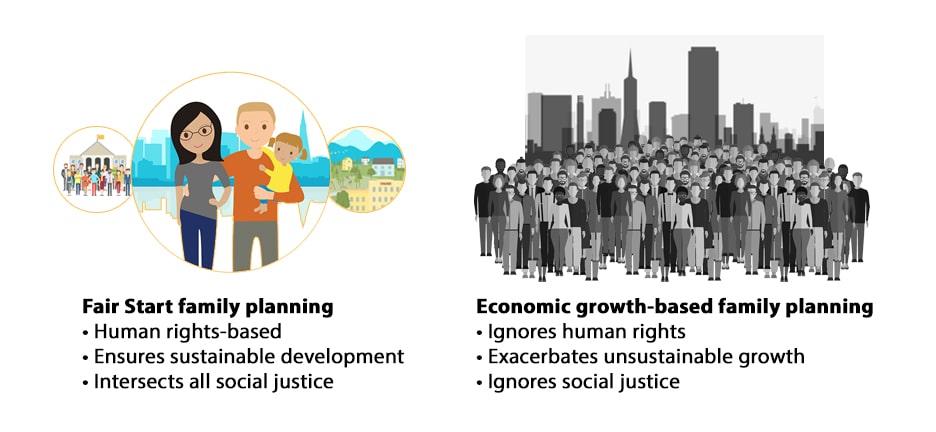
A specific example of the scam is when civil society organizations knowingly undo the progress they are claiming in fundraising and other materials with outdated growth-based family policies that disempower most people in order to – per one Nobel laureate – grow economies that benefit a few at cost to freedom and democracy.
And even when shown the undoing, many groups have continued on course, opting for downstream “distractivism” projects and upstream growth policies that will continue to undo the claimed progress in their campaigns. That makes the messaging in those campaigns misleading, as on balance the work does not help animals or other categories of subjects, human or nonhuman.
Many are fighting back against that, and for true freedom. And those who benefitted from unsustainable growth policies that did nothing to level the playing field between rich and poor kids know they are in trouble, now coming up with outlandish claims and a fake “underpopulation” crisis to decoy us away from justice.
This scam hides something called the “constitutive fallacy,” basing one’s obligation to follow the law on coercive top-down instruments like written constitutions rather than bottom-up family reforms that actually empower and liberate people – in terms of their actual relations – and in a measurable way, enabling them to physically constitute – under the Children’s Convention – legitimate power relations between people from whose authority things like written constitutions must derive.
Put another way, try to think, say, or do anything that does not derive from some set of theoretical or actual power relations, relations that would have had to derive from whatever norm created the people between whom those relations exist. It’s not possible to do, and for those relations to create obligations between people they must be created fairly and in a way that measurably empowers people. Acts of mass violence may be driven in part because we have failed to empower people.
Resolving the fallacy allows each of us – individually – to orient from a just position, rather than knowingly being part of systems in which some benefit by placing costs on others.
Truly free people will feel obligated to follow the law, including laws that create property rights, when they are empowered.
Please consider the dozens of ways to adopt Fair Start modeling, rather than the Cairo Consensus, as the base of your work and please take part in the #thewholetruth campaign, which allows groups to publicly explain the impact of family policies on their work.
How? He embraced anthropocentric population growth over the true liberation of animals, something only possible through rewilding and Fair Start family policies that require parental readiness, redistribution of wealth for child equity, and a default of smaller families.
Moreover, his approach has bred a generation of “distractivists” who pretend to help animals by selling vegan food products to a growing population, while even pushing for more growth, that on balance is at war with animals. They are using their wealth and power profit by imposing costs on others, disempowering the majority, and in a way that exacerbates acts of violence that are hitting innocent rather than those responsible for pushing unjust systems.
Singer committed the “constitutive fallacy,” or basing one’s obligation to follow the law on top-down instruments like written constitutions rather than bottom-up family reforms that actually empower and liberate people – in terms of their actual relations – and in a measurable way, enabling them to physically constitute – under the Children’s Convention – legitimate power relations between people from whose authority things like written constitutions must derive.
Urge Singer to embrace Fair Start reforms, or a comparably effective approach, here.
The first measure of doing good is not welfare or utility, it is consent, and whether we are constituting – physically – just and liberating societies. Singer, given his position, has the capacity to tell the truth and help change family policies in a way that could save millions of lives. Doing the most good means targeting concentrations of influence, like Singer, and using them to bend the arc of growth towards justice.
Don’t get scammed about which issues really matter when it comes to protecting animals. If we take animal personhood seriously their liberation should override political processes as fundamental rights do, for example, favoring a “right to rescue” over waiting for statutory personhood. But that move in isolation may threaten chaos to some who fear change. One solution?
Based on a recent Newsweek whistleblower article, use family and equity reforms to make those processes the inclusive ideal they were meant to be, building a social contract from the zero power baseline of nonhuman autonomy, and investing enough in each child as we go to limit growth in a way that preserves the influence of each law-making / self-determining voice in our democracies.
Summary
Most theories of animal law, rights and liberation focus myopically on immediate relations between humans and animals – like Peter Singer’s focus on diet, or the many large organization’s focus on animal cruelty laws. Few if any focus on fundamental legal or political theories, like theories of intergenerational justice or family law reforms, despite the fact that this area of inquiry and human behavior has the greatest impact on the greatest number of animals and shows clear alignment between human and nonhuman interest that surpass other areas of law. Scan “animal law” casebooks or other materials and you will see this, with no inclusion of basic legal theory concepts like political obligation, including theories that account for basic things like normativity, or that actually empower citizens.
That gap allowed some funders and many organizations (including academic institutes) to focus on less effective work, like food systems reform, because they are less politically risky, much easier to market, and enable profitable investments in growing industries like plant-based foods. Many benefitted from this misplaced focus at cost to animals, in what one Nobel Laureate called a pyramid scheme of growth, often lying (or greenwashing) about their impacts. This went beyond ignorance, with many entities receiving animal rights funding actually urging growth, enabling things like restrictive abortion bans. Or the use of growth-based profits to fund the popularization of growth-based philosophies that undercut nonhuman autonomy and legality at the same time.
The result is a social movement that largely ignores the fundamental driver of nonhuman animal suffering and death – the proliferation of humans over their world – the very thing that also drove the climate crisis, a thing that now threatens to cause more suffering than any human action in the history of the world. While environmental, child-welfare, and human rights and democracy movements experienced the same gap, the impact on nonhumans was the most destructive.
The myopia included blindly accepting massive generational birth inequity that is tantamount to white supremacy, and embracing macro-propertyhood of the nonhuman world which was undoing the micro-personhood benefits that many animal protection organizations routinely use to fundraise. Many calling themselves animal organizations thus chose policy areas that would benefit far fewer animals than the trillions the underlying family policies they simply accepted threatened – a form of deadly fraud.
Ask any organization or funder claiming to benefit animals how they have accounted for the impact of children being born into the world on their claims. Whether they are investing in those children, or exploiting them for growth, matters to animals. Below is a roadmap to close this gap and ensure reparative justice – the payment of actual claims – that actually liberates humans and nonhumans together by 1) inverting the movement from top down control to bottom up empowerment whereby governance is aligned with animal liberation, and 2) by temporalizing the work to account for empathy in future generations, rather than exploiting them for economic growth at cost to nonhumans.
Talking about animals rights while driving them into extinction
There are reasons to question the nature of what we often call animal law, rights, protection, welfare, etc. Just putting the word “animal” in a phrase or sentence does not help animals, and can do more harm than good.
This is a problem that can be corrected by treating animal law as inherently requiring inclusivity, and below I lay out the steps for doing so. The result is a conception of animal law that starts with our becoming, through a focus on autonomy and family reforms, a species consistent with mutual liberation. How?
We begin with the full conception of the nonhuman, liberated complete biodiversity, and the ideal of law – normativity because it is the will of the ruled. That is the genesis of unified animal personhood, and the mutuality between humans and nonhumans, and to think otherwise is to commit a fallacy.
The dominant of law, rights, welfare, protection, etc., because it can coerce results, is animal law. Impact, and for the right reasons, is what matters. Adding billions of people to the world without regard to how they will impact nonhumans, when doing that in the past created the crises we face today, and while touting laws that are riddled with exemptions and rarely enforced, is not a beneficial impact.
“Animal law” is really human law that happens to refer to animals, while excluding legal and practical protection for the vast majority of nonhumans (animals in factory farms and in research), and designating the vast majority— wildlife—as property, quietly bundled into an anthropocentric concept of the environment as a human resource designated to absorb and be altered by things like greenhouse gas emissions. That concept begins with a companion concept of future children as the property of their would-be parents that simultaneously disregards the autonomy of the nonhuman world.
That bundling is macro-propertyhood, always undoing the micro-personhood that many animal protection organizations routinely use to fundraise.
Any conception of animal law without reforming this – on balance – hurts animals, and does not address the fundamental and existential threat to nonhumans – the fact that we are replacing them.
How might our thinking of “animal law” or other terms that imply a benefit to nonhumans have been different? Were, long ago, humans to have seen themselves as equal parts of a complex ecology rather than a dominant species capable of shaping the world to its needs, we would have been obligated—in family, food, land use, and dozens of other policy areas—to limit ourselves existentially to just such an ecology.
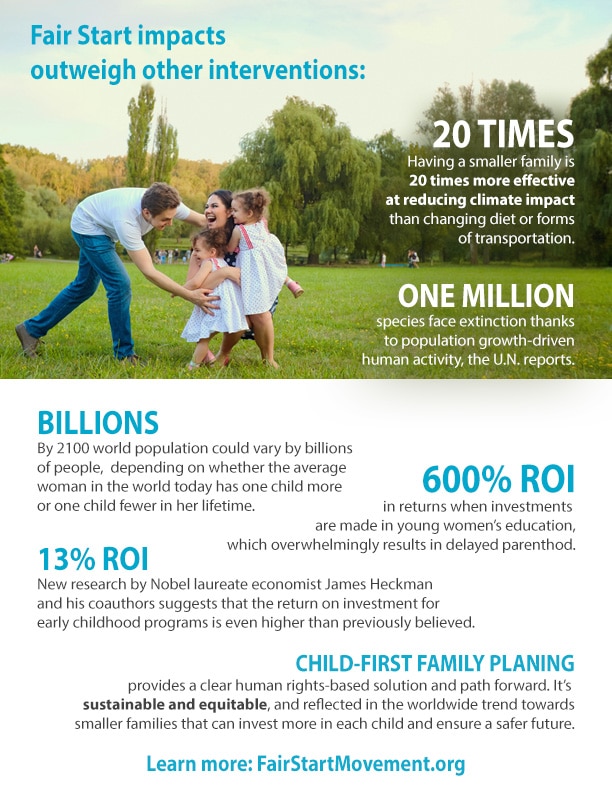
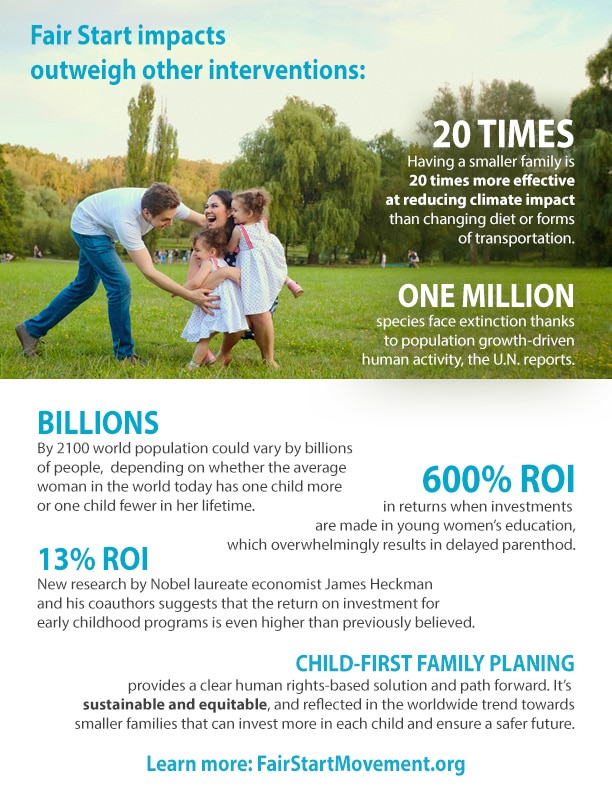
That means smaller families, parenting delay and readiness, and redistribution to wealth to incentivize these things and ensure equal empowerment of children. This is a comprehensively effective model with a 1/2 dozen positive peer-reviews. Simply said, the same nonsense that having kids is a matter of parental autonomy rather than an interpersonal matter of constituting future societies is the same thing that degraded participatory democracy, causes mass animal suffering and extinction, triggered the climate crises, and blew a gulf between rich and the impoverished.
The solution to that, described above in bold, would have required fundamentally challenging the anthropocentric nature of our legal systems, as well as the entitlements of concentrations of wealth and power, something many of the originators of the term “animal law” and other protective terms evaded doing. To the extent Peter Singer evaded these reforms with a misleading focus on farmed animals — rather than all future animals and future persons’ relations with those animals—as the majority for whom we should be concerned if we want to maximize probability of impact, he played a large role in this misdirection. The climatological effects of that misdirection, alone, cannot be overstated, preventing family reforms that could have saved countless animal lives and creating room reforms that exacerbate the situation. Those articulating (or framing) what nature (in the case of Our Children’s Trust) or animal liberation (in the case of Singer) is, are most dangerous because they move the goalposts / cloud the ideal. Singer’s utilitarianism and focus on market preference satisfaction has enabled a humanized world. And now that the climate crisis proves he was wrong under his own standard, by likely reducing overall utility, he’s still not admitting it.
Reversing pronatal family policies now would mean a lot fewer babies being born, immediately, as the entitlements/incentives and other changes kick in (and arguably the only block to massive resource relocation is a lie about the justifiability of current entitlements that benefits us at cost to future generations). The vast majority of those babies would have not only have immediately begun to eat animals, they would have caused all the other ecocide humans cause. In a more concrete sense, the fact that our family norms would have done nothing to halt the creation of children in certain conditions, and that this in turn degrades the ecological conditions they need to survive, just seems nutty. Want to see how this works? Google this: “conviction child abuse biting,” count the stories, and you will see what I mean. If there were no way to halt these things from occurring none of this would matter. But I backing education standards into family planning and funding the process would halt them.
In other words, there is no such thing as anthropocentric animal law, unless you want to disregard the function of law—to protect its subjects. Thinking there is commits the common mistake of trying to magically separate humans from their language and ideation as well as the ecologies in which they live, a mistake with massive consequences given the climate crisis.
The misnomer argument is true for conceptual reasons, in that a fundamentally ecocentric system necessitating smaller populations of prosocial persons would have maintained the capacity to be more reflective of its human subjects, but also practical reasons—because requiring our systems to be actually inclusive of its subjects so that they can meaningfully participate, and hence ecocentric rather than anthropocentric, would have avoided much of the climate crisis which now threatens the system such “law” was meant to protect. Surely there is no concept of law, including positivism, that would not require its obligations to actually relate to and ideally reflect the inclinations of its subjects, something dependent on their actuality, their quantities and qualities. If the core condition of positivism is to treat law as obligatory because it derives from social sources, how can we do that without first accounting for people and their role in the process, e.g. their being subject to democratic attenuation through growth?
The pathway forward is to treat an ecocentric future, and democracy where the average person maintains the quantitative and qualitative capacity to actually have an impact on the outcomes, as the precondition for the legitimacy of any norms and to alter rights and obligations accordingly. This starts with family law and policy oriented around deep ecology and equity, as a pathway towards true animal law and protection. This answers the otherwise open question left by many theorists, of who the people should be that will actually carry animal-benefitting theories into action. That pathway is animal protection in the most comprehensive sense because it actually includes the full biodiversity of nonhumans, as well as the future persons with whom they would interact.
This is a pathway that could be bricked by an untold number of activists creating compelling narratives about the next big social movement, bottom up, limiting and decentralizing human power, rather than simply waiting for institutional change to come from the top down. Bottom line? We should not take a concept like law, reasonably seen as something that is the product of participatory democracies reflective of the will their constituents, which is itself a concept consistent with animal liberation when you look at the family policies necessary to achieve such systems, and pervert it to serve neither ideal.
In my almost two decades of working in “animal law” I saw the concept become a commodity organizations would use to fundraise – regardless of whether it was on balance helping animals, as if the proliferation of people using the these two words together was what we value. It should not be. Impact, and for the right reasons, is what matters. Adding billions of people to the world without regard to how they will impact nonhumans, when doing that in the past created the crises we face today, and while touting laws that are riddled with exemptions and rarely enforced, is not a beneficial impact.
When I left the Animal Legal Defense Fund in 2022 we were potentially doing more harm to animals than good, promoting the idea of effective animal cruelty laws while rarely if ever prosecuting the companies engaged in the vast majority of cruelty, undercutting direct action activists while fundraising using their hard-earned content and high-risk work, opting for family and ecological baseline policies that would put many more animals in harms way than we were taking out, and alienating the crucial social justice movements we needed in order to de-silo animal rights by ignoring the need for DEIJ reforms, changes in employment policies, and unionization.
All of this suggests the need for a certain matrix when thinking about animal law, which in its ideal form may simply be a perfectionist view of law itself, which is necessary if we are to actually account for the physical and day-to-day relations between powerful humans and vulnerable nonhumans. How do we maximize consent in those relations? (And yes, consent can be measured and quantified, much like utility, but unlike utility consent is primary, necessary to justify the governance that makes systems of utility – like economies – possible). Town halls precede shopping malls if actually take democracy seriously.
The matrix would have two axes. The first, 1) where personhood as consensual relations bookends one end of a continuum, would be 2) bookended on the other end by propertyhood (the total control of animals in a CAFO, unlimited procreative “autonomy” that appropriates future children, and anthropocentric approaches to environmentalism for example).
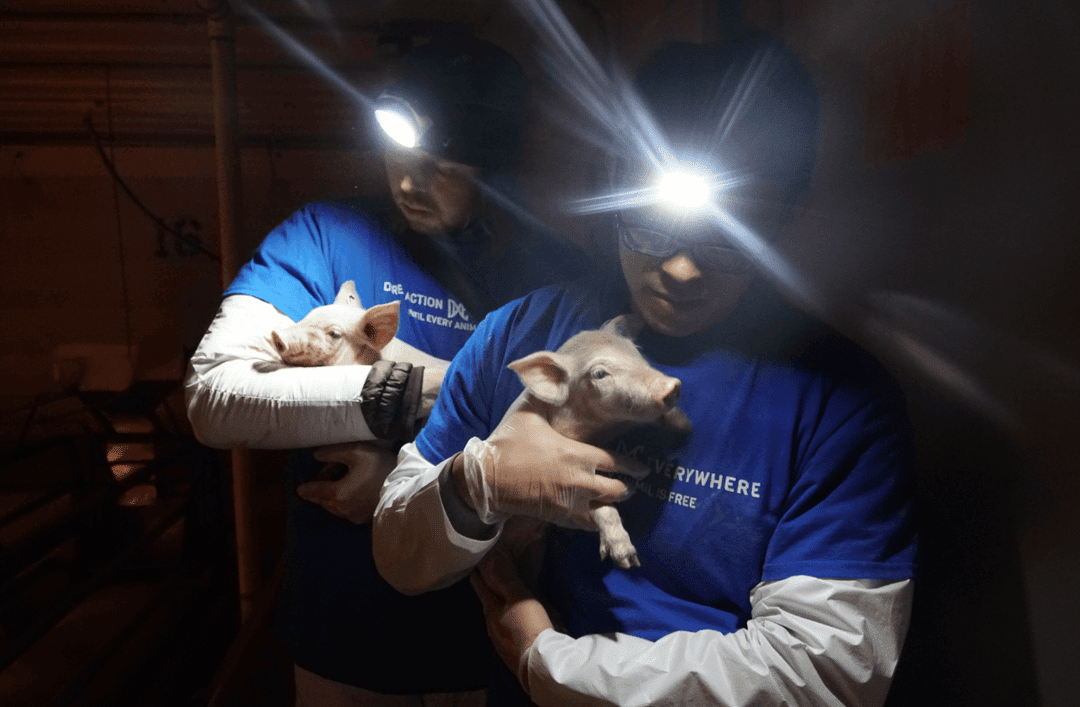
To be specific, there are specific actions that could further the many forms of social justice, benefitting humans and nonhumans alike: Open rescues at factory farms in extremely oppressed communities timed with Fair Start resource-demand occupations targeting the concentrations of wealth and power that own the farms; climate reparation interventions targeting pro-growth interests to pay climate restoration-level amounts to ensure birth equity; flash-mob demands that executive directors at large nonprofits who shilled for concentrations of wealth and power tell the #wholetruth about what they did.
Many advocates choose to orient from and reify unjust systems that exploit animals, rather than confronting and overcoming those systems even in simple and incremental ways. But protest and other direct action movements can be more effective than the best charities, a truism that – in the context of animals – relies on the incredible transparency activists can create.
All of this is to say that if we are going to fight for animals we owe them an examination of all assumptions, and a backing out from those assumptions to assessing raw power in its naked form, and how to limit it – for their sake and ours.
So if we wish to make the world a better place, we have to change the way we plan families.
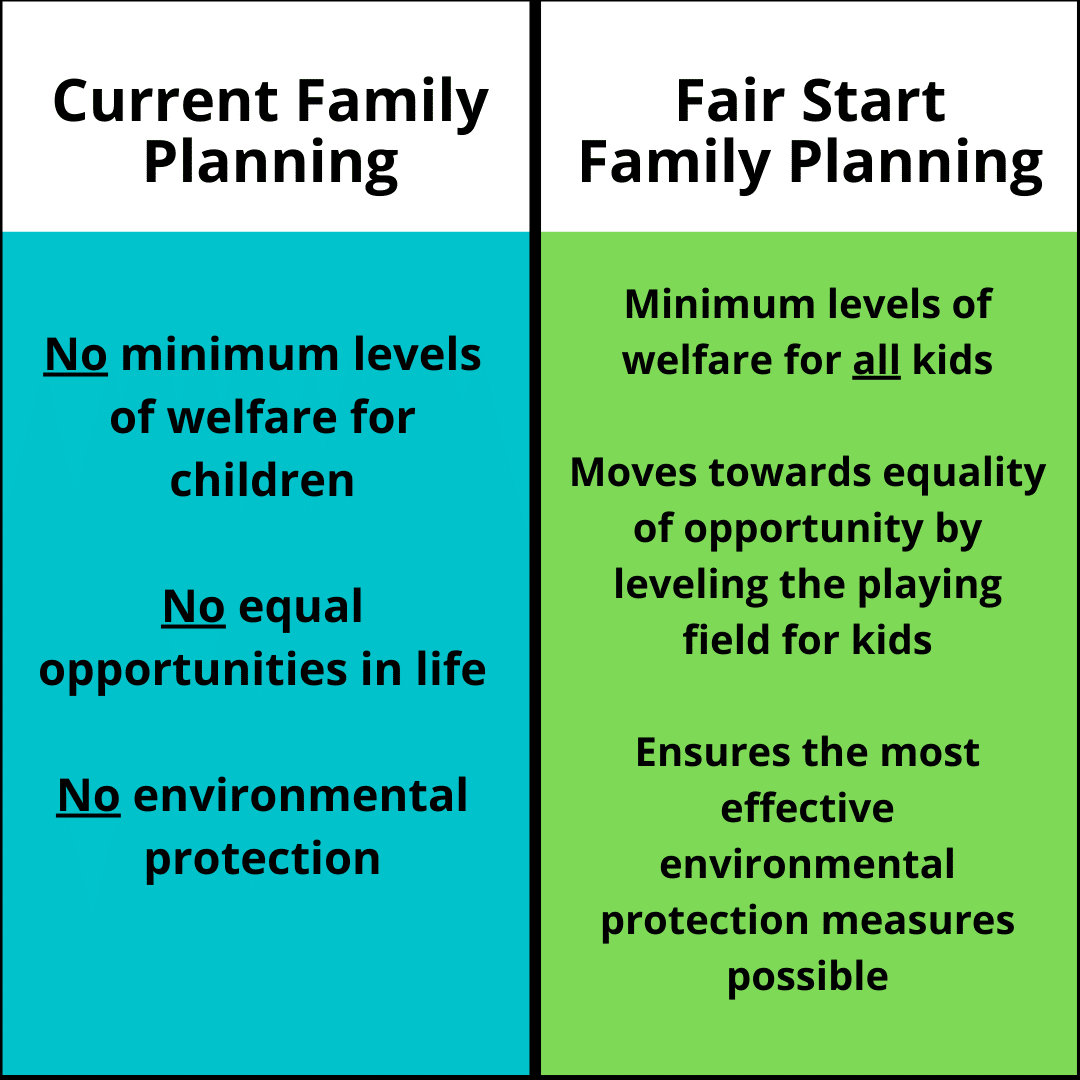
Fair Start helps shift unjust concentrations of wealth and power towards funding policies that instead empower all children with equal opportunities in life and a natural, biodiverse environment, by incentivizing and entitling well-planned, well-located, sustainable and more equitable families. In short, we promote fundamental justice and freedom by actually accounting for, and improving, fundamental power relations between people, and between people and their ecologies. This is not charity – this is fundamental justice, or ensuring that the true costs of wealth are paid back into communities in the most effective way possible.
Dietary change also does little to ensure equal opportunities among children, or to build democracy.
The complaint and update make a few simple demands:
First, the United Nations must treat the correct interpretation of universal family policies (which should require climate restoration through birth equity redistribution of wealth in the form of family planning entitlements) as the fundamental and overriding human right.
Second, to admit that the United Nations failure to do this previously led to the climate and inequity crises we face today, including violations of future generations’ right to have children in safe and natural environments, and for that right to be safeguarded in perpetuity.
Third, to endorse loss and damage payments as overriding property rights, if used for the family planning entitlements described above.
Put simply: There is a universal human right that overrides domestic climate policies – most of which are anthropocentric and insufficient – in part because climate emissions do not respect borders and the “business as usual” approaches most governments and groups use disproportionately harm the peoples and nations least responsible for the crisis.
Be effective.
As the update argues:
One clear step towards compliance with the best interpretation of Article 16 (the right to found a family) would be to urge that programming around the education of young women – throughout the world – begin with ensuring they know that all children’s right to an ecosocial Fair Start in life (defined by concrete climate restoration and birth equity measures) – now and for generations to come – overrides all competing rights and interests as the first and peremptory human right, including any conflicting property rights.
Does being vegan mean not eating animals and other forms of consumerism, or something more? It could mean a much greater obligation.
Peter Singer has promoted consumption-based veganism, quite effectively. We can summarize that approach as: “We should help animals by not eating them.” But that claim fails if the intent is to, all-things-considered, help animals because the “we” in it – the unspoken norm of an unlimited right to have children which permits population growth, a norm and relations Singer tacitly accepts – does more harm to animals than changing diets does good.
That’s the constitutive fallacy at play. When we create people we are also creating the fundamental power relations between them, and in a way that precedes written constitutions or other binding sets of rules. If we want justice, bottom-up in the style of true democracy, just creation must come first. And that mistake – not requiring things like the Children’s Convention standard in family planning policies to improve those relations, which would physically constitute just communities – does more than just harm animals. It fundamentally permits anthropocentric changes that cause irrefutable harm to all, against an absolute standard like infant health.
Singer fails because he did not push for what true animal liberation, the title of his famous book, requires: Restoration of the nonhuman world through family planning entitlements. Had he done so he might have helped mitigate the climate crisis, the greatest threat to nonhumans.
Think of it this way: The same growth and intergenerational inequity that degraded the ability of democracies to represent their people and respond to the climate crisis also undid much of the progress in emissions reduction that was attempted. We failed because we were not constituted, on many levels, to respond.
Don’t confuse chaos with freedom. Truly free people will fundamentally limit and decentralize the power (including subtle power like climate emissions, the impact of bad parenting on communities, massive disparities of wealth, etc.) others have over them, and by all means effective. And that starts with who is born into our societies, and the degree to which we actually empower them. Free people – on both ends of that creation – will condition their obligation to follow the law on their actually being empowered, assessed via a simple inversion test, in functional democracies. And we can empower people by overriding property rights – which are contingent on our constituting democracies where we are actually empowered – to fund better family planning.
The solution to the constitutive fallacy is holding ourselves at optimal population ranges, which if we use Fair Start modeling will ideally reflect just power relations, at the same time.
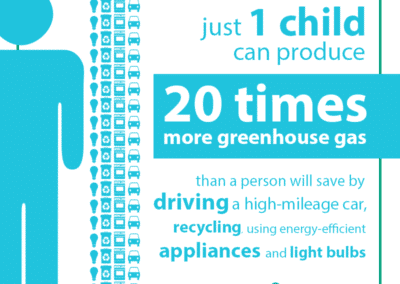
The population-driven climate crisis will do more harm to wild big cat populations in the long run than the Act can do good. Although the act protects current species of cats from being unnecessarily overbred and domesticated, it does not address threats that still exist through the interactions humans have with the environment, as shown by the infographic below.
Changing these interactions begins with us. Truly liberating big cats means reversing their slide towards extinction by promoting and funding incentives that create a universal ethic of sustainable and economically equitable human families, loving families that build empathy in children.
Let’s not undo progress for animals with growth-based policies, pushed by some animal advocates. Let’s not trick ourselves – growth is undoing progress.
Don’t confuse chaos with freedom. Truly free people will fundamentally limit and decentralize the power (including subtle power like climate emissions, the impact of bad parenting on communities, massive disparities of wealth, etc.) others have over them, and by all means effective. They will condition their obligation to follow the law on their actually being empowered, assessed via a simple test, in functional democracies.
Not only are there more animals being abused than there were decades ago, in almost every sector of animal rights, but the climate crisis threatens more animal suffering than any other form of human impact. Many leaders in animal rights like Joyce Tischler have spoken out for family reforms.
Animals Do Not Benefit from Human Population Growth. Why Do Their Advocates Promote It?
I have actually talked to funders and the heads of nonprofit groups they support who knew growth-based family policies were doing more harm to animals than things like dietary veganism were doing good, but who were choosing to ignore that because they were making money – selling vegan products – on that growth. I have met with funders and animal advocates who have relatively wealthy children, children who are in the process of inheriting even more wealth or positions of influence they did not earn. Those funders and advocates are now choosing to reject birth equity family entitlements that would not only level the playing field for all kids but also save billions of animals long-run by promoting family planning. They are choosing unearned privilege over the animal protection they claim to support.
How? If we accept that government derives from the people who derive from their creation, there is one clear path: By moving wealth from the top (from the men who took it from women and children) to pay parents to be ready before they have kids, to work to level the start line between rich and poor kids, and to promote a universal ethic of sustainable families.
Help us target those pre-cons – groups like Exxon – blocking these family reforms, and thus threatening our freedom.
Every week parents are arrested for severely abusing their own young children, in some cases torturing them. In news stories, you may never connect that to the fact that scientists have now determined the world has completely failed to reach its goal of avoiding at least a deadly 1.5C temperature rise due to the climate crisis.
But the truth is the stories are connected.
These problems both flow fundamentally from family policies that do not comply with the Children’s Rights Convention, assuring children – especially infants – the eco-social conditions they need to actually constitute just and free communities in the long run. The Convention functionally requires a natural environment and parents who are ready before they have kids. Nations ignored these requirements in family planning policies to make money by exploiting people as economic inputs. And many charities went along with the lie, often because funders pressured them to.
We are fixing that, targeting unjust concentrations of wealth that formed because of the failed family policies, the ones that allowed massive population growth rather than investing more in women and children.
TAKE ACTION: URGE EXXON TO PAY WHAT IT OWES TO SOLVE THE FUNDAMENTAL PROBLEM DRIVING SO MANY CRISES.