Category: Climate, Environment & Animal Protection

  • Wealthy Public Interest Organizations Helped Ensure the Climate Crisis. Now They Are Hiding Liability.

    Wealthy Public Interest Organizations Helped Ensure the Climate Crisis. Now They Are Hiding Liability.

    It’s common to see public interest organizations and governments challenging greenwashing or humanewashing as a means of protecting the environment. But are they using arbitrary criteria for what is green, or humane? Relative to what standard have they been making progress if we have arrived at the current polycrisis?

    At FairStartMovement.org (FSM) our research has shown that growth – and hiding the impacts of growth through growthwashing – are easily the largest driver of harm to animals and the environment.

    Our research further shows that framing the issue as “growth” itself is inaccurate though helpful to begin to introduce audiences to the issues. Growth is not accurate because people are not reducible to numbers that ignore the more influential relations formed as children enter the world. Those relations present a primarily qualitative issue, one that first has to do with empowerment.

    The growth of the past several decades was first enabled by antiquated “separate but equal” reproductive rights policies that illegally discounted and disenfranchised future lives by ignoring a “one person, one equal and influential vote” standard for intergenerational justice in favor of preserving status quo birth inequity and mostly white generational wealth – harming mostly lives of color. The codification of “separate but equal” between 1948-1968 by the emerging human rights regime represented a power grab by elites to protect generational wealth, and avoid intergenerational justice obligations.

    The move removed any threshold for intergenerational justice that would have maintained empowering conditions, including birth equity, low climate emissions and reasonable representative-ratio levels. The move used a narrow misconception of what it means to be free from power – one that assumed political authority and existing entitlements rather than legitimating them by actually empowering the children born into the world.
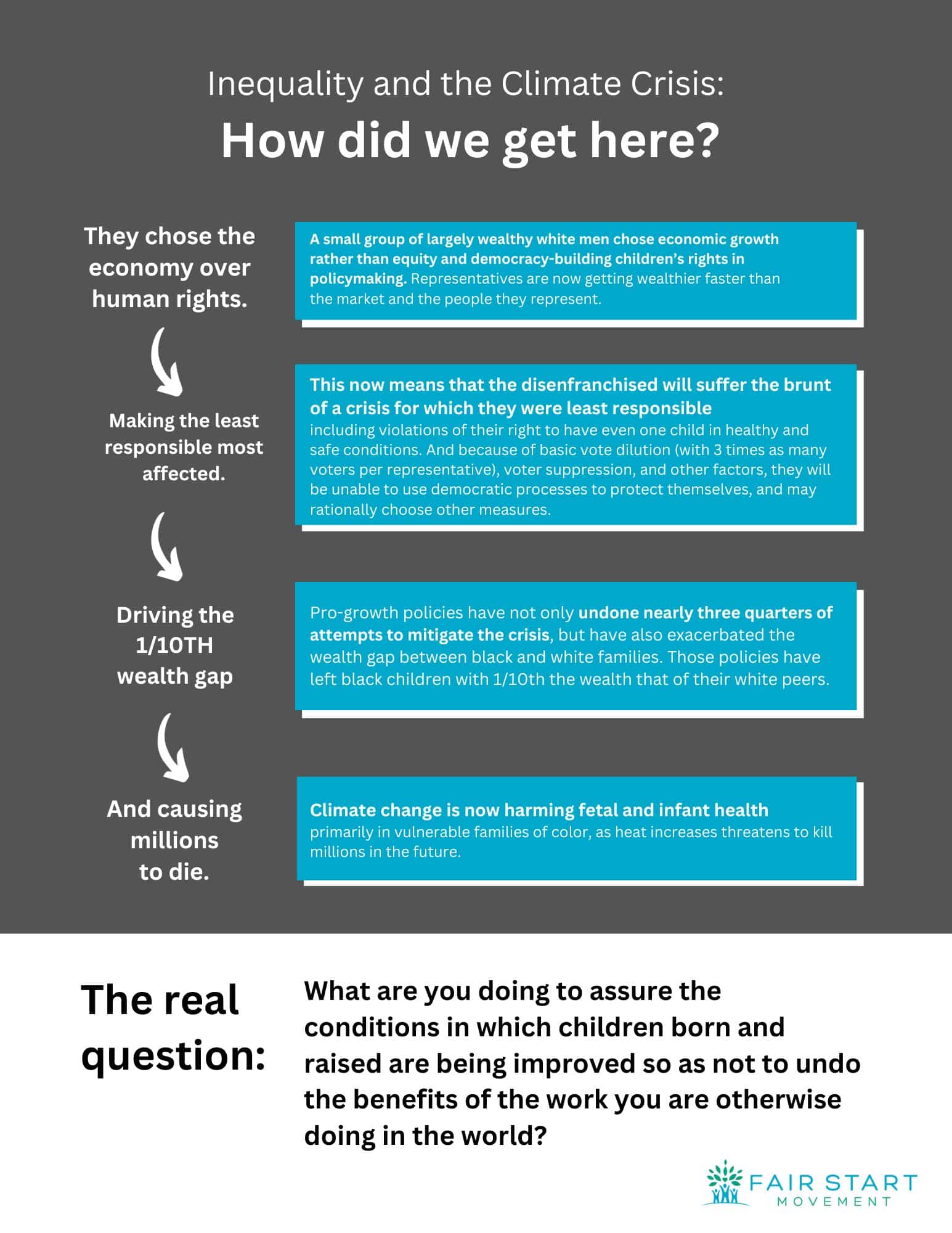
     

    Inequality info graphic


    The policies, by ensuring unsustainable growth that diluted the average role one has in influencing the outcomes of their political systems, commercialized human freedom – basing the idea of freedom around free-market isolation and the disembedding of the person from their political systems, rather than empowerment.

    To understand Illegal discounting / equitywashing we can simply ask: How are we accounting for empowering children as they came into the world at a “one person, one equal and influential vote” level – enough for them to simply vote to end the climate crisis, autocracy, inequity, etc? The notion that they have that level of influence – that they are anywhere near self-determining – is ludicrous. And the fact is, our assessing value and reporting impact without this accounting hid the daily decline, and made it all worse.

    Forget words like sustainable, green, humane, etc. Organizations appear to have never met a basic standard of legitimacy, 

    The problem thus goes beyond growthwashing, into something called equitywashing (or illegal discounting) – the act of 1) assuming children deserve what they are born with rather than what measureable empowerment and political legitimacy requires, and 2) omitting the role of inequitable growth in value assessments and impact claims.

    The alternative was, and is, to treat children entering the world beneath a recognized threshold of measurable empowerment as a constitutionally impermissible cost. It’s treating no child as worth more than another.


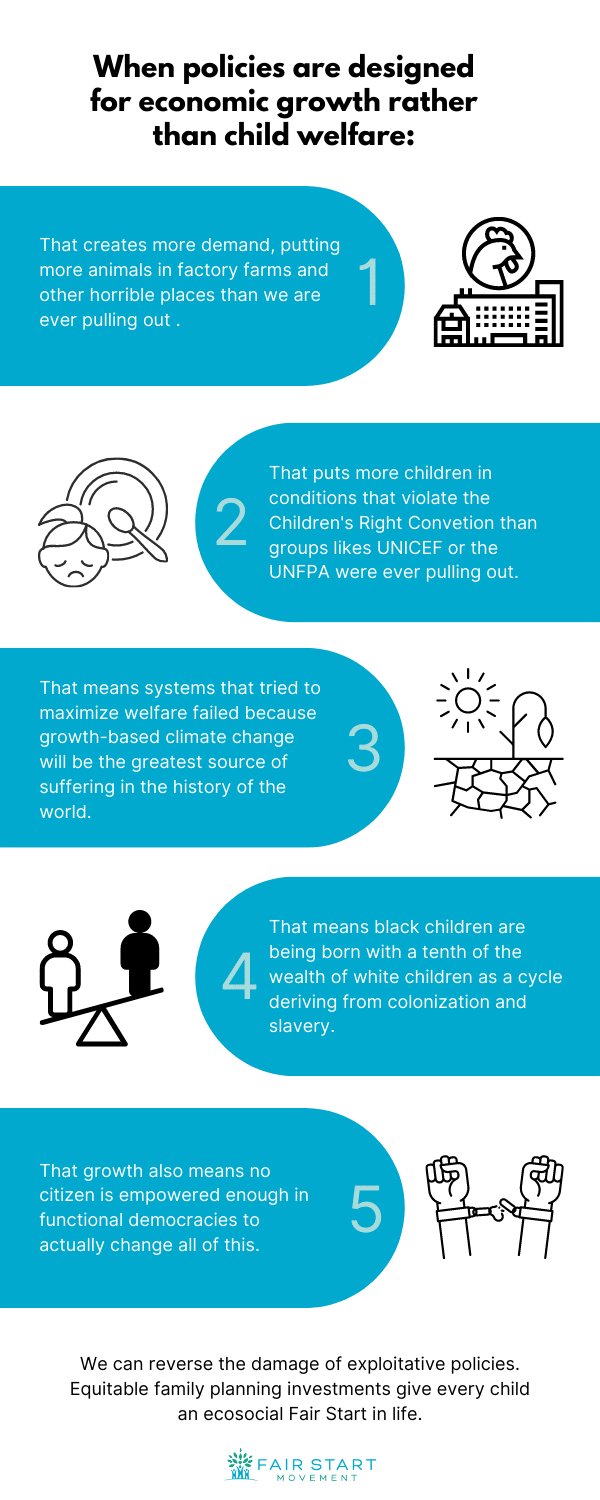
    Don't Get Scammed: Charities, Media and Big Business Use Family Policy to Quietly Undo Progress. Ask This One Question Before Giving, Believing, or Buying Infographic

    Constitutions and treaties don’t create legal obligations, only actually empowering others does that.

    And that empowerment depends on whether we account for its costs, assess value, and report impact accordingly – and thus engage in a truly constitutional discourse. One either accounts for the benefits one enjoys as requiring the measurable empowerment of others, or one does not – and the things we say give away whether we do that, or not.

    We can use the things we say we test whether we are accounting for legitimacy, and AI-assisted tools can help that process.

    Can you think of and describe conditions in which those relations would form that does not involve that accounting? No – that’s impossible, as is being self-determining without truly empowering others. 

    The fix? Because they do not do that, equitywashing leads to false claims that disvalue human and nonhuman lives, and by metrics we all use like safe temperatures, influence over our political systems, equality of opportunity, etc.

    Anyone impacted by those false claims can use consumer protection law to target the claims, and because the underlying business model that causes the claims often violates civil rights and other laws, advocates can use those laws to block use of the underlying model itself. These equity actions trigger something unique: They force governments to decide whether they are are interpreting their laws and own authority as contingent on the measurable empowerment of those subject to that authority – on a one person, one equal and influential vote standard – or choose to use some other standard.

    Those willing to pay the costs of legitimacy could never compete against those who refuse to, but the former don’t have to compete: governance requires empowering those subject to it, and interpreting laws to require the same.

    In 2023 I published several Newsweek articles on illegal baselining / illegal discounting at U.S. nonprofits. I published the article after resigning from the Animal Legal Defense Fund, which had engaged in illegal discounting / equitywashing, and had withdrawn federal litigation that would have forced the organization to deal with the issue.

    Again, the practice of illegal discounting derives from historic subversion of racial justice movements described above, and exponentially reduce environmental damage evaluations, a move that enriches some children – like the children of those funders driving nonprofit agendas – at illegal and deadly cost to the most vulnerable communities in the world.

    The practice is part of a historical trend of nonprofits setting low environmental standards and engaging in performative work, something that now exposes them to liability as the climate crisis unfolds. The situation is exacerbated by a lack of accountability mechanisms – like market forces or constituencies – in philanthropy.
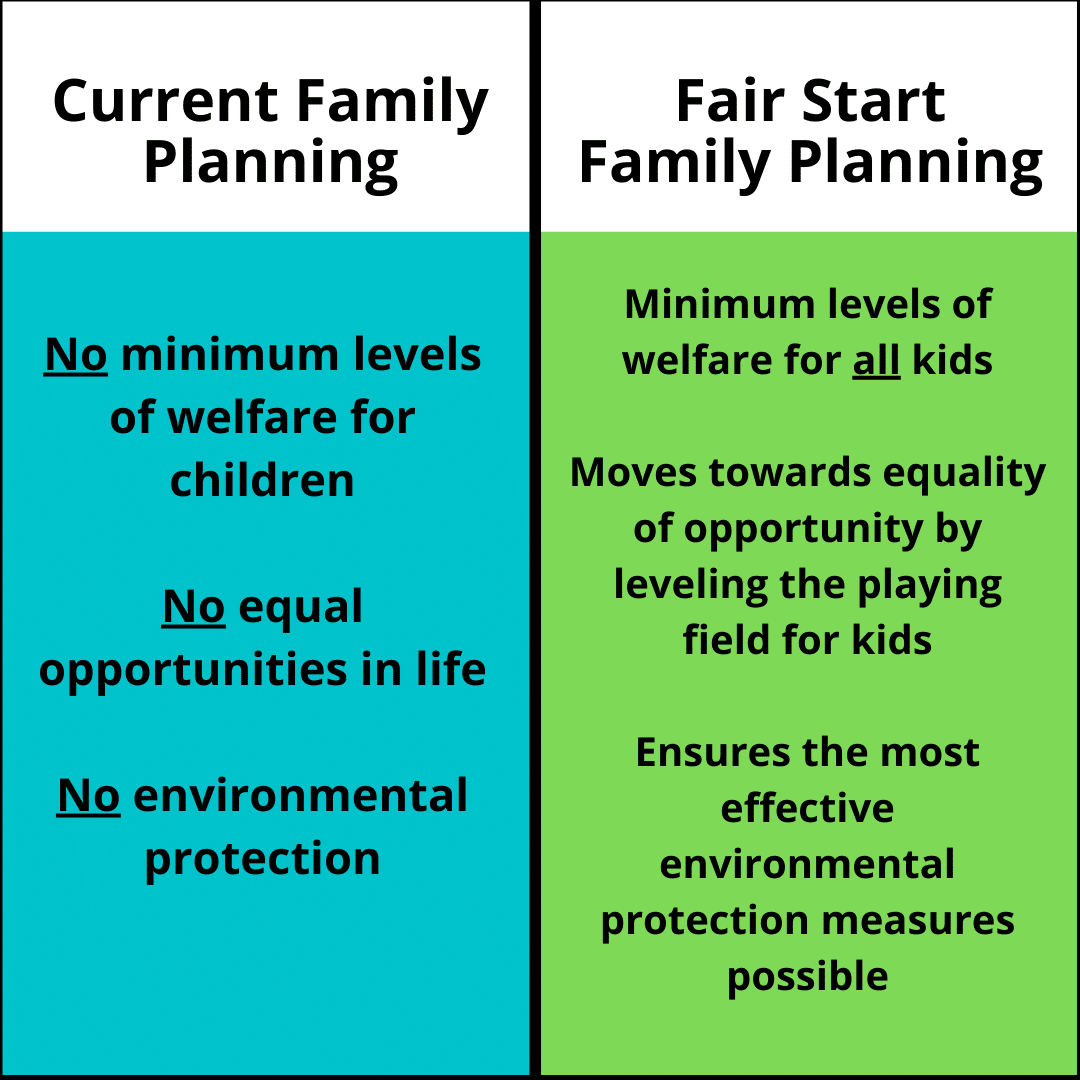
     

    Family Planning info card


    As part of a 2024 fellowship I did with the MAHB at Stanford University, and based on extensive peer-reviewed research, FSM began to publish popular articles on interventions to end the equitywashing/ illegal discounting, and using animal liberation (where one finds the most falsifiable claims) as a vector for change.

    In 2024 my employer, the University of Denver, consistent with their funders’ illegal discounting, retaliated by removing me from a grant I had developed for the University, including extensive planned litigation, and I resigned my position. The animal law programming, including how it assesses and reports value, represents the use of wealth made through a birth-inequity system to create a charade version of animal liberation, one that by preserving the status quo, does vastly more harm to animals than the program does to benefit them.

    It provides a window into how the polycrisis formed, and at the most fundamental level: How we value others, and assess and report our impacts on the world.

    In 2025 around litigation I helped bring against Coca Cola, Inc. for equitywashing, I began a fellowship at Emory University based on a forthcoming book on using a “preemptive constitutional discourse” about what it means to empower future generations as a requirement for national legitimacy. The research is built into a tool: FalseClaimsChecker.org. This work is designed to use clearly out-of-context impact claims to get at and preempt the underlying modeling using a simple “one person, one vote” standard to block the illegal discounting and equitywashing under state law, using unfair competition litigation.

    Said simply, the tool looks for fake numbers in claims, which originate from the false assumption that there is any form of freedom outside of being birth-empowered to a level of political self-determination. It’s accurate to call those numbers “fake” or “false” because they derive from the legal fiction that having children is more determinative for the parents than the children born or communities they come to comprise, with no level of infant-health-as-enfranchisement (relative to a neutral or zero position) required. Infants arbitrarily born into deprivation relative to others – racially, generationally, nationally, etc. – are not constitutionally positioned to be relatively self-determining, or part of a legitimate, inclusive, and empowering system.

    Our research now shows false claims by prominent public interest advocates dating back decades.
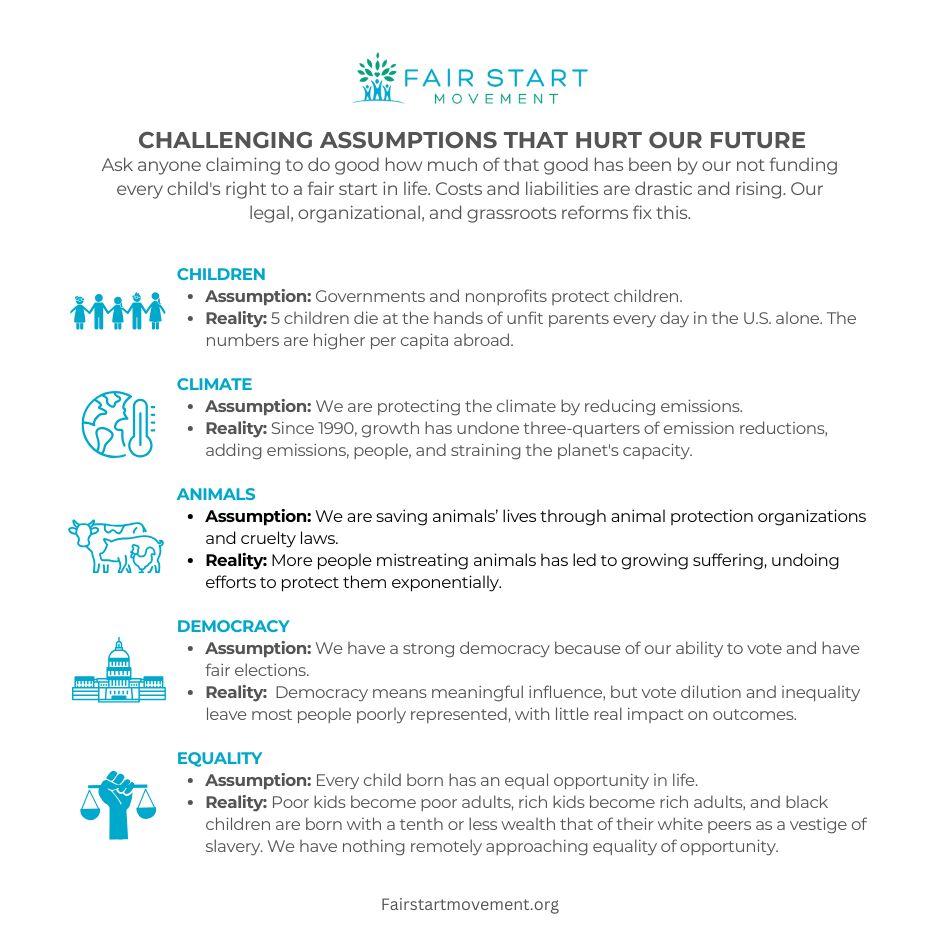
     

    Challenging assumptions that hurt our future infographic

    In 2026 the funder I had brought on at the University of Denver and various allies made public demands on the University of Denver – including threatening the first ever political equity /constitutional injunction litigation.

    In 2026 the Coke litigation terminated in-part because of a lack of funding from animal protection philanthropists avoiding the equitywashing issue, but the University of Denver returned key donor funds, and TruthAlliance.global is now making renewed public demands on the school to end its illegal discounting – in part because it constitutes unfair competition, and violates state and federal civil rights laws.

    This work has now culminated in an open letter and forthcoming campaign to urge Coca-Cola, Inc. to end illegal discounting.

    The efforts, unlike other campaigns, account for how the the public interest sector – from government, to philanthropy, to nonprofits – enabled many of the current crises because the sector used no fixed baseline or goalpost in assessing public interest outcomes and equitywashed by failing to adhere to the legal “floor”of a one person, one equal and influential vote standard. This is evident in looking at simple metrics like permissible climate emissions, minimum standards for early childhood development, functional representative ratios for political systems, etc. against the legitimacy, or legitimacy/child empowering, standard.

    Instead public interest organizations use and have used constantly moving goalposts to ensure the ability to claim progress, and justify their positioning. That’s illegal, and  flows from the racist “separate but equal” standard and policy embedded in near-universal reproductive rights systems which acted to protect generational wealth (particularly at foundations), and which accepted as a given that children of color deserve fewer resources, more risk, and diminished influence in their political systems.

    Performative public interest interventions, equitywashing, and illegal discounting are costing lives.

    Key public interest organizations face serious liability for decades of false claims, and are now taking actions to hide it. FSM activists have been removed from public interest fora, seen Wikimedia pages deleted, have had funders drop their funding, have seen their social media posts censored – and many other forms of retaliation – all for raising these questions. 

    Our experience has shown that like any sector, public interest entities will not only avoid admitting their mistakes, and as detailed in current proceedings before the African Union, will in many cases attempt to sabotage revelations of those mistakes.

    TAKE ACTION: If you are supporting a public interest organization, assess their claims using FalseClaimsChecker.org and urge them to end illegal discounting.

    In most cases, the discounting does more to harm their stated missions than they do to further them. An easy way to start the process is through the Tell the Truth and Commit Campaign – in which we simply admit that illegal discounting did more to harm our values than we did to further them, and commit to treating children entering the world beneath a threshold of legitimating empowerment as constitutionally impermissible. 
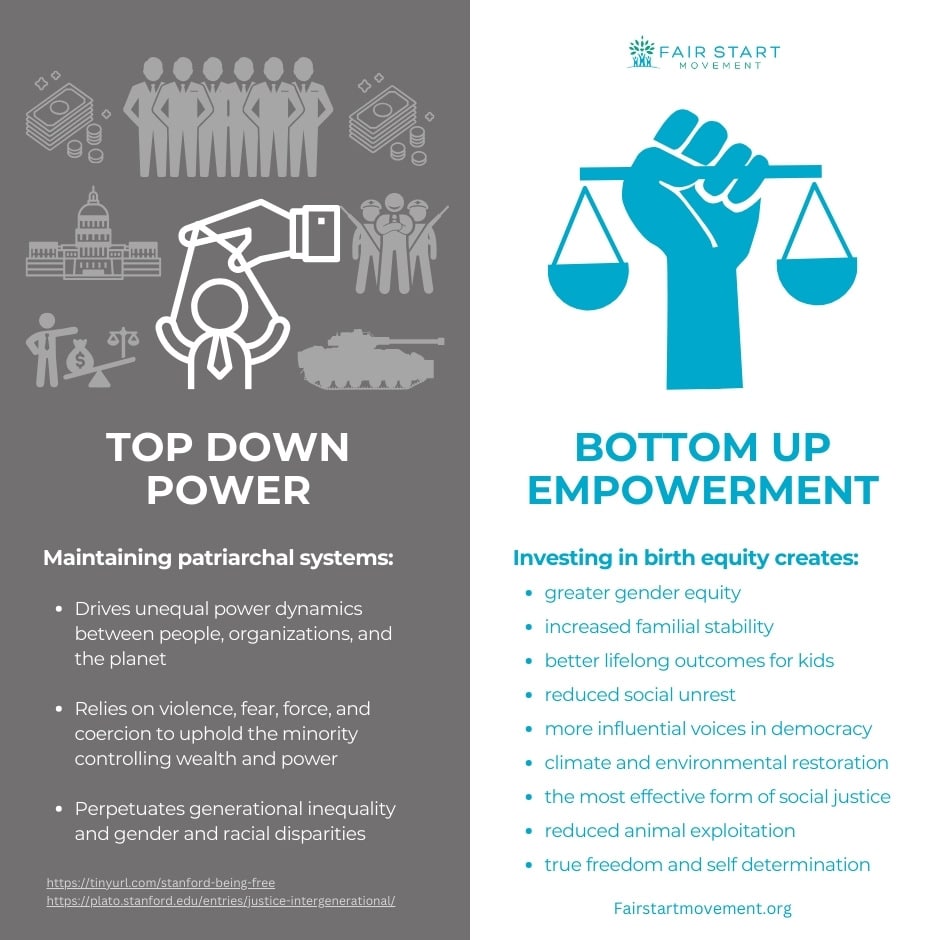
     

    Top Down Power and Bottom Up Empowerment infographic


  • Fighting For The Future Saving Animals, Nature, Future Generation, the Real Truth, a Letter Harvard – Letter Included

    Fighting For The Future Saving Animals, Nature, Future Generation, the Real Truth, a Letter Harvard – Letter Included

    Right now, across the world, people are beginning to open their eyes and realize something bigger is happening. We are being told humanity is progressing, that justice is advancing, that the world is becoming fairer — yet every day I see people struggling to survive, wildlife losing habitats, children being born into inequality, and entire ecosystems pushed closer to collapse.

    Dying zebra from climate drought and starvation with two people looking concerned

    People are no longer just looking for hopeful words and polished campaigns. They are looking for truth. Real truth. Because if we truly want to save animals, protect people and give future generations a fighting chance, then we must have the courage to ask whether the systems shaping this world are actually creating meaningful change — or simply becoming better at marketing the appearance of it.


    having kids vegan

    That is the deeper conversation now being raised by the Fair Start Movement in relation to Harvard University and what the organization describes as a “fantasy world of social justice undone daily by birth inequity.”

    This is not about attacking good people.

    There are countless students, researchers, activists and educators who genuinely want to make the world better. Many dedicate their lives to helping vulnerable communities, challenging injustice and fighting for equality. That work matters. But the wider concern being raised is whether some institutions have become too focused on presenting narratives of progress while failing to fully confront the structural systems continuing to produce inequality underneath the surface.

    And that matters more than ever right now.

    The Fair Start perspective argues that many social justice institutions focus heavily on downstream solutions — programs, campaigns, reforms, diversity initiatives and public advocacy — while the upstream conditions driving inequality continue growing stronger every year.

    In simple terms, we may celebrate individual victories while the larger system producing suffering remains largely untouched.

    climate crisis kids

    That is where the idea of “birth inequity” becomes central.

    The argument is that children are not entering the world on anything close to equal ground. Some are born into safety, wealth, opportunity and political influence. Others are born into poverty, instability, environmental decline and systems already stacked against them from the beginning.

    Mom with newborn baby; love

    And as climate instability, economic inequality and ecological collapse intensify globally, those gaps only grow wider.

    The concern being raised is that institutions can sometimes unintentionally create the appearance of meaningful progress by measuring outputs rather than genuine net outcomes. A university can point to programs launched, scholarships funded or initiatives promoted, but the deeper question remains: are the structural conditions affecting future generations actually improving overall?

    Because that is the truth people are beginning to search for now.

    Not branding.

    Not polished narratives.

    Not carefully managed public relations.

    Truth.

    The reality is that across the world we are seeing ecosystems pushed to breaking point. Wildlife is disappearing at terrifying speed. Communities are struggling under economic pressure. Young people are growing up with uncertainty about their future, while millions of children are born into conditions where survival itself becomes harder every single year.

    And yet many institutions continue presenting narratives that suggest society is steadily moving toward fairness and sustainability.

    That disconnect is what people are starting to question.

    For those of us working directly with wildlife and vulnerable communities, these realities are impossible to ignore. I see firsthand how deeply connected everything is. When forests disappear, communities suffer. When inequality grows, ecosystems come under pressure. When people are desperate, wildlife suffers too. The survival of humanity and the survival of nature are tied together whether we acknowledge it or not.

    That is why transparency matters.

    Not to tear institutions down.

    Not to shame people trying to help.

    But to ensure that the work being done in the name of justice, sustainability and equality is actually capable of creating long-term change in the real world.

    The Fair Start discussion ultimately asks a powerful question: are institutions willing to fully examine whether the outcomes they promote publicly still hold true once the wider baseline realities are honestly accounted for?

    Because if we truly care about future generations, then we cannot build systems based only on appearances.

    We need courage.

    The courage to question whether the current path is truly sustainable.

    The courage to confront uncomfortable truths about inequality, growth and ecological decline.

    And the courage to build a world where justice is not simply something spoken about in lecture halls or campaign slogans, but something reflected in the actual conditions people, animals and future generations are living through every day.

    That is the kind of future worth fighting for.

    Several childrens hands placed together in a supportive gesture over a wooden surface, with text reading, The most powerful social justice is a fair start in life. Join the coalition. Logo and Having Kids appear at the bottom.

    A future built not on illusion, but on truth.


    Letter –

    May 8, 2026

    Attorney General Andrea Joy Campbell
    Office of the Attorney General
    Commonwealth of Massachusetts
    One Ashburton Place, 20th Floor
    Boston, MA 02108

    Re: Request for Attorney General Review of Directional Impact Representations and Baseline Omission in Massachusetts Animal-Welfare Institutional Communications Under Chapter 93A

    Dear Attorney General Campbell,

    Fair Start Movement and TruthAlliance.global submit this letter to request review and guidance concerning a specific and recurring pattern in Massachusetts-based institutional communications: the creation of a directional impression of progress through public-facing language that does not disclose the baseline conditions necessary to interpret whether that progress is occurring on balance.

    This submission is narrow and disclosure-focused. It does not allege improper motive, and it does not dispute that the institutions discussed perform real work, expend real resources, and achieve identifiable outputs. The issue is whether public-facing representations—particularly those that operate in donor-facing, student-facing, or credibility-bearing contexts—are structured in a way that invites reliance on an implied trajectory of improvement without providing the baseline information required to evaluate that implication.

    The concern arises from a consistent pattern across multiple Massachusetts institutions. Language is often framed carefully to avoid explicit, measurable outcome claims. Terms such as “committed to,” “working to,” and “seeking to advance” appear frequently in institutional descriptions of animal-law programming and advocacy. At the same time, that language still communicates something to a reasonable reader. It conveys forward motion. It signals that progress is being made, or at minimum that support for the institution contributes to that progress. That signal influences behavior. It shapes donation decisions, student enrollment, partnerships, and policy attention.

    The problem is not the use of aspirational language itself. The problem is that the directional impression created by that language is not accompanied by the context needed to determine whether the implied progress is occurring when broader conditions are taken into account. Public-facing materials do not typically disclose the scale of countervailing forces—continued expansion of animal agriculture, growth-driven demand, ecological degradation, and structural conditions that perpetuate harm across generations. Without that context, the impression created by the language may be materially incomplete.

    This dynamic becomes more pronounced where institutions move from aspirational phrasing into definitive outcome language. In Massachusetts, MSPCA-Angell provides a clear example. The organization describes itself as “positively impact[ing] the lives of tens of thousands of animals each year” and as driving “meaningful, systemic change.” These are present-tense outcome statements. They communicate that impact is occurring and that systems have changed. At the same time, the organization has publicly disclosed that it no longer tracks the metrics used to measure its results. The combination of definitive outcome language and the absence of outcome measurement creates a gap between the impression conveyed and the substantiation available. That gap is not theoretical. It exists at the point where donors decide whether to contribute, and where the public decides whether progress is being achieved.

    A similar issue arises with quantified claims made by Humane World for Animals. Statements that millions of meals have been transitioned or that over a million animals have been improved are specific and concrete. They communicate progress through numbers. But those numbers operate within a broader system that is not disclosed alongside the claim. If the total scale of animal agriculture or confinement grows by more than the improvements cited, the directional impression created by the numbers may not reflect the net trajectory. The claim itself may be accurate in isolation. The impression created by the claim, absent baseline context, may still be incomplete.

    Across these examples, the same structural issue appears. Public-facing communications operate at the level of narrative, while the conditions necessary to interpret that narrative—what is counted, what is excluded, what baseline governs the claim, and how competing forces affect the outcome—are not disclosed at the point of reliance. This is the baseline omission problem. It is not a dispute about values. It is a question of whether the information environment in which decisions are made is complete enough to support those decisions.

    Massachusetts General Laws Chapter 93A provides a framework for addressing this issue. The statute does not require that a statement be literally false to be actionable. It encompasses conduct that creates a misleading impression through omission of material information. Where a representation invites reliance and the meaning of that representation depends on context that is not disclosed, the omission may be material if it would change the understanding of a reasonable audience.

    In this context, baseline conditions are not peripheral details. They are the elements that determine what the claim means. They define whether a statement reflects activity, projected contribution, or demonstrated net outcome. When those elements are absent, the resulting impression may be incomplete in a way that affects decision-making.

    This submission therefore requests that the Office consider whether directional impact representations in Massachusetts animal-welfare communications should be evaluated under a material-omission framework when they omit baseline conditions necessary to interpret implied progress. The request is not for punitive action based on isolated statements. It is for a structured review of whether current practices create reliance risks that can be addressed through disclosure.

    Specifically, we request that the Office consider initiating a Chapter 93A review of how animal-welfare institutions in Massachusetts communicate impact and progress, with attention to whether those communications distinguish between program outputs and net outcomes once baseline conditions are accounted for. We further request consideration of whether guidance should be issued clarifying that aspirational and outcome-oriented language can create materially incomplete impressions when baseline conditions are omitted.

    In addition, we request that the Office review MSPCA-Angell’s use of definitive outcome language in light of its disclosed cessation of outcome measurement, and that it examine whether quantified claims by Humane World for Animals create directional impressions that are supported when evaluated against broader system-level trajectories.

    The remedy sought is disclosure-forward and corrective, not punitive. The objective is to ensure that when institutions communicate impact, the public is provided with the information necessary to understand what that impact means and what it does not mean. This can be accomplished through baseline disclosure: clear statements of what is counted, what is excluded, the time horizon used, the presence of uncertainty, and the distinction between outputs and net outcomes.

    Fair Start’s Tell the Truth framework provides one model for this approach. It asks institutions to align public claims with the baseline conditions that determine their meaning, so that reliance is based on complete information rather than directional impression alone. The framework is designed to be applied cooperatively, allowing institutions to maintain their advocacy while improving the clarity and integrity of their communications.

    We recognize that the institutions discussed are respected and perform meaningful work. This request does not challenge that work. It addresses the structure of the information environment in which that work is presented. Where public trust is involved, clarity is not optional. It is the condition that allows that trust to function as intended.

    We respectfully request confirmation of intake and identification of the division or bureau assigned for review.

    Respectfully submitted,

    Suriya Khan
    Fair Start Movement / TruthAlliance.global
    suriya@fairstartmovement.org
    516-725-3157

  • Inequality, Philanthropy, Animal Protection, The Letter To Yale

    Inequality, Philanthropy, Animal Protection, The Letter To Yale

    There is a growing conversation happening across the world about justice, inequality and the stories institutions tell about progress.

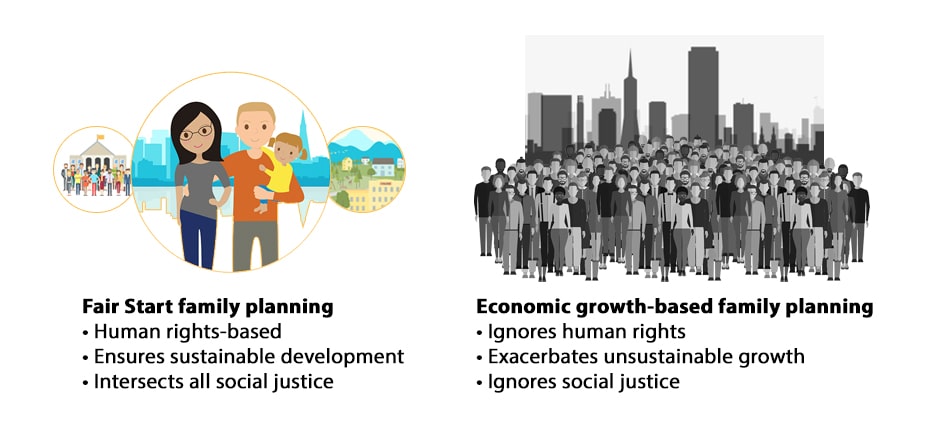
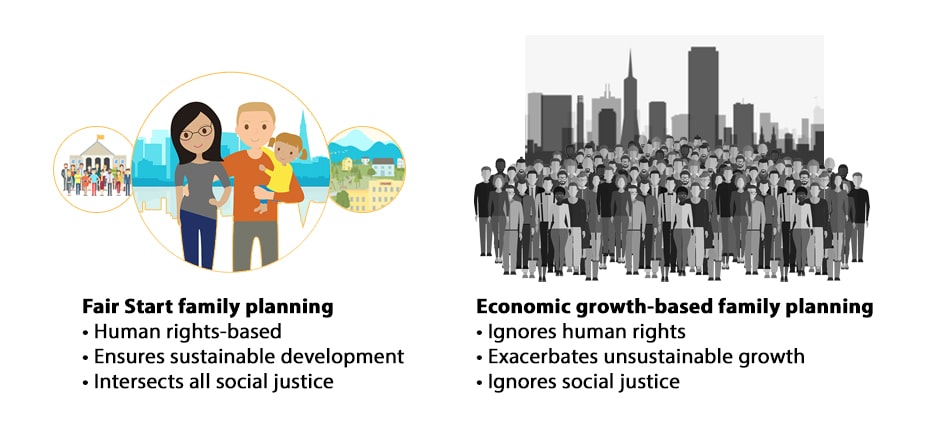
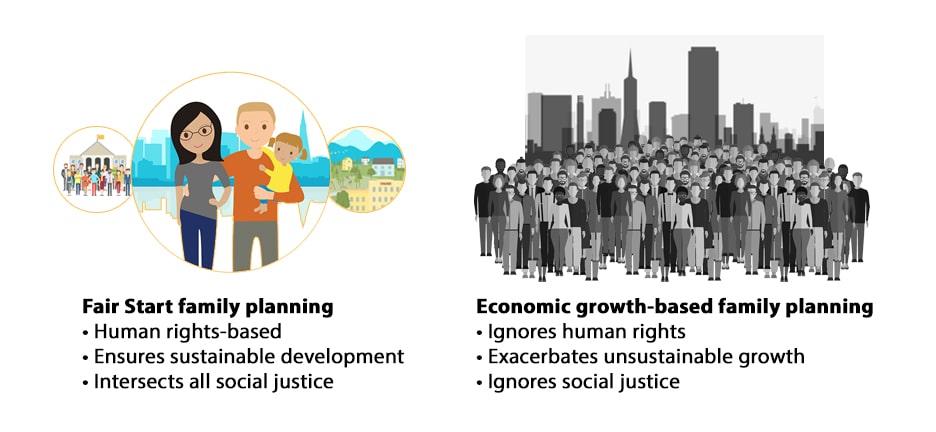
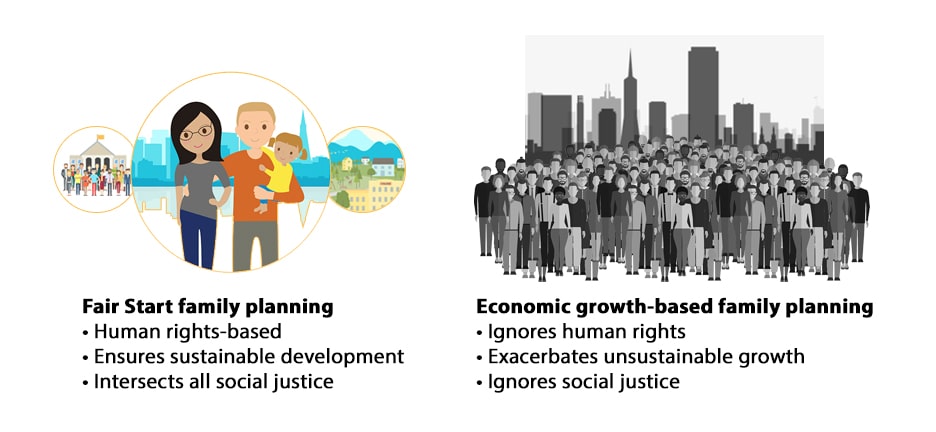
    Illustration compares fair start family planning, showing a diverse family and children, with economic growth-based planning, showing a large, crowded, grayscale group in a city. Lists pros of fair start and cons of growth-based planning.

    Not just in climate activism or animal protection, but in universities, nonprofits, philanthropy and social justice movements themselves.

    People are beginning to ask a difficult but necessary question:

    Are we truly addressing the root causes of suffering and inequality, or are we building narratives of progress while the underlying systems continue producing harm every single day?

    That question sits at the heart of the recent Fair Start Movement article discussing Yale and what the organization describes as a “fantasy world of social justice undone daily by birth inequity.” (Fair Start Movement)

    Importantly, this conversation should not be framed as an attack on individuals trying to create positive change. Many people working in academia, social justice advocacy and philanthropy genuinely care deeply about equity, human rights and creating a better future. Many dedicate their lives to helping vulnerable communities and challenging injustice.

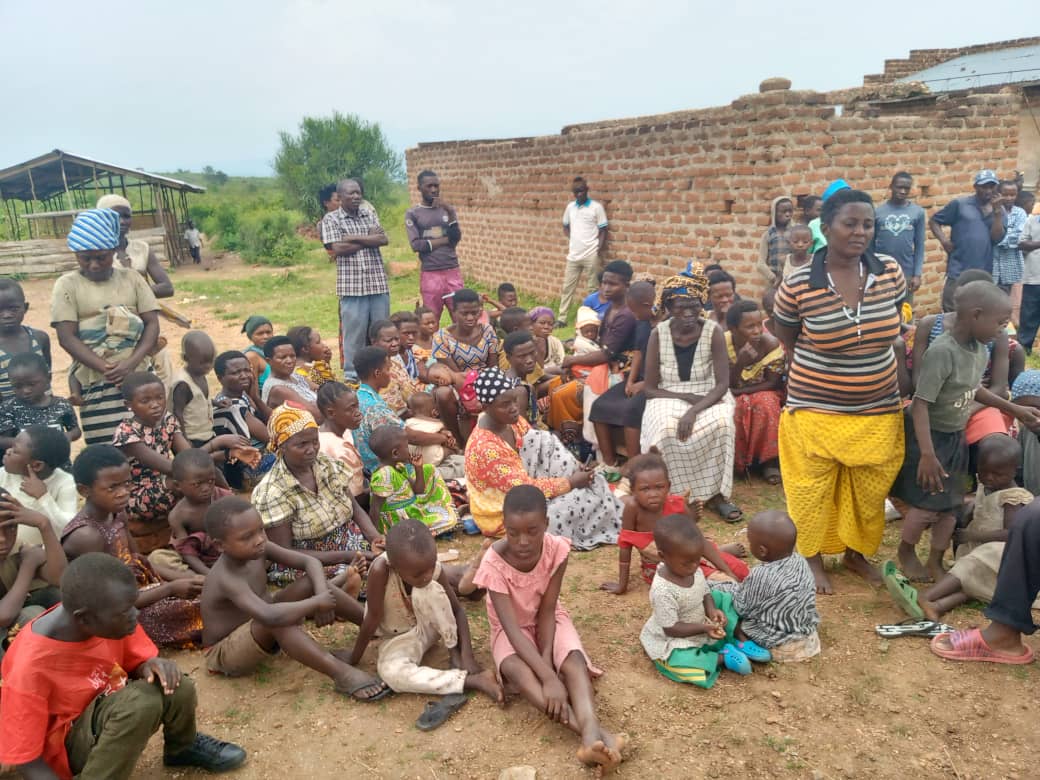
    People sitting around in a circle, a neglected community

    But the article raises a broader systems-level concern.

    It argues that many public-interest institutions may be measuring impact inside incomplete frameworks that fail to fully account for the structural conditions shaping real-world outcomes — particularly inequality at birth, political inequity and the long-term effects of growth-driven systems. (

    At the center of Fair Start’s argument is the idea that “downstream” social justice work can be continuously undermined if the “upstream” systems driving inequality remain unchanged.

    In simple terms, organizations may celebrate important victories — expanded rights, educational initiatives, diversity programs, environmental reforms or social justice campaigns — while larger structural conditions continue reproducing inequality underneath the surface. According to the movement, this creates a perception of progress that may not fully match the deeper realities experienced by the most vulnerable communities.

    The article places particular emphasis on what it calls “birth inequity.”

    This refers to the reality that children enter the world under vastly unequal conditions depending on wealth, race, geography, political influence and environmental stability. Fair Start argues that these starting conditions profoundly shape health, opportunity, democratic influence and long-term survival itself, especially as climate instability and ecological degradation intensify globally.

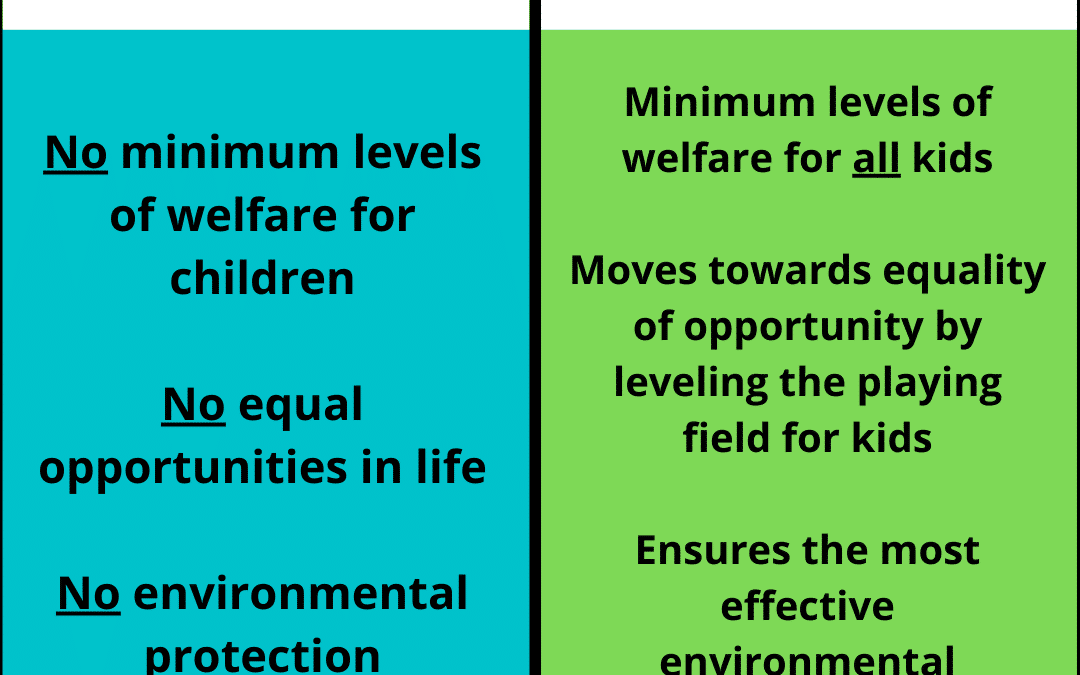
    Two columns compare outcomes. Left (blue): No minimum levels of welfare for children. No equal opportunities in life. No environmental protection. Right (green): Minimum welfare for all kids. Equality of opportunity. Environmental protection.

    The broader concern being raised is that many institutions discuss justice without fully accounting for these baseline inequalities.

    From the Fair Start perspective, if systems continue allowing millions of children to enter conditions of severe inequity, then downstream reforms alone may struggle to produce meaningful net progress over time. The movement argues that many public-facing impact claims fail to fully disclose how structural growth, ecological degradation and political inequality may be undoing the very outcomes organizations publicly celebrate. (Fair Start Movement)

    Whether one agrees entirely with Fair Start’s framework or not, the deeper questions being raised are significant.

    How should institutions measure progress honestly?

    How do we distinguish between symbolic progress and systemic transformation?

    And how do we ensure that public trust is grounded in transparency rather than carefully managed narratives?

    These are questions that are becoming harder for society to ignore.

    Across the world, people are watching ecosystems deteriorate, inequality deepen and political trust erode, even while institutions continue presenting optimistic narratives about sustainability, justice and progress. Increasingly, there is public demand for more honest conversations about whether current systems are truly addressing the root causes of the crises humanity now faces. (Fair Start Movement)

    For those of us working directly with animals, conservation and vulnerable communities, these realities are impossible not to see.


    mass extinction take action

    We see humans and wildlife increasingly competing for shrinking resources. We see communities struggling under economic and environmental pressure. We see ecosystems under stress. And we see how inequality and ecological collapse are deeply connected.

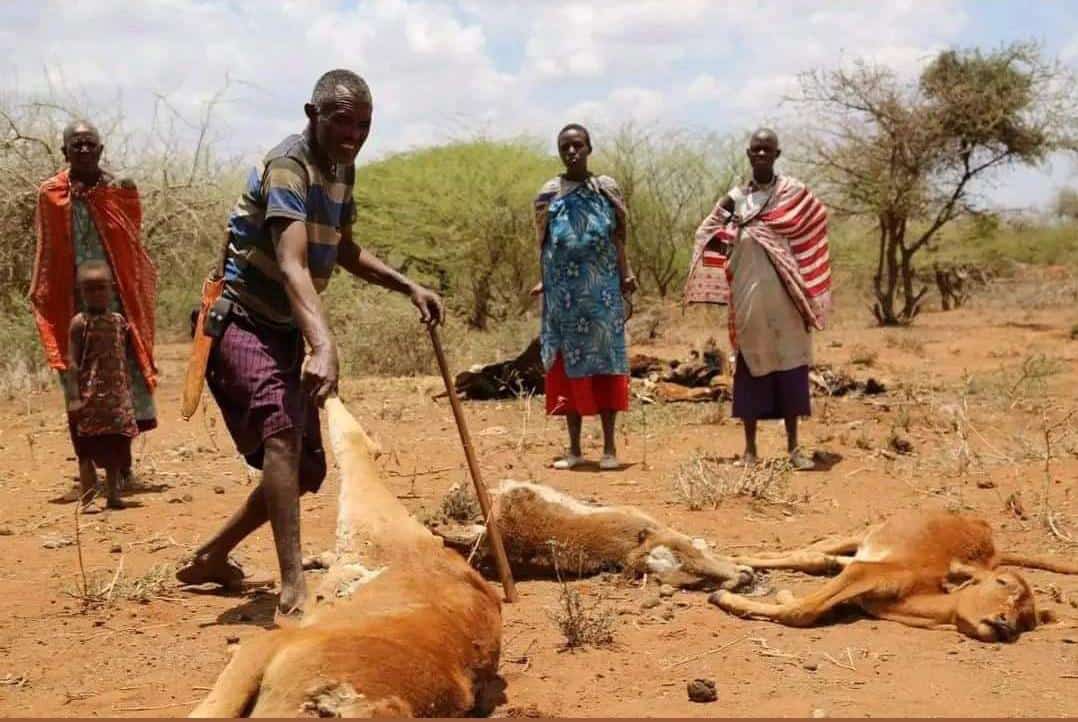
    Climate driven drought in the Amboseli, Kenya - starving cows as people look on

    Because when systems fail people, they also fail nature.

    The Fair Start article ultimately calls for something larger than political ideology or institutional branding. It calls for a deeper level of honesty about how we measure impact, how we define justice and whether the systems currently shaping the world are truly capable of delivering a fair future for the next generation.

    And perhaps that is the most important part of this conversation.

    Not tearing down good people.

    Not attacking institutions.

    But asking whether humanity is finally willing to confront the deeper structural realities underneath the crises we now face — and whether we have the courage to build systems rooted not only in appearance, but in truth.

  • New York’s Climate Battle and Success? Letters Included

    New York’s Climate Battle and Success? Letters Included

    There is a growing feeling across the world that something is not adding up.

    People see climate campaigns, sustainability branding, corporate pledges and public-interest initiatives everywhere. We are constantly told progress is being made. Yet at the same time, forests continue disappearing, species continue vanishing, temperatures continue rising and inequality continues deepening across entire generations.

    Bare feet standing on dry, cracked earth, illustrating drought or arid conditions. The ground appears parched and fragmented, highlighting environmental dryness and lack of moisture.

    So naturally, people are beginning to ask a difficult question:

    If all this progress is happening, why does the world still feel like it is moving toward crisis?

    That is the wider issue explored in the recent article published by the Fair Start Movement titled “New York Helped Create a Fantasy World of Climate Progress — Fair Start Is Taking Action to Show the Truth.” The article forms part of the organization’s broader “Tell the Truth” campaign, which argues that many institutions, nonprofits and public-interest organizations may be measuring success inside incomplete frameworks that fail to account for the larger systems driving harm.

    Importantly, this conversation should not be viewed as an attack on people trying to do good.

    Many individuals inside environmental organizations, charities, universities and advocacy groups genuinely care deeply about protecting people, animals and the planet. Many dedicate their lives to helping others. But the Fair Start argument is that good intentions alone are not enough if the systems used to measure “impact” fail to include the baseline realities shaping outcomes in the real world.

    Person giving food to another
    Person giving food to another

    And that distinction matters enormously.

    The core concern raised by Fair Start is that institutions often celebrate downstream victories — projects completed, emissions reduced, forests protected, animals rescued, policies passed — without fully accounting for the larger upstream conditions continuing to worsen overall outcomes. According to the campaign, this creates what they describe as a “fantasy world of progress,” where isolated successes are publicly highlighted while wider ecological and social deterioration continues in the background.

    In simple terms, the question becomes:

    Are we measuring genuine net progress, or are we measuring selective progress inside systems that continue driving larger harm overall?

    Two panels compare family planning types. Left: diverse family illustration with bright colors, labeled Fair Start family planning with positive points. Right: grayscale crowd in a city, labeled Economic growth-based family planning with negative points.

    Fair Start argues that many public-interest organizations, governments and institutions have relied on what they call incomplete or distorted “baseline” assumptions when presenting impact claims to the public. Their concern is not merely about data, but about transparency. They argue that audiences deserve to understand the full context behind institutional claims of success, particularly where larger structural conditions may be undoing much of the progress being celebrated publicly.

    The campaign places significant focus on climate change, inequality and intergenerational justice. It argues that ecological destruction and social inequality are deeply interconnected, and that the most vulnerable communities — especially children and future generations — often bear the heaviest consequences of systems designed around growth without long-term balance or equity.

    Don't Get Scammed: Charities, Media and Big Business Use Family Policy to Quietly Undo Progress. Ask This One Question Before Giving, Believing, or Buying Infographic

    Whether one agrees fully with every aspect of Fair Start’s framework or not, the wider questions being raised are important.

    How should institutions measure impact honestly?

    How do we distinguish between meaningful systemic change and isolated wins that may be outweighed elsewhere?

    And how do we ensure that public trust is built on transparency rather than carefully managed narratives?

    These are not small questions anymore.

    Across conservation, climate policy and public-interest advocacy, there is increasing recognition that outcomes cannot simply be measured through branding, fundraising success or headline achievements alone. More organizations are now being asked to disclose the assumptions, modelling limits and broader systems behind their public-facing impact claims. That conversation is growing globally. (fairstartmovement.org)


    Plant growing in a desert

    At its heart, this is really a conversation about integrity.

    Because the world does not need more polished marketing around sustainability while ecosystems continue collapsing. It does not need more carefully crafted narratives around compassion while inequality and environmental instability intensify underneath the surface.

    What people are looking for now is honesty.

    Honesty about what is working.

    Honesty about what is failing.

    And honesty about whether current systems are truly creating a livable future for both humanity and the natural world.


    COP25 family planning

    For those of us working directly with wildlife, conservation and communities on the ground, these realities are impossible to ignore. We see humans and animals increasingly pushed into conflict over shrinking resources. We see ecosystems under pressure. We see vulnerable communities struggling to survive. And we know that protecting nature and protecting humanity cannot be separated from one another.

    Because without healthy ecosystems, there is no long-term future for any of us.

    Exxon Knew Kids
    David Goldman / Associated Press via LA TImes

    That is why transparency matters so much moving forward.

    male birth control

    Not to tear down good people.

    Not to destroy institutions.

    But to ensure that the work being done in the name of justice, sustainability and protection is genuinely aligned with reality — and capable of creating the future the world so desperately needs.

    Letter-

    May 8, 2026


    The Honorable Letitia James
    Office of the New York State Attorney General
    The Capitol
    Albany, NY 12224-0341


    Re: Submission Requesting Baseline-Disclosure Addendum and Settlement-Messaging Guardrails – JBS USA Climate and Sustainability Matter (Assurance of Discontinuance No. 25-067)


    Attorney General James:


    This submission asks the Office to close a disclosure gap that can survive enforcement itself: absent plain-language baseline disclosure, settlement messaging in a greenwashing matter can operate as an implied credibility signal for the very class of “net” climate representations whose ambiguity gave rise to the enforcement action.

    At issue is not a disagreement over values, nor a claim that nothing beneficial may have occurred. The issue is narrower and more administrable. When public-facing impact claims are communicated without the baseline conditions necessary to interpret them, the public is left to rely on an incomplete account of what is being represented. In that setting, settlement communications themselves can become a reliance event.


    Purpose and Posture


    Purpose. Convert settlement legitimacy into a baseline-integrity requirement. Enforcement outcomes should not function as implied validation of net-benefit narratives unless settlement communications require baseline disclosure that makes the claim falsifiable to the public.

    Posture. This is not a dispute about intent, ideology, or whether any emissions-related progress occurred. It is a consumer-protection submission framed around plausibly material omissions and corrective disclosure remedies. The concern is preemptive. It applies at the point at which claims are made and repeated to the public, not only after reliance has already hardened or harm has already diffused.


    Factual Posture


    On November 3, 2025, your Office announced a $1.1 million settlement with JBS USA Food Company and JBS USA Food Company Holdings arising from alleged misleading climate marketing tied to “net zero” messaging, and stated that JBS USA agreed to reform marketing practices and report annually to OAG for three years.


    The Assurance of Discontinuance identifies the covered “Net Zero by 2040” statement and resolves claims under Executive Law § 63(12) and General Business Law §§ 349–350, and includes monetary relief totaling $1.1 million.


    Consumer Deception by Omission


    Deception analysis turns on the net impression created and whether missing information is material to a reasonable audience’s understanding and decision-making. Material omissions can mislead even absent proof of motive.


    In climate “net” claims, baseline omissions are often decisive. The missing information that matters here is not abstract disagreement over climate values. It is the set of plausibly material conditions that determine what a reasonable audience is actually being asked to believe: what is counted, what is excluded, what “net” depends on, how uncertainty is treated, how time horizons and discounting choices affect meaning, and whether the claim reflects a present, verified condition or a contingent future aspiration.


    Where those baseline conditions are incomplete, narrowed, or omitted, the resulting representation may not satisfy the minimum conditions necessary for meaningful public evaluation. What appears to be a concrete climate achievement may instead rest on unstated accounting choices, offset assumptions, exclusions, and contingencies that materially alter the claim’s significance. In that setting, the omission is not peripheral. It is part of the claim’s meaning.


    Settlement-Optics Reliance Risk


    When the State resolves a greenwashing matter, the public naturally treats the resolution as a credibility signal. That is especially true where the resolution is public, formal, and issued by an enforcement authority charged with protecting consumers from misleading representations.

    This submission does not claim that OAG endorsed JBS. The point is narrower. Settlement communications are themselves a public reliance event. Without a baseline-disclosure addendum, they can still leave reasonable audiences with an inference of validated net-outcome meaning that the enforcement action was meant to correct.


    That risk matters because public-facing claims influence more than immediate purchasing behavior. They shape institutional trust, commercial reputation, counterpart relationships, policy discourse, and the broader public understanding of what counts as climate progress. If enforcement is to preserve its corrective function, it should not allow settlement optics to become a vehicle for credibility laundering through unresolved ambiguity.


    Requests


    Request 1: Baseline-Disclosure Addendum as a Condition of Ongoing Settlement Messaging

    Ask OAG to publish, and require JBS to host and maintain, a plain-language baseline-disclosure addendum that must accompany any continued “net zero” or emissions-reduction messaging covered by, adjacent to, or reasonably derivative of the settled representations.

    The addendum should be structured as a checklist completion for each flagship claim:


    1. A) Claim Translation
      State what the claim implies to a reasonable audience versus what is actually promised.
    2. B) Accounting Boundary
      Specify Scope 1, Scope 2, and Scope 3 treatment, supplier boundary rules, land-use change treatment, and which entities and brands are in scope.
    3. C) Net Mechanism
      Disclose the share of reductions versus offsets or removals, offset types, quality criteria, permanence and leakage assumptions, retirement mechanics, and double-count safeguards.
    4. D) Time and Metric Choices
      Disclose the baseline year, interim milestones, time horizon, and metric choices that materially change meaning.
    5. E) Verification and Audit Trail
      Name the verifier, frequency, standard used, substantiation availability, and what triggers correction.
    6. F) Decision Thresholds
      State what would cause the claim to be treated as no longer supportable, requiring correction or withdrawal.


    Request 2: Standardized “What This Does Not Mean” Disclaimers

    For statements that could imply verified net outcomes, require short standardized disclaimers that constrain inference, including:

    Goal-versus-guarantee language,
    Reliance limits describing what audiences should not infer,
    Dependency disclosures, including Scope 3 dependence and offset-quality dependence,
    Correction triggers identifying what changes the claim’s supportability.


    Request 3: Verification Hooks Tied to Existing Settlement Compliance Mechanics

    Use the settlement’s existing monitoring infrastructure, including annual compliance reporting and review mechanics, as verification hooks by tying compliance certification to completion and maintenance of the baseline-disclosure addendum for each flagship claim, not solely to phrasing edits.


    Request 4: Settlement Communications Guardrail for Similar Cases

    Adopt a settlement-communications protocol for greenwashing matters under which no official language is used that can reasonably be read as net-outcome validation unless baseline disclosures and substantiation availability are in place and correction triggers are stated.


    Legal Support for a Disclosure-Forward Remedy


    This submission seeks compelled, factual, uncontroversial baseline disclosures reasonably related to preventing deception in consumer-facing marketing and settlement-adjacent communications. The requested relief does not require the Office to endorse any ideological position on climate policy. It asks only that where public-facing claims invite reliance, the baseline conditions necessary to interpret those claims are disclosed clearly enough for the public to understand what is being asserted and what is not.

    That is consistent with the core consumer-protection concern here. Where a representation depends on unstated boundaries, exclusions, dependencies, or contingent assumptions, the omission of those conditions can materially distort the net impression received by a reasonable audience.


    Ripeness


    Ripeness is strong because the covered climate claims and settlement communications are already public, the requested relief concerns disclosure and verification mechanics rather than speculative damages quantification, and the settlement already contains compliance infrastructure that can be upgraded into baseline disclosure without departing from ordinary consumer-protection logic.


    Requested OAG Actions


    Acknowledge intake and identify the bureau or division assigned for review.

    Publish an OAG baseline-disclosure addendum template for “net” climate claims and require JBS to host it for covered claims.

    Require standardized disclaimers for any “net zero” or emissions-reduction statements that could imply verified net outcomes.

    Tie annual compliance reporting to baseline-disclosure completion, maintenance, and correction triggers for each flagship claim.

    If settlement communications leave unresolved the baseline conditions that determine what a “net” claim means, enforcement risks correcting deceptive phrasing while preserving deceptive inference. The minimal fix is to require baseline disclosure wherever official resolution may influence public reliance.

    About the www.FairStartMovement.org: Unless a person or company claiming to “add value” can prove their impact accounts for the full, preemptive cost of equitably empowering every child at birth, the claim collapses under scrutiny. That means showing conditions where each child enters the world with the health, resources, and real-world influence required to withstand climate risk, systemic inequity, and political exclusion. If those conditions are not measured, disclosed, and met, the claim is built on a distorted baseline. It shifts real costs onto the most vulnerable while preserving benefits for the claimant—turning impact reporting into a mechanism that can obscure harm rather than demonstrate it.


    Respectfully Submitted,


    Carter Dillard
    Carter@fairstartmovement.org
    516-725-3157
    Fair Start Movement / TruthAlliance.global


  • Save The Animals, Save The World

    Save The Animals, Save The World

    Save the Animals Save The World, was set up by Ryan Parker, a wildlife conservationist, wildlife presenter, safari guide and animal rescuer. With a love of the natural world, and being in the wild making more sense. My idea is that restoring wild areas, letting nature take its course, an ecological balance of evolutionary grand design.  But with a growing human population, fighting for resources, human population pushing the climate, more people pushed into poverty.  A person wearing a backpack and cap stands on a dirt path in a wooded area, holding out their hand to feed a young giraffe that is leaning forward to sniff or eat from their palm.

    More and more wildlife is coming into conflict with humans. Animals are not only fighting for wild areas, but also urban areas. We cannot blame the people who are trying to survive, and we cannot blame the animals. They are both the result of social inequalities. And why is this bad? 

    Once you start removing nature, a species, whether it be plant, fungi, or animal, from birds, to insects, spiders, to large mammals. Every species has an important role to play. Take that away, the ecosystem starts to fail, and this affects us humans. It affects crop growth, flooding, human health, disease control, and even climate, and so much. You just need to check out the benefits of rewilding wolves to Yellowstone national park, or Humpbacks returning in numbers, or the benefits of beavers returning to the U.K. The importance of parrots, or the importance of song birds, to the importance of elephants, or sharks. The list is endless. 

    A baby orca swims closely beside an adult orca in the ocean, with gentle waves surrounding them and sunlight reflecting off the water.

    So we need to teach people how to live alongside these amazing animals. How to coexistence. As most of the time, the funding from governments, large companies do not reach, the local people.  For me conservation is about uniting people. For conservation to work, to help the planet, we need to work together without discrimination. A brotherhood of man. 

    Two men stand side by side outdoors on a dirt area, both giving thumbs-up gestures. They are wearing hats and casual outdoor clothing. Green trees and clear blue sky are visible in the background.

    And me personally how do I do this? Through love! To give hope. My passion and excitement for the natural world! I love it with my heart, and I can get people excited about wildlife. As a safari guide, as wildlife presenter. If I can show what beauty we have on this planet, from wildlife to landscapes. I can make people fall in love with it and fight to save it.  This is why I make wildlife films, and take people on safari. I am a conservationist sales man here to save the world.  But also prove that people do not have to be a conservationist, know the difference between an alligator or crocodile, or be part of a rich organization. That everyone can make a difference, by simple things, that do not cost money, or spending in the right place if they do. By being kind! This is how! Myself I align myself to work with small grassroots NGO companies working for little money, that is dangerous, hard, with little support. Just like me, I struggle to pay my rent and pay to rescue animals. So I understand them.  These are the people that are making a difference! An inspiration. And any company that supports that same ethos, I will be happy to work with them, like I do supporting the Fair Start Movement! 

    Because if we can work together, to save animals, they will save the world!


    https://www.instagram.com/savetheanimalssavetheworld/

  • Is This About Animal Welfare or More?

    Is This About Animal Welfare or More?

    Child holding a duckWhat is becoming increasingly clear across the world is that this conversation is no longer limited to animal welfare alone.

    The questions now being raised around institutional transparency, impact representation and public accountability are appearing across public health, climate policy, child rights, sustainability and international governance. The deeper we look, the more we find the same structural issue repeating itself: institutions presenting outputs as evidence of meaningful progress, while failing to fully disclose the baseline conditions that continue driving harm underneath the surface.

    These concerns were further reinforced through an independent expert letter submitted by Pierrette, a public health and systems governance specialist whose work focuses on child rights, intergenerational accountability, equity policy and institutional integrity, including African Union–aligned work examining long-term social and structural outcomes.

    In his letter, Pierrette explains that across multiple sectors there is increasing concern around how institutions communicate public-benefit impact. In particular, the distinction between “program outputs” and genuine “net outcomes” is becoming central to modern standards of accountability and evidence integrity.

    And that distinction matters enormously.

    Because there is a major difference between reporting actions taken, campaigns launched or services delivered — versus proving that overall conditions genuinely improved once wider structural realities are taken into account.

    Pierrette’s letter does not seek to attack advocacy itself, nor undermine the importance of animal protection, social justice or public-interest work. Instead, it raises broader governance questions that institutions across the world are increasingly being forced to confront:

    Are public-facing impact claims being communicated with sufficient transparency?

    Are baseline assumptions clearly disclosed?

    Are modelling limitations openly acknowledged?

    And are institutions carefully distinguishing between measurable outputs and actual system-wide outcomes?

    These questions sit directly at the center of the current concerns surrounding the University of Denver’s animal law programming and associated public-facing advocacy efforts.

    At issue is whether institutional impact language may have implied meaningful net progress in animal protection without sufficiently disclosing the wider structural realities surrounding inequitable growth, systemic harm and the limitations of the underlying models being relied upon.

    The concern is not necessarily that individuals involved lacked good intentions. Many people working within these institutions genuinely want to create positive change. But intention alone cannot replace transparency.

    Because if suffering expands faster than interventions reduce it, then institutions have a responsibility to communicate those realities honestly.

    In his letter, Pierrette explains that across global health, sustainability and governance sectors, there is increasing emphasis on what is known as “evidence integrity” — ensuring that publicly communicated impact claims are analytically grounded, methodologically transparent and properly bounded by clear assumptions.

    This is becoming one of the defining issues of institutional trust in the modern world.

    From climate policy to child-rights work, systems experts are increasingly warning that when baseline conditions remain hidden or poorly disclosed, even well-intentioned advocacy can unintentionally create overstated narratives of progress. Programs may highlight outputs — cases supported, services delivered, campaigns launched — while larger structural conditions continue worsening overall outcomes in the background.

    We see this happening globally every day.

    Wildlife disappears while conservation campaigns raise millions. Forests shrink while sustainability reports celebrate incremental targets. Children continue suffering under systems that publicly market themselves as advancing social equity. Communities face hunger and instability while institutions produce carefully managed narratives designed to reassure stakeholders that progress is being made.

    Meanwhile, the planet itself continues absorbing the consequences.

    That is why this issue matters beyond any one university, campaign or organization.

    The deeper question is whether institutions operating in the public-interest space are willing to hold themselves to the same standard of transparency they often demand from governments and corporations.

    Because accountability cannot only exist outwardly.

    It must also exist inwardly.

    Pierrette’s letter ultimately calls for stronger methodological clarity, transparent baseline disclosure and more disciplined communication around institutional impact claims. Not to weaken advocacy, but to strengthen public trust in it.

    Because a world facing ecological collapse, inequality and growing social instability cannot afford narratives that outpace reality.

    People deserve clarity.

    Donors deserve informed understanding.

    Students deserve truthful institutional representations.

    And the public deserves confidence that organizations claiming to create change are willing to openly disclose both the successes and the limitations of what their programs are actually achieving.

    That is not anti-progress.

    That is the foundation of credible progress.

  • Recognizing Grassroots Power for Birth Equity, Climate Repair, and Justice in Women Care Groups in Africa.

    Recognizing Grassroots Power for Birth Equity, Climate Repair, and Justice in Women Care Groups in Africa.

    Summary – “Across Africa, groups of women are coming together in their communities to tackle poverty, hunger, and inequality in simple but powerful ways—supporting families, sharing knowledge, caring for the land, and standing by the belief that every child matters equally”

    Across Africa, some of the most powerful solutions to poverty, hunger, and inequality are not coming from large institutions or global conferences. They are coming from women gathered in small circles in villages, under trees, in homes, and in community meeting spaces.

    These women care groups are made up of mothers, grandmothers, farmers, caregivers, and community organizers. They work quietly, often without recognition, yet their impact is profound. At the most basic level of society the household and the village they are strengthening families, protecting children, and rebuilding community resilience. In many ways, their work reflects the core values of Truth Alliance and the Tell the Truth Campaign: the belief that real justice begins with honesty about inequality, and with the simple but powerful principle that no child is worth more than another.

    Birth Equity Begins at Home

    Birth equity means that every child no matter where they are born—should enter the world with equal dignity and a fair chance to live a healthy life. In many African communities, women care groups are the first line of protection for that principle. They share knowledge about maternal health, safe pregnancy, breastfeeding, and child nutrition. They support pregnant mothers, check on newborns, and help families understand how to keep children healthy during their earliest and most vulnerable stages of life.

    But their work goes beyond health education. Women care groups challenge the quiet assumption that some lives matter less than others simply because of where they are born. Through their care and solidarity, they affirm a truth reflected in the International Covenant on Civil and Political Rights that every human life has equal worth.

    Starting from a Zero Baseline

    A powerful idea sits at the center of this grassroots work: every child should start from the same moral baseline.

    This “zero baseline” does not mean every family begins with the same resources. Rather, it means that no child should be considered less valuable or less deserving of opportunity.

    Women care groups put this idea into practice every day. They create shared food gardens, savings circles, and community support networks so that families facing hardship are not left alone. When crops fail or a child becomes sick, neighbors step in to help.

    This spirit of collective care helps prevent the deep inequalities that often grow when families are isolated. It strengthens communities and protects children who might otherwise fall through the cracks.

    Family Planning info card

    Climate Repair through Local Action

    Africa contributes only a small share of global emissions, yet African communities often suffer some of the harshest impacts of climate change drought, flooding, crop failure, and rising food insecurity.

    Women care groups are responding in practical ways. Many organize kitchen gardens, plant trees, conserve water, and teach climate-resilient farming methods. These small actions improve soil health, increase food production, and protect local ecosystems.

    Organizations such as Rejoice Africa Foundation have shown how these community-led efforts can tackle both environmental and social challenges at once. When women grow food locally and restore the land, they reduce hunger while strengthening resilience against climate shocks.

    In this sense, their work represents a form of climate repair not only through funding or policy, but through restoring the conditions that allow communities to survive and thrive.

    Addressing the Root Causes of Poverty

    Too often, development programs focus only on immediate problems distributing food, treating illness, or responding to emergencies. While these efforts are important, they do not always address the deeper causes of poverty and inequality.

    Women care groups take a more holistic approach. They work to tackle underlying challenges such as:

    • Poor household nutrition
    • Limited health knowledge
    • Environmental degradation
    • Economic vulnerability
    • Social pressures that contribute to large family sizes

    Through open conversation, shared learning, and mutual support, women encourage healthier birth spacing, improved nutrition. They also strengthen women’s voices in household decisions.

    Through focusing on causes rather than symptoms, these groups help communities move toward long-term stability.

    Reducing Hunger and Preventable Disease

    One of the clearest impacts of women care groups is improved nutrition and health.

    Community gardens provide vegetables and fruits that enrich family diets. Nutrition education helps mothers prepare balanced meals for children. Hygiene and sanitation practices are shared through trusted relationships, allowing life-saving knowledge to spread quickly from one household to another.

    These simple steps help reduce malnutrition and prevent diseases that continue to affect millions of children worldwide.

    The result is powerful: healthier mothers, stronger children, and more resilient communities.

    A Movement Rooted in Truth

    The experience of women care groups teaches an important lesson: lasting change rarely begins in distant offices or international meetings. It begins where life itself begins—in families, neighborhoods, and villages.

    By caring for one another and protecting the next generation, these women are already practicing the vision promoted by Truth Alliance and the Tell the Truth Campaign.

    Their work quietly exposes a global contradiction. Many systems speak about equality while allowing deep inequalities at birth to persist.

    Women at the grassroots are showing that a different path is possible.

    No Child Is Worth More than Another

    The principle is simple: every child has equal worth.

    But if that truth is taken seriously, it has profound implications for how the world organizes its resources, policies, and priorities.

    Climate policy, health systems, development funding, and economic opportunity must all reflect that same commitment to human equality. African women working through care groups are already living this truth through everyday acts of cooperation, compassion, and resilience. Their leadership offers a powerful blueprint for a more just world.

    The responsibility now is not to replace their efforts but to recognize, support, and learn from them.

    When communities begin with the understanding that no child is worth more than another, justice stops being a distant idea. It becomes something real grown in gardens, shared across households, and protected by women determined to secure a better future for the next generation.


  • New York Helped Create a Fantasy World of Climate Progress. Fair Start is Taking Action to Show the Truth.

    New York Helped Create a Fantasy World of Climate Progress. Fair Start is Taking Action to Show the Truth.

    NY JBS “Net Zero” Settlement Risk: FairStartMovement.org and TruthAlliance.global Ask New York Attorney General to Require Baseline Disclosures So Enforcement Does Not Become Implied Climate-Claim Certification

    Fair Start Movement and TruthAlliance.global announced today that they submitted a formal process request to the New York Attorney General and to JBS seeking baseline-disclosure requirements for any continued “net zero by 2040” or emissions-reduction messaging tied to New York’s publicly announced enforcement resolution involving JBS’s climate and sustainability representations.

    The request asks New York to close a disclosure gap that can survive enforcement itself: absent plain-language baseline disclosure, settlement messaging in a greenwashing matter can operate as an implied credibility signal for the very class of “net” climate representations whose ambiguity gave rise to the enforcement action.

    We simple ask: relative to what was any of the progress made?

    Fact: Inequitable growth that enriched mostly wealthy, white children at deadly cost to countless children of color did exponentially more harm to climate than the state or JBS ever did good. Use of an inaccurate valuation and reporting model hides liability for the deaths of tens of millions as the climate crisis intensifies, and reflects the academic and public interest practice that ensured the polycrisis: Constantly moving goalposts away from the absolute infant-health-as-enfranchisement standard necessary for political legitimacy in order to falsely claim truth, or victories, and to thus raise funds.

    Relative to that harm, on many levels, the work was insignificant and thus performative – and in terms of the underlying business model – mimics Coca-Cola’s model of discounting future lives, especially lives of color, at exponential levels. 

    Backgrounder on Equity Fraud 

    The fundamental unit of moral currency is the influence one has over the outcomes of their political system, or what is loosely understood as political equality / equity though common conceptions are incomplete. Other currencies, like welfare, cannot exist outside of systems of political and legal obligation or “oughtness” and the primacy of how people are positioned relative to others and Earth’s ecologies at birth.

    This equity is consistent with an objective “one person, one equal and influential vote” (equal offsets of influence relative to zero) standard, empowering persons to limit the influence others have – including ecologically and socially – over them. This is also consistent with more collective systems of family planning in which no child is treated as worth more than another, an outcome ensured through a threshold or level of empowering birth and development conditions and relations outside of which no child should be born.

    While world leaders after World War Two were obligated by the emerging human rights regime to use this standard as the fundamental baseline for governance, this was functionally blocked by use of the dominant “separate but equal” standard in universal reproductive rights regimes – in the birth and development-based creation of actual power relations. This system reversed the concept of freedom by treating the act of having children as more self-determinative of the parent than other-determinative of the children and the communities they would comprise – determining political equity for all in the process.


    Inequality info graphic

    This physically disembedded persons from any effective role in their political systems. It also allowed those in power, both with political authority and entitlements to wealth defended by that authority, to avoid having to legitimate their power by actually, and measurably empowering those subject to it. Rather than seeing the creation of actual (relative to the legal baseline) empowering relations as the source of political authority, nations treated symbolic or representative instruments like treaties and constitutions as themselves authoritative.

    While civil rights movements made headway in areas like housing, employment, and education, the notion of autonomy without equity amounted to the privatization of the creation of power relations, and the totally arbitrary basis for the concentration of extreme levels of generational white wealth – over the span of decades – that drives many of the outcomes we see today. That wealth never had to pay the costs of legitimacy – and the full impacts are now being revealed.

    Within less than a few generations the regime caused unsustainable growth, vast political, social, and ecological inequity, the destruction of world ecologies, and the decline of democracy. This inequitable and disenfranchising growth breached political, ecological and social thresholds for objective values we all share like comfortable temperatures, equality of opportunity,

    Public interest work and outcomes during these decades and into today have generally oriented from arbitrary, ever-changing and illegal (both because they disenfranchise and otherwise harm children, relative to a host of accepted legal standards usually only applied to existing rather than future children) baselines that violate the “one person, one equal and influential vote” standard. High levels of climate emissions championed by “environmental” organizations that enrich some at deadly cost to others, still permitted and defended by coercive authority of nations, are an example.

    Use of these baselines represents an undemocratic, diluted and commercial form of freedom, rather than values consistent with political freedom, that is more akin to “free market” choice” of a shopping mall more than the political influence of a functional town hall.

    Public interest interventions to challenge greenwashing and humanewashing have failed because they themselves did not account for the massively countervailing impacts of growth on the interventions themselves – growth that for instance has created more climate emissions than the interventions removed, while bringing children into the world without the resources or political influence to deal with them.

    And yet accounting for growth by itself would not account for the inequity of the relations formed by that growth.cIt would not account for how some benefit at deadly cost to others based simply on their birth and developmental positionality, with benefits defended by nations on the false premise that all are empowered equally at birth. One of the false assumptions at work was that some children were magically born poor and others rich, instead of the reality of a policy choice to elevate family autonomy (and not in the sense of being free of the climate crisis, but free in a “free market” sense) over family equity and political legitimacy.

    Today women “liberated” by this reproductive rights regime, as well as their children, are dying in growth-based heat waves, living in poverty, with no way to use their political influence to save themselves or their children. They are subject to top-down abstract rules, not rules derived from the inclusive creation of power relations by those subject to them.

    Worse yet, wealthy funders benefiting from that inequitable growth – like Tim Midura – have helped conceal this with the downstream charade interventions discussed above, and low standards for defining terms like “green,” “humane,” and “equitable” designed to enrich their own children at deadly cost to others.

    For example, Fair Start activists were funded by such funders in their work with prior organizations, and prominent activists turned business owners today benefit from having used assessment and reporting models that each year allowed them to claim progress for vulnerable entities  – like animals –  that was easily being undone on exponential levels by birth-inequity based growth. The hallmark of equity fraud involves the fraudster omitting from evaluation and reporting the largest driver of the relevant outcome – the birth-based creation of power relations – in order to exploit that process.


    Top Down Power and Bottom Up Empowerment infographic

    The solution? 

    The FalseClaimsChecker.org accounts for this minimum necessary condition of political equity by replacing those assumptions – and the illegal baselining – with a base assumption that political authority and the entitlement to wealth it can generate must be derived from a “one person, one equal and influential vote” / “no child is worth more than another standard,” thus situating those making the value assessments and impact reporting themselves as part of, or outside of, a discourse legitimacy moving towards a just future. This accounts, at a most fundamental level – at a constitutional or basic system of obligation level, for the driver of the polycrisis.

    This allows us to begin to see the creation of actual (relative to the legal baseline) empowering relations as the source of political authority, and treat how each person assesses value and report impacts to determine the alternative baseline from which they proceed. 

    These claims situate them in their political system, and allow us to assess how they arbitrarily benefit from, or suffer the costs, of the “separate but equal” standard.

    When someone makes a value assessment and impact claim, we should ask: Relative to what? 

    You will find rampant use of shifting baseline – moving goalposts – that allow claimants to appear to create value and beneficial impact with no functional protections for the most vulnerable, infants and animals, as the climate crisis, autocracy, and massive inequity worsens. That means the impact is being undone relative to the minimum legally required threshold, or an illegal baseline – illegal because it does not account for legitimacy, or the need to measurably empower those subject to the legal system, including ensuring minimum levels of health-as-enfranchisement for all infants.

    This is called growthwashing, or more accurately equitywashing. Why the latter? Because to treat humans quantitatively as numbers is less accurate than to see them as living in complex qualitative relations, and because past certain ecological, social, and political thresholds, growth has devastating nonlinear impacts – with climate emissions triggering things like ecological feedback loops.

    We can use these claims to demonstrate the problem, that the values and impact they claimed would have been undone relative to the legal / preemptive as opposed to arbitrary baselines, and encourage reforms towards the legal baseline and their becoming part of an empowering system of truly self–determining persons by realigning fundamental authority and entitlements around a system of fair birth positionality, consistent with the values that they are signaling in their claims This is a state of autonomy through political equity by rearranging constitutional entitlements, sufficient to ensure Dasgupta’s optimality, but in the qualitative sense of empowering relations.

    Given that few if any use the legal “one person, one equal and influential vote” standard, this exercise generally entails their having to admit benefiting from arbitrary birth and developmental positionality (national, racial, intergenerational, etc.) at deadly cost to others, and having disparate influence over others defended by unlegitimated authority, and threat of coercion, of the state.

    Two illustrations compare family planning models: At left, a diverse happy family stands together with icons for community and health. At right, a monochrome crowd in a city. Text contrasts fair start (rights-based) with economic growth-based planning.

    We admit: Being part of a system of birth inequity that treats children of color as deserving fewer resources and influence, including omitting this as a countervailing factor in our value assessments and impact reporting, by overshooting ecological, political and social thresholds does more harm to our values than we do to further them.

    This “Tell the Truth” discourse creates an opportunity for permanent resistance to oppression because it protects, through the use of an intergenerational justice threshold, the most vulnerable, Infants and animals and identifies those who reject that protection, and systems of mutual self-determination with it.

    See the fallacious claims by prominent food entrepreneur Paul Shapiro, who ironically started his work as an animal rights activist climbing to a level of national influence on a false advertising campaign against egg producers for humane washing, His claims to have saved animals while explicitly refusing to back equity reforms or qualify his claims, make them inaccurate and out of context because he omits how he chose underlying policies that did vastly more harm to animals than he did good. His omission enables him to exploit financial systems – as lead at a profitable food company with military contracts – that in turn growth exploit animals and elevate his voice above those pursuing on-balance reforms.

    Initial attempts, in other scenarios, by Fair Start Movement and Truth Alliance advocates to implement this preemption were met with sabotage by public interest entities hiding liability for decades of inaccurate claims, usually for micro interventions undone – relative to a true system of empowerment – by macro forces that enriched those involved, and their funders, at deadly cost to others.

    As a practical matter one can challenge illegal baselining, or political equity and impact fraud, using inexpensive and widely available consumer protection and unfair competition laws to enjoin public and private business valuation, and impact reporting, that don’t comply with the minimum baseline of inclusive legitimacy.

    Given that political authority, including to entitle wealth, derives from having to empower those subject to the authority, these cases get to the ultimate question of political freedom: Are we obligated to a political system that does not empower us? And what are the limits of self-defense against such a system? 

    After 1948 and the inception of universal human rights that limited national authority, nations were obligated to derive their authority and any entitlements protected under it from the equitable empowerment of their subjects. This requirement is widely reflected in the Bill of Human Rights instruments and their references to the right to self-determination – and one person, one equal and influential vote. This requirement should have created an interpretation of the collective pronoun that premises those documents, like the reference to “we the people,” treating a level of influence in one’s political system (“oughtness” or an “influl” that precedes a “util”) as a fundamental currency that precedes utility and welfare.


    Don't Get Scammed: Charities, Media and Big Business Use Family Policy to Quietly Undo Progress. Ask This One Question Before Giving, Believing, or Buying Infographic

    The textual basis for this interpretive rule is clear – these pronouns are the linguistic premise of the language that follows. Such a currency and universal linguistic rule of interpretation would have entailed a harsh principle: Each person in a system of law and obligation would be owed the level of public protection, or oughtness, they would account to the most vulnerable: Infants, and the animals whom the infants would impact. The value of self, versus other, determination would require it. Again, a racist system of self-determination blocked this change.

    Regardless, the principle creates a textual basis to interpret law as requiring the inclusion and empowerment of those subject to it, consistent with standards for intergenerational justice, and ensuring equal offsets of influence relative to a zero baseline and the idea that no child is worth more than another. At a policy level this would have required a fundable, minimum threshold of empowerment beneath which no child should be born, with future children holding entitlements sufficient to create collective family planning systems based on readiness, delay, and the equitable distribution of levels of influence among children. The threshold ensures equal offsets relative to zero, or the preemptive costs of having to measurably empower all children equitably as they enter the world – and at a standard where those children could protect themselves from things like a climate crisis, autocracy, deadly inequity, etc.

    Put simply: 

    If it’s illegal to use a business model that prohibits hiring or housing persons of color, it’s illegal to structure cost/benefit business models to enrich some children at deadly cost to children of color. Use of that model hides liability for the deaths of tens of millions as the climate crisis intensifies, and reflects the academic and public interest practice that ensured the polycrisis: Constantly moving goalposts away from the infant-health-as-enfranchisement standard necessary for political legitimacy in order to falsely claim truth, or victories, and to thus raise funds.

    Unless a person or company claiming to add value to the world can show they were evaluating and reporting by accounting for the preemptive costs of having to measurably empower all children equitably as they enter the world – and at a standard where those children could protect themselves from the climate crisis, autocracy deadly inequity, etc. – the person or company making the claims has been using an illegal baseline, a Ponzi/equity-fraud standard that benefits them at deadly cost to others, and mostly children of color.

    Those willing to pay the costs of a legitimate political system that avoids arbitrary benefits of birth positionality and conditions authority on empowerment could never compete against those willing to exploit others, and they need not given that any authority to govern or assign wealth derives from first empowering those subject to these things. The other solution to inequity-gained wealth backed by state violence – as the oppression it is – is to treat that violence as illegitimate and triggering the right to self-determinative self-defense against “trolley targets” who benefit themselves at deadly cost to others.  

    It’s this truthful and obligation-creating discourse, a Tell the Truth campaign, that is most preemptive and legally authoritative over all conflicting obligations, including treaties and constitutions. 


  • Fact Check: Harvard’s  Animal Law Professor Kristin Stilt Does More to Privilege Her Kids Than Benefit Animals.

    Fact Check: Harvard’s Animal Law Professor Kristin Stilt Does More to Privilege Her Kids Than Benefit Animals.

    Professors are influential, and when they make public benefit claims, they should do some from clear baselines, and in a way that does not hide inequitable and disenfranchising growth. Not dealing with baselines is evidence to support the Fair Start thesis: That wealth obtained by violating the rights of future children now drives public interest narratives and outcomes to hide and violate those rights.  

    *This critique is intentionally done outside of customary back and forth academic discourse. A constitutive discourse is more public, and rather than treating values like animal protection as abstract, it assesses the value and impact claims influential people make that fundamentally benefit them, through a system of illegitimate and disentrancing growth and birth positionality, at deadly cost to others and in contravention of academic neutrality. 

    Professor Kristin Stilt is Faculty Director of the Animal Law & Policy Program, Harvard Law School, and in leadership at the Brooks Institute for Animal Rights Law and Policy. 

    The Program’s website states it is: “Committed to analyzing and improving the treatment of animals through the legal system.”

    That statement is inaccurate. Stilt and the program use an illegal baselining and equity fraud standard that creates a fantasy world of benefit for animals that is undone, upstream, by inequitable and disenfranchising growth.

    Stilt’s work on the illusory concept of “rights of nature,” the benefits of which are undone by growth every day, is exemplary of her approach. Claims of using animals benefiting animals are the worst example of the Winners Take All phenomenon because animals are the most numerous category of vulnerable entities, and because claiming our current political inequity-based system of growth can benefit them are outlandish.


    Family Planning info card


    Fact: Inequitable growth that enriched mostly wealthy, white children at deadly cost to countless children of color did exponentially more harm to animals than the program ever did good. Use of that valuation and reporting model hides liability for the deaths of tens of millions as the climate crisis intensifies, and reflects the academic and public interest practice that ensured the polycrisis: Constantly moving goalposts away from the absolute infant-health-as-enfranchisement standard necessary for political legitimacy in order to falsely claim truth, or victories, and to thus raise funds.

    Relative to that harm, on many levels, our work was insignificant and thus performative – and in terms of the underlying business model – mimics Coca-Cola’s model of discounting future lives, especially lives of color, at exponential levels. 

    Fair Start and Truth Alliance will be taking legal action, in addition to our petition before the United Nations, to block the use of the standard by Harvard.

    Backgrounder on Equity Fraud 

    The fundamental unit of moral currency is the influence one has over the outcomes of their political system, or what is loosely understood as political equality / equity though common conceptions are incomplete. Other currencies, like welfare, cannot exist outside of systems of political and legal obligation or “oughtness” and the primacy of how people are positioned relative to others and Earth’s ecologies at birth. 

    This equity is consistent with an objective “one person, one equal and influential vote” (equal offsets of influence relative to zero) standard, empowering persons to limit the influence others have – including ecologically and socially – over them. This is also consistent with more collective systems of family planning in which no child is treated as worth more than another, an outcome ensured through a threshold or level of empowering birth and development conditions and relations outside of which no child should be born. 

    While world leaders after World War Two were obligated by the emerging human rights regime to use this standard as the fundamental baseline for governance, this was functionally blocked by use of the dominant “separate but equal” standard in universal reproductive rights regimes – in the birth and development-based creation of actual power relations. This system reversed the concept of freedom by treating the act of having children as more self-determinative of the parent than other-determinative of the children and the communities they would comprise – determining political equity for all in the process. 


    Inequality info graphic

    This physically disembedded persons from any effective role in their political systems. It also allowed those in power, both with political authority and entitlements to wealth defended by that authority, to avoid having to legitimate their power by actually, and measurably empowering those subject to it. Rather than seeing the creation of actual (relative to the legal baseline) empowering relations as the source of political authority, nations treated symbolic or representative instruments like treaties and constitutions as themselves authoritative. 

    While civil rights movements made headway in areas like housing, employment, and education, the notion of autonomy without equity amounted to the privatization of the creation of power relations, and the totally arbitrary basis for the concentration of extreme levels of generational white wealth – over the span of decades – that drives many of the outcomes we see today. That wealth never had to pay the costs of legitimacy – and the full impacts are now being revealed. 

    Within less than a few generations the regime caused unsustainable growth, vast political, social, and ecological inequity, the destruction of world ecologies, and the decline of democracy. This inequitable and disenfranchising growth breached political, ecological and social thresholds for objective values we all share like comfortable temperatures, equality of opportunity, 

    Public interest work and outcomes during these decades and into today have generally oriented from arbitrary, ever-changing and illegal (both because they disenfranchise and otherwise harm children, relative to a host of accepted legal standards usually only applied to existing rather than future children) baselines that violate the “one person, one equal and influential vote” standard. High levels of climate emissions championed by “environmental” organizations that enrich some at deadly cost to others, still permitted and defended by coercive authority of nations, are an example. 

    Use of these baselines represents an undemocratic, diluted and commercial form of freedom, rather than values consistent with political freedom, that is more akin to “free market” choice” of a shopping mall more than the political influence of a functional town hall. 

    Public interest interventions to challenge greenwashing and humanewashing have failed because they themselves did not account for the massively countervailing impacts of growth on the interventions themselves – growth that for instance has created more climate emissions than the interventions removed, while bringing children into the world without the resources or political influence to deal with them. 

    And yet accounting for growth by itself would not account for the inequity of the relations formed by that growth.cIt would not account for how some benefit at deadly cost to others based simply on their birth and developmental positionality, with benefits defended by nations on the false premise that all are empowered equally at birth. One of the false assumptions at work was that some children were magically born poor and others rich, instead of the reality of a policy choice to elevate family autonomy (and not in the sense of being free of the climate crisis, but free in a “free market” sense) over family equity and political legitimacy.

    Today women “liberated” by this reproductive rights regime, as well as their children, are dying in growth-based heat waves, living in poverty, with no way to use their political influence to save themselves or their children. They are subject to top-down abstract rules, not rules derived from the inclusive creation of power relations by those subject to them. 

    Worse yet, wealthy funders benefiting from that inequitable growth – like Tim Midura – have helped conceal this with the downstream charade interventions discussed above, and low standards for defining terms like “green,” “humane,” and “equitable” designed to enrich their own children at deadly cost to others.

    For example, Fair Start activists were funded by such funders in their work with prior organizations, and prominent activists turned business owners today benefit from having used assessment and reporting models that each year allowed them to claim progress for vulnerable entities  – like animals –  that was easily being undone on exponential levels by birth-inequity based growth. The hallmark of equity fraud involves the fraudster omitting from evaluation and reporting the largest driver of the relevant outcome – the birth-based creation of power relations – in order to exploit that process. 


    Top Down Power and Bottom Up Empowerment infographic

    The solution? 

    The FalseClaimsChecker.org accounts for this minimum necessary condition of political equity by replacing those assumptions – and the illegal baselining – with a base assumption that political authority and the entitlement to wealth it can generate must be derived from a “one person, one equal and influential vote” / “no child is worth more than another standard,” thus situating those making the value assessments and impact reporting themselves as part of, or outside of, a discourse legitimacy moving towards a just future. This accounts, at a most fundamental level – at a constitutional or basic system of obligation level, for the driver of the polycrisis. 

    This allows us to begin to see the creation of actual (relative to the legal baseline) empowering relations as the source of political authority, and treat how each person assesses value and report impacts to determine the alternative baseline from which they proceed. 

    These claims situate them in their political system, and allow us to assess how they arbitrarily benefit from, or suffer the costs, of the “separate but equal” standard. 

    When someone makes a value assessment and impact claim, we should ask: Relative to what? 

    You will find rampant use of shifting baseline – moving goalposts – that allow claimants to appear to create value and beneficial impact with no functional protections for the most vulnerable, infants and animals, as the climate crisis, autocracy, and massive inequity worsens. That means the impact is being undone relative to the minimum legally required threshold, or an illegal baseline – illegal because it does not account for legitimacy, or the need to measurably empower those subject to the legal system, including ensuring minimum levels of health-as-enfranchisement for all infants. 

    This is called growthwashing, or more accurately equitywashing. Why the latter? Because to treat humans quantitatively as numbers is less accurate than to see them as living in complex qualitative relations, and because past certain ecological, social, and political thresholds, growth has devastating nonlinear impacts – with climate emissions triggering things like ecological feedback loops. 

    We can use these claims to demonstrate the problem, that the values and impact they claimed would have been undone relative to the legal / preemptive as opposed to arbitrary baselines, and encourage reforms towards the legal baseline and their becoming part of an empowering system of truly self–determining persons by realigning fundamental authority and entitlements around a system of fair birth positionality, consistent with the values that they are signaling in their claims This is a state of autonomy through political equity by rearranging constitutional entitlements, sufficient to ensure Dasgupta’s optimality, but in the qualitative sense of empowering relations. 

    Given that few if any use the legal “one person, one equal and influential vote” standard, this exercise generally entails their having to admit benefiting from arbitrary birth and developmental positionality (national, racial, intergenerational, etc.) at deadly cost to others, and having disparate influence over others defended by unlegitimated authority, and threat of coercion, of the state. 

    Two illustrations compare family planning models: At left, a diverse happy family stands together with icons for community and health. At right, a monochrome crowd in a city. Text contrasts fair start (rights-based) with economic growth-based planning.

    We admit: Being part of a system of birth inequity that treats children of color as deserving fewer resources and influence, including omitting this as a countervailing factor in our value assessments and impact reporting, by overshooting ecological, political and social thresholds does more harm to our values than we do to further them.

    This “Tell the Truth” discourse creates an opportunity for permanent resistance to oppression because it protects, through the use of an intergenerational justice threshold, the most vulnerable, Infants and animals and identifies those who reject that protection, and systems of mutual self-determination with it. 

    See the fallacious claims by prominent food entrepreneur Paul Shapiro, who ironically started his work as an animal rights activist climbing to a level of national influence on a false advertising campaign against egg producers for humane washing, His claims to have saved animals while explicitly refusing to back equity reforms or qualify his claims, make them inaccurate and out of context because he omits how he chose underlying policies that did vastly more harm to animals than he did good. His omission enables him to exploit financial systems – as lead at a profitable food company with military contracts – that in turn growth exploit animals and elevate his voice above those pursuing on-balance reforms.

    Initial attempts, in other scenarios, by Fair Start Movement and Truth Alliance advocates to implement this preemption were met with sabotage by public interest entities hiding liability for decades of inaccurate claims, usually for micro interventions undone – relative to a true system of empowerment – by macro forces that enriched those involved, and their funders, at deadly cost to others. 

    As a practical matter one can challenge illegal baselining, or political equity and impact fraud, using inexpensive and widely available consumer protection and unfair competition laws to enjoin public and private business valuation, and impact reporting, that don’t comply with the minimum baseline of inclusive legitimacy.

    Given that political authority, including to entitle wealth, derives from having to empower those subject to the authority, these cases get to the ultimate question of political freedom: Are we obligated to a political system that does not empower us? And what are the limits of self-defense against such a system? 

    After 1948 and the inception of universal human rights that limited national authority, nations were obligated to derive their authority and any entitlements protected under it from the equitable empowerment of their subjects. This requirement is widely reflected in the Bill of Human Rights instruments and their references to the right to self-determination – and one person, one equal and influential vote. This requirement should have created an interpretation of the collective pronoun that premises those documents, like the reference to “we the people,” treating a level of influence in one’s political system (“oughtness” or an “influl” that precedes a “util”) as a fundamental currency that precedes utility and welfare. 


    Don't Get Scammed: Charities, Media and Big Business Use Family Policy to Quietly Undo Progress. Ask This One Question Before Giving, Believing, or Buying Infographic

    The textual basis for this interpretive rule is clear – these pronouns are the linguistic premise of the language that follows. Such a currency and universal linguistic rule of interpretation would have entailed a harsh principle: Each person in a system of law and obligation would be owed the level of public protection, or oughtness, they would account to the most vulnerable: Infants, and the animals whom the infants would impact. The value of self, versus other, determination would require it. Again, a racist system of self-determination blocked this change. 

    Regardless, the principle creates a textual basis to interpret law as requiring the inclusion and empowerment of those subject to it, consistent with standards for intergenerational justice, and ensuring equal offsets of influence relative to a zero baseline and the idea that no child is worth more than another. At a policy level this would have required a fundable, minimum threshold of empowerment beneath which no child should be born, with future children holding entitlements sufficient to create collective family planning systems based on readiness, delay, and the equitable distribution of levels of influence among children. The threshold ensures equal offsets relative to zero, or the preemptive costs of having to measurably empower all children equitably as they enter the world – and at a standard where those children could protect themselves from things like a climate crisis, autocracy, deadly inequity, etc.

    Put simply: 

    If it’s illegal to use a business model that prohibits hiring or housing persons of color, it’s illegal to structure cost/benefit business models to enrich some children at deadly cost to children of color. Use of that model hides liability for the deaths of tens of millions as the climate crisis intensifies, and reflects the academic and public interest practice that ensured the polycrisis: Constantly moving goalposts away from the infant-health-as-enfranchisement standard necessary for political legitimacy in order to falsely claim truth, or victories, and to thus raise funds.

    Unless a person or company claiming to add value to the world can show they were evaluating and reporting by accounting for the preemptive costs of having to measurably empower all children equitably as they enter the world – and at a standard where those children could protect themselves from the climate crisis, autocracy deadly inequity, etc. – the person or company making the claims has been using an illegal baseline, a Ponzi/equity-fraud standard that benefits them at deadly cost to others, and mostly children of color. 

    Those willing to pay the costs of a legitimate political system that avoids arbitrary benefits of birth positionality and conditions authority on empowerment could never compete against those willing to exploit others, and they need not given that any authority to govern or assign wealth derives from first empowering those subject to these things. The other solution to inequity-gained wealth backed by state violence – as the oppression it is – is to treat that violence as illegitimate and triggering the right to self-determinative self-defense against “trolley targets” who benefit themselves at deadly cost to others.  

    It’s this truthful and obligation-creating discourse, a Tell the Truth campaign, that is most preemptive and legally authoritative over all conflicting obligations, including treaties and constitutions. 

    Take action: Urge her here to tell the truth.