Author: Fair Start Movement

  • When deciding to have children

    When deciding to have children

    BY RUBY FOX

    Ruby Fox is a fourth year student studying Society and Environment with a concentration on Justice and Sustainability at the University of California, Berkeley. She is interested in systemic injustice, environmental issues, childhood development, and food sovereignty, and looks forward to working with educational facilities and community organizations in the future.


    Oftentimes when people are considering whether or not to have children, they think about their own wants and needs. Instead, parents should be considering the needs of the prospective child as they consider their own. Most people understand that humanity is moving into trying times as climate change exacerbates our social issues in profound and unpredictable ways.
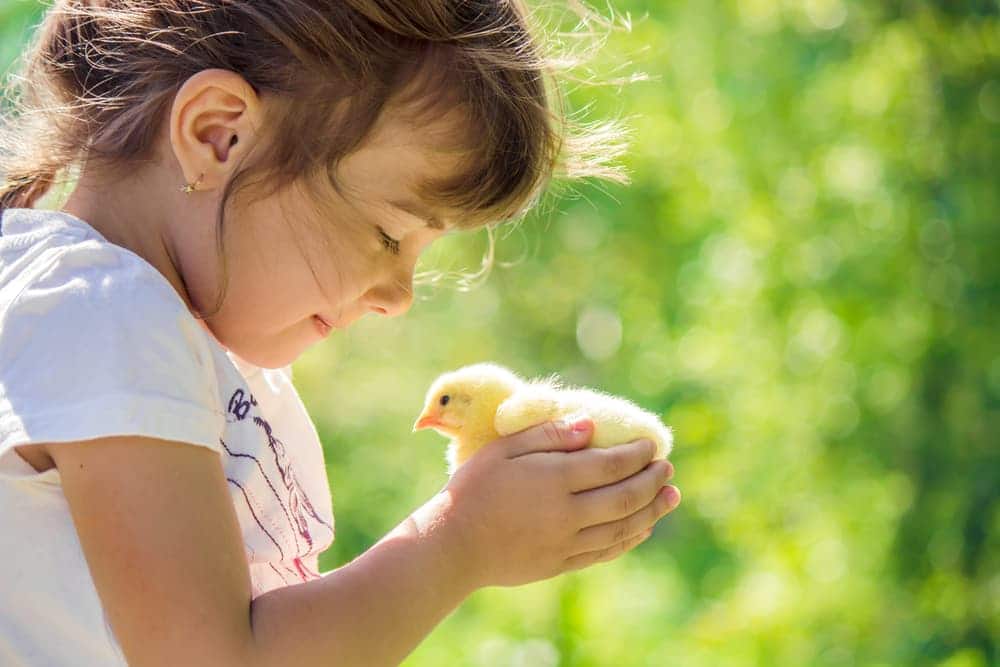
    Child holding a duck


    Potential parents must be thoughtful about their own motivations, the social stratification of society, and worsening global environmental conditions when building a family. Intention and motivation is not often questioned when discussing pregnancy. Many people simply decide that they are “ready for a family.” While everyone deserves love and connection, creating a whole new life to increase the quality of your own should not be the immediate response to craving community. Many academics have argued against the compulsory expectation or cultural entitlement to bearing children on ethical grounds. Christine Overall wrote Why Have Children (2012) to ponder the philosophy and ethics of procreation, concluding that the least selfish life plan may not include parenthood, especially for those who would have children only to “please others, to conform to convention, or to benefit themselves based on the delusion that children will fix their problems” (219). Giving breath to another being holds the parent at least partially culpable for any harm against that being. Raising a child requires more than desire and healthy financial support; it requires attention, energy, commitment, patience, and unconditional love for a child to grow into their own unique person.

    A man and a young girl are standing at a kitchen sink washing their hands together. The man is smiling as he washes his hands, and the girl is wearing a pink sleeveless shirt and using soap.
    Photo by CDC on Unsplash

    Parents want to believe the ability to protect and support their child is absolute, but life is unpredictable, and that support inevitably falters from events outside of parental control. Making a family and playing a parental role cannot be the only goal for prospective parents when children exist outside the familial vacuum as independent people and members of greater society. Outside of the individual growth, people must consider the social conditions that each baby is born into. As class demographics shift overtime, researchers have seen the association between marriage and child poverty weaken over time, while the association between work and poverty became stronger, suggesting the limitations of “overemphasizing marriage and the growing importance of work for reducing child poverty in America” (Baker 1166).
    Three children sit at a checkered table. One covers his eyes, the middle rests his face on his hands, and the third covers her mouth. Toy cars are on the table and a window with trees is in the background.

    People must understand that a stable marriage and a paying job alone cannot provide the financial or emotional security necessary to raise children. Research shows significant negative association between parenthood and emotional well-being in high-income countries, especially in the US, due to stress heavily attributable to lack of social policy support with lower-income parents coping with worse emotional well-being and more stress (Glass et al). In 2019, the American foster care removed over 251,359 children from their homes, making a total of 423,997 children living in the foster care system (AFCARS Report). Sixty-three percent of removals were due to neglect, often arising from the inability to cope with the stress and expectations of parenthood.

    Our current systems make it incredibly difficult to raise children with their basic needs met, let alone extra support and opportunity. Prospective parents should not only consider their ability to provide for their children in a tumultuous economic climate, but also whether their children will be able to provide adequately for themselves moving forward. Another issue outside parental control, but still within the scope of parental considerations, is our changing environment. Our societal struggle to reconcile the impending doom of climate change is a relatively new issue in parenting as well. Like most issues facing humanity, climate change is a wicked problem, a complex, ill defined, interconnected problem whose solutions present subsequent issues.
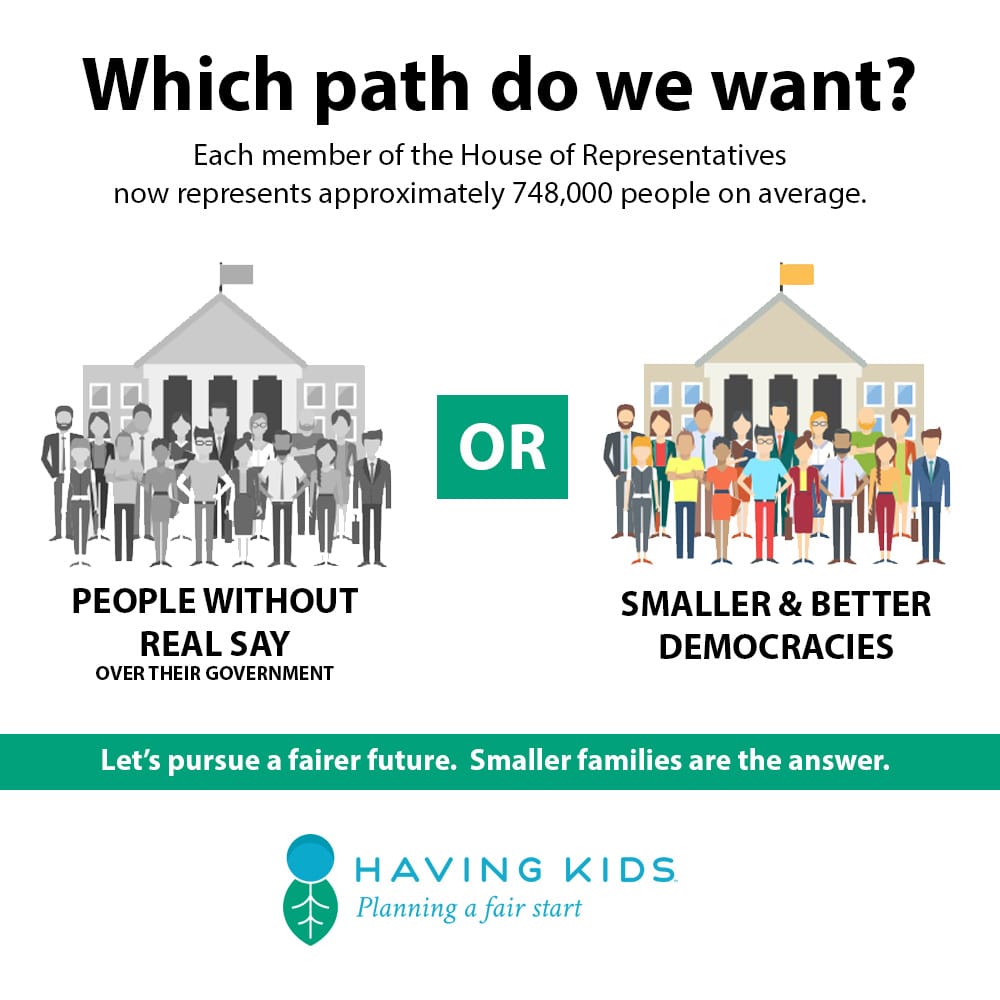
    An infographic compares two options: on the left, gray figures under “People without real say over their government,” and on the right, colorful families with “Smaller & better democracies.” Text promotes smaller families for fairer representation.

    Prospective parents must consider how they will support their families through devastating environmental threats: erratic day-to-day weather conditions, increasing pollution, extreme environmental disasters, population displacement, inconsistency in global supply chains and manufacturing, etc. For example, without extreme policy shifts and decreasing freshwater availability, about 2.3 billion more people than today (over 40% of the global population in total) are expected to be living in river basins under severe water stress; globally, land prices worldwide will skyrocket as agricultural lands become more scarce, and more urgently necessary (OECD Environmental Outlook to 2050).

    A chart with circles of varying sizes showing the impact of different actions on reducing carbon emissions. The largest circle says “Have one fewer child 58.6”. Other actions include living car-free, recycling, and using green energy.

    Issues like these will become more relevant in child development worldwide, including in high-income countries, like the US, that do not currently bear the brunt of climate related issues. One of the largest social shifts at this point in human history is the scope of parental responsibility to expand past
    the parents’ lifetime to include the hardship of generations to come.

    Works Cited


    Baker, Regina S. “The Changing Association Among Marriage, Work, and Child Poverty in the
    United States, 1974–2010.” Journal of Marriage and Family, vol. 77, no. 5, 2015, pp.
    1166–1178., www.jstor.org/stable/2458272


    “Births and Natality.” Centers for Disease Control and Prevention, Centers for Disease Control
    and Prevention, 3 Aug. 2021, https://www.cdc.gov/nchs/fastats/births.htm.


    Glass, Jennifer et al. “Parenthood and Happiness: Effects of Work-Family Reconciliation
    Policies in 22 OECD Countries.” AJS; American journal of sociology vol. 122,3 (2016):
    886-929. doi:10.1086/688892


    “OECD Environmental Outlook to 2050: The Consequences of Inaction – Key Facts and
    Figures.” OECD, Organisation for Economic Co-Operation and Development, 2012,
    https://www.oecd.org/env/indicators-modelling-outlooks/oecdenvironmentaloutlookto205
    0theconsequencesofinaction-keyfactsandfigures.htm.


    Overall, Christine. Why Have Children? The Ethical Debate. MIT Press, 2014.


    Rieder, N. “Procreation, Adoption and the Contours of Obligation.” Journal of Applied
    Philosophy, vol. 32, no. 3, 2015, pp. 293–309. JSTOR, www.jstor.org/stable/26813113.


    Saad, Lydia. “Americans, in Theory, Think Larger Families Are Ideal.” Gallup.com, Gallup, 6
    July 2018, https://news.gallup.com/poll/236696/americans-theory-think-larger-families-ideal.aspx.


    “The AFCARS Report.” The US Department of Health and Human Services, 23 June 2020


  • New Book: The Most Effective Solution to the Crises We Face Today

    New Book: The Most Effective Solution to the Crises We Face Today

    Why are we facing climate and other ecological crises, massive inequality, and decaying democracies? How did things not get better than they were in the past? As a new peer-reviewed book by folks at the Fair Start Movement makes clear, these problems derive from a massive power grab by elites in the middle of the Twentieth Century.

    The book was recently recommended reading by a leading constitutional scholar.

    The core claim it makes, that fair family policies which – restore a biodiverse nonhuman world, ensure equal opportunities for children, and build democracies where each person actually has the capacity to influence outcomes – would override all competing interests and rights has been subject to five successful peer-reviews: The Primary Right, A Human Rights Approach to Planning Families, Constituting Over Constitutions, The Right to Matter, and Justice as a Fair Start in Life. But we don’t need peer-review to understand the claim. How could we reject these values and believe in any viable conception of freedom, especially as the loss of nature through the climate crisis seriously harms infants? How can we separate these values from our creation, and how could anything logically precede creation – or existential – justice? How could we actually choose who has power over us without the “first election” of a just family planning norm?

    Rather than ensure equal opportunities for all, and ecological sustainability via properly interpreting Article 16 of the Universal Declaration of Human Rights, world leaders invented a family planning model that evaded their collective responsibility to invest in and protect future generations. They pretended an interpersonal right was personal. They went for “nobody else’s business” over actually protecting kids. And by using that nonsense to maintain the trajectories at the time, they went for growth over equity.

    A promotional banner for the book Justice as a Fair Start in Life by Carter Dillard, featuring the book cover with a tree illustration, a QR code, and a 10% off offer for direct purchases.

    They faked justice, and human rights, to protect existing power structures. Yes, we all got scammed, and our children will suffer as a result.

    But as the book demonstrates, there is no real justice without a Fair Start in life. And right now, taking resources from the top of the wealth pyramid – the one Nobel Laureate Steven Chu recently decried – and using those resources as better family planning incentives/entitlements would have ten to twenty times the beneficial impact on the the climate and other ecological crises, massive inequality, and decaying democracies we are faced with today relative to downstream approaches. Fair Start is justice and freedom, or ensuring the capacity to consent to the influence of others.

    The move to take those resources, and ensure birth equity, exposes a new border war between free people, and preconstitutional people or “precons” who refuse to collectively constitute free and just societies, and thus threaten our kids’ future.

    This is the bottom line: Unless we prioritize an ecosocial Fair Start in life, we are not coming from a just place. Precons won’t prioritize each child getting a fair start in life. Free people will. Full stop.

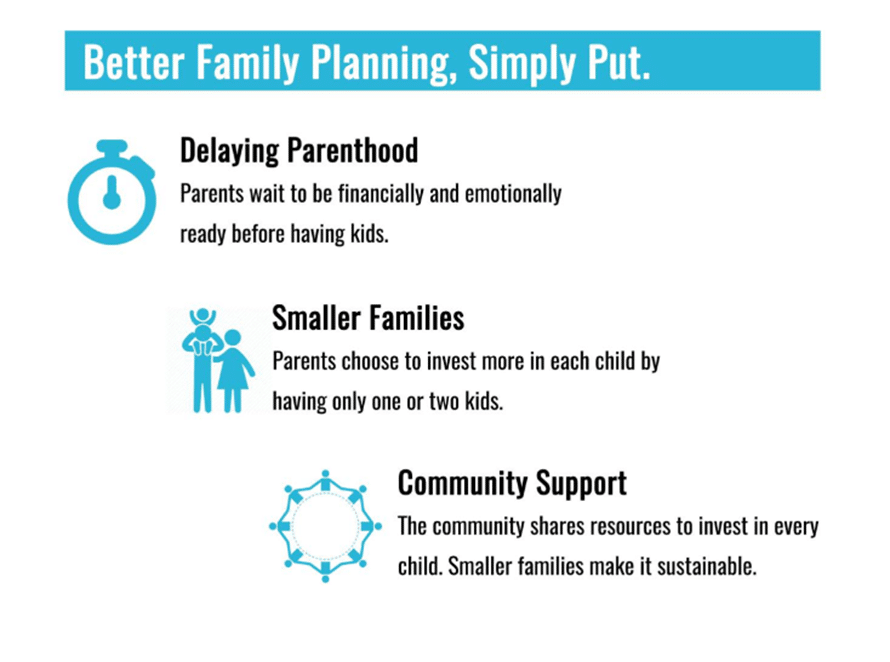
    Infographic titled Better Family Planning, Simply Put with icons and three points: Delaying parenthood, smaller families, and community support, each explained with brief text and blue graphics.

    Order your copy today, and join the fight for true justice.

    1. Concentrations of wealth and power only exist because world leaders chose isolation family planning systems meant to avoid collective obligations to protect future generations. This fundamentally created every crisis, from the climate to massive inequity, we face today.
    2. The right to a Fair Start in life is the first and overriding human right, obligating us to target those concentrations – and people like Ivanka Trump and other wealthy families like the Raymonds – to limit and decentralize their power and pay what they owe. They benefited from, and furthered, a lie at the heart of our systems of human rights and democracy.  They are at the heart of the power grab. Government and all political obligations derive from people, who derive from their creation. The duty to ensure a Fair Start in life – the god norm – overrides all other rules, like the property rights that empower people like Ivanka. Fair Start is promoting a process called the Tell the Truth campaign, under federal law, to require disclosures of who played what role – and what role they plan on playing – in creating the crises we face today.
    3. Making them first apologize and then pay, via Fair Start incentives and entitlements, is the most just and effective way to compensate future generations for things like the climate crisis, with impacts that are ten to twenty times more effective than the downstream measures other nonprofits are promoting. Don’t get scammed. First things first – let’s start by creating optimal and just populations.

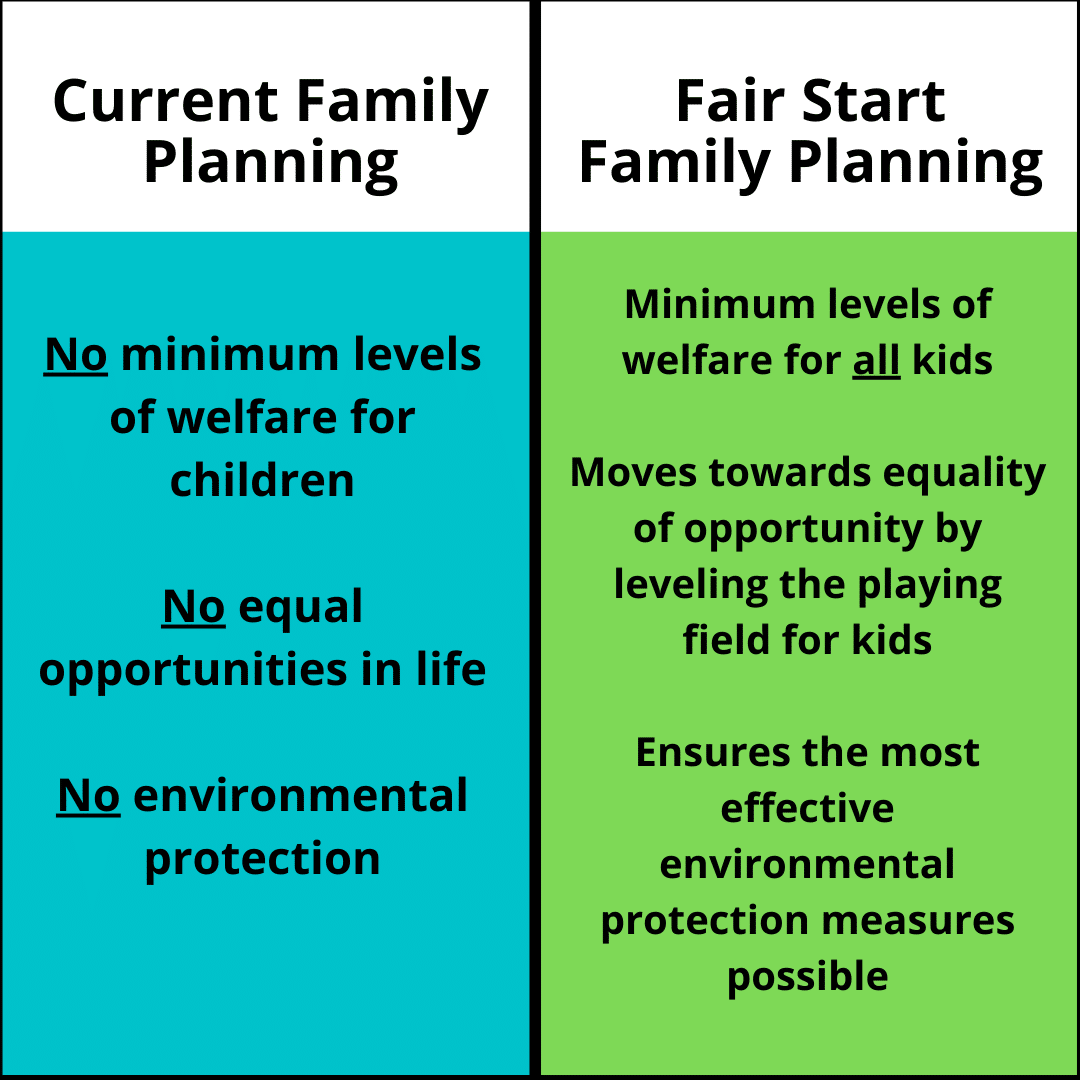
    A comparison chart of Current Family Planning and Fair Start Family Planning. The left side lists negatives: no minimum welfare, no equal opportunity, no environmental protection. The right side lists corresponding positives.

  • Calling for Voices: Think Your Future Child Deserves a Fair Start?

    Calling for Voices: Think Your Future Child Deserves a Fair Start?

    This past Fourth of July, two everyday people Cassie and Matt – exemplified what it would mean to constitute communities that are actually free, in part by compensating future generations for the harm we have caused them through the climate, inequity and other ecosocial crises.

    They are living the truth that justice for future generations overrides all other obligations, including property rights. Older generations lied about the “private” nature of family planning to protect concentrations of wealth and power from distributive obligations to future generations. That lie is fundamentally blocking justice.

    Listen to this brief podcast to understand why.

    Cassie, an activist and nonprofit professional said this about family planning:

    Current corrupt concentrations of power push a growth model that promotes unsustainable family planning policies. They see us ordinary people as economic inputs in their machine, to use for our reproductive and other labor. It’s our job to fight that narrative and elevate the worth of every individual to have their basic needs met, on day one. My partner and I hope to adopt children one day and I feel the urgency to ensure that my future child, and all children, have the resources and opportunities that are their right.

    Matt, a donor to the Fair Start Movement, said this:

    I support the Fair Start Movement because I know that any claims I have to property and wealth are subject to ensuring every child a fair and equitable start in life, the first and overriding human right. I’m willing to step forward, as a donor, and say that. I challenge others to do the same.

    Together, they are exemplifying a real new deal, one that fixes the fundamental source of the biggest problems in the world today, and leads to a comprehensively liberated state of affairs. It’s not about population. It’s about people, the vast majority of people, who will exist in the future. It’s about putting their interests first. And if it takes a village to raise a child, it takes a village to plan for a child. Government derives from the people which derive from their creation. A just creation norm thus precedes and overrides everything else, including the government assigned property rights that have created massive power differentials between rich and poor.

    We can spread this modeling, and this simple discourse: “Part of your wealth is my and my future child’s family planning entitlement and incentive.

    TAKE ACTION:

    1. Do you feel your child or future child deserves a level playing field and equal opportunities in life, relative to wealthy children – the many  millionaire and billionaire kids who will impact your child’s life?
    2. What if your child or future child had a human right to that fair start ? Would you advocate for policies, and direct action, to ensure that right?
    3. If you are someone with wealth, would you be willing to speak out in support of that right and those policies?

    Can you help us find groups of people to enlarge the discourse that future children’s right to an ecosocial Fair Start in life overrides property rights, and necessitates distribution that will incentivize the most comprehensive and effective solution to the crises we face – Fair Start family planning?

    Urge those you know who are willing to step forward and say this to contact Ashley Berke at Ashley@fairstartmovement.org

    Several hands of different skin tones are stacked together. Overlaid text reads, The most powerful social justice is a fair start in life. Join the coalition. The Fair Start Movement logo appears at the bottom.
  • Orgs Are Speaking Out on Smaller Families, and It’s Having an Impact

    Orgs Are Speaking Out on Smaller Families, and It’s Having an Impact

    Kudos to Fair Start Movement coalition member, Population Matters for bringing attention to the topic of sustainable families. The group awarded $695 to Prince Harry and Meghan Markle to be gifted to the charity of their choice, for making the decision to limit their family to two kids. The award, which is garnering headlines and serving to break the taboo, was timed to coincide with the U.N.’s World Population Day.

    Prince Harry revealed the couple’s plans to limit their family size due to environmental concerns back in 2019. Earlier that year we wrote to Megan as well, urging the couple to serve as role models and incorporate sustainability into family planning. It took courage for them to make that statement and it likely would not have happened without the great teamwork and encouragement from Population Matters and Jane Goodall. 

    Despite the endless supply of alarmist stories about declining birthrates, cultural perspectives are beginning to shift and recognize the numerous social and emotional benefits of choosing to have only one or two kids. Choosing a smaller family is also the most effective way to reduce climate impact. 

    The environmental impact of smaller families:

    It’s time for more environmental organizations to inspire eco-conscious parents to choose to have smaller families to reduce human impact on animals and the planet.

    Take Action: Share this headline with your favorite animal and environmental organizations, and urge them to follow suit in promoting more sustainable families. 

    Tweet:

    • Carter Roberts, @Carter_Roberts, president and CEO of the World Wildlife Fund
    • Annie Leonard, @AnnieMLeonard, executive director of Greenpeace USA
    • Michael Brune, @bruneski, executive director of the Sierra Club
    and ask them to take a stand on the most effective way to protect our future: policies that promote sustainable and equitable family planning.

  • Our Real Impact on Animals: Incalculable. Until now.

    Our Real Impact on Animals: Incalculable. Until now.

    Human population growth is the greatest threat to animals across the globe. For World Population Day, we’re launching a campaign around our interactive Animal Mortality Calculator designed to show individuals and policymakers how human population matters to animals.

    Created alongside experts, our model will use existing interdisciplinary data to measure direct human impact (in animals raised for meat, milk, and other products) and indirect impacts (including habitat  loss, traffic-related mortality, and native carnivores killed to protect livestock) on animal life.

    Though several publicly accessible animal “impact” resources and calculators exist, none helps  individuals easily assess the impact of their family planning decisions on nonhuman life. Our science-based calculator will influence individuals and lawmakers by helping individuals conceptualize the impact of their family planning choices while educating the animal protection movement about the need to include growth policy in our campaigning to reduce animal  suffering and death. The upshot is helping to build a sustainable world for animals and future humans.
    Can you help us reveal the truth about the greatest threat to wild and domestic animals worldwide and fund our Animal Mortality Calculator today?
    Donate
  • Fair Start Movement Files Amicus Brief Urging Court to Hear Climate Change Lawsuit

    Fair Start Movement Files Amicus Brief Urging Court to Hear Climate Change Lawsuit

    Fair Start joins Zero Hour, actor Mark Ruffalo, and dozens of other groups filing amicus brief in support of lawsuit arguing for a constitutional right to nature, which would prompt federal climate action 

    The Fair Start Movement has joined dozens of organizations together to file an amicus curiae (“friend of the court”) brief in support of a groundbreaking lawsuit brought by the Animal Legal Defense Fund and Seeding Sovereignty, a project of Earth Island Institute, that aims to compel federal government action on climate change based on a constitutional right to nature and wilderness. There is no freedom without nature. It sets the spectrum for autonomy from other persons, the buffer between us and their impacts upon us. The climate crisis is the erosion of the that buffer.

    The case is currently pending before the Ninth Circuit Court of Appeals. The case is based simply on the plain meaning of the liberty right “to be let alone,” a constitutional right promised by the Supreme Court and enforced in a variety of contexts, but none as important as this case. While the government routinely protects our right to be let alone in terms of being free from surveillance or intrusion into our homes, it is this version of the right – protecting the ecological baseline of nature in which we can be free from others and thrive – that matters most. 

    Cat Hughey, Director at Fair Start, had this to say: 

    “The sacredness of all human life and the more than human life culminates at a moment that we hold space and protections for all equally. The Fair Start Movement holds that the full-fledged experience of humanity exists when we embark on fighting the climate and ecological crisis by ensuring that every child can restore nature and value its health. By environing wilderness and its right, we in turn protect our future generations’ ability to exercise freedom, democracy and, most importantly, keep at bay ecological and social catastrophe.”

    The right to be let alone, applied in this case to require the federal government to take the greatest measures possible to stop the climate crisis and restore nature, would ensure our children enjoy the natural world generations past have enjoyed. The Constitution guarantees that. 

    Nature, like equity and democracy, is part of every child’s right to an ecosocial Fair Start in life, and we have a right to ensure that right by all means effective. No government that fails to ensure that right is legitimate. The Fair Start Movement knows future parents will do what it takes to protect their children’s right to an ecosocial #fairstart in life. 

    What’s next? The Fair Start Movement intends to file federal litigation challenging a state abortion ban not as a violation of personal privacy, but because such bans interfere with the first and most fundamental human right: Every child’s right to a Fair Start in life.

    For more information, visit fairstartmovement.org 

    ### 

  • 10 Guides for Effective Nonprofit Management

    10 Guides for Effective Nonprofit Management

    By Jenna Sherman, of parent-leaders.com

    Have you recently become interested in the philosophy behind the Fair Start Movement? From family planning reform to environmental activism, there are so many ways that people can get involved in order to establish a more equitable society for children and parents. Maybe learning about this concept has even sparked your interest in starting your own nonprofit! If you’re considering this major undertaking, check out these resources first.

    The First Steps

    Starting a nonprofit doesn’t happen overnight. Here are a few tasks that belong on your checklist!

    • Want to build your nonprofit around family planning? Read up on the movement to find out how your nonprofit can become part of it!
    • Work out everything from your fundraising strategy to your overall message in your initial business plan.
    • Next, you need to think about your budget — be realistic about how much you expect to bring in and spend.
    • Finally, you can begin hiring your first team members! Look for candidates with a combination of skills and passion.

    Money Matters

    How can you bring in funds for your organization? And how can you ensure that your money goes far? These financial management tips will help!

    • These strategies can make your fundraising efforts more effective.
    • From tracking important dates to distributing paychecks on time every month, a payroll software and calendar template that automatically does calculations for you is a great tool.
    • Don’t forget about everything you’ll need to take care of come tax season! Check out your reporting requirements ahead of time.
    Several hands of different skin tones are stacked together. Overlaid text reads, The most powerful social justice is a fair start in life. Join the coalition. The Fair Start Movement logo appears at the bottom.

    Great Management Skills

    You want to polish your leadership skills and motivate your team to succeed. These resources are full of essential management recommendations.

    You might feel simultaneously excited and nervous about starting your nonprofit. At first, you will have a lot to learn about nonprofit management! But as time goes on, you’ll realize that you’re making a real impact, and building a brighter future is possible.

    Want to create a better world for all children? Get involved with the Fair Start Movement. Sign up on our website today to find out how you can lend a hand to our campaigns!

    Photo via Pexels

  • The Fair Start Movement is Here

    The Fair Start Movement is Here

    After five years of research and evolution, we are excited to announce that HavingKids is becoming the Fair Start Movement. This comes from the input of many voices from diverse and intersectional areas in advocacy, as the organization pivots to more of a collective structure increasingly led by identities with more at stake. 

    The Fair Start Movement is a collective of parents and young people, child advocates, activists, health practitioners, social scientists, ethicists, and institutions from a range of causes who come together to advance Fair Start efforts at the state, federal, and global level. 

    Several hands of different skin tones are stacked together. Overlaid text reads, The most powerful social justice is a fair start in life. Join the coalition. The Fair Start Movement logo appears at the bottom.

    We advocate for informed, inclusive policies rather than ones focused on short-term and unsustainable economic growth with damaging ecological consequences. We call on those with a platform to speak out, from celebrities to those in governance. We also build our movement through a growing coalition of organizations. But most importantly, we empower young people and parents to share their stories and force accountability from those who oppose giving kids a fair start and threaten our and our children’s future.

    Child-first collective family planning, beyond the isolation of “nobody else’s business” is happening. Most people maintain a taboo against talking about collective family planning because they fear the top-down power of the state. The reality is that we perceive the state as a threat, which in a democracy makes no sense, because of our failure to implement Fair Start or comparably inclusive family planning models.

    Our focus remains on work with the greatest long-run impact on the crises we face today: Rights-based Fair Start reproductive justice reforms that override all competing interests. If it takes a village to raise a child, it takes a village to plan for one. Our interventions are built around three pillars: 1) fertility delay and parental readiness, 2) distribution of resources geared around birth equity, and 3) a universal ethic of sustainable families.

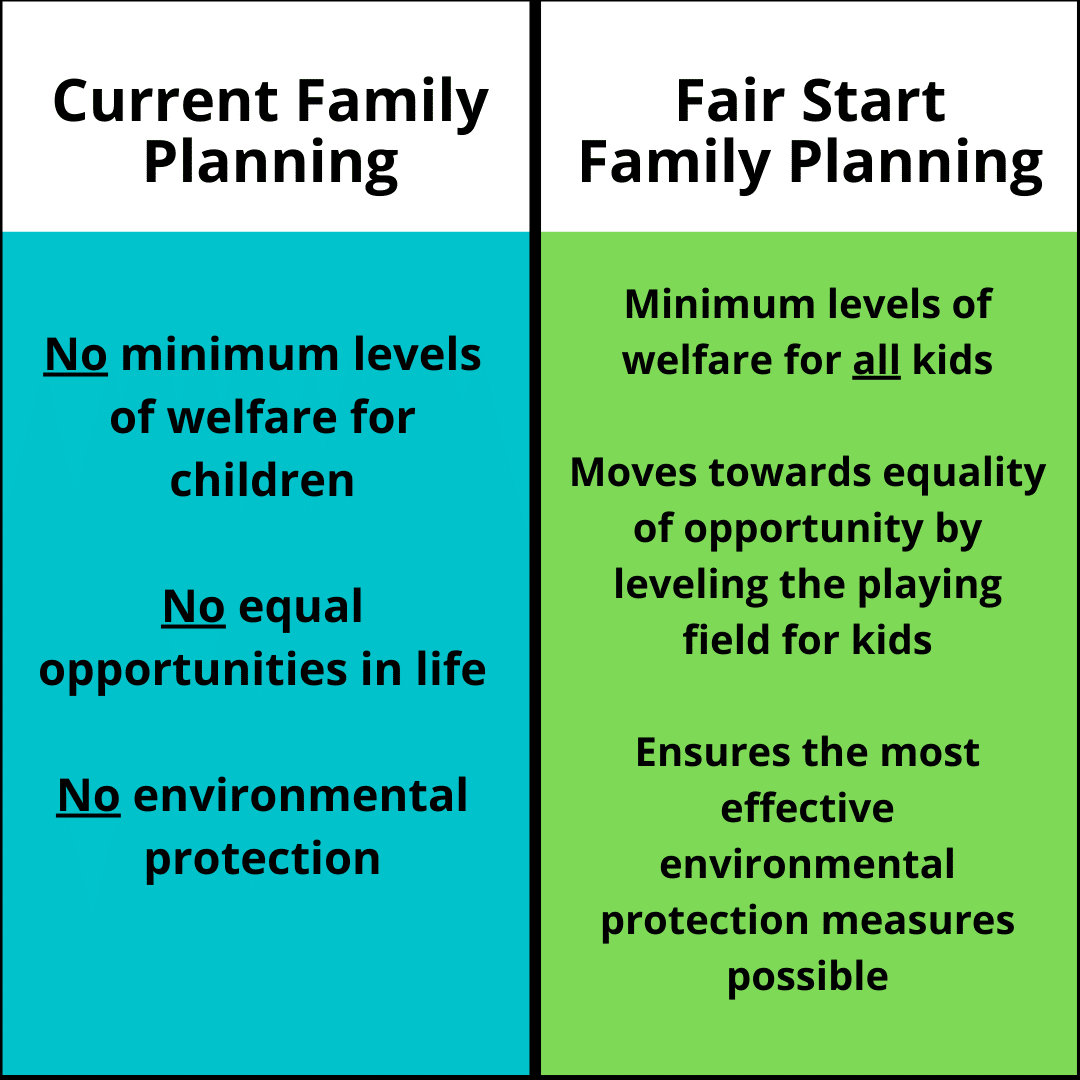
    A comparison chart of Current Family Planning vs. Fair Start Family Planning. The left side lists negatives of current planning; the right side highlights positive outcomes of fair start planning for welfare, equality, and environmental protection.
    Better family planning has the greatest impact on the crises we face today.

    We remain committed to our 2021 plans of action, including: 

    Plans for our first peaceful demonstration as the Fair Start Movement demanding that Exxon officials, past and present, publicly acknowledge their obligations to compensate future generations against a zero baseline, given the climatological harm they have caused. They are obligated to right that wrong by funding climate restorative projects to ensure all kids an ecosocial fair start in life, a moral fact we are also urging the UN to institutionalize through correct interpretation of Article 16 of the Universal Declaration of Human Rights. It’s time for both governments and big business to stop working together to exploit future generations. Fair Start is the first and overriding human right, superseding the property rights of those who have harmed future generations, and who must compensate them through Fair Start and other effective mechanisms.

    Join the coalition as an organization or sign up to follow the latest opportunities to take action. 

  • How Does the Fair Start Model Work?

    How Does the Fair Start Model Work?

    Guest author: Mary Jean

    We all deserve the best life. Whether you want a happy kid, a happy cat, a healthy environment to live in, or a happy community, all of it can be done with the right policies and carefully designed models. This is where the fair start model also comes into play. It focuses on how intending parents are planning to give their kids a fair start to their life. Communities and families must go hand in hand to make the future secure and bright for the kids and to provide them with a better living standard from the very beginning. Here is what you need to know about the fair start model:

    What is a Fair Start Model?

    To be precise, the fair start is a child-centric family planning model. It advocates the benefits of having small, sustainable, and equitable families invest more in every child and give them the rights they are entitled to. It helps our mindsets shift from ‘what the parents want’ to ‘what child will need.’ The future of a child is a major concern in the fair start model. 

    The fair start model plays a major role in eradicating problems like child poverty, environmental crisis, bloated democracies, and economic inequalities. Overpopulation leads to inequality and gives rise to grave global concerns, primarily being the inequitable living condition that further leads to exploitation of basic human rights. 

    How Does This Model Work?

    Those who plan to have a child prepare themselves economically and socially first in order to fulfill their responsibility in a better way.

    Together, communities and governments play their part to give all kids a fair start in life, leading them to a secure future, and a socially and economically stable lifestyle. 

    These efforts become fruitful through a universal ethic of equitable and sustainable families.

    What Are the Benefits of the Fair Start Model?

    The model keeps kids from falling prey to issues like poverty, and distress from being neglected. The modeling erases boundaries between child welfare programs and family planning by linking needs with resources. Since the model is centered upon when and where the kids will arrive, and what kids will need to have a fulfilling start in life, it urges parents to give themselves enough time to prepare themselves for starting a family. How we plan our families is what majorly determines the quality of lives we will live, both at the societal and individual levels. 

    Shifting our focus towards a better future incoming generations surely results in the best outcomes. It gives people an agency over their lives that frees them from excess financial burdens that are one of the major causes of mental health issues. Moreover, family planning curbs the overpopulation that is leading to environmental crises – like the water crises un many parts of the world. For saving future generations, a fair start model is the need of the hour!

    Three children sit at a checkered table. One covers his eyes, the middle rests his face on his hands, and the third covers her mouth. Toy cars are on the table and a window with trees is in the background.

    Conclusion:

    The fair start model is undeniably an all-in-one solution. It benefits all the basic domains of the world, such as ecology, economics, democracy, and human rights. It provides us with a solution to live the best of our lives even within our limited resources. You can play your part to bring the much-needed change in our family planning system by practicing the fair start model. Save the planet and resources for future generations to come.