Author: Fair Start Movement

  • The Real Issue Behind D.C. Statehood: Constituting Ourselves as Free People

    The Real Issue Behind D.C. Statehood: Constituting Ourselves as Free People

    Guest Contributor: Nicole King

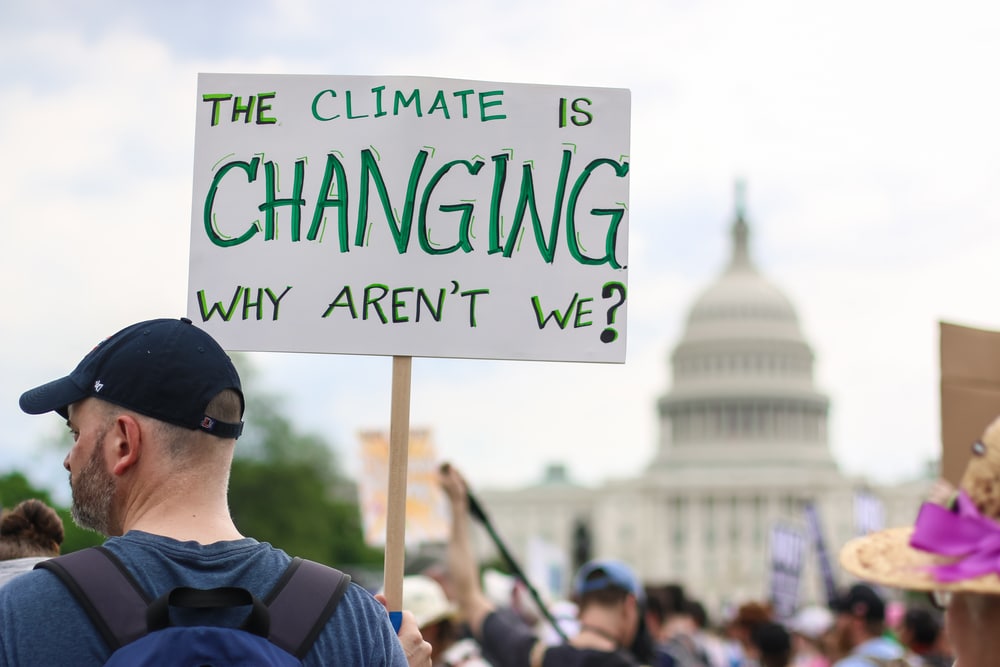
    This June, the House of Representatives voted in favor of granting statehood to Washington D.C. “The Washington, D.C. Admission Act” (H.R. 51) would admit most of the current district as the 51st state. For the first time, the District’s 702,455 residents would be represented in Congress. 

    Republicans, however, have been quick to paint the individuals who live in the District as unworthy of representation. Senator Tom Cotton stated, “Wyoming is smaller than Washington by population, but it has three times as many workers in mining, logging, and construction, and ten times as many workers in manufacturing…Wyoming is a well-rounded working-class state. A new state of Washington would not be.” To make matters worse, Senator Steve Dane’s of Montana implied that D.C.’s residents were not “real people” like those found outside of the beltway. 

    Such remarks stand in sharp contrast to the idea that every person – regardless of their career opportunities or zip code – deserves the opportunity to meaningfully participate in democracy. In fact, these comments show a disrespect for basic human rights. The United Nations recognizes that each person is born free and equal and the right to take part in government and public affairs. Yet Senators Cotton and Dane remain steadfast in their views that the District’s population should not enjoy this right.  

    Real Statehood

    While granting D.C. statehood is certainly an important step toward bridging the gap between rights and reality, it is not a sufficient one. A driving cause of this schism remains largely overlooked: our current family planning paradigm prevents us from constituting our societies in a way that allows us to fulfill the rights that we already recognize. By exclusively focusing on the rights and obligations of the human beings that exist today, we miss a critical preceding step: that we constitute ourselves in a way that allows all future human beings to meaningfully participate in making the laws that govern them.

    The U.S. House of Representatives has one voting member for just about every 747,000 Americans. This “representation ratio” is the highest it has ever been in our nation’s history and is significantly higher than in other industrialized countries. Research suggests that as the representation ratio climbs, our democracy becomes less effective. With fewer representatives per capita, individual citizens have to fight harder to be heard by their elected officials. Additionally, the makeup of the legislature is less likely to reflect the demographics of the people they represent – both in terms of race and income level. When faced with representatives who are largely unrepresentative, many communities feel shut out of the policy making process and avoid engaging entirely. 

    Despite these problems, our number of representatives has remained the same since the 1930s, even though the U.S. population has tripled since that time. While the D.C. statehood bill may grant much needed representation for residents of one city, it does not address the fact that almost all Americans are already severely underrepresented and will have painfully little say in shaping the laws that govern their lives for the foreseeable future. 

    Getting Intergenerational

    Adding more representatives to the House may seem like the obvious solution. This strategy, however, is likely to be ineffective in the long term. According to Drew DeSilver, a Senior Writer and the Pew Research Center, we would already need to add nearly 700 members to our current 435 member House in order to achieve the representation ratio we had in the 1930s. This number will only grow as we add a projected 79 million individuals by 2060. As the number of representatives rise, the House runs the risk of becoming unsustainable and unmanageable, mimicking China’s National People’s Congress, which at 2,980 members, is harshly criticized for its inefficiency and largely symbolic existence. 

    Today’s policymakers can help solve this problem by considering the needs of all future children when planning their own families. By giving families access to the resources needed to plan for more sustainable families, policymakers can help parents across the country slow the rate of population growth. This would afford future generations the time and space to organize themselves in ways that are truly democratic, giving each person more time at the podium during townhalls and allowing representatives to truly represent their communities. 

    The District’s residents undoubtedly deserve representation. And so do all future children. We should all use this unique moment in history to ensure that our children’s right to participate in democracy becomes their reality.  

    Take action: Let’s lead in D.C. by moving towards Fair Start family planning.

  • A Thoughtful Mother Calls Out for Family Reforms

    A Thoughtful Mother Calls Out for Family Reforms

    In response to a recent article on the struggle for creating meaningful animal rights through family reforms, one anonymous mother is choosing to speak out

    The issue of population ethics is very fraught, and for good reason. Things can go badly when government interferes with the bond between parents and children, especially when the government is placed in the role of controlling whether people have children or keep their children–even worse when it’s some government entity that’s deciding what makes “good” or “deserving” parenting. No parent or child – or even hypothetical child – wants the parent-child bond threatened in any way, even as much as we all agree that it’s a necessary pseudo-parental role the state must take on when a child must be protected from abuse or neglect.

    Hands united

    One thing that is uncontroversial to say is that regardless of whether we have or plan to have children, all of us want a world where all life is able to thrive, and an environment that will sustain that. Life, especially new life and vulnerable life, represents hope. We are all rooting for new and future life to succeed.

    The problem is that we are facing a reality where the value of life and the hope for any given new life is rapidly diminishing. And for some new life, there is no hope at all – for example, male chicks born into the egg industry struggle to emerge from their eggs and live barely long enough for their feathers to dry before they are ground up alive. For most of us, the picture is not that dark, but we operate in a society where hope is an increasingly rare commodity and distributed in a dramatically unequal way. We are all only different from those chicks as a matter of degree, not kind.

    A woman with wavy hair carries a baby in a green sling on her back, standing on a misty field with puddles, while black cows graze in the background.

    The root cause of this is devaluation of life. We have not done enough to protect life or enable an environment to support it. Fair Start’s core thesis seems to be that this is because we are unable to see or rationally reckon with the creation of life as the starting point in our thinking about justice and fairness, and because of this, our – in fact all life’s – existential value and hope for survival is threatened. To me the essence is this: there is a point at which population – especially high-resource-consuming human population – becomes so large that it lessens the value of life. It lessens the value of the individual as well as the family, and increases conflicts over the right to life between and within species.

    I can’t say where that line is or whether we have yet crossed it, but I think it would go against the laws of basic ecology and physics to say that line does not exist. What that means is that we have to find a way to responsibly bring this issue into the conversation, preserving the value of life and the protective bond between parents and children. This includes our role as parents in the metaphorical sense that all of us are guardians of society and protectors of future life, and our metaphorical role as children in the sense that we are all vulnerable and trading in the increasingly scarce resource of hope.

    A young girl wearing a yellow long-sleeve shirt is sitting at a table, focused on writing in a notebook with a pen. Sunlight softly illuminates her face and her surroundings.

    There are a number of routes to addressing this, some of which would be counterproductive or come with an untenable cost to the very values this relies upon – autonomy, valuation of life, the parent-child bond and protection, and hope. But this is exactly why we have to reckon with the issue, responsibly and thoughtfully, since leaving it out of the important conversations of how to repair and build the world we need to support life comes with an even bigger cost. It’s not just badly conceived and destructive remedies to this issue that we risk when we marginalize this topic, but a threat to the ability for any species to survive, including our own.

  • Decolonizing the Future: Having a Fair Start in the Philippines

    Decolonizing the Future: Having a Fair Start in the Philippines

    How changing the rules for family planning and development will make all the difference

    by Brixton Reyes

    A Fair Start in the Philippines?

    In the Philippines, family is a central and inviolable aspect of Filipino society. Most people’s lives revolve around their families, as is evident through various generations of family members living under the same household not wanting to be separated and through Overseas Filipino Workers (OFWs) remitting support to their parents and siblings. Despite the level of value Filipinos put on ‘family’, many children are still not given the same degree of importance. These children are victims of unfortunate circumstances from the moment they are born. In an article published by France’s Agency for Development, there are 250,000-1,000,000 homeless children living in the streets of the capital city of Manila.[1] In relation to this, thirty percent (30%) of Filipino children under 5 years old also suffer from stunting due to malnutrition which makes the Philippines one of the top countries in stunting prevalence.[2] Moreover, at least 17% of Filipino children aged 13-17 years old experienced sexual violence while growing up.[3] These are a few among the barrage of issues that plague today’s Filipino youth.

    The same is the very reason I support the Fair Start Movement. A fair start for a Filipino child ensures that they will have a proper home they can live in that is conducive to their holistic development, adequate nutrition to fully develop their physical, mental, & emotional capacities, and safety from abuse and other forms of violence. It is imperative that the Fair Start Model should be included as one of the government’s core policy reforms. Children are referred to as “biyaya ng Diyos” (blessings of God) but our current laws & policies do not reflect this status. The Filipino family should not be an entity to which a child, even as he or she matures, is subservient.

    A key feature of the Fair Start Model is that the right to have children is not a personal and private act within the parents’ exclusive domain. In the current model, which assumes this right belongs privately and exclusively to the parents, our local laws don’t have the same regulatory enforcement.  Compounded with the state’s neglect to provide for free accessible contraception and family planning services to its citizens, this situation allows children to be born to parents who are unprepared to care for them and their own rights are neglected from the start. This state of affairs is supported by different aspects of Philippine society such as religion, socio-cultural norms, and even online trends. Family planning should be child- centric rather than parent or family-centric. An effort to get out of this limbo is the submission of R.A. 10354 otherwise known as the Responsible Parenthood and Reproductive Health Act or RPRH Law[4] whose implementation is currently not being prioritized. As an effect of this, despite the availability of safeguards, it still snowballs into unwanted pregnancies[5] and eventually, a growing population that ends up uncared for.

    Because of this, I believe that adopting the Fair Start Model is a necessary public act. In doing so, the Philippines can pave the way for more countries to uphold intergenerational justice in the trying times ahead.


    [1] https://www.afd.fr/en/actualites/breath-hope-street-children-philippines

    [2] https://reliefweb.int/report/philippines/undernutrition-philippines-scale-scope-and-opportunities-nutrition-policy-and

    [3]https://www.unicef.org/philippines/media/491/file/National%20Baseline%20Study%20on%20Violence%20Against%20Children%20in%20the%20Philippines:%20Results%20(executive%20summary).pdf

    [4] Republic Act No. 1035

    [5] https://pidswebs.pids.gov.ph/CDN/PUBLICATIONS/pidsdps2110.pdf

  • Collective Souls Coalition for Lost Girls: Their Story

    Collective Souls Coalition for Lost Girls: Their Story

    Can We Really Prevent Child Abuse? One Family Rides in Search of an Answer

    A father and his son have set out on a bicycle ride across the nation, from South Florida to Los Angeles. After being raised in abusive situations, and being fortunate enough to find a safe place, now they will not run, they will ride to fight for all children to have a fair start.

    On average, according to FBI statistics, 450 children are murdered by their parents each year in the United States. More than one a day.

    Why can’t governments prevent that? 

    The truth is they can.

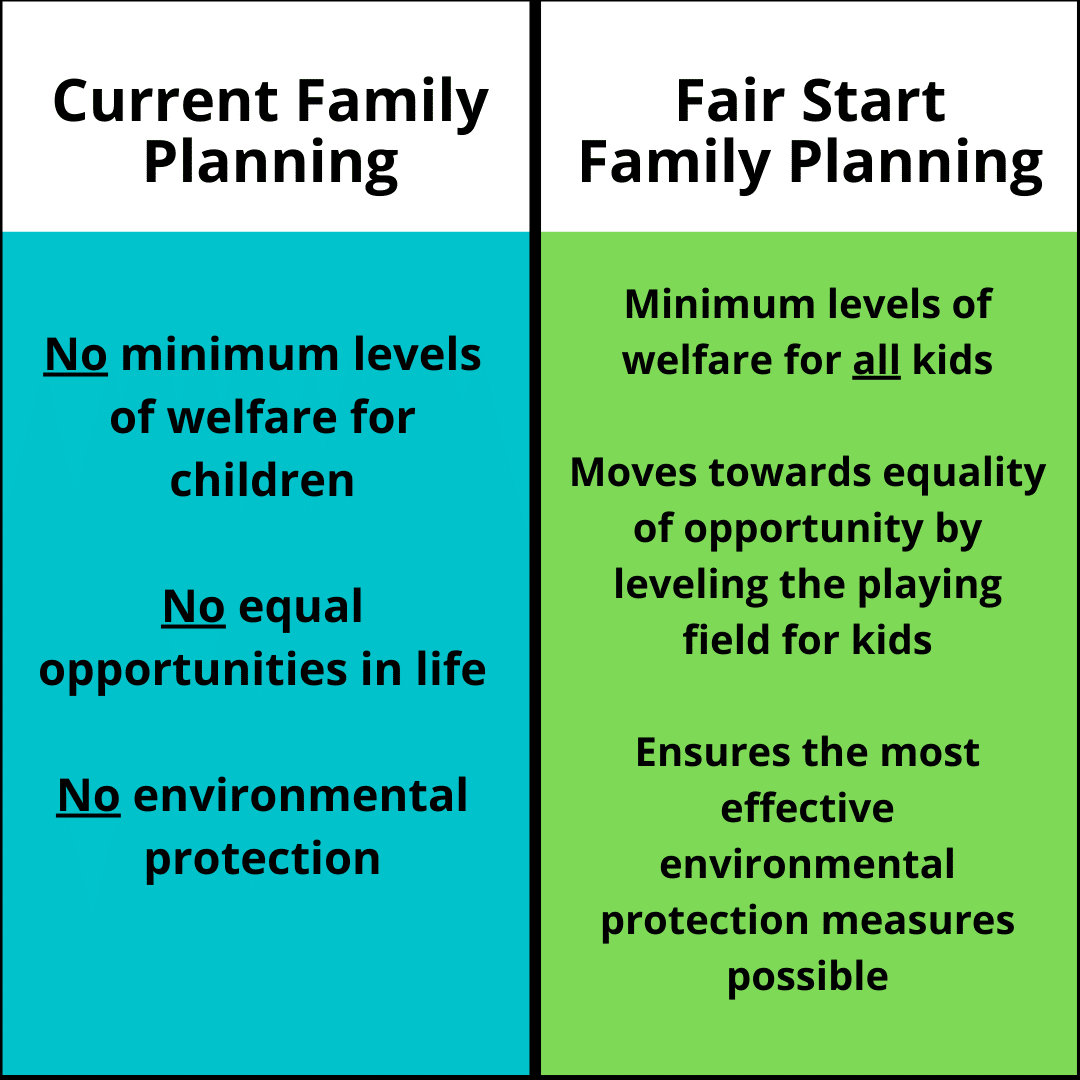
    A comparison chart of Current Family Planning vs. Fair Start Family Planning. The left side lists negatives of current planning; the right side highlights positive outcomes of fair start planning for welfare, equality, and environmental protection.

    But a few bad policies – family planning systems that push population growth to fill shopping malls rather than parental readiness to ensure functional town halls, underfunded child protection agencies, misplaced systems of rights that treat children as parental property – are standing in the way. 

    This father and son, inspired by the horrific death of Gabriel Fernandez in 2013, and many others,  set out to expose and change those policies. And along the way they’ve seen the other costs of those policies – the ones that push helpless children into the hands of abusive parents – in the form of nature overrun by people mass produced and uncared for,  and systems of government that look nothing like the inclusive democracies in which we are supposed to live. 

    The nature, the family planning policies that will determine it and future children’s fate, and the road ahead. Can you see the connection between these things?

    But they are also seeing support – a gush of online support, an advocate in the capital of their home state, and the animals in what remains of nature, helpless like the children this ride honors. 

    A person relaxes inside a blue tent set up on sandy ground. Next to the tent are bicycles, bags, and a cart with a chalkboard sign, with greenery and a building in the background.
    On the road.

    The father says this of his son: 

    “Now he plays the vigilante of sorts. Taking matters into his own hands, with me as his sidekick and back up. He pounds the streets with his statistics and petitions with a will to change the world for his peers.”

    Help them end  this, the child abuse, the filicide,  that started their ride and keeps them pedaling towards better places and safer spaces. 

    Follow them on YouTube. 

    Sign their Change.org petition.

    Join their group on Facebook. 

    You can also help change the way we plan families by promoting Fair Start reforms universally. 

  • Act: Ask CNN and Eliza Anyangwe to Embrace True Equality Now

    Act: Ask CNN and Eliza Anyangwe to Embrace True Equality Now

    Kudos to Eliza Anyangwe for reporting on the most important issue of our time: The changing way we are all having children, the massive impact it will have on our futures, and the policies that control these matters.

    But after rightly criticizing Prince William for his place in the inequitable systems in which we all live (the monarchy is a dead giveaway), Eliza then endorses the isolation model of family planning that prioritizes subjective parental choice and growth over objective values like birth equity for all children as a means to eliminate the gap between rich and poor, the restoration of nature, and ensuring functional democracies where all voices matter. The isolation model evades collective obligations to level the playing field and serves the wealthy (many of whom benefit as advertisers on CNN), not women or children.

    Fact: That model, by not prioritizing the needs of future children, fundamentally created the crises we face today.

    As Equals must be committed to equality, for all entities, and we only get there through Fair Start reforms that change the way we plan families, moving us away from the model that created the climate crisis and vast economic inequity, and towards birth equity based reparations for future generations.

    Take action: Urge @ElizaTalks to consider alternative policy models, like Fair Start, as the most just and effective solution to the crises we face today.

    Facts:

    • A clear link exists between rapid unsustainable growth and poverty. Better family planning and sustainable families increase economic prospects by allowing greater investment in each child.  
    • According to the World Bank, in 2015, almost 2 billion people (26% of the world’s population) were living on less than $3.20 per day, and nearly half of the world (46%) was living on less than $5.50 a day. 
    A comparison chart of Current Family Planning vs. Fair Start Family Planning. The left side lists negatives of current planning; the right side highlights positive outcomes of fair start planning for welfare, equality, and environmental protection.
    • The costs and benefits of overpopulation under globalization are now distributed by class more than by nation. Labor bears the cost of reduced wage income; capital enjoys the benefit of reduced wage costs. 
    • The United State and much of the capitalist world believed that new bodies were needed to produce more labor. This pro-natal, pro-capital belief has created a world in which huge inequities exist. For example, the world’s 2,153 billionaires have more wealth than 4.6 billion people, which is more than 60% of the planet’s population. 
    • Family size affects those in developed countries as well as underdeveloped nations: In the U.S., the Kansas City Star reported that of more than 6,000 prisoners in 12 states, 1 in 4 was a product of the foster-care system; there is a foster-care-to-prison pipeline in many states. Foster children are also diagnosed with PTSD at a rate greater than Iraq War veterans, and every year, more than 4,000 former foster care kids end up homeless after leaving the system. Meanwhile, the number of American children in foster care increased 12% between 2012 and 2017. 
    • Our current family planning systems provide no minimum standard of well-being for future children, allowing children to be born into failing state systems because their parents cannot care for them. That exacerbates inequity and ensures rich kids stay rich and poor kids stay poor. 
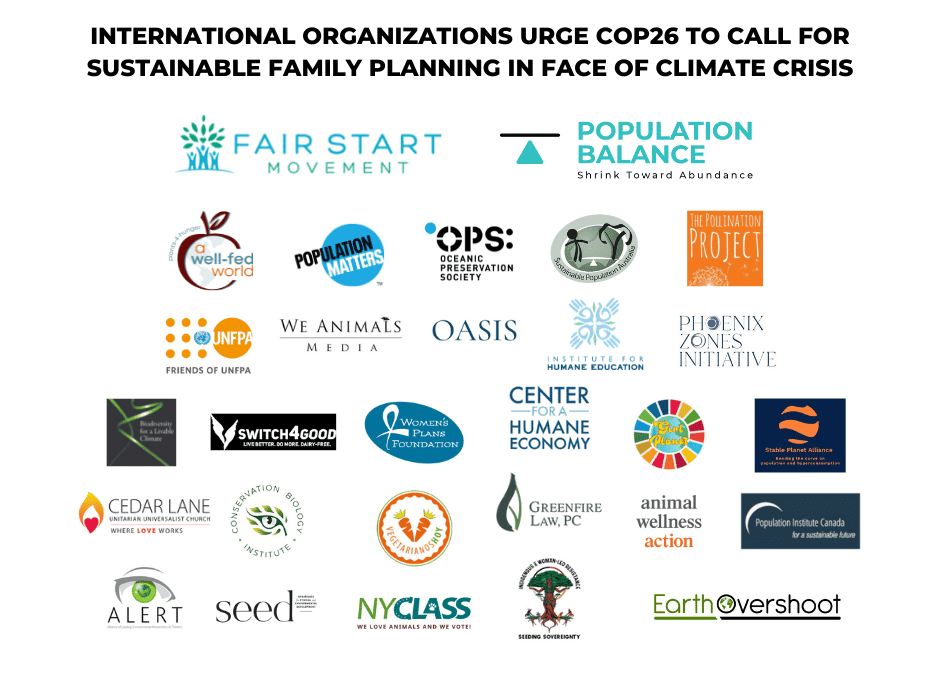
    A collage of logos from various international organizations urging COP26 to support sustainable family planning in response to the climate crisis. The message is written in bold text above the logos.
    Recent coalition of organizations promoting equality in family planning reforms.
  • Eliva Press book on Fair Start recommended by leading constitutional scholar Prof. Lawrence B. Solum

    Eliva Press book on Fair Start recommended by leading constitutional scholar Prof. Lawrence B. Solum

    Review by Prof. Larry Solum

    “The Legal Theory Bookworm recommends Justice as a Fair Start in Life: Understanding the Right to Have Children by Carter Dillard.  Here is a description:

    “Heidegger wants us to recapture the sense of people as unique and valuable, and this seems like the central argument of Dillard’s book.”

    How did we ever come to believe in the myth of intentional, just and legitimate systems of social organization – like states and families – without actually accounting for the fair creation, development and consensual inclusion of future generations – the majority of persons – into those systems? How is consent, or self-determination, possible without that account? What norm could possibly precede that account? These articles – several peer-reviewed and originally published by Yale, Duke, Northwestern and other universities – will argue that, abstraction aside, there is no real justice without ensuring all children a fair start in life, both socially and ecologically. We first move towards justice by reforming the moral and legal right to have children, and the family planning systems the right creates, around zero baseline – or Fair Start – modeling that through collective child-centric planning enables consent to power and thus relative self-determination against the true baseline of nonpolity. Without it, we never orient our actions from a just, or inclusive and reflective, position.

    A group of logos from various organizations appears below the headline: International organizations urge COP26 to call for sustainable family planning in face of climate crisis.

    Fair Start moves the discussion away from population and toward people, away from counting people and toward making people count. If we care about freedom, we first care about people because in democratic systems they – ultimately – have political authority over us. A just creation norm makes God fair, our systems consensual, and frees us from one another.

    This book thus seeks to correct what we might call the constitutive or grundnorm fallacy: The mistake of trying to derive inclusive systems of justice, and freedom, downstream of our creation rather than going to the source – just family planning. Correcting that mistake, and understanding the right to have children, resolves a corruption at the heart of human rights which makes a system designed to protect the most vulnerable, like future persons, fundamentally exploitative of them. The creation norm is what most accounts, and should most account, for the lives we experience. Making that norm fair brings us to optimal world populations. It is also the most effective solution to the ecosocial crises we face today, with the weight of evidence showing ten to twenty times the impact, via redistributive Fair Start family planning entitlements/incentives, on things like the climate crisis and economic inequality relative to downstream measures.

    “Justice is not abstract, but created in the constant and fundamental formation – or procreation – of power relations.”

  • Insist That Public Policy Respects the Rights of Children and Women

    Insist That Public Policy Respects the Rights of Children and Women

    By Dave Gardner, co-host of the GrowthBusters podcast, and director of the film, GrowthBusters: Hooked on Growth

    A woman in a red shirt holds an hourglass and touches her belly, smiling. The Italian text reads, La bellezza non ha età. La fertilità sì. (Beauty has no age. Fertility does.) The hashtag #fertilityday is shown.
    “Beauty has no age limit. Fertility does.”
    Ad issued by Italian government in campaign to boost fertility rate.

    Let’s find a way to reduce child poverty without signaling that society needs to exploit more babies to grow economies. There was a time when a case could be made that bringing more children into the world was a benefit to society. Today, with the overwhelming demands of nearly 8 billion people inflicting serious damage on the planet’s life-supporting ecosystems, there is no case for encouraging births, especially when it will harm the very children we have. More births portend a bleak future for today’s and future children – whom we should be protecting, not exploiting. Public policy needs to catch up with this harsh reality.

    For too long, the decision to bring a child into this world has been all about the “rights” and desires of the prospective parent, with little regard for the rights of children. The rights of children should be paramount, eclipsing other rights and agendas. Nothing could be more important. That’s one reason I admire and support the work of the Fair Start Movement.

    Today, we’re witnessing unenlightened state and business agendas to reverse the trend of dropping birth rates. “People want it. Society needs it. We want the economy to grow,” proclaims Lyman Stone, an adjunct fellow at the pro-growth American Enterprise Institute (AEI).

    On a full planet, it’s time we put an end to pro-natal agendas and rhetoric that pressure, incentivize or otherwise encourage prospective parents to add to our numbers. Let’s consider pro-natal public policies because they are surging today.

    Bear with me while I set the stage:

    A close-up of a sleeping newborn baby wrapped in a blanket, featured on a BBC News webpage discussing the global decline in fertility rates, with headlines and navigation menus visible.

    Birth rates have been dropping around the world for 60 years, and that drop may be accelerating today – for many reasons. There is some lag, but after birth rates drop below replacement rate, a population eventually begins to contract. While that’s not happening yet to our global numbers, many countries have begun to experience this contraction. And there are more to come. Sadly, this is getting negative attention.

    But it’s actually really good news. It’s an indication that we’re collectively planning for and investing more in each child, which naturally brings down family size. It also means more female autonomy, improved access to education and employment opportunities for women, better access to contraception and other family planning services, and a reduction in teen pregnancies.

    Another contributing factor is it’s become SO apparent that we’re doing serious damage to our home planet. Our climate, biodiversity, soil, and water are all degrading before our eyes. Young adults today are reluctant to bring a child into such an uncertain world, and many do not want to contribute to this destruction by adding more people.

    A nearly empty small-town street with a few cars parked along the side, brick buildings on the left, trees in the background, and a cloudy sky overhead. The headline discusses U.S. population growth concerns.

    On an overpopulated planet, we ought to celebrate declining birth rates. It’s exactly what is needed so we can ease our pressure on ecosystems, allowing them to return to health and meet our needs, the needs of other species, and especially the needs of the world’s children. Unfortunately, I’m observing the exact opposite. There’s an unexamined assumption that, “of course we must replenish ourselves” (replenishing is something we should do when we’re at a sustainable population).

    Growth-addicted policymakers in numerous nations have been panicking about what’s being termed a “baby bust.” These fears over a shrinking population are so common, they’ve earned the labels, “depopulation panic” and “baby-bust alarmism.” Some of this panic stems from the fact that governments have been engaged in a population Ponzi scheme, relying on tax revenue from an ever-growing pool of citizens to fund services for those born decades earlier. Plus, a growing population means more workers and more consumers year after year, an easy recipe for GDP growth. New York Times columnist Ross Douthat wrote, “Today’s babies are tomorrow’s taxpayers and workers….”

    Screenshot of a news article titled Its national preservation: Greece offers baby bonus to boost birthrate, with a photo of young children in traditional Greek costumes holding Greek flags.

    Of course, a high rate of GDP growth is the Holy Grail. Economic growth is the most universal public policy goal on the planet. AEI’s Stone, who is also a research fellow at the conservative think tank, Institute for Family Studies, laments, “There is no economy that has managed to knock out gangbuster growth with a declining population.”

    If you’re addicted to growth and running a Ponzi scheme, it can be very alarming to see it begin to unravel. And if you’re running for reelection and you can’t brag about economic growth during your administration, you’re pretty much done.

    So, officials in numerous countries are instituting policies designed to boost the birth rate. According to the U.N., 10% of the world’s nations had explicitly pro-natal policies in 1976, but that number began to rise sharply at the turn of this century, and has almost tripled (28% in 2015, the most recent data). Hungary, Poland, Greece, Japan, and Korea are just a few of the nations very actively attempting to reverse population contraction.

    A close-up of an adult gently holding a baby’s hand, with the headline, “Japan is trying really hard to persuade women to start having babies again,” displayed at the top of the image.

    It’s too seldom discussed, but pressuring women to birth more taxpayers, workers or consumers is an abhorrent violation of their human rights. It commodifies children and dehumanizes women, reducing them to incubators in service to an overheated economy hooked on unsustainable growth. Women and couples should be making family-size decisions free from political and cultural pressure to procreate. As for future children, they have a right to inherit a healthy planet and a shot at living decent lives.

    Even in the U.S., where social support programs have traditionally received limited funding, support for unsustainable and inequitable baby-making has begun ratcheting up. Child tax credits, child allowances, paid family leave, and child care subsidies are getting miraculous bipartisan support. The American Rescue Plan (a response to COVID) has been providing $3,000 to $3,600 per child in tax credits annually – through the end of 2021. Efforts are underway to extend it. Senator Mitt Romney this year proposed The Family Security Act, which would also send a monthly check to families for each child.

    Multiple identical babies in white shirts and diapers crawl in rows on a solid blue background, illustrating concerns about Eastern Europe’s efforts to boost birthrates and address depopulation.

    In defending the proposal, Senator Romney said, “We’re creating an incentive for people to be able to form families and to have children because we’re recognizing that we’re not reproducing ourselves.” In one interview, Romney stated, “Our population is declining pretty substantially. We’re down, I think, 5.8 million people from where we would have been had we maintained the birth rate of the last decade. So, we’ve got some work to do.” Clearly, he is not aware that we’re in overshoot (the scale of the human enterprise – our economy and our population – has outgrown our planet).

    Policies and projects to increase birth rates in several nations have met with mixed results. That’s not deterring policymakers desperate for growth. Advice from New York Times columnist Ross Douthat: “America needs more babies. Public policy alone cannot deliver them, but it can help.”

    Pro-natal public policy emerges in – and helps perpetuate – a pro-natal culture. Emma Green, in The Rebirth of America’s Pro-Natalist Movement (The Atlantic, 2017) wrote, “Ultimately, a shared cultural commitment to the importance of children is the factor that will determine America’s baby-making future.”

    While it is concerning that today we live in a pro-natal culture, I’m optimistic because young adults today are transforming that culture. They are choosing to delay childbearing and choosing to have fewer children. They understand a meaningful life does not require motherhood. They recognize that raising a child is a huge commitment, it’s expensive, and it does require sacrificing career and other priorities. And, of course, many appreciate that a full planet doesn’t benefit from a growing human population.

    Protecting today’s children from poverty is a noble goal. But encouraging higher birth rates isn’t the way to do that. It guarantees those children will inherit a dead planet. It’s challenging to develop policy that alleviates child poverty but does not incentivize prospective parents to bring more children into the world. I don’t know the answer to that dilemma. But policymakers working on this must have a full understanding of the fact that we’re in overshoot. This means we need to embrace and celebrate dropping birth rates and contracting population, not fight it.

    Let your elected representatives know you do not support policies that attempt to bribe women to birth more taxpayers, workers, and consumers. Let them know you support policies that reduce child poverty, but only those that do not also increase the number of children.

  • Inside Climate News Speaks Truth to Power

    Inside Climate News Speaks Truth to Power

    Kudos to Inside Climate News for covering a topic many are hiding from: The fact that many benefitted from a clearly unsustainable family planning system that hurt future generations, and how to take wealth from the top to now compensate them.

    Read the full article here.

    The solution? The United Nations should shift from growth-based family policies to #FairStart family planning. Yes, it’s that simple, and we are urging the United Nations Human Rights Council to take action.

    A comparison chart of Current Family Planning vs. Fair Start Family Planning. The left side lists negatives of current planning; the right side highlights positive outcomes of fair start planning for welfare, equality, and environmental protection.

    These are the facts:


    Donate

    A group of logos from various organizations appears below the headline: International organizations urge COP26 to call for sustainable family planning in face of climate crisis.
  • New Podcast: Scam of the Century, or How the Wealth Bubble Was Taken From Women and Children

    New Podcast: Scam of the Century, or How the Wealth Bubble Was Taken From Women and Children

    How did we end up in a world with massive wealth in the hands of a few and ecosystems crashing as our climates degrade? The answer is surprising. Rather than invest in early childhood development, at the crucial phase in the middle of the Twentieth Century, world leaders chose population growth and the creation of mass consumers, cheap labor and large bases of taxpayers.

    The Fair Fair Start Movement and Christine Dimmick’s Be the Change are pushing back. Listen to the podcast.

    And read the book.

    A podcast webpage displays an episode titled Smaller Families for a Sustainable Future with a photo of a serious man overlaid by large text, #BE THE CHANGE. Episode details and media player are visible on the right.

    WHY FAIR START?

    Governments are failing children’s right to an eco social fair start in life. 

    We know that early childhood experience is pivotal to lifetime outcomes. Why are we waiting for adverse childhood experiences to occur before acting? 

    Children deserve equitable conditions, right from the beginning. A fair start in life is the first human right – it overrides all others. It is what children are entitled to under the Children’s Rights Convention, and what allows them to eventually be free from the power of others, and truly self-determining.

    Because legitimate governance derives from people, who derive from the norms that create them, there are no such things as just societies, political legitimacy and freedom without the sort of Fair Start reforms discussed in this site. Without them we are always coming from an unjust place. 

    How do we change course? Many are joining this simple discourse, in which we recognize that all wealth is subject to future generations’ right to fairness, and that wealth transfers should act as an incentive and entitlement for better – and equitable – family planning. Ensuring an eco-social #fairstart in life for all kids can have ten to twenty times the long run impact on the key social and ecological crises we are facing today relative to other interventions.

    It is the most effective and just thing we can do. We may achieve it by extraordinary means, because there is no justice without it.