But their analysis misses the key question: How are we actually empowering people to participate in making the rules under which they must live, and limiting the power others have over them – including the destructive power inflicted by the climate crisis?
That solution could be as simple as steeply redistributive baby bond legislation designed to incentivize family planning that actually gives all children equal opportunities in life, socially and ecologically. There is no need to ignore the long run threat, while dealing with immediate ones.
Take action: Urge @dleonhardt to cover the story that really matters – how we work together to ensure a natural and democratic future.
A recent court case in Germany begins to recognize that nature, or a restored biodiverse ecology, is inseparable from the concepts of liberal democracy and freedom. Our right to nature is what frees us from the power of others.
So what do we do about that right? There are particular men who have, more than others, violated that right and robbed us and our children of freedom. We can target them to pay what they owe, by all means effective.
To move the wealth he made by helping create the climate crisis into the most effective solution to the crisis would be a coup for freedom. Find and engage him, peacefully and lawfully, to pay what he owes, and we will share your story, and help expand the tactic towards others who are also responsible.
As evidence mounts that the January 6th riot at the U.S. Capitol was an orchestrated attempt to subvert democracy, one obvious question is how to reverse whatever process made Trump’s attempt possible. At base, what made it possible was an extreme concentration of wealth and power, combined with a large group of supporters who were susceptible to his influence.
No solution is sufficient if it does not address that problem, by fundamentally limiting and decentralizing power into future generations through Fair Start wealth transfers/empowerment. Other fixes just move the problem around. The real fix is to take down pyramidic power schemes, the kind that created Trump.
TAKE ACTION: Real democracy is about empowering people, bottom up. The long run fix for the degrading of our democracies is a universal family planning system that builds town halls, not Trump-owned shopping malls. Urge the United Nations to act, then lawfully engage a wealthy family with Fair Start demands and let us tell your story.
It’s common to see people today sign their messages with a variety of pronouns. That act is meant to liberate people to identify themselves as they see fit – to self-determine, rather than be determined by others’ conceptions of gender, for example. Our language matters and shapes our experience, and self-determination – or freedom – is at the core of human rights.
Could pronouns be the key to an even larger form of self-determination?
Keep in mind that groups of people are inherently dynamic, with people constantly being born, and dying. So for the pronouns that relate to who will exist in the future, has the claimant accounted the most basic of values and building blocks of freedom: For ensuring future persons minimum levels of wellbeing, equality, their need for a safe and natural environment, and an influential voice in democratic systems? In other words, has the claimant accounted for the most important factor in any claim that we should do something – the people at stake – and how to ensure those people can self-determine, relative to a zero baseline, rather than be determined by others. In other words, can they account for how all the pieces fit together?
What we find is that because the creation of people – or having kids – is considered a matter of parental autonomy and private decision-making, we largely overlook people as the key factor (always he first and largest driver) in all prescriptive claims. In almost every legal system in the world today parents who have severely abused children have the right to have more children, even when those children will raised by the state. At the same time those systems do nothing to ensure the average citizen has a right to a safe and natural environment. That sad reality shows how deeply embedded unsustainable population growth – anthropocentrism – is in our systems. And as a result, the most important aspect of policy claims – the creation and sustainable development of each person – is treated as none of our collective business.That reality epitomizes how those at the top pit the most vulnerable against one another, and shows the need for reproductive justices reforms that free us from one another.
Urging people to specify their pronouns can help fix this. For example, when governments claim to have a climate policy, we can urge them to account for the actual people causing the emissions, the people subject to them, the people in both categories who will exist in the future, etc. You will be shocked to see how little thought goes into these matters of how people came to be, and will come to be.
Do you support nonprofits that protect children, animals, the environment, or human rights and democracy? Urge them to explain how population growth – the entry of new persons into the world – impacted their missions, what they did about that impact, and what they are doing now. Again, you will find that most groups did not create the results they claimed to have because they ignored the key factor shaping outcomes. And in terms of for-profit businesses, query how many have produced anything of truly objective value, and how many just rode a wave of valuation, demand and population explosion created by poor and unsustainable family planning that ensured no minimum levels of welfare for children (in blatant violation of things like the Children’s Rights Convention), abysmal levels of education, extreme inequity ensuring cheap labor, and bloated nation-states where the average person had no real voice in political outcomes. Did they simply profit from a system that mass produced consumers instead of developing capable, and truly free, citizens?
We can sharpen the questions. Have the claimants noticed how their answers group together people who do not trust each other at all, and could not possibly operate in truly consensual, integrated, and democratic systems of relative self-determination? If people don’t trust one another, how can they be in truly consensual systems of governance with one another? For example, if you have to lock your home because you do not trust the people in your country, why would you trust them as citizens empowered to help decide the fate of the nation? How will the claimant deal with this, or what might be called the constitutional dilemma (or Lesser Power Asymmetry) of how to include and empower people in legal systems, at the same time?
Discourse using the pregnant pronouns elicits and brings to the surface something very specific about all “should” claims: It is ubiquitous that we ignore the people in, and subject to, prescriptive claims. We can’t allow ourselves to make this mistake.
Our evasion derives from the simple fact that for many reasons, including a series of mistakes in the development of legal and political systems (like seeing power as violent domination rather than more subtle things, like bad parenting and climate emissions), human cognitive dissonances like temporal myopia, cultural taboos, deference to religion’s role in the family, racial and political sensitivities, etc., we ignore people’s creation and how their creation impacts ethics, morality, rules, law, policy, etc. We think of people abstractly, exogenously, and statically, instead of dynamically focusing on their creation, their development and how they constitute themselves together in self-determining democracies where human power is limited and decentralized. And yet, if we truly value people and self-determination, they will always be the first and most important factor in the things we prescribe.
Why? Because we are before we do, people are always the factor that comes first (or “lexically prior”), and because the vast majority of people and other animals whom we should care about will exist in the future and as such are especially vulnerable, their interests outweigh the interests of people alive today.
What is the usefulness of the information we get in pregnant pronoun discourse? Questioning people about the pronouns in the things they are prescribing helps us divide people into those committed to freedom, and those who are not. The former will choose to orient their claims from the perspective of, and with pronouns that imply, self-determining people who are assured minimum levels of wellbeing, equity, nature, and democracy. They will orient the creation of future generations – or family planning systems, laws, and policies – from a child-centric perspective, as proof of their empathy, and in way that gives children these things and allows them to constitute themselves in just and relatively self-determining communities. This is not about population; it’s about freeing people.
A Useful Divide
The latter, who can be termed precons, will not – either because they cannot empathize with the people their prescriptions impact, wish to exploit rather than invest in them, do not care if those people will constitute themselves as free and relatively self-determining people and instead are content with centralized systems of top-down power, etc. In other words, the discourse helps us identify the people we should not trust in our democracies, where the act of constituting ourselves – intergenerationally – liberates us. Distinguishing between the two and knowing the threats for what they are can mean the difference between building a future where people are free and relatively self-determining, something countless people died in wars of liberation to ensure, and not doing that. No ethic, morality, law, policy – or systems comprised of such things – is legitimate if it cannot hold up in pregnant pronoun discourse as promoting relative self-determination, and we may be obligated to violate the prescription and its systems in favor of systems that do.
The case is straightforward: The Declaration of Independence,
parts of the Constitution, and the Supreme Court have made clear that there is
a fundamental human right to be let alone, or free from others. The
Declaration, in particular, talks about freedom as based on Nature. Being
in nature, or wilderness more specifically, is the height of that experience,
and given that climate change is the greatest threat to nature, climate change
is the greatest threat to that right. How can you be free of others without
nature? If climate change is a bad thing, what’s the state of affairs we are
changing from, and don’t we have a right to that healthy and natural world? Nature is the buffer
between us and others – the thing that individuates us.
And the right to nature is not just part of our legal system. It’s fundamental to the concept of liberty, a necessary condition for any legitimate form of social contract. The right to nature, conceived specifically as a wilderness or regenerative ecological standard, is the highest environmental baseline possible. It’s the gold standard against which any environmental protection efforts must be judged. We are facing the climate crisis and other ecological catastrophes because we’ve failed to protect this right.
If power derives from the people how we are created matters most of all. Let’s look at Putin and population policy.
Обратитесь к дочери Путина, Катерине Тихоновой (Контакты — «Иннопрактика» (innopraktika.ru)) с просьбой осудить вторжение и поддержать реформы «Справедливого Старта», которые имеют фундаментальное значение для демократии.
What’s unfolding in Ukraine is fundamentally the fault of the United Nations, and a system that – through unsustainable and inequitable family policies – allows top-down power over bottom-up democracy. And while using economic sanctions to respond to military action is a step in the right direction of ending violence, it’s time to go to the next level and empower people over despots from the ground up. The ultimate mistake lies in allowing nations to use future generations to grow their power, rather than empowering future generations as democratic citizens with a voice.
Imagine if the wealth being spent by Russia on the war in Ukraine were used to improve birth conditions for all children. The impact would be incomparable.
Fair Start is urging Putin’s daughtersKaterina Tikhonova and Maria Vorontsova (who can be engaged publicly) wherever they appear to denounce the invasion, use their influence to support democracy in Ukraine, and to support Fair Start reforms that put democracy at the base of who we should be. They had more than a fair start and should want a better beginning for future children in Russia.
Take action:
1. For now we are personally urging our Russian-speaking supporters to politely ask Putin’s daughterKaterina Tikhonova (reachable at Контакты – “Иннопрактика” (innopraktika.ru)) to denounce the invasion, and support the Fair Start reforms that are fundamental to democracy.
2. We suggest asking International Criminal Court leadership,@IntlCrimCourt and @KarimKhanQC to open an investigation into the commission of war crimes in Ukraine.
2. Urge your representatives in Congress to support removing Russia from SWIFT, and to support imposing a NATO no-fly zone. Also, please sign this petition to support the SWIFT action.
There is a particular and fundamental mistake in our language and behavior that impedes freedom. It’s called the constitutive fallacy, or mistaking the first obligation or principle (the grundnorm) as anything downstream from the norm that should create us.
There is another way to say this. Before we can have anything like a written constitution, iconic representatives, or lists of human rights, we would first have to be physically constituting ourselves as free and equal people who can self-determine (much the way we would in a popular constitutional convention), relative to an absence of being determined by others, or a zero-baseline. If government derives its power from the people and people derive from their creation, ensuring a creation norm that maximizes consent — again, imagine a dynamic constitutional convention — acts as a sort of “first election” to bring in future persons as new members (who always constitute the majority of persons) before we ever elect any representatives. And we have to constitute ourselves as if for town halls — with fewer and highly developed people — rather than as crowds of consumers for shopping malls, because the former regulate the latter.
This truly self-determining state of affairs requires, despite our temporal myopia, 1) conceptualizing of power as any form of human influence, and 2) temporalizing our conception of human beings to first assess fairness in the first creation — or procreation — of power relations. These moves constitute us as free and equal people by limiting and decentralizing the power that others have over us. This form of intergenerational justice subsumes all other forms, including distributive, retributive, and ecological, by factoring them into our creation. To the extent we have considered justice in the abstract, we have hidden the fundament: how justice and injustice make us who we are.
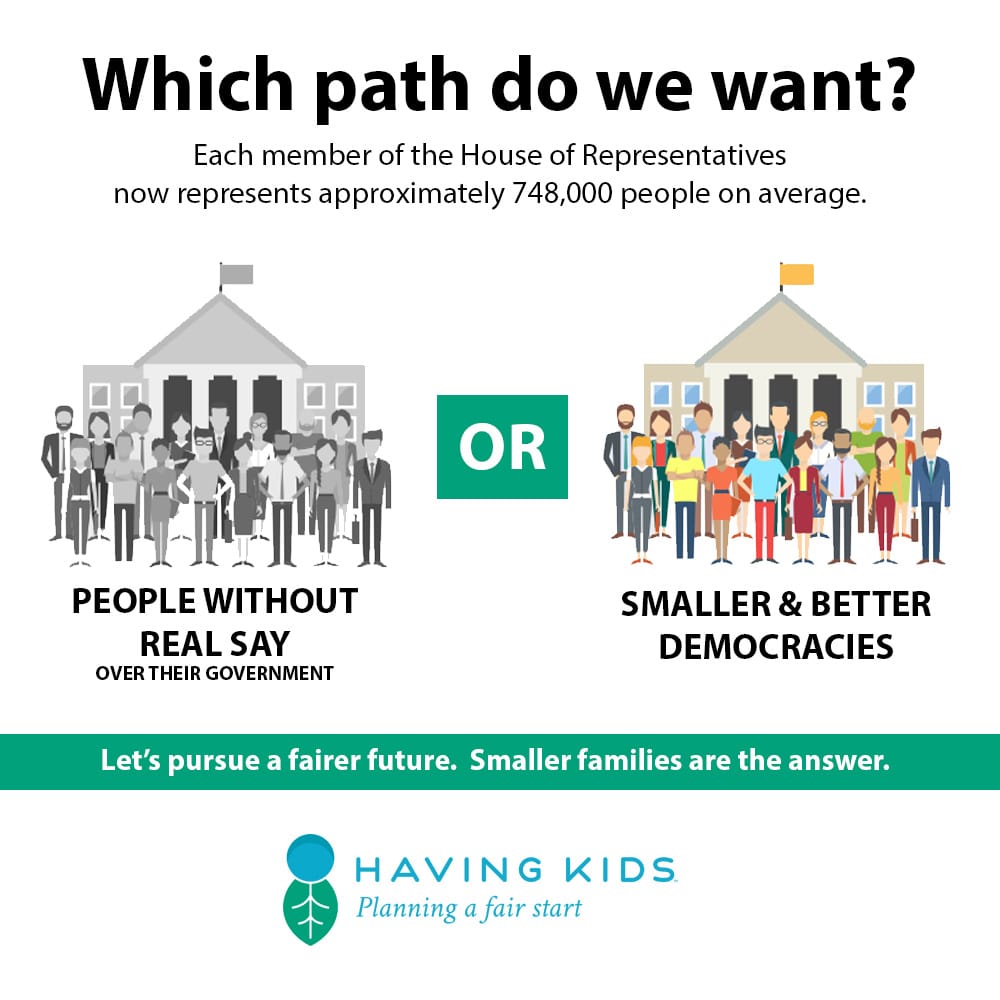
How do we know we are moving in the right direction, and that this is happening? Our relative self-determination will be directly inverse to the number of people in our democracies, and those democracies should divide into others at particular thresholds to maintain the baseline.
This dynamic process resolves the fallacy and unifies values like justice, relative autonomy, nature, freedom, equality, etc., at the most fundamental structure of human power. It’s also a pathway to qualitatively determining optimal populations using very specific and current legal standards to determine the values above. We simply cannot create a person without simultaneously impacting all these qualitative values. By seeing freedom as akin to the dynamic emancipation of children, we eliminate false generations of rights that divide values like development and welfare from liberty and we find that truly becoming a citizen requires at a minimum being sufficiently other-regarding to constitute future democracies through collective and child-centric family planning.
Assuring this level of empowerment and equity begins with policies that 1) fulfill minimum levels of welfare approaching birth equity for all future children 2) ensure each child a meaningful voice in their future democracies. This is not about people as numbers, or as population. It’s about making people matter, politically, and freeing them from others’ power — or physical influence, from disparate inherited wealth to ecological impacts — so that they may actually consent or become relatively self-determining. The closest analogy to this, in our current lexicon, is the freedom to associate.
We fund these policies by taking wealth (one form of influence) from the top of the economic pyramid as a matter of right, and thus limiting and decentralizing the power others have over us. This is obligatory, given the irrefutable facts that this wealth 1) was created using an unsustainable and unjust system of growth that violated multiple human rights including the Children’s Convention, environmental rights, the right to equal opportunities in life, and the right to an influential role in one’s democracy, 2) foisted its costs, including the loss of freedom, on future generations, and 3) is most comprehensively and effectively redressed using Fair Start family reforms and redistribution of wealth as equitable family planning incentives. The economic pyramid was built by moving the locus of power and control to the top in the form of wealth and political control (based on the threat of violence), rather than forward into future generations, and to preserve relative self-determination must be redirected.
Again, this is not about population or consumption; it’s about becoming existentially just and abandoning the fallacious reasoning that life is not fair because our creation is not fair — and can’t be.
This shift, which means humans will matter politically, will eliminate the misconception of procreative autonomy in favor of procreative justice. Procreative autonomy largely derives from religious autonomy. But note how it would violate obligations to separate church and state to live under a world defined by others’ religious beliefs, including the ideas that life is not fair because God and creation is not fair.
Consider also traditional political borders: the line on a map between two nations. Existential justice moves past this archaic conception toward a real and primary border of human power — our creation — and accounts for how it determines our freedom, or more accurately, our relative self-determination. Our current political borders mask the way true personal sovereignty is directly inverse to growth, and in ways other political models would not.
The fundamental difference between preconstitutional systems like polities and economies, as opposed to legalities, involves the latter limiting and decentralizing power in the constant recreation of their constituents to make obligations relatively self-reflective. That is what it means to constitute. Any policy that does not start with a Fair Start or comparable transition does not come from a just place, is overridden by Fair Start and is fundamentally illegitimate. The proponents of such policies, precons, will be unable to account for how basic values, such as nature, welfare, equity, and democracy, and the actual people impacted, should relate.
Here are some examples of how to apply Fair Start, practically:
1. Urge the United Nations to interpret Article 16 of the Universal Declaration of Human Rights, the right to have children, in a way that is intergenerationally fair, and compensates future generations for the harm we have already caused them from unfair prior interpretations.
Today many are fighting to change this, get the wealth back, and use it to most effectively reverse the crises we face. We can separate those people from the politicians, fake charities and others protecting the wealth bubble at the top – and hurting our kids – with a simple language test.
It’s not about counting people, it’s about making people count. The borders of just and inclusive nations are not lines on a map; they are comprised of people who trust one another, and engage in consensual and inclusive governance.
For example, if environmentalists claim to be protecting a river, force them to account for the way population growth will drive the climate crisis in ways that will degrade the river and increase demands for its use. Many environmental and animal protection groups raised millions to protect natural spaces that they knew would be destroyed by population growth, growth they were helping promote – furthering the Anthropocene. If child protection advocates claim to be investing more in kids with tax policy for example, as them why they permit children to be born into poverty in the first place, rather than incentivizing better – and even equitable – family planning. If groups claim to promoting democracy, ask them to account for how poor family planning and population growth is diluting our individual roles to the point of meaningless, and degrading the civil qualities of the people around us. But the first norm has to be to simply to create normative people, which can best be visualized as a functional constitutional convention of principles – free people – not representatives, and not with the expectation that the norms will require coercion or incentives because they are not truly reflective of the people involved.
Our world is the way it is because we never held those claiming to promote values to actually account for the truth: People are the most important factor in all policy, and people don’t fall from the sky. If officials or groups do not prioritize giving all kids a #fairstart in life, they are part of the problem, not constituting us as free and equal people (and hence preconstitutional or “precons”) and protecting the bubble of wealth at the top of the pyramid in ways that will hurt our kids.
We are at a fork. The choice is clear. Let’s take what our kids deserve and build truly consensual governance. Now, how?
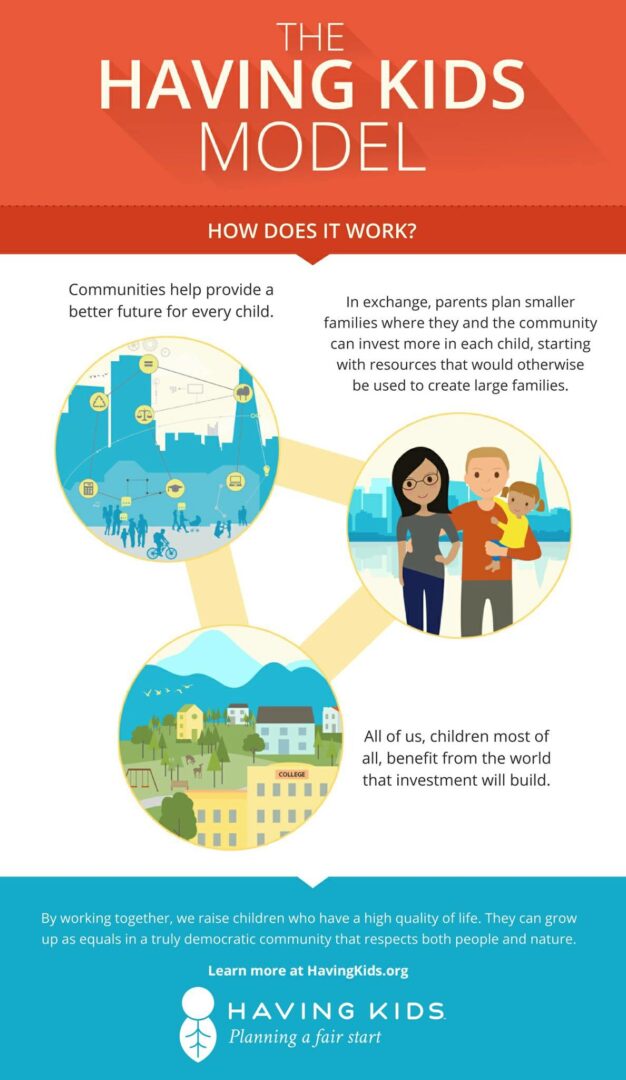
To constitute ourselves as free people means to limit and decentralize the power people have over one another, and we do that by promoting a simple discourse in which intending parents agree to planning caring, and sustainable families in exchange for their future children’s entitlement to #fairstart funding and incentives taken from the top of the wealth pyramid. That’s a true, or physical, social contract, which is inclusive of the majority of persons – those who will live in the future. It reflects the alleviation of power differentials, the sort rich have over poor, parents have over children, and we all have over our natural ecologies. That is what it means to be sufficiently other-regarding, or empathetic, to constitute ourselves as free people.
We can take the wealth at the top of the wealth pyramid – as matter of the first human right, one that overrides government processes and property rights – and use it to bend the arc of the future to create greater welfare, equity, meaningful democracy, and nature. Or we can leave it at the top and have a future with greater inequity, less nature, and bloated democracies that don’ work. We can become free people, and defeat the precons. The wealth bubble at the top is big enough to bend the arc, and incentivize, the future we deserve. Let’s move that wealth forward.
Take Action
Moving wealth from the top of the economic pyramid to incentivize better family planning and equitable families is the best way to do the most good
Support a federal executive order – the Tell the Truth order – that would require the disclosure of corporations and nonprofits role in the scam described above, so that we can hold people accountable.
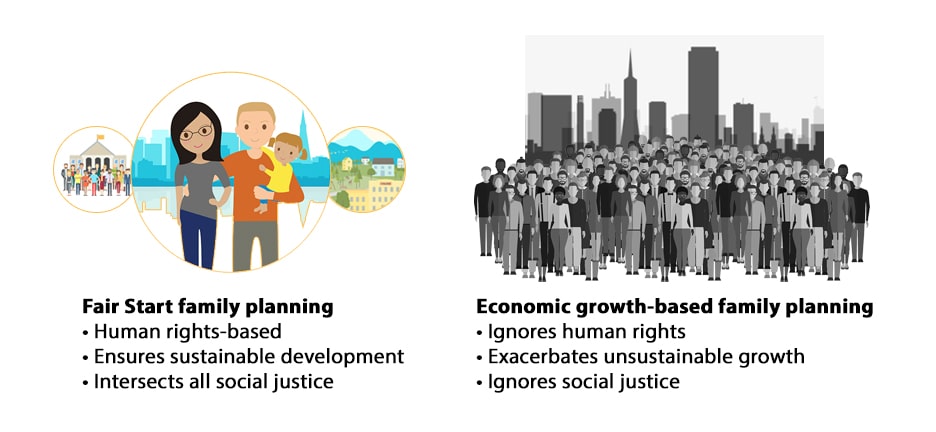
That is where we have to start. And today’s populace was created to fill shopping malls – not town halls. We know this from the ubiquitous references to a “baby bust” in reaction to falling fertility rates. We are used to creating lots of people with the economic capacity to consume, work, and pay taxes, not fewer and highly developed people capable of collectively operating a democracy where each sovereign voice actually matters.
Our current family planning policies, which encourage economic growth irrespective of individual levels of child welfare, fair starts in life, and environmental consequences, have made things worse. The United States is a largely unrepresentative democracy where family planning policies are designed to create large future populations of consumers, workers, and taxpayers, rather than a sustainable number citizens capable of collective self rule. They create people for shopping malls, not town halls.
By starting at the source, and using Fair Start family planning to decentralize concentrations of power, including governments, large corporations, and wealthy families and individuals, we can shift resources to empower and free future children
Let’s first address the root questions of who we are and should be when we talk about amending the Constitution, and embrace reforms that will enable future generations to take the idea of amending more seriously.
TAKE ACTION: Urge the NYT editor @ @deanbaquet to take human rights and democracy seriously, and embrace Fair Start as the fundament of justice.