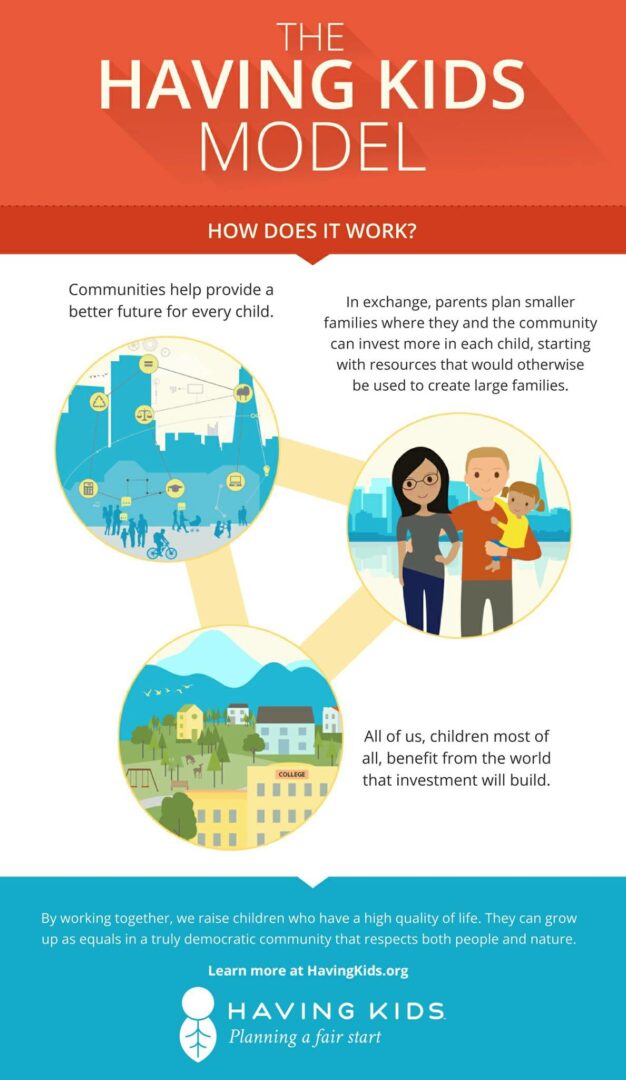
Social movements that try to protect kids, animals, the environment, and democracy tend to see themselves as distinct, and even conflicting. That’s a huge mistake. The most impactful way to further the core missions of all movements lies in making a simple change: Restructure family planning policies, universally, by 1) promoting delayed parenthood, so that people are ready to actually parent, 2) prioritizing giving all kids a Fair Start in life in any political system of resource and stakeholder redistribution, and 3) encouraging smaller families for all, something which helps enable and pay for the first two moves.
So who would be oppose this transition? Big business and big government both thrive on poor family planning, because it creates a wave of consumers, cheap future labor, and taxpayers. Both use growth to increase and concentrate their power, at cost to the development of individuals, real democracy where every voice matters, and nature. The solution? Social justice movements can unify against these concentrations of power, finding reasonable allies on both the political left and the right, who want effective reform that furthers our widely shared values, the decentralization of power, and our actually reaching sustainable development goals. Want more information? Our peer-reviewed white paper on family planning reform can be found here.
Want to help with this unification of social justice movements against the concentrations of power? Please consider donating to HavingKids.org, or signing up to volunteer at info@fairstartmovement.org.
Want to make the world a better place? Nothing has a greater impact than universal policy reforms incentivizing smaller and more equitable families cooperatively investing more time, love, attention, and resources into every child.
Current policies were designed with motivations to fuel the economy, not provide for child welfare, and these policies have fueled the crises we face today. In order to boost markets and economies, they have incentivized growth that has filled the world with billions of people and has led to climate change and the sixth mass extinction. By contrast, Fair Start policies promote equity and human rights, developing people for democratic communities, and maintaining the natural world for future generations.
Enjoy this presentation detailing what we mean by the Fair Start revolution and how it is the best way to reach world sustainable development goals.
Nothing will do as much good as improving family planning policies to shift the focus from what Wall Street wants now to what all future children need. It’s the first human right and obligation, it demands the collective intergenerational obligations most countries and the United Nations seek to avoid, and Having Kids is helping to make it a reality. With Fair Start, we aim to stabilize human populations at the United Nations low variant before 2100 through a qualitative transition focused on intergenerational human rights and self-determination, defined by a fair start in life for all kids.
In 2020, Having Kids, with an almost all volunteer staff and minuscule budget, made real strides:
Publishing our work, in publications from popular outlets like Salon to peer-reviewed and other academic journals, detailing how better family planning — enabled through policies like fertility delay incentives — can have 10 to 20 times the impact on climate, equity, and other crises as shortsighted policy changes.
Garnering positive reactions to our work from key thought leaders such as Paul Hawken, Larry Solum, Hugh LaFollette, and Elizabeth Anderson.
Engaging with the CDC on ways to address the fundamental driver of pandemics like COVID-19: Overcrowding, poor public health, and the degradation of nature.
As demonstrated in 2020, Having Kids acts as a “part replacer,” finding unsustainable and inequitable family planning modeling in systems of governance, discourse, corporatism, and culture, and replacing it with truly human rights-based Fair Start modeling. We are the praxis, more than simply an organization, of moving the way we all plan families from a focus on adults to a focus on future children.
For 2021, Having Kids has eight specific objectives, or key performance indicators, to further the overwhelming and quantified impact of better family planning.
We will persuade more companies to speak out for sustainable and equitable family planning improvements, including those we are in negotiations with now.
In partnership with a Having Kids legislative fund, we will introduce our first legislation, improving popular “baby bond” bills to instead incentivize families working together to give all kids a Fair Start, socially and ecologically.
We will file our first litigation, challenging intrusions on the right to terminate one’s pregnancy not as a violation of personal autonomy, but of the collective obligations we all owe future children.
We will target a wealthy family responsible for the climate crisis to urge them to compensate future generations by funding Fair Start family reform, and speak the truth to their power that this lexically primary obligation overrides all property rights. We will also focus on recidivist child abusers, from all parts of the economic spectrum, to urge them to admit the need for family planning reform.
We will submit proposed legislative and regulatory proposals that prioritize approval and accessibility of the male birth control pill, with policy reforms that treat contraception as the default for all teens. Kids should not be having or raising kids.
We will target investors supporting companies that promote unsustainable family planning policies that further inequity and ecocide.
We will expand our coalition of organizations, urging the U.N. secretary general and other U.N. leaders to admit that current family planning modeling is a failure, undercutting sustainable development and human rights.
We will initiate a #factcheck function on our platforms to correct misinformation in the media regarding the impact of population growth, and we will file actions against civil society organizations misleading donors with claims of progress that do not account for the overwhelming impacts caused by poor family planning and growth.
The Ohio Supreme Court has ruled unconstitutional a probate judge’s order that an Ohio man who has 13 kids by nine mothers to avoid procreating further because he owes hundreds of thousands of dollars in child support. Polls in Ohio show that many people would have supported the Lorain County judge’s original decision and that people believe the right to have kids is contingent on parents being able to support them.
The court seemed sympathetic to the idea that having kids comes with responsibilities but ultimately found that the order did not sufficiently relate to the legal authority under which the judge issued it. In other words, it would be up to the Ohio legislature to step in and broaden courts’ authority to address poor family planning.
Having Kids has developed model legislation, based on some of the leading research in the field, that would authorize courts nationwide to do this. We have also developed federal legislation that would facilitate funding to improve the way our system protects kids and our communities from poor family planning. Of course, the right to have kids comes with responsibilities. And our failure to ensure those responsibilities through better policy has fundamentally created the social and ecological crises we are experiencing today.
We can do better, and Having Kids is leading the way.
Every child’s right to a socially and ecologically fair start in life is the first and overriding human right. It physically constitutes us as the free and equal people we should be. It is the right that frees us from one another.
That right is the first and necessary condition of human freedom and political legitimacy, and we may pursue it by all means effective. Social justice begins with Fair Start family planning policies, and balancing the right to have children with the community and parental responsibilities that come with that right and protect us all.
Having Kids is an international human rights organization dedicated to improving family planning systems worldwide with a simple idea: Every child has a fundamental human right to a Fair Start in life, ecologically and socially, which overrides all competing interests. Our modeling is the subject of several peer-review works, and it includes clear policy pathways for implementation.
Our biggest crises — health, economic, and environmental — are complex, but they all point back to a single issue: failures in family planning. This is reflected by the nearly 50% of pregnancies that are unplanned in the United States. If we hope to effectively make progress on the crises we face, it is essential that we stop looking at them as separate issues. They are intersectional; we cannot address them individually. And they demand an informed and coordinated approach from this administration.
They begin with family planning.
Family planning is an economic issue: The U.N. has called the United States the most unequal society in the developed world. Right now, nearly 40% of children in the U.S. live in or near poverty. Unequal opportunities translate into unequal lifelong outcomes by the time children reach age 5. Decades of research indicate that better family planning is the most effective way to break the cycle of poverty. It enables future parents to pursue higher education and achieve career stability, allowing them greater lifetime earning power for families that sets children up for greater achievement and welfare outcomes.
Family planning is a health issue: We have seen both COVID-19 and climate-affected environments disproportionately affect the health of low-income and BIPOC communities. This occurs because economic disparities among these groups translate into health inequalities.
Family planning is a climate issue: Unsustainable population growth is undoing the work to curb carbon and other emissions. It is time to look beyond fossil fuels to the primary and fundamental driver of the climate crisis. We must account for a sustainable population growth if we are serious about reversing course on climate and promising a healthy, habitable future for the next generation.
The policies of the United States and other nations will severely harm future generations if we do not make changes now. Improving the way we plan families is the most important investment we can make for the health and well-being for all children.
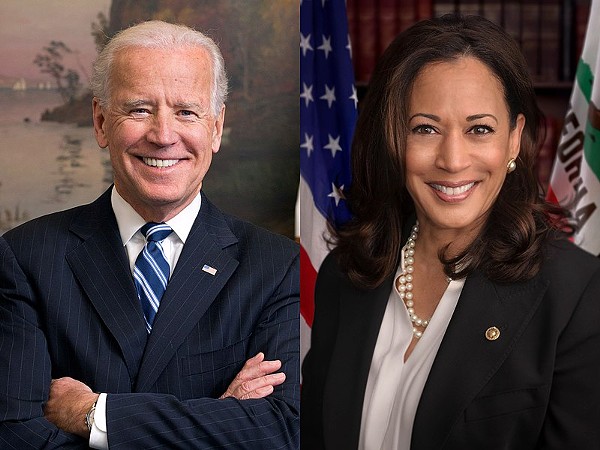
Here are three things the Biden administration must do in 2021 to address the social, health, and ecological crises we face today:
Respond to the Climate Crisis by Targeting Its Fundamental Driver
The most effective long-term way to mitigate the climate crisis is by promoting smaller families for all. This move can have 20 times the impact of other policy choices. And there are now clear policy levers that would promote smaller families, and well as parental readiness before having children as another means of improving child welfare. Focusing on building resilient future generations would go beyond the Green New Deal, which lacked this key focus. It would move us toward a true social contract to come together as free and equal people, but one correctly designed to be 360-degree intergenerational.
Multiple studies have confirmed the incomparable impact of new family planning policies. Yet governments and industries that are accustomed to unsustainable population growth have instead embarked on policy initiatives designed to push women to have children.
Your administration has the opportunity to lead on this issue, in part by promoting tax reforms that convert traditional child tax credits into Fair Start baby bonds designed to promote smaller and equitable families. In short? Convert incentives for all people to have kids into a steeply progressive tax system that incentivizes everyone to wait until they are truly ready to parent and to work together to have smaller families with a level entry field for every child.
It should be the administration’s policy that the United States will lead in helping the world reach an optimal population range as soon as possible. This population will be built around the human right to nature rather than continued nationalistic and unsustainable growth policies that consider babies to be economic inputs, treat nature as a resource, and exacerbate the climate crisis, inequity, and child poverty.
Respond to COVID-19 by Making Future Generations More Resilient
In a recent dialogue between Having Kids and the CDC, the agency noted the connection between reduced birth rates and the beneficial impact on our ability to respond to COVID-19. In short? Poor family planning hurts public health, creates overcrowding, and sets the stage for the next public health crisis.
We propose reforming federal family planning policies through forthcoming legislation designed to respond to COVID-19. And we urge cementing these changes by reforming Title X to promote a child’s equitable start in life as the guide-star value. Stimulus packages and regulatory reform provide a unique opportunity to stabilize today’s families while protecting future generations.
Become a World Leader in Human Rights-Based Family Planning
Family planning is a universal human right, and the United States can become a leader in the ongoing development of this right around the world. The best way would be to explicitly support a growing coalition’s call for the United Nations Secretary General to issue an informal statement embracing family planning reform as the first and most fundamental means of addressing the world’s key social and ecological crises, and moving toward the U.N.’s Sustainable Development Goals.
By 2100, world population could vary by billions of people depending on whether the average woman in the world has one child more or one child fewer.
Simply stated, the current family planning model used by the United Nations was developed before awareness of climate change, the disproportionate impact of early childhood development on human well-being, and how birth conditions and early development exacerbate inequality and other factors. This old model makes our future less secure, healthy, and equitable.
The right to have children comes with responsibilities for parents and for communities that protect us all. The United Nations is using a decades-old pro-growth family planning model that ignores those responsibilities and hurts kids. That model is fundamentally driving ecological crises and the climate crisis, child poverty, and growing inequity across the globe. That model exacerbates the risk and impact of pandemics and prevents our reaching the U.N.’s Sustainable Development Goals. That non-inclusive model exploits children more than it invests in them, thereby driving its political illegitimacy.
The United States should take the lead in urging the United Nations to abandon its current family planning modeling in favor of a truly future child-centric and human rights-based Fair Start approach. Our recent letter to the heads of the UNFPA and UNICEF detail the change.
We are hopeful for important progress to be made as we usher in an administration that believes in science and the advancement of human welfare. With these three steps, we believe the Biden administration can become a leader in promoting the evolution of our family planning systems to guarantee every child a fair start in life.
Matthew Yglesias’ new book, “One Billion Americans: The Case for Thinking Bigger,” is the thought experiment the title implies: exploring policies that might increase the population of the country threefold by using incentives to create larger families.
Cassie King with Having Kids has a message and invitation for Matthew:
The book has been harshly critiqued by most reviewers for its admiration of China and its placing economic growth before human rights, confusing quantitative growth with sustainable human development, ignoring and naively dismissing the environmental consequences of its proposal (the sort of thinking that created the climate crisis), reinforcing a patriarchal vision of women as mothers, and more.
All kids have a fundamental human right, ecologically and socially, to a #fairstart in life. It’s the first human right. Help us secure it against those who threaten our future.
The right to have children comes with responsibilities on parents and their communities that protect us all. The United Nations is using a decades-old pro-growth family planning model that ignores those responsibilities, enables people like Yglesias to promote economic growth over human rights, and hurts kids. That model is fundamentally driving ecological crises and the climate crisis, child poverty, and growing inequity across the globe. That model exacerbates the risk and impact of pandemics and prevents our reaching the U.N.’s Sustainable Development Goals. That noninclusive model exploits children more than it invests in them, thereby driving political illegitimacy.
But groups and individuals from around the world are signing on to an effort to change the old model that focuses on what parents want toward a new model that focuses on what all kids need. The new model, called Fair Start family planning, is the beginning of real social justice. The reform can begin with the United Nations secretary general simply acknowledging the need for change.
Sign on, and urge any organization you support or can influence — nonprofit or for-profit — to also sign on. Sign here, or contact us at info@fairstartmovement.org for more information.
The most effective way to protect children, animals, our environment, and equality is by changing from family planning policies that focus on what parents want to policies that ensure future children what they need, both ecologically and socially.
The sooner you speak out, the better our and our kids’ future will be.
There are massive advantages to planning smaller and more equitable families.
It enables greater empowerment for women, more individual attention and more resources invested in each child, greater achievement in school, and more engaged, less crowded communities. But most importantly, research indicated that smaller families are better for kids. Smaller families also leave time, energy and resources for parents to invest in their community, and to ensure that the world their children will inherit is better and more equitable than the one we experience today. This list is by no means exhaustive. The bigger picture is that families and communities benefit. Read more reasons to have a small and more equitable family.
Have you chosen to have just one or two kids? Send us a video and tell us why. Email info@fairstartmovement.org
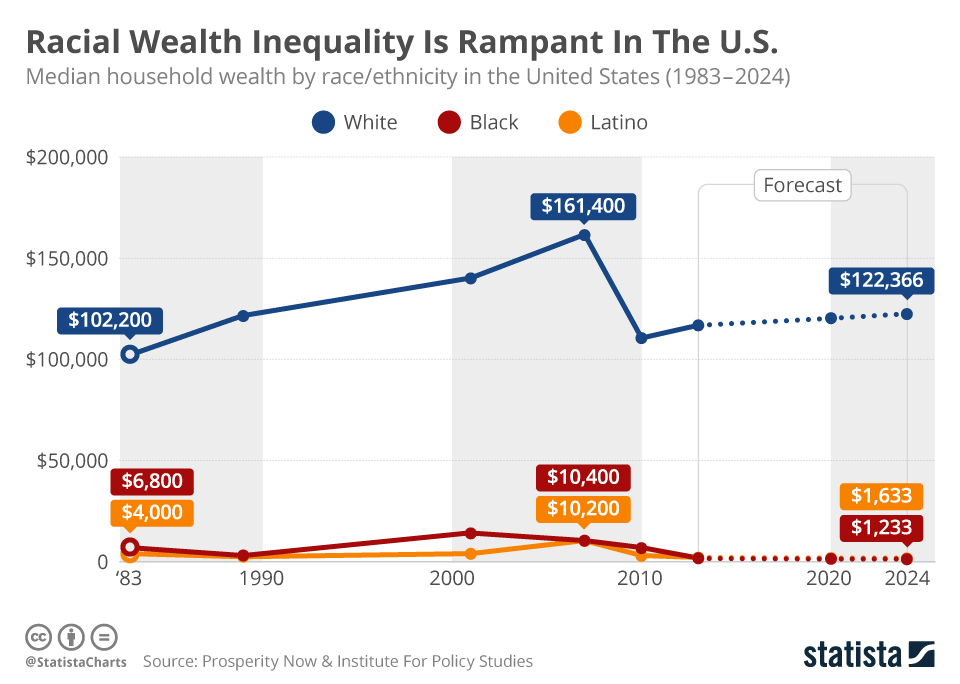
It’s true that many policies that have been promoted under the banner of an attack on systemic racism have – by the accounts from empirical scholars of all political leanings – utterly failed. But is Steele missing the foundational issue that makes any allegation of systemic racism true, regardless of what policies we put forth to eliminate it? Black children, and children of color more generally, are poor – in the extreme – relative to white children.
We cannot coherently talk about racism and policy at all without addressing the core issue – our failure to give all kids a fair start in life – and the specific family planning and redistribution reforms that could actually reverse that failure.
Take action: Every child has a fundamental human right to a #fairstart in life. It is the first human right, the one that makes us free and equal people, and as such it overrides all competing interests. Urge Congress to begin to recognize and legislate around the right.
Elon’s Musk’s Starlink satellites are creating massive sky pollution and ruining stargazing; his commercial interests are creating “space graffiti” in the night sky and obstructing astronomers’ observations. Can we solve this problem in a way that could apply to other scenarios — such as the climate crisis — in which the uber-wealthy and dysfunctional governments work together to destroy nature and threaten our kids’ futures? These incursions into nature interfere with our being free from others’ power, and their subtlety does not make them any less wrong than more obvious forms of oppression. It’s more proof that Musk, who recently doubled down on his assertion that women must have kids in order to support the economy, is not an environmentalist as much as he is a car and space tourism manufacturer.
At the most fundamental level, this process of propping up the world economy involves a population pyramid in which a few people exploit population growth, fueled by poor family planning, as an engine to convert nature and the nonhuman world into their own wealth. One fundamental solution involves simply reversing that stream: We should agree that two correlative human rights — everyone’s right to nature and children’s right to a fair start in life — supersede the property rights of wealthy people like Musk. The solution involves seeing the right to be born into the world as a free and equal person as the first human right. And it requires using that foundational right to rebase our constitutions on people, not property.
As we constantly reconstitute societies through the act of having kids, we have a right and an obligation to recycle the resources at the top, and the raw power over others they represent, to constantly generate nature, equity, and democracy where each voice matters.And there now exist clear policy ideas — like Fair Start baby bonds — to ensure that mankind most effectively uses those resources to empower future generations. The few at the top, who are literally hiding the stars from our view, can’t have power over us if we don’t give it to them.
Take action: Urge Musk to support Fair Start family planning reforms.
A vision for comprehensive family planning reforms