Category: Animal Rights

  • Animal Law, Rights, Welfare, Protection – Whatever You Call It, Should Actually Help Animals

    Animal Law, Rights, Welfare, Protection – Whatever You Call It, Should Actually Help Animals

    Don’t get scammed about which issues really matter when it comes to protecting animals. If we take animal personhood seriously their liberation should override political processes as fundamental rights do, for example, favoring a “right to rescue” over waiting for statutory personhood. But that move in isolation may threaten chaos to some who fear change. One solution?

    Based on a recent Newsweek whistleblower article, use family and equity reforms to make those processes the inclusive ideal they were meant to be, building a social contract from the zero power baseline of nonhuman autonomy, and investing enough in each child as we go to limit growth in a way that preserves the influence of each law-making / self-determining voice in our democracies.
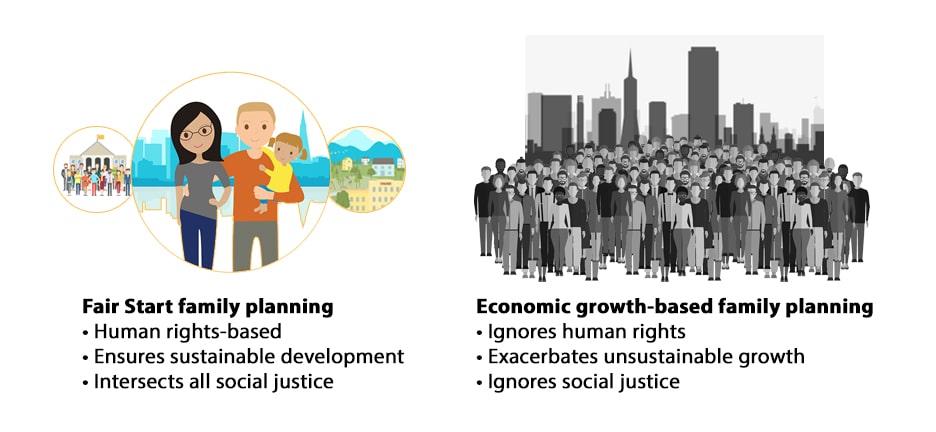
     

    Two panels compare family planning types. Left: diverse family illustration with bright colors, labeled Fair Start family planning with positive points. Right: grayscale crowd in a city, labeled Economic growth-based family planning with negative points.


    Summary


    UN Warns Earth 'firmly on track toward an unlivable world'


    • The result is a social movement that largely ignores the fundamental driver of nonhuman animal suffering and death – the proliferation of humans over their world – the very thing that also drove the climate crisis, a thing that now threatens to cause more suffering than any human action in the history of the world. While environmental, child-welfare, and human rights and democracy movements experienced the same gap, the impact on nonhumans was the most destructive.
    • Entities are thus either promoting humane families, or they are quietly causing animal suffering.
    • The myopia included blindly accepting massive generational birth inequity that is tantamount to white supremacy, and embracing macro-propertyhood of the nonhuman world which was undoing the micro-personhood benefits that many animal protection organizations routinely use to fundraise. Many calling themselves animal organizations thus chose policy areas that would benefit far fewer animals than the trillions the underlying family policies they simply accepted threatened – a form of deadly fraud.
    • Ask any organization or funder claiming to benefit animals how they have accounted for the impact of children being born into the world on their claims. Whether they are investing in those children, or exploiting them for growth, matters to animals. Below is a roadmap to close this gap and ensure reparative justice – the payment of actual claims – that actually liberates humans and nonhumans together by 1) inverting the movement from top down control to bottom up empowerment whereby governance is aligned with animal liberation, and 2) by temporalizing the work to account for empathy in future generations, rather than exploiting them for economic growth at cost to nonhumans.


    Climate crisis infographic


    Talking about animals rights while driving them into extinction

    There are reasons to question the nature of what we often call animal law, rights, protection, welfare, etc. Just putting the word “animal” in a phrase or sentence does not help animals, and can do more harm than good.

    This is a problem that can be corrected by treating animal law as inherently requiring inclusivity, and below I lay out the steps for doing so. The result is a conception of animal law that starts with our becoming, through a focus on autonomy and family reforms, a species consistent with mutual liberation. How?

    We begin with the full conception of the nonhuman, liberated complete biodiversity, and the ideal of law – normativity because it is the will of the ruled. That is the genesis of unified animal personhood, and the mutuality between humans and nonhumans, and to think otherwise is to commit a fallacy.

    The dominant of law, rights, welfare, protection, etc., because it can coerce results, is animal law. Impact, and for the right reasons, is what matters. Adding billions of people to the world without regard to how they will impact nonhumans, when doing that in the past created the crises we face today, and while touting laws that are riddled with exemptions and rarely enforced, is not a beneficial impact.

    “Animal law” is really human law that happens to refer to animals, while excluding legal and practical protection for the vast majority of nonhumans (animals in factory farms and in research), and designating the vast majority— wildlife—as property, quietly bundled into an anthropocentric concept of the environment as a human resource designated to absorb and be altered by things like greenhouse gas emissions. That concept begins with a companion concept of future children as the property of their would-be parents that simultaneously disregards the autonomy of the nonhuman world.


    A woman with wavy hair carries a baby in a green sling on her back, standing on a muddy field and looking at cows grazing in the foggy distance.


    That bundling is macro-propertyhood, always undoing the micro-personhood that many animal protection organizations routinely use to fundraise.

    Any conception of animal law without reforming this – on balance – hurts animals, and does not address the fundamental and existential threat to nonhumans – the fact that we are replacing them.

    How might our thinking of “animal law” or other terms that imply a benefit to nonhumans have been different? Were, long ago, humans to have seen themselves as equal parts of a complex ecology rather than a dominant species capable of shaping the world to its needs, we would have been obligated—in family, food, land use, and dozens of other policy areas—to limit ourselves existentially to just such an ecology.

    That means smaller families, parenting delay and readiness, and redistribution to wealth to incentivize these things and ensure equal empowerment of children. This is a comprehensively effective model with a 1/2 dozen positive peer-reviews. Simply said, the same nonsense that having kids is a matter of parental autonomy rather than an interpersonal matter of constituting future societies is the same thing that degraded participatory democracy, causes mass animal suffering and extinction, triggered the climate crises, and blew a gulf between rich and the impoverished.

    The solution to that, described above in bold, would have required fundamentally challenging the anthropocentric nature of our legal systems, as well as the entitlements of concentrations of wealth and power, something many of the originators of the term “animal law” and other protective terms evaded doing. To the extent Peter Singer evaded these reforms with a misleading focus on farmed animals — rather than all future animals and future persons’ relations with those animals—as the majority for whom we should be concerned if we want to maximize probability of impact, he played a large role in this misdirection. The climatological effects of that misdirection, alone, cannot be overstated, preventing family reforms that could have saved countless animal lives and creating room reforms that exacerbate the situation. Those articulating (or framing) what nature (in the case of Our Children’s Trust) or animal liberation (in the case of Singer) is, are most dangerous because they move the goalposts / cloud the ideal. Singer’s utilitarianism and focus on market preference satisfaction has enabled a humanized world. And now that the climate crisis proves he was wrong under his own standard, by likely reducing overall utility, he’s still not admitting it. 

    Reversing pronatal family policies now would mean a lot fewer babies being born, immediately, as the entitlements/incentives and other changes kick in (and arguably the only block to massive resource relocation is a lie about the justifiability of current entitlements that benefits us at cost to future generations). The vast majority of those babies would have not only have immediately begun to eat animals, they would have caused all the other ecocide humans cause. In a more concrete sense, the fact that our family norms would have done nothing to halt the creation of children in certain conditions, and that this in turn degrades the ecological conditions they need to survive, just seems nutty. Want to see how this works? Google this: “conviction child abuse biting,” count the stories, and you will see what I mean. If there were no way to halt these things from occurring none of this would matter. But I backing education standards into family planning and funding the process would halt them.

    Media – themselves reliant on growth – generally ignore this issue, often because of conflict of interest they would not admit – the profit expectations, based on unsustainable growth, of their advertisers and parent companies.


    Protecting the Planet Infographic
    What has the greatest impact on animals?

    True animal law

    But nothing is “animal law” or animal-benefitting—except in the thinnest and most useless of senses—if it does not orient from their (and hence our) biodiverse and life-giving world.

    In other words, there is no such thing as anthropocentric animal law, unless you want to disregard the function of law—to protect its subjects. Thinking there is commits the common mistake of trying to magically separate humans from their language and ideation as well as the ecologies in which they live, a mistake with massive consequences given the climate crisis.

    The misnomer argument is true for conceptual reasons, in that a fundamentally ecocentric system necessitating smaller populations of prosocial persons would have maintained the capacity to be more reflective of its human subjects, but also practical reasons—because requiring our systems to be actually inclusive of its subjects so that they can meaningfully participate, and hence ecocentric rather than anthropocentric, would have avoided much of the climate crisis which now threatens the system such “law” was meant to protect. Surely there is no concept of law, including positivism, that would not require its obligations to actually relate to and ideally reflect the inclinations of its subjects, something dependent on their actuality, their quantities and qualities. If the core condition of positivism is to treat law as obligatory because it derives from social sources, how can we do that without first accounting for people and their role in the process, e.g. their being subject to democratic attenuation through growth?

    This can be applied in family reforms but also more immediately in things like personhood reform, where we physically reject propertyhood in favor of personhood, rather than exclusively relying on and reifying “official means” and a system that treats animals as property in that hopes that such a system will magically one day liberate animals.

    Direct action also has the benefit of often making moderates more included in power structures. These protest movements can often have a greater impact than large extractive organizations that silo off and rarely question the fundamental systems driving the oppression.


    A person wearing a white cap, sunglasses, and a black face mask stands beside a fluffy white bird with pink-tinted feathers, both near a wooden wall.
    Jess, and her friend.

    A pathway forward

    The pathway forward is to treat an ecocentric future, and democracy where the average person maintains the quantitative and qualitative capacity to actually have an impact on the outcomes, as the precondition for the legitimacy of any norms and to alter rights and obligations accordingly. This starts with family law and policy oriented around deep ecology and equity, as a pathway towards true animal law and protection. This answers the otherwise open question left by many theorists, of who the people should be that will actually carry animal-benefitting theories into action. That pathway is animal protection in the most comprehensive sense because it actually includes the full biodiversity of nonhumans, as well as the future persons with whom they would interact.

    This is a pathway that could be bricked by an untold number of activists creating compelling narratives about the next big social movement, bottom up, limiting and decentralizing human power, rather than simply waiting for institutional change to come from the top down. Bottom line? We should not take a concept like law, reasonably seen as something that is the product of participatory democracies reflective of the will their constituents, which is itself a concept consistent with animal liberation when you look at the family policies necessary to achieve such systems, and pervert it to serve neither ideal.

    In my almost two decades of working in “animal law” I saw the concept become a commodity organizations would use to fundraise – regardless of whether it was on balance helping animals, as if the proliferation of people using the these two words together was what we value. It should not be. Impact, and for the right reasons, is what matters. Adding billions of people to the world without regard to how they will impact nonhumans, when doing that in the past created the crises we face today, and while touting laws that are riddled with exemptions and rarely enforced, is not a beneficial impact.

    Animal law begins with fundamental/constitutive power relations that actually helps animals and legitimates legal systems, not downstream window dressing. Not dealing with those relations, and other rent-seeking moves by animal protection organizations, make their claims of progress misleading.
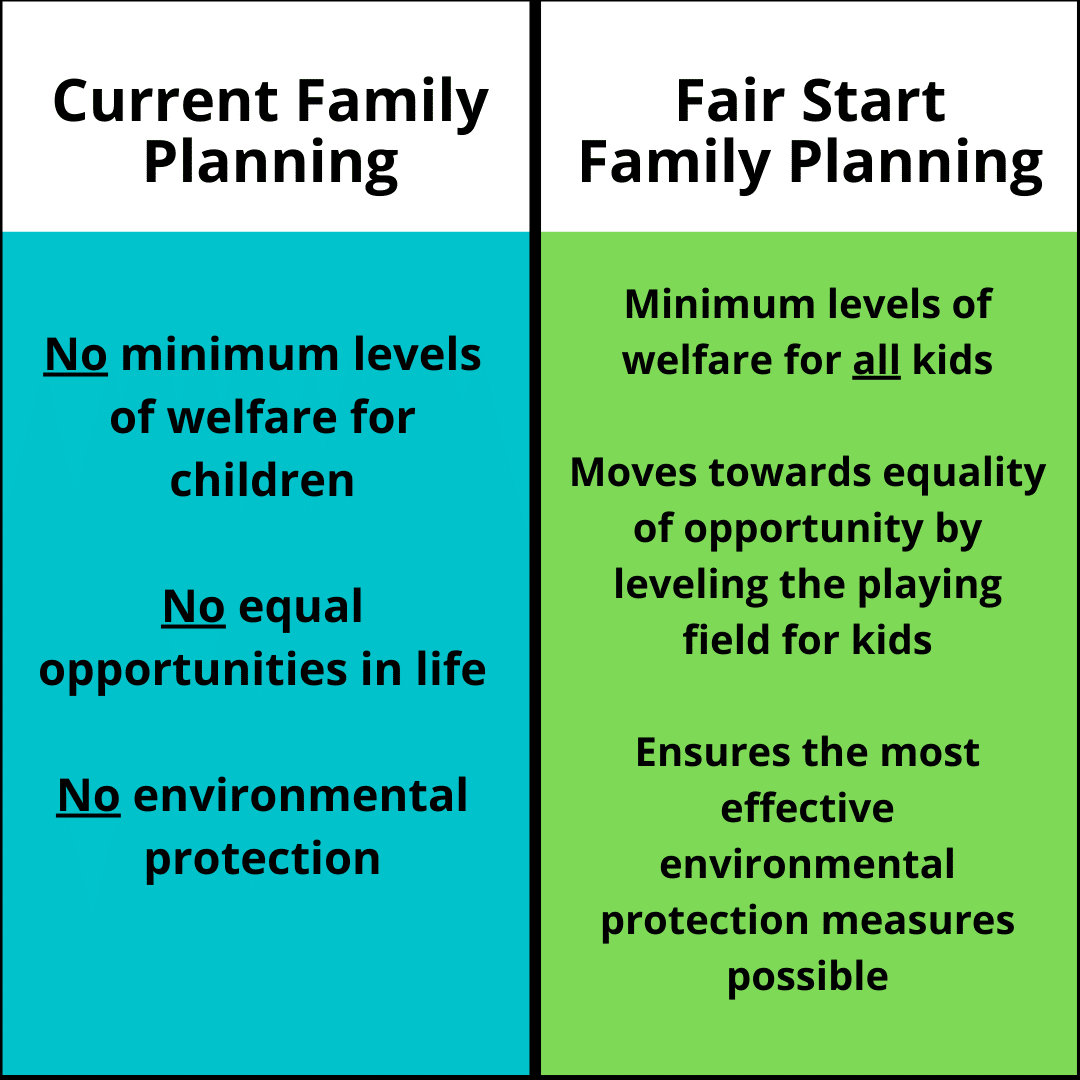
     

    A comparison chart of Current Family Planning vs. Fair Start Family Planning. The left side lists negatives of current planning; the right side highlights positive outcomes of fair start planning for welfare, equality, and environmental protection.
    Changes like this are fair.

    When I left the Animal Legal Defense Fund in 2022 we were potentially doing more harm to animals than good, promoting the idea of effective animal cruelty laws while rarely if ever prosecuting the companies engaged in the vast majority of cruelty, undercutting direct action activists while fundraising using their hard-earned content and high-risk work, opting for family and ecological baseline policies that would put many more animals in harms way than we were taking out, and alienating the crucial social justice movements we needed in order to de-silo animal rights by ignoring the need for DEIJ reforms, changes in employment policies, and unionization.

    A matrix for true inclusivity and next-level DEIJ work.

    All of this suggests the need for a certain matrix when thinking about animal law, which in its ideal form may simply be a perfectionist view of law itself, which is necessary if we are to actually account for the physical and day-to-day relations between powerful humans and vulnerable nonhumans. How do we maximize consent in those relations? (And yes, consent can be measured and quantified, much like utility, but unlike utility consent is primary, necessary to justify the governance that makes systems of utility – like economies – possible). Town halls precede shopping malls if actually take democracy seriously.
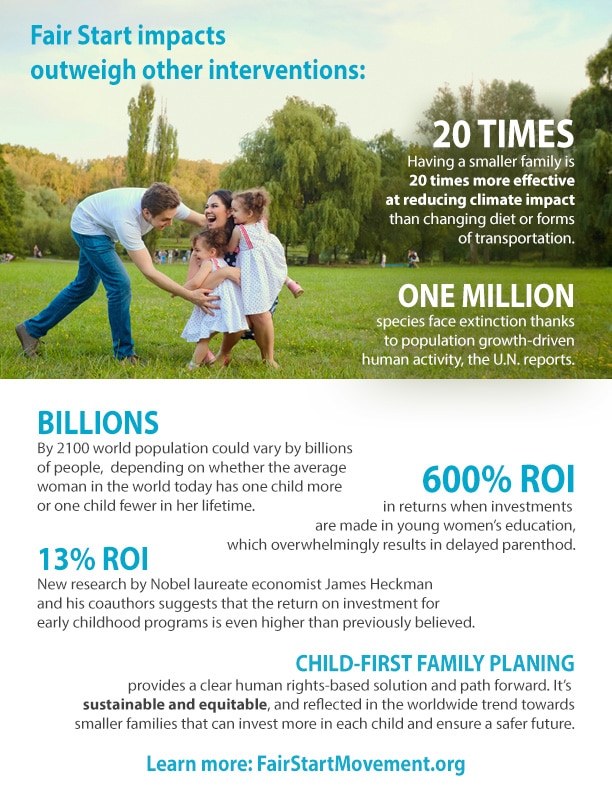
     

    Informational flyer shows statistics about the benefits of family planning, emphasizing reduced climate impact, lower extinction rates, financial returns, and improved women’s education. The flyer promotes child-first family planning.


    The matrix would have two axes. The first, 1) where personhood as consensual relations bookends one end of a continuum, would be 2) bookended on the other end by propertyhood (the total control of animals in a CAFO, unlimited procreative “autonomy” that appropriates future children, and anthropocentric approaches to environmentalism for example).

    The other axis would involve tactics for changing that status, which proceed on a continuum from 1) those based on top-down and exclusionary systems of power based on things like litigation under constitutions, 2) moving towards the alternative of direct action systems that reject official obligations (like DXE‘s work) and which instead embrace bottom-up and inclusive systems of power, and 3) ending the axis with actions that incorporate intergenerational justice for the future majority like Fair Start, ecocentric environmentalism, and macro personhood – all forms of fundamental or constitutive change.
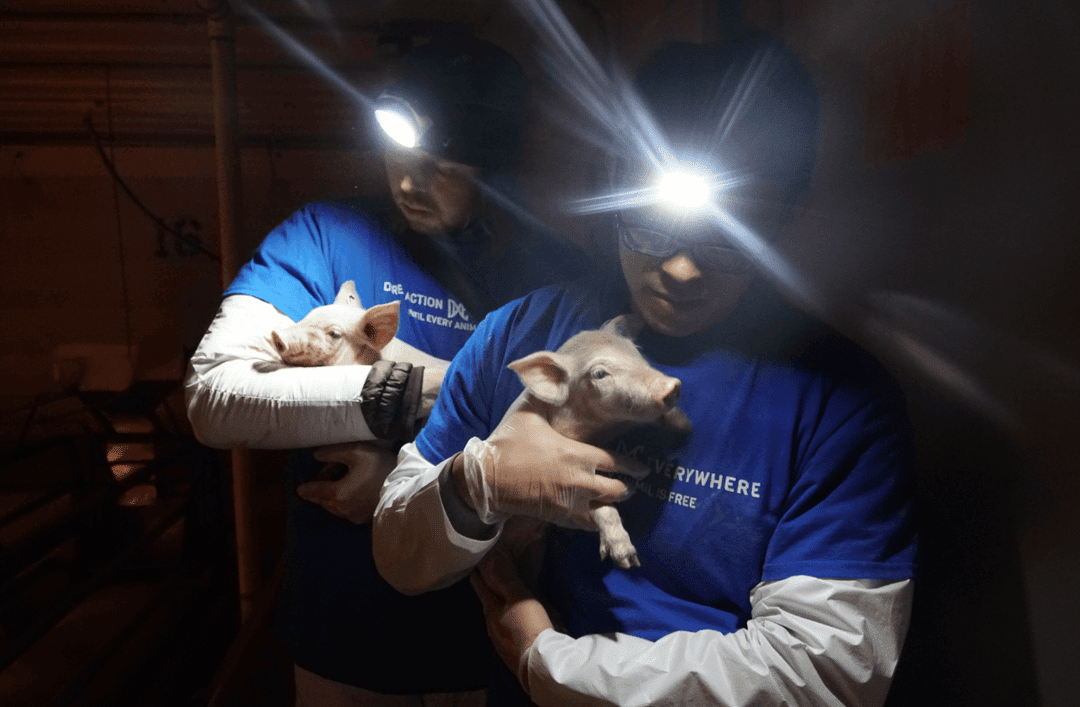
     

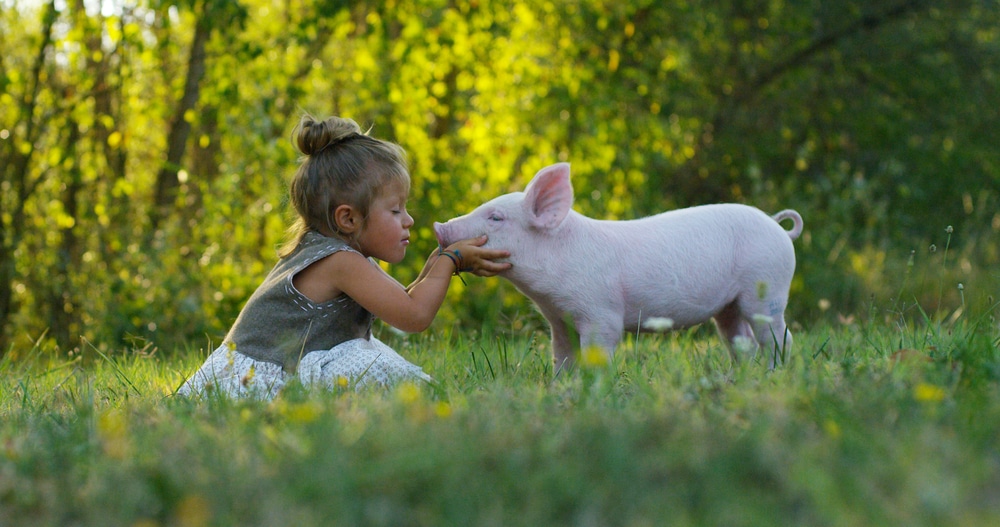
    Animal Law, Rights, Welfare, Protection - Whatever You Call It, Should Actually Help - People rescuing pigs


    Where particular efforts land on the matrix might show 1) how seriously particular advocates take the value of consent (which might mirror decolonization efforts), 2) the probability and level of impact (hundreds of attorneys waiting decades for precedent v. thousands of activists right now telling their stories/cases on many overlapping areas of animal-benefitting state-resistant social justice), and 3) the willingness of advocates to benefit from or challenge (at personal risk) systems premised on the inextricable exploitation of nonhumans and future generations as property.

    Next steps

    To be specific, there are specific actions that could further the many forms of social justice, benefitting humans and nonhumans alike: Open rescues at factory farms in extremely oppressed communities timed with Fair Start resource-demand occupations targeting the concentrations of wealth and power that own the farms; climate reparation interventions targeting pro-growth interests to pay climate restoration-level amounts to ensure birth equity; flash-mob demands that executive directors at large nonprofits who shilled for concentrations of wealth and power tell the #wholetruth about what they did.

    Many advocates choose to orient from and reify unjust systems that exploit animals, rather than confronting and overcoming those systems even in simple and incremental ways. But protest and other direct action movements can be more effective than the best charities, a truism that – in the context of animals – relies on the incredible transparency activists can create.

    The best outcomes for animals may come from organizations across the spectrum of the axes working together, with fair levels of funding for each. That is the genesis of unified animal personhood, and the mutuality between humans and nonhumans, and to think otherwise is to commit a fallacy.

    All of this is to say that if we are going to fight for animals we owe them an examination of all assumptions, and a backing out from those assumptions to assessing raw power in its naked form, and how to limit it – for their sake and ours.

    TAKE ACTION: A lot of organizations and people using terms that imply the protection of animals are not actually helping animals, long run and when considering the totality of the circumstances. Urge them to tell the #wholetruth – about their approach to family policy and direct action – and encourage them to make reforms in a way that will actually help animals.

  • What’s a Real Vegan? It’s Not What You Think.

    What’s a Real Vegan? It’s Not What You Think.

    Does being vegan mean not eating animals and other forms of consumerism, or something more? It could mean a much greater obligation.

    Peter Singer has promoted consumption-based veganism, quite effectively. We can summarize that approach as: “We should help animals by not eating them.” But that claim fails if the intent is to, all-things-considered, help animals because the “we” in it – the unspoken norm of an unlimited right to have children which permits population growth, a norm and relations Singer tacitly accepts – does more harm to animals than changing diets does good.

    That’s the constitutive fallacy at play. When we create people we are also creating the fundamental power relations between them, and in a way that precedes written constitutions or other binding sets of rules. If we want justice, bottom-up in the style of true democracy, just creation must come first. And that mistake – not requiring things like the Children’s Convention standard in family planning policies to improve those relations, which would physically constitute just communities – does more than just harm animals. It fundamentally permits anthropocentric changes that cause irrefutable harm to all, against an absolute standard like infant health.

    Singer fails because he did not push for what true animal liberation, the title of his famous book, requires: Restoration of the nonhuman world through family planning entitlements. Had he done so he might have helped mitigate the climate crisis, the greatest threat to nonhumans.

    No alt text provided for this image

    Think of it this way: The same growth and intergenerational inequity that degraded the ability of democracies to represent their people and respond to the climate crisis also undid much of the progress in emissions reduction that was attempted. We failed because we were not constituted, on many levels, to respond.

    Backwards family policies fundamentally drive things like extinction, growing levels of birth-based inequity, rising numbers of unhoused persons, the exacerbation of the conditions that drive pandemics, a multiplying of climate impacts on multiple levels, and the degrading systems of participatory democracy. And yet these policies are easily reversible and with policies that actually liberate humans and animals alike by using wealth from the top to incentivize delays in parenting pegged to objective standards of parental readiness, redistribution of wealth between rich and poor kids, and a universal ethic of sustainable families, all of which create functional democracies.

    Don’t confuse chaos with freedom. Truly free people will fundamentally limit and decentralize the power (including subtle power like climate emissions, the impact of bad parenting on communities, massive disparities of wealth, etc.) others have over them, and by all means effective. And that starts with who is born into our societies, and the degree to which we actually empower them. Free people – on both ends of that creation – will condition their obligation to follow the law on their actually being empowered, assessed via a simple inversion test, in functional democracies. And we can empower people by overriding property rights – which are contingent on our constituting democracies where we are actually empowered – to fund better family planning.

    The solution to the constitutive fallacy is holding ourselves at optimal population ranges, which if we use Fair Start modeling will ideally reflect just power relations, at the same time. 

  • The Big Cat Public Safety Act is a giant leap forward for animals. But can we do even better?

    The Big Cat Public Safety Act is a giant leap forward for animals. But can we do even better?

    The population-driven climate crisis will do more harm to wild big cat populations in the long run than the Act can do good. Although the act protects current species of cats from being unnecessarily overbred and domesticated, it does not address threats that still exist through the interactions humans have with the environment, as shown by the infographic below.

    Changing these interactions begins with us. Truly liberating big cats means reversing their slide towards extinction by promoting and funding incentives that create a universal ethic of sustainable and economically equitable human families, loving families that build empathy in children.

    Let’s not undo progress for animals with growth-based policies, pushed by some animal advocates. Let’s not trick ourselves – growth is undoing progress.

    See this:

    Protecting the Planet Infographic

    Let’s keep going towards liberation, and learn more at FairStartMovement.org

    Don’t confuse chaos with freedom. Truly free people will fundamentally limit and decentralize the power (including subtle power like climate emissions, the impact of bad parenting on communities, massive disparities of wealth, etc.) others have over them, and by all means effective. They will condition their obligation to follow the law on their actually being empowered, assessed via a simple test, in functional democracies.

    The best way to actually empower people is through Fair Start family reforms like climate restoration and #birthequity baby bonds to physically constitute democracy and consensual governance where people are actually empowered to make the ultimate rules under which all must live. And there is only really one way to do that: Incentivizing parental readiness policies that avoid things like parents torturing their children to death, birth equity redistribution of wealth to ensure true equality of opportunity, and a universal ethic and default of sustainable families. People who have been robbed of their freedom – over time through horrible family policies – are committing acts of random violence out of anger, and it will get worse. We can do better than that. We can take the money from the top that was made by not paying its true costs to freedom and use it to create democracies.

    Take action: Choose from dozens of ways to bend the arc of population growth towards the justice of investing more in kids.

  • There Are More Animals in Factory Farms Today Than Decades Ago. Here’s How to Make Animal Rights Actually Work.

    There Are More Animals in Factory Farms Today Than Decades Ago. Here’s How to Make Animal Rights Actually Work.

    Animals Do Not Benefit from Human Population Growth. Why Do Their Advocates Promote It?

    Animal rights, as a social movement, has largely failed. During a time when advocates promoted flashy “wins” like ballot initiatives, animal use skyrocketed based on pro-growth policies that most animal advocates did nothing to oppose, even as those policies were being ramped up and crucial funding that could have blunted the climate crisis was being redirected to ineffective uses.

    Not only are there more animals being abused than there were decades ago, in almost every sector of animal rights, but the climate crisis threatens more animal suffering than any other form of human impact. Many leaders in animal rights like Joyce Tischler have spoken out for family reforms.

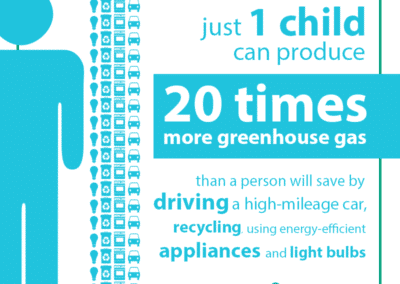
    Infographic showing that one child can produce 20 times more greenhouse gas than can be saved by driving a fuel-efficient car, recycling, or using energy-efficient appliances and light bulbs.

    Animals Do Not Benefit from Human Population Growth. Why Do Their Advocates Promote It?

    I have actually talked to funders and the heads of nonprofit groups they support who knew growth-based family policies were doing more harm to animals than things like dietary veganism were doing good, but who were choosing to ignore that because they were making money – selling vegan products – on that growth. I have met with funders and animal advocates who have relatively wealthy children, children who are in the process of inheriting even more wealth or positions of influence they did not earn. Those funders and advocates are now choosing to reject birth equity family entitlements that would not only level the playing field for all kids but also save billions of animals long-run by promoting family planning. They are choosing unearned privilege over the animal protection they claim to support.

    That’s disgusting.

    Protecting the Planet Infographic
    What’s actually effective?

    These backward family policies not only hurt animals, driving things like extinction, but they also ensure: Growing levels of birth-based inequity, rising numbers of unhoused persons, exacerbation of the conditions that drive pandemics, multiplying the climate crisis on multiple levels, and degrading systems of participatory democracy. Free people who pursue fundamental fairness will limit and decentralize the public and private power others have over them by constituting democracy through fair family policies that restore nature and ecosystems that do not harm kids, as well as effective town halls where people actually matter politically. 

    How? If we accept that government derives from the people who derive from their creation, there is one clear path: By moving wealth from the top (from the men who took it from women and children) to pay parents to be ready before they have kids, to work to level the start line between rich and poor kids, and to promote a universal ethic of sustainable families.

    Help us target those pre-cons – groups like Exxon – blocking these family reforms, and thus threatening our freedom.

    TAKE ACTION: Urge Peter Singer, the father of modern animal rights, to embrace Fair Start and lead by example.

  • Take Action: Did Peter Singer’s Population Ethics Undo His Work on Animal Liberation? Absolutely.

    Take Action: Did Peter Singer’s Population Ethics Undo His Work on Animal Liberation? Absolutely.

    Peter Singer is regarded by many as a founder of contemporary animal rights, largely based on his book Animal Liberation. But few realize that he has also taken public and influential stances on family and population policies, in this 2018 public lecture, for example. He avoids making concrete conclusions about population policies in this lecture and elsewhere,

    Nowhere has he advocated for effective interventions – like overriding property rights to wealth in order to fund Fair Start family planning incentives/entitlements – and other peremptory norm measures would have bent the arc of unsustainable growth downwards towards what many see as optimal world population ranges. Those ranges, like all population matters, actually involve people – and the fundamental creation of power relations between them. And power and population ethics begin with human rights, the objective frame that after WW2 should cabin utility, Effective Altruism, and all other lesser and more subjective forms of policy Singer normally employs.

    No alt text provided for this image

    These are the facts. The growth Singer did not seriously address put more animals in places like factory farms than his ethics – interpreted by many as promoting mere dietary changes – took out. That growth also fundamentally exacerbated the climate crisis, which will be the greatest source of human and nonhuman suffering.

    And while fertility rates may be falling, we are far from optimal and many – including Singer’s followers – are pushing to reverse that trend and increase family size to drive economic growth.

    How is animal liberation possible in the face of a wave of human population growth causing massive extinction? How is promoting veganism for what is effectively a small percentage of a growing human population that mostly exploits, tortures, and kills nonhumans true animal rights? How does that growth further human rights when the growth enriched relatively few people, at cost to equality and the political stability it brings?

    No alt text provided for this image

    Singer’s work is based on an error called the constitutive fallacy, or ignoring the way our creation and development do and (assuming we use baselines like the Children’s Rights Convention) should – fundamentally – constitute actual power relations, between humans, and between humans and nonhumans. Who we are might be different mixes of nurture, or nature, or influential power relations, but all flow (and among self-determining peoples should flow) from our creation. We cannot separate values like nature and equity from who we are and our power relations with others, which stem from our creation.

    For example, our economic birth position mostly determines whether we are rich or poor as adults. Another example would be that it is impossible to ensure the empathy people need to treat nonhumans well without addressing the conditions in which people are born and develop because empathy largely depends on years zero to three in childhood maturation.

    Another example would be that if we assume we ought to treat nonumans well, we would have to structure an effective legal system that would obligate that. But because there is such massive attenuation (caused by the growth that is eradicating the nonhuman world) between people and their representatives, we cannot do this. Another example would be world leaders attempting to determine the costs and benefits associated with Anthropocentric environmental baselines like the Paris Agreement, a mistake that only accelerated ecocide, rather than using an organic baseline like being relatively self-determining people and the conditioning of wealth on equitable family planning investments that make that possible. (This last example gels with the constitutive fallacy as political adherence to national constitutions, or even international law, as basic and overriding norms, as opposed to adherence the obviously antecedent and more basic family planning norms that create us, the people.)

    In other words, in Singer’s prescriptions for animal liberation come from outside of who people ought to actually be, in terms of the creation of the fundamental power relations that define them.

    Some have argued that it’s unfair to say that Singer’s population comments (or lack of comments) have “undone” his work for animals, given that virtually no one knows what his views on population are. Per this argument, there are probably zero policy-makers who’ve done anything based on Singer’s population views. Perhaps few or none have decided to procreate or not procreate based on Singer’s silence on the issue.

    This response treats population as something, an issue, that we can separate from what we do. But how can we do anything, or suggest that others should do something, without first determining the acceptable power relations that determine who we are, and should be? We cannot separate what we narrowly think of as population – or who we are – from what we do. The former is always a factor and precedes the latter.

    Singer’s claim that “we should help animals by not eating them” is wrong on its face because the “we” in his claim – the fundamental creation of power relations that permit growth, relations he accepts – does more harm to animals than changing diets does good. That’s the constitutive fallacy at play. And that mistake – not requiring things like the Children’s Convention standard in family planning policies to improve those relations, which would physically constitute just communities – does more than just harm animals. It fundamentally permits anthropocentric changes that cause irrefutable harm to all, against an absolute standard like infant health.

    Backwards family policies fundamentally drive things like extinction, growing levels of birth-based inequity, rising numbers of unhoused persons, the exacerbation of the conditions that drive pandemics, a multiplying of climate impacts on multiple levels, and the degrading systems of participatory democracy. Yet these policies are easily reversible and with policies that actually liberate humans and animals alike by using wealth from the top to incentivize delays in parenting pegged to objective standards of parental readiness, redistribution of wealth between rich and poor kids, and a universal ethic of sustainable families, all of which create functional democracies.

    Don’t confuse chaos with freedom. Truly free people will fundamentally limit and decentralize the power (including subtle power like climate emissions, the impact of bad parenting on communities, massive disparities of wealth, etc.) others have over them, and by all means effective. They will condition their obligation to follow the law on their actually being empowered, assessed via a simple test, in functional democracies.

    No alt text provided for this image

    Singer never seriously addresses this issue, through redistributive birth entitlements that empower us in terms of who we are before turning to what we should do, for example. That mistake of ignoring the primacy of who we should be (and the best answer is fair), given his position of influence and the crucial time for mitigating the climate crisis in which he was working, harmed future generations.

    And as a result his work does not effectively protect nonhumans, promote equity, restore democracy, or even protect considered parental desire. An alternative approach which does not make the error would value each person born, and the value of self-determination, above the growth Singer never seriously opposed.

    Is this type of fairness a threat to the ongoing processes of decolonization. antiracism, and other forms of anti-oppression? Eliminating the massive birth inequity caused by colonization – the one that disempowers the majority of people, those who will live in the future – and doing so while restoring nonhuman autonomy is the height of anti-oppression. Though admittedly, all of this argument flows from Eurocentric framing and should also be done from more indigenous frames.

    No alt text provided for this image

    It would treat ensuring minimum levels of welfare, and freedom, as more important than total welfare indictors like gross domestic product. It would elevate ethics in the creation of people – and the conditioning of political obligation on family planning policies that ensure people will matter – over the constitutions and governments whose authority to assign property and other rights derive from such people, again something Singer never considered.

    TAKE ACTION: Urge Singer to #tellthetruth and admit that his family and population ethics undid his animal liberation ethics. Urge him to support a pivot from parent-centric family planning to child-centric planning. He should admit that before we can engage in Effective Altruism we are politically obligated to constitute just communities – and total liberation – through socially and ecologically regenerative family reforms like Fair Start.

    Without this, his work could in the end do more to protect concentrations of wealth and power than nonhumans.

    He should not allow his work on animal ethics to mislead people from the truth that we are committing ecocide through poor family planning, and should support paying back the costs to freedom that population growth has imposed on future generations. Also urge him to lead by example and treat property claims – like the extreme wealth he helped create in the plant-based industry – as conditional on our fulfilling every child’s right to a fair start in life. That wealth, and the power disparity it represents, is defended by the threat of state violence, not the true justification possible amid fair power relations.

  • The Intersection of Liberty for Humans and Non-Human Animals

    The Intersection of Liberty for Humans and Non-Human Animals

    We’re reflecting on this July 4th. I’m finding it difficult to celebrate this year as a fundamental liberty has been stripped from half of Americans – autonomy over our bodies. This move has created space for new attacks on women’s autonomy. In more ways than one, the Roe/Dobbs decision narrows the distance in the fights for human rights and animal rights. 

    The parallels start with the matter of consent over our own physical being, and how that consent aligns with ecocentrism and true nonhuman autonomy. 

    An illustrated infographic showing how global warming, wildlife extinction, and farmed animals are linked to humans; it highlights the environmental impact of population growth and suggests smaller families as a solution.

    The decision also has massive repercussions for the non-human world. Many have chosen to remain childfree because of the impact that creating more people puts on animals raised for food, wildlife, the environment, and concern for the world that will be left to the next generation. The ability to choose has now been significantly limited, and for many, eliminated entirely. But we can push back. Our policy advisor, Carter Dillard was again published (with a great assist from GreenFire Law) in The Hill this week on this topic: State abortion bans create new governmental obligations for children.

    My fellow animal advocates, I know that you, more than anyone else, grasp the urgency of large scale change in our food systems and beyond. We can’t remain safely in our silos while these intersecting crises hurdle towards an ever-increasingly harmful reality for the most vulnerable, across species.

    I urge you, as the courageous game changers that you are, to take a clear position on the right to plan families as being instrumental to animal and environmental advocacy, and to mutual liberation. Planning is a human right.

    Help us improve and protect it. 

    We will be presenting on these issues at the Canadian Animal Law Conference 2022 – Animal Rights Toronto. Hope you can join us. 

    Several hands of different skin tones are stacked together. Overlaid text reads, The most powerful social justice is a fair start in life. Join the coalition. The Fair Start Movement logo appears at the bottom.
  • Societal Pressures on Female Humans and Nonhuman Animals: Calling for Change

    Societal Pressures on Female Humans and Nonhuman Animals: Calling for Change

    by Jess Beaulieu

    One Voice Speaks Out for the Only Form of True Inclusivity

    As a child, I was famously aware of society’s pressure on females to reproduce. I was gifted baby dolls by countless family members in the hopes that I would begin to foster a need to procreate – just as they had. And as I grew up, the pressures of motherhood were relentless. I’ll never forget the required class in my Georgia middle school that taught girls how to be fit stay-at-home mothers while boys learned business and home repair skills. Not to mention the recurrent phrases that haunted me throughout my young adult years: “how can you not want children,” “you’ll change your mind when you’re older,” and “I didn’t want children either until I had my own, and that changed everything.” Rather than taking these questions to heart and seriously considering my need to reproduce for my family, and society at large, I found myself concerned about how this pressure on females generally would impact humans, nonhuman animals, and the environment long-term.

    Consider how our current systems exploit females whether human or nonhuman – and even Mother Earth. For example, in the dairy industry, female cows are artificially inseminated and upon giving birth, their calves are ripped from their side so that their milk may be preserved for the industry itself – all to make a profit. This insidious pattern is repeated throughout a female cow’s life until she is considered no longer useful by the industry and is rewarded for her life-long trauma by being sent to slaughter. Similarly, female human autonomy is under direct attack. State governments are attempting to rip a woman’s abortion right from her to directly benefit the system by producing more bodies for more labor. This pro-natal, pro-capital conviction has generated a world with massive inequities. In both scenarios we see female exploitation for economic gain and supremacy. 

    A comparison chart of Current Family Planning vs. Fair Start Family Planning. The former lacks welfare, equality, and environmental protection, while the latter ensures welfare, equal opportunity, and environmental protection for all kids.
    Care about the majority of sentient beings? Focus on family reforms.

    And concerning Mother Earth, with the largest meat and dairy companies’ impact on the climate now outweighing that of numerous developed nations, no bigger threat to the future of the planet exists than that of factory farming expansion. The U.S. Environmental Protection Agency reports that livestock operations make up 25% of all agricultural greenhouse gas emissions, and that manure management operations are responsible for 12% of overall agricultural emissions. (See David Worford, Letter Asks Congress to Give EPA Power to Regulate Livestock Emissions, Environmental Leader (Feb. 18, 2022), https://www.environmentalleader.com/2022/02/letter-asks-congress-to-give-epa-power-to-regulate-livestock-emissions/.)

    And factory farming, which almost always goes unnoticed as the climate culprit within the agriculture sector, tears down forests to plant crops for animal feed, releasing carbon into the atmosphere; shatters wildlife habitats; displaces local communities; and profits from the immense suffering of billions of farmed animals each year. (See Jacqueline Mills, Factory Farming: The Real Climate Culprit, World Animal Protection (Oct. 29, 2021), https://www.worldanimalprotection.org/blogs/factory-farming-real-climate-culprit.) And yet the government does not require that factory farms obtain permits under the Clean Air Act, and it has failed to determine how to measure emissions from feedlots, barns, and croplands. 

    To this climate change point, Fair Start Movement’s Carter Dillard has stated, “[y]oung people are increasingly choosing not to have children, not because they don’t want them, but because they’re worried about how the climate crisis will impact their children’s future.” (See Elena Shao, More Young People Don’t Want Children Because of Climate Change. Has the UN Failed to Protect Them?, Inside Climate News (Nov. 16, 2021), https://insideclimatenews.org/news/16112021/young-people-children-united-nations-climate-change/.) We may not all have the same reasons behind our choice to not have children, but the fate of the planet is an increasingly rooted concern of many. I join both Fair Start Movement and Population Balances’ desire to see the social pressure and bias shift away from reproduction. Much needs to change for the future of all females.

    A four-panel meme showing brain images that progressively light up as the captions advance: from denying global warming, to recognizing overconsumption, to choosing a smaller family, to advocating for future children’s needs.
    We can go further.

    The most effective way to address many impacts on our environment and other species, such as climate change, is to choose sustainable families. Putting the child first when family planning provides a human rights-based solution, ensuring the availability of resources for all. It is both equitable and sustainable and is also reflected in the worldwide trend towards families that can invest more in each child and ensure a safer future. And all of this considered will empower females in the long-term. 

    Taking matters into our own hands, rather than continually allowing corrupt systems to determine our futures, the future of nonhuman animals, and the future of Mother Earth, is how we will dismantle unjust societal expectations and guarantee a sustainable future for all.

  • Ezra’s Dilemma: Vox Is Pushing Women to Have Kids, Which Accelerates Species Extinction and Expands Factory Farming

    Ezra’s Dilemma: Vox Is Pushing Women to Have Kids, Which Accelerates Species Extinction and Expands Factory Farming

    [et_pb_section fb_built=”1″ _builder_version=”4.16″ global_colors_info=”{}”][et_pb_row _builder_version=”4.16″ background_size=”initial” background_position=”top_left” background_repeat=”repeat” global_colors_info=”{}”][et_pb_column type=”4_4″ _builder_version=”4.16″ custom_padding=”|||” global_colors_info=”{}” custom_padding__hover=”|||”][et_pb_text _builder_version=”4.16″ background_size=”initial” background_position=”top_left” background_repeat=”repeat” global_colors_info=”{}”]

    Ezra Klein has a dilemma.


    Vox Media reports responsibly on the horrors of factory farming and the climate crisis but openly pushes women to have more kids as a means of creating economic growth. They do so through their tax policy promotions, the work of Matthew Ygelsias, articles denying the science of population and climate, etc. It’s the same approach used by Donald Trump and many right-wing politicians who think of future generations as numbers to inflate the economy, rather than as children who all need a socially and ecologically fair start in life.


    Factory farming and every other animal and environmental crisis is fundamentally driven by human population growth. While Peter Singer is often credited with advancing the philosophy of animal rights, Paul Ehrlich probably did more to actually mitigate animal suffering and extinction through his influential work to slow population growth. Animal liberation, ours and nonhuman, begins with a family planning ethic that promotes sustainable and more equitable families who build empathy and fluid democracy in future generations. It’s not whether we talk about animal rights — it’s how we actually influence nonhumans and their worlds.


    Vox’s “women should have more kids” reporting is slanted, exacerbates the greatest factor driving the climate crisis, and hurts animals. Vox should recognize that any economic growth is first contingent on human rights compliance, which requires more equitable and sustainable families that invest heavily in each child. The human rights regime envisions a future filled with town halls where everyone has a voice, defined by nonhuman habitat. It does not envision a world where the average voice is lost and nature is paved with shopping malls where consumer freedom has replaced political freedom.


    Take Action:


    Learn more about why social justice for all starts with family planning reform and urge Editor Lauren Williams (@laurenwilliams) and Ezra Klein (@ezraklein) to support Fair Start sustainable family planning policies, and to stop pushing women to have kids.


    Also, urge Cory Booker to adopt family planning reform as key aspects of his opposition to factory farming and his support for guaranteed minimum income for children.


    [/et_pb_text][/et_pb_column][/et_pb_row][/et_pb_section]

  • Comprehensive Animal Rights

    Comprehensive Animal Rights

    If you wanted to work to liberate both humans and nonhumans, how would you do it?

    You might promote diet-focused veganism as a way to eliminate the confinement and suffering that humans inflict on nonhumans in factory farms, and to improve human health and well-being at the same time. Or you might focus on early childhood development programs that build children’s empathy in the hopes that they will end up treating other animals — both human and nonhuman — well.

    While effective, neither of those strategies is comprehensive. To be comprehensive, we have to deal with the interactions of future generations of all animals — or what might be called the long-run future — which dwarf the number of interactions occurring today. One way to do that is to apply an accepted ethical framework such as international human rights. To deal with the long-run future within that system, we could combine a forward-looking and child-focused family planning ethic devised around the Children’s Rights Convention, for example, with a nonhuman-focused ecological ethic, in order to minimize the suffering and death that humans impose on animals (which will continue to increase as human population grows), and maximize self-determination for all entities.

    Let’s unpack that statement a little: To be comprehensive, we have to account — at the most fundamental and irreducible level — for how all humans and nonhumans first come to exist and interact. We would have to account for who we are as a species, in terms of the quantity, qualities, relative positioning, etc., of the people on the planet, relative to the nonhuman world. Who are the people impacting animals, and who will they be in the next generation and in the generations after that? The first step in animal rights is accounting for the existential relationship, and perhaps the balance, between humans and nonhumans. It’s hard to have rights when you are extinct and hard to prevent extinction without a family planning ethic that requires preservation of the nonhuman world.

    Rights Are About Protecting the Most Vulnerable Classes: Future Children and Nonhumans 

    And to be comprehensive and actually account for the interconnections, we have to deal with the crucial phase between the nonhuman and human world: the time-space in which humans are conceived, born, raised, and developed in particular ways, and the nexus of the nonhuman world, or a restorative baseline for environmental protection, in that process (e.g., the shortening of pregnancies due to the climate crisis). In other words, we have to account for the fundamental power humans have over the most two vulnerable categories of entities though the act of procreation: future children and nonhumans.

    We would have to ensure that, relative to the touchstone of the nonhuman world, future generations are free and self-determining and are inherently disposed from the very beginning to treat humans and nonhumans in ways that promote the autonomy and well-being of every individual. 

    How do we know this is true? The climate crisis provides a helpful example: Study after study has shown that the most comprehensive and effective way to mitigate the climate crisis that is the greatest threat to future generations of humans is also the most effective way to protect animals: Creating and implementing better family planning laws that promote more equitable and sustainable families.

    Doing so would not only reduce emissions, but would also create resilient, capable, and cooperative people able to best navigate a degraded ecology.

    In other words, the poor family planning laws designed to promote economic growth to benefit elites also ensured countless children were born into poverty, abusive homes, and misery over the past several decades. This, in turn, ensured the extinction of countless species, the creation of factory farming, the onset of the climate crisis, and other examples of nonhuman suffering and death that has only skyrocketed in our lifetimes. Human population growth (which is actually a misnomer for a more complex process), or the act of having kids, was the genesis of it all.

    Had we applied a standard of protecting the nonhuman world as part of the liberation of nonhumans, we humans would have evaded the climate crisis and would be much better off.

    And it’s not just about population growth: Having kids determined things about our qualities (like empathy) and relative inequity that fueled the colonization and destruction of the nonhuman world. It starts, unsurprisingly, with who we are.

    Being Comprehensive Means Applying a Duality

    How, in practice, do we do reverse this catastrophe? Now we are back to the beginning: We can apply a simple duality. First, we can implement a forward-looking and child-focused family planning ethic, one which recognizes that creating a child is more an act of other-determination than self-determination. That means changing from the current family planning paradigm, focused on what parents want, to a paradigm focused on what children need. We can combine that ethic with a nonhuman-focused ecological ethic — which is not the “world’s environment is a human resource” ethic many mainstream environmentalists use and which precipitated the climate crisis — in order to minimize the suffering humans impose on animals and maximize self-determination for all entities. 

    That’s comprehensive (as opposed to consumption-based) veganism and animal rights — and the only approach truly consistent with the precautionary principle. Comprehensive animal rights is an ongoing process of constituting free societies for all. The good news is that better family planning is on trend, much more so than consumer-based and less comprehensive veganism.

    Having Kids uses the duality described above to help accelerate that trend, through actions like:
    • our campaign to urge the United Nations to use a human rights-based family planning model
    • our campaign to reform child-welfare systems to ensure some minimum level of welfare at birth for all kids, and
    • our support for recent litigation to protect our fundamental human right to the existence of the natural, or nonhuman, world and the restored habitat of countless sentient creatures. 

    You have a right to nature, children have a right to a fair start in life, and no one has a right to have children in abusive or neglectful conditions. Understanding these moral facts is the key to comprehensive animal rights, true fourth-dimensional (or temporalized) freedom, and a better future for all. And we can implement these truths by speaking truth to power, and transferring the resources necessary to incentivize better family planning and fair starts in life for all.

    Nothing Matters More Than Who We Are Becoming

    In other words, maximizing impact means first accounting for the volatility in human population growth created by our current family planning systems — or who we will be in the future — and then ensuring that we build future communities where freedom, and the suffering future humans will cause animals, have actually been accounted for. Maximizing impact means working toward a temporalized and comprehensive vision of a human and nonhuman environment — a vision of who we are to be.

    This goes well beyond traditional welfarist population ethics. We are trying to liberate future generations by making them self-determining, not just accounting for our impact upon their ecology, for example. If we value agency, self-determination and humans controlling the norms under which they live, we have to create self-ruling communities — rather than archaic nation states — where those values are manifest. We have to create people with what John Rawls called a “sense of justice,” or a community of truly legal persons capable of complying with norms that protect animals, rather than relying exclusively on traditional animal protection laws that — especially when it comes to farmed animals — are often not worth the paper on which they are written.

    Comprehensive animal rights would mean intentionally constituting future communities of free and equal people by cooperatively and equitably ensuring the requisite time, love, and energy for each child, so that we are investing in future generations rather than exploiting them. 

    This is where Peter Singer (who focused on suffering, rather than power) and other prominent animal rights theorists failed to account for the majority of animal subjugation (both human and nonhuman), the interrelation of that subjugation, and the way it is causing the social and ecological crises we are experiencing right now. They ignored the point when the interactions begin: our creation. And they ignored the need for an orienting baseline to constitute our communities. They also ignored that justifying social organization at this level prevents that subjugation, and the crises, and serves as the foundation of comprehensive animal rights.  Rights developed as a means of protecting the vulnerable from the powerful. And given that future children and nonhumans are uniquely and inextricably vulnerable, systems of rights must begin with them. Want to protect the vulnerable? Focus on the invariably antecedent, and dominant, factor: the creation of their oppressors. 

    How Do We Achieve Comprehensive Animal (Including Human) Rights?

    There is a way forward that aligns the rights of all animals, using the nonhuman world — or the wild — as a baseline for the unified conception of a dynamic social and ecological, or human and non-human, environment. This is what that conception, which goes beyond descriptions toward a normative account of human power properly oriented from its absence, looks like: Families that invest more in each child and can create sustainable and deliberately inclusive communities; a greater voice for each person in their systems of governance as we reorient social organizations around town halls instead of shopping malls; more time off for parents; smaller impacts on the planet, wildlife, and farmed animals as we restore the wild; better outcomes for each child; and more resources to share among families so that everyone can get a fair start in life. 

    It’s a win-win for all animals. It’s the freedom of opportunities to do things in life balanced with the freedom from the unwanted influence of others. There is simply no coherent conception of freedom, or rights, that does not account for this dynamic alignment. In this sense, while nonhumans were unlucky in the power dynamic relative to humans, they are lucky in that their liberated world is a necessary condition for humans to be the best people they can be.

    Having Kids works to move the world in this direction through what we call the Fair Start family planning model, which orients from a zero-baseline, or the nonhuman world. The work is not purely theoretical but involves very specific real-world policy changes. We can advance family planning to improve lives and our planet’s future through many avenues. Here are just a few:

    • Fighting for the fundamental right to nature, or a nonhuman ethic of environmentalism, which is the anchor point for any coherent conception of freedom and the intersection of human and animal rights. This can include direct action to transfer resources in ways that promote and incentivize Fair Start family planning, and other tactics, given the peremptory status of the right.
    • Using expressive and noncoercive approaches to prioritize child welfare and to accelerate a change in family planning culture, highlighting shocking child welfare crises to illustrate the urgent need for reform. Being free means celebrating our right to nature in tandem with responsible family planning — not allowing kids to be born with no minimum guaranteed level of welfare, e.g., into abusive and neglectful conditions. That warped conception of freedom only feeds into growth economics, the consumption of nature, and the exploitation of future generations. It’s not freedom — it’s the powerful using the powerless.
    • Tax policies that encourage large families can be reformed to encourage delaying parenthood, investing more in each child and transferring resources to ensure that every child gets a fair start in life. This would include guaranteed minimum incomes for all children, pegged to better family planning policies.
    • Fully funding the development and availability of new male long-acting contraceptives. These should have been on the markets decades ago — and would have been, were it not for sexist and pronatal policies. 
    • Urging public figures to speak out, given the massive impact that role modeling better and more sustainable family planning can have. Meghan Markle and Prince Harry’s recent statement about their intent to keep their family small was exemplary.

    If it takes a village to raise a child, it takes a village to plan for a child. Please consider promoting a universal ethic of cooperative Fair Start family planning and sustainable, more equitable families. It’s the most effective and comprehensive way to achieve a socially and ecologically regenerative society for all animals, or making sure we are becoming sufficiently other-regarding and socialized enough to actually constitute free societies. Of course, many alive today will resist doing what’s right. But in the end, it’s not about them: It’s about pushing past them toward the next frontier of social justice to save the most vulnerable and numerous category of entities, future children and nonhumans, from the intergenerational hegemony of a small minority of oppressors.