 |
| The biggest impact of all? Changing the way we plan families. |
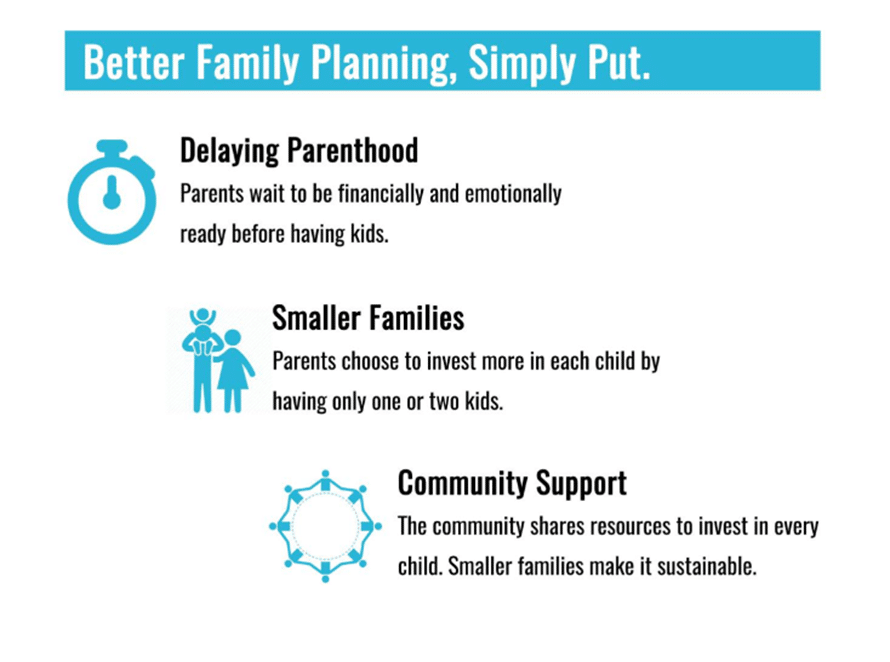
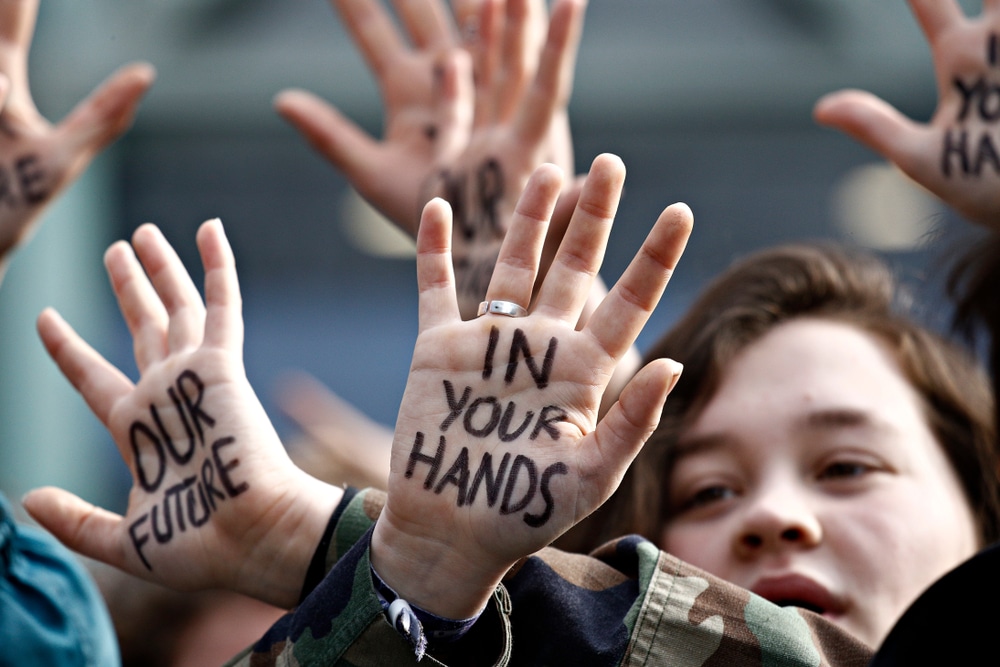
| Make a difference today by sharing your “why” for taking part in the Fair Start movement, and we might use your video in our campaigns: • Record a 10- to 30-second video clip of you sharing why we need to rethink family planning policy to finally end child abuse and advocate for smaller families to protect our planet and wildlife.• Share your video on social media by using the hashtag #FairStartStories |
 |
Author: Fair Start Movement
-

Share your story. Make an impact. Join the Fair Start movement.
-
In a Country Divided, Can Our Children Unite Us? Take Action.
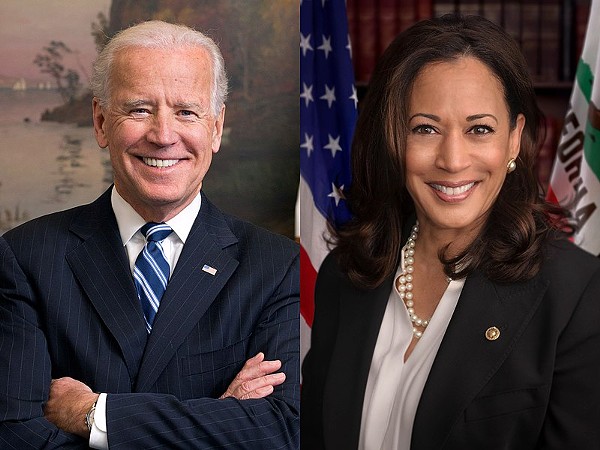
Whatever rhetoric comes from President-elect Joe Biden, the country remains more divided because of the election, with studies showing a growing divide and distrust between red and blue communities and increasing openness to violence on both sides. The impact of the second wave of Covid-19 on businesses, the continued killing of black men and women by police, and a former president soon unhindered by office, will not help.
Biden is pursuing a business-as-usual approach to funding childcare that makes the situation worse long-term. This policy does not address the root of the problem: family planning. It does not ensure a minimum threshold under which children should not be born, does not address the way unsustainable family size drives the climate and other crises, and does not create inclusive communities.
Why are your tax dollars being paid out without these safeguards?
It’s a cliché to say that children, who are the future, can unite us. But novel policies that could change the way we plan for, have, and raise kids make the possibility of coming together real and meaningful beyond empty clichés. Those policies begin by our realizing that being truly inclusive starts by deliberately including children in communities through more cooperative family planning systems that eliminate marginalization, and focus as a priority on giving every child a fair start in life.
Those policies would also have to promote smaller families that create more democratic communities where everyone’s voice matters. This would be a stark reversal of our current family tax policies that promote quantity over quality, ignore fair starts in life, and promote the antithesis of inclusivity.
The best part? Such #fairstart policies should appeal to both liberals and conservatives, because they promote the traditionally liberal value of equity while also promoting the traditionally conservative value of autonomy by investing more in kids in ways that make them self-sufficient and capable citizens. Together, these values create a vision of free and equal people engaged in the self-rule the founders of the nation envisioned, or the ideal of town halls, rather than a vision of economic growth that through overcrowding and lack of a common core excludes people from public institutions.
Moreover, new family planning policies like these would have a massive impact on the climate crisis that threatens all of us, with an exponentially greater impact than many downstream alternatives. Family planning reform is the only truly fundamental type of reform, and given the climate crisis, fundamental reform is what we need.
Children can unite us, but to make that statement mean something, we have to start at the beginning, with the way we plan families. We have to start with a vision of a future of smaller, sustainable, and truly democratic communities where we invest more in kids and where all have a meaningful voice.
Take Action: Urge Kamala Harris to use her position to educate Biden and to promote child-centric Fair Start family planning reforms. Copy and paste this message in your communications with her.
-
The Animal Mortality Calculator: Knowledge for the Foundation of Animal Rights
How many other animals in total – farmed, wildlife, animals in research, etc. – die to support the current lifestyle of a human individual?
The answer is that we don’t really know. Fair Start aims to find out and, in partnership with several researchers, is engaging in a new research project that hopes to tell the truth about our existential relationship with other animals. Here is some of the background:
For survival, humans depend completely on Earth’s ecosystems and the services they provide us, they are also called ecosystem services. These include the production of healthy air and water, food, medicines, disease management, removal of toxins, building materials, fuel, climate regulation, buffering of storms, spiritual fulfillment, and aesthetic enjoyment. Ecosystem services are primarily provided by the activities of biotic flora and fauna interacting with nonliving (abiotic) elements in nature that provide the nutrients and minerals to support a planet once teaming with life.

Today, we have entered a period of mass extinction that rivals the extermination of the dinosaurs and 76% of life on Earth. However, unlike past extinction events caused by natural global pulses, our species has already caused the extinction of nearly 60% of assessed vertebrate populations and these trends are accelerating (WWF, 2016). Beyond the massive loss of species and wildlife populations, the abject suffering that humans are causing on the planet is significant. These human-induced adversities should not be assumed inevitable, and are due to human psychological shortcomings that can be remedied through equal access to information, resources, and security.
The vast and detrimental changes to Earth’s ecosystems are largely to meet rapidly growing human demands for food, fresh water, timber, fiber, minerals, and fuel at levels that are unsustainable and based on irresponsible human overpopulation, consumption and false-dependency on economic growth (Global Humanitarian Forum, 2009; Millennium Ecosystem Assessment, 2005; WWF, 2014; 2016). Although our demands on Earth’s ecosystems have led to substantial gains in human physical well-being and economic development for a few, the long-term costs are now being observed in the forms of climate change, habitat destruction, pollution, disease, war, displacement, hunger, and mass mortality in humans and nearly all other life forms (e.g., Ceballos, et al., 2015; Cohen, et. al., 2017; Dockery & Evans, 2017; Raworth, 2012; Rockstrom et al., 2009).
We now know that we as a species have so degraded and destroyed parts of our life-support system that our health, well-being and survival as a species is threatened and a sharp unplanned decline in our population has become very probable. It is increasingly clear that environmental problems cannot be resolved through technical solutions alone and that these ecological issues are forcing us to rethink what development and progress means, and to consider the size and activity of our population with new urgency (Hickey, Rieder & Earl, 2016). These threats are not as new as some might think, with one of the most prominent calls to action coming from the Limits to Growth studies, first published in 1972 (Meadows, Meadows, Randers, & Behrens, 1972).
Additionally, destruction and despoliation of the environment has not happened in a vacuum, nor with only the suffering of our species as collateral damage. At no time in human history has the suffering and death of other species been so numerous, prevalent and profound. Much science has come forth to successfully quantify and describe the sentience of nonhuman animals with whom we share Earth (e.g., Bekoff, 2006; Darwin, 1998; Fossey, 2000; Goodall, 2000; Griffin, 2001; Marino & Allen, 2017; Masson & McCarthy, 1996; Moss, 2000; Poole, 1998, Shanor & Kanwal, 2011). Recently, insects have been shown to have emotional states not different from our own (Paul & Mendl, 2016; Perry, Baciadonna & Chittka, 2016). Logic, therefore, would dictate that, like humans, other species suffer needlessly and we have a moral obligation to reduce and alleviate such trauma, much of which is caused by nonessential human behaviors.
The enormity by which humans torture and kill other animals is indefensible. The numbers in a single year are in the billions in the U.S. alone. If human nonessential activities were killing billions of humans each year, it would be considered apocalyptic on an unprecedented scale. Here is a breakdown of some of the data. Cows: 30.6 million adults; 487,700 calves (USDA, 2017) Pigs: 118.2 million (USDA, 2017) Sheep and Lambs: 2.24 million (USDA, 2017) Chickens: 8.9 billion (USDA, 2017) Wildlife: Diffuse numbers, but just one example is 3.2 million killed intentionally in
2015 by the U.S. government, primarily to serve the interests of the livestock industry and agribusiness, that serve the consuming public (USDA, 2016). Other significant numbers are killed every year as “road kill”, by hunters, captured to serve as pets, die due to pollutants, habitat destruction, and more.
While the sharing of the numbers of animals used in animal agriculture may appear out of step with our current mass extinction event and environmental harms, animal agriculture has been found to be the second largest contributor to human generated greenhouse gases and the leading cause of water and air pollution, deforestation and biodiversity loss (Koneswaran & Nierenberg, 2008). Therefore, the suffering and killing of nearly 70 billion animals in agriculture per year, literally leads additionally to the suffering and death of countless wild animals and the deterioration of the natural environment.
About the Animal Mortality Calculator
The objective of this project is to develop the algorithms to calculate the average number of animals that die to support the lifestyle of one human individual. This calculation will serve as a basis for an educational tool of the organizations, Fair Start and the Institute for Human-Animal Connection to garner further support from people everywhere for the responsibility to protect other species. A consideration for animal protection that has largely been avoided is the fact that a decreasing and healthy human population is the best protection for all animals, including humans.
A key behavioral objective of this project is increased support of the Fair Start Model (Fair Start , 2016) by animal advocates and the general public through recognition that continued human population growth means more suffering and loss of life of other species with eventual ecological and industrial collapse, and that we have choices on limiting personal family size. The magnitude of the issues humans have caused and now face today can be psychologically overwhelming, therefore the provision of solutionary pathways for our species is of utmost importance to deflect the development of apathy and avoidant tendencies. This project will also result in multiple scientific publications in peer-reviewed scientific journals.
Informing Family Planning
Thoughtful parents are concerned about the world in which the next generation will inherit and inhabit. Jessica Blome, a mom from California shared her thoughts:
“When I thought about starting a family, I sought advice from family and friends, discovered the world of mommy blogs, considered the latest parenting trends, and consulted with my healthcare provider. My husband and I researched the costs of childcare and education. We questioned whether we would be able to balance work and family. We wondered how to best position our child, so she could get into the best schools, what kinds of opportunities or barriers she would face when she grew up, and what her world will look like when she does. And when we got pregnant, we hoped our daughter would be able to enjoy nature, appreciate non-human animals, and live in a healthy environment.
As my daughter makes her way through primary school, I wonder if I truly understand how my family planning choices impact the environment, animals, and nature. What am I doing to make it more or less likely that my daughter will live in a thriving, healthy environment, free from cruelty to all animals? If that were something I could know, I’d want to know. Should we all want to know? Wouldn’t we add that calculation to our list of considerations before having a family and while raising children?
Seeking protection for non-human animals and our planet is not in opposition to having a family. The Animal Mortality Calculator has the potential to inspire parents like me to plan families that reduce the human impact on farmed animals and ecosystems while creating a sustainable future for all children.”
Interested in assisting with this project? We are seeking researchers and modelers. Email us at Ashley@faairstartmovement.org for more information on funding, volunteer, and other opportunities.
-

What Makes Pandemics Worse? Population Growth. Take Action.
Humans are shortsighted by nature. We experience something like the climate crisis or Covid-19, and our usual reaction is to look for an immediate solution like emissions technology or a vaccine. But sometimes solving problems – especially global and interconnected ones – takes stepping back and seeing the larger picture.
Decades ago world leaders were faced with a choice: Respond to explosive population growth by promoting smaller families and greater investments in child development universally, or take a relatively hands off approach, and hope that falling fertility trends would continue. Most countries chose the latter, which allowed them to grow and to exploit rather than invest in future generations.
This choice has resulted in a world population that is still skyrocketing towards potentially eleven billion people by 2100. The hands off approach has done little to alleviate poverty and inequity, and has become the fundamental driver behind the climate crisis and every other anthropogenic impact. What’s worse? The hands off approach – pushed by men who controlled their households – did not comply with human rights requirements, which require balancing parents’ right to have kids with an obligation to provide the things all future children need. The human-rights approach to planning families requires that we collectively plan in ways that give all kids a socially and ecologically fair start in life.

The exploit-rather-than invest approach set the stage for the risk and impact of Covid-19, and is setting the stage for the next pandemic, which could be larger in scale. How?
- Overcrowding, or the quantity of people around us, helps pandemics like Covid 19 spread. Worldwide, public health officials are admitting that the failure to contain the pandemic is largely a function of the quantity and civic qualities of the people crowding the planet, which are factors that depend on our family planning policies. India is exemplifying this. Key UN agencies were urged to change modeling well before the pandemic, but did nothing.
- Civic qualities that are largely contingent on the conditions of our birth and early development, like our overall health and risk of comorbidities, as well as empathy deficits which are reflected in the refusal of many to engage in easy and life-saving public health measures like practicing social distancing and wearing masks, substantially contribute to the impact of pandemics like Covid-19.
- The economic disparities we inherit at birth lead to massive disparities in how pandemics impact different communities, and hence determine the average impact of things like Covid-19.
- Our growing population is degrading our natural ecologies, which sets the stage for future and worse pandemics.
- The distribution and efficacy of vaccines is being stymied by population size, the refusal of many to participate, and underlying health conditions that can be traced to family planning systems.
What does all of this mean?
Part of the response to Covid-19 has to be reforming family planning policies to fulfill human rights obligations, and give every child a Fair Start in life. Given that Fair Start family planning is the first and overriding human right and obligation, we may fulfill it by taking resources from both public and private concentrations of wealth and power, and using them to incentivize better and more cooperative family planning, or smaller families working together to invest more time, love, and resources in every child.
-

Kate Middleton Speaks for Children’s Rights to Equal Starts in Life
Kate Middleton is speaking out, urging the world to recognize that all children deserve an equal start in life. Unveiling the results of a U.K. survey on attitudes about children’s early years, she said work on the importance of early childhood should be regarded equally alongside the other most crucial social issues of our era. She argues that the early childhood years are key to shaping the rest of each child’s lives and our broader societal outcomes.
The work she advocates is a far cry from the outdated standard still used by the United Nations, the United States, and many other countries that ignore child welfare in favor of focusing on parental autonomy (and in so many cases, exclusively male autonomy). Given that children have the most at stake, shouldn’t our family planning systems be based on their needs? Other mothers are speaking out, too. See a recent video of one mom’s plea here.
This move makes Kate a leader on the issue of family planning reform. The bold statement brings her into closer alignment with Meghan Markle and Prince Harry, who also recently spoke out.
The move, prompted in part by Kate’s “early years” work, could not come soon enough. Children in Britain and around the world are sinking deeper into an abyss of pandemic, poverty, and ecological crisis. Kate’s move is also step toward Having Kids‘ mission of promoting every child’s right to a Fair Start in life as the dominant human right, overriding anything with which it would conflict.
Kate’s Truth
We cannot help kids without changing the conditions into which they are born. That means we must change the policies that control way we all plan for and raise kids. Kate knows this hard truth and is not afraid to speak out. Kudos to her. It’s time for the United Nations to make the same move and to start urging member nations to come into compliance with human rights requirements. This summer for World Population Day, Having Kids will bring to the United Nations secretary general the demands of a growing coalition of organizations.
TAKE ACTION:
If you support any organization that claims to help children, animals, the environment, and/or human rights and democracy, reason with them as to why their mission is impossible without embracing family planning reform, and strongly urge them to join our coalition by contacting us at Carter@HavingKids.org.
Learn more about the transition from parent-focused to child-focused Fair Start family planning policies at HavingKids.org.

-

Having Kids: From 2020 Into 2021, Doing the Most Good
Want to make the world a better place? Nothing has a greater impact than universal policy reforms incentivizing smaller and more equitable families cooperatively investing more time, love, attention, and resources into every child.
Current policies were designed with motivations to fuel the economy, not provide for child welfare, and these policies have fueled the crises we face today. In order to boost markets and economies, they have incentivized growth that has filled the world with billions of people and has led to climate change and the sixth mass extinction. By contrast, Fair Start policies promote equity and human rights, developing people for democratic communities, and maintaining the natural world for future generations.
Enjoy this presentation detailing what we mean by the Fair Start revolution and how it is the best way to reach world sustainable development goals.
Nothing will do as much good as improving family planning policies to shift the focus from what Wall Street wants now to what all future children need. It’s the first human right and obligation, it demands the collective intergenerational obligations most countries and the United Nations seek to avoid, and Having Kids is helping to make it a reality. With Fair Start, we aim to stabilize human populations at the United Nations low variant before 2100 through a qualitative transition focused on intergenerational human rights and self-determination, defined by a fair start in life for all kids.
In 2020, Having Kids, with an almost all volunteer staff and minuscule budget, made real strides:
- Publishing our work, in publications from popular outlets like Salon to peer-reviewed and other academic journals, detailing how better family planning — enabled through policies like fertility delay incentives — can have 10 to 20 times the impact on climate, equity, and other crises as shortsighted policy changes.
- Producing visual media, from calling out people threatening our future, to testimonials from mothers about the need for better family planning, to our co-director Cat Hughey’s call for change.
- Surveying the public for their attitudes on family planning reform.
- Developing detailed policy applications of Fair Start family planning reform, from federal work in response to COVID-19 and the climate crisis, to proposed Colorado and District of Columbia constitutional reforms.
- Helping companies speak out in support of sustainable family planning reform.
- Garnering positive reactions to our work from key thought leaders such as Paul Hawken, Larry Solum, Hugh LaFollette, and Elizabeth Anderson.
- Engaging with the CDC on ways to address the fundamental driver of pandemics like COVID-19: Overcrowding, poor public health, and the degradation of nature.
- Preparing a detailed proposal for an Animal Mortality Calculator that will let people see the impact of their family planning decisions on the natural world and our shared future.
- Continuing to expand our coalition urging the United Nations to adopt Fair Start as required by the International Bill of Human Rights.
- Urging public figures, from Marty Barron to the Pope to Matthew McConaughey, to embrace Fair Start reforms, and bravely calling out funders who promote traditional family planning systems as a means of furthering their own economic position.
- Helping small and more sustainable families break the taboo that prevents them from pushing back against large and unsustainable families.
- Expanding our endorsements.
- Incorporating a new entity capable of substantial lobbying for legal reforms.
- Expanding the impact of new families adopting Fair Start.
- Supporting social movements, like Black Lives Matter, by urging the intergenerational redistribution of power that is the beginning of any form of social justice.
What Do We Have Planned for 2021?
As demonstrated in 2020, Having Kids acts as a “part replacer,” finding unsustainable and inequitable family planning modeling in systems of governance, discourse, corporatism, and culture, and replacing it with truly human rights-based Fair Start modeling. We are the praxis, more than simply an organization, of moving the way we all plan families from a focus on adults to a focus on future children.
For 2021, Having Kids has eight specific objectives, or key performance indicators, to further the overwhelming and quantified impact of better family planning.
- We will persuade more companies to speak out for sustainable and equitable family planning improvements, including those we are in negotiations with now.
- In partnership with a Having Kids legislative fund, we will introduce our first legislation, improving popular “baby bond” bills to instead incentivize families working together to give all kids a Fair Start, socially and ecologically.
- We will file our first litigation, challenging intrusions on the right to terminate one’s pregnancy not as a violation of personal autonomy, but of the collective obligations we all owe future children.
- We will target a wealthy family responsible for the climate crisis to urge them to compensate future generations by funding Fair Start family reform, and speak the truth to their power that this lexically primary obligation overrides all property rights. We will also focus on recidivist child abusers, from all parts of the economic spectrum, to urge them to admit the need for family planning reform.
- We will submit proposed legislative and regulatory proposals that prioritize approval and accessibility of the male birth control pill, with policy reforms that treat contraception as the default for all teens. Kids should not be having or raising kids.
- We will target investors supporting companies that promote unsustainable family planning policies that further inequity and ecocide.
- We will expand our coalition of organizations, urging the U.N. secretary general and other U.N. leaders to admit that current family planning modeling is a failure, undercutting sustainable development and human rights.
- We will initiate a #factcheck function on our platforms to correct misinformation in the media regarding the impact of population growth, and we will file actions against civil society organizations misleading donors with claims of progress that do not account for the overwhelming impacts caused by poor family planning and growth.
How can you help? Please consider donating now. No other change is as effective, comprehensive, or fundamental.
Thank you,The Team at Having Kids

-
Having Kids Statement on Ohio Supreme Court Opinion: Parents Need Not Support Their Kids?
The Ohio Supreme Court has ruled unconstitutional a probate judge’s order that an Ohio man who has 13 kids by nine mothers to avoid procreating further because he owes hundreds of thousands of dollars in child support. Polls in Ohio show that many people would have supported the Lorain County judge’s original decision and that people believe the right to have kids is contingent on parents being able to support them.
The court seemed sympathetic to the idea that having kids comes with responsibilities but ultimately found that the order did not sufficiently relate to the legal authority under which the judge issued it. In other words, it would be up to the Ohio legislature to step in and broaden courts’ authority to address poor family planning.
Having Kids has developed model legislation, based on some of the leading research in the field, that would authorize courts nationwide to do this. We have also developed federal legislation that would facilitate funding to improve the way our system protects kids and our communities from poor family planning. Of course, the right to have kids comes with responsibilities. And our failure to ensure those responsibilities through better policy has fundamentally created the social and ecological crises we are experiencing today.
We can do better, and Having Kids is leading the way.
Take action: Urge Ohio Gov. Mike DeWine @GovMikeDeWine to prioritize Fair Start order legislation.
-

Having Kids Co-Director Speaks Out for Fair Start
[et_pb_section fb_built=”1″ admin_label=”section” _builder_version=”4.16″ global_colors_info=”{}”][et_pb_row admin_label=”row” _builder_version=”4.16″ background_size=”initial” background_position=”top_left” background_repeat=”repeat” global_colors_info=”{}”][et_pb_column type=”4_4″ _builder_version=”4.16″ custom_padding=”|||” global_colors_info=”{}” custom_padding__hover=”|||”][et_pb_text admin_label=”Text” _builder_version=”4.23.4″ background_size=”initial” background_position=”top_left” background_repeat=”repeat” hover_enabled=”0″ global_colors_info=”{}” sticky_enabled=”0″]Catharina Hughey, co-director at Having Kids, speaks out on the need for new Fair Start family planning policies.
Having Kids is working to make change — from changes at the United Nations to key policy reforms in the United States and other countries, from reforming our culture through role modeling to changing corporate behavior.
Video: Catharina Hughey speaks on the Fair Start family planning policy model Every child’s right to a socially and ecologically fair start in life is the first and overriding human right. It physically constitutes us as the free and equal people we should be. It is the right that frees us from one another.
That right is the first and necessary condition of human freedom and political legitimacy, and we may pursue it by all means effective. Social justice begins with Fair Start family planning policies, and balancing the right to have children with the community and parental responsibilities that come with that right and protect us all.
TAKE ACTION: Urge Joe Biden and his team to embrace Fair Start.
[/et_pb_text][/et_pb_column][/et_pb_row][/et_pb_section] -

Matthew Yglesias: Discuss Your ‘One Billion Americans’ Proposal With a Small Family Advocate?
Matthew Yglesias’ new book, “One Billion Americans: The Case for Thinking Bigger,” is the thought experiment the title implies: exploring policies that might increase the population of the country threefold by using incentives to create larger families.
Cassie King with Having Kids has a message and invitation for Matthew:
The book has been harshly critiqued by most reviewers for its admiration of China and its placing economic growth before human rights, confusing quantitative growth with sustainable human development, ignoring and naively dismissing the environmental consequences of its proposal (the sort of thinking that created the climate crisis), reinforcing a patriarchal vision of women as mothers, and more.
In a previous blog post, Having Kids argued that his approach — like many others who see babies as economic inputs to be exploited — was actually compelling evidence of the fundamentally unjust nature of our system.
All kids have a fundamental human right, ecologically and socially, to a #fairstart in life. It’s the first human right. Help us secure it against those who threaten our future.
The right to have children comes with responsibilities on parents and their communities that protect us all. The United Nations is using a decades-old pro-growth family planning model that ignores those responsibilities, enables people like Yglesias to promote economic growth over human rights, and hurts kids. That model is fundamentally driving ecological crises and the climate crisis, child poverty, and growing inequity across the globe. That model exacerbates the risk and impact of pandemics and prevents our reaching the U.N.’s Sustainable Development Goals. That noninclusive model exploits children more than it invests in them, thereby driving political illegitimacy.
But groups and individuals from around the world are signing on to an effort to change the old model that focuses on what parents want toward a new model that focuses on what all kids need. The new model, called Fair Start family planning, is the beginning of real social justice. The reform can begin with the United Nations secretary general simply acknowledging the need for change.
Sign on, and urge any organization you support or can influence — nonprofit or for-profit — to also sign on. Sign here, or contact us at info@fairstartmovement.org for more information.