Category: Social Justice & Equity

  • Existential Justice and Freedom: The First Obligation 

    Existential Justice and Freedom: The First Obligation 

    The following is a summary of the thesis of new book by Carter Dillard titled Justice as a Fair Start in Life: Understanding the Right to Have Children (Eliva 2021). The book was recently recommended reading by leading constitutional law professor and political theorist Larry Solum at the University of Virginia. 

    There is a particular and fundamental mistake in our language and behavior that impedes freedom. It’s called the constitutive fallacy, or mistaking the first obligation or principle (the grundnorm) as anything downstream from the norm that should create us. 

    Put simply: When we have kids, the act has to be child-centric and fair because having children is what most determines the fair society we should orient from. The collective act of having children creates the people around us, and through their development, largely makes them the people they will be. As will be argued below, then, fairness in our creation is thus the first obligation, or grundnorm (because we are before we do, and because who we are is the product of the norms that create us); its praxis means we will be coming from a just place.

    There is another way to say this. Before we can have anything like a written constitution, iconic representatives, or lists of human rights, we would first have to be physically constituting ourselves as free and equal people who can self-determine (much the way we would in a popular constitutional convention), relative to an absence of being determined by others, or a zero-baseline. If government derives its power from the people and people derive from their creation, ensuring a creation norm that maximizes consent — again, imagine a dynamic constitutional convention — acts as a sort of “first election” to bring in future persons as new members (who always constitute the majority of persons) before we ever elect any representatives. And we have to constitute ourselves as if for town halls — with fewer and highly developed people — rather than as crowds of consumers for shopping malls, because the former regulate the latter. 

    This truly self-determining state of affairs requires, despite our temporal myopia, 1) conceptualizing of power as any form of human influence, and 2) temporalizing our conception of human beings to first assess fairness in the first creation — or procreation — of power relations. These moves constitute us as free and equal people by limiting and decentralizing the power that others have over us. This form of intergenerational justice subsumes all other forms, including distributive, retributive, and ecological, by factoring them into our creation. To the extent we have considered justice in the abstract, we have hidden the fundament: how justice and injustice make us who we are.

    How do we know we are moving in the right direction, and that this is happening? Our relative self-determination will be directly inverse to the number of people in our democracies, and those democracies should divide into others at particular thresholds to maintain the baseline.

    This dynamic process resolves the fallacy and unifies values like justice, relative autonomy, nature, freedom, equality, etc., at the most fundamental structure of human power. It’s also a pathway to qualitatively determining optimal populations using very specific and current legal standards to determine the values above. We simply cannot create a person without simultaneously impacting all these qualitative values. By seeing freedom as akin to the dynamic emancipation of children, we eliminate false generations of rights that divide values like development and welfare from liberty and we find that truly becoming a citizen requires at a minimum being sufficiently other-regarding to constitute future democracies through collective and child-centric family planning. 

    Assuring this level of empowerment and equity begins with policies that 1) fulfill minimum levels of welfare approaching birth equity for all future children 2) ensure each child a meaningful voice in their future democracies. This is not about people as numbers, or as population. It’s about making people matter, politically, and freeing them from others’ power — or physical influence, from disparate inherited wealth to ecological impacts — so that they may actually consent or become relatively self-determining. The closest analogy to this, in our current lexicon, is the freedom to associate.  

    We fund these policies by taking wealth (one form of influence) from the top of the economic pyramid as a matter of right, and thus limiting and decentralizing the power others have over us. This is obligatory, given the irrefutable facts that this wealth 1) was created using an unsustainable and unjust system of growth that violated multiple human rights including the Children’s Convention, environmental rights, the right to equal opportunities in life, and the right to an influential role in one’s democracy, 2) foisted its costs, including the loss of freedom, on future generations, and 3) is most comprehensively and effectively redressed using Fair Start family reforms and redistribution of wealth as equitable family planning incentives. The economic pyramid was built by moving the locus of power and control to the top in the form of wealth and political control (based on the threat of violence), rather than forward into future generations, and to preserve relative self-determination must be redirected. 

    Again, this is not about population or consumption; it’s about becoming existentially just and abandoning the fallacious reasoning that life is not fair because our creation is not fair — and can’t be. 

    This shift, which means humans will matter politically, will eliminate the misconception of procreative autonomy in favor of procreative justice. Procreative autonomy largely derives from religious autonomy. But note how it would violate obligations to separate church and state to live under a world defined by others’ religious beliefs, including the ideas that life is not fair because God and creation is not fair.

    Consider also traditional political borders: the line on a map between two nations. Existential justice moves past this archaic conception toward a real and primary border of human power — our creation — and accounts for how it determines our freedom, or more accurately, our relative self-determination. Our current political borders mask the way true personal sovereignty is directly inverse to growth, and in ways other political models would not. 

    The fundamental difference between preconstitutional systems like polities and economies, as opposed to legalities, involves the latter limiting and decentralizing power in the constant recreation of their constituents to make obligations relatively self-reflective. That is what it means to constitute. Any policy that does not start with a Fair Start or comparable transition does not come from a just place, is overridden by Fair Start and is fundamentally illegitimate. The proponents of such policies, precons, will be unable to account for how basic values, such as nature, welfare, equity, and democracy, and the actual people impacted, should relate. 

    There are many pathways to ensure existential justice, and these include a simple discourse of constituting ourselves as free and equal people. That discourse puts future generations into the stream of power and places their demands upon the living, a move that might have averted the climate crisis had the United Nations properly interpreted its human rights obligations. Regardless, the goal of existential justice is to become part of optimal world populations, qualitatively, that are relatively self-determining and therefore free. 

    Here are some examples of how to apply Fair Start, practically: 

    1. Urge the United Nations to interpret Article 16 of the Universal Declaration of Human Rights, the right to have children, in a way that is intergenerationally fair, and compensates future generations for the harm we have already caused them from unfair prior interpretations. 

    2. Support a recent call for a federal executive order that would require disclosures of past, present, and anticipated family planning and population policies, and their multiplying impact on a variety of factors within the current federal reporting Environmental, Sustainability, and Governance guidelines. 

    3. Oppose abortion bans as a violation not just of privacy, but of governments’ historic human rights and democracy obligations to ensure every child has an ecosocial Fair Start in life.

    4. Promote our universal right to restored, natural and nonhuman habitats and communities, including restorative climate policies, and the freedom these things create.  


  • Insist That Public Policy Respects the Rights of Children and Women

    Insist That Public Policy Respects the Rights of Children and Women

    By Dave Gardner, co-host of the GrowthBusters podcast, and director of the film, GrowthBusters: Hooked on Growth

    A woman in a red shirt holds an hourglass and touches her belly, smiling. The Italian text reads, La bellezza non ha età. La fertilità sì. (Beauty has no age. Fertility does.) The hashtag #fertilityday is shown.
    “Beauty has no age limit. Fertility does.”
    Ad issued by Italian government in campaign to boost fertility rate.

    Let’s find a way to reduce child poverty without signaling that society needs to exploit more babies to grow economies. There was a time when a case could be made that bringing more children into the world was a benefit to society. Today, with the overwhelming demands of nearly 8 billion people inflicting serious damage on the planet’s life-supporting ecosystems, there is no case for encouraging births, especially when it will harm the very children we have. More births portend a bleak future for today’s and future children – whom we should be protecting, not exploiting. Public policy needs to catch up with this harsh reality.

    For too long, the decision to bring a child into this world has been all about the “rights” and desires of the prospective parent, with little regard for the rights of children. The rights of children should be paramount, eclipsing other rights and agendas. Nothing could be more important. That’s one reason I admire and support the work of the Fair Start Movement.

    Today, we’re witnessing unenlightened state and business agendas to reverse the trend of dropping birth rates. “People want it. Society needs it. We want the economy to grow,” proclaims Lyman Stone, an adjunct fellow at the pro-growth American Enterprise Institute (AEI).

    On a full planet, it’s time we put an end to pro-natal agendas and rhetoric that pressure, incentivize or otherwise encourage prospective parents to add to our numbers. Let’s consider pro-natal public policies because they are surging today.

    Bear with me while I set the stage:

    A close-up of a sleeping newborn baby wrapped in a blanket, featured on a BBC News webpage discussing the global decline in fertility rates, with headlines and navigation menus visible.

    Birth rates have been dropping around the world for 60 years, and that drop may be accelerating today – for many reasons. There is some lag, but after birth rates drop below replacement rate, a population eventually begins to contract. While that’s not happening yet to our global numbers, many countries have begun to experience this contraction. And there are more to come. Sadly, this is getting negative attention.

    But it’s actually really good news. It’s an indication that we’re collectively planning for and investing more in each child, which naturally brings down family size. It also means more female autonomy, improved access to education and employment opportunities for women, better access to contraception and other family planning services, and a reduction in teen pregnancies.

    Another contributing factor is it’s become SO apparent that we’re doing serious damage to our home planet. Our climate, biodiversity, soil, and water are all degrading before our eyes. Young adults today are reluctant to bring a child into such an uncertain world, and many do not want to contribute to this destruction by adding more people.

    A nearly empty small-town street with a few cars parked along the side, brick buildings on the left, trees in the background, and a cloudy sky overhead. The headline discusses U.S. population growth concerns.

    On an overpopulated planet, we ought to celebrate declining birth rates. It’s exactly what is needed so we can ease our pressure on ecosystems, allowing them to return to health and meet our needs, the needs of other species, and especially the needs of the world’s children. Unfortunately, I’m observing the exact opposite. There’s an unexamined assumption that, “of course we must replenish ourselves” (replenishing is something we should do when we’re at a sustainable population).

    Growth-addicted policymakers in numerous nations have been panicking about what’s being termed a “baby bust.” These fears over a shrinking population are so common, they’ve earned the labels, “depopulation panic” and “baby-bust alarmism.” Some of this panic stems from the fact that governments have been engaged in a population Ponzi scheme, relying on tax revenue from an ever-growing pool of citizens to fund services for those born decades earlier. Plus, a growing population means more workers and more consumers year after year, an easy recipe for GDP growth. New York Times columnist Ross Douthat wrote, “Today’s babies are tomorrow’s taxpayers and workers….”

    Screenshot of a news article titled Its national preservation: Greece offers baby bonus to boost birthrate, with a photo of young children in traditional Greek costumes holding Greek flags.

    Of course, a high rate of GDP growth is the Holy Grail. Economic growth is the most universal public policy goal on the planet. AEI’s Stone, who is also a research fellow at the conservative think tank, Institute for Family Studies, laments, “There is no economy that has managed to knock out gangbuster growth with a declining population.”

    If you’re addicted to growth and running a Ponzi scheme, it can be very alarming to see it begin to unravel. And if you’re running for reelection and you can’t brag about economic growth during your administration, you’re pretty much done.

    So, officials in numerous countries are instituting policies designed to boost the birth rate. According to the U.N., 10% of the world’s nations had explicitly pro-natal policies in 1976, but that number began to rise sharply at the turn of this century, and has almost tripled (28% in 2015, the most recent data). Hungary, Poland, Greece, Japan, and Korea are just a few of the nations very actively attempting to reverse population contraction.

    A close-up of an adult gently holding a baby’s hand, with the headline, “Japan is trying really hard to persuade women to start having babies again,” displayed at the top of the image.

    It’s too seldom discussed, but pressuring women to birth more taxpayers, workers or consumers is an abhorrent violation of their human rights. It commodifies children and dehumanizes women, reducing them to incubators in service to an overheated economy hooked on unsustainable growth. Women and couples should be making family-size decisions free from political and cultural pressure to procreate. As for future children, they have a right to inherit a healthy planet and a shot at living decent lives.

    Even in the U.S., where social support programs have traditionally received limited funding, support for unsustainable and inequitable baby-making has begun ratcheting up. Child tax credits, child allowances, paid family leave, and child care subsidies are getting miraculous bipartisan support. The American Rescue Plan (a response to COVID) has been providing $3,000 to $3,600 per child in tax credits annually – through the end of 2021. Efforts are underway to extend it. Senator Mitt Romney this year proposed The Family Security Act, which would also send a monthly check to families for each child.

    Multiple identical babies in white shirts and diapers crawl in rows on a solid blue background, illustrating concerns about Eastern Europe’s efforts to boost birthrates and address depopulation.

    In defending the proposal, Senator Romney said, “We’re creating an incentive for people to be able to form families and to have children because we’re recognizing that we’re not reproducing ourselves.” In one interview, Romney stated, “Our population is declining pretty substantially. We’re down, I think, 5.8 million people from where we would have been had we maintained the birth rate of the last decade. So, we’ve got some work to do.” Clearly, he is not aware that we’re in overshoot (the scale of the human enterprise – our economy and our population – has outgrown our planet).

    Policies and projects to increase birth rates in several nations have met with mixed results. That’s not deterring policymakers desperate for growth. Advice from New York Times columnist Ross Douthat: “America needs more babies. Public policy alone cannot deliver them, but it can help.”

    Pro-natal public policy emerges in – and helps perpetuate – a pro-natal culture. Emma Green, in The Rebirth of America’s Pro-Natalist Movement (The Atlantic, 2017) wrote, “Ultimately, a shared cultural commitment to the importance of children is the factor that will determine America’s baby-making future.”

    While it is concerning that today we live in a pro-natal culture, I’m optimistic because young adults today are transforming that culture. They are choosing to delay childbearing and choosing to have fewer children. They understand a meaningful life does not require motherhood. They recognize that raising a child is a huge commitment, it’s expensive, and it does require sacrificing career and other priorities. And, of course, many appreciate that a full planet doesn’t benefit from a growing human population.

    Protecting today’s children from poverty is a noble goal. But encouraging higher birth rates isn’t the way to do that. It guarantees those children will inherit a dead planet. It’s challenging to develop policy that alleviates child poverty but does not incentivize prospective parents to bring more children into the world. I don’t know the answer to that dilemma. But policymakers working on this must have a full understanding of the fact that we’re in overshoot. This means we need to embrace and celebrate dropping birth rates and contracting population, not fight it.

    Let your elected representatives know you do not support policies that attempt to bribe women to birth more taxpayers, workers, and consumers. Let them know you support policies that reduce child poverty, but only those that do not also increase the number of children.

  • New Podcast: Scam of the Century, or How the Wealth Bubble Was Taken From Women and Children

    New Podcast: Scam of the Century, or How the Wealth Bubble Was Taken From Women and Children

    How did we end up in a world with massive wealth in the hands of a few and ecosystems crashing as our climates degrade? The answer is surprising. Rather than invest in early childhood development, at the crucial phase in the middle of the Twentieth Century, world leaders chose population growth and the creation of mass consumers, cheap labor and large bases of taxpayers.

    The Fair Fair Start Movement and Christine Dimmick’s Be the Change are pushing back. Listen to the podcast.

    And read the book.

    A podcast webpage displays an episode titled Smaller Families for a Sustainable Future with a photo of a serious man overlaid by large text, #BE THE CHANGE. Episode details and media player are visible on the right.

    WHY FAIR START?

    Governments are failing children’s right to an eco social fair start in life. 

    We know that early childhood experience is pivotal to lifetime outcomes. Why are we waiting for adverse childhood experiences to occur before acting? 

    Children deserve equitable conditions, right from the beginning. A fair start in life is the first human right – it overrides all others. It is what children are entitled to under the Children’s Rights Convention, and what allows them to eventually be free from the power of others, and truly self-determining.

    Because legitimate governance derives from people, who derive from the norms that create them, there are no such things as just societies, political legitimacy and freedom without the sort of Fair Start reforms discussed in this site. Without them we are always coming from an unjust place. 

    How do we change course? Many are joining this simple discourse, in which we recognize that all wealth is subject to future generations’ right to fairness, and that wealth transfers should act as an incentive and entitlement for better – and equitable – family planning. Ensuring an eco-social #fairstart in life for all kids can have ten to twenty times the long run impact on the key social and ecological crises we are facing today relative to other interventions.

    It is the most effective and just thing we can do. We may achieve it by extraordinary means, because there is no justice without it.

  • We Were Scammed Out of Freedom and Justice. Let’s Take Back What We Deserve.

    We Were Scammed Out of Freedom and Justice. Let’s Take Back What We Deserve.

    Moving wealth from the top of the economic pyramid to incentivize better family planning and sustainable families is the best way to do the most good

    The crises we face today, from the climate to massive economic inequality, did not magically appear. They are the product of a scam in the middle of the Twentieth Century, in which world leaders in government and business embraced poor family planning and population growth over promoting parental readiness, sustainable families, and investing more in kids. Instead that money, through a process of isolating families and encouraging growth, went to the top of the wealth pyramid. Those who acted stole resources that should have gone into future generations, by externalizing the costs that human rights and democracy would have required them to internalize. They didn’t even interpret the relevant rights in ways that would protect future generations equally.

    Several hands of different skin tones are stacked together. Overlaid text reads, The most powerful social justice is a fair start in life. Join the coalition. The Fair Start Movement logo appears at the bottom.
    When else would justice begin?

    Today many are fighting to change this, get the wealth back, and use it to most effectively reverse the crises we face. We can separate those people from the politicians, fake charities and others protecting the wealth bubble at the top – and hurting our kids – with a simple language test.

    For any policy claim being made, urge the person making it to account for the relative self-determination (or what we often think of as freedom) of the people who will be involved – long-term – in the policy. How do they account for how the people will be empowered by the conditions in which they are born, how they will be ensured equal opportunities in life without their economic birth position of riches or poverty carrying forward, how will they be assured influential voices in their democracy, and provided the freedom of nature. In other words, force them to explain how we can be coming from a just place without ensuring every child a #fairstart in life? (Hint: We can’t)

    It’s not about counting people, it’s about making people count. The borders of just and inclusive nations are not lines on a map; they are comprised of people who trust one another, and engage in consensual and inclusive governance.

    For example, if environmentalists claim to be protecting a river, force them to account for the way population growth will drive the climate crisis in ways that will degrade the river and increase demands for its use. Many environmental and animal protection groups raised millions to protect natural spaces that they knew would be destroyed by population growth, growth they were helping promote – furthering the Anthropocene. If child protection advocates claim to be investing more in kids with tax policy for example, as them why they permit children to be born into poverty in the first place, rather than incentivizing better – and even equitable – family planning. If groups claim to promoting democracy, ask them to account for how poor family planning and population growth is diluting our individual roles to the point of meaningless, and degrading the civil qualities of the people around us. But the first norm has to be to simply to create normative people, which can best be visualized as a functional constitutional convention of principles – free people – not representatives, and not with the expectation that the norms will require coercion or incentives because they are not truly reflective of the people involved.

    Our world is the way it is because we never held those claiming to promote values to actually account for the truth: People are the most important factor in all policy, and people don’t fall from the sky. If officials or groups do not prioritize giving all kids a #fairstart in life, they are part of the problem, not constituting us as free and equal people (and hence preconstitutional or “precons”) and protecting the bubble of wealth at the top of the pyramid in ways that will hurt our kids.

    We are at a fork. The choice is clear. Let’s take what our kids deserve and build truly consensual governance. Now, how?

    To constitute ourselves as free people means to limit and decentralize the power people have over one another, and we do that by promoting a simple discourse in which intending parents agree to planning caring, and sustainable families in exchange for their future children’s entitlement to #fairstart funding and incentives taken from the top of the wealth pyramid. That’s a true, or physical, social contract, which is inclusive of the majority of persons – those who will live in the future. It reflects the alleviation of power differentials, the sort rich have over poor, parents have over children, and we all have over our natural ecologies. That is what it means to be sufficiently other-regarding, or empathetic, to constitute ourselves as free people.

    We can take the wealth at the top of the wealth pyramid – as matter of the first human right, one that overrides government processes and property rights – and use it to bend the arc of the future to create greater welfare, equity, meaningful democracy, and nature. Or we can leave it at the top and have a future with greater inequity, less nature, and bloated democracies that don’ work. We can become free people, and defeat the precons. The wealth bubble at the top is big enough to bend the arc, and incentivize, the future we deserve. Let’s move that wealth forward.

    Take Action

    Moving wealth from the top of the economic pyramid to incentivize better family planning and equitable families is the best way to do the most good

    1. Help us build the discourse of constituting, and of freedom. If someone puts property over people, they are part of the problem. Contact us at ashley@fairstartmovement.org to learn more, and support the Unite America campaign by urging Congress to act.
    2. Urge the UN to interpret the relevant human rights, including the right to have children, to protect all generations equally.
    3. Support a federal executive order – the Tell the Truth order – that would require the disclosure of corporations and nonprofits role in the scam described above, so that we can hold people accountable.
    4. Promote constitutional amendments, in your state, that would ensure all children an ecosocial #fairstart in life as the first and overriding human right.
    Promotional image for the book Justice as a Fair Start in Life by Carter Dillard, featuring the book cover, a discount offer, and a summary of the author’s background and achievements.

  • Worried About Having Children in the Climate Crisis? Your Human Rights Were Violated. Fight Back. 

    Worried About Having Children in the Climate Crisis? Your Human Rights Were Violated. Fight Back. 

    The UN has been obligated to interpret the promise of Article 16 of the Universal Declaration of Human Rights, that of a right “to found a family,” in a way that would protect the right for all generations equally. This includes those in the middle of the Twentieth Century, and those in 2050 for example, equally. It should have also interpreted Article 16 consistent with other human rights obligations, like the Children’s Rights Convention, and well as the Sustainable Development Goals.

    Mountains of evidence show young persons are not able to exercise their right equally because of many population-driven threats to the children they would have, including significant birth impacts. In other words, the UN failed to interpret and administer Article 16 correctly.

    In fact it caved to member state pressures to maintain large and unsustainable families and population growth rates in the Twentieth century, and violated future generations’ rights to safely and sustainably found their families under Article 16. Because men – under enabling from the UN – pushed women to have large families in the past, younger generations today have to worry about having even one child, given the ecological future that child faces. Moreover, women who were pushed to have children under the growth paradigm enabled by the UN’s modeling – and have children despite the risks of Covid-19 – are dying in massively disproportionate numbers. We need to hold those who enabled this accountable.

    Read the draft process Fair Start is developing to seek justice before the United Nations Human Rights Council.

    The best way to compensate young people and future generations for this violation of their rights is by properly interpreting Article 16 via Fair Start modeling, which encourages birth equity-level transfers of resources as Fair Start family planning incentives/entitlements. This is forward-facing climate reparations at their best. Given the special foundational nature of Article 16, and when properly interpreted its peremptory status as the grundnorm overriding even state-created property rights, younger persons have the right to take the Fair Start resources they need and we will encourage them to do, including those that will ensure future children’s enjoyment of their rights under the Children’s Rights Convention. 

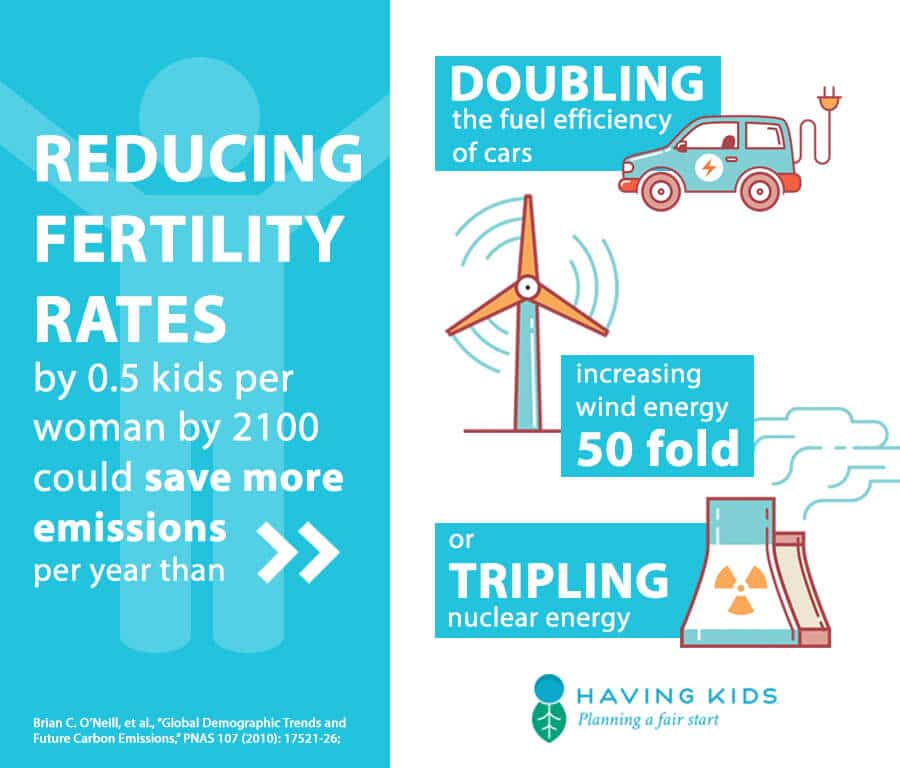
    Infographic showing ways to reduce carbon emissions: reducing fertility rates, doubling car fuel efficiency, increasing wind energy 50-fold, and tripling nuclear energy. Includes icons of a car, windmill, and nuclear symbol.

    Activists should start by engaging the relatively wealthy children of UN officials, in this special  form of lawful and peaceful constitutional dialogue and social change, geared around our just desert to family planning incentives/entitlements. There is nothing more just than targeting an extant minority for the benefit of the countless future majority. This process will build, targeting the concentrations of wealth and power – both public and private – most responsible for the climate and other crises we face today, including those that most benefited from past, inequitable and unsustainable interpretations of Article 16.

    Take action: Urge United Nations Secretary General Antonio Guterres @antonioguterres to speak out and act to protect all generations’ right to found a family.

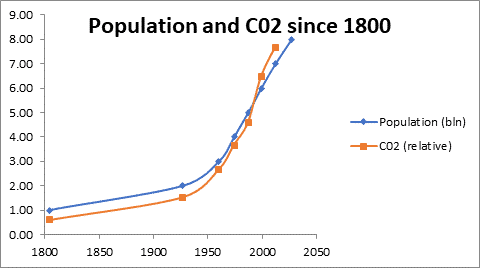
    Line graph showing global population (in billions) and CO2 (relative) from 1800 to 2050. Both lines rise slowly at first, then sharply increase around 1950, with population slightly above CO2 in recent decades.

  • How to See and Fix the Fundamental Mistake at the Heart of Our Climate, Inequality and Other Crises

    How to See and Fix the Fundamental Mistake at the Heart of Our Climate, Inequality and Other Crises

    There is a common mistake in all of our language and thinking that drives many of the crises we face today. Our brains have trouble perceiving how time and space interact, and this usually leads to bad long-term decision making. For example, we know promoting a universal norm of sustainable families is one of the best ways to mitigate the climate crisis, but most policies around the world today are pushing in the opposite direction, incentivizing women to have more children.

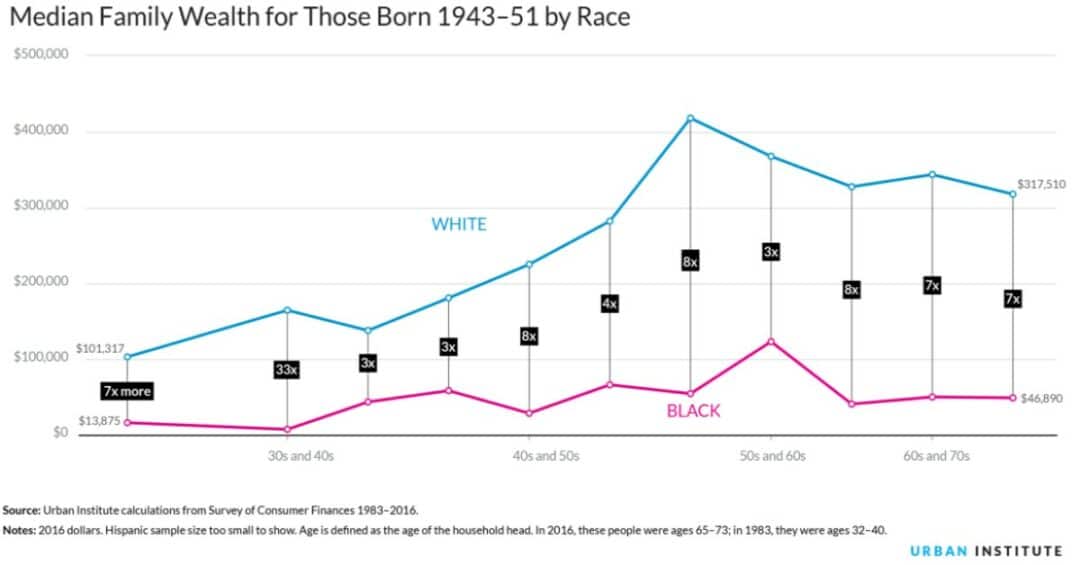
    The same can be said for the gap between rich and poor, which is inherited from the injustices of the past, and the policies we choose to address the gap.

    A line graph compares median family wealth by age for White and Black Americans born 1943–51. White wealth is consistently much higher, peaking at 7,500 in their 60s, while Black wealth peaks at ,800.

    This cognitive dissonance creates a special problem when it comes to systems of justice and freedom, normally things that we first deal with through laws, nations’ constitutions, and international human rights conventions. This is the problem: We tend to think of constitutions, or other fundamental and dominant systems of norms, statically. We think of them as fixed things. That is incorrect. The legitimacy of systems of governance derives from people, and people are not static. They are constantly being born and dying. They are dynamic. And most people, all of whom matter, will live in the future. What lies at the base of things like justice and freedom – the dynamic “we” in “We the People” – is more fluid than our brains usually perceive.

    It is thus more accurate and true to our values of deriving legitimate governance from the people themselves (per a recent peer-reviewed article), to say that we are constantly constituting as we create new persons, not constituted by god-like founders in the past. We have to account for justice and freedom in the fundamental and ongoing formation of power relations, in the act of having children and ensuring their capacity to consent to the power of others. We thus “constitute” by accounting for the key stages in our development, early childhood and the creation of things like empathy, and the collective impact of that on our ability to socially self-determine. This is how we truly come together, or constitute, as free and equal people. We surpass our constant confusion about what it means to be free by seeing that such a state of being first lies in who we are – the fundamental power relations formed between us as we are created – before freedom can emerge, or not, in what we do.

    Making that change, using a verb, frees us from what might be called the constitutive fallacy, an erroneous deference to power structures that oppresses us – like property entitlements that prevent equal opportunities in life for all. Or treating the planning of our families – the creation of children – as “nobody else’s business.” That sense of privacy was not meant to protect would-be parents or children, but was instead designed for concentrations of wealth and power to evade collective obligations to give kids a fair start in life via things like family planning incentives/entitlements pegged to literal birth equity.

    How does the verb form free us? If we are dynamically constituting, then that process – limiting and decentralizing power to ensure future generations are free – becomes the dominant norm or ubernorm. We have to first and constantly make a free “We the People.” It precedes and overrides other norms. If we value justice and freedom (or self-determination over top-down systems of influences outside of ourselves like coercion or even incentives, which we can think of as simple sticks and carrots), we have to start from the premise that governance derives its legitimacy – its compelling oughtness – from the norm which through our creation ensures consensual governance.

    We have to create future generations in ways that assure they are relatively self-determining, part of a system of laws that reflects their will, and as such free from all forms of power to which they cannot consent.

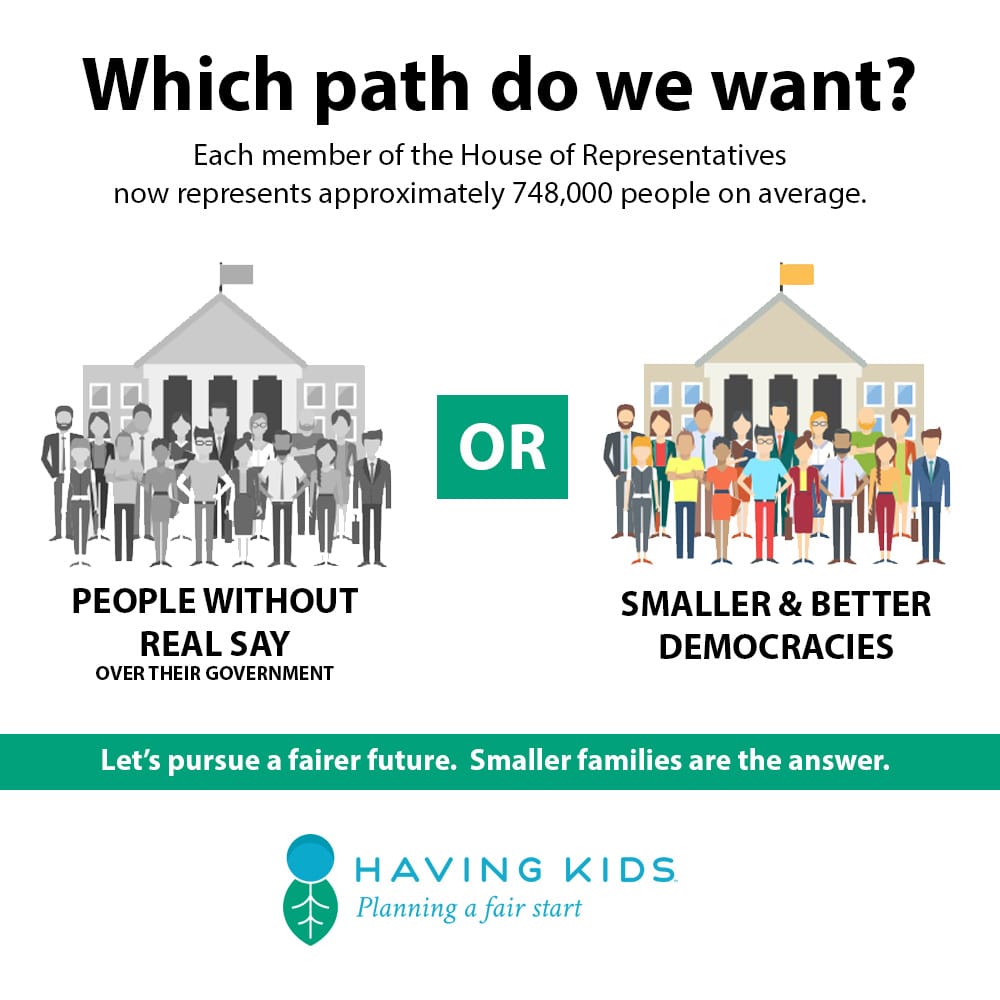
    An infographic compares two options: on the left, gray figures under “People without real say over their government,” and on the right, colorful families with “Smaller & better democracies.” Text promotes smaller families for fairer representation.

    Using the verb constituting may feel nebulous, leaving us lost in time and space without the familiar static concept of a written constitution, sitting under glass in some far-away place, or militarily defended lines on a globe that define some amorphous “we.” There is a simple way to fix this. If we are constituting or in motion, we will necessarily be focused on where we are going, prioritizing a universal and child-centric (as opposed to parent-centric) system for planning our families that ensures justice and freedom for the majority (those that will live in the future) of persons. We will be sufficiently other-regarding – and free enough – to physically constitute just communities.

    In the Fair Start Movement a collective of diverse people are discussing what it means to physically constitute those communities, using the simple and most basic value parameters of 1) minimum levels of welfare approaching birth equity for all, 2) an effective voice for everyone in more participatory democracies, and 3) restoration of nature, or the nonhuman world, which we can also think of as nonpolity, or the original positions/states of nature that undergird all theories of freedom. These values, just relations between people, and freedom, are simply inseparable from who we are and should be. And who we are and should be first depends on our creation. It’s about people, not population, and a physicalizing of justice through an existential norm that would include all other forms of traditional justice, e.g. distributive, environmental, intergenerational, procedural, retributive. We cannot be free if we carry pre-ordained hierarchies into our creation.

    In other words, if we don’t start from a just people policy that gives all kids an ecosocial Fair Start in life, we can never proceed from a just position. We can never really be free. Our language and vision for the future will not orient from any of the values that comprise freedom.

    A four-panel meme showing brain images that progressively light up as the captions advance: from denying global warming, to recognizing overconsumption, to choosing a smaller family, to advocating for future children’s needs.

    As we move to correct the fallacy in our thinking, we will find ourselves divided between free people, and those who are entrenched in preconstituting modes (whom we might call “precons”), often because they benefit at cost to others from those modes. The divide, at this first and uniquely critical border of human power, is binary: We either support sufficiently just beginnings and are sufficiently other-regarding to constitute, or not. We either constitute/maintain polities and their citizenry in the position of being able to effectively participate in a constitutional convention, and have the capacity to consent to others’ power, or we give up the pretense of being free and equal people.

    How can we identify precons? While forthcoming federal policies requiring disclosures regarding the role large companies play in the climate and other crises will help out these people, we can force the conversation with a few questions: How do they account for freedom and justice if not in the ongoing formation of power relations, as we have children? How could they care about children without caring about the conditions in which they are born? Is one’s birth position really a matter of fortune, or the result of things we can control? Is procreation more self, or other, determining? How can we consent to others’ power over us without accounting for the fundamental formation of power relations? If we value welfare, equity, democracy, or nature, wouldn’t we want to reflect those values in the norms that create us? Won’t we want to avoid relegating untold numbers of children to an ecologically degraded future with no guaranteed levels of resource or resilience?

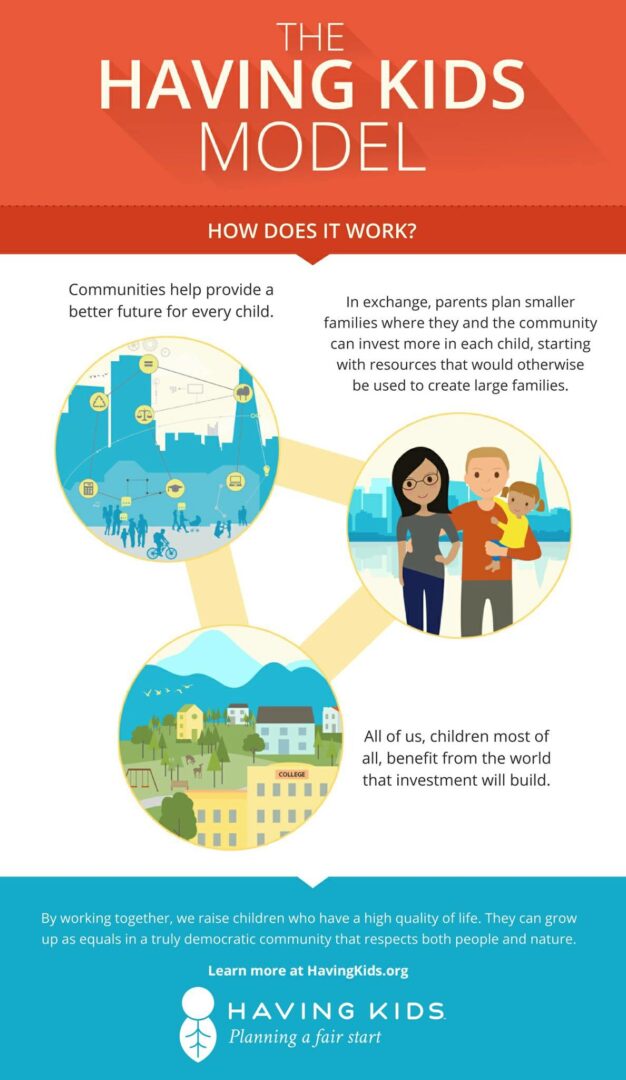
    Infographic explaining the Having Kids Model: communities invest in children’s futures, parents plan smaller families, and all children benefit from increased resources and a supportive environment. Includes illustrations and text.

    TAKE ACTION:

    These facts are indisputable: 1) Many benefitted from the mistakes described above by placing costs – ecological and social – on others. They did so in violation of multiple universal human rights that would have otherwise allowed us to constitute as free and equal people. And they did so in part by hiding the impact of the unjust family planning policies from which they were benefitting, instead using distracting downstream policies to prevent effective upstream reforms. 2) Most justly and effectively compensating future generations, who should be treated as a majority, for those violations requires targeting those precons most responsible, and those precons who benefitted the most, from blocking the process of constituting. They stand between us and legitimate systems of governance. 3) We right the fundamental wrong by taking and using portions of their concentrated power and wealth, measured against the relevant fundamental baseline, to constitute free and equal groups of future people via the effective vehicle of Fair Start incentives/entitlements.

    Free people will demand these resources, and be opposed by precons, who should be treated as the fundamental threat to our freedom.

    In other words these entities, like Exxon, should pay for the costs they externalized on others. And they must do so by complying with the first and overriding human right – Fair Start. We can spread this modeling, and this simple discourse: “Part of your wealth is my and my future child’s family planning entitlement and incentive.” If justice is meant to protect the most vulnerable, and it is, then it starts by protecting future persons, including nonhumans, which are the most vulnerable entities in the moral universe.


  • Democracy Before Economy: Tell the NYT the Difference Starts with Fair Start

    Democracy Before Economy: Tell the NYT the Difference Starts with Fair Start

    Is it time to put democracy before economy?

    Jesse Wegman asks the question on many minds given the political crises we in the U.S. now face: What about amending our constitution? But can we back out of that question and ask what he means by “us,” or the people who would do the amending? Given that government derives from the people, that is the key question.  There is no such thing as human rights and democracy without accounting for the just and fair creation of the people who would comprise such systems.

    That is where we have to start. And today’s populace was created to fill shopping malls – not town halls. We know this from the ubiquitous references to a “baby bust” in reaction to falling fertility rates. We are used to creating lots of people with the economic capacity to consume, work, and pay taxes, not fewer and highly developed people capable of collectively operating a democracy where each sovereign voice actually matters.

    sustainable family planning

    Our current family planning policies, which encourage economic growth irrespective of individual levels of child welfare, fair starts in life, and environmental  consequences, have made things worse. The United States is a largely unrepresentative democracy where family planning policies are designed to create large future populations of consumers, workers, and taxpayers, rather than a sustainable number citizens capable of collective self rule. They create people for shopping malls, not town halls.

    By starting at the source, and using Fair Start family planning to decentralize concentrations of power, including governments, large corporations, and wealthy families and individuals, we can shift resources to empower and free future children

    Let’s first address the root questions of who we are and should be when we talk about amending the Constitution, and embrace reforms that will enable future generations to take the idea of amending more seriously. 

    TAKE ACTION: Urge the NYT editor @ @deanbaquet to take human rights and democracy seriously, and embrace Fair Start as the fundament of justice.

    Several hands of children placed together in a supportive stack, with the text: The most powerful social justice is a fair start in life. and Having Kids: Planning a fair start at the bottom.
  • The Constitutive Fallacy: We Cannot Achieve justice and the Freedom It Brings After Power Relations Have Already Formed

    The Constitutive Fallacy: We Cannot Achieve justice and the Freedom It Brings After Power Relations Have Already Formed

    Systems of governance and their laws derive from people, who derive from their creation. Justice (distributive, procedural, retributive, ecological, intergenerational, etc.) and the rule law therefore begin in the dynamic formation of our first relations, or ideally, as we physically and constantly reconstitute democratic communities through forward looking child-centric family planning reforms under Article 16 of the Universal Declaration of Human Rights.

    We scam ourselves and others out of justice by pretending to do it downstream, after the fact of the formation of our power relations, and usually because we personally benefit from doing so. That scamming is rampant in civil society and politics, where those purporting to protect animals, the environment, children and other vulnerable categories of persons utterly fail to do so – and mislead – because they embrace inequity in creation, and the resulting power differentials that make formal and downstream law ineffective. This is especially so for the most vulnerable, like animals, for whom formal law offers little protection.

    Why focus on our creation? It is not fortune, or the will of a god, that some are born poor and others rich or in other inequitable positions of power. The belief in fortune is part of a myth meant to preserve power structures, and to justify our using future generations as unequal economic inputs who will concentrate wealth and power in the hands of a few. The core of that myth is the isolating idea that having children is matter of personal privacy, and that such privacy protects parents. If we really care about people we will be collectively focused on the wellbeing of future children, who have more at stake than their parents, and future generations more generally, who vastly outnumber persons alive today. Our failure to focus forward in this way fundamentally created the ecosocial crises we face today, like the climate crisis, as we avoided ensuring ecological justice in our creation and instead opted for downstream – and now utterly failed – corrective environmental interventions. Environmental groups curried favor with concentrations of power that rely on population growth, despite the risk – now a reality – that their conservation programs would eventually be undone by that growth and the climate crisis it created.

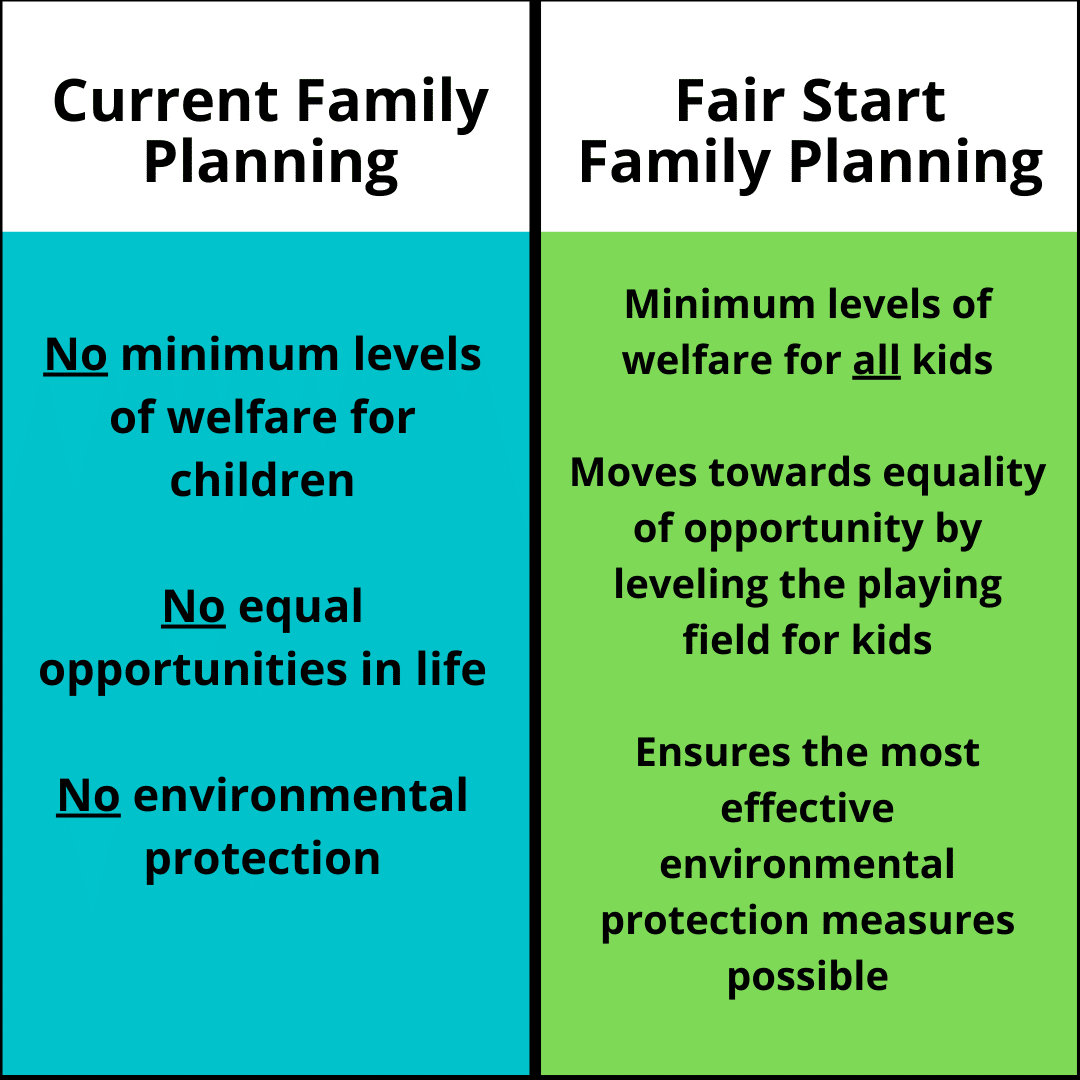
    A comparison chart of Current Family Planning vs. Fair Start Family Planning. The left side lists negatives of current planning; the right side highlights positive outcomes of fair start planning for welfare, equality, and environmental protection.

    Evading the constitutive fallacy allows us to avoid the lie of seeing ourselves as constituted into nation states – where we have little role over public affair and are hardly self-determining – by god-like founders in the past. First deriving justice and rules from that ancient process would require ignoring the formation of the power relations that justice is designed to shape. Committing that mistake or fallacy means denying people the relative self-determination, or fairness, of constituting just communities where their voice actually matters, and ignoring the drivers of our daily experience in favor of the abstraction of celebrities and politicians, divorced from the creation and reality of the lives of the people with whom we share the world. The verb form, constituting, instead empowers people, and focuses us linguistically on relative self-determination rather than being determined by others.

    To constitute means first and always accounting for the future generations impacted by our lives and ensuring that their creation is just, via Fair Start reforms or comparable modeling that uses the entitlements future children deserve as a correlative incentive to ensure – universally – small, sustainable and well-planned families. This includes ensuring minimum levels of welfare, a move towards birth equity, restorative environmentalism or rewilding, and physically constituting participatory democratic communities along the physical borders of human power. If we don’t do this, we are relying on and furthering an illegitimate system that undemocratically exploits the most numerous and vulnerable category of entities – future generations – in a way that retards freedom, or relative self-determination, for all. The freedom that comes from our existential role as sovereigns in a democracy precedes and enables the personal freedom and empowerment we experience, as workers, consumers or otherwise, in that democracy.

    A circular infographic titled “Fertility Delay Incentives to Planning” shows a leaf in the center with four benefits: Delayed Parenthood, Better Family Planning, Guaranteed Minimum Income, and Equal Opportunity & Education for all kids.

    What’s an example of moving past the constitutive fallacy? Consider what rules for containing Covid-19 are most just, balancing public health, personal choice, and the maintenance of one’s livelihood? To answer this question we would have to be constituted into relatively self-determining groups or democratic communities capable of answering the question, and our having first done that would have likely evaded the overcrowding, poor public health, destruction of nature, etc. that drove the pandemic. The same revision in thinking would apply to the climate crisis, and dozens of other problems.

    Practically we can do this – as free and equal people – by limiting and decentralizing existing concentrations of private and public power, taking the resources the people in those concentrations hoarded by externalizing costs, and instead investing them in Fair Start reforms as the entitlements/incentives described above. We may do so because the act of constituting overrides downstream rules, like property entitlements. This will happen over the opposition of preconstitutional people, or precons, who simply block justice. We can test the progress of this process – the ongoing first and fundamental election – by looking for its application in the pronouns in our language, and to see whether we are constituting together the persons those pronouns explicitly and implicitly refer to.

    Several hands of different skin tones are stacked together. Overlaid text reads, The most powerful social justice is a fair start in life. Join the coalition. The Fair Start Movement logo appears at the bottom.
  • World Population Day: Young Women, Sustainable Families, and Our Right to Take the Wealth Our Kids Deserve

    World Population Day: Young Women, Sustainable Families, and Our Right to Take the Wealth Our Kids Deserve

    The climate and nature crises that our planet faces are rooted in both population and consumption.  We cannot waste precious time by pointing fingers between consumption and population – we need to talk about both in tandem, as our survival and quality of life, and those of our children, depend on it. 

    On the heels of Independence Day demands from people like Cassie King for the resources all kids deserve to ensure their eco-social Fair Start in life, and others who see their future child’s entitlement to birth equity as a sustainable family planning incentive, dozens of young women have come forward to speak out for more sustainable families. It’s a message for every young person’s future on planet earth.

    On World Population Day, July 11, 2021, GirlPlanet.Earth will launch as an informal forum for global dialogue by women and teenage girls from around the world on population, consumption, planetary boundaries, and personal choices.  Featuring the voices of women from Africa, Europe, North America, Central America, and Asia, GirlPlanet.Earth will enable honest, authentic, lively conversations between women and girls about our future.

    A group of students sit at desks in a classroom, attentively listening and taking notes. The focus is on a girl in a plaid shirt, resting her chin on her hand and looking forward thoughtfully.
    Courtesy of the Urban Institute.

    Join the conversation.

    In addition to young voices pushing back on unsustainable population growth, this Sunday – World Population Day – key experts will make clear the pathway to an optimal world population, at this special event.

    Having one fewer child actually reduces your carbon footprint more than any other single move you can make. We owe it to future generations to ignore advertiser-bound media pushing women to have kids to grow their economies. Instead, those intending to have small and sustainable families should approach concentrations of power for the wealth – and birth equity – their child has a fundamental right to under the Children’s Rights Convention and other human rights instruments.

    Infographic showing ways to reduce carbon emissions: reducing fertility rates, doubling car fuel efficiency, increasing wind energy 50-fold, and tripling nuclear energy. Includes icons of a car, windmill, and nuclear symbol.

    This is the time to restart the conversation about family sizes, resources, population, personal choice, climate change and the future of our planet. The science is clear – we get the best outcomes, for everyone, when families plan for and invest more love, time, and attention in each child. 

    Stabilizing our human population, even through the most fundamental educational and economic advancement of women, has been taboo for too long.  Humanity has made terrible mistakes through coercive practices and policies, and stabilizing our population needs to be instead profoundly rooted in improved justice, education, and economic opportunity, especially for women and girls.