How do we know what counts as a cost or benefit in a particular transaction? Enter the idea of normative baselines, or the theoretical states of affairs by which we can answer the question.
But is there an antecedent question nesting in the above-linked list of possible states of affairs we might use, from human rights to process-based positive law? From what justifiable social organization, of free and equal people, are we orienting when we assess the states of affairs? Perhaps we first have to be, existentially, a group of self-determining people capable of democratically deciding what’s a cost and what’s a benefit?
We can think of this in another way. John Rawls is famous for articulating the basic framework of a just and free society. But what rule precedes the existence of the actual people who will eventually comprise Rawlsian systems? Is the rule that determines their creation the first issue that must be decided? How will the quantity of persons, the civic qualities of its members, and their initial relative positioning to their ecology and each other – the conditions of their early development – be determined? What creates the first relations of these people, whom Rawls wished to assure would be free and equal? How, in accounting for those relations, do we account for the dynamic or intergenerational nature of such a group, i.e. that they would die, and others would replace them?
As a new peer-reviewed article on fair start family planning argues, the most basic criteria for assessing costs and benefits has to be the ideal creation (or procreation) norm, or the norm that first creates the people – and their relations, power differentials, relation to their ecology, etc. – who are making the assessment. Moreover, as the article argues, using such initial criteria to assess what counts as a cost or benefit is actually practicable, given what we know about intergenerational justice, optimal world population ranges, and the need for very specific policies, like education, to ensure relative self-determination or what we commonly call freedom. This differs from the intergenerational justice work of Rawls and others who have asked what we owe, or what we might save for, future generations. Here the question is whether the dynamic “we” – any grouping of people from which we might consider these questions – is a justifiable group of people, in terms of the assuring each member the correct relative degree of self-determination. That difference matters, because the latter approach – or Fair Start reforms – trigger the override of competing norms, very specific criteria for behavior change, and other implications. They would fulfill what might have been the Rawlsian answer to the background question – we must create people in a way that makes them free and equal.
As part of revisiting the baseline issue for policy reforms, Fair Start is working with IAMECON on the development of further research, specifically around the role of the nonhuman world as an ideal in ecological restoration. Per a lead on the project:
“In this [forthcoming] paper, we study the relationship between human actions and the wilderness using a static game theoretical framework, and determine the parameter space that manages the gap between the payoff functions required for sustainable action vs payoff functions that leads to unsustainable actions observed in the last two centuries. When agents are not impacted at all from the harm wilderness suffers (as a result of human actions), i.e. zero empathy for the wilderness case, lack of environmental awareness, we find that unsustainable actions are always a dominant strategy for all individuals. When agents are somewhat impacted by the harm the wilderness suffers, i.e. flexible awareness case, we find that the benefit an individual gets from her unsustainable actions should be outweighed by the pressure to conform (to society) plus the negative consequences of the harm wilderness suffers on the individual herself, in order to arrive uniformly sustainable action as nash equilibrium.”
This is one way to fundamentally assess costs and benefits, by orienting from the most basic notion of a justifiable, or relatively self-determining, social organization constantly recreated through Fair Start family planning.
What is the upshot of all of this? If Fair Start is the first and overriding human right we have the right to implement it, over all other obligations – like property rights – by all means effective.
World Environment Day 2021 provided a crucial opportunity for the United Nations to make good on its promise to reset humanity’s relationship with nature. But by continuing to adhere to a family planning model that allows unfettered growth, despite every opportunity to simply issue statements that would initiate reform, it has failed to honor its pledge at the most fundamental and impactful level.
Our relationship with nature is fundamentally defined by the laws that shape family planning and drive population size, and whether – in those laws – nature or the nonhuman world is seen as a resource for population growth, or instead a check on it.
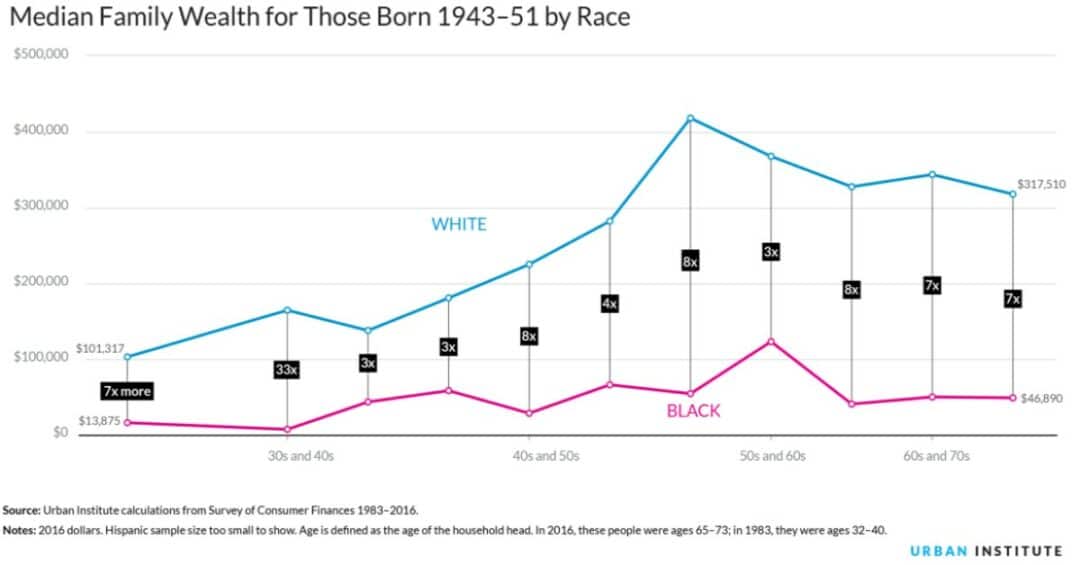
By adhering to the isolation modeling the UN is enabling a false idea of autonomy and is perpetuating inequity that benefits white colonizing nations. (That colonialism is reflected in the current 1/10 wealth gap between black and white children in the U.S.) Instead the UN should promote birth equity to achieve true autonomy and as a reparations to future generations.
The UN has not taken action. It has failed to link its outdated modeling to the overcrowding and poor public health that helped drive the COVID-19 pandemic. It has failed to condemn China’s new pronatal family planning regime, which is intended to create a baby boom among a population that – because of its size – already poses the greatest threat to the world’s ecologies. Instead the UN has focused on downstream efforts while at the same time profiting, politically, from population-based GDP growth.
Inaction threatens the UN’s credibility. Pronatal policies being rolled out in response to a perceived economic “baby bust” show that our current systems of governance are fundamentally illegitimate. If we are willing to create lots of people in whom we invest relatively little in order to satisfy markets and economies, instead of fewer people in whom we invest more in order to build the democracies that must precede, justify and regulate those markets and economies, we are admitting fundamental illegitimacy, or as the peer-reviewed work shows, the preconstitutionality, of our political systems. This is especially true when doing so exacerbates the climate crisis. In that case, all effective measures to correct this inversion are just.
The costs of ignoring reproductive justice legal reforms are mounting. These include the costs of the relevant climate emissions that could have been avoided since at least 2007, and the role the failure to require equitable family planning has played in driving the massive and growing gap between rich and poor across the globe. The Fair Start Movement is calculating those costs as harms, and believes world leadership must – and one day will – be held fully accountable for them.
Will you join that call? Nothing would have a greater long-run impact on restoring our environment than simultaneously compensating future generations, while helping them become parts of legitimate democracies, via Fair Start investments in their empowerment and resilience.
For demographers and other population experts population decline is the expected and desired outcome of decades of family planning interventions meant to end and reverse unsustainable population growth. Why the media alarmism then?
Zero Baseline (or “Fair Start”) Modeling (ZBM) corrects critical errors in all theories of social organization (from states, to corporations, to families etc.) that center around how we derive legitimacy, and political obligation, in the process of organizing. These errors retard personal sovereignty, or relative states of self-determination, and hence freedom. While there are several errors that drove the development of the ZBM, they can be summed up as the “constitutive fallacy,” or the belief that legitimacy and obligation can be fundamentally derived from anything other than the norms that determine our creation, and hence determine our initial relations and forms of organization.
The ZBM is a proposed creation norm to correct the fallacy and to legitimate forms of social organization. It operates primarily by 1) treating social contract theories of political obligation as inherently intergenerational (such that we are constituting states rather than having been constituted in the past), 2) prioritizing relative self-determination (relative to zero, or the absence of human influence, including 300ppm and lower climate crises baselines required to meet restorative/ecocentric/rewilding standards of environmental protection) as a value, but one that should diminish as members are added to the contract and the sovereigns displace one another, and 3) expanding our conception of power to include any form human influence or affect, like climate emission and bad parenting. The ZBM thus serves 1) as an interpretation of the moral and legal right to have children – one focused on collectively giving all children an ecosocial fair start in life as a means of limiting and decentralizing human power so that it can be subjected to norms, and 2) a formula by which to assess optimal world population.
The following discussion will situate the ZBM in the relevant literature, detail some of the costs of the constitutive fallacy, and finally present the ZBM in more detail as a basis to move social organization from top-down relations based on coercion, or incentive, towards bottom-up relations based on inclusive systems of relative self-determination derived from child development.
Situating the ZBM in the Literature
The ZBM combines work from several theorists and overlapping subjects, most obviously:
Hans Kelsen’s work on the basic norm,
deontological population ethics,
social contract, natural law, and Rousseau’s democratic theory,
the intergenerational justice work of Lukas Meyer, Axel Gosseries and David Archard,
theories of political obligation, constitutional identity, baselining, as well as personal and political autonomy,
the work of Joel Feinberg on children’s right to an open future,
related work from Sarah Conly, Christine Overall, Onora O’Neill on the right to have children,
And the practical realm of family law and reproductive rights.
That said, the ZBM is unique because it corrects the constitutive fallacy where it appears in the work above, like the common presumption that the claimant is who they should be, were created justly, and as such operate from the position of a justifiable social organization. Instead of political obligation theories like “fair play,” or relying on the harm principle for measuring liberty, the ZBM reserves legitimacy for states of affairs in which people were created fairly. Unlike many theories on the right to have children, the ZBM rejects procreative autonomy, and even places autonomy in the form of choosing not to have children subsequent to collective obligations not to have them if they would fall below minimum thresholds of civic quality necessary for a democracy.
The failure to develop and implement a just creation norm, like the ZBM, has created significant social and ecological costs. The following will discuss some of these costs, before moving onto a more detailed discussion of the model as a solution, and as a baseline to seek restorative justice.
The Underlying Errors
The errors – almost all conceptual – underlying the fallacy include, among others: 1) Treating things like national constitutions, or even rules of recognition, as the fundamental norms or grundnorms, when in fact the norms that determine our creation would have preceded these forms. 2) Using abstracted conceptions of the person focused on adulthood, and rationality, that are insufficiently dynamic to account for the key early stages and drivers of personal development, and the cumulative and collective impact of that development. And specifically for liberalism, 3) the failure from Locke to Rawls to account for how (the harm principle aside) the creation of persons controls their relative states of self-determination (e.g., vote dilution), and how this failure to account disenfranchises the majority of constituents, or future persons, who along with nonhumans are the most numerous and vulnerable category of moral entities.
The underlying errors also include using 4) limited conceptions of human power (and the borders of that power), e.g. that are focused on coercion, as opposed to using a conception that includes all human influence or affect, 5) myopic conceptions of autonomy that are self-contradicting, e.g. procreative autonomy and which presume we are whom we should be rather than the products of unjust creation norms, and in 6) in population ethics, using a concept of persons focused on quantity, when the concept of population inevitably at least five incommensurable and primarily qualitative values discussed below.
The Costs of the Errors
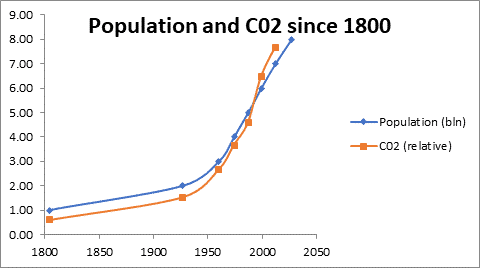
There are many costs that flow from the fallacy and underlying errors. Because the fallacy enabled in 20th Century a misinterpretation of the right to have children that focused on procreative autonomy and parental subjective desire rather than the objective needs of future children, population growth exploded past optimal levels, and continues to do so, backed by pronatal policies. That continued explosion drives the climate crisis and other ecocides, child poverty, massive inequity, and the degradation of systems of human rights and democracy. Because of the fallacy – which ironically seeded subjectivism, unlimited power (parental) and “might makes right,” at the fundament of human rights – neoliberal, colonial and patriarchal systems were able to use future generations and the nonhuman world as resources to fuel economic growth.
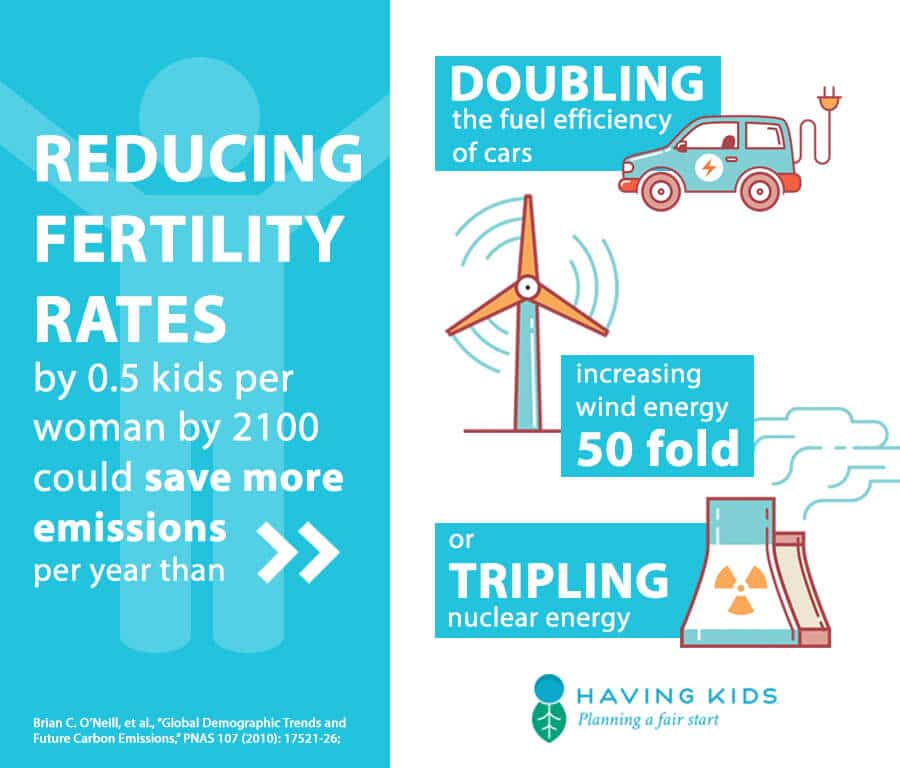
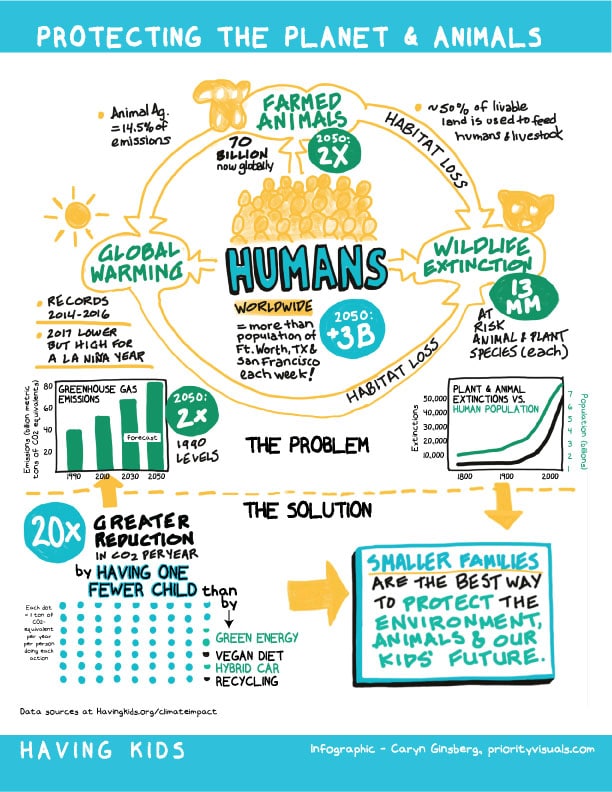
They used the misinterpretation to enable that growth (and subjectivism more generally) over systems of early childhood and civic development. This had the result of physically constituting economies, or shopping malls, rather than the antecedent systems of democracy, or town halls, that regulate economies. Often this process used religion as the driver, in violation of separation principles. The trend continues today, as falling fertility rates – a phenomena with twenty times the long-run impact reducing climate emissions – are treated by the dominant discourse an economic “baby bust.”
The Solution to the Constitutive Fallacy: ZBM
If the constitutive fallacy involves skipping the step of creation in determining the justifiability and legitimacy of relations, the solution involves a norm that literally creates normativity, or the inclusion of relatively self-determining and reasonable agents into social organizations that reflect their constituents. In other words, if we want just systems we must begin with a just creator or creation norm, one who gives all children a Fair Start in life. That will in turn allow us to maintain the constant and antecedent “we,” or group of free and equal people, necessary to constantly reconstitute participatory democracies that empower their members to actually control the rules under which they live.
The Fair Start grundnorm or ZBM (the constituting norm) is comprised of four interdependent evaluative requirements, or objective values that act as necessary conditions that enable true human subjectivity and choice: To minimize the loss of political autonomy in a human-rights-based democracy, and hence maximize consent, integration, and justified political obligation, would require, as a matter of lexical primacy, that (1) each new entrant be of a minimum constitutive quality or capable of constituting with others, (2) that there be a maximum number of members constituting the human-rights-based democracy, (3) that they enter relative to each other so that they exclude equally, and (4) that they are capable, given their quality, quantity, and relativity, of reconstituting their legalities relative to (or approaching) some level of nonpolity, or nature, that represents their capacity to convert power into law.
The existence of these four variables are inevitable in the act of procreating. The grundnorm thus necessitates backdating the standards, e.g., requiring conditions of entry that ensure constitutive quality and emancipation, rather than ignoring entry and subsequently excluding persons as insufficient in some way.
The values that comprise the grundnorm, which try to maximize obligation and autonomy through entry, role, and exit are the following: Treating procreation as the improved continuation of the parent’s life (“improved continuity,” or IC), a minimum level of welfare at entry, the nexus or zero-baseline point at which the values are first determined, fairly defined by the welfareof other entrants (> MW(F)). A qualitative threshold of a minimum quality of equitable individual sovereignty defined by the standard for emancipation, or reason (> E). A quantitative threshold of a maximum number of individual sovereigns defined by a minimum of individual sovereign roles, or capacities, in their democracy (< R). And finally, a quantitative threshold of a maximum number of individual sovereigns defined by nature (< N), the nexus or zero-baseline point or balance point at which the values are last determined.
To constitute is to maximize relative self-determination by approaching – given that constituting is dynamic – the zero baseline, or beginning to make people count or count, on a simple scale of 0, 1, 2 . . . 0
The thresholds above can be set using existing legal standards we claim to already adhere to, like basic parental fitness, the Children’s Rights Convention, biodiversity and wilderness restoration targets, education benchmarks, federalism and representative ratios, redistribution polices that attempt to create equality of opportunity, etc. The model will show that, by our own standards existing in law today, we are not who we should be or who we claim to be, but the products of a truly original sin.
The model above represents the implied and justified antecedent “we” in any normative claim, assuming the fundamental value of relative self-determination, or the grouping of persons from which the claimant is operating and in which they matter. At its base, democracy involves the capacity to influence, which in turn begins with the existence of the person. If we take democracy (or individual sovereignty, from the appropriate and more compelling individualized perspective) seriously, we must focus on the creation of individuals and thereby unravel the age-old legal conundrums of balancing community and autonomy, unified independence, and ordered liberty.
Taking Action
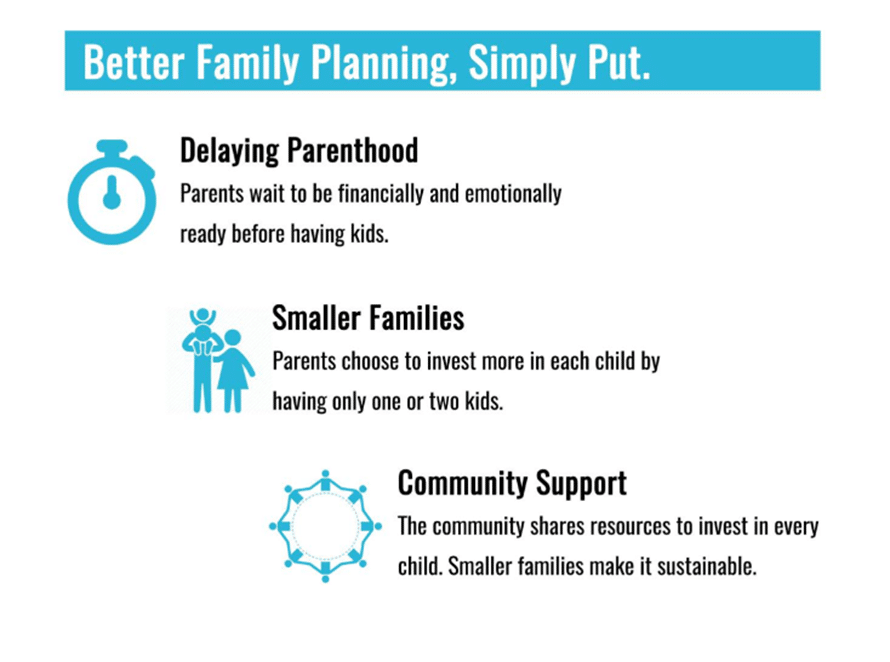
Beyond theory, the ZBM is the subject of a growing social movement demanding a shift from preconstitutional, parent-focused, and subjective family planning systems to a future child focused Fair Start system that – as grundnorm – should be treated as the fundamental and overriding human right. The vision and mission of the work involve bending the world population arc downwards, using a universal policy of families working together to plan for and equitably invest more in each child. The goal is to create a future of truly democratic communities surrounded by nature, constituted of free and equal people who each have a meaningful role in making the rules under which they live, and where each was empowered by the conditions in which they were born and raised.
The movement uses a simplified application of the ZBM, and includes dozens of legal, policy, institutional, cultural and direct action interventions supporters can use to further the change. The interventions include, among other things, international law reforms, celebrity appeals and Fair Start family modeling, tax measures, litigation, contraceptive funding, demands for climate compensation relative to the zero baseline, corporate divestment campaigns, and fact checking and reporting on claims relevant to the modeling.
Chaos Enabled by Irresponsible Behavior Is the Antithesis of Freedom
What do pandemics like Covid-19, and ecocidal things like the climate crisis, have to do with the idea of human freedom? For some, these events will be perceived as opportunities for governments to limit human freedom. For others, they will seem like limitations on freedom, along with governments’ failure to prevent them. Whatever the view, these events are largely driven by human behavior, which in turn is driven by values and norms, like freedom. How we further these events, and react to them, fundamentally derives in many ways from our perception of freedom and how it limits or justifies behavior. Dealing with these crises could then fundamentally start with examining the concept. Below are three particular perspectives, centered on isolation, inclusion, and creation, respectively.
A common view of freedom is the right to do whatever one wishes, absent some obvious and unjustifiable harm to others. The vision here is that one is and should be autonomous from other people, a vision captured in statements we see all the time: A gym owner in Arizona who refuses to require masks or close his business despite Covid-19, landowners who refuse to comply with the endangered species act, companies in trade associations that push back against consumer regulations, or coalitions fighting regulations that would limit climate emissions. The entire concept proceeds from intentional myopia, or the decision to view oneself in isolation from others, in time and space. It is the maintaining of willful ignorance of how people came to occupy different positions in society, the subtlety of harm, and the importance of things beyond harm – like obtaining the considered consent of others we influence. That myopia makes these claims of freedom easy to contest, but they endure to the extent our political systems position people so that they are – in an antisocial way – unwilling or unable to examine them. Collective problems, like the climate crisis and Covid 19, are primarily seen as presenting a risk that the collective will have a new opportunity to interfere with the will of individuals.
A second and less common view of freedom evades these problems we find in the first view. It takes many forms, but the general idea is to more comprehensively account for one’s position in the collective, and ensure a shared arrangement that allows one to do what one wishes as part of a system that simultaneously allows others to do the same. The goal is to not prevent each other from self-determination in the process. The philosophers: Joseph Raz, in The Morality of Freedom, or Philip Pettit, in a recent Ted Talk, exemplify this more comprehensive view. It cannot easily be picked apart by examining how the autonomy of the individual relates to the collective – they have accounted for these complex and relevant connections. Under this view, both the climate crisis and Covid-19 present direct risks to the autonomy or freedom of all, as well as those in the future. It is consistent with the objective value of people getting to do what they want that we require all to change their behavior in response to these events. This vision is more complex and accurate – but beyond the capacity or willingness of many to grasp.
But the truly myopic, and even the more comprehensive visions of freedom, aside, there is a third view of freedom that involves something unique. Is there something odd about the two visions of freedom just discussed? There is no account of how the people in them came to be. It’s as if they dropped from the sky. But if freedom entails freedom from other people and their unwanted influence, as well as the freedom to do things – like choose among the valuable options in life enabled by particular types of social organization – don’t we have to first account for the creation of people? Don’t we have to assure all some minimum levels of welfare or even equity of opportunity at birth, some meaningful role in controlling their governance, and political entities physically defined by nature so that we can be free from others? In other words – we first need a norm that accounts for the creation of free people.
This third view of freedom – which we might call a fair start, is centered on the act of creating other people to ensure they live as free and equal persons. It is not exclusive of the first two but rather precedes and enables them, and would be furthered through a very specific process of reforming family planning and population policies – specifically treating the act of procreation as more other-determining for the child than self-determining for the parents. It asks: How can we be inclusive without first accounting for the creation of the people to be included? The impact of these family planning reforms would exponentially surpass many of the downstream reforms underway to alleviate child poverty, ensure equity, restore democracy, and protect our environment. So would the long-term impact on the climate crisis, and the impact and risks of pandemics.
Lastly, this third view has a unique feature: Because it always proceeds other behaviors, in that we are before we do, it overrides conflicting interests. We may do whatever it takes to ensure all children a fair start in life or to continuously recreate the people who actually – or physically – comprise free societies.
The crises we face today arise from and depend on values, like freedom. Starting at the source of the problem entails examining what we mean when we use this word, and what it means for others.
Members of Congress are urging President Biden to declare a climate emergency and use his presidential powers to take immediate action to address the crisis, which is quickly accelerating. Having Kids is urging Biden to do the same. Here’s why:
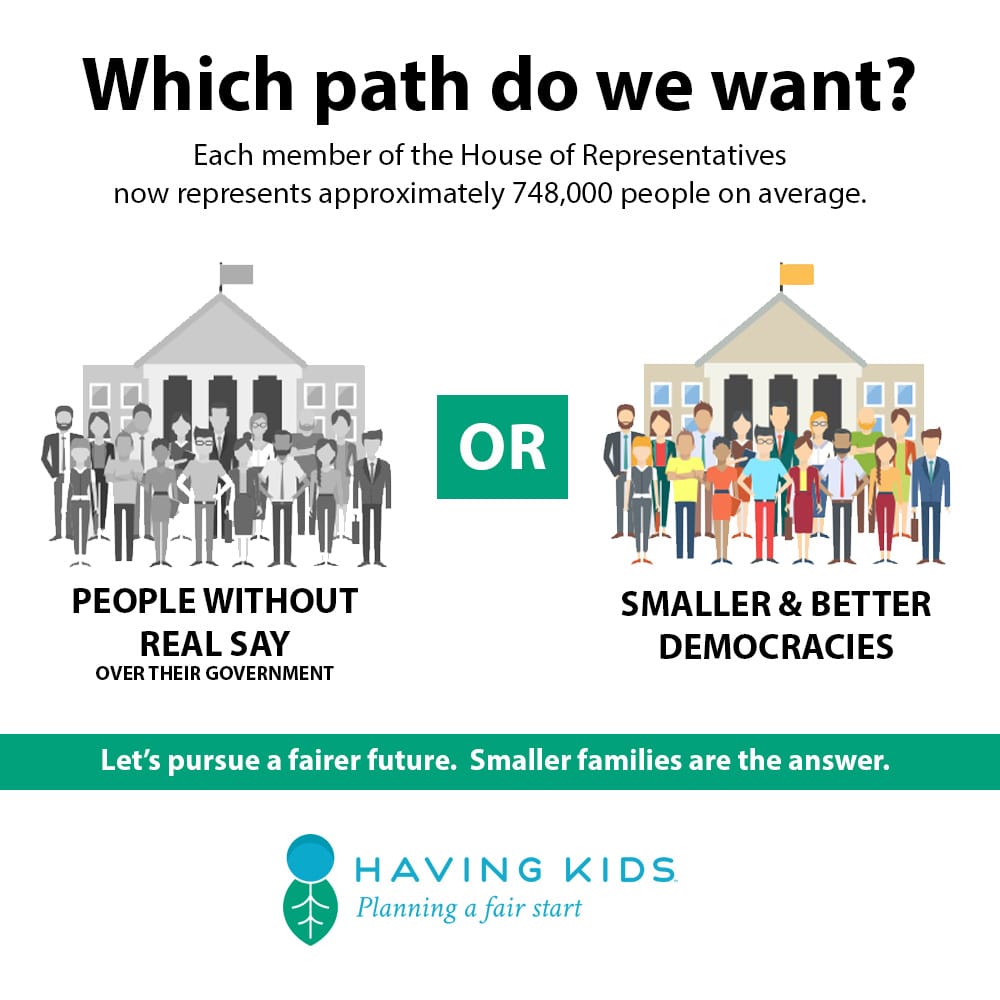
Fair Start is the genesis of social justice, and the beginning of actually constituting democracies through the limitation and decentralization of human power. It was and is wrong to put population-driven economic growth over that right, or over smaller and more functional democracies where each voice is influential.
Biden acting to declare an emergency now, and to take immediate next steps for any or all the reasons given above, would start to right this wrong.
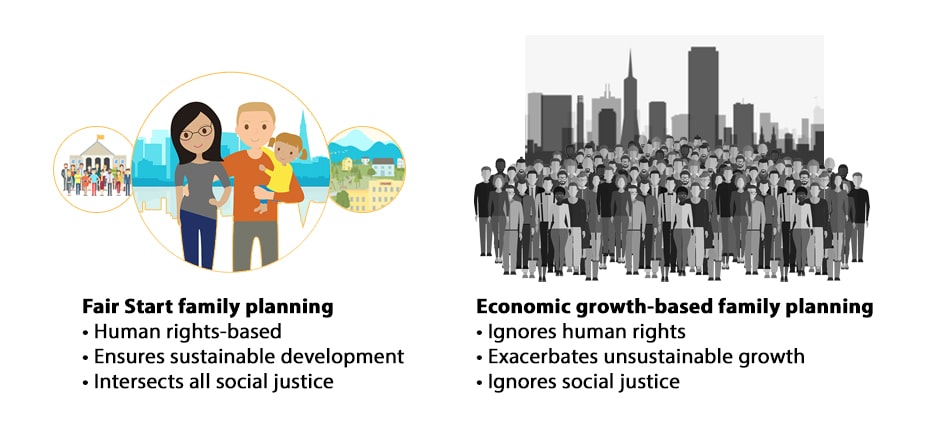
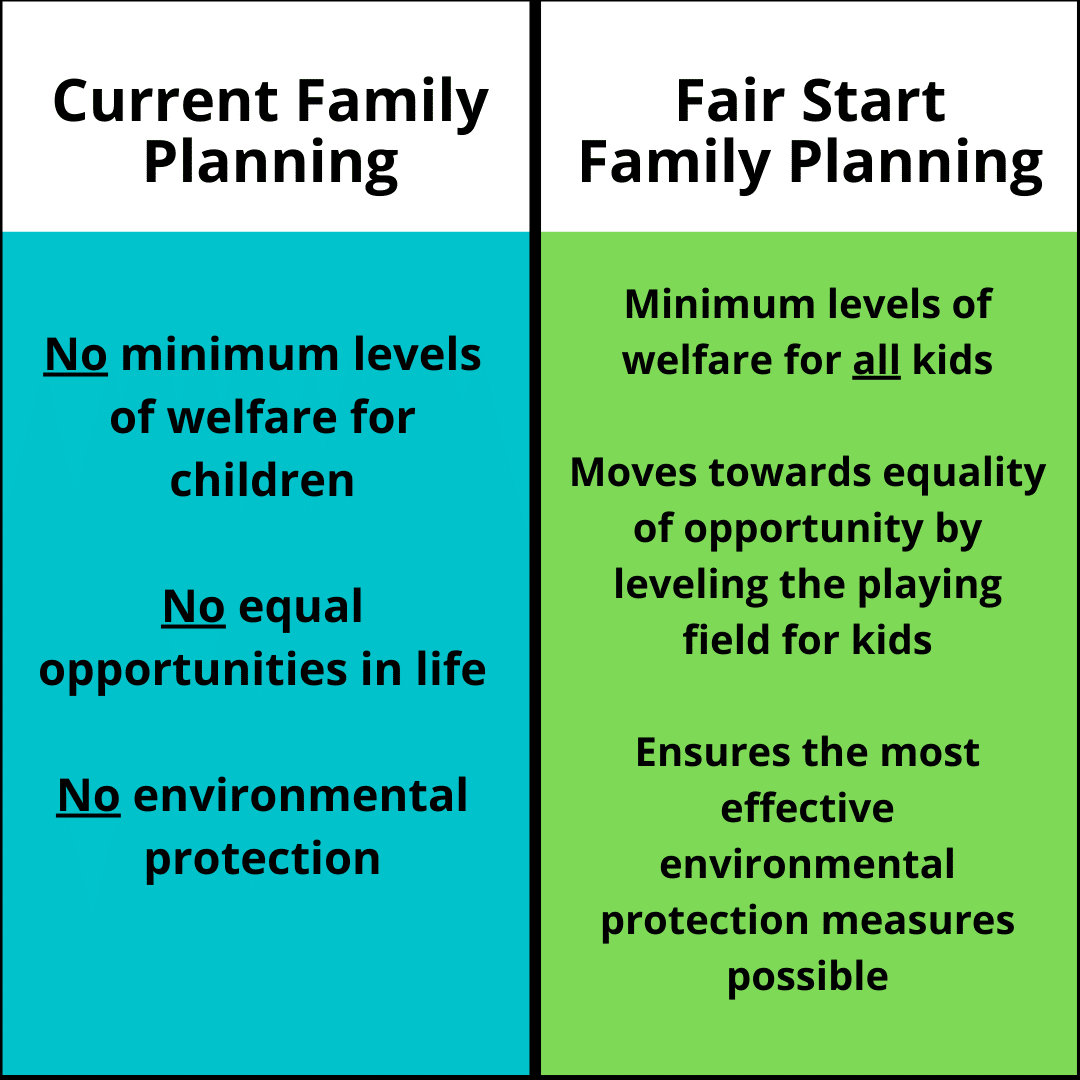
Every crisis we face, from the climate to Covid-19, is a function of family planning laws and policies that actually do nothing to ensure planning. They do nothing to give children minimum levels of welfare, or birth equity, and nothing to promote sustainable environments, or functional democracies where each voice matters. All of these problems, social and ecological, root in the people that comprise them.
The reasonable reaction to this situation would be to reform these systems to address the problems, especially given the massive impact changes in family planning systems make on things like climate emissions. Any discussion of family planning is an opportunity to do so. So why is the New York Times publishing empty pieces that celebrate thoughtlessly having children and simply hoping for the best? The most recent piece does nothing to address whether a more collective model of planning could mitigate the crises, sets up a false dichotomy of anti/pro-natalism, and spends the rest of the piece dressing the former up as nihilistic and the latter as a glorious leap of faith that even Kant would endorse. The author manages to ignore that if we followed Kant, we would in fact find a universal norm for family planning that did not simply exacerbate the problems and injustice we see today but address them as a collective action problem, a norm like Fair Start.
The New York Times can do better than push people to have kids with babies = hope messaging. It can address the problem one Nobel Laureate laid bare: Those in power like Times editor Dean Baquet sit atop a population pyramid, the growth of which they are incentivized to promote as a means of expanding their wealth and influence. Baquet and the Times benefit from the growth, but don’t pay its costs. The costs of that expansion, including the inequity that floats Baquet and his son Ari above the masses, are leveled on others, especially on future generations who will suffer in the climate crisis. Family planning is the first border of justice – address that issue, Dean and Ari, and let People Magazine publish thoughtless pieces on hopeful baby making as a solution to the crises causes by the same.
Take Action: Urge @deanbaquet, or his son Ari, to explain how they intend to promote the reform family planning laws and policies to address the crises we see today, and account for the social and ecological benefits they enjoy, but others will not.
But what makes the modeling unique is the way it frees us, ensuring – through an alignment of values – relative self-determination that is impossible without it. That, and the fact that reproductive justice precedes other forms, means we can purse Fair Start by all means effective, and use it to identify and overcome those that threaten that our and our kids’ freedom.
For example, the autonomy would-be parents gain through self-development and meeting a standard of readiness to parent aligns with objective, constitutive and naturalistic reasons for having children, parents’ procreative interest in successful relationships with their children, the diminishing interest in having additional children, and the quality–quantity tradeoff of a smaller family or more ecocentric family. These things align with the autonomy a highly loved and developed child experiences in life, and the morally valuable options and equality of opportunities in life they will have, which further aligns with the autonomy created by the gender equity such development allows, cooperativeness within groups, a level of inherent security in groups that avoids the need for top-down limitations on autonomy, as well as fluidity among groups.
The resulting smaller or more ecocentric populations and high levels of development align with one’s being empowered by having a meaningful voice – not drowned out or diluted by others – in public affairs and the rules under which one must live. This participatory agency aligns with the autonomy created by fulfilling one’s need for meaningful group membership, which in turn aligns with reduced consumption. and personal property that is oriented around nonpolity rather than things like ranking over others.
And all of these align with a healthy and safe environment and the freedom—or autonomy—from others that is only possible through interaction with the nonhuman world. That is freedom in nature. This in turn aligns with the nonhuman autonomy the animal liberation movement advocates for. Note this alignment spans many types of freedom, from communitarian to libertarian, that might be seen as conflicting, were we not temporalizing our perspective and orienting from creation, a place that could unify values in ways other approaches do not.
We can assess with a simple test, objectively, whether each of us is choosing to be part of a fundamentally just system in which the values discussed above align and in which we ensure true self-determination, or we are not.
As the rights both of and to nature emerge and solidify in the minds of the public, and in law and policy, they will entail greater investment in and empowerment of future generations. This panel will explain why.
It begins with the lead attorney, Jessica Blome, in a case currently pending before the Ninth Circuit that argues the Constitution implies a right to nature, including a regenerative standard for environmental policies, under the liberty doctrine. That right aligns with the international rights of nature groups like Earth Law Center promote, and it would help further them, legislatively and otherwise.
Tony Zelle, will present on those rights, from an international perspective, detailing their history and future. Cat Hughey, will explain what the rights to/of nature entail for reforming our family planning systems, from the United Nations to state ballot initiatives. And finally, Michael Swistara and Max Broad will discuss the local implications of these movements for the District of Columbia, where efforts to promote legislation that would ensure every child a socially and ecologically fair start in life might begin.