Education is compulsory for children, beyond the massive return on investment it ensures, because it is seen as a prerequisite to democracy. Why? Democracy requires people are sufficiently developed, and have enough of a common core, to come to agreement on the rules under which they should live. But most education laws were written before recent developments in child psychology that show the core of the ability to socialize with others and come to agreement — empathy and a disposition for prosocial behavior — develop very early in our lives, including our infancy.
That’s a problem. How can we have functional town halls without preparing people to care enough for each other to work together? Also, consider the return on investment point above: Education has a huge impact because it determines much about the full measure of our lives, and is designed to impact the majority of our — and all future generations — interactions with others.
All of this suggests that while family planning laws and educational systems are often decoupled, they should not be. We learn at least as much as home as we do at school. Rather, our family planning systems should be the first aspect of educational systems — moving upstream to help assure the social development and educational goals are achieved, and enough to meet that “town hall” standard.
What’s blocking this coupling of systems, family planning and education, that would do so much good?
Big business exerts a lot of influence on our family planning systems, using them to ensure population growth and poor educational outcomes in their quest to create lots of people for shopping malls, rather than fewer people for town halls where their voice matters.
Republicans pushed for changes in the tax code to do just this, and democrats were quick to join the effort. Yes, that’s the level of influence they have in keeping education from really working. They push as many people, through failing systems, as possible to ensure more consumers, cheap future labor, and large tax bases. That’s not what functional town halls look like. But the taboo against change is deep. I’ve worked with animal protection groups and funders whose purported missions commit them to this change, but they won’t support it for fear of backlash– in the end contravening their missions.
What’s the solution? Our political systems are not the final answer when it comes to making policy. Human rights override those systems and empower people to demand change at a constitutional level. Given that creating people for democracy is so important, so primary in nature, we can help intending parents to target the concentrations of wealth and power that made so much money debilitating family planning systems to pay for the reforms we need. Why?
Because people come first, and people come from family planning systems — whether they work well or not. We need to make sure they do work well, for example, through regearing them around equity: every child’s right to an ecosocial Fair Start in life as the first and overriding human right. Without that, how can we come from a just place?
And that move is not as abstract as it sounds. It could be as simple as replacing our pro-unsustainable growth federal child tax policy with a truly equitable and ecologically restorative one that funds family planning-based humane education as a matter of the fundamental right to full — and effective — development as part of true democracies.
We might initiate this through a simple discourse of demand and override — in which the wealthy are urged to admit what they owe, we can lay claim to the funding that would link family planning and educational systems, and build the democracies we deserve, one child at a time. We could combine that with eliminating tax credits for wealthy families (150K+ a year as an example, or a multi-faceted eligibility approach to determination) and the savings could be used 1) to increase credits proportionally for lower incomes, 2) fund a federal human education pilot program under the Dept. of Education, 3) accompanied by a federal messaging campaign modeled on NTSB seatbelt campaigns to promote “delayed families for all.”
Let’s see family planning and education as part of the same system, and start making citizens for town halls, not consumers for shopping malls. That’s what freedom requires.
But after rightly criticizing Prince William for his place in the inequitable systems in which we all live (the monarchy is a dead giveaway), Eliza then endorses the isolation model of family planning that prioritizes subjective parental choice and growth over objective values like birth equity for all children as a means to eliminate the gap between rich and poor, the restoration of nature, and ensuring functional democracies where all voices matter. The isolation model evades collective obligations to level the playing field and serves the wealthy (many of whom benefit as advertisers on CNN), not women or children.
As Equals must be committed to equality, for all entities, and we only get there through Fair Start reforms that change the way we plan families, moving us away from the model that created the climate crisis and vast economic inequity, and towards birth equity based reparations for future generations.
Take action: Urge @ElizaTalks to consider alternative policy models, like Fair Start, as the most just and effective solution to the crises we face today.
Facts:
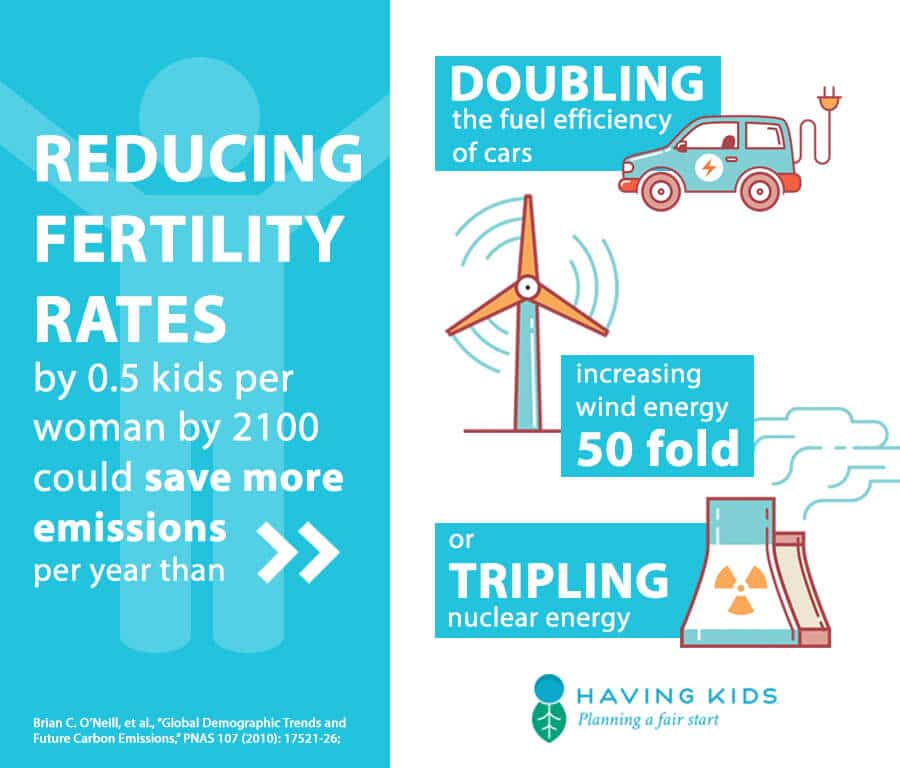
A clear link exists between rapid unsustainable growth and poverty. Better family planning and sustainable families increase economic prospects by allowing greater investment in each child.
According to the World Bank, in 2015, almost 2 billion people (26% of the world’s population) were living on less than $3.20 per day, and nearly half of the world (46%) was living on less than $5.50 a day.
The costs and benefits of overpopulation under globalization are now distributed by class more than by nation. Labor bears the cost of reduced wage income; capital enjoys the benefit of reduced wage costs.
The United State and much of the capitalist world believed that new bodies were needed to produce more labor. This pro-natal, pro-capital belief has created a world in which huge inequities exist. For example, the world’s 2,153 billionaires have more wealth than 4.6 billion people, which is more than 60% of the planet’s population.
Family size affects those in developed countries as well as underdeveloped nations: In the U.S., the Kansas City Star reported that of more than 6,000 prisoners in 12 states, 1 in 4 was a product of the foster-care system; there is a foster-care-to-prison pipeline in many states. Foster children are also diagnosed with PTSD at a rate greater than Iraq War veterans, and every year, more than 4,000 former foster care kids end up homeless after leaving the system. Meanwhile, the number of American children in foster care increased 12% between 2012 and 2017.
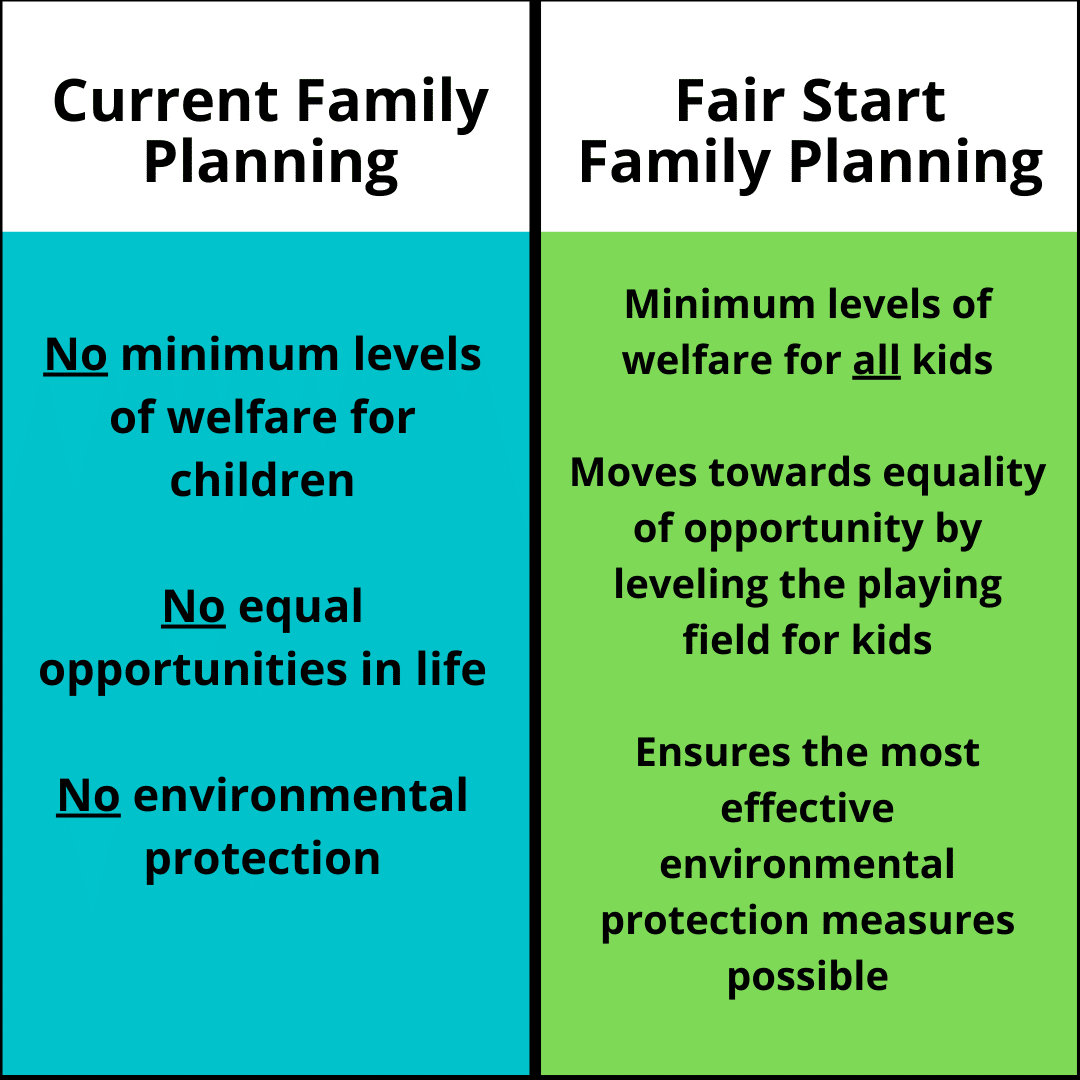
Our current family planning systems provide no minimum standard of well-being for future children, allowing children to be born into failing state systems because their parents cannot care for them. That exacerbates inequity and ensures rich kids stay rich and poor kids stay poor.
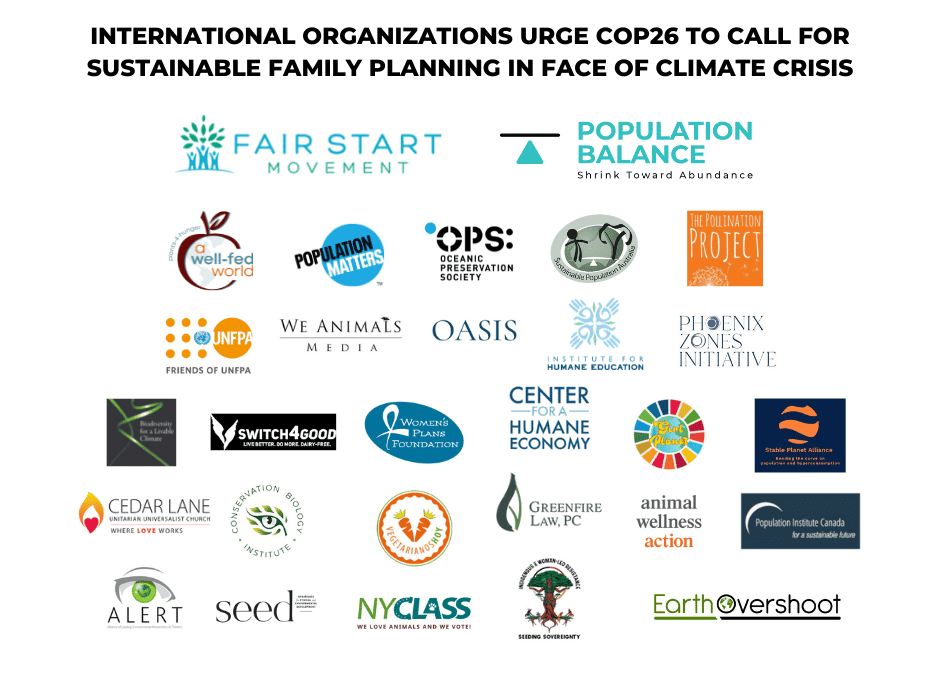
Recent coalition of organizations promoting equality in family planning reforms.
“The Legal Theory Bookworm recommends Justice as a Fair Start in Life: Understanding the Right to Have Children by Carter Dillard. Here is a description:
“Heidegger wants us to recapture the sense of people as unique and valuable, and this seems like the central argument of Dillard’s book.”
How did we ever come to believe in the myth of intentional, just and legitimate systems of social organization – like states and families – without actually accounting for the fair creation, development and consensual inclusion of future generations – the majority of persons – into those systems? How is consent, or self-determination, possible without that account? What norm could possibly precede that account? These articles – several peer-reviewed and originally published by Yale, Duke, Northwestern and other universities – will argue that, abstraction aside, there is no real justice without ensuring all children a fair start in life, both socially and ecologically. We first move towards justice by reforming the moral and legal right to have children, and the family planning systems the right creates, around zero baseline – or Fair Start – modeling that through collective child-centric planning enables consent to power and thus relative self-determination against the true baseline of nonpolity. Without it, we never orient our actions from a just, or inclusive and reflective, position.
Fair Start moves the discussion away from population and toward people, away from counting people and toward making people count. If we care about freedom, we first care about people because in democratic systems they – ultimately – have political authority over us. A just creation norm makes God fair, our systems consensual, and frees us from one another.
This book thus seeks to correct what we might call the constitutive or grundnorm fallacy: The mistake of trying to derive inclusive systems of justice, and freedom, downstream of our creation rather than going to the source – just family planning. Correcting that mistake, and understanding the right to have children, resolves a corruption at the heart of human rights which makes a system designed to protect the most vulnerable, like future persons, fundamentally exploitative of them. The creation norm is what most accounts, and should most account, for the lives we experience. Making that norm fair brings us to optimal world populations. It is also the most effective solution to the ecosocial crises we face today, with the weight of evidence showing ten to twenty times the impact, via redistributive Fair Start family planning entitlements/incentives, on things like the climate crisis and economic inequality relative to downstream measures.
“Justice is not abstract, but created in the constant and fundamental formation – or procreation – of power relations.”
“Beauty has no age limit. Fertility does.” Ad issued by Italian government in campaign to boost fertility rate.
Let’s find a way to reduce child poverty without signaling that society needs to exploit more babies to grow economies. There was a time when a case could be made that bringing more children into the world was a benefit to society. Today, with the overwhelming demands of nearly 8 billion people inflicting serious damage on the planet’s life-supporting ecosystems, there is no case for encouraging births, especially when it will harm the very children we have. More births portend a bleak future for today’s and future children – whom we should be protecting, not exploiting. Public policy needs to catch up with this harsh reality.
For too long, the decision to bring a child into this world has been all about the “rights” and desires of the prospective parent, with little regard for the rights of children. The rights of children should be paramount, eclipsing other rights and agendas. Nothing could be more important. That’s one reason I admire and support the work of the Fair Start Movement.
Today, we’re witnessing unenlightened state and business agendas to reverse the trend of dropping birth rates. “People want it. Society needs it. We want the economy to grow,” proclaims Lyman Stone, an adjunct fellow at the pro-growth American Enterprise Institute (AEI).
On a full planet, it’s time we put an end to pro-natal agendas and rhetoric that pressure, incentivize or otherwise encourage prospective parents to add to our numbers. Let’s consider pro-natal public policies because they are surging today.
Bear with me while I set the stage:
Birth rates have been dropping around the world for 60 years, and that drop may be accelerating today – for many reasons. There is some lag, but after birth rates drop below replacement rate, a population eventually begins to contract. While that’s not happening yet to our global numbers, many countries have begun to experience this contraction. And there are more to come. Sadly, this is getting negative attention.
But it’s actually really good news. It’s an indication that we’re collectively planning for and investing more in each child, which naturally brings down family size. It also means more female autonomy, improved access to education and employment opportunities for women, better access to contraception and other family planning services, and a reduction in teen pregnancies.
Another contributing factor is it’s become SO apparent that we’re doing serious damage to our home planet. Our climate, biodiversity, soil, and water are all degrading before our eyes. Young adults today are reluctant to bring a child into such an uncertain world, and many do not want to contribute to this destruction by adding more people.
On an overpopulated planet, we ought to celebrate declining birth rates. It’s exactly what is needed so we can ease our pressure on ecosystems, allowing them to return to health and meet our needs, the needs of other species, and especially the needs of the world’s children. Unfortunately, I’m observing the exact opposite. There’s an unexamined assumption that, “of course we must replenish ourselves” (replenishing is something we should do when we’re at a sustainable population).
Growth-addicted policymakers in numerous nations have been panicking about what’s being termed a “baby bust.” These fears over a shrinking population are so common, they’ve earned the labels, “depopulation panic” and “baby-bust alarmism.” Some of this panic stems from the fact that governments have been engaged in a population Ponzi scheme, relying on tax revenue from an ever-growing pool of citizens to fund services for those born decades earlier. Plus, a growing population means more workers and more consumers year after year, an easy recipe for GDP growth. New York Times columnist Ross Douthat wrote, “Today’s babies are tomorrow’s taxpayers and workers….”
Of course, a high rate of GDP growth is the Holy Grail. Economic growth is the most universal public policy goal on the planet. AEI’s Stone, who is also a research fellow at the conservative think tank, Institute for Family Studies, laments, “There is no economy that has managed to knock out gangbuster growth with a declining population.”
If you’re addicted to growth and running a Ponzi scheme, it can be very alarming to see it begin to unravel. And if you’re running for reelection and you can’t brag about economic growth during your administration, you’re pretty much done.
So, officials in numerous countries are instituting policies designed to boost the birth rate. According to the U.N., 10% of the world’s nations had explicitly pro-natal policies in 1976, but that number began to rise sharply at the turn of this century, and has almost tripled (28% in 2015, the most recent data). Hungary, Poland, Greece, Japan, and Korea are just a few of the nations very actively attempting to reverse population contraction.
It’s too seldom discussed, but pressuring women to birth more taxpayers, workers or consumers is an abhorrent violation of their human rights. It commodifies children and dehumanizes women, reducing them to incubators in service to an overheated economy hooked on unsustainable growth. Women and couples should be making family-size decisions free from political and cultural pressure to procreate. As for future children, they have a right to inherit a healthy planet and a shot at living decent lives.
Even in the U.S., where social support programs have traditionally received limited funding, support for unsustainable and inequitable baby-making has begun ratcheting up. Child tax credits, child allowances, paid family leave, and child care subsidies are getting miraculous bipartisan support. The American Rescue Plan (a response to COVID) has been providing $3,000 to $3,600 per child in tax credits annually – through the end of 2021. Efforts are underway to extend it. Senator Mitt Romney this year proposed The Family Security Act, which would also send a monthly check to families for each child.
In defending the proposal, Senator Romney said, “We’re creating an incentive for people to be able to form families and to have children because we’re recognizing that we’re not reproducing ourselves.” In one interview, Romney stated, “Our population is declining pretty substantially. We’re down, I think, 5.8 million people from where we would have been had we maintained the birth rate of the last decade. So, we’ve got some work to do.” Clearly, he is not aware that we’re in overshoot (the scale of the human enterprise – our economy and our population – has outgrown our planet).
Policies and projects to increase birth rates in several nations have met with mixed results. That’s not deterring policymakers desperate for growth. Advice from New York Times columnist Ross Douthat: “America needs more babies. Public policy alone cannot deliver them, but it can help.”
Pro-natal public policy emerges in – and helps perpetuate – a pro-natal culture. Emma Green, in The Rebirth of America’s Pro-Natalist Movement (The Atlantic, 2017) wrote, “Ultimately, a shared cultural commitment to the importance of children is the factor that will determine America’s baby-making future.”
While it is concerning that today we live in a pro-natal culture, I’m optimistic because young adults today are transforming that culture. They are choosing to delay childbearing and choosing to have fewer children. They understand a meaningful life does not require motherhood. They recognize that raising a child is a huge commitment, it’s expensive, and it does require sacrificing career and other priorities. And, of course, many appreciate that a full planet doesn’t benefit from a growing human population.
Protecting today’s children from poverty is a noble goal. But encouraging higher birth rates isn’t the way to do that. It guarantees those children will inherit a dead planet. It’s challenging to develop policy that alleviates child poverty but does not incentivize prospective parents to bring more children into the world. I don’t know the answer to that dilemma. But policymakers working on this must have a full understanding of the fact that we’re in overshoot. This means we need to embrace and celebrate dropping birth rates and contracting population, not fight it.
Let your elected representatives know you do not support policies that attempt to bribe women to birth more taxpayers, workers, and consumers. Let them know you support policies that reduce child poverty, but only those that do not also increase the number of children.
Thomas Friedman’s recent piece on Musk and tech capital as a solution to the climate crisis is a jarring poke in the eye for those who decry more geoengineering as a solution to a crisis created by geoengineering. But Friedman missed the crucial history, and issue, at play. Fundamentally, climate change flows from the failure of world leaders to adopt sustainable family planning policies in the Twentieth Century that would have used nature as a limiting factor.
The solution? Embrace a new family model based on equity and ecological restoration, and use the wealth bubble at the top of the pyramid – the one that buoys up the uber-rich of the world – to fund the transition as a matter of ensuring every child’s right to a fair start in life.
Urge @tomfriedman to get it right.
What is Fair Start?
The Fair Start Movement is the convergence of social, eco, and reproductive justice to ensure every child a fair start in life. Let’s stop counting people, and start making people count. How? Move wealth from the top of the economic pyramid and into incentivizing better family planning and more equitable, sustainable families. That wealth was made through poor family planning policies that put costs on women and children. Redirecting that wealth is how to do the most good for children, animals and the environment, and the only way to make people truly free.
Without giving every child an ecosocial Fair Start in life we never come from a just place. Changing that is the first obligation, for all of us, and as such it is achievable by all means effective.
Kudos to Inside Climate News for covering a topic many are hiding from: The fact that many benefitted from a clearly unsustainable family planning system that hurt future generations, and how to take wealth from the top to now compensate them.
13%: New research by Nobel laureate economist James Heckman and his coauthors suggests that, after accounting more accurately for long-term health and other benefits, the return on investment for early childhood programs is even higher than previously believed, at 13 percent rather than 7-10 percent.
1 MILLION SPECIES face extinction thanks to unsustainable growth-driven human activity, the U.N. reports.
What’s the solution? The UN should use the right to a healthy environment as a springboard to a more aggressive or restorative approach that restores nature and habitat, for all species.
Ruby Fox is a fourth year student studying Society and Environment with a concentration on Justice and Sustainability at the University of California, Berkeley. She is interested in systemic injustice, environmental issues, childhood development, and food sovereignty, and looks forward to working with educational facilities and community organizations in the future.
Oftentimes when people are considering whether or not to have children, they think about their own wants and needs. Instead, parents should be considering the needs of the prospective child as they consider their own. Most people understand that humanity is moving into trying times as climate change exacerbates our social issues in profound and unpredictable ways.
Potential parents must be thoughtful about their own motivations, the social stratification of society, and worsening global environmental conditions when building a family. Intention and motivation is not often questioned when discussing pregnancy. Many people simply decide that they are “ready for a family.” While everyone deserves love and connection, creating a whole new life to increase the quality of your own should not be the immediate response to craving community. Many academics have argued against the compulsory expectation or cultural entitlement to bearing children on ethical grounds. Christine Overall wrote Why Have Children (2012) to ponder the philosophy and ethics of procreation, concluding that the least selfish life plan may not include parenthood, especially for those who would have children only to “please others, to conform to convention, or to benefit themselves based on the delusion that children will fix their problems” (219). Giving breath to another being holds the parent at least partially culpable for any harm against that being. Raising a child requires more than desire and healthy financial support; it requires attention, energy, commitment, patience, and unconditional love for a child to grow into their own unique person.
Photo by CDC on Unsplash
Parents want to believe the ability to protect and support their child is absolute, but life is unpredictable, and that support inevitably falters from events outside of parental control. Making a family and playing a parental role cannot be the only goal for prospective parents when children exist outside the familial vacuum as independent people and members of greater society. Outside of the individual growth, people must consider the social conditions that each baby is born into. As class demographics shift overtime, researchers have seen the association between marriage and child poverty weaken over time, while the association between work and poverty became stronger, suggesting the limitations of “overemphasizing marriage and the growing importance of work for reducing child poverty in America” (Baker 1166).
People must understand that a stable marriage and a paying job alone cannot provide the financial or emotional security necessary to raise children. Research shows significant negative association between parenthood and emotional well-being in high-income countries, especially in the US, due to stress heavily attributable to lack of social policy support with lower-income parents coping with worse emotional well-being and more stress (Glass et al). In 2019, the American foster care removed over 251,359 children from their homes, making a total of 423,997 children living in the foster care system (AFCARS Report). Sixty-three percent of removals were due to neglect, often arising from the inability to cope with the stress and expectations of parenthood.
Our current systems make it incredibly difficult to raise children with their basic needs met, let alone extra support and opportunity. Prospective parents should not only consider their ability to provide for their children in a tumultuous economic climate, but also whether their children will be able to provide adequately for themselves moving forward. Another issue outside parental control, but still within the scope of parental considerations, is our changing environment. Our societal struggle to reconcile the impending doom of climate change is a relatively new issue in parenting as well. Like most issues facing humanity, climate change is a wicked problem, a complex, ill defined, interconnected problem whose solutions present subsequent issues.
Prospective parents must consider how they will support their families through devastating environmental threats: erratic day-to-day weather conditions, increasing pollution, extreme environmental disasters, population displacement, inconsistency in global supply chains and manufacturing, etc. For example, without extreme policy shifts and decreasing freshwater availability, about 2.3 billion more people than today (over 40% of the global population in total) are expected to be living in river basins under severe water stress; globally, land prices worldwide will skyrocket as agricultural lands become more scarce, and more urgently necessary (OECD Environmental Outlook to 2050).
Issues like these will become more relevant in child development worldwide, including in high-income countries, like the US, that do not currently bear the brunt of climate related issues. One of the largest social shifts at this point in human history is the scope of parental responsibility to expand past the parents’ lifetime to include the hardship of generations to come.
Works Cited
Baker, Regina S. “The Changing Association Among Marriage, Work, and Child Poverty in the United States, 1974–2010.” Journal of Marriage and Family, vol. 77, no. 5, 2015, pp. 1166–1178., www.jstor.org/stable/2458272
“Births and Natality.” Centers for Disease Control and Prevention, Centers for Disease Control and Prevention, 3 Aug. 2021, https://www.cdc.gov/nchs/fastats/births.htm.
Glass, Jennifer et al. “Parenthood and Happiness: Effects of Work-Family Reconciliation Policies in 22 OECD Countries.” AJS; American journal of sociology vol. 122,3 (2016): 886-929. doi:10.1086/688892
“OECD Environmental Outlook to 2050: The Consequences of Inaction – Key Facts and Figures.” OECD, Organisation for Economic Co-Operation and Development, 2012, https://www.oecd.org/env/indicators-modelling-outlooks/oecdenvironmentaloutlookto205 0theconsequencesofinaction-keyfactsandfigures.htm.
Overall, Christine. Why Have Children? The Ethical Debate. MIT Press, 2014.
Rieder, N. “Procreation, Adoption and the Contours of Obligation.” Journal of Applied Philosophy, vol. 32, no. 3, 2015, pp. 293–309. JSTOR, www.jstor.org/stable/26813113.
Saad, Lydia. “Americans, in Theory, Think Larger Families Are Ideal.” Gallup.com, Gallup, 6 July 2018, https://news.gallup.com/poll/236696/americans-theory-think-larger-families-ideal.aspx.
“The AFCARS Report.” The US Department of Health and Human Services, 23 June 2020
National organizations urge COP26 leaders to protect most vulnerable
San Francisco, CA – Dozens of leading NGOs are calling on the President and Delegates of the COP26 in this open letter to take an urgent and clear public position recommending just and sustainable family planning as the most effective solution to address the climate crisis, and rising global inequality, including gender inequity.
The global community has failed to inform and support a universal effort towards just and sustainable family planning, which:
Is human-rights centered
Ensures sustainable and equitable resources for greater investment in each child
Enables communities and governments to protect children and future generations while upholding reproductive rights
On the contrary, pressures to increase births, or to obstruct family planning programs, are driving our biggest crises and putting the health, safety, and welfare of current and future generations in peril. Unsustainable population growth, a documented threat multiplier, is contributing to catastrophic climate change, unprecedented flooding, pandemics, ecosystem destruction, groundwater depletion, mass extinctions, and environmental degradation. Worsening inequality, in large part driven by our growing population, is also a grave threat to democracy and political stability across the globe.
Nandita Bajaj, Executive Director of Population Balance says, “Our growth-driven policies are not only a cause of immense suffering for marginalized human and ecological communities, present and future, but they are premised upon oppressive power structures. Not only are reproductive, intergenerational, and ecological justice under attack, our current unsustainable growth-centred family planning policies are threatening all life on earth. We collectively need to acknowledge and address the urgency of this predicament.”
Fair Start Movement is a 501(c)3 nonprofit organization dedicated to reforming family planning by replacing growth-centered family planning models with the human rights-based and child-first Fair Start model.
Population Balance is a 501(c) 3 nonprofit organization that provides education and solutions to address the impacts of human overpopulation and overconsumption on the planet, people, and animals.