How changing the rules for family planning and development will make all the difference
by Brixton Reyes
A Fair Start in the Philippines?
In the Philippines, family is a central and inviolable aspect of Filipino society. Most people’s lives revolve around their families, as is evident through various generations of family members living under the same household not wanting to be separated and through Overseas Filipino Workers (OFWs) remitting support to their parents and siblings. Despite the level of value Filipinos put on ‘family’, many children are still not given the same degree of importance. These children are victims of unfortunate circumstances from the moment they are born. In an article published by France’s Agency for Development, there are 250,000-1,000,000 homeless children living in the streets of the capital city of Manila.[1] In relation to this, thirty percent (30%) of Filipino children under 5 years old also suffer from stunting due to malnutrition which makes the Philippines one of the top countries in stunting prevalence.[2] Moreover, at least 17% of Filipino children aged 13-17 years old experienced sexual violence while growing up.[3] These are a few among the barrage of issues that plague today’s Filipino youth.
The same is the very reason I support the Fair Start Movement. A fair start for a Filipino child ensures that they will have a proper home they can live in that is conducive to their holistic development, adequate nutrition to fully develop their physical, mental, & emotional capacities, and safety from abuse and other forms of violence. It is imperative that the Fair Start Modelshould be included as one of the government’s core policy reforms. Children are referred to as “biyaya ng Diyos” (blessings of God) but our current laws & policies do not reflect this status. The Filipino family should not be an entity to which a child, even as he or she matures, is subservient.
A key feature of the Fair Start Model is that the right to have children is not a personal and private act within the parents’ exclusive domain. In the current model, which assumes this right belongs privately and exclusively to the parents, our local laws don’t have the same regulatory enforcement. Compounded with the state’s neglect to provide for free accessible contraception and family planning services to its citizens, this situation allows children to be born to parents who are unprepared to care for them and their own rights are neglected from the start. This state of affairs is supported by different aspects of Philippine society such as religion, socio-cultural norms, and even online trends. Family planning should be child- centric rather than parent or family-centric. An effort to get out of this limbo is the submission of R.A. 10354 otherwise known as the Responsible Parenthood and Reproductive Health Act or RPRH Law[4] whose implementation is currently not being prioritized. As an effect of this, despite the availability of safeguards, it still snowballs into unwanted pregnancies[5] and eventually, a growing population that ends up uncared for.
Because of this, I believe that adopting the Fair Start Model is a necessary public act. In doing so, the Philippines can pave the way for more countries to uphold intergenerational justice in the trying times ahead.
Dear Secretary General Gutteres, and Directors Kanem, Andersen, and Russell,
Several United Nations member states, ignoring the impacts on the climate crisis, the pandemic, human rights, and the sustainable development goals, are intensifying pronatal programs that are designed to push women to have children as a means of expanding economic and other forms of state power.
Not only do pronatal policies reverse progress in mitigating the climate crisis, but they fundamentally exacerbate the pandemics, which are killing millions. At the same time, faced with the United Nations’ historic failure to adopt a sustainable universal family model, nations like India and Nigeria are struggling on their own to stem disastrous growth.
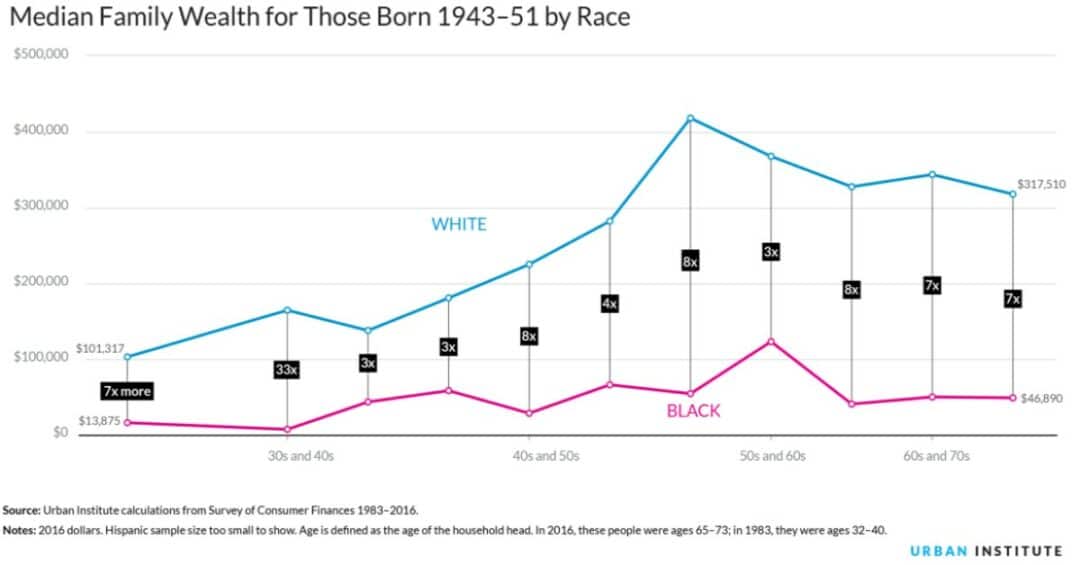
By adhering to the isolation modeling the UN is enabling a false idea of autonomy and is perpetuating inequity that benefits white colonizing nations. (That colonialism is reflected in the current 1/10 wealth gap between black and white children in the U.S.) Instead the UN should promote birth equity to achieve true autonomy and as a reparations to future generations.
The UN has not taken action. It has failed to link its outdated modeling to the overcrowding and poor public health that helped drive the COVID-19 pandemic. It has failed to condemn China’s new pronatal family planning regime, which is intended to create a baby boom among a population that – because of its size – already poses the greatest threat to the world’s ecologies. Instead the UN has focused on downstream efforts while at the same time profiting, politically, from population-based GDP growth.
Inaction threatens the UN’s credibility. Pronatal policies being rolled out in response to a perceived economic “baby bust” show that our current systems of governance are fundamentally illegitimate. If we are willing to create lots of people in whom we invest relatively little in order to satisfy markets and economies, instead of fewer people in whom we invest more in order to build the democracies that must precede, justify and regulate those markets and economies, we are admitting fundamental illegitimacy, or as the peer-reviewed work shows, the preconstitutionality, of our political systems. This is especially true when doing so exacerbates the climate crisis. In that case, all effective measures to correct this inversion are just.
The costs of ignoring reproductive justice legal reforms are mounting. These include the costs of the climate emissions that could have been avoided since at least 2007, and the role the failure to require equitable family planning has played in driving the massive and growing gap between rich and poor across the globe. The Fair Start Movement is calculating those costs as harms, and believes world leadership must – and one day will – be held fully accountable for them.
Will you join that call? Nothing would have a greater long-run impact on restoring our environment than simultaneously compensating future generations, while helping them become parts of legitimate democracies, via Fair Start investments in their empowerment and resilience.
If you do a term search on Google for recent media regarding issues around human population growth, you will find that the vast majority of messaging tells us women are not having enough kids and that we are in a “baby bust.” In other words, we are not having enough children to satisfy the ever-present push to ensure the economic growth – and greater returns on investments – that comes with more people.
A counterargument goes something like this: Policies that allowed that growth to happen drove the climate crisis, enslaved women to expectations of motherhood, and ensured no minimum levels of welfare or equity for children. These are all bad things, and it’s not clear that returns on investments – which generally favor the rich – are worth the trade. Everyone loves free money, but the climate crisis is kind of a big deal, right?
But there is a bigger problem with pushing women to have kids for economic reasons. Assuming that how we see future children is how we see our societies, the universal media push (driven often by journalists’ advertisers) to grow our population means that we are essentially economic inputs and comprise economies, measurable in things like gross domestic product. That is who we are.
And if being in a democracy is what obligates us to follow the rules, because in democracy we make those rules, then being in an economy – essentially, because of who we are – would mean we do not have to follow the rules, rules that protect the property of the rich for example. Robbed of our actual role in the process, and left to gape at politicians over which we each have little or no control, why should we? If governments have simply become adept at hiding violence, for the most part, and now mostly partner with private concentrations of wealth to more subtly use economic incentives to control the populace as some think is the case, as opposed to fulfilling their obligation to ensure the self-determination of people directly applying their will in functional town halls, why follow the rules? None of this would matter if getting to those town halls was impossible. It’s not, thanks to Fair Start and other reforms.
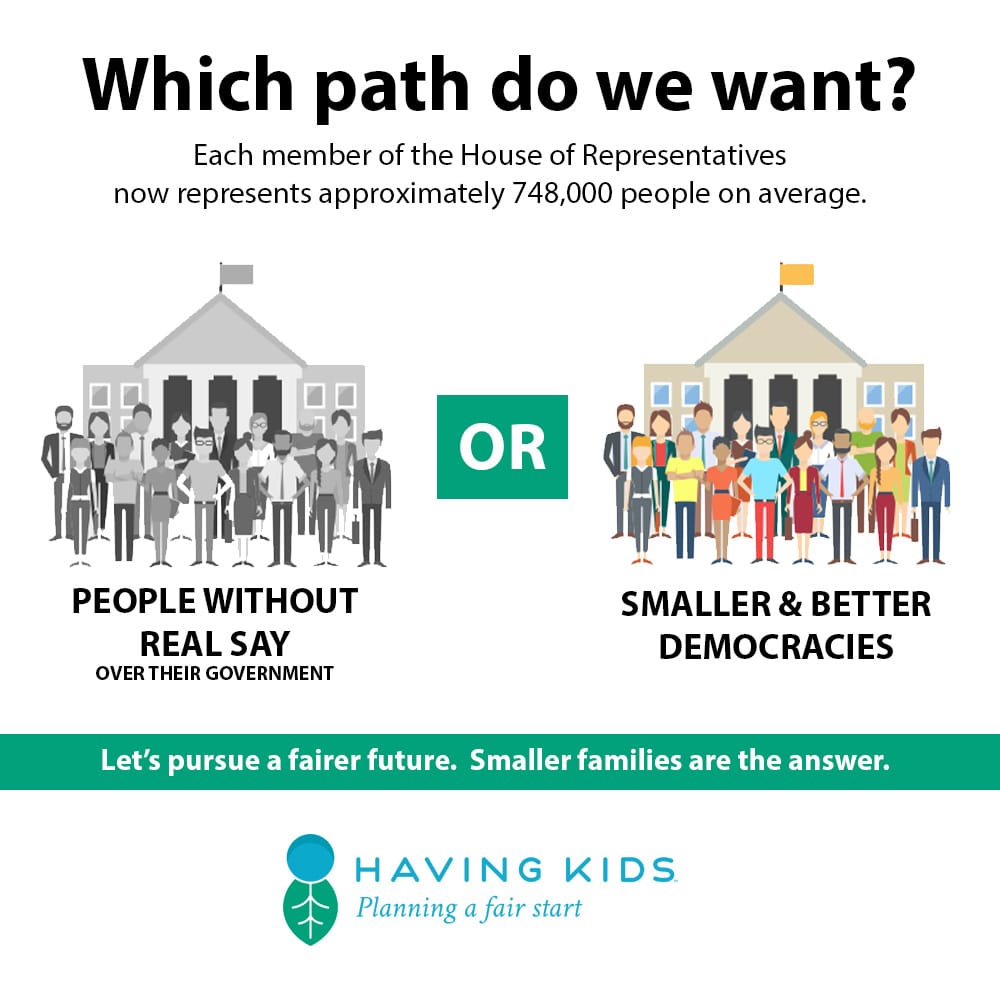
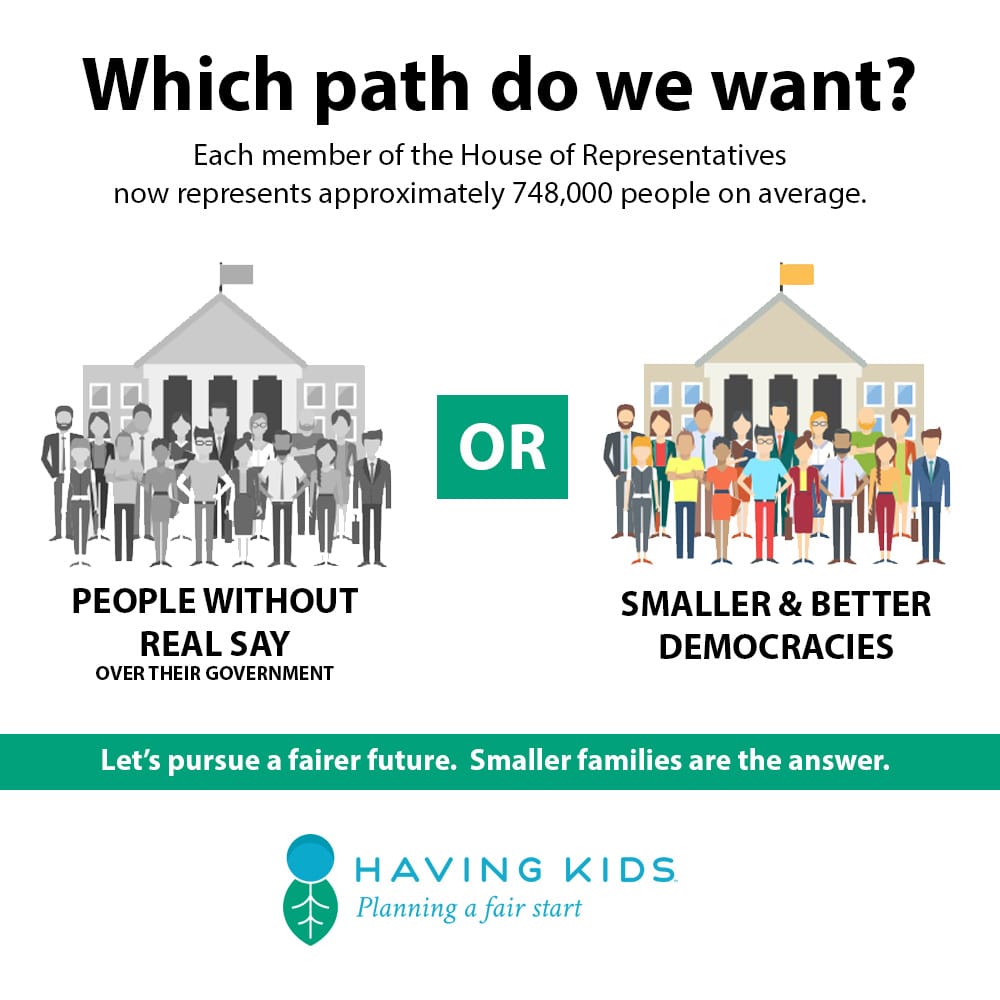
The “baby bust” messaging is scary for many reasons, but it may also be the key to solving many of our political crises today. If we are worried about democracy we should stop seeing kids as economic inputs and use family reforms like Fair Start to make sure children will be comprising – in terms of maximizing our investment in them, and their development via collective family planning – town halls rather than shopping malls. Then we are freed by the rules under which we live because they are our rules.
Justice begins with the fair creation – or procreation – of power relations, but those at the top of our political systems have historically refused to cede (or “constitute”) their power and influence into future generations.
The Lie
Older generations lied to themselves and others by treating the most interpersonal act – having kids – as a matter personal and private to the parents (often just the father), isolating those parents in the decision-making process from the impact their decision would have on the children born, on our communities and on our world. Families would have no obligation to others’ children, rich or poor. If the state sought to protect children, it would have to wait for them to be harmed.
That isolationism, in family planning, prevented the social contract – which includes the limitation of one person’s power over another, including would-be parents’ power over future children, rich kids’ power into their adulthood over poor kids, humans’ power to overrun the nonhuman world and create a climate crisis where freedom from others’ influence became impossible – from ever forming.
But the act of creating others is more other-determining – for the children born and the societies they will comprise – than self-determining for the parents. The move of older generations, to ignore the impact we have on others, evaded collective obligations to invest in children and preserved and expanded existing power structures via population growth. What appeared to be social justice movements – for equity and the environment – were always being undone upstream by family policies that would eventually bring us to the place of` massive inequality in failing ecosystems in which we live today.
Elites and those they controlled, throughout the Twentieth Century, did not want to pay their fair share to give all kids a fair start in life, a healthy environment, and a meaningful role in their democracies. Instead, they pretended that fortune, or some magical god, simply made it so that some kids were born poor, and others rich. They assumed nature, as a resource, was infinite and growth infinitely sustainable. Elites gave their own children a massive head start in life, contravening basic principles of democracy like the requirement that there be equal opportunities for all.
They made money with policies that prioritized population growth over investing in women in children, turning democracies into massive economies of scale filled with consumers rather than influential citizens, and functional constitutional conventions. Lost in a sea of others elites could exploit, the average person became voiceless, with the choice of what to buy but not to help steer the polity around them. Elites made their wealth by simply evading paying the costs necessary to maintain nations of free people – people free from things like the anthropocentric climate crisis. And they have historically been assisted by media and unethical journalists, as they are today with constant stories of “baby busts” and underpopulation, who shill for their advertisers and the need for more and more consumers.
That is the lie – that the generation of our societies, the base “we” from which all our language proceeds – should be determined by subjective autonomy rather than values and objective justice. That lie preserved fundamentally exploitative power structures and drove the crises causing immense suffering today, and the suffering – of the most vulnerable – that will occur in the future. And those who pushed and are pushing the lie are fundamentally responsible for the outcomes.
They also sought to evade an obvious truth: The obligations we have to future generations come first, and override other obligations, like property rights. Why? Governments derive from people who derive from their creation, so a just creation norm precedes other rules. That norm represents the only opportunity to ensure consensual power relations, from the moment those relations are created. Maintaining an optimal world population range, in terms of the creation and continuation of power relations between people, and between people and their ecologies, is always the first question of ethics because we are before we do. Existential justice precedes and overrides other forms, like property allocation.
We always have to ensure justice, in creation, first.
But instead, under the isolation or privacy paradigm men, and especially rich ones, kept control of their castles. And governments were more than happy to go along with the lie and the subversion of human rights – backed by the excuse of the cold war – as long as they received their cut in taxes, and otherwise benefitted from the growth.
That lie, the idea that what is interpersonal is really personal, fundamentally created the key crises – climate and inequity – we face today by driving the anthropocene over a more ecocentric world, and ensuring the massive inequality we now inherit at birth. It was assisted by religion – if we are made by gods rather than men, then the act is not really interpersonal, or subject to the demands of justice.
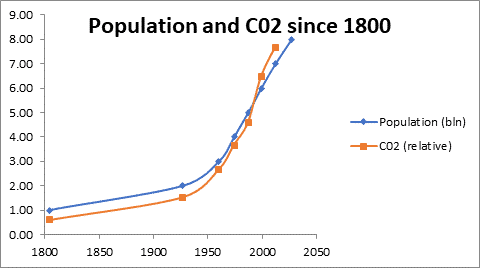
The curve represents the opportunity to promote values like child welfare, parental readiness, the restoration of nature, and democracies where each person plays a greater role, or alternatively, to continue to exploit people as consumers, workers, and taxpayers in a world filled with inequity, political voicelessness, and degraded ecologies.
We should choose the former, and arc down.
People are not numbers. They are entities that exert power over one another. We see this when we 1) understand power as any form of human influence (emissions, bad parenting, using language to exclude others, etc.) rather than focusing on the coercive (or official) power of the state, and 2) think about people in terms of their whole life span, including their earliest and most formative years. This is not John Rawls’ intergenerational justice – it’s about creating relatively self-determining people, as discussed below. If there is one condition for rules it is that they be fair, and the rule that creates us is no exception.
If you want to see the lies, join our Tell the Truth campaign and simply urge people and organizations to show you what they were doing to give kids a fair start, ecologically and socially, in the past and how they plan to do it today. Ask them to show the impacts of their family policies – past and present – on things like the climate crisis, inequity, and participatory democracy. Ask them to explain how we can have a just society without fairness, right from the start.
The truth is that no legal system is legitimate and obligatory unless it is comprised of consenting subjects who matter or have an influential role politically, and who thus act as though their capacity for self-determination is inverse to – and balanced against – population growth (which is fundamentally the addition of other sovereign or relatively self-determining people) relative to the absence of human power, or nature. That is the base conception of a social contract – the device that fundamentally makes freedom work. Freedom is the capacity to consent to the influence of others, and as a default, we should not submit to those we do not trust. And with massive power differentials and lack of any common core that proceed from our creation, trust is unreachable.
This is a condition for legitimacy prior to the development of downstream systems – like political representation, markets, or institutions. If power derives from people, is it more accurate to say that we are constituted into a system at some point in the past, through no role of our own, or actively part of a system of constituting physical democracies by taking part in a child-centric system that physically empowers people? Power derives from people who derive from their creation, and if it takes a village to raise a child it takes a village to plan for a child. While things like human rights, representative government, and checks and balances make democracy work, the first and most important device involves the rearing and development of children into people capable of democracy. The way we plan families is blocking this.
It’s hard to make sense of any political or legal system, positive, natural, formal, interpretive or otherwise, without accounting for the creation and development of the people from whom law derives and to whom it should feel obligatory. While we are familiar with forms of social organization like states, corporations, families, and communities, resolving the lie blocking procreative justice opens up the possibility of undiscovered countries of truly consensual obligation – islands of democracy in a sea of nature.
The lie regarding what is personal and interpersonal ensured growth that crippled this process of ensuring consensual governance. The quadrupling of populations in the Twentieth Century fundamentally replaced town halls with shopping malls by converting the possibility of fewer, well-developed citizens whose voices would matter into a mass of disconnected consumers with little influence over their governments, thus disempowering the average person. It ensured the endless greed and self-interest we see today, something Greta Thunberg has noticed, because it robbed people of secure and fulfilling communities that ground people and obviate the need for such things.
The Truth and Resolution
The most just and effective solution to the lie and its horrific impacts is to move the wealth and power that was made through growth – both public and private wealth and power – forward into future generations rather than continue to move it up to the top of the current structure, or what Nobel Laureate Steven Chu called the Ponzi scheme population pyramid.
Just follow where the money that should have gone into investing in future children went by our ignoring their needs and opting for growth.
Dozens of groups are already beginning to move in the direction of just and sustainable families – and it looks like this. The kind of freedom these groups are building is true freedom – e.g., not the fake “I’m alone in the world” freedom to choose to wear or not wear a mask in the middle of a raging pandemic, but the intricate freedom represented by a fundamental state of affairs where any pandemics would have been substantially avoided or mitigated. This move – just and sustainable family planning – has the biggest long run impact by far. It also solves the dilemma at the heart of democracy, aligning 1) just or right outcomes with 2) popularity, by investing more in and developing each person. Through development we come together around truth. There are legitimate economies without democracies preceding them, which means our family policies must create citizens and not consumers. We can ensure that – the first condition of justice – by all means effective.
There is a simple test for whether someone is part of this fix, and really accounting for freedom and justice, that involves looking at their language (much the way we look for binary gender mistakes in pronouns today). How? Ask anyone making claims about policies to define the people – the fundamental social organization – at the base of their claims, e. g. “tell me about the justifiable group that is making and implementing the policy you are discussing, in terms of basic values like the welfare, equity, ecological conditions, and effective roles in their democracy, both now and in the future,” and “tell me how they are consenting to the influence of others.” Ask them to unpack their claims in light of the open multiplier they are using, and the impact of that multiplier on child welfare, equity, nature and participatory democracy. Do they even have an intention for fundamental justice? How do they assess market costs and benefits without the primary baseline of a functional constitutional convention – or democracy – from which to do so?
Do the people in question act as though population growth is inverse to one’s capacity for self-determination, relative to nature or a zero-power baseline? Groups of relatively self-determining people are bordered by the absence of human power (nature, or the absence of being determined by others, which makes consent to power possible), accept loss of pure self-determination as they grow in number, but seek to divide and create new groups to maintain the relative power of each individual. This is the fundamental equation of free and equal people, one test for which will be the presence of fluid – not fixed – political borders defined by people and not arbitrary lines.
This is not mere theory – this is what might be beginning to happen in places Catalan, against the will of autocrats like Donald Trump. This is what optimal world populations – using a base value of freedom – might begin to look like, and where people would matter politically rather than trying to matter by literally imitating figures in the advertising we were raised on as is the case in social media today. Free polities are formed through the rule that meets the basic test for all rules – one that is fair. And in the case of any truly first rule, it can’t be practical or even interpretive, but must be existential in nature. It must be a rule – God notwithstanding – about who we should be.
In other words, do the people making policy claims act as though people matter politically, and do they seek to empower the majority – future generations (which make the idea of population more normative than descriptive) – through family planning reforms that limit and decentralize (or reconstitute) the power each of us have over one another such that we reach qualitative optimal populations? If it takes a village to raise kids, it takes a village to plan for them – for the phase of entry into society, from their creation to their emancipation. If we want relatively autonomous families, where vulnerable entities like the poor, women, and children share in the autonomy, we have to plan for and create them as such and not pretend autonomy will magically appear.
As a practical matter, do the claimants support a discourse where every child’s right to an ecosocial Fair Start in life overrides property rights? To constitute – politically – is to transfer power in a way that ensures the capacity for relative self-determination. It’s about making power flow bottom up, rather than top down and based on coercion, as it does today. Are the claimants willing to make that transfer of power, a sort of “first tax” that pays for existential justice? If they are not, they are putting property and things over people, rejecting the relative self-determination of peoples, and are choosing to remain part of fundamentally unjust systems. In other words, are they part of – or opposed to – constituting just societies comprised of democracies where voices of the people are heard and matter? If not, the people in question are preconstitutional, or “precons.” They cannot account for any form of justice because they cannot account for how people – the majority – will fit into those forms. They cannot account for “constituting” or the physical limitation and decentralization of power, regardless of its form. To the extent they are intending parents they would be unwilling to empower their children and may not be ready to parent. In other words, hey are insufficiently other-regarding to constitute just societies.
Urge them to change course and help us liberate the majority of entities – those who will live in the future (both human and nonhuman) – by supporting our action before the UN Human Rights Council. We begin legitimacy by through the physical conditions that make social obligations genuinely reflective of the people subject to them.
Take action:
We can use the values that free us to physically define our species. Click here for dozens of ways to take action to support true freedom for the majority, starting by engaging in the direct action discourse that puts people over property, and which helps us act against concentrations of wealth and power in ways the liberate and decolonize the future.Putting human rights, like Fair Start, before governmental processes will feel infeasible because we have lived in a world filed with people who did not get a fair start in life. We can change that.
——————
Carter is author of Justice as a Fair Start in Life, works to resolve the constitutive fallacy, or the mistake of attempting to practice any form of freedom and/or justice without first ensuring the same in the dynamic creation – or procreation – of human power relations. Simply put, those that do not promote procreative justice can never orient from a just place or prioritize the needs of the future majoirty, while many have begun to move in the direction of actually doing so and physically constituting – via just power relations – free and equal societies.
Carter began his career as an Honors Program appointee to the U.S. Department of Justice. He later served as a legal adviser to the U.S. Department of Homeland Security, in the national security law division. He wrote his thesis reformulating the right to have children under Jeremy Waldron, his extensive academic work on family planning has been published by Yale, Duke, and Northwestern Universities, as well as in peer-reviewed pieces, and he has served on the Steering Committee of the Population Ethics and Policy Research Project and was a Visiting Scholar at the Uehiro Center, both at the University of Oxford. He has taught at several law schools in the U.S., served as a peer reviewer for the journal Bioethics, and most recently managed an animal protection strategic impact litigation program, with annual resources in excess of five million dollars. As early as 2007 his work provided a sufficient human rights basis for policy changes that could have significantly mitigated the climate, inequity and other crises we now face, and with the Fair Start Movement, Carter now works to hold those blocking the reforms – including those creating noise through self-serving ineffective reforms – responsible for the harm they caused.
Nothing would speak out against selfishness more than that and give the majority of people – those who will exist in the future – that which they deserve. It’s not about population. People are not numbers. It’s about the impossibility of separating values like welfare, equity, and nature from their creation.
The curve represents the opportunity to promote values like child welfare, parental readiness, the restoration of nature, and democracies where each person plays a greater role, or to exploit people as consumers, workers, and taxpayers. We should choose the former, and arc down.
There is nothing else that comes close to having the impact, long term, on the social justice and environmental causes you support. Without an ecosocial Fair Start in life – with guaranteed minimum levels of welfare approaching equity for each child, the restoration of nature, and democracies where voices actually matter – there is no real justice. All forms justice remain downstream – missing the fundamental phase in which we create and most define power relations.
Fair Start changes that. It’s the biggest win-win of all.
His Holiness speaking out for Fair Start and donating would start a trend, changing the ultimate form of selfishness – the concentration of wealth that could be used to save and improve countless lives – into the ultimate form of impact. Many young people stand ready to support such a trend of giving and planning, putting people and nature before profits and property, and treating Fair Start redistributions as a peremptory norm overriding governmental processes.
Fair Start is not about population. It’s about people, starting from the source, limiting and decentralizing power, and thus becoming the relatively self-determining – or free – people we deserve to be.
Will you speak out for real social justice that most effectively furthers the values you have espoused, by supporting all children getting a Fair Start in life?
Ashley Berke, Nandita Bajaj, Carter Dillard
FairStartMovement.org
FAIR START RESEARCH
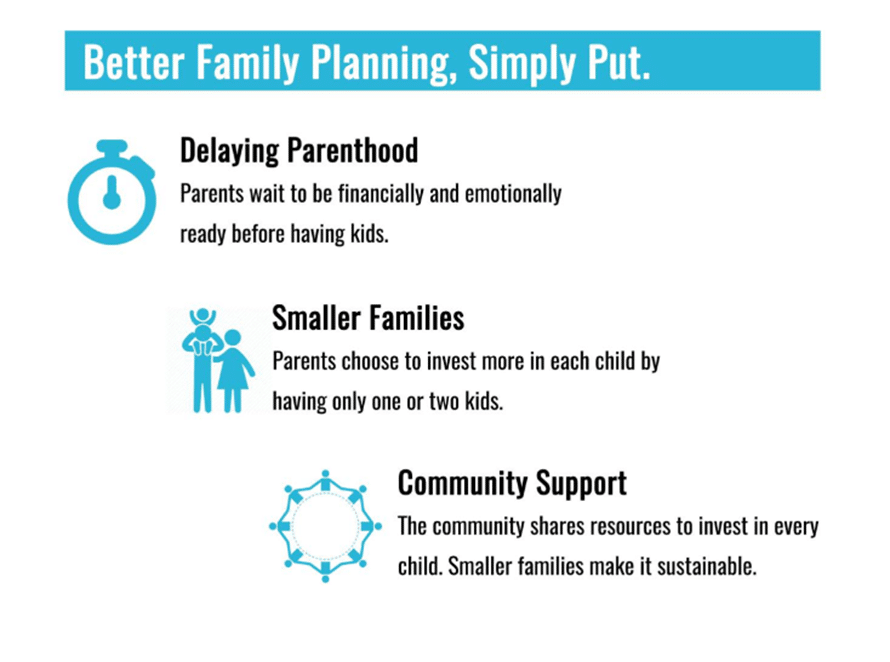
A clear link exists between rapid unsustainable growth and poverty. Better family planning increases economic prospects by allowing greater investment in each child.
According to the World Bank, in 2015, almost 2 billion people (26% of the world’s population) were living on less than $3.20 per day, and nearly half of the world (46%) was living on less than $5.50 a day.
The costs and benefits of overpopulation under globalization are now distributed by class more than by nation. Labor bears the cost of reduced wage income; capital enjoys the benefit of reduced wage costs.
The United State and much of the capitalist world believed that new bodies were needed to produce more labor. This pro-natal, pro-capital belief has created a world in which huge inequities exist. For example, the world’s 2,153 billionaires have more wealth than 4.6 billion people, which is more than 60% of the planet’s population.
Family size affects those in developed countries as well as underdeveloped nations: In the U.S., the Kansas City Star reported that of more than 6,000 prisoners in 12 states, 1 in 4 was a product of the foster-care system; there is a foster-care-to-prison pipeline in many states. Foster children are also diagnosed with PTSD at a rate greater than Iraq War veterans, and every year, more than 4,000 former foster care kids end up homeless after leaving the system. Meanwhile, the number of American children in foster care increased 12% between 2012 and 2017.
Can We Really Prevent Child Abuse? One Family Rides in Search of an Answer
A father and his son have set out on a bicycle ride across the nation, from South Florida to Los Angeles. After being raised in abusive situations, and being fortunate enough to find a safe place, now they will not run, they will ride to fight for all children to have a fair start.
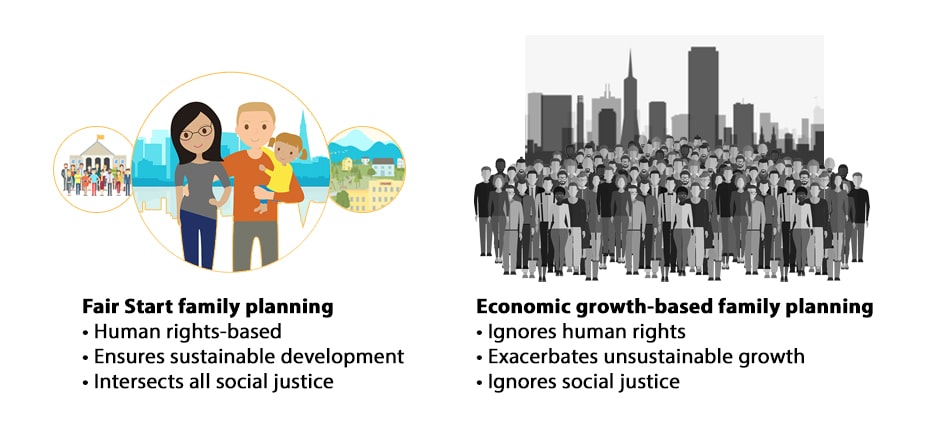
But a few bad policies – family planning systems that push population growth to fill shopping malls rather than parental readiness to ensure functional town halls, underfunded child protection agencies, misplaced systems of rights that treat children as parental property – are standing in the way.
This father and son, inspired by the horrific death of Gabriel Fernandez in 2013, and many others, set out to expose and change those policies. And along the way they’ve seen the other costs of those policies – the ones that push helpless children into the hands of abusive parents – in the form of nature overrun by people mass produced and uncared for, and systems of government that look nothing like the inclusive democracies in which we are supposed to live.
The nature, the family planning policies that will determine it and future children’s fate, and the road ahead. Can you see the connection between these things?
But they are also seeing support – a gush of online support, an advocate in the capital of their home state, and the animals in what remains of nature, helpless like the children this ride honors.
On the road.
The father says this of his son:
“Now he plays the vigilante of sorts. Taking matters into his own hands, with me as his sidekick and back up. He pounds the streets with his statistics and petitions with a will to change the world for his peers.”
Help them end this, the child abuse, the filicide, that started their ride and keeps them pedaling towards better places and safer spaces.
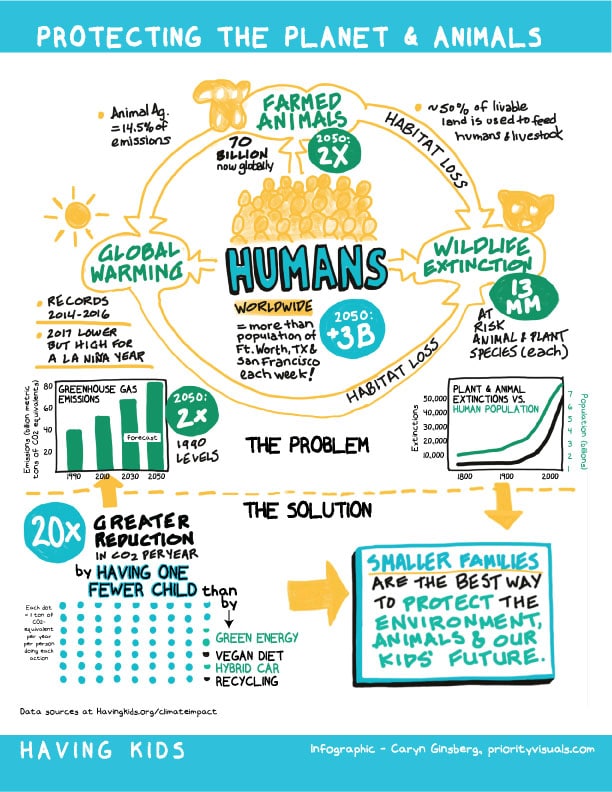
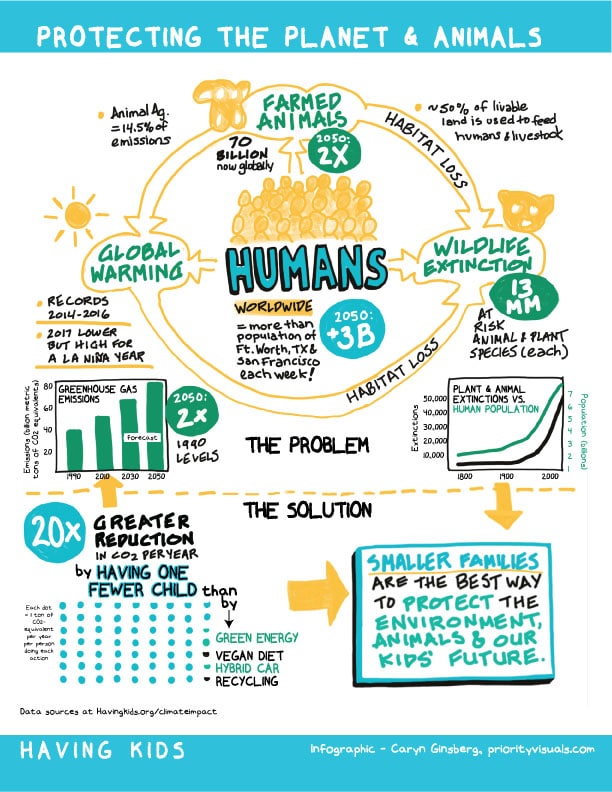
In almost every category, from increased demand for animal products, to the extinction of wildlife, animals are losing. And that’s not even accounting for what the climate crisis will do to animals as it escalates.
What went wrong and how do we reverse course? In short, as a Yale Climate Connections piece recently showed we allowed the Anthropocene to unfold, unchecked, rather than adhering to ecocentric systems. Here is one effective move to change the law to make it work for animals: Reform family policies to promote delayed parenting, birth equity, and sustainable families for all as a matter of fundamental human rights and obligations.
The right to an ecosocial Fair Start represents a unified version of animal personhood – one that aligns human and nonhuman personhood into one functional concept rather than making them oppositional. For example, populations of humans with much higher investments in each child mean more meaningful roles for each person in their democracy, and more room for animals – the height of nonhuman liberation.
Fact: An ecocentric and biodiverse standard for environmentalism would have also prevented the horrific impacts of the climate crisis on motherhood, which fall disproportionately because of inherited inequities.
Without this change refences to animal law are probably misnomers, and misleading . Animal law, minus changing the people we are becoming, would be missing the key ingredient: Us.
We can’t call something animal law if it does not orient from restoring the nonhuman world – their autonomy, and systems that don’t do that may not even produce law at all – truly obligatory norms – because they do not use a baseline that accounts for how people meaningfully participate in those systems such that the rules the systems produce actually reflect the peoples’ will. How does reconstituting legal systems ensure legitimacy, and help humans and nonhumans? One example: Eliminating the wealth gap at birth between white children and children of color, via Fair Start federal tax reforms, restores the nonhuman world and is antiracist. Traditional “animal law” with its racist outcomes (including evading birth equity, in favor of historical disparities, despite the exponential benefit equity would also bring nonhumans) does none of this. Another: Traditional family law legal scholarship uses case and statutory law – or “positive law” to advance human welfare. But without a system of overriding rights that would mitigate the climate crisis, it’s failed to achieve its purpose and simply condemned future generations to suffer.
This advanced concept of unified animal personhood is now the subject of litigation, in the Texas abortion fight and in litigation surrounding the right to nature in Oregon (which seeks to restore the nonhuman world (including -300ppm climate policies)) as a matter of constitutional right. It’s a form of full personhood that is also consistent with what renowned author Carl Safina – in a pointed Q&A – recently suggested as the best move for animals.
TAKE ACTION: Animal personhood, and animal law, mostly depends on the humans animals share the world with. Let’s start our reforms there.
The system of growth rested on obvious myths – like being born rich versus poor was a matter of some magical “fortune” or hand of god, rather than a failure of nations to implement policies that would ensure birth equity. That myth was designed to prevent concentrations of wealth and power for paying what they owed – under human rights obligations – as investments in future generations.
Those promoting the system treated the act of having children, something inherently interpersonal, as instead personal in order to preserve fundamental – familial – power structures. They used a misperception of privacy and empowerment, within the home or marketplace, to rob people of those same things at the much more fundamental level – in the inclusive and reflective democracies they were entitled to and which are most determined by the first border of human power – creation .
Those preventing us from constituting ourselves as free and equal people via Fair Start reforms cannot – fundamentally – justify power relations. They prevent our becoming free by moving the flow of power from top-down to bottom-up, through a discourse of collective family planning that physically limits and decentralizes the power we have over each other.
These losses of freedom cannot be separated from one another, or from the family planning norms that create them. To make policies just, we have to make their foundation – people – just, and free.
How can we identify who is a precon, and who is moving towards freedom by helping constitute future generations – the majority of persons – in a just way via child-centric planning? Precons will remain abstract and self-contradictory when pressed on how they will promote the relative self-determination of future persons, even when they are asked to use simple metrics like wellbeing and equity. They will contravene values, like healthy ecologies, they clearly value as demonstrated through their own actions when it comes to ensuring those values for future generations – the majority. They will put existing property rights over investing equitably in the majority of persons – future generations.
Free people, on the other hand, will begin the development of any policy by 1) treating self-determination as inverse to population growth (which means democracy is functioning, fundamentally, as it should and moving toward relatively self-determining populations) and 2) promoting our constituting new democracies of free and equal persons through a discourse of collective family planning that would create functional constitutional conventions of relatively self-determining persons.*
*note that the appeal of corporations may stem from their ability to imitate such groups relative to bloated nation states, but their purpose and structure make them anathema to true democracies.
Those moving towards freedom will first act in ways that support fundamental justice. They will want to come from a just place, and they will act as though people actually matter, politically. They will act as though each person is empowered equally. This is the litmus test for democracy.
There is a particular and fundamental mistake in our language and behavior that impedes freedom. It’s called the constitutive fallacy, or mistaking the first obligation or principle (the grundnorm) as anything downstream from the norm that should create us.
There is another way to say this. Before we can have anything like a written constitution, iconic representatives, or lists of human rights, we would first have to be physically constituting ourselves as free and equal people who can self-determine (much the way we would in a popular constitutional convention), relative to an absence of being determined by others, or a zero-baseline. If government derives its power from the people and people derive from their creation, ensuring a creation norm that maximizes consent — again, imagine a dynamic constitutional convention — acts as a sort of “first election” to bring in future persons as new members (who always constitute the majority of persons) before we ever elect any representatives. And we have to constitute ourselves as if for town halls — with fewer and highly developed people — rather than as crowds of consumers for shopping malls, because the former regulate the latter.
This truly self-determining state of affairs requires, despite our temporal myopia, 1) conceptualizing of power as any form of human influence, and 2) temporalizing our conception of human beings to first assess fairness in the first creation — or procreation — of power relations. These moves constitute us as free and equal people by limiting and decentralizing the power that others have over us. This form of intergenerational justice subsumes all other forms, including distributive, retributive, and ecological, by factoring them into our creation. To the extent we have considered justice in the abstract, we have hidden the fundament: how justice and injustice make us who we are.
How do we know we are moving in the right direction, and that this is happening? Our relative self-determination will be directly inverse to the number of people in our democracies, and those democracies should divide into others at particular thresholds to maintain the baseline.
This dynamic process resolves the fallacy and unifies values like justice, relative autonomy, nature, freedom, equality, etc., at the most fundamental structure of human power. It’s also a pathway to qualitatively determining optimal populations using very specific and current legal standards to determine the values above. We simply cannot create a person without simultaneously impacting all these qualitative values. By seeing freedom as akin to the dynamic emancipation of children, we eliminate false generations of rights that divide values like development and welfare from liberty and we find that truly becoming a citizen requires at a minimum being sufficiently other-regarding to constitute future democracies through collective and child-centric family planning.
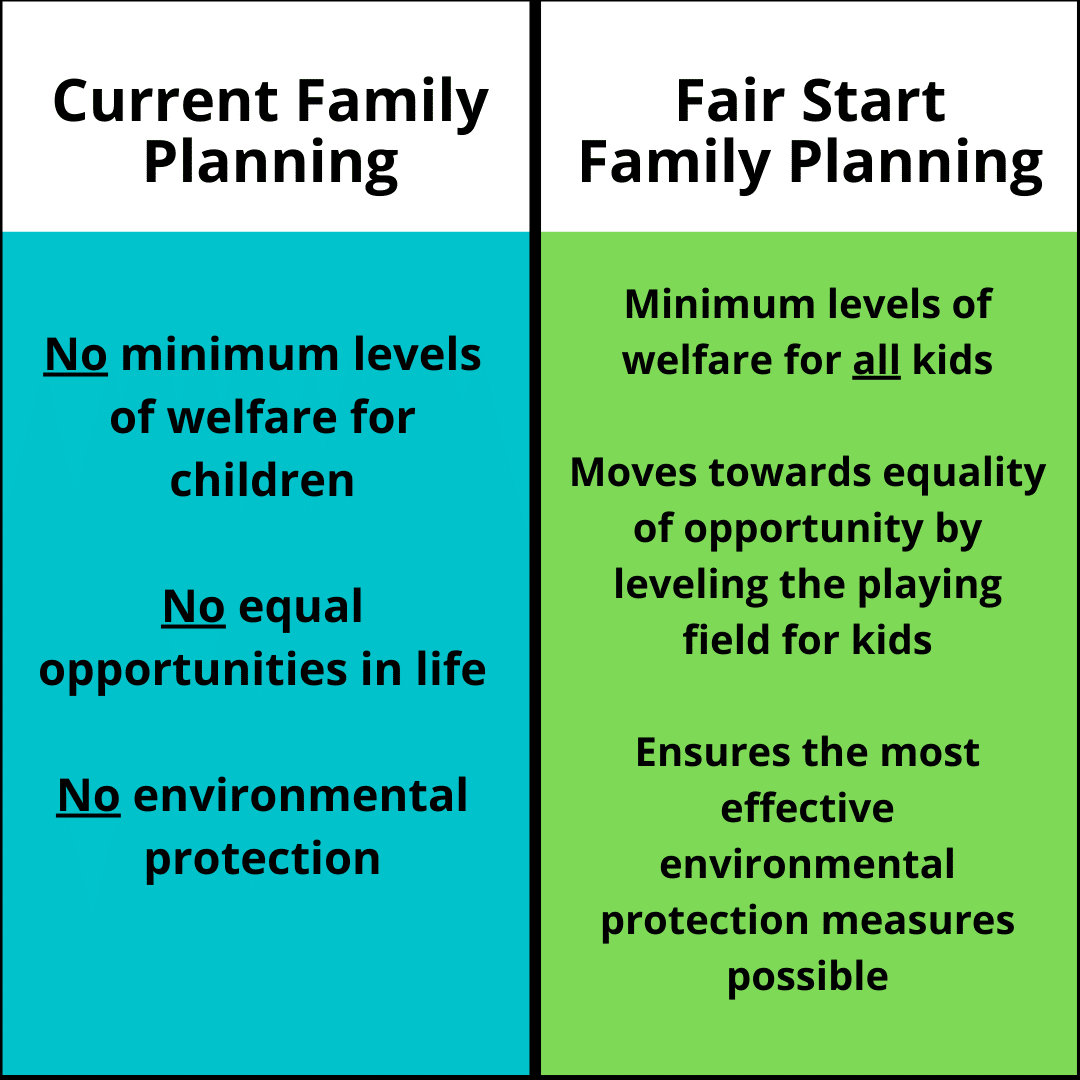
Assuring this level of empowerment and equity begins with policies that 1) fulfill minimum levels of welfare approaching birth equity for all future children 2) ensure each child a meaningful voice in their future democracies. This is not about people as numbers, or as population. It’s about making people matter, politically, and freeing them from others’ power — or physical influence, from disparate inherited wealth to ecological impacts — so that they may actually consent or become relatively self-determining. The closest analogy to this, in our current lexicon, is the freedom to associate.
We fund these policies by taking wealth (one form of influence) from the top of the economic pyramid as a matter of right, and thus limiting and decentralizing the power others have over us. This is obligatory, given the irrefutable facts that this wealth 1) was created using an unsustainable and unjust system of growth that violated multiple human rights including the Children’s Convention, environmental rights, the right to equal opportunities in life, and the right to an influential role in one’s democracy, 2) foisted its costs, including the loss of freedom, on future generations, and 3) is most comprehensively and effectively redressed using Fair Start family reforms and redistribution of wealth as equitable family planning incentives. The economic pyramid was built by moving the locus of power and control to the top in the form of wealth and political control (based on the threat of violence), rather than forward into future generations, and to preserve relative self-determination must be redirected.
Again, this is not about population or consumption; it’s about becoming existentially just and abandoning the fallacious reasoning that life is not fair because our creation is not fair — and can’t be.
This shift, which means humans will matter politically, will eliminate the misconception of procreative autonomy in favor of procreative justice. Procreative autonomy largely derives from religious autonomy. But note how it would violate obligations to separate church and state to live under a world defined by others’ religious beliefs, including the ideas that life is not fair because God and creation is not fair.
Consider also traditional political borders: the line on a map between two nations. Existential justice moves past this archaic conception toward a real and primary border of human power — our creation — and accounts for how it determines our freedom, or more accurately, our relative self-determination. Our current political borders mask the way true personal sovereignty is directly inverse to growth, and in ways other political models would not.
The fundamental difference between preconstitutional systems like polities and economies, as opposed to legalities, involves the latter limiting and decentralizing power in the constant recreation of their constituents to make obligations relatively self-reflective. That is what it means to constitute. Any policy that does not start with a Fair Start or comparable transition does not come from a just place, is overridden by Fair Start and is fundamentally illegitimate. The proponents of such policies, precons, will be unable to account for how basic values, such as nature, welfare, equity, and democracy, and the actual people impacted, should relate.
Here are some examples of how to apply Fair Start, practically:
1. Urge the United Nations to interpret Article 16 of the Universal Declaration of Human Rights, the right to have children, in a way that is intergenerationally fair, and compensates future generations for the harm we have already caused them from unfair prior interpretations.