Category: Climate Crisis & Ecocide

  • Better Parenting in the Age of the Climate Crisis

    Better Parenting in the Age of the Climate Crisis

    Kudos to Jedediah Britton-Purdy for his eloquent explanation of why he chose to have his young son, James, despite the climate crisis, as many others are forgoing parenting altogether as they take. Jedediah’s hope for the future, and for James’ future, shines through his writing.

    But did he miss something crucial to protecting that future? Hope is not a strategy.

    And if we want to, as Jed says, “build a world that is both safer and fairer,” we should start with the actual building blocks of the future and remember that having a small family is the most effective way to mitigate the climate crisis. It’s more effective on a magnitude of 20 times than things like changing one’s diet or transportation.

    And that’s not taking into account the way better family planning can improve child welfare, reduce inequity, and perhaps most importantly, build democracies that are small and inclusive enough for each person’s voice to matter and to not be drowned out in a crowd.  

    Family Planning and the Environment

    What matters most is that Jed just had James and that he exemplifies the evolved thinking true environmentalism requires by connecting his family planning behavior and its impact on the collective. We can go further and all realize that responsible decision-making like Jed’s can be promoted collectively through better family planning policies and laws that reflect the love Jed obviously has for nature, children, and democracy.   

    TAKE ACTION: Urge the Atlantic, by writing to themasthead@theatlantic.com, to report on the greatest and most fundamental solution to our social and ecological crises: Child-first family planning.

  • COP25: Don’t Ignore the Greatest Factor in the Climate Crisis

    COP25: Don’t Ignore the Greatest Factor in the Climate Crisis

    Having Kids will be truly speaking truth to power – in the most fundamental way – at the COP25 UN Climate Conference in Madrid next month. It’s time to promote the implementation of a truly human rights-based family planning system. We need a real system of human rights that protects kids and restores nature, and limits the hegemony that people alive today have over future generations.

    Read our letter to the Executive Secretary of the Conference and share widely.

    Last year’s conference focused on industrial emissions. Now it’s time to stop ignoring the most fundamental and biggest factor in the climate crisis: Poor family planning policies.

    We will make clear: 
    1. The Conference must address new family planning policies as the most effective solution to the climate crisis – twenty times more effective than most alternatives.

    2. Human rights require that we put the interests of future children, and hence future generations, first, and requiring a fair start in life for every child is the best way to do that. The Conference must acknowledge the interconnection of the crises we all face, like the inequity in Chile that caused the shift in conference location and which will ensure climate apartheid.

    3. There are specific policies that the Conference can promote. Lets focus on funding research into, approval of, and robust marketing of the male pill, subsidizing delaying parenthood, and ensuring the UN reverses its current and disastrous family planning model.

    Take Action: Add your name to urge the UN and COP25 to recommend smaller families.

  • Having Kids Urges UN to Include Family Planning to Combat Climate Change

    Having Kids Urges UN to Include Family Planning to Combat Climate Change

    On the eve of an international conference to fight climate change, the national human rights advocacy group Having Kids today urged the United Nations to incorporate universal family planning as the most effective long-term solution to the crisis.

    Read and share our letter here.

    “Let’s start at the source, and avoid the mistakes in past family planning modeling that created the ecological and social crises of today,” Having Kids executive director Erika Matthews wrote in a letter to Patricia Espinosa, executive secretary of the United Nations Framework Convention on Climate Change.

    The letter was also sent to dozens of other organizations participating in the 25th Conference of the Parties, or COP25, the UN global climate summit starting in Madrid next Monday.

    This month, the lead author of a climate emergency warning from more than 11,000 climate scientists published in the journal BioScience stated the connection clearly: “The greatest influence individuals can have in combating climate change is to have one fewer child.”

    Having Kids is urging the UN to push for policies that will reduce family size, such as replacing tax policies that encourage big families with ones that incentivize delaying parenthood and having smaller families; and fully funding the development of and availability of the male contraceptive pill.

    The group advocates a Fair Start family planning model, which promotes smaller, sustainable, and more equitable families.

    “If it takes a village to raise a child, it takes a village to plan for a child,” Matthews wrote. “Please consider promoting a universal ethic of cooperative Fair Start family planning, and smaller and more equitable families, as the most effective and comprehensive way to achieve a socially and ecologically regenerative society, and address the climate crisis.” 


  • Deadly Heat Waves? Take Action Against Those Most Responsible

    Deadly Heat Waves? Take Action Against Those Most Responsible

    July 2019 is likely to be the hottest month ever on Earth. A heatwave is currently settled over the U.S., and it’s deadly. 

    What’s worse, these extreme temperatures brought about by climate change  trigger an increase in emissions. Our world’s explosion in population and poor family planning has caused a catastrophic feedback loop.

    When we look at climate change, we know human impact is the problem, but we don’t all have the same impact. While there are of course things individuals can and should do to address the problem, the fact is that some people are more responsible than others for the large-scale destruction of our environment. 

    Yes, the average person in a developed nation is partly responsible due to consumerism and technology that puts pressure on the environment. But for generations, CEOs and other power players have opted to suppress science, progress, and environmental stewardship in favor of knowingly pushing the environment toward a point of no return. 

    These people are more responsible for the threat climate change poses to you and your family than most other people on earth.

    Now that we are facing an uncertain future, shouldn’t we ask for the most action from those who are most responsible for the problem?

    Let’s ask the CEOs to fund the most comprehensive and effective thing out there: Fair Start family planning reforms to help reverse the damage they’ve done.

    Here’s how it works: Communities offer substantial resources, like guaranteed minimum incomes, to future parents. Then, in exchange, parents plan smaller families. By doing so, they can invest more in each child and have a smaller impact on the planet than they otherwise would have with a large family. Family planning and climate change are intersectional. An increasingly crowded planet means more impact on the planet.

    Nothing will change if we don’t demand it. Now it’s time to use your voice.

    Sincerely,

    Erika and Willow

    The Phelps-Mathews Family
    The Phelps-Mathews Family


    Join Erika and Willow to TAKE ACTION.

    Pick one of these CEOs, or another person who’s profiting off the destruction of our kids’ futures, and urge them to direct their money toward giving kids a Fair Start. They owe it to the next generation to undo the harm they’ve caused. We can’t wait to hear what you do: email us at info@fairstartmovement.org.


  • He helped create the climate crisis. Tell him to make it right for kids.

    He helped create the climate crisis. Tell him to make it right for kids.

    The climate crisis is the biggest threat to your kid’s future. The federal government is making things worse. Ready to step up for your kids and their future? What would you do to help minimize the harm that climate change will cause them? What will you tell them you did to protect them?

    The truth is, some people alive today are much more responsible for climate change than others. Lee R. Raymond, and those members of his family that are benefiting from the money he made denying climate change, are a great example. As a CEO of ExxonMobil, Lee is more responsible for the threat climate change poses to you and your family than most other people on earth.

    The good news is that there are ways to mitigate the harms of climate change, starting with funding the most comprehensive and effective thing out there: Fair Start family planning reforms. The reform model is simple.  Communities offer substantial resources, like guaranteed minimum incomes, to future parents. Then, in exchange, parents plan smaller families where they can invest more in each child. That simple model is the greatest way to mitigate most of the environmental and social threats that face our children. We can apply better family planning in policy, or through individual actions.  

    The Raymond family should use their millions to fund Fair Start reforms. If they did, it would have massive impact beyond just the sheer amount of money spent. It would symbolize and publicize their acknowledgement of the harm they caused. And it would widely highlight better family planning as the most effective way to make amends for that harm.

    Take action: We believe you can contact Lee here. Please politely ask him to use his millions to publicly fund Fair Start family planning reforms. Lee, it’s time to do the right thing for all the harm you caused. 


  • Consumption or Family Size: Which Matters for Climate?

    Consumption or Family Size: Which Matters for Climate?

    Care about consumption and its impact on the planet? Many argue that consumption, not population is the real climate crisis. But the truth is, consumption and people are inextricably linked. We have to address both.

    Demand isn’t created by dirty companies. Demand comes from people. Focusing only on carbon, plastic, and such plays right into the hands of global corporations like Unilever, Walmart and Amazon who depend on increasing birth rates to fuel spending for their products. Yes, bad industrial players must be held accountable. And we’re on our way to doing that. But if we’re only addressing carbon output, we’re ignoring the source of the problem: unsustainable population growth. Choosing to have a smaller family however, is the best way to mitigate our impact on the planet.  

    Looking only at emissions also ignores several critically important issues including water scarcity, mineral depletion, deforestation, and habitat loss. As the Center for Biological Diversity explains,“If we address one without the other, the end result will still be humans continuing to take more than our fair share from the planet.”

    The Center for Biological Diversity also stated:

    “A 2009 study of the relationship between population growth and global warming determined that the “carbon legacy” of just one child can produce 20 times more greenhouse gas than a person will save by driving a high-mileage car, recycling, using energy-efficient appliances and light bulbs, etc. Each child born in the United States will add about 9,441 metric tons of carbon dioxide to the carbon legacy of an average parent. The study concludes, “Clearly, the potential savings from reduced reproduction are huge compared to the savings that can be achieved by changes in lifestyle.”

    One of the study’s authors, Paul Murtaugh, warned that: “In discussions about climate change, we tend to focus on the carbon emissions of an individual over his or her lifetime. Those are important issues and it’s essential that they should be considered. But an added challenge facing us is continuing population growth and increasing global consumption of resources. . . . Future growth amplifies the consequences of people’s reproductive choices today, the same way that compound interest amplifies a bank balance.”

    The consumption vs. population debate.

    The finger pointing is generally toward high fertility rates in developing countries and high consumption in developed countries. However, it’s not an either/or scenario. It’s an evolving situation. As nations develop, their standard of living increases along with consumption rates. We are on track for exponential population growth paired with a drastic increase in consumption. Taking an incomplete approach is a recipe for disaster.

    Is consumption outpacing population growth?
    It is in some cases. Consider that food demand outpaces sustainable supply. According to the 2018 Global Agricultural Productivity Report, “for the fifth straight year, global agricultural productivity growth is not accelerating fast enough.” How can we continue to feed a growing population without a global effort for sustainable population planning?

    The U.N. has also warned that one million species are at risk of disappearing due to habitat loss, among other human activities, in the sixth mass extinction already underway. “A quarter of catalogued animal and plant species are already being crowded, eaten or poisoned out of existence,” its IPBES Global Assessment Report report states. Should we be concerned then about consumption or crowding? The answer is both – as confirmed by a UN Report released in May. 

    We have the power to determine the future for our kids.
    Most of us agree that a crowded planet is not something we want. But we fail to make the connection that our decision to have a large or small family is what determines how the world will look. The Fair Start Model is one way that we can work together to ensure that all kids get what they need to thrive – including a habitable planet. Let’s save room for animals, for nature, and for our kids to enjoy the only planet we have by planning smaller families.

    TAKE ACTION:
    Join us in urging the U.N. Secretary-General to issue a statement recommending sustainable family planning for World Population Day. RSVP to our event, help us share the event, and send him a message here.
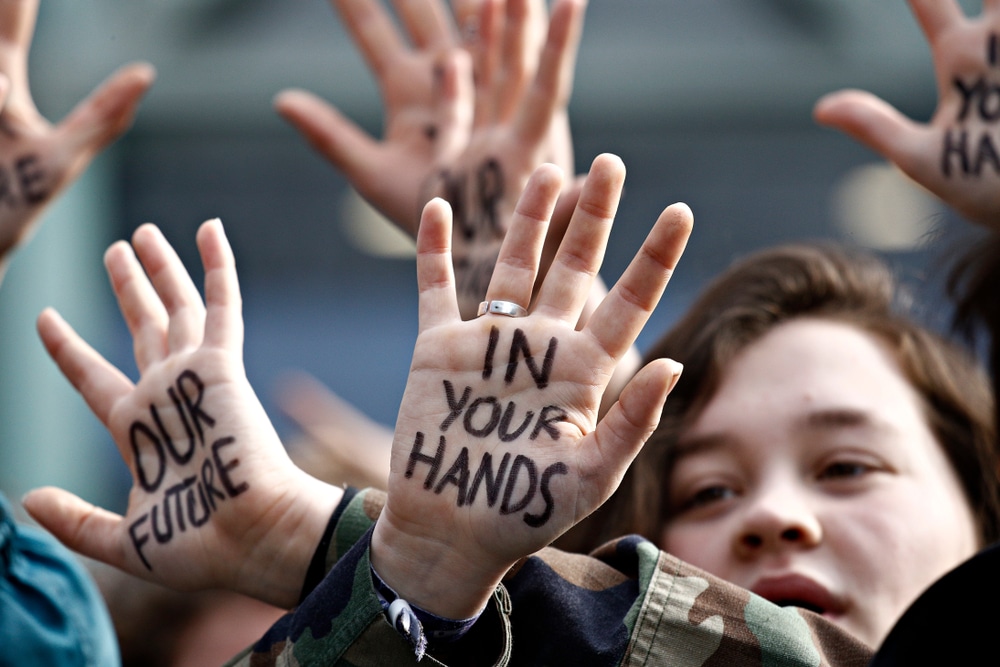
  • WORLD ENVIRONMENT DAY: NEW CAMPAIGN URGES TEACHERS TO TELL TEENS THE TRUTH ABOUT CLIMATE CHANGE

    WORLD ENVIRONMENT DAY: NEW CAMPAIGN URGES TEACHERS TO TELL TEENS THE TRUTH ABOUT CLIMATE CHANGE

    On the heels of a study showing that the most effective solutions to climate change are not being discussed, and UN reports of disastrous mass extinctions, a growing coalition of environmental and child protection organizations is launching a daring new campaign.

    The Tell the Truth Campaign is urging the education community around the world to speak out, and to tell teen students as appropriate and depending on their age, that smaller families are the most effective way to mitigate the threats of climate change and many other environmental crises.

    Why are groups urging teachers to speak out?

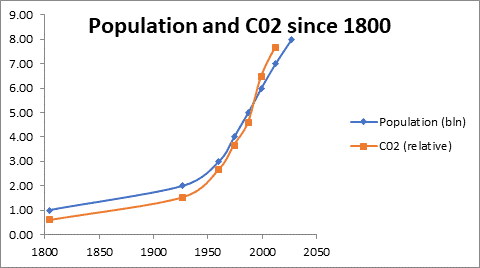
    Here are the facts:

    Population and CO2

    The campaign will be sending a new letter each week to influential educator organizations around the world urging them to take action, providing them with all of the relevant information, and offering to publicize the most impressive efforts.

    “Who would oppose telling kids the truth about what protects their future,” said Erika Matthews, Executive Director of Having Kids. “It’s well past due to give teens the information they need to promote effective policy changes,” said Small Families Project Executive Director Peter Fiekowsky. “This may be the most important thing for the educational community to convey to younger generations.”


  • Climate Crisis: Act Now to Protect the Future for Kids

    Climate Crisis: Act Now to Protect the Future for Kids

    Despite attempts the United Nations and others to reduce carbon dioxide and other greenhouse gases, levels are now at an all time high. The growth in emissions tracks world population growth, which is the greatest driver of climate change and a threat multiplier.

    What can you do to protect yourself and the ones you love?

    Understand that you have a fundamental human right to resources to ensure your child a fair start in life. Choosing to have a smaller family is, without comparison, the best way to mitigate the threats of climate change. The right to nature and a fair start in life is the first and supreme human right. If you are willing to plan responsibly, you have a moral claim against those that are able to pay – including the government and wealthy individuals.

    Demand your rights, and help others make their demands. Communities who are most impacted by climate change, and are literally being driven from their homes, and morally entitled to target those most responsible for Fair Start funding (which would include offsetting the impacts of climate change). Help them do so, by directly confronting those responsible, or calling for governments to recognize and protect the fundamental right to a fair start in life. Would-be mothers who are concerned about the future, and are forgoing having children, have a moral claim against those who are creating the predicament. Engage those people directly, and speak out against government policies that promote having larger families that threaten our future.

    Having Kids means caring for the future, and that means taking effective action now. Let’s change to conversation from what parents want to what kids need. 

  • Earth’s Mass Extinction: How You Can Stop It

    Earth’s Mass Extinction: How You Can Stop It

    Nature is disappearing from our planet. According to new United Nations estimates over a million species are threatened:

    Earth likely is moving into the sixth mass extinction event in its history, the first one that humans are causing. Elephants could be gone from the wild in a generation. Amphibian populations already are collapsing. Climate change is warming and acidifying the oceans, threatening to annihilate coral reefs.

    What can you do to respond and stop mass extinction?

    Qualitative, child-first family planning like the Fair Start model is THE intersectional and fundamental change we have all been anticipating.