Phrases like “vote dilution,” and “representative ratios” are a mouthful, but if you value freedom and democracy you should probably know them.
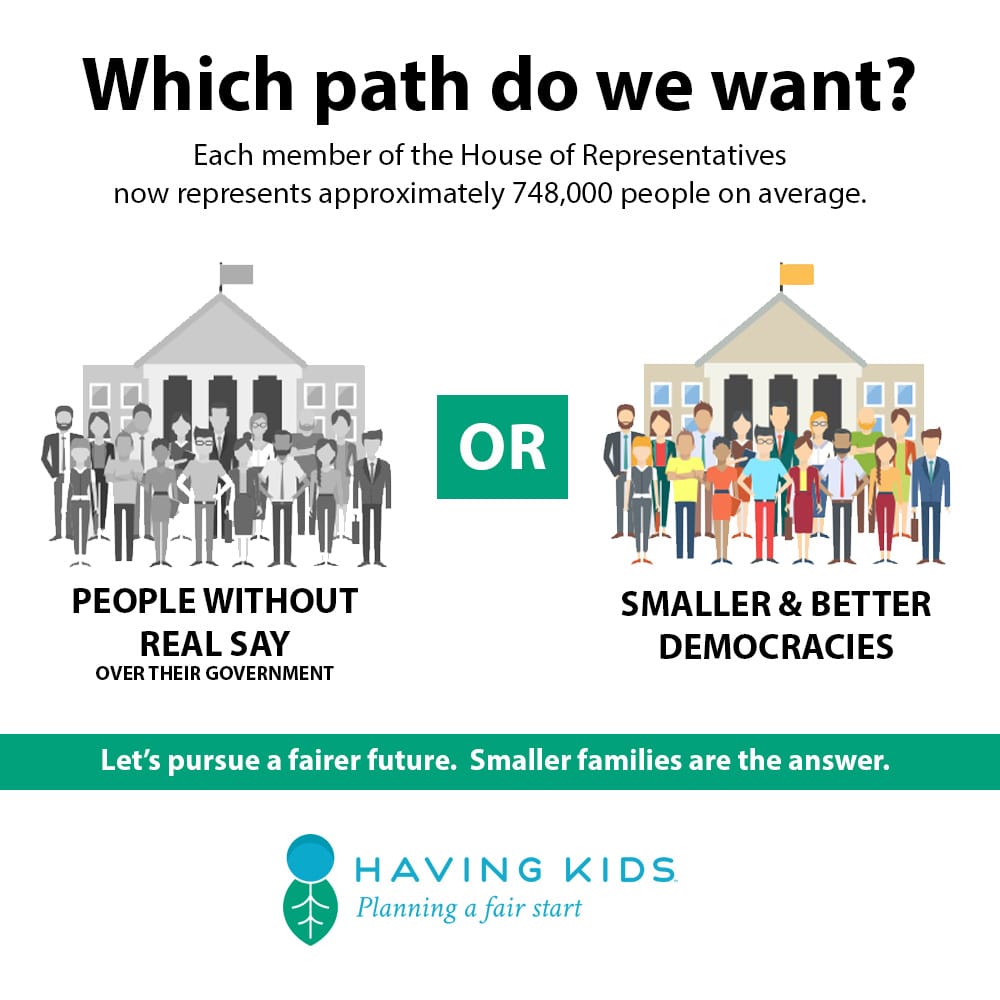
While the former is often used to refer to racist redistricting practices, its more basic meaning is simply that as populations grow, each voter (in what is also called Down’s paradox) has less influence on determining the rules under which they must live. And the latter simply refers to the number of voters each representative claims to represent.
At the national level – the United States Congress for example – the degree of vote dilution and the poor representative ratios mean you – and each average person – plays little or no role in actually determining the rules under which they must live.
These are the same concentrations that created the family policies that created the attenuation – the ones that benefitted from it, replacing town halls where people are empowered with shopping malls where a few are enriched.
We have all heard of groups of everyday people fighting for freedom, and human rights and democracy, in the past. Today such a group of free people might best look like those engaging in taking back the wealth and power some made by attenuating our democracy, and using the wealth to fund family reforms that reverse the process.
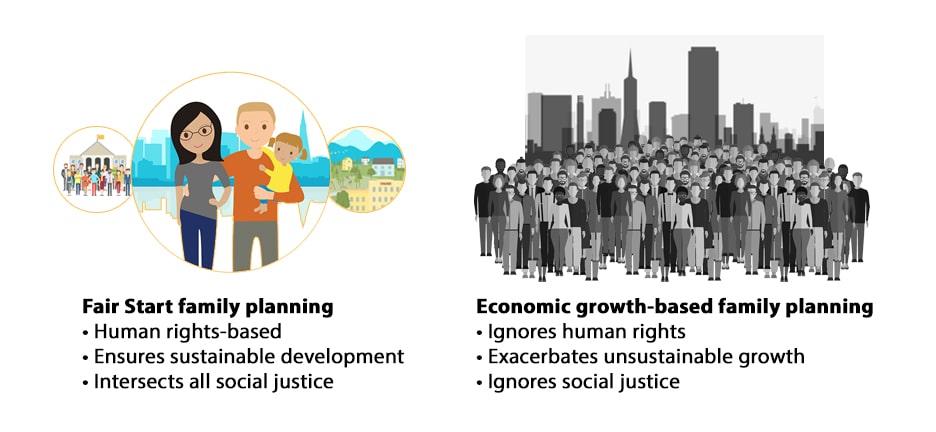
The most effective way – long-run – to fulfill you evident goals of protecting animals and creating child equity is by moving from outdated family policies towards a human-rights based approach the treats every child’s right to a fair start in life as the first and overriding human right.
That has the greatest impact on sustainable development goals and other key values.
Rather than parental autonomy there is a strong argument that domestic and world governance is obligated to use child equity as the basic standard for family planning. More specifically this would entail climate restoration via family planning entitlements that override property rights at the top of the economic pyramid. Such rights are the product of compliance with other human rights requirements, like ensuring all children birth and development conditions consistent with the Children’s Rights Convention which is the basis of true democracy.
Be effective.
And while many nonprofits will use stalled legislation to raise funds, year after year, the reality is that our family systems reverse progress – ensuring more and more animals are subject to abuse, inequity grows, and the climate crisis deepens. The Fair Start Movement refuses to do that.
Please consider moving towards Fair Start modeling, both in your baby bonds work, and in efforts to protect animals.
Nothing does more good. Please consider this, and simply saying publicly that you believe all children deserve a fair start in life.
The fundamental baseline for any form of cost/benefit analysis, assuming we take human rights, democracy and relative self-determination seriously, must be inclusive political systems characterized by climate restoration and birth equity, achieved through family planning reforms that ensure all children birth and development conditions consistent with the Children’s Rights Convention.
In other words, to properly assess costs and benefits we have to first become groups of people capable of doing so in a way that is actually inclusive and reflective of the group constituents. That baseline halts the Ponzi scheme demography Nobel laureate Steven Chu wisely noted was the basis of much economic growth.
In the Forum’s public commitment to address the climate crisis, the company uses a particular ecological goal or baseline for its risk assessments and climate mitigation strategy that – compliance aside – is at least comparable to the goals of the Paris Climate Accord. While we focus on the Forum in this letter, to be clear, the logic applies to many entities
The Fair Start Movement was formed because these goals or baselines are premised on an error. They were developed based on the assumption that nations operate from a place of historical political legitimacy, and can themselves freely define ecological goals, including anthropocentric ones like those of the Paris Accord. That assumption is incorrect. As recent peer-reviewed research shows, nations are constituting, not constituted in the past, and they are either doing so legitimately or not depending on their family policies. Nations cannot simply declare their legitimacy. Legitimacy is a political ideal based relative self-determination that would require, again minimally, that all children enjoy the ecosocial birth and development conditions required by the Children’s Rights Convention.
Resolving this baseline error involves treating legitimacy as contingent on our ongoing fulfillment of our obligations to future generations.
In other words, to properly assess costs and benefits we have to first become groups of people capable of doing so in a way that is actually inclusive and reflective of the group constituents. This is simply the ideal of the “we,” in “We the People.” The ideal political we, meaning fundamental power relations defined by the goals of the Children’s Convention, is the primary baseline. We cannot think of, or describe, an ecological outcome that is not first contingent upon family planning outcomes, on at least five levels.
If we value human self-determination or freedom, we have to begin from an ecocentric – rather than anthropocentric – baseline, because that makes relative self-determination possible, freeing us from the influences of others, including the harmful impacts of even the current rise in global temperature. Humans cannot self-determine when their childhood development is defined by the pollution of others. Moreover, climate goals cannot be limited to ecological outcomes, but should include changes in family policy that maximize the resilience, equity, and democratic cooperability of future generations to thrive despite the crisis. Our creation is the intersection of our values.
In other words, if we correct the error described above, the correct goal or baseline must entail our becoming democratic and legitimate groups of free and equal people, which requires concrete and specific restorative ecological policies much more aggressive than the Paris Accord, redistributive and equalizing family planning reforms that recognize the right to nature and level the playing field for all kids, financially and ecologically. A simple litmus test, given these standards, for our being free and equal persons involves whether we first treat the capacity for each person’s self-determination as directly inverse to population growth, relative to a neutral baseline such as the nonhuman world. This is proof that each person is politically, and equally, empowered. Not treating growth as such calls into question the true role of citizens in their own democracy.
Moreover, because this unifying goal or baseline is primary in nature, it overrides state issued property rights and entitlements enjoyed by members of the Forum, enabling intending parents claims to wealth at the top as part of their constituting just and sustainable societies. Our becoming just and sustainable people comes first. A helpful analogy relies on what is generally called the “myth of ownership,” which requires that ownership of wealth first account for the societal costs the creation of that wealth entails. Based on our research, the costs to our being free and equal people positioned to truly consent to the influence of others are first costs we must account for.
We cannot assign property rights in ways that undercut physically constituting and democratically empowering future generations. Our being, and in this case becoming, positioned to determine costs and benefits in a way that is inclusive of the reasoned views of all, is the first baseline.
Again, we can refer to this helpful summary of the baseline problem. All of the solutions to the problem Professor Solum gives jump to what we should do rather than who we should be, and thus ignore the need to be fair people, in terms of the physical power relations determined by our creation, before we can be positioned/empowered to make fair rules/laws. Ideally we would be created/grouped to look like a functional Rawlsian constitutional convention before fundamentally assessing costs and benefits, hence our being an ideal “We the People,” is the first baseline. And for that, the minimal guidelines that would apply to family planning would be the standards we hold up for extant persons, like parental fitness, the Children’s Convention, equality of opportunity, restoration-based climate sequestration targets, biodiversity restoration targets, historic voter-representative ratios, etc. Those point us towards the UN low-variant population, something aggressive family planning incentives – funded with claims to wealth at the top of the economic pyramid – could practically help achieve.
We are writing to urge the Forum to embrace the specific restorative ecological policies described above as the part of the first and overriding human right to a Fair Start in life, and to commit some share of its wealth and resources as Fair Start planning reparations to offset the harm it has done to future generations, relative to baseline discussed above. The Forum could easily practice this change by supporting the child tax credit reforms linked above, while treating them as a fundamental human right.
This is not about liberal or conservative politics. Family planning redistributions – as primary obligations – can replace wasteful tax obligations that would simply create larger governments which do not reflect the will of the people. This is about a commitment to human freedom and equality of opportunity, enabled by policies that ensure children can develop and physically comprise communities that liberate them from the threats they face today. This is something we all should value. Correcting the baseline error described above enables such a future.
Please let us know if the Forum will commit to these changes.
Sincerely,
The Team at Fair Start Movement
TAKE ACTION: Urge Klaus Schwab, @ProfKlausSchwab, to change baselines. There is no need to respect property rights that do not flow from inclusive and reflective political systems. The baseline the Forum promotes now converts your empowerment and freedom to wealth for their members.
Gabriel Fernandez was tortured and killed by his parents because the United States treats the act of having children as more personal and private than interpersonal, and subject to obligations like emotional readiness that protect those with the most at stake – future children. That’s an obvious mistake.
But it’s not a mistake. The privacy model was developed by wealthy elites in the 20th Century who 1) did not want to invest in all children but preferred to privilege their own, and 2) knew that ensuring child welfare in family planning would limit the population growth that creates great returns on investment.
Gabriel is not alone – 5 children die at the hands of their parents in the United States each week.
THERE IS ONE FUNDAMEMTAL CAUSE – OUR FAMILY POLICIES.
TAKE ACTION: The New York Times is complicit if upholding the privacy, over parental readiness, model. Urge Jessica Grose, @JessGrose, to write about these issues and save children like Gabriel.
The idea is simple: Investments will go directly to women and their families in order to plant trees, expand kitchen gardens, and open saving accounts for their children – all at the same time. This mitigates the climate crisis, ensures food security and supplemental income, and moves towards equality of opportunity for children.
Esther Afolaranmi is a young lawyer from Nigeria who will come to the U.S. to ask for these ecocentric, climate restorative and family planning-based climate reparations – as described more below.
Planting the trees
This has the greatest impact, long-run, on regenerative development. See our research below.
Fair Start’s recent grant to Rejoice to support it was not given as charity or altruism – though some may choose to do it that way too.
The complaint calls on the United Nations to honor its obligation to ensure all children are born and raised in conditions consistent with the Children’s Rights Convention, which functionally requires climate restoration via birth equity family planning entitlements.
All children have a right to an ecososocial fair start in life as the first and overriding human right, defined as climate restoration and birth equity, and we can take the resources that were stolen from future generations to fund that start by all means effective.
This process, of baseline compensation, requires taking back wealth from those people and companies that imposed their costs on others by not ensuring birth and development conditions consistent with the Children’s Convention.
What does this mean exactly? Wealth today was created by externalizing the ecosocial costs of choosing the Cairo convention model of private families, over the fair and ecocentric model of wealth being contingent on ensuring that all children are born and raised in conditions that comply with the Children’s Convention, including historic climatological conditions. The world is in crisis today because we never paid those costs.
Esther Afolaranmi is a young lawyer from Nigeria who will come to the U.S. to ask for these ecocentric, climate restorative and family planning-based climate reparations. She is a grand threat to those blocking family reforms that would have prevented things like the death of this child, and the mass death the climate crisis is bringing to many colonized nations. Campaigns like Esther’s seek to create a kink in the arc of ecocidal growth that would save more animals and children, and prevent more climate emissions – by far – than any organization is succeeding in doing today and she is doing so as part of a legal process of forcing the United Nations to actually uphold human rights, like the first and overriding human right to an ecosocial fair start in life.
TAKE ACTION: Donate directly to RAFUG for the Seeds for the Future campaign today, not as charity, but as fairness and reparations that bend the arc of who we are towards justice. The donations, through Wise or their bank account, go directly to RAFUG (which was recently inspected onsite and certified by the Republic of Uganda) and the families, whereas most international giving to programs in Uganda goes to charities in the Global North that take a percentage of the funds.
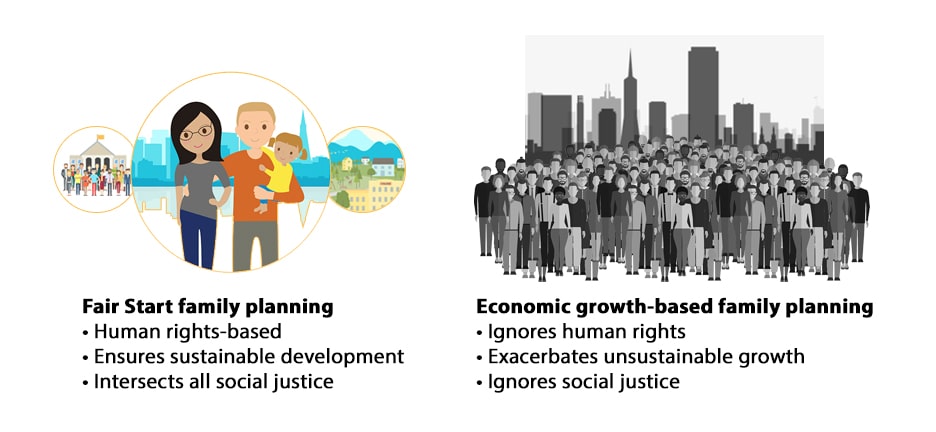
Right now most political systems around the world base their family policies on a lie, that the act of having children should be based on parental autonomy, what parents want, rather than child equity, or what children need. Decades ago rich world leaders created this lie in order to avoid paying their fare share to collectively invest in children – through things like planning incentives – and to ensure them what things like the Children’s Rights Convention promises. They preferred to exploit the unsustainable growth that not investing created, and the growth-based economics that created the climate crisis.
Faced with this reality, and the fact that the New York Times rose to influence upon that unsustainable growth, its lead – Joe Khan – simply wants more growth. On balance, the outlet’s reporting (much of which should be labeled as opinion) pushes women to have more kids, irrespective of the conditions in which they are born, in order to enrich people at the top of the economic pyramid who – per one Nobel Laureate – rely on growth to make money through investment.
If you wanted to do the most good in this world, and to change the arc of our future to ensure the freedom and democracy things like the Children’s Convention could create, you would target Kahn and other concentrations of influence (online or in person) to admit the truth of what they do, and support changing course. Freedom is impossible without fairness because we have no way to consent to the influence of other people, and to bring that liberty we can focus on these concentrations to pay what they owe, what they took by imposing the costs of their power on our freedom.
This is something you can do.
TAKE ACTION: Urge Joe Khan at @nycscribe, or engage him in person, to admit that he’s harming children and the environment by supporting unsustainable growth that benefits a few.
If you wanted to be free from the power of others, you might migrate towards nations where you had more social mobility, where government was democratically elected, and where the rule of law – preventing things like arbitrary violence – operated. That would be liberating, but only relative to the nation from which you emigrated.
The move would not free you from the man-made climate crisis, the way your social positioning in that nation was determined by the resources you had at birth and in your development, or the way your vote is diluted by the size of the democracy itself. Relative to the ideal of freedom, your physical move might not be liberating at all.
Our thinking, when it comes to freedom, is clouded by what is called the “constitutive fallacy,” or basing your obligation to follow the law on coercive top-down instruments like written constitutions rather than bottom-up family reforms that actually empower and liberate people – in terms of their actual relations – and in a measurable way, enabling them to physically constitute – under the Children’s Convention – legitimate power relations between people from whose authority things like written constitutions must derive.
Resolving the fallacy allows us to orient from a just position, rather than knowingly being part of systems in which some benefit by placing costs on others.
This work can feel oppressive because it seems to impinge on our autonomy – the freedom to have as many children we like, in any conditions, irrespective of what they need and the impact on the nonhuman world. That sense of autonomy is an illusion because the private sphere of our family lives is not private at all, but shaping the public life of the future and it may very well be that freedom is an impossibility without fairness in creation, given that fairness is the base prerequisite for justice and liberty.
The idea that having and raising children is a personal or private matter to be left to the parent was not designed to protect; it was designed to eliminate the obligations of the wealthy, and the governments they influence, to collectively invest in the children they could instead exploit as labor, and to avoid drastic reductions in the arc of population growth that was creating massive returns on investments.
Recently Fair Start added an addendum to this letter. Read it here.
Open Letter to Prime Minister Shri Narendra Modi Regarding India’s Human Rights Obligations in Developing New Family and Population Policies sent January 29th, 2023
This is the key thing to know: India should consider itself bound by international human rights and obligations to future generations when devising a new policy, which it needs desperately. The best human-rights based guidelines for that policy are described in filings now before the United Nations, and which treat Article 16 of the International Bill of Human Rights as the most basic norm – or grundnorm – around which all family and population policy must orient.
We, the undersigned are writing to urge you to bring your legislation in line with international human rights obligations to future generations, an opportunity signaled by Dr. Natalia Kanem of the United Nations Population Fund’s (UNFPA) via her bold statement on World Population Day that equality is not about counting people but making sure people count. India can use international law, the binding sources rather than the flawed Cairo Consensus, to guide its family policy reforms to ensure every child a fair start in life.
Fair Start as the First and Overriding Human Right
All forms of political obligation begin with a list of norms, or human rights, that attempt to objectively limit the subjectivity of democracy. The order of these lists – from the International Bill of Human Rights to India’s constitution, show why the Cairo Consensus, which was driven by elites who did not want to invest in children but rather exploit population growth for profit, ensured an unsustainable population explosion, massive inequality, and the climate crisis, is a failure.
The first norm that must begin any set of human rights is the right to have children, accounting for the people themselves, and that norm – despite what Cairo intended – cannot be subjective to the parents but must be based on the fair and objective needs of children, as outlined in the Children’s Rights Convention. To give parents unlimited power over their future children is a form of property in persons. Many charities, funded by wealthy persons more interested in protecting their wealth than doing good, push distracting campaigns that do little good in the face of things like massive inequity and a climate crisis set to kill millions.
They are hiding something called the “constitutive fallacy,” basing one’s obligation to follow the law on top-down instruments like written constitutions rather than bottom-up family reforms that actually empower and liberate people – in terms of their actual relations – and in a measurable way, enabling them to physically constitute – under the Children’s Convention – legitimate power relations between people from whose authority things like written constitutions must derive.
Truly free people will limit and decentralize the power others have over them, including via reallocating property rights, by actually constituting systems in which they are empowered.
This means changes in the actual practice of India’s family and population changes can happen bottom-up, through class struggle that seeks to invest more in planning for the future of families at the bottom of India’s economic demographic.
An example of the fallacy involves what’s been called the #famscam, in which several civil society organizations were outed by a whistleblower in 2023 for violating ethics rules and knowingly undoing claimed progress with outdated family policies that disempowered most people in order to – per one Nobel Laureate – grow economies that benefitted a few at cost to freedom and democracy.
We urge you to continue your bold actions, and to take a clear public position recommending just and sustainable family planning to address rising global inequality – including gender inequity and the climate crisis. Governments, NGOs, and major foundations are failing women, children and future generations. Without a universal effort to implement equitable and sustainable family planning programs, Sustainable Development Goals (SDGs), FP2030 commitment, and Human Development Index benchmarks cannot be achieved, and human rights will continue to erode.
And they will do so in a world where the climate crisis continues to unfold more quickly than expected, leaving the dead in its wake.
Just and sustainable family planning centers on human rights and accounts for the needs of women, children and future generations – something that current family planning programs across the globe fail to do. Family planning that is just and sustainable:
● Ensures equitable access to family planning and education
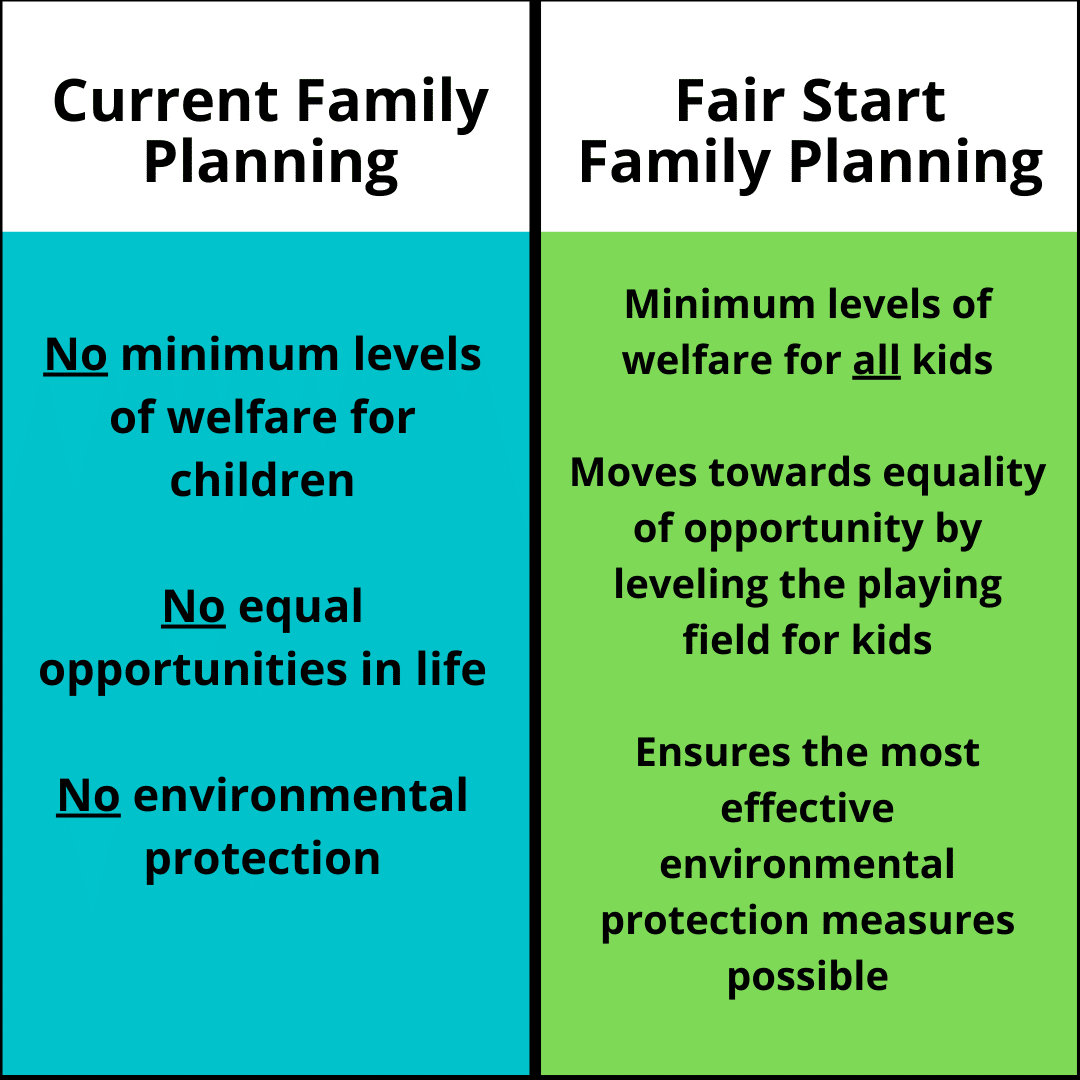
● Ensures equitable entitlements at birth and moves towards using fiscal and other policies to ensure that all children are born and raised in conditions that comply with the Children’s Rights Convention
● Ensures every child is born with a fair start with sufficient resource
● Reflects the disparity of ecological impacts between wealthy nations and less wealthy ones, and allocates responsibility proportionally, including calling for the waiving of property claims where appropriate to account for the costs externalized – relative to the Children’s Convention – in the creation of concentrations of wealth
These resources empower individuals and families and enable communities and governments to sustainably and equitably invest more in each child and their future while upholding reproductive rights.
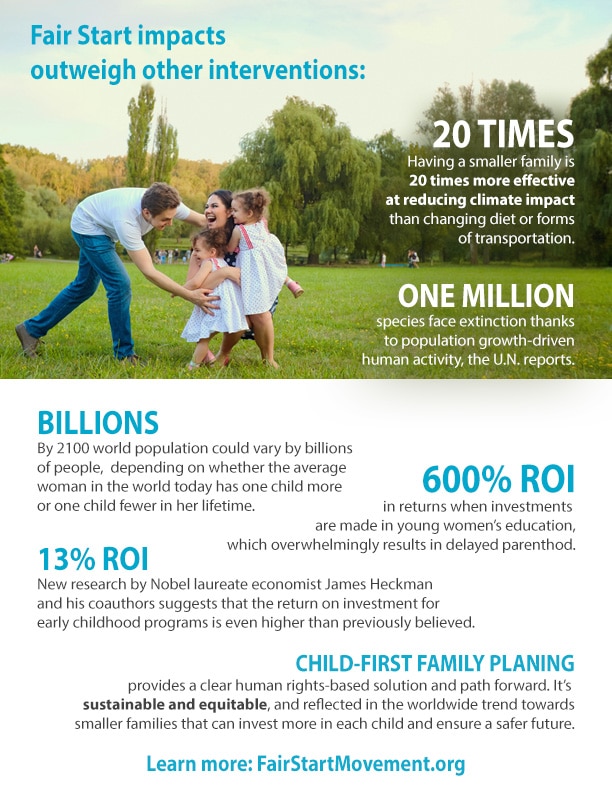
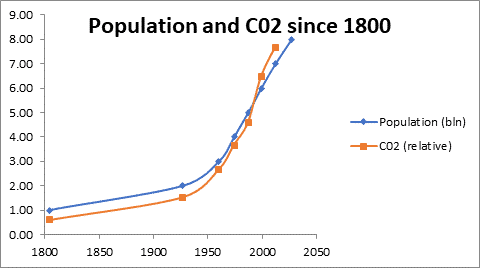
However, current political, religious, economic, and cultural pressures to increase births and obstruct family planning programs are driving our biggest global crises and putting the health, safety, and welfare of current and future generations in peril. The growing human population, with 8 billion alive today, is already too much for earth to sustainably and ecologically support.
Unsustainable population growth, a documented threat multiplier, contributes to catastrophic climate change, unprecedented flooding, pandemics, ecosystem destruction, groundwater depletion, mass extinctions, and environmental degradation. Worsening inequality, in large part driven by our growing population, is also a grave threat to democracy and political stability across the globe.
The Right to Found a Family
Current family planning programs and policies demonstrate clearly the UN’s misinterpretation of the right to found a family under Article 16 of the Universal Declaration of Human Rights. Article 16 should have been exercised in a way that protects all generations – from the middle of the 20th Century to those in 2050 – equally. The United Nations also should have interpreted Article 16 as being consistent with other human rights obligations, such as the Children’s Rights Convention, FP2030, as well as the SDGs.
Because they see the conditions being created today, 40 percent of young people have expressed concerns about exercising their right to plan a family. A robust application of Article 16 could allay those concerns. Instead, the United Nations succumbed to member state pressures to promote and coerce large, unsustainable families and increase population growth rates in the 20th century.
Children’s Rights and Intergenerational Justice
The misreading of Article 16 enabled pro-growth economic and pronatalist pressures to directly undermine the UN’s clear commitment to the rights of children, sustainable development, and intergenerational justice. As things stand, young and future generations face the prospect of significant reversals in human rights.
Mountains of evidence show that because of population-driven environmental threats, children born today and tomorrow will live “an unprecedented life”, facing “conditions older generations have never experienced.” The most recent report from UNICEF indicates that almost half the world’s 2.2 billion children face an “extremely high risk” from the impacts of the climate crisis and pollution. The inequities created by unsustainable growth policies also gravely impact the estimated 356 million children living in extreme poverty worldwide.
Just and Sustainable Family Planning
The global community has failed to promote or support family reproductive decisions that lead to healthy and sustainable ecosystems and equitable prosperity. Quite the opposite, in fact.
The best way to compensate current and future generations for this failure would be to reinterpret Article 16 as stated above and create an equitable balance of resources. Equitable distribution would ensure that children are born into just conditions including entitlements and a global vision that puts them first – with a fair start to a path forward.
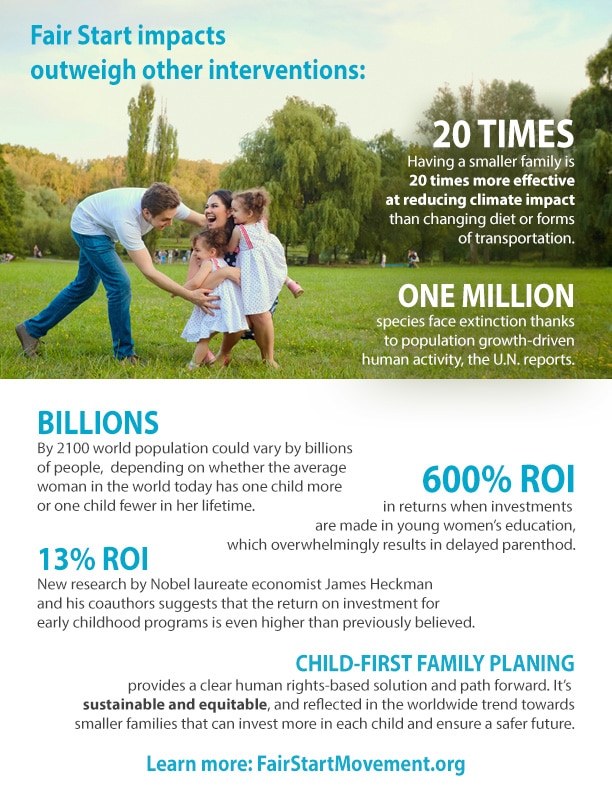
Governments and community institutions must make sustainable, equitable investments in current and future families. They must be required to educate would-be parents about the benefits of delayed parenthood, birth spacing, and smaller families – including those with no children. These investments would create greater family financial stability, better social and emotional outcomes, higher standards of living, women’s empowerment, greater investment in each child, and would result in a more sustainable planet.
A declaration by the The Prime Minister would be a powerful step toward dispelling the myths that underpin pronatalism and challenging the reluctance to address unsustainable population growth. Such a statement would elevate discussions around the needs and wellbeing of existing and future generations.
Such a declaration also would highlight the urgency of substantial investment in comprehensive and equitable family planning programs. These programs not only realize individual rights but also advance the legitimate goal of creating equitable and sustainable birth conditions.
The United Nations has been criticized for not intervening to protect human rights in other contexts. This negligence has already resulted in calamitous consequences for the planet and the human species. It is therefore imperative that the Prime Minister call on governments, NGOs, and major foundations to promote equitable and sustainable family planning to ensure intergenerational justice and achieve true liberation for all people, starting with women and children.
A specific example of this is when civil society organizations knowingly undoing claimed progress with outdated family policies that disempower most people in order to – per one Nobel laureate – grow economies that benefit a few at cost to freedom and democracy. And even when shown the undoing, some groups have continued on course, opting for growth policies that will continue to undo claimed progress.
Many are fighting back against that, and for true freedom. And those who benefitted from unsustainable growth policies that did nothing to level the playing field between rich and poor kids know they are in trouble, now coming up with outlandish claims and a fake “underpopulation” crisis to decoy us away from justice.
This scam hides something called the “constitutive fallacy,” basing one’s obligation to follow the law on coercive top-down instruments like written constitutions rather than bottom-up family reforms that actually empower and liberate people – in terms of their actual relations – and in a measurable way, enabling them to physically constitute – under the Children’s Convention – legitimate power relations between people from whose authority things like written constitutions must derive.
Put another way, try to think, say, or do anything that does not derive from some set of theoretical or actual power relations, relations that would have had to derive from whatever norm created the people between whom those relations exist. It’s not possible to do, and for those relations to create obligations between people they must be created fairly.
Resolving the fallacy allows each of us – individually – to orient from a just position, rather than knowingly being part of systems in which some benefit by placing costs on others.
Truly free people will feel obligated to follow the law, including laws that create property rights, when they are empowered. They will limit and decentralize the power others have over them, including via reallocating property rights, by actually using resources at the top of the economic pyramid in the act of constituting systems in which they are empowered. This can be done universally through a simple change in employment benefits that ensures discretionary benefits impacting kids should be scaled inverse to wages, or more acutely, targeting the heads of companies like Exxon, as well as leadership at the United Nations, who use their massive influence to preserve unjust systems that heap costs on others.