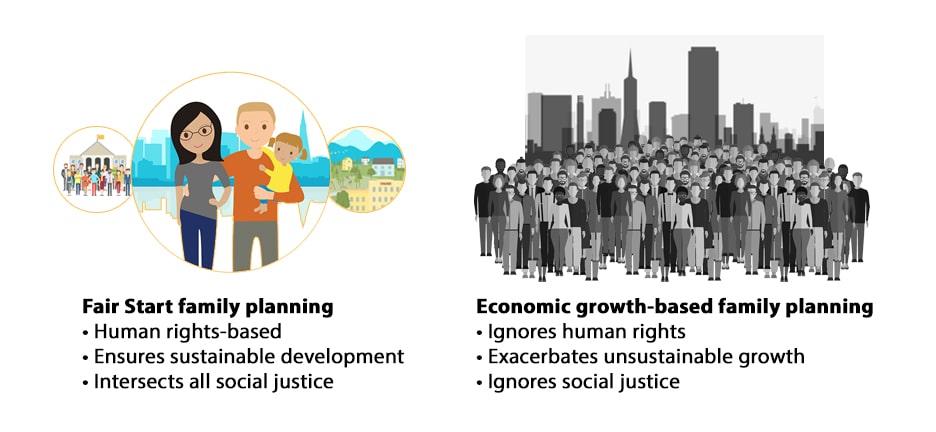
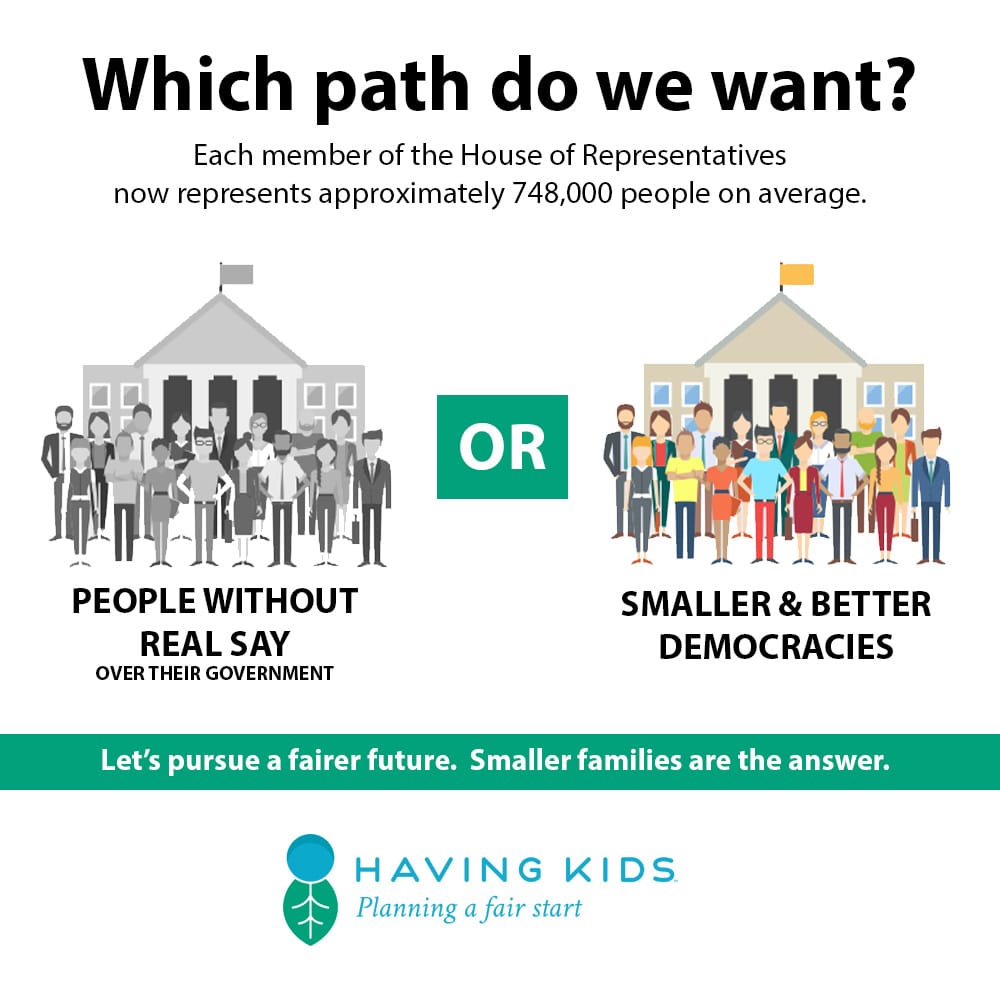
Kimberly Atkins Stohr, The Emancipator’s senior columnist, a senior opinion writer and columnist at The Boston Globe, and author of “We Can Solve the Racial Wealth Gap” series highlights the black and white financial gap in the U.S. She suggests that a number of solutions are needed to reimagine reparations and dismantle systemic racism that fuels the racial wealth gap. We agree. And those solutions must include policies to ensure equity right from birth if we hope to effectively close that gap, because without a fair start in life, children will be playing a lifelong game of catch up.
Author: Fair Start Movement
-

ExxonMobil’s Progress on Climate Misses Critical Factor: Humanity
By Terra Walters, a concerned Texan.
In honor of Earth Day 2022, we at the Fair Start Movement encourage ExxonMobil to include every child’s human right to a Fair Start as part of its commitment to meet standards set out in the Paris Agreement.
To the leadership of ExxonMobil,
We members of the Fair Start Movement, on this Earth Day, April 22, 2022, write to inform ExxonMobil of an oversight in your commendable efforts toward sustainability.
You must amend your policy in order to acknowledge the needs and rights of future human generations. Policies that ignore critical factors such as family planning and universal basic human rights will fail. All of us are locked in a global struggle to ensure the existence of our species.

We implore ExxonMobil to take into account the environmental impacts of humankind. Too many children today are born unwanted, into poverty, famine, or war. Our approach to offer a Fair Start to every child born on Earth will ensure that these conditions will be eliminated moving into the future.
We demand that ExxonMobil allocate funds to support restorative ecological policies that acknowledge and actively promote the primary and overriding human right to an ecosocial Fair Start for every child born today and tomorrow.

Fundamental change starts with family policy. By supporting our and our allies’ initiatives, ExxonMobil will begin to substantively repair damage done by its historical environmental misconduct. You will truly become part of the solution by sustaining and protecting humanity.
Will you commit today, in honor of Earth Day, to right past wrongs? Will you catapult forward the global effort to survive? Will you join our movement’s efforts to ensure every child’s right to a Fair Start?
We thank you for your time and consideration.
-The Team at Fair Start Movement
The Fair Start Movement (FSM) comprises groups and individuals who prioritize every child’s right to an ecosocial Fair Start in life – outlined by the Children’s Rights Convention – as the first and overriding human right.
-

Societal Pressures on Female Humans and Nonhuman Animals: Calling for Change
by Jess Beaulieu
One Voice Speaks Out for the Only Form of True Inclusivity
As a child, I was famously aware of society’s pressure on females to reproduce. I was gifted baby dolls by countless family members in the hopes that I would begin to foster a need to procreate – just as they had. And as I grew up, the pressures of motherhood were relentless. I’ll never forget the required class in my Georgia middle school that taught girls how to be fit stay-at-home mothers while boys learned business and home repair skills. Not to mention the recurrent phrases that haunted me throughout my young adult years: “how can you not want children,” “you’ll change your mind when you’re older,” and “I didn’t want children either until I had my own, and that changed everything.” Rather than taking these questions to heart and seriously considering my need to reproduce for my family, and society at large, I found myself concerned about how this pressure on females generally would impact humans, nonhuman animals, and the environment long-term.
Consider how our current systems exploit females whether human or nonhuman – and even Mother Earth. For example, in the dairy industry, female cows are artificially inseminated and upon giving birth, their calves are ripped from their side so that their milk may be preserved for the industry itself – all to make a profit. This insidious pattern is repeated throughout a female cow’s life until she is considered no longer useful by the industry and is rewarded for her life-long trauma by being sent to slaughter. Similarly, female human autonomy is under direct attack. State governments are attempting to rip a woman’s abortion right from her to directly benefit the system by producing more bodies for more labor. This pro-natal, pro-capital conviction has generated a world with massive inequities. In both scenarios we see female exploitation for economic gain and supremacy.

Care about the majority of sentient beings? Focus on family reforms. And concerning Mother Earth, with the largest meat and dairy companies’ impact on the climate now outweighing that of numerous developed nations, no bigger threat to the future of the planet exists than that of factory farming expansion. The U.S. Environmental Protection Agency reports that livestock operations make up 25% of all agricultural greenhouse gas emissions, and that manure management operations are responsible for 12% of overall agricultural emissions. (See David Worford, Letter Asks Congress to Give EPA Power to Regulate Livestock Emissions, Environmental Leader (Feb. 18, 2022), https://www.environmentalleader.com/2022/02/letter-asks-congress-to-give-epa-power-to-regulate-livestock-emissions/.)
And factory farming, which almost always goes unnoticed as the climate culprit within the agriculture sector, tears down forests to plant crops for animal feed, releasing carbon into the atmosphere; shatters wildlife habitats; displaces local communities; and profits from the immense suffering of billions of farmed animals each year. (See Jacqueline Mills, Factory Farming: The Real Climate Culprit, World Animal Protection (Oct. 29, 2021), https://www.worldanimalprotection.org/blogs/factory-farming-real-climate-culprit.) And yet the government does not require that factory farms obtain permits under the Clean Air Act, and it has failed to determine how to measure emissions from feedlots, barns, and croplands.
To this climate change point, Fair Start Movement’s Carter Dillard has stated, “[y]oung people are increasingly choosing not to have children, not because they don’t want them, but because they’re worried about how the climate crisis will impact their children’s future.” (See Elena Shao, More Young People Don’t Want Children Because of Climate Change. Has the UN Failed to Protect Them?, Inside Climate News (Nov. 16, 2021), https://insideclimatenews.org/news/16112021/young-people-children-united-nations-climate-change/.) We may not all have the same reasons behind our choice to not have children, but the fate of the planet is an increasingly rooted concern of many. I join both Fair Start Movement and Population Balances’ desire to see the social pressure and bias shift away from reproduction. Much needs to change for the future of all females.

We can go further. The most effective way to address many impacts on our environment and other species, such as climate change, is to choose sustainable families. Putting the child first when family planning provides a human rights-based solution, ensuring the availability of resources for all. It is both equitable and sustainable and is also reflected in the worldwide trend towards families that can invest more in each child and ensure a safer future. And all of this considered will empower females in the long-term.
Taking matters into our own hands, rather than continually allowing corrupt systems to determine our futures, the future of nonhuman animals, and the future of Mother Earth, is how we will dismantle unjust societal expectations and guarantee a sustainable future for all.
-

Why Some Funders Resist Giving All Kids a Fair Start in Life
The longer we delay replacing dysfunctional family planning policies with the Fair Start model, the wider the gap between rich and poor will grow. At the same time, Having Kids and other organizations that support giving all kids a fair start in life rely on wealthy philanthropists and foundations to help fund this reform. While many funders want to, and want to eliminate giving their own kids a massive head start in life, others want to pass their privileged positions in life along to their kids.
In one extreme case, a family of billionaires is enabling their young children – through a family foundation – to drive the direction of several policy reforms, including the type of legislation progressive environmental groups would be allowed to introduce. Consistent with a trend that was thoroughly documented in a recent New York Times bestseller, the parents would prefer to enable their kids to disproportionately shape public policy, and in ways that make the average voter irrelevant.
What’s wrong with this picture? In a true democracy, there is no justification for giving some kids wealth and power at birth while allowing other kids to die from starvation, neglect, and abuse. But that happens in the United States and elsewhere all the time – and many of us just treat it as something that is beyond our control.
In a true democracy, we have to level the playing field for all kids. We have to move towards true equality of opportunity at birth. That’s what it means to constitute ourselves as free and equal people, and it’s the only way to understand what phrases like “We the People” in the United States Constitution, and other constitutions around the world, mean. Our constitutions must be interpreted to apply justice intergenerationally, and our failure to do so is driving the ecological and social crises we face today.
We owe our kids more than a world filled with rich families constantly passing their wealth and power forward, while other kids are born into conditions where statistically they have no chance to succeed.
Take action: Urge Congress to adopt legislation that would start to move the United States in the direction of giving every kid a Fair Start in life.
-

Organizations Joining for World Population Day at the U.N.
Groups urging Secretary-General Antonio Guterres to recommend smaller families.
A coalition of child protection, animal rights, and environmental organizations are coming together for World Population Day on July 11th. They hope to urge U.N. Secretary-General Antonio Guterres to issue a statement on the need for smaller families and sustainable family planning as a vital step toward attaining the U.N.’s Sustainable Development Goals. Activists will also gather at the U.N. for a peaceful demonstration to mark the day and to raise awareness on the issue. The event will take place from 11:30 a.m.-1:30 p.m.
Read the Secretary-General Guterres letter here.
The groups led by Having Kids and U.K.- based Population Matters also include OneProtest, World Population Balance, Earth Overshoot, Population Institute Canada, Sustainable Population Australia, In Defense of Animals, 34 Million Friends of UNFPA, Wilderness Watch, New Yorkers for Clean, Livable, and Safe Streets, and Seeding Sovereignty,
The facts are clear:
- Several studies show that small changes in average fertility rates will have massive impacts on population growth, and that smaller families are the best way to confront climate change and other related environmental crises.
- Several new studies have confirmed the dire threat posed by climate change, including its impact on the increasing threat of pestilence and crop losses, the severity of hurricanes and other weather threats and the degradation of every ecosystem on earth
- By 2100, world population could vary by billions of people depending on whether the average woman in the world has one child more or one child fewer.
- Simply stated, the current family planning model used by United Nations was developed prior to awareness of climate change, the disproportionate impact of early childhood development on human well being, how birth conditions and early development exacerbate inequality and other factors. This old model makes our future less secure, healthy and equitable.
“Our world leaders have failed to recognize the greatest driver of climate and other anthropogenic impacts – unsustainable family planning. We’re working hard to change that by bringing organizations together representing a range of global issues. It’s time for those causes and the media to talk about the most effective way we can protect the future for the next generation,” said Ashley Berke, Director of Communications at Having Kids.
Robin Maynard of Population Matters says, “There’s an ever-growing scientific consensus that population growth is a primary driver of climate change and biodiversity loss. The equation is simple: too many of us, taking too much (especially, but not uniquely in rich, developed countries) from a finite planet. This is a global problem, demanding global action. The Sustainable Development Goals are the mechanism through which the international community seeks to achieve a sustainable future – but unless the SDGs incorporate the goal of achieving a sustainable population through people choosing smaller families, they will not succeed in that noble mission.”
TAKE ACTION:
Add your name to our letter.
And if you’re near NYC, join us at the U.N. on Thursday, July 11th for World Population Day. RSVP here -

Are Small Families Subsidizing Larger and Less Sustainable Ones? Tell Us Your Story.
* This is authored by a mother of one child. The author preferred to remain anonymous.
Small families in America routinely pay insurance premiums, taxes, childcare fees, and other costs that incentivize large and unsustainable families. These costs often masquerade as discounts as families grow, translating into cost savings to add more children to otherwise complete families.
While this may seem benign or even generous to some parents, this archaic “bigger is better” policy is destroying our environment and our quality of life and is unfairly penalizing smaller families.Here are some examples:
- Insurance schemes often offer family plans that favor large and unsustainable families, rather than charging for each person enrolled. Alternatives exist that don’t ask smaller or nontraditional families to subsidize their larger brethren. In my son’s school (yes, I have only one child) and many others, childcare plans often don’t charge per child, but instead offer reduced fees and more openings for larger families.
- In federal and state child tax-credit schemes, individuals and small families subsidize tax credits for larger and unsustainable families, and some want to increase the cost in order to incentivize women to have more kids.
- Do we really want to punish responsible families just so that governments and big businesses can have more taxpayers and cheap labor for the future? Especially when study after study shows that this trend is bad for kids and is destroying our environment and our quality of life?
Instead of incentivizing large and unsustainable families, polices should be based on the first human right: ensuring every child their right to an ecologically and socially fair start in life.
That means incentivizing smaller and more sustainable families who invest more in each child and who can use the resources they save to help improve the conditions into which other families bring their children.
TAKE ACTION: Tell us your story! If this resonates with you, write to info@fairstartmovement.org and tell us your experience. Also, urge Congress to embrace smaller families who can invest more in each child.*After this initial post was written another anonymous mother, who works as an executive in one of the largest companies in the United States, came forward and had this to say: “Even in the arts and other places where there is say a single or couple membership, the options often jump to a family membership of 4 kids and sometimes more, without an in-between option if you only have one kid. I’ve seen that a lot and it pisses me off.”
-

Open Letter to Sundar Pichai, CEO of Google: Please Embrace Fair Start Reforms
Dear Sundar,
Congratulations on Google’s recent plans to invest in U.S. job creation, and on your ongoing commitments to social justice in this country. Our organization, Having Kids, is reaching out to you regarding an issue fundamental to social justice – the laws and policies that control the way we plan families and raise our children.
Google recently announced plans to disrupt liberal arts educational systems with its career certificate program. While the move expands economic opportunities for many, it places Google – an influential actor – at a crossroads between two directions this country may go in terms of family planning and educational policy, culture, and practice. The choice is fairly binary, given the nature of population growth.
A. We can treat the country as an economy to be driven – as Nobel Laureate Steven Chu recognized – by unsustainable population growth, buoyed up by family planning, rearing and educational policies that ensure no minimum levels of welfare at birth, no equal opportunities in life, political systems where the average person has little impact, and no fundamental right to a biodiverse and natural world. This approach responds to a perceived “baby bust” in population growth by simply creating more and more people as economic inputs. This is the approach championed by Ivanka Trump in her policies on family planning and education, and much of this was recently adopted by Congress in its stimulus legislation.
B. We can treat the country as a democracy, with family planning, rearing and educational policies which push in the opposite direction, creating fewer people in whose development we invest more, and in ways that are equitable. This requires cooperative family planning systems where parents, and the centers of wealth and power both public and private, work together to ensure all children are born above certain thresholds (like those specified in the Children’s Rights Convention). This move can help us approach equality of opportunities in life, as well as restructured democracies where each voice is heard. These moves, in turn, are consistent with future generations enjoying a biodiverse and natural world. This approach is the subject of recent peer-reviewed research, and can be implemented through things as simple as fertility delay incentives. All of this comports with the Sustainable Development Goals, and eventual stabilization at an optimal world population range of the sort Sir Partha Dasgupta has envisioned. This approach could be termed Fair Start family planning.

There are compelling reasons to choose the latter, or more investive than exploitative, approach. It has ten to twenty times the beneficial impact on key crises facing our species, from the climate crisis, to massive inequity, to failing democracies. But more importantly, it is the best interpretation of the Universal Declaration of Human Rights promise of a fundamental human right to have children – one that every generation should enjoy. And because that right is uniquely peremptory, or lexically primary in that we are before we do, we are simply obligated – under international law – to implement it. Put another way, because human rights and democracies must precede and regulate economies, they come first and we must plan to comprise future generations as such.
We urge Google to take a stand in favor of Fair Start family planning reforms, and we stand ready to assist in any way we can.
Sincerely,
Cat Hughey,
Executive Director, Having Kids

-
Sustainable Families: Surviving and Even Thriving During COVID-19
The following post is contributed by Huggable, whom the team at Having Kids applauds for engaging on complex social issues. Having Kids receives no compensation from Huggable.
Here at Huggable, we applaud Having Kids’ mission to create a better and more equitable world by giving all children the best possible start in life. We also believe that research should inform decision-making about important topics such as family planning, child inequality, and climate change.
Another topic that we are deeply interested in is learning about what makes strong, sustainable families thrive, even when presented with difficult circumstances.
Huggable’s COVID-19 Research Report
To find out how the COVID-19 pandemic has affected families with young children, we recently commissioned a survey of hundreds of families. The results of our research provide not only a glimmer of optimism in the midst of the pandemic’s tragic consequences, but also further evidence of the importance of building stable, sustainable families that thrive when given the right resources and opportunities.
Our findings are based on the insights of 538 parents with children under the age of three, collected in April and May 2020. The vast majority of the respondents were mothers, although a number of fathers also took part in the survey.
Key Takeaways From Our Survey
1. Parents Are Spending More Time With Their ChildrenArguably, the most important finding of our research is that parents are spending more time with their children than they did before COVID-19. Specifically, mothers are spending an average of 49% more time with their babies and toddlers, which is an additional 3.9 hours per weekday. The increase was particularly apparent among mothers who work full-time, as they reported a 60% increase in time spent with their children.
Specifically, many parents have found unexpected opportunities to help their children with schoolwork, learn new skills, adopt an exercise routine, and get to know their little ones in a way that just wasn’t possible before the pandemic.
2. Mothers Are Feeling Closer to Their ChildrenAlthough COVID-19 has undoubtedly made the multifaceted nature of parenthood even more complex, especially for mothers, many relationships between mothers and children have improved. Notably, 63% of mothers in our survey said they felt either slightly or significantly closer to their children as a result of changes related to COVID-19.
Once again, full-time working mothers have experienced the most significant improvement in their relationships, with 67% reporting that they felt either slightly or significantly closer to their children. Several mothers in our survey noted that they were particularly grateful to have been able to breastfeed their babies and toddlers more regularly, as this has helped them develop closer bonds with their littles ones.
3. Parents and Children Have Found Unexpected Opportunities to Thrive
Despite the anxieties and challenges brought on by COVID-19, we were very pleased to discover that many mothers, fathers, and children are using this time to work together more cohesively as a family unit.
The pandemic has resulted in many families taking stock of what really matters and finding ways to cope even in the midst of financial uncertainty. With families valuing time spent together and avoiding unnecessary trips to crowded places, many parents reported that they have found creative ways to make online shopping faster and easier by using money-saving tools such as Wikibuy.
Additionally, with parents and children spending more time at home, there have been extra opportunities for shared family meals, creative play, and spending time in nature. In our survey, we repeatedly heard about how children have been helping their parents with chores, exploring their own interests, and developing skills such as independence, resilience, and empathy.
We were also pleased to learn that fathers have been sharing in childcare and other household responsibilities more regularly and more equitably. This has been especially valuable for fathers of young children who may have missed out on their children’s earliest developmental milestones.
You can find out more about our findings, and discover other research on how children and families are dealing with the COVID-19 pandemic by reading our full research report.
-

Unilever’s Solution To World Problems Is… More People?
You and 2.5 billion other people likely used one of Unilever’s products today. Unilever is the powerhouse behind more than a thousand household brand names sold globally, including Lipton, Breyer’s, Ben & Jerry’s, Vaseline, and Suave.
In 2013 Unilever launched “Project Sunlight” for “a bright future” – a slick, feel-good campaign to convince couples that the solution to the world’s crises is to bring more children into the world. Watch this video the company produced, and carefully examine the family planning messaging in the mommy blogs the company sponsors.
Unilever claims to support the UN’s global goals and sustainable development. Why then does it encourage would-be parents to ignore environmental and other concerns when planning their families? The company relies on unsustainable growth and higher fertility rates to sell its products, including its worldwide line of baby products under brands like Dove.
Population growth and the consumerism that comes with it is one of the main drivers of climate change, pollution, inequality, and other societal crises. South Africa is weeks away from running out of drinkable water. Our world’s problems require sustainable solutions and a collective approach to sustainable development. That starts with smarter family planning for more sustainable families; not the reckless pronatalism being promoted by Unilever to create more consumers for their products.
Rather than encouraging parents to ignore their concerns and just have kids, Unilever must exercise its corporate responsibility to encourage sustainable family planning.
A truly “bright future” means a fair start for every child through more sustainable families.
Tweet Unilever CEO Paul Polman at @PaulPolman and politely suggest the following:
Please promote smaller, more sustainable families as part of your #brightfuture campaign.