Lee Raymond may have done more to exacerbate the climate crisis than any other one person on the planet. His active burying of the truth of the emerging crisis and how Exxon was responsible stands out among those who have done the greatest harm to our environment.
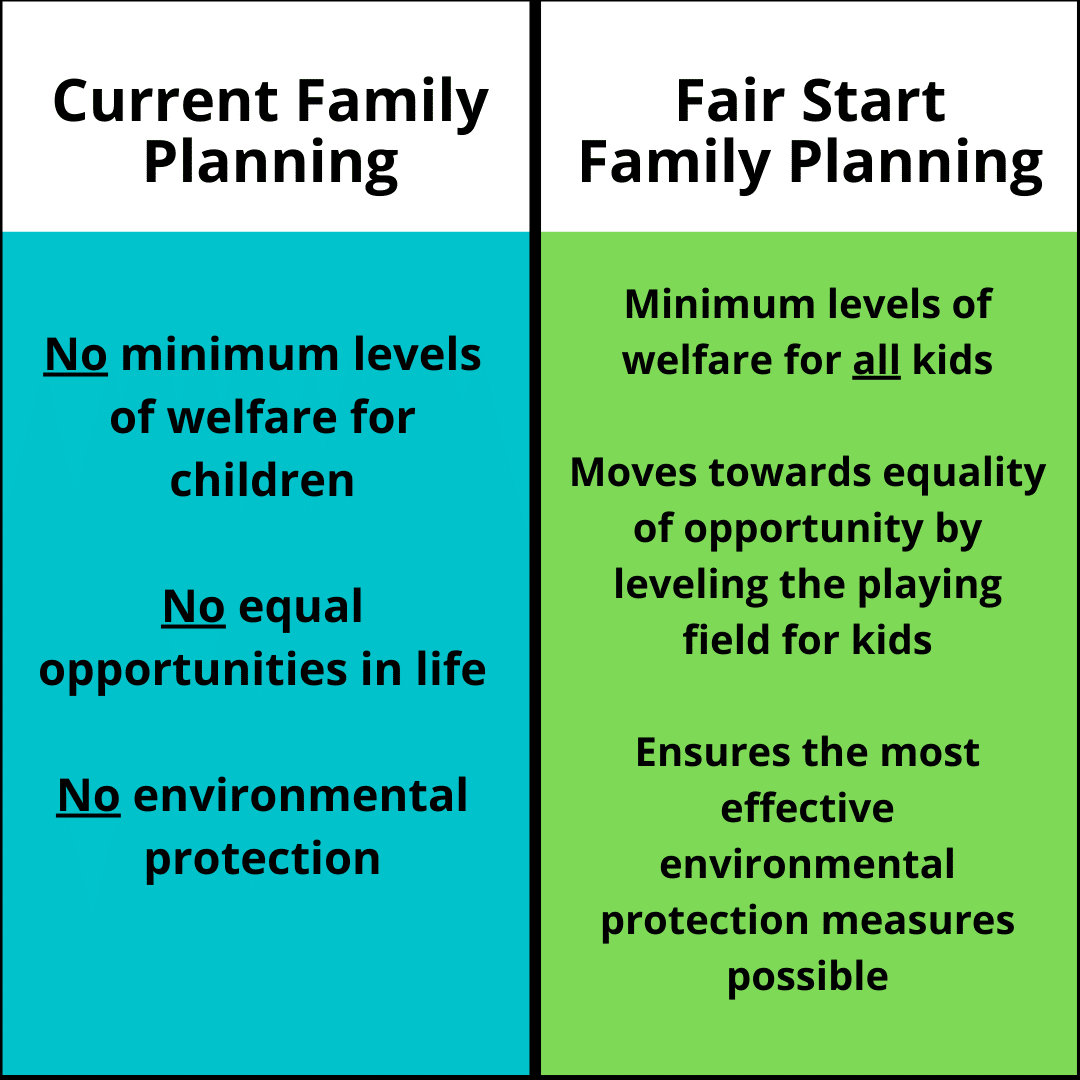
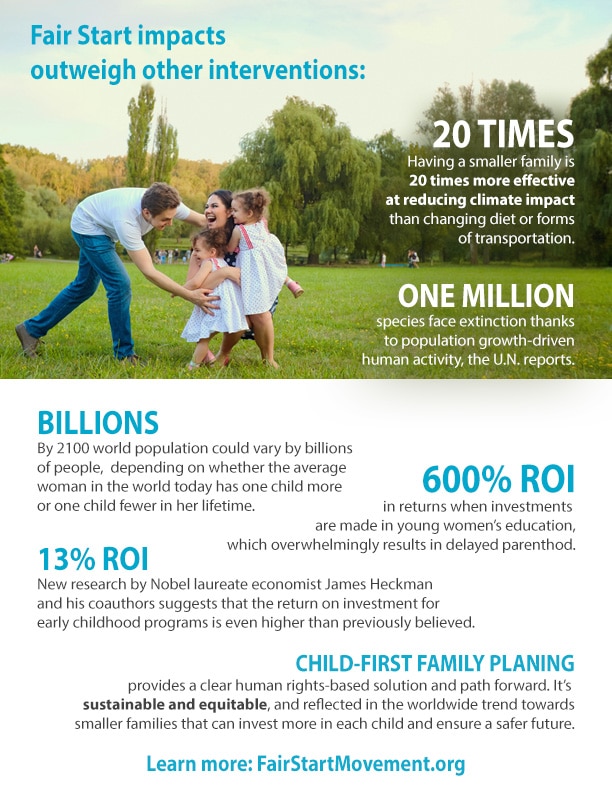
Using concentrations of wealth and power to fund family reforms is the most just and effective way to respond to the climate crisis, restoring our environment and building resilience in children at the same time. This would also help guarantee the right to a healthy environment, now recognized by the UN. An ecosocial Fair Start in life for all children is the first human right, and we can ensure it by all means effective. Why? We are before we do, so true justice comes in creation; it is existential.
The founder of Patagonia, Yvon Chouinard has given away the company to an environmental trust and non-profit. All profits will go to the organizations to fight the climate crisis and pursue other environmental goals.
The act is courageous and begins to break down the barrier that prevents us from talking about what the wealthy owe in light of the climate, inequity, and other crises we face today.
This quote by Patagonia leadership is key:
“The current system of capitalism has made its gains at an enormous cost, including increasing inequality and widescale uncompensated environmental damage. The world is literally on fire,” Charles Conn, chair of the Patagonia board, said in a statement.
TAKE ACTION: Urge @Elonmusk to consider the same moves that Patagonia chose with the companies he oversees, which rose to prominence through the same process.
Fair Start policies are more effective than hoping poor black kids will make friends with rich white ones, which seems to be the upshot policy implication of the Times article. If we truly care about equity, why not promote it in the most effective way? Why not cover the fuller story of people’s lives, including how they begin?
If the Times can push women to have children to solve an economic “baby bust,” and at massive levels of inequity for the children born, surely it can acknowledge the possibility that systems are not just if they are not constituted fairly.
TAKE ACTION: Urge @DLeonhardt to cover what matters to ensure a better future.
Rich nations are refusing to pay for the harm they caused poor nations through systems that created the climate crisis. But nations and the rich families they are protecting have a baseline problem. They cannot assign and defend property rights while simultaneously violating the right of all to be free. We have the right to take back the wealth and use it to offset the harms, through things like equitable family planning, by all means effective. Help us target the Raymond family, one of the worst violators, to pay what they owe. Contact Ashley@FairStartMovement.org.
But they made a huge mistake. If you believe in freedom, it’s impossible for a group of people to define what the world should look like for everyone. The baseline, or what the world should look like, is instead itself a group of relatively self-determining – or free – people. This is why so many Nobel Laureates are focused on family reforms.
That requires limiting the power each individual or government entity has over others by ensuring a restored, natural and biodiverse environment for future generations. It requires that all children are empowered from the beginning by having a fair start in life.
How could we know what’s a cost or benefit, or the rules that allot them, without being organized as participatory groups capable of making such decisions? Wouldn’t capacity to participate first depend on the quantity, and civic qualities, of the participants?
How could we be self-determining or free in an anthropocentric world dominated by a singularly human-centric viewpoint, rather than a natural or nonhuman one that allow humans to consent to the power of others?
How do we create a fair start for all – ensuring each person as the capacity to consent to the power and influence of others – without accounting for how people are created and nurtured into adulthood?
The bottom line is that a diverse, inclusive, international coalition must debate the issues and create meaningful, realistic policy that can be implemented globally. We want a town hall, not a shopping mall. Only in the former are we truly empowered, but our family planning policies are crafted to create people for latter. Nothing provides greater evidence that our current family planning system creates commercial, rather than empowering political relations, than the ubiquitous reaction to falling fertility rates as an economic baby bust.
Fact: Population growth-based economic gains were created by intentionally violating the Children’s Convention, ensuring children would be born and raised in conditions that violated the Convention’s standards.Instead of making the first norm something that created normativity, we used growth to degrade it.
The Children’s Rights Convention should be our guide, shifting away from seeing people as population to a vision of constituting ourselves dynamically, and qualitatively. It presumes restorative laws and policies that protect wilderness and biodiversity, evading the harm our current anthropocentric policies are inflicting on children. It demands basic human rights that would ensure democracies in which people can meaningfully participate. It’s what lies behind the concept of “We the People,” in the United States Constitution. It’s of freedom from, and freedom to. It’s an alignment of values that often, downstream, appear to conflict.
What does seeing the baseline as who we could be, rather than what we do, change things? A focus on who we should be would precede and override all other obligations, including property rights. Just government derives from the people, who should operate from a just position (or creation norm). We cannot assign property rights that deviate from that position by degrading our natural ecology or ignoring the needs of future generations.
Based on our model – which has been subject to a 1/2 dozen peer-reviews – we can take wealth Exxon Mobil and others collected by degrading the baseline (the environment) while externalizing costs to others, primarily generation after generation of women and children, with or without the government because no obligation can precede or override the existential justice of being free and equal people. It always comes first. And if we could not restore nature and empower people as such, which we can, the baseline serves as a way to measure how compensate future generations.
We wish to restore empowerment to those affected – to incentivize / entitle / repair ecosocially just and restorative family planning. We want to support women’s right to plan a family, and incentives/entitlements work. And yet our systems have avoided them for decades simply because wealthy leaders did not want to open to door to redistribution, and the logical end-point of fairness that is inevitable.
Help us shift the foundation we all share – the norms that create and develop us – toward a just position. In a true democracy the norms that emancipate us should be derived from life experience and development, and not top-down pressure from iconic influencers, government coercion or market incentives.
TAKE ACTION: Urge @Exxonmobil to adopt Fair Start reforms.
“Behind Elon Musk’s blather about free markets, free speech, and free choice is his goal to be free from accountability,” Robert Reich warns. Like the actions of fellow billionaire Trump, this move to influence the public with false claims and dangerous propaganda threatens democracy. So what does this have to do with a fair start in life? A lot. Unjust birth conditions are the root of inequality. That inequality allows unjust wealth to flow to the hands of a few. When we ensure equity from birth, we build communities where voices are equal and democracy is truly exercised.
Kimberly Atkins Stohr, The Emancipator’s senior columnist, a senior opinion writer and columnist at The Boston Globe, and author of “We Can Solve the Racial Wealth Gap” series highlights the black and white financial gap in the U.S. She suggests that a number of solutions are needed to reimagine reparations and dismantle systemic racism that fuels the racial wealth gap. We agree. And those solutions must include policies to ensure equity right from birth if we hope to effectively close that gap, because without a fair start in life, children will be playing a lifelong game of catch up.
Earth Day 2022: Exxon Should Pay Reparations for the Climate Crisis That Physically Create Just and Sustainable Communities Through Family Planning Investments
In Exxon’s public commitment to address the climate crisis, the company uses a particular ecological goal or baseline for its risk assessments and climate mitigation strategy that – compliance aside – is at least comparable to the goals of the Paris Climate Accord. While we focus on Exxon in this letter, to be clear, the logic applies to many companies and well beyond the energy sector.
FSM was formed because these goals or baselines are premised on an error. They were developed based on the assumption that nations operate from a place of historical political legitimacy, and can themselves freely define ecological goals, including anthropocentric ones like those of the Paris Accord. That assumption is incorrect. As recent peer-reviewed research shows, nations are constituting, not constituted in the past, and they are either doing so legitimately or not depending on their family policies. Nations cannot simply declare their legitimacy. Legitimacy is a political ideal based relative self-determination that would require, again minimally, that all children enjoy the ecosocial birth and development conditions required by the Children’s Rights Convention.
Resolving this baseline error involves treating legitimacy as contingent on our ongoing fulfillment of our obligations to future generations.
In other words, to properly assess costs and benefits we have to first become groups of people capable of doing so in a way that is actually inclusive and reflective of the group constituents. This is simply the ideal of the “we,” in “We the People.” The ideal political we, meaning fundamental power relations defined by the goals of the Children’s Convention, is the primary baseline. We cannot think of, or describe, an ecological outcome that is not first contingent upon family planning outcomes, on at least five levels.
If we value human self-determination or freedom, we have to begin from an ecocentric – rather than anthropocentric – baseline, because that makes relative self-determination possible, freeing us from the influences of others, including the harmful impacts of even the current rise in global temperature. Humans cannot self-determine when their childhood development is defined by the pollution of others. Moreover, climate goals cannot be limited to ecological outcomes, but should include changes in family policy that maximize the resilience, equity, and democratic cooperability of future generations to thrive despite the crisis. Our creation is the intersection of our values.
In other words, if we correct the error described above, the correct goal or baseline must entail our becoming democratic and legitimate groups of free and equal people, which requires concrete and specific restorative ecological policies much more aggressive than the Paris Accord, redistributive and equalizing family planning reforms that recognize the right to nature and level the playing field for all kids, financially and ecologically. A simple litmus test, given these standards, for our being free and equal persons involves whether we first treat the capacity for each person’s self-determination as directly inverse to population growth, relative to a neutral baseline such as the nonhuman world. This is proof that each person is politically, and equally, empowered. Not treating growth as such calls into question the true role of citizens in their own democracy.
We cannot assign property rights in ways that undercut physically constituting and democratically empowering future generations. Our being, and in this case becoming, positioned to determine costs and benefits in a way that is inclusive of the reasoned views of all, is the first baseline.
Again, we can refer to this helpful summary of the baseline problem. All of the solutions to the problem Professor Solum gives jump to what we should do rather than who we should be, and thus ignore the need to be fair people, in terms of the physical power relations determined by our creation, before we can be positioned/empowered to make fair rules/laws. Ideally we would be created/grouped to look like a functional Rawlsian constitutional convention before fundamentally assessing costs and benefits, hence our being an ideal “We the People,” is the first baseline. And for that, the minimal guidelines that would apply to family planning would be the standards we hold up for extant persons, like parental fitness, the Children’s Convention, equality of opportunity, restoration-based climate sequestration targets, biodiversity restoration targets, historic voter-representative ratios, etc. Those point us towards the UN low-variant population, something aggressive family planning incentives – funded with claims to wealth at the top of the economic pyramid – could practically help achieve.
We are writing in the spirit of Earth Day 2022 to urge Exxon to embrace the specific restorative ecological policies described above as the part of the first and overriding human right to a Fair Start in life, and to commit some share of its wealth and resources as Fair Start planning reparations to offset the harm it has done to future generations, relative to baseline discussed above. Exxon could easily practice this change by supporting the child tax credit reforms linked above, while treating them as a fundamental human right.
This is not about liberal or conservative politics. Family planning redistributions – as primary obligations – can replace wasteful tax obligations that would simply create larger governments which do not reflect the will of the people. This is about a commitment to human freedom and equality of opportunity, enabled by policies that ensure children can develop and physically comprise communities that liberate them from the threats they face today. This is something we all should value. Correcting the baseline error described above enables such a future.
Please let us know if Exxon will commit to these changes.
How did we end up in a world with massive wealth in the hands of a few and ecosystems crashing as our climates degrade? The answer is surprising. Rather than invest in early childhood development, at the crucial phase in the middle of the Twentieth Century, world leaders chose population growth and the creation of mass consumers, cheap labor and large bases of taxpayers.
Because legitimate governance derives from people, who derive from the norms that create them, there are no such things as just societies, political legitimacy and freedom without the sort of Fair Start reforms discussed in this site. Without them we are always coming from an unjust place.