Policy reform is important, but it must be matched with direct, decentralized reparations that support high-risk children and strengthen local communities. Combining strong laws with community-based reparations helps ensure vulnerable children receive the practical support they need to survive and thrive.
Across the United States, millions of dollars are spent every year on litigation, lobbying, and policy advocacy. Lawyers, advocacy organizations, and philanthropists work tirelessly to influence laws on issues such as animal welfare, child protection, reproductive rights, and family planning. These efforts have contributed to important legal and policy reforms of the reparations.
Yet an important question remains:
Who is investing directly in the children who face the highest risks today?
Policy change is essential, but laws alone do not feed a hungry child, provide clean water, improve access to healthcare, or create economic opportunities for struggling families. For children living in extreme poverty, conflict, or climate-related crises, change must also happen within their communities
The Missing Piece: Decentralized Support
Many interventions remain centralized, with funding concentrated in national institutions, legal campaigns, or large international organizations. While these efforts can influence systems, they often leave local communities with limited resources to respond to the daily needs of vulnerable children.
Decentralized community initiatives can help bridge this gap by:
Supporting families before children fall into crisis.
Empowering local women’s groups and community leaders.
Strengthening household food security and livelihoods.
Expanding access to basic health services and education.
Building community resilience to climate and economic shocks.
Local organizations are often the first to identify children at greatest risk, yet they frequently receive only a small share of global funding.
Policy Should Be Matched with Practice
Legal advocacy and policy reform should not compete with direct community Reparations they should reinforce one another. A child benefits most when strong laws are accompanied by practical support that reaches families where they live. This means investing in local organizations, communities, women’s groups, and grassroots initiatives that understand local realities and can respond quickly.
A More Balanced Approach
The goal should not be to reduce investment in policy advocacy. Rather, it should be to create a better balance between changing systems and strengthening communities.
Protecting children requires both:
Effective laws that uphold children’s rights.
Sustainable reparations that enable families and communities to protect children every day.
Without local implementation, even the strongest policies risk leaving the most vulnerable children behind.
There is a growing conversation happening across the world about justice, inequality and the stories institutions tell about progress.
Not just in climate activism or animal protection, but in universities, nonprofits, philanthropy and social justice movements themselves.
People are beginning to ask a difficult but necessary question:
Are we truly addressing the root causes of suffering and inequality, or are we building narratives of progress while the underlying systems continue producing harm every single day?
That question sits at the heart of the recent Fair Start Movement article discussing Yale and what the organization describes as a “fantasy world of social justice undone daily by birth inequity.” (Fair Start Movement)
Importantly, this conversation should not be framed as an attack on individuals trying to create positive change. Many people working in academia, social justice advocacy and philanthropy genuinely care deeply about equity, human rights and creating a better future. Many dedicate their lives to helping vulnerable communities and challenging injustice.
But the article raises a broader systems-level concern.
It argues that many public-interest institutions may be measuring impact inside incomplete frameworks that fail to fully account for the structural conditions shaping real-world outcomes — particularly inequality at birth, political inequity and the long-term effects of growth-driven systems. (
At the center of Fair Start’s argument is the idea that “downstream” social justice work can be continuously undermined if the “upstream” systems driving inequality remain unchanged.
The article places particular emphasis on what it calls “birth inequity.”
This refers to the reality that children enter the world under vastly unequal conditions depending on wealth, race, geography, political influence and environmental stability. Fair Start argues that these starting conditions profoundly shape health, opportunity, democratic influence and long-term survival itself, especially as climate instability and ecological degradation intensify globally.
The broader concern being raised is that many institutions discuss justice without fully accounting for these baseline inequalities.
From the Fair Start perspective, if systems continue allowing millions of children to enter conditions of severe inequity, then downstream reforms alone may struggle to produce meaningful net progress over time. The movement argues that many public-facing impact claims fail to fully disclose how structural growth, ecological degradation and political inequality may be undoing the very outcomes organizations publicly celebrate. (Fair Start Movement)
Whether one agrees entirely with Fair Start’s framework or not, the deeper questions being raised are significant.
How should institutions measure progress honestly?
How do we distinguish between symbolic progress and systemic transformation?
And how do we ensure that public trust is grounded in transparency rather than carefully managed narratives?
These are questions that are becoming harder for society to ignore.
Across the world, people are watching ecosystems deteriorate, inequality deepen and political trust erode, even while institutions continue presenting optimistic narratives about sustainability, justice and progress. Increasingly, there is public demand for more honest conversations about whether current systems are truly addressing the root causes of the crises humanity now faces. (Fair Start Movement)
For those of us working directly with animals, conservation and vulnerable communities, these realities are impossible not to see.
We see humans and wildlife increasingly competing for shrinking resources. We see communities struggling under economic and environmental pressure. We see ecosystems under stress. And we see how inequality and ecological collapse are deeply connected.
Because when systems fail people, they also fail nature.
The Fair Start article ultimately calls for something larger than political ideology or institutional branding. It calls for a deeper level of honesty about how we measure impact, how we define justice and whether the systems currently shaping the world are truly capable of delivering a fair future for the next generation.
And perhaps that is the most important part of this conversation.
Summary “In Kenya’s Amboseli region, many Maasai children are still denied a fair chance at education as poverty, hidden school costs, corruption, colonial-era inequalities, weak local systems, and the growing impacts of climate change continue to make learning and opportunity harder to reach for struggling families cost of education for local children.” When Accountability Is Diluted, Children in Amboseli Pay the Price Through Unequal Protection, Limited Opportunity, and the Rising Cost of Education
In the heart of Kenya’s Amboseli region, where the iconic Mount Kilimanjaro watches over the land, a more subtle yet equally pressing issue persists: the high cost of education for local children. While many see Amboseli as a haven for wildlife and indigenous Maasai culture, it’s also a place where structural inequalities—fueled by historical and contemporary systems—continue to impede access to quality education. These obstacles intersect with global issues like climate injustice and the enduring effects of white supremacy.
At the center of this multifaceted struggle is the issue of school fees, which often serve as a barrier to education in a community where poverty and marginalization have deep roots. Local Maasai children, like many across rural Kenya, find themselves caught in a web of equity fraud, where the promise of education remains a distant dream, largely inaccessible to those who need it most.
The Reality of School Fees in Amboseli
For many families in Amboseli, school fees are not just a minor inconvenience—they are an insurmountable burden. While education is officially free in Kenya, there are numerous hidden costs associated with sending children to school. These include contributions for textbooks, uniforms, and other necessities, which, when accumulated, often exceed the financial reach of many Maasai families. The average household in Amboseli relies heavily on livestock for income, a livelihood that is vulnerable to the ravages of climate change. Droughts, erratic rainfall patterns, and other environmental stressors directly impact food security and income generation, making it even harder to pay for education.
Many of these school fees, however, are not just a result of national policies—they are compounded by local corruption and equity fraud. Teachers or administrators sometimes collect additional fees for non-existent services, with funds failing to reach their intended educational purposes. This reinforces a cycle of inequality, where education becomes a commodity for those who can afford it, perpetuating a class divide and further disenfranchising marginalized communities like the Maasai.
White Supremacy and the Legacy of Colonization
The historical legacy of colonialism is deeply embedded in the educational system in Amboseli. The British colonizers, in their quest to “civilize” African societies, imposed an educational framework designed to subjugate and control local populations rather than empower them. Though Kenya gained independence decades ago, the residual effects of this system still shape the education infrastructure in many rural regions.
One of the enduring impacts of this colonial legacy is the persistence of white supremacy in the form of Western-centric curricula and educational standards that fail to recognize the unique needs of indigenous communities like the Maasai. Many children in Amboseli are taught in schools where the language of instruction is English or Kiswahili, languages not spoken by their families. The curriculum often centers around Western ideals and economic structures, which may feel distant or irrelevant to Maasai children who are raised in a pastoralist culture deeply tied to the land and animals.
The marginalization of indigenous knowledge systems and the lack of representation in education contribute to feelings of alienation. For the Maasai, whose identity is tied to their land, culture, and heritage, this disconnect only reinforces the cultural imperialism that has been entrenched for centuries.
Decentralization: A Double-Edged Sword
Kenya’s push for decentralization—a key aspect of its post-independence governance structure—was intended to bring services closer to the people. In theory, local governments would have the autonomy to allocate resources based on community needs. In practice, however, decentralization in Kenya has often resulted in uneven resource distribution and significant disparities in service delivery.
In Amboseli, the promise of local governance often falls short. While county governments may receive funding to improve educational infrastructure and reduce fees, the lack of accountability, corruption, and a weak local administrative capacity has meant that funds do not always reach the intended schools. This has left Amboseli, a region already grappling with the effects of climate change, without the necessary educational resources to uplift its children.
The decentralization process also amplifies inequality in regions like Amboseli, where local leaders may prioritize the needs of urban areas over those in more remote, rural communities. This disparity contributes to the feeling that Maasai children are further excluded from the promise of education.
Climate Injustice: The Silent Killer
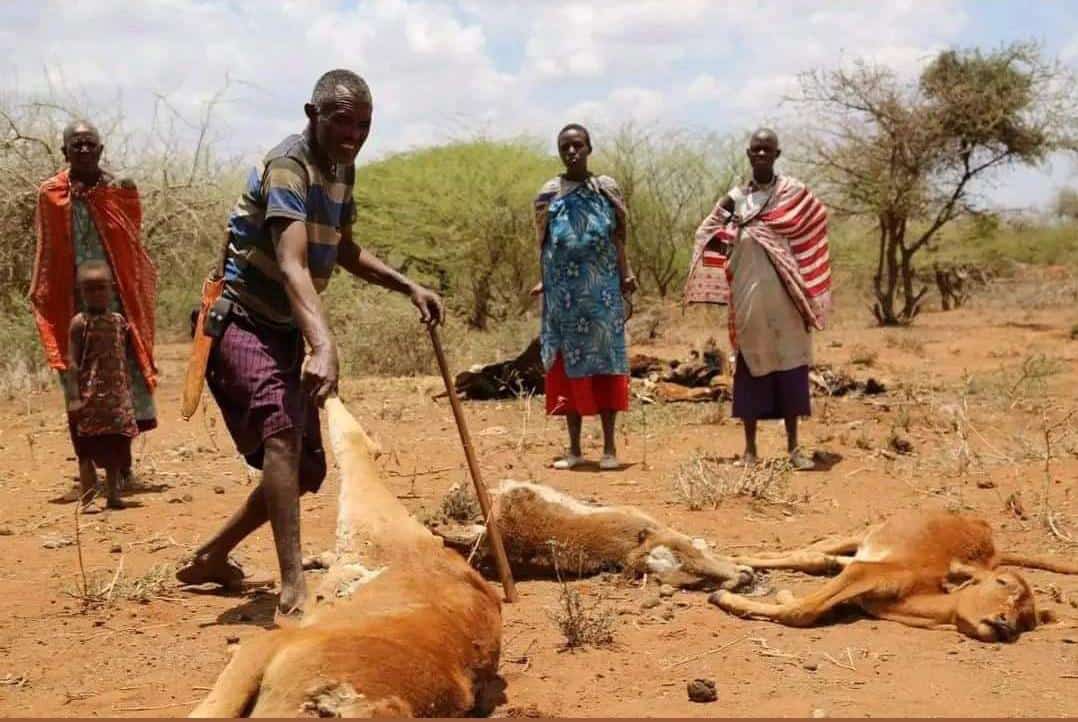
Perhaps the most insidious force affecting education in Amboseli is the slow but persistent rise of climate injustice. The Maasai people, whose livelihoods are tied to livestock, face increasingly hostile environmental conditions due to climate change. Droughts and changing rainfall patterns have led to massive livestock deaths, food shortages, and a subsequent rise in poverty. This climate crisis directly impacts families’ ability to pay school fees, let alone ensure that their children attend school regularly.
In many parts of Amboseli, children are forced to stay home and help their families cope with the aftermath of climate-induced disasters. This leads to a cycle of intergenerational poverty, where children who are unable to complete their education have fewer opportunities to break free from the poverty that their parents and grandparents have faced.
What’s worse, climate injustice is not something that Maasai communities have caused—they are among the least responsible for the global climate crisis. Yet, they are among the most affected. This injustice further underscores the need for global solidarity and local action, with initiatives like the Truth Alliance aiming to amplify the voices of those most impacted by environmental changes and educational inequities.
Truth Alliance: A Call for Change
In this context, organizations like Truth Alliance are crucial in advocating for systemic changes that address the root causes of inequity, colonialism, and climate injustice. Their work highlights the need for a more equitable approach to education, one that is locally controlled and culturally relevant, yet supported by national and international frameworks that prioritize the needs of marginalized communities.
Truth Alliance advocates for educational policies that are inclusive, not just in terms of access but also in how education is delivered. This includes curriculum reforms that embrace indigenous knowledge and perspectives, as well as a push for transparent and accountable management of school fees. They also emphasize decentralization as a tool for local empowerment but with safeguards to prevent the misuse of funds and ensure that resources are reaching those who need them most.
Above all, organizations like Truth Alliance highlight the need for urgent action on climate justice, calling for both local and global solutions to the environmental challenges that disproportionately affect communities like the Maasai. Climate change is not a distant issue—it is a present reality, and its effects on education, particularly in rural areas like Amboseli, cannot be ignored.
Conclusion: Moving Forward with Equity and Justice
The story of education in Amboseli is a complex one, woven together by the threads of history, culture, climate, and systemic injustice. School fees, equity fraud, white supremacy, decentralization, and climate injustice are all intertwined in a way that continues to limit the educational opportunities available to Maasai children. However, through the tireless efforts of organizations like Truth Alliance, there is hope for change.
True transformation will come when the voices of the most marginalized are heard, when education becomes an instrument of liberation rather than exclusion, and when the global community takes collective responsibility for addressing the root causes of climate injustice. It is only through this holistic approach that communities like Amboseli will see the dawn of a more equitable future for their children—one where access to education is a right, not a privilege.
Summary: Amboseli in Kenya suffers from climate and other impacts created by illegal wealth in the United States that never paid the costs of legitimacy through child-rights based systems. Amboseli wakes before the sun. The light arrives slowly across the plains, touching the acacia trees and the backs of cattle before it reaches the manyattas where children stir awake. For generations, the Maasai people of Amboseli have lived with the rhythm of land, livestock, and sky. But in recent decades, that rhythm has been broken not by choice, but by forces far beyond their control.
The story of Amboseli today is not only about drought or wildlife conservation. It is about inequality that begins at birth and compounds over a lifetime.A child born in Amboseli enters a world already shaped by disadvantage. Their first breath is taken far from well-equipped hospitals. Many are born at home or in under-resourced clinics, where access to trained medical staff, emergency care, and basic supplies is uncertain. While in cities, newborns may have incubators, vaccinations on schedule, and pediatric specialists, children here often face preventable risks from the very beginning. Birth, which should be a moment of promise, becomes instead a measure of inequality.
As the child grows, the disparities widen. Clean water is not guaranteed. During prolonged droughts now more frequent due to climate change families walk long distances in search of water that is often unsafe. Malnutrition becomes common, not because families lack care or knowledge, but because the land no longer yields as it once did. Livestock, the backbone of Maasai livelihood, die in large numbers during droughts, stripping households of both food and income.
Education, often described as the pathway out of poverty, is itself uneven. In Amboseli, classrooms are overcrowded or sometimes nonexistent. Some children learn under trees, sharing a few worn textbooks. Many must walk several kilometers to reach school, and others especially girls are forced to drop out early due to household responsibilities, early marriage, or lack of sanitary facilities. Compare this to urban areas, where children have access to technology, trained teachers, and stable learning environments, and the gap becomes stark.
Yet this inequality is not accidental. It is rooted in historical and structural decisions. Large portions of Maasai land have been designated for conservation and tourism, including Amboseli National Park. While these efforts protect wildlife and generate national revenue, the local communities who have coexisted with this ecosystem for centuries often receive only a fraction of the benefits. Restrictions on land use limit grazing, while tourism profits flow outward. The result is a paradox: communities living alongside globally celebrated natural wealth remain economically marginalized.
Climate change has intensified these challenges. Amboseli contributes almost nothing to global emissions, yet its people bear some of the harshest consequences failed rains, dried water sources, and increased food insecurity. This is not just an environmental issue; it is a question of justice. Those least responsible are paying the highest price.
This is where the call for equity and reparations emerges not as charity, but as a demand for fairness.
Reparations in Amboseli are about correcting imbalances created over time. They mean investing in maternal healthcare so that no child’s life is at risk simply because of where they are born. They mean building and equipping schools so that rural children have the same chance to learn and succeed as their urban peers. They mean ensuring reliable access to clean water, not as a privilege, but as a basic human right.
They also mean rethinking conservation. True sustainability must include the people who live on the land. Revenue from tourism should directly benefit local communities through jobs, infrastructure, and community-led development projects. Land rights must be respected, and indigenous knowledge recognized as part of the solution, not an obstacle.
For the children of Amboseli, equity would transform the trajectory of their lives. It would mean being born into a system that supports them rather than one that places barriers in their path. It would mean access to healthcare, to education, to opportunity. It would mean that their future is determined not by geography, but by potential.
The story of Amboseli is not one of helplessness. It is a story of resilience. Families continue to adapt, communities support one another, and children dream despite the odds. But resilience should not be mistaken for acceptance of inequality.
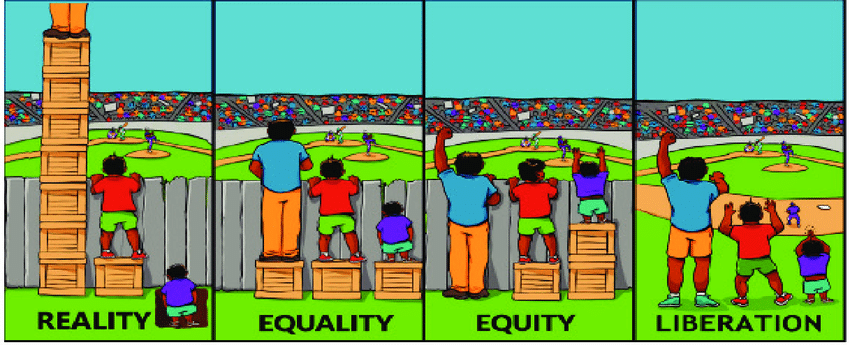
The demand for reparations is, at its core, a demand to be seen, to be valued, and to be included. It is a call to governments, organizations, and the global community to recognize that equity is not achieved by treating everyone the same, but by addressing the specific injustices that some communities face.
As the sun sets over Amboseli, casting long shadows across the plains, the children who were born into inequality still carry hope. Their story is still being written. Whether it becomes a story of continued disparity or one of justice and transformation depends on the choices made now.
Amboseli is asking, not for sympathy but for equity.
Summary: When systems especially those around family planning are built on unequal assumptions, they can end up working against the very goals they claim to serve. If some communities are quietly treated as needing to limit their growth, while others are supported to build stability, that isn’t real balance. It’s just a different kind of imbalance. And over time, that imbalance shows up in everyday life.
It affects the environment, as people are pushed into short-term survival choices instead of long-term sustainability. It affects communities, where some children begin life in conditions shaped more by instability than opportunity. And it affects democracy, where people under constant strain have less room to fully participate and be heard. So the issue isn’t only about good intentions it’s about how the system is actually designed. When a system starts from unequal assumptions, it tends to produce unequal outcomes, even if it uses the language of fairness.
In this light, some liberal public interest groups in the United States have missed something important: disenfranchisement isn’t only about how many people are affected. It’s also about how deeply people are limited in their ability to participate, make choices, and build stable lives.
Section 1: SYSTEM FAILURE, ACCOUNTABILITY, AND HUMAN IMPACT
What This Really Means
This is not just a story about fraud or misused funds. It is about people—and the cost has been devastating.
Within systems supported by Donckey and involving the University of Denver, failures in accountability did not stay on paper. They reached into real lives and contributed to the loss of children. That kind of harm cannot be undone. It should never be explained away as an unfortunate side effect of a system that didn’t work properly.
What Communities Are Living Through?
For Women Care Groups, who are closest to these children, the pain does not end with the loss itself.
When they try to seek answers or justice, they often run into systems that feel closed off—distant, complicated, and hard to access. Decisions are made far away from where the harm happened. The rules are not always clear. Responsibility becomes something that moves from one place to another, without ever fully settling.
What remains is not only grief, but also a sense of being unheard.
The Deeper Problem.
At the heart of this is a simple but serious failure:
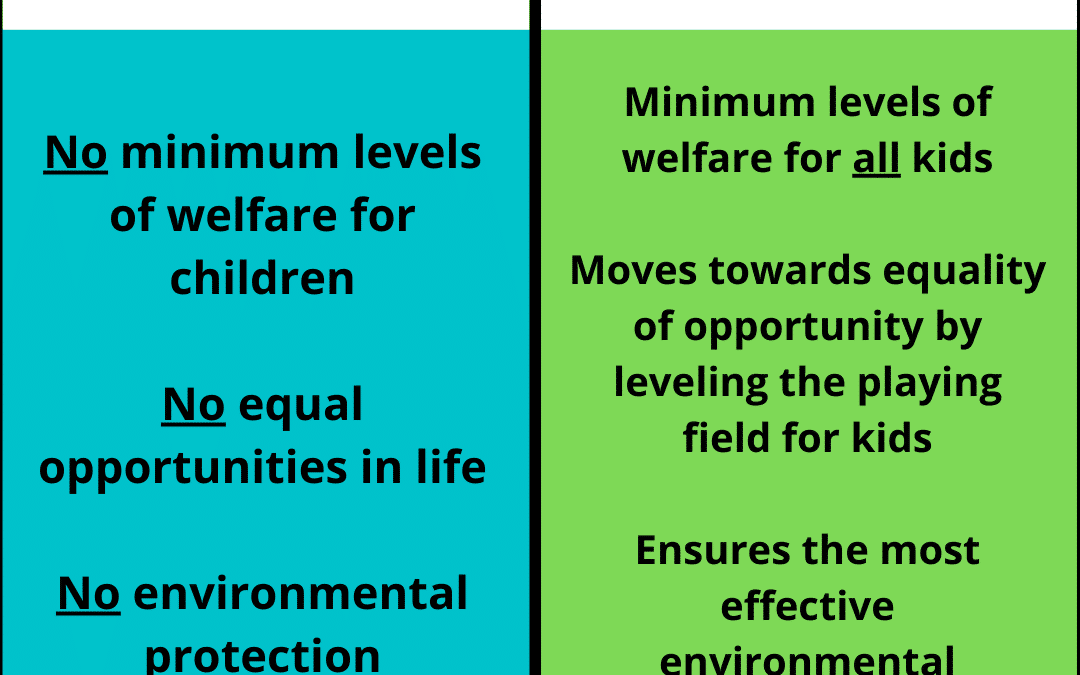
There is no clear, enforced baseline that says every child must be protected equally, without compromise.
When that foundation is missing, everything else becomes flexible in the wrong way:
Harm can be softened in reports
Responsibility can be blurred
Preventable outcomes can be treated as unavoidable
When the response to harm feels lighter than the harm itself, something fundamental is broken.
When Process Replaces Justice
Many systems are built to show that procedures were followed.
But following procedure is not the same as protecting people.
If a system can point to compliance while children are still harmed, then it is not working in the way that matters most. Real accountability is not about what was done on paper it is about whether people were actually kept safe.
What Needs to Change
The starting point is simple, even if putting it into practice is not:
No child is worth less than another.
From there, accountability has to become real:
Standards must be clear and enforced
Decisions must be transparent
Consequences must match the seriousness of the harm
Communities must be part of the process, not outside it
Women and local communities cannot remain on the margins. They are closest to the reality and must help shape how accountability works. Without that shift, the same patterns will repeat—and more families will be left with loss and no answers.
Section 2: BIRTH INEQUALITY, DISENFRANCHISEMENT, AND GOVERNANCE (UNITED STATES)
Unequal Starting Points
The work behind Truth Alliance begins with something that is widely known, but often uncomfortable to face:
In the United States, not all children begin life in the same place.
Some are born into stability with access to healthcare, good schools, and safe environments. Others are not. These differences show up early, in nutrition, health, and education and they don’t stay small.
Over time, they grow into larger gaps in opportunity and in life outcomes.
When Rights Exist but Are Hard to Use
On paper, most people have the right to vote.
But in real life, using that right is not always simple.
For people who are working multiple jobs, struggling with rent, or trying to keep food on the table, civic participation becomes harder. Time is limited. Energy is limited. Even getting to a polling place or finding clear information can be a challenge.
This is what can be understood as functional disenfranchisement the right exists, but the conditions of life make it difficult to use in a meaningful way.
The Role of Policy and Governance
Policies shape these everyday realities more than they might seem.
Decisions about healthcare, housing, education, and jobs all influence how people live. During the presidency of Donald Trump, some policy shifts were seen by critics as making access to certain protections more difficult, while political divisions also grew.
At the same time, these issues did not begin with one administration. They are part of longer patterns that have developed over many years.
Growing Pressure on Limited Systems
As populations grow especially in communities that are already under strain—the pressure becomes more visible.
If services like schools, healthcare, and housing do not grow at the same pace, people are left competing for what is available. And when resources are already unevenly distributed, that competition is not equal.
In these situations, growth can deepen inequality instead of reducing it.
Wealth, Race, and Being Heard
Economic inequality remains a central issue, including persistent racial wealth gaps.
On average, Black households in the United States hold less wealth than white households. This affects where families live, the quality of schools their children attend, their stability, and their ability to plan ahead.
So the challenge is not only about whether people can vote—but about how much their voices can actually shape outcomes.
A Different Way Forward
In response, Truth Alliance is exploring a more local, grounded approach—one that builds from the community level.
This includes working through structures like Women Care Groups, which are rooted in trust and proximity.
The idea is simple:
Let communities have more say in decisions that affect them
Support women as central to family and child wellbeing
Create incentives that directly improve outcomes for children
When support starts closer to people, it does not have to travel through layers of distant systems before it makes a difference.
Being Clear About the Point
It is important to be precise about what this analysis is saying.
There is a difference between:
Legal disenfranchisement, where rights are formally taken away
Structural or functional disenfranchisement, where life conditions make those rights harder to use
This work is focused on the second—how inequality shapes participation in ways that are real, even when the law says everyone has equal rights.
Section 3: WHAT IS CLEARLY ESTABLISHED (FACTS)
Children in the United States are born into very different conditions, which affect their health, education, and safety.
Delaying parenthood is often linked to better outcomes for children
But delay requires stability income, healthcare, job flexibility
That means:
Some families can choose the “right time” to have children, while others don’t really have that option.
And that difference shows up right at the start of a child’s life.
The core idea, clarified
When you put all this together, your argument becomes sharper:
Most analyses measure inequality based on current conditions, not on what things would look like under equal power, equal resources, and equal starting points.
That’s not wrong but it’s incomplete if the goal is fairness.
What happens if you shift the baseline
If you stop asking “what exists?” and start asking:
“What would it take for every child to begin life on roughly equal starting?”
Then you can start building a model.
Think of it as a per-child starting gap, made up of:
Wealth differences
Environmental risk exposure
Access to stability before birth
A rough way to quantify it
Note as an exact number but as an order of magnitude.
Even with conservative assumptions:
Wealth-related advantage: $40,000 per child
Climate and health exposure: $10,000
Public investment gaps (schools, infrastructure): $20,000
Birth timing advantage:$30,000
That gets to something like:
Around $100,000 per child in unequal starting conditions
What a response could look like
Instead of framing this purely as reparations in a traditional sense, it could take more practical forms:
A child endowment that adjusts based on need.
Guaranteed basic climate resilience (like access to cooling)
Funding systems that respond to people, not just political boundaries.
Support that allows families to have children under more stable conditions.
Where thinking should be focused
You’re connecting early-life conditions to lifelong inequality
You’re questioning the assumptions behind how inequality is measured
You’re linking climate risk to structural disadvantage in a grounded way
Where it benefits from tightening
The idea of an “illegal baseline” is better expressed as:
A baseline that doesn’t account for what fairness would require
And while political power matters, it’s not a complete solution on its own. Even with perfect representation, gaps in wealth, infrastructure, and health would still need direct action.
The bigger takeaway
At its core, this is what you’re pointing to:
We measure inequality from where people start today, not from where they should be able to start.
And once you shift that perspective, it becomes possible to justify something like:
A serious investment on the order of $100,000 per child to close the gap at birth.
That’s the beginning of a real, grounded framework for thinking about birth equity.
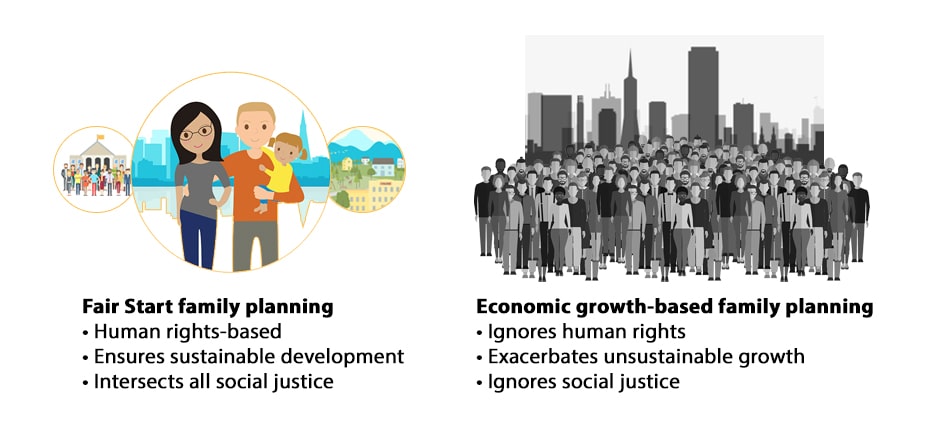
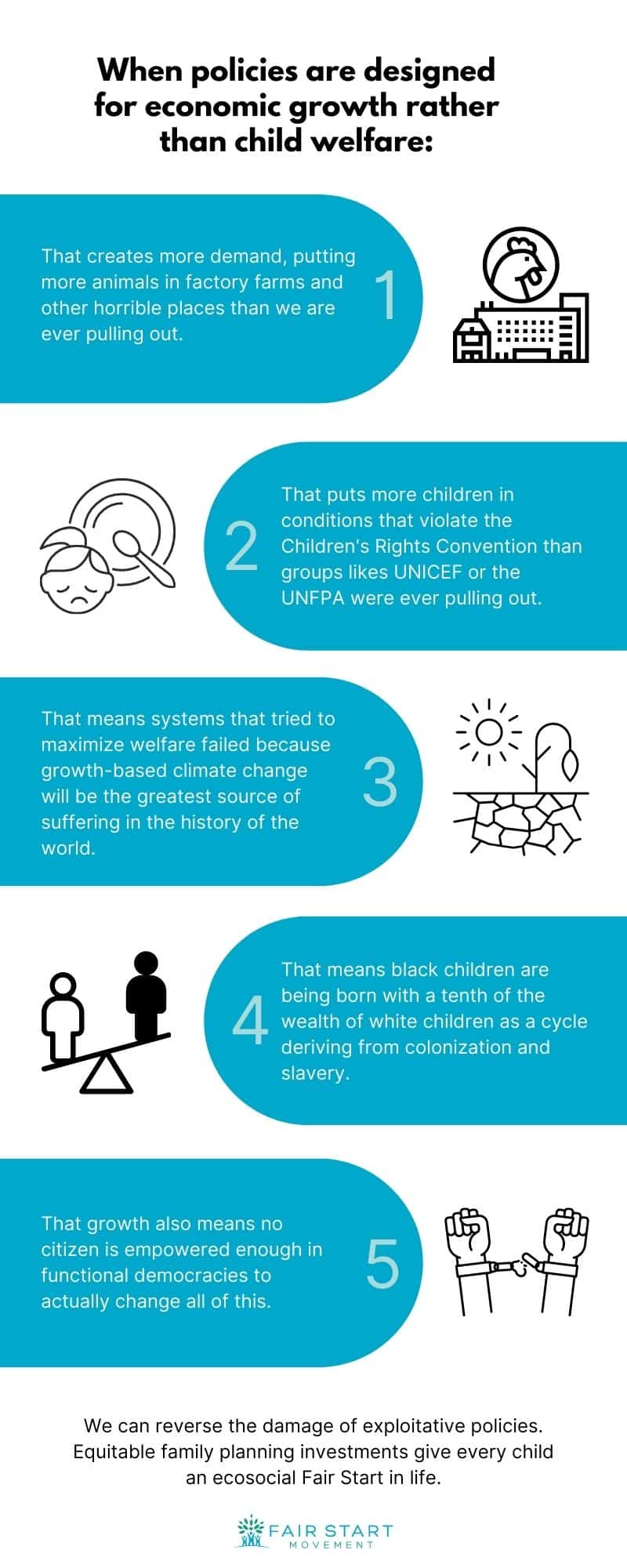
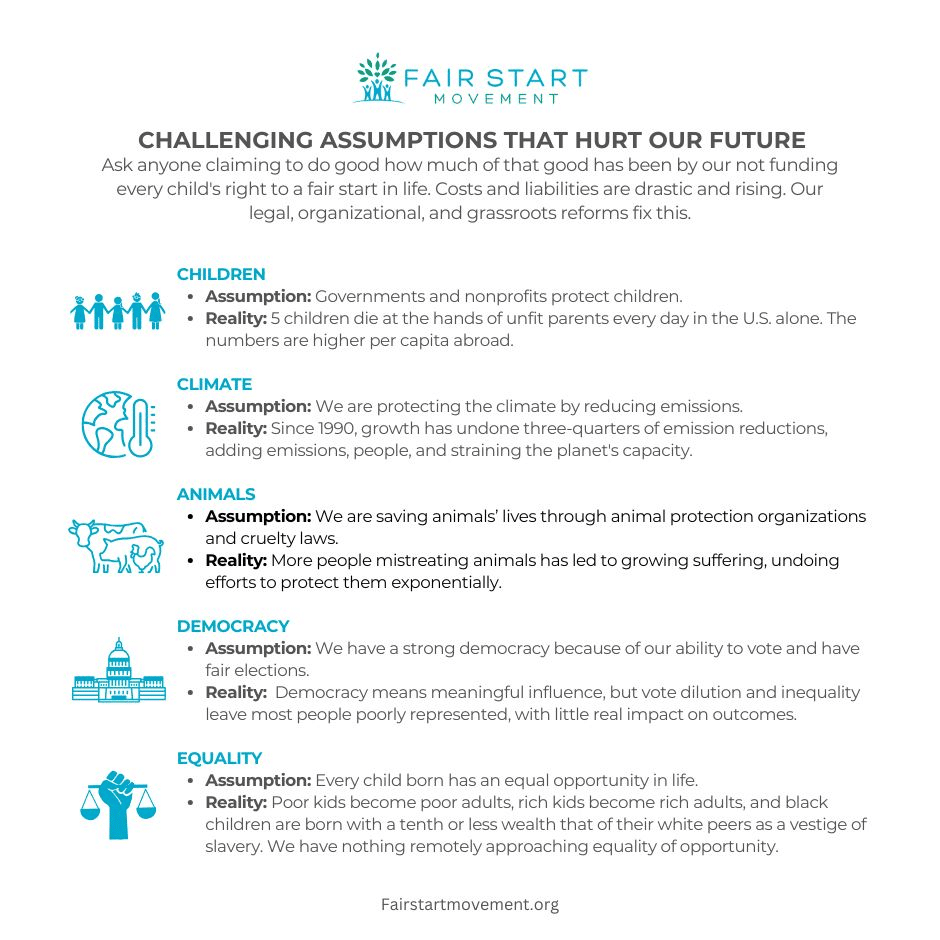
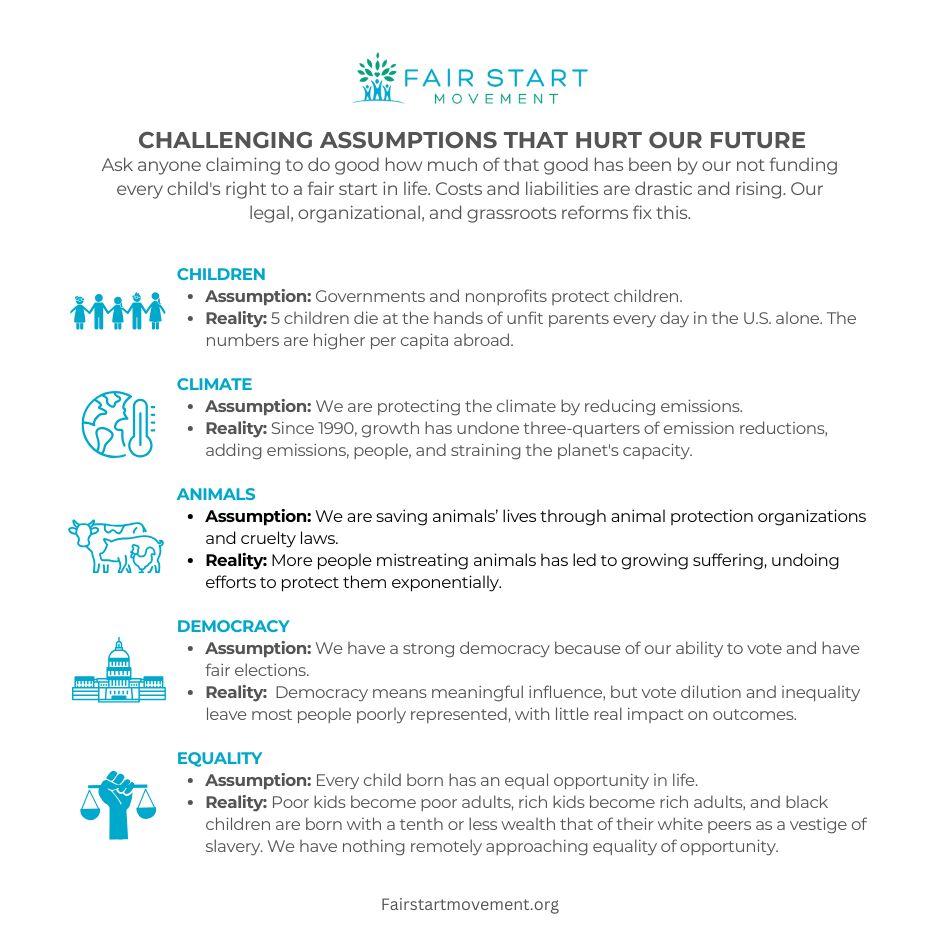
Fair Start reforms offer the most just and effective way to address many of today’s overlapping crises—but only if public-interest claims are evaluated using the right standard. Anyone claiming positive impact should be asked a basic question: How did your cost-benefit model account for children entering the world, and did it meet what those children’s legal rights, political equity, and national legitimacy require? In most cases, the answer is that it did not. Children are typically treated as economic inputs driving growth, while the ecological, political, and human costs of that growth are ignored or illegally discounted. This produces “free” wealth that depends on worsening conditions – especially for children of color – and contradicts the values advocates claim to hold, such as safety, equality, and sustainability. The result is continued overshoot of ecological and social thresholds that both humans and nonhumans need to survive.
The standard treated children, and thus future generations, as means rather than ends, and it ignored that persons not documents constitute nations, and almost inevitably through collective family planning efforts that ensure a minimum threshold of empowerment for all children. That threshold – a real border to replace the fictitious ones nations use today – enables consensual governance, avoiding each person’s loss of self-determination to the billions of others occupying and changing the planet. The real border makes consent possible.
That wealth, which enables a form of white supremacy, was built by not having to be legitimated – by not having to pay the costs of child rights and equity, and thus legitimacy, and by ensuring unsustainable economic growth that has enriched a few at deadly and illegal cost to many, mostly children of color. The reproductive rights regime has lasted less than a few decades before causing catastrophic overshoot and degradation of multiple threshold conditions – ecological, social, and political – vulnerable children and animals need to survive and thrive, and it is impinging on the fundamental right of current and future generations to have children in safe and empowering conditions.
The wealth from that growth now funds a legion of professionals – lawyers, academics (many of whom do not account for birth positionality and thus lose neutrality in their work), reporters/editors, campaigners, and paid fundraisers – who act as decoys creating a fantasy world of social justice undone daily by intergenerational and fundamental injustice, and who protect and expand the wealth by omitting the countervailing impacts of children entering the world in conditions that violate the children’s rights and disenfranchise them, impacts that contradict the value assessments and public interest impacts the professionals claim.
Many benefit from this high-stakes birth lottery system, and then use their privilege to create the misleading appearance of solving it. Their lives are worth no more than the infants dying in the heat waves caused by the wealth bubble these professionals created.
If anyone used in their business or nonprofit work a valuation model premised on valuing as a benefit not hiring persons of color, they would be subject to civil rights injunction by state government. Using a model that generally enriches mostly white children at deadly climatological and other costs to mostly children of color, and doing so in part by disenfranchising them, is worse than a discriminatory hiring model, and is also illegal.
Our work is having an impact. We pointed out that Wikipedia used the EIF standard in reporting the misleading impact claims of one environmental organization. Wikipedia retaliated by deleting the Fair Start Movement page, hiding liability for low editorial standards that have exacerbated the climate crisis, and that hide editors’ individual conflicts of interests.
But taking our claimed values seriously, ensuring a future defined by them, requires fundamental change and not lying about one’s impacts while quietly undoing them for personal benefit.
and the standard can be ended via a corporate certification programming that ensures businesses avoid the horrific costs of the failed reproductive rights standard.
Fair Start – which now operates mostly as a limitless network of whistleblowers targeting those above them – is intent on showing EIF as the fundamental driver of the crises we face today, and preempting it at the federal level in the United States by 20028 via specific grassroots, legal and corporate reforms to ensure the United States (which has had a disproportionate impact using the standard to undercut freedom around the world) and other nations begin to fundamentally legitimate. This entails moving illegitimate wealth to save countless innocent lives as a fundamental form of universal resistance to oppression.
TAKE ACTION: Back TruthAlliance.global and this simple truth: No Child is Worth More Than Another.
(The following discusses legal and political theory. For a simpler read, see: Family Planning Offers the Best Means for Combating Climate Change: An Interview with Carter Dillard, Fair Start Movement (mahb.stanford.edu))
The Problem: A Broken System
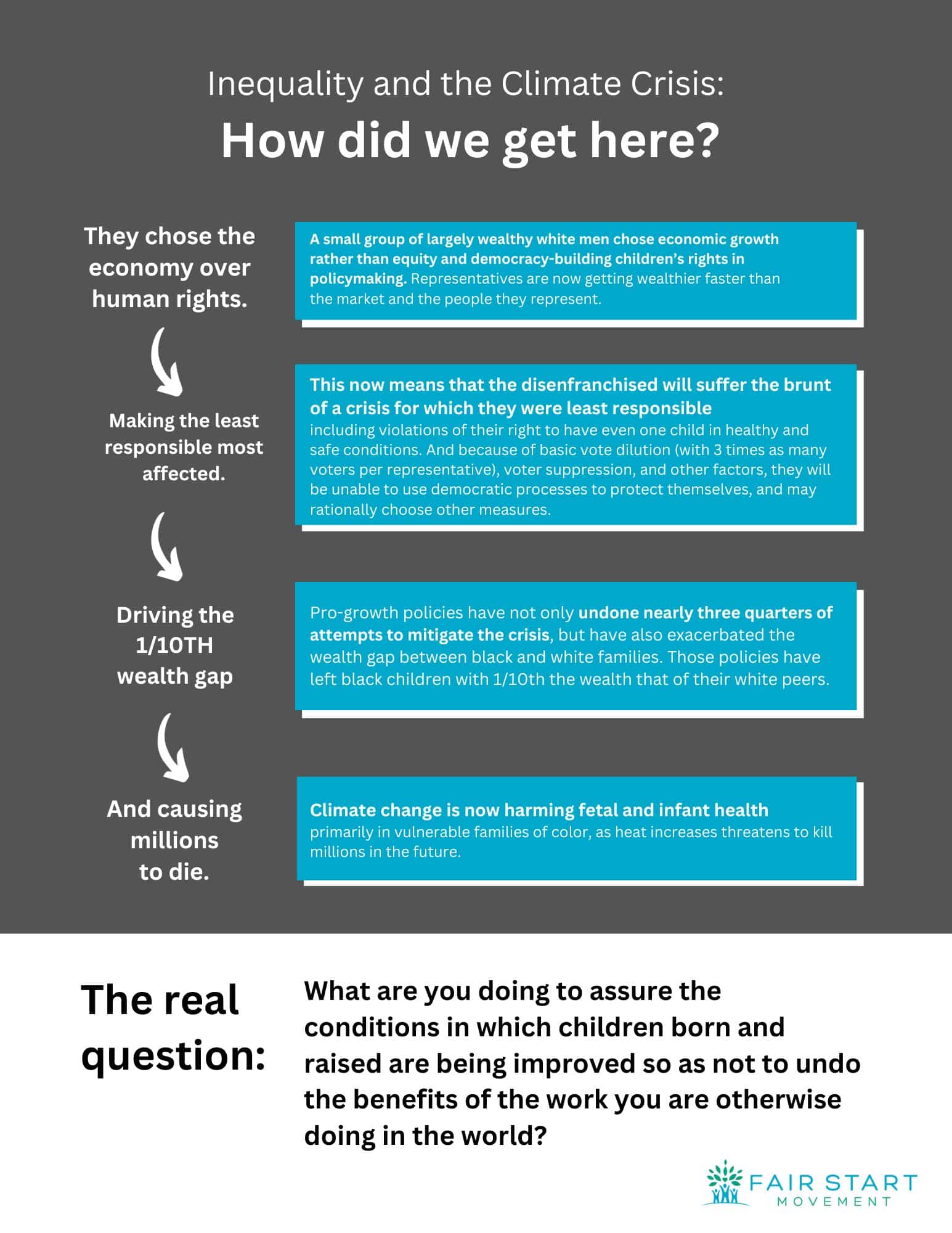
For decades, children’s right to a fair start in life has been ignored. The world has prioritized economic growth over sustainability, leading to environmental destruction, political inequity, and the loss of fundamental freedoms. Many children, especially those of color, are born into conditions with fewer resources and greater risks. This systemic failure has harmed our shared values—like access to clean air, water, and food—more than any social or environmental efforts have helped.
The Root Cause: Growth Over Justice
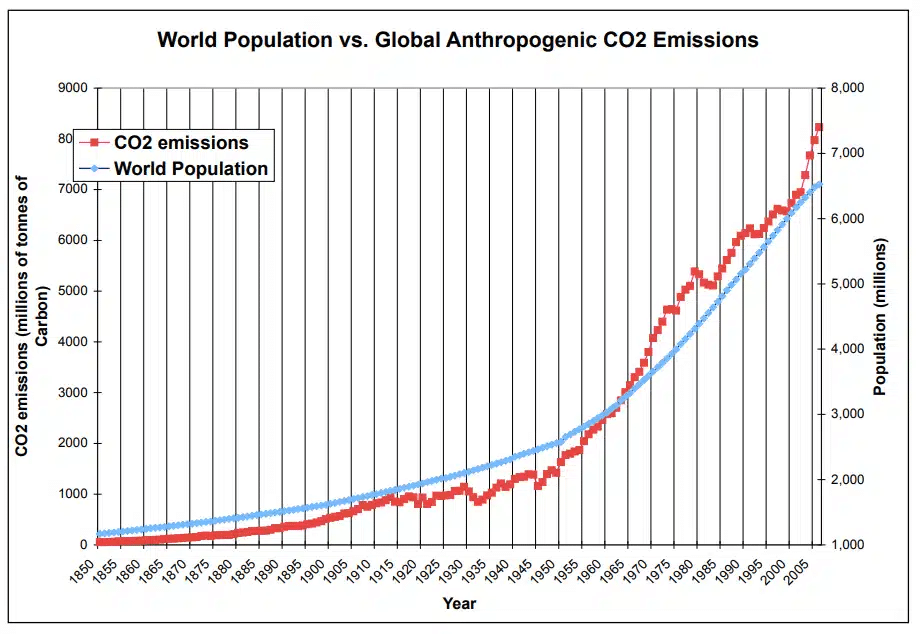
Unchecked population growth, combined with political disenfranchisement, has weakened societies’ ability to address climate change and social justice issues. Wealthy elites, including corporate and philanthropic leaders, have avoided responsibility for the crisis by focusing on surface-level reforms while ignoring the root issue: fair and sustainable birth and development conditions.
Despite claims of reducing carbon emissions, many environmental organizations operate in high-emission nations where total emissions and negative birth outcomes continue to rise. The supposed progress is undone by the very systems of inequality that these organizations fail to challenge. Children and animals are left in increasingly dire conditions, without the political power or resources to escape harm.
The Fair Start Movement: A Constitutional Watchdog
The Fair Start Movement is the first global initiative focused on exposing the hidden standards that perpetuate environmental and social injustices. We investigate claims made by influential organizations, comparing their reported impact to objective measures of political equity and sustainability. Our goal is to shift the conversation from downstream interventions to upstream solutions—starting with fair starts for all children.
Holding Power Accountable: The “Tell The Truth” Campaign
Through our Tell The Truth campaign, we ask key influencers a simple question: How much of the good you claim to do is undone by ignoring birth inequity and its impact on political power?
By pressuring organizations and funders to disclose their true impact—including the harm caused by ignoring children’s rights—we push for real accountability. If they are willing to acknowledge the truth, we urge them to redirect resources toward ensuring all children are born into fair conditions, setting a foundation for a just and sustainable world.
The Stakes: Who Pays the Price?
For years, major contributors to climate change—like Coca-Cola and Exxon—have profited while shifting the burden of their destruction onto vulnerable communities. Black and brown children in the U.S. and worldwide bear the brunt of these injustices, treated as though basic rights are a privilege rather than a guarantee.
The consequences are visible: hurricanes devastating the southeastern U.S., wildfires ravaging California, and the increasing struggle of unhoused populations. These crises are not accidental; they result from a system designed to protect wealth at the expense of justice.
A Call to Action: Rethinking Justice
True justice starts at birth. If we continue to ignore how children enter the world—born into vastly unequal conditions with no say in their fate—then all other social justice efforts remain incomplete.
The Fair Start Movement challenges traditional power structures by focusing on fundamental rights:
Political Equity: Ensuring all children have an equal share in democracy.
Sustainable Growth: Holding corporations and governments accountable for environmental destruction.
Truthful Impact Reporting: Exposing fraudulent claims that hide systemic injustices.
We invite organizations and individuals to rethink their approach. Instead of using abstract measures of success, we must ask: Are we actually improving lives, or are we perpetuating harm?
Join Us in Demanding Accountability
The future depends on breaking the cycle of injustice. We call on all advocates, organizations, and policymakers to recognize the real drivers of climate and social crises—and to act on solutions that start where justice truly begins: at birth.
As liability overtakes charity as the primary model for wealth redistribution, we must confront the reality of the philanthroscam. Wealthy funders have positioned themselves as saviors while benefiting from inequitable economic growth that has enriched their own children at the deadly expense of others. Nonprofit leaders, too, have played into this scheme, omitting key details in their reporting that would reveal how this growth has undone their purported progress.
This omission has hidden the largest factor driving the climate crisis: the systemic violation of children’s legal rights.
Wealthy families from nations most responsible for the climate crisis are funding a false narrative to evade liability for their role in perpetuating environmental and social injustices. They employ an equity fraud model, sidestepping accountability for climate reparations. These families support decoy nonprofits that compartmentalize social justice issues into downstream concerns, diverting attention from the structural entitlement and reparations fraud occurring upstream. This deceit allows them to benefit from a system that ultimately reverses the progress they claim to make. The result: privileged children of funders continue to prosper while countless children of color bear the devastating consequences.
Many philanthropic foundations that support sexual health and reproductive rights have profited more from the consumer demand created by population growth than they have invested in contraceptive access and health interventions. This strategy undermines democratic institutions by prioritizing economic growth over birth equity, possibly as a way to protect generational wealth entitlements.
The Contradiction of Reproductive Autonomy
Many funders in the population space refuse to question the UN’s contradictory stance on reproductive autonomy because doing so would expose the nepotistic foundations at the core of their own institutions. Shifting the conversation away from “population” and toward the fundamental right of individuals to self-determine power relations through birth, development, and emancipation would challenge their existing frameworks and economic interests.
Former employees of the Fair Start Movement have witnessed how key facts were deliberately omitted in previous roles to maintain a false sense of progress in social justice and environmental sustainability. This charade continues as children are born without the resources they need, while wealthy families continue to fund misleading nonprofits that obscure the true sources of inequality. These organizations benefit the privileged children of funders while further harming marginalized communities.
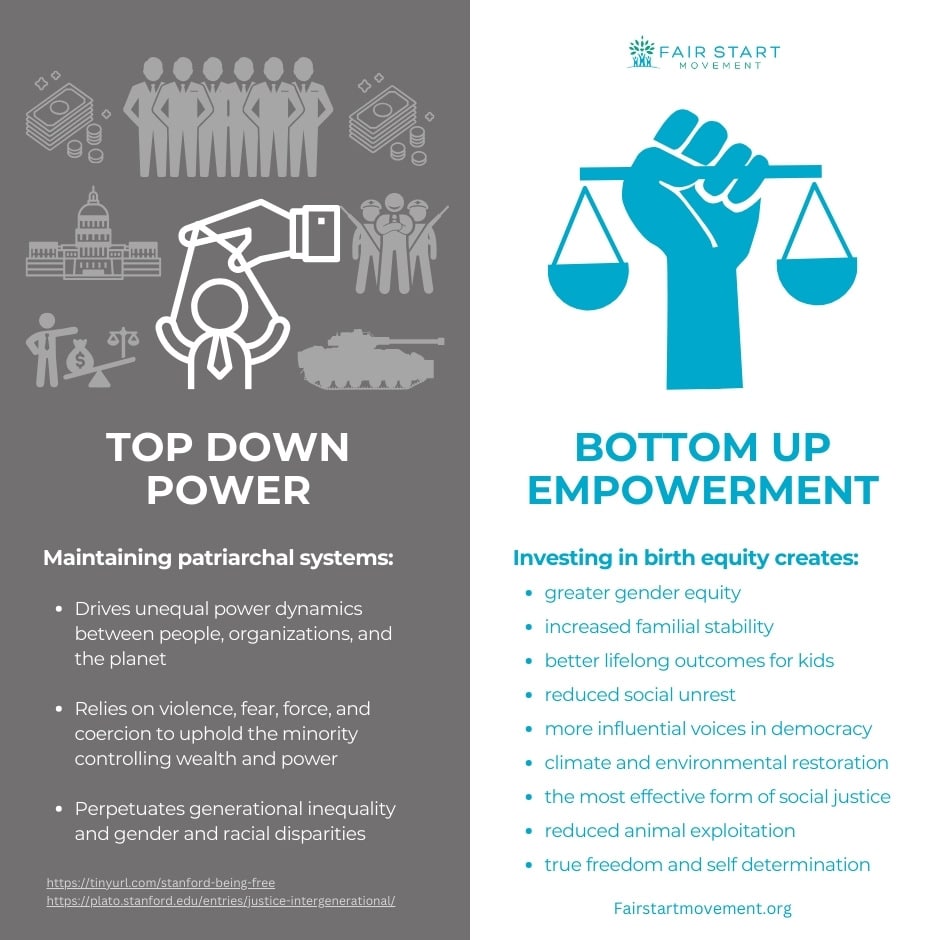
Shifting Power: Bottom-Up Empowerment
To create meaningful change and uphold children’s rights, we must implement parenting delay payments, structured inversely to wealth and income. Given the systemic inequities at play, the right to access wealth for these entitlements supersedes the rights of those who currently control wealth—particularly because their fortunes were amassed through unsustainable growth and the externalization of costs that violated children’s birthrights.
A Systemic Analogy
Imagine that all social progress is being built on a crumbling foundation. Some individuals—those born into privilege—insist on continuing as usual, benefiting from their arbitrary birth advantage while others fall through the cracks, dragging many down with them. By refusing to rebuild this foundation, these free riders threaten the sustainability of our entire system. True freedom—true self-determination—requires that we ask fundamental questions about how we ensure that every new generation is empowered equitably, rather than subjected to inherited disparities that perpetuate environmental and social collapse.
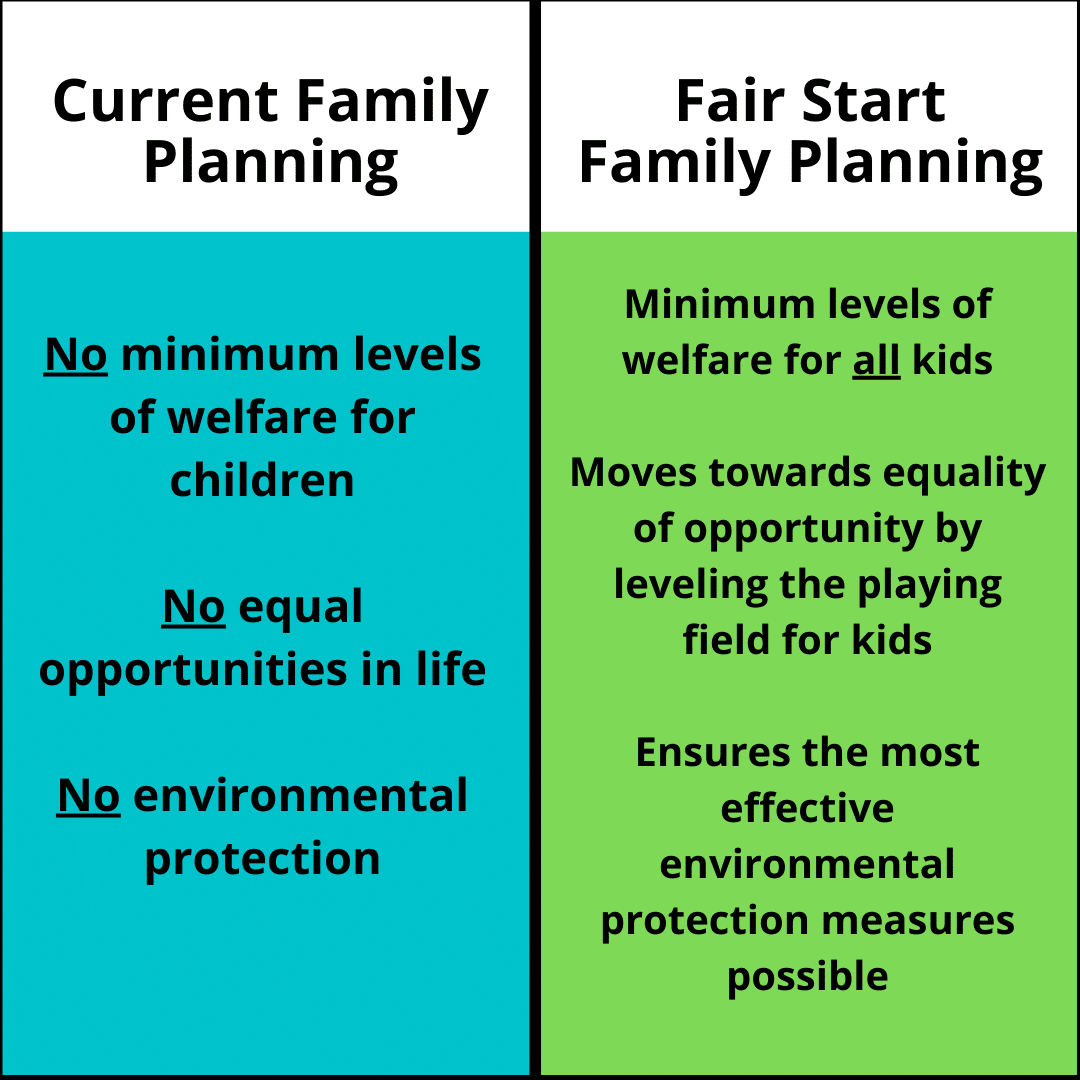
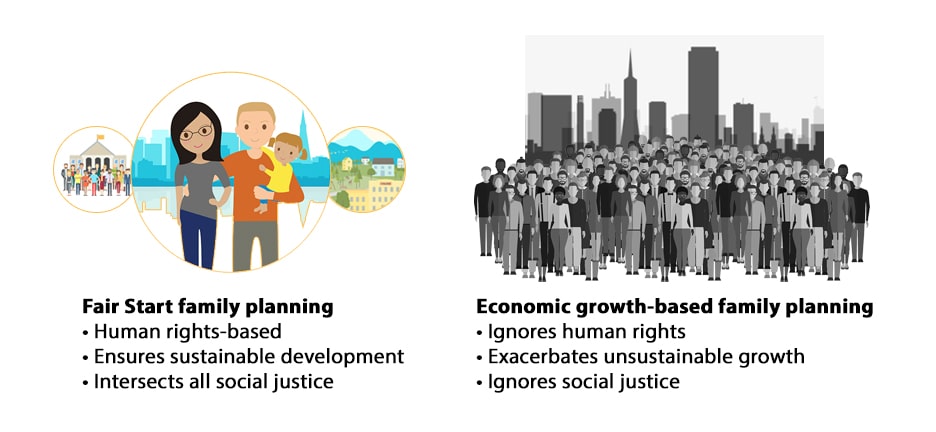
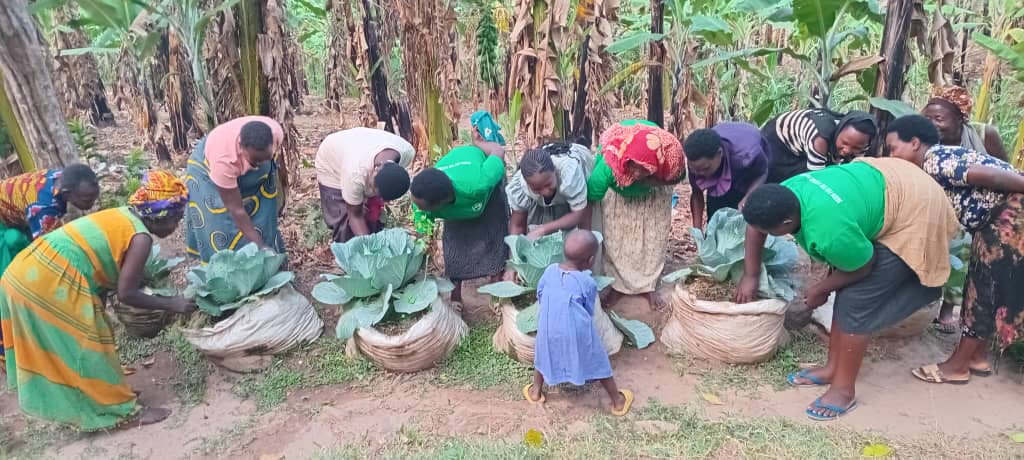
Many organizations focus on reducing family size by promoting contraceptives, but they often overlook why parents make these choices. A better approach is encouraging people to join care groups, where they can learn about family planning benefits and see positive examples firsthand. These groups also provide essential resources like childcare, kitchen garden supplies, school fees, and materials—ensuring every child gets a fair start in life.
A New Way to Address Family Planning and Climate Change
Large organizations often rely on centralized systems to tackle family planning and climate issues, but these approaches don’t always work effectively. The Fair Start Movement (FSM) and Rejoice Africa Foundation Uganda (RAFUG) use a decentralized system, which leads to more transparent and impactful results for families directly affected by these issues.
How Can We Fund These Efforts?
Wealthy nations can adopt this community-driven approach and work with less wealthy countries to share resources, promote birth equity, and support smaller, more sustainable families.
How Care Groups Work
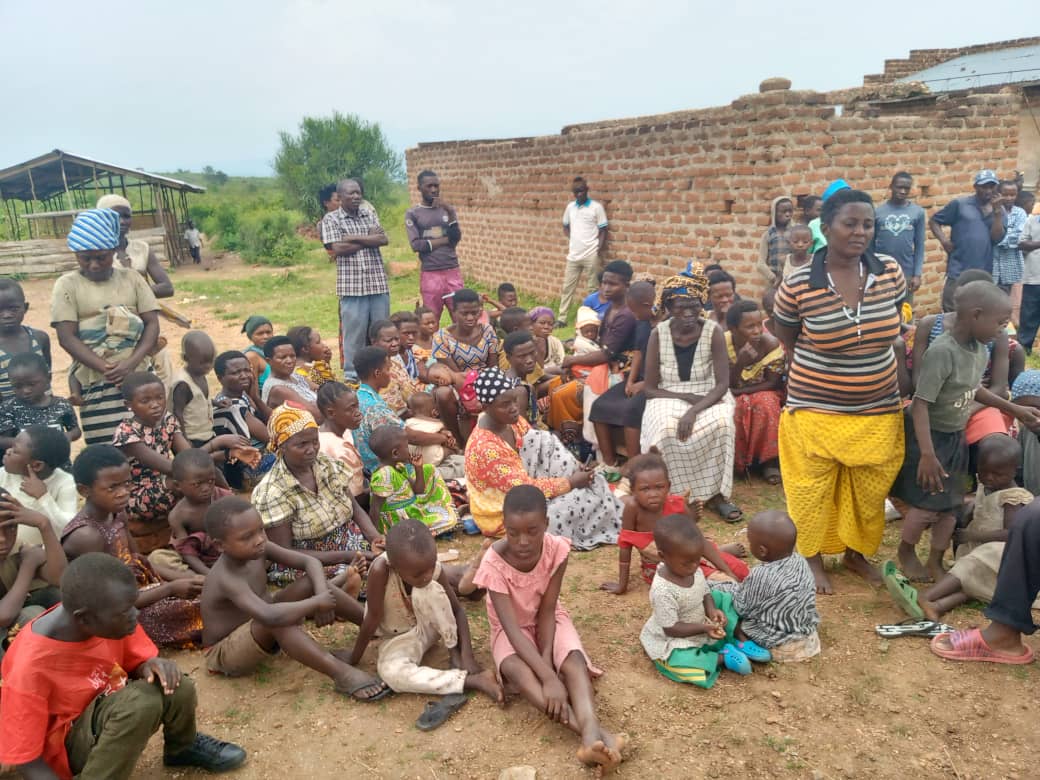
Rejoice Africa Foundation has set up 20 care groups, each with 20 women led by a community leader. These leaders oversee projects like:
Kitchen gardens
Child savings programs
Family planning education
Agroforestry initiatives
Real Stories from Care Group Members
Immaculate’s Leadership in Rwampara
Immaculate, a care group leader from Bugashe, Rwampara district, has helped women start kitchen gardens, practice sustainable cooking, and engage in family planning discussions. A donor contributed $640 for child savings accounts, enabling RAFUG to create 62 accounts and grants for kitchen gardens. However, financial support from wealthy individuals remains limited.
The Challenges of Family Planning: Ruth’s Story
Komugisha Ruth, a care group member, became pregnant while using the contraceptive Implanon. Struggling to provide for her child, Joan, she now questions parent-centered family planning and wants to delay having another child until she can better support her family.
Jemima’s Journey from Child Bride to Activist
Kabugho Jemima grew up in a poor family of 10 in Western Uganda. Forced into marriage at 16, she later worked as a maid for priests, one of whom sponsored her education in nursing. Now an activist, she fights for women’s rights, reproductive health, and climate-friendly farming. Jemima co-founded the Rejoice Africa Foundation, urging accountability through a reward-based system to combat climate change.
The Impact of Care Groups
Sixty women across three care groups have successfully built kitchen gardens, growing their own vegetables—even on small plots or using sack farming. Some members now earn $10 per week selling their harvests. This financial independence has helped women like Paskazia, who once engaged in risky survival strategies but now supports her family through farming.
Joy, a mother of three, advises younger women to delay having children until they are better prepared. She shares her struggles during drought and poverty, encouraging others to plan for their children’s future.
Why Care Groups Matter for Reparations
The Care Group model is more than a support system—it’s a path to long-term change. It helps women:
Build Community: Women with shared experiences support one another.
Gain Education: They learn about reproductive health, nutrition, and financial planning.
Develop Skills: Training in income-generating activities promotes financial independence.
Advocate for Change: Women collectively push for justice and support.
If more wealthy individuals followed the example of Jessica Blome and invested in Care Groups as part of reparations, donations would be more transparent and accountable. Most importantly, future generations would have a fairer and more sustainable start in life.