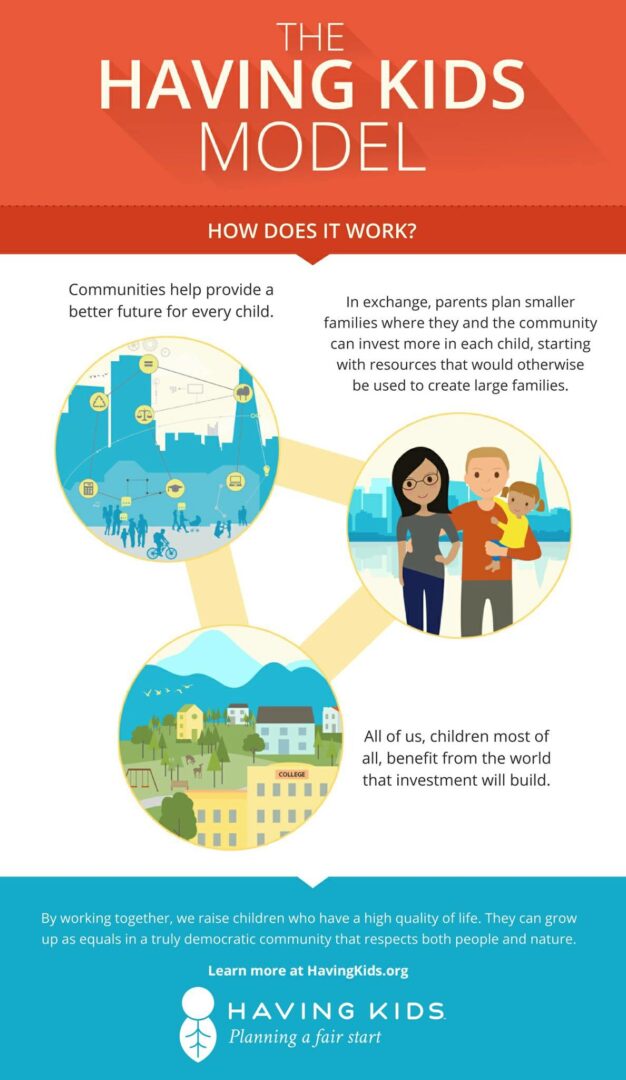
Fair Start is bottom-up democratic override using the first human right, rather than top-down authority.
The Ministry for the Future is a climate fiction (“cli-fi”) novel by American science fiction writer Kim Stanley Robinson published in 2020. Set in the near future, the novel follows a subsidiary body, established under the Paris Agreement, whose mission is to act as an advocate for the world’s future generations of citizens as if their rights are as valid as the present generation’s.
In contrast, the Fair Start Movement looks back toward the base cause of the climate crisis (and buttressing crises like deadly inequity): The failure of world leaders in the Twentieth Century to implement the Children’s Rights Convention and zero-baseline modeling as the standard for family policy, and as the first and overriding human right – a right that would override property rights of entities like Exxon, because such property rights can only be legitimately assigned after we have physically constituted functional democracies where people have influential voices through fair family policy.
Being free entails changing the way we create power relations at birth.
We then use a simple test to see who among us is continuing that failure, versus truly free people who are targeting concentrations of wealth and power to limit and decentralize that influence into functional systems of democracy. Limiting and decentralizing how? It involves taking back the costs that were imposed on women and children, described above.
But their analysis misses the key question: How are we actually empowering people to participate in making the rules under which they must live, and limiting the power others have over them – including the destructive power inflicted by the climate crisis?
That solution could be as simple as steeply redistributive baby bond legislation designed to incentivize family planning that actually gives all children equal opportunities in life, socially and ecologically. There is no need to ignore the long run threat, while dealing with immediate ones.
Take action: Urge @dleonhardt to cover the story that really matters – how we work together to ensure a natural and democratic future.
The founder of Patagonia, Yvon Chouinard has given away the company to an environmental trust and non-profit. All profits will go to the organizations to fight the climate crisis and pursue other environmental goals.
The act is courageous and begins to break down the barrier that prevents us from talking about what the wealthy owe in light of the climate, inequity, and other crises we face today.
This quote by Patagonia leadership is key:
“The current system of capitalism has made its gains at an enormous cost, including increasing inequality and widescale uncompensated environmental damage. The world is literally on fire,” Charles Conn, chair of the Patagonia board, said in a statement.
TAKE ACTION: Urge @Elonmusk to consider the same moves that Patagonia chose with the companies he oversees, which rose to prominence through the same process.
Amboseli Love is working hard to achieve noble ends and is focused on next generations, like Fair Start.
Per their leadership:
The Amboseli Love is a non-profit organization based in Amboseli Kenya. Our primary focus is on Orphaned children, children living with disability HIV/AIDs, Rescued children from early marriages and most vulnerable in the community. Amboseli Village is located in Loitokitok, Kajiado South in Oloolarashi/Olgulului group ranch communal Land. Most Maasais in Amboseli are nomads and live in Manyatta Villages with population of around fifty families. With wife inheritance and wife sharing within age sets poses increased danger in spread and new born with HIV/AIDS. That’s where we Amboseli Love get in to educate the community on the risks of shared love and take over the affected children, educated, feed and nature them to their full potential.
Almost every claim of valuing something that we commonly make has been and is being physically undone by a baseline/border error in our universal family planning policies, and the constant violations of the Children’s Convention it causes.
The error makes our political systems fundamentally unjust. The error also makes claims misleading, converting empowering democratic relations that limit and decentralize power into exploitative commercial ones that do the opposite.
Pressing claimants to account for the actual people in their claims – to stop abstracting – demonstrates this. Ask anyone making a policy claim to account for the minimum levels of welfare, equity, restored ecology, and effective democratic voice, they are ensuring for the people – and the future majority that would be impacted by – their claim. If they cannot account for these basic values, they are not making a morally coherent claim.
Many are already moving in that direction with the most effective reforms possible, and choosing not to be part of an unjust, or preconstitutional and anthropocentric, system that exploits rather than invests in kids.
TAKE ACTION: THERE ARE DOZENS OF WAYS TO HELP BEND THE ARC OF WHO WE ARE TOWARDS JUSTICE.
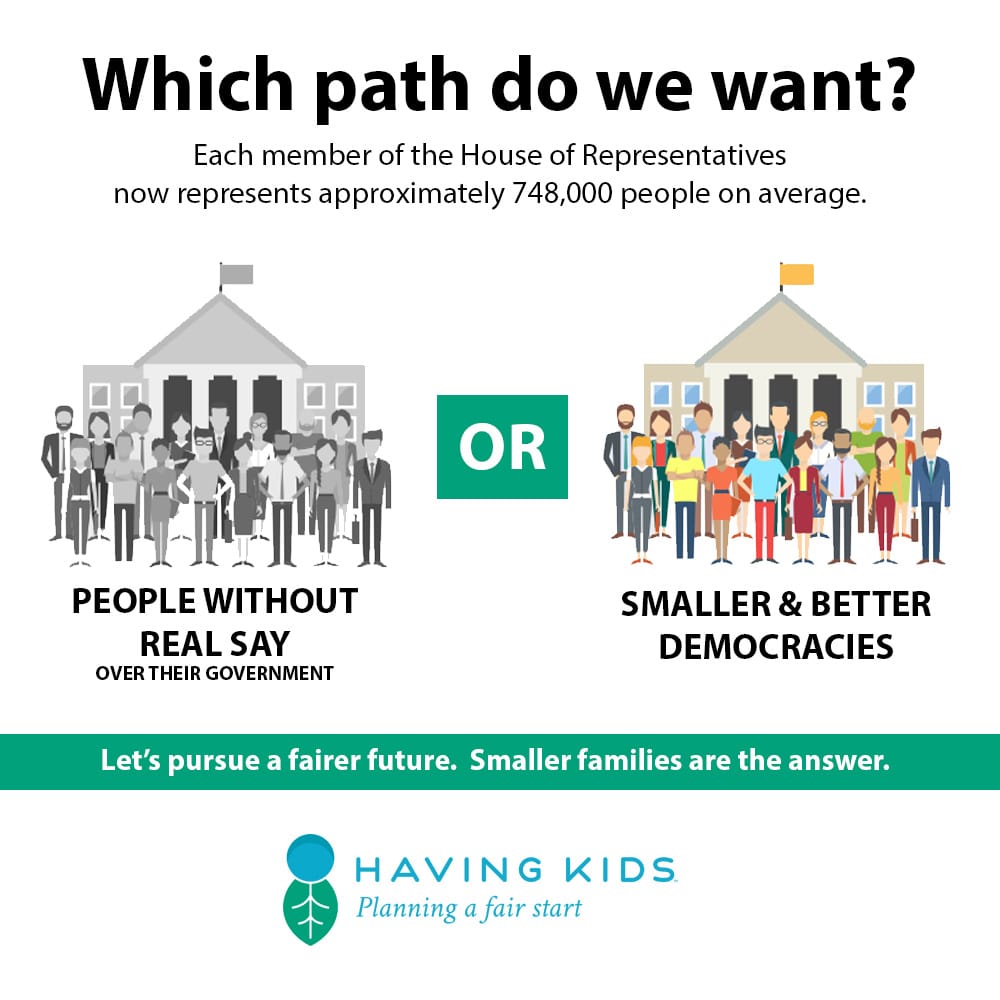
As evidence mounts that the January 6th riot at the U.S. Capitol was an orchestrated attempt to subvert democracy, one obvious question is how to reverse whatever process made Trump’s attempt possible. At base, what made it possible was an extreme concentration of wealth and power, combined with a large group of supporters who were susceptible to his influence.
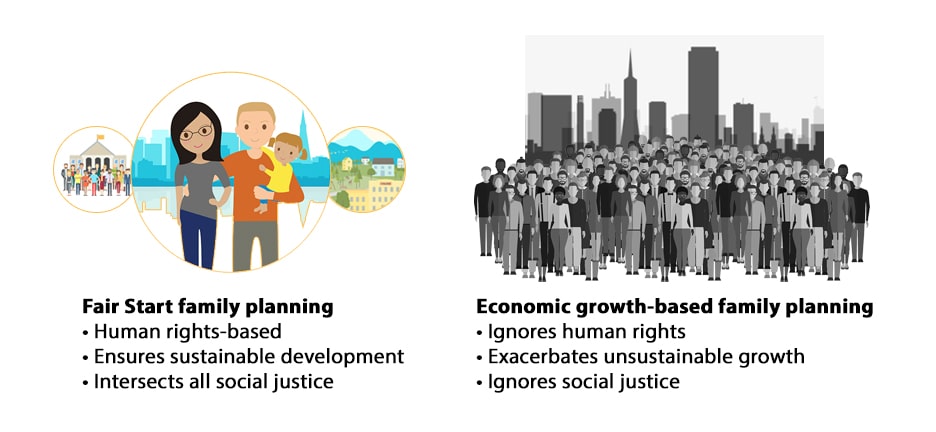
No solution is sufficient if it does not address that problem, by fundamentally limiting and decentralizing power into future generations through Fair Start wealth transfers/empowerment. Other fixes just move the problem around. The real fix is to take down pyramidic power schemes, the kind that created Trump.
TAKE ACTION: Real democracy is about empowering people, bottom up. The long run fix for the degrading of our democracies is a universal family planning system that builds town halls, not Trump-owned shopping malls. Urge the United Nations to act, then lawfully engage a wealthy family with Fair Start demands and let us tell your story.
Harvard President Larry Bacow says that Harvard is committed to confronting the climate crisis. Harvard fundamentally built its wealth and prestige on an unsustainable system of growth – family policies – that externalized their costs on others and did nothing to protect nature from the Anthropocene. Is Harvard reversing its position on those family policies? Is it employing a restorative standard for climate mitigation? It is pointing the world towards optimality, or growth that will multiply unforeseen threats – the very thing that happened with greenhouse gasses?
If Harvard is not changing course on family policies Bacow’s statements are misleading, with growth remaining the fundamental driver of the crisis. You cannot make any claim of a policy impact that does not start with, and become fundamentally contingent upon, people and the family policies that create them. And in a democracy, those people – comprised as relatively self-determining – are the baseline to assess costs and benefits.
The same questions can be raised with Harvard’s recent purported commitments to racial justice, child welfare, animal rights, or human rights and democracy. Is it embracing redistributive policies that eliminate the massive birth-wealth gap between black and white children? Does it apply the Children’s Rights Convention as a standard for family planning? What is it doing to prevent our species from overrunning and eliminating others? Growth and inequity have ensured the average person will have little if any impact on their systems of governance. Is Harvard reversing that process?
Quietly undoing downstream fixes with upstream anthropocentric growth and birth inequity is disingenuous, has concentrated power in a few, and foisted social and ecological costs on others. Harvard is one of those concentrations. The family policies it tacitly accepts, which pretend that our social and ecological positions are a matter of some magic fortune, are the fundamental source of injustice. The greatest act of justice, for the vast majority who will live in the future, means recovering those costs and using the wealth to plan just and sustainable families where power is physically limited and decentralized.
Urge Larry Bacow to tell us all the truth about these matters. Contact him here:
617 495 1502 Email: president@harvard.edu
We cannot afford to lose ground on these issues having missed the fundamental driver and allow concentrations of wealth and power to use people to further exacerbate power differentials.
The longer we delay replacing dysfunctional family planning policies with the Fair Start model, the wider the gap between rich and poor will grow. At the same time, Having Kids and other organizations that support giving all kids a fair start in life rely on wealthy philanthropists and foundations to help fund this reform. While many funders want to, and want to eliminate giving their own kids a massive head start in life, others want to pass their privileged positions in life along to their kids.
In one extreme case, a family of billionaires is enabling their young children – through a family foundation – to drive the direction of several policy reforms, including the type of legislation progressive environmental groups would be allowed to introduce. Consistent with a trend that was thoroughly documented in a recent New York Times bestseller, the parents would prefer to enable their kids to disproportionately shape public policy, and in ways that make the average voter irrelevant.
What’s wrong with this picture? In a true democracy, there is no justification for giving some kids wealth and power at birth while allowing other kids to die from starvation, neglect, and abuse. But that happens in the United States and elsewhere all the time – and many of us just treat it as something that is beyond our control.
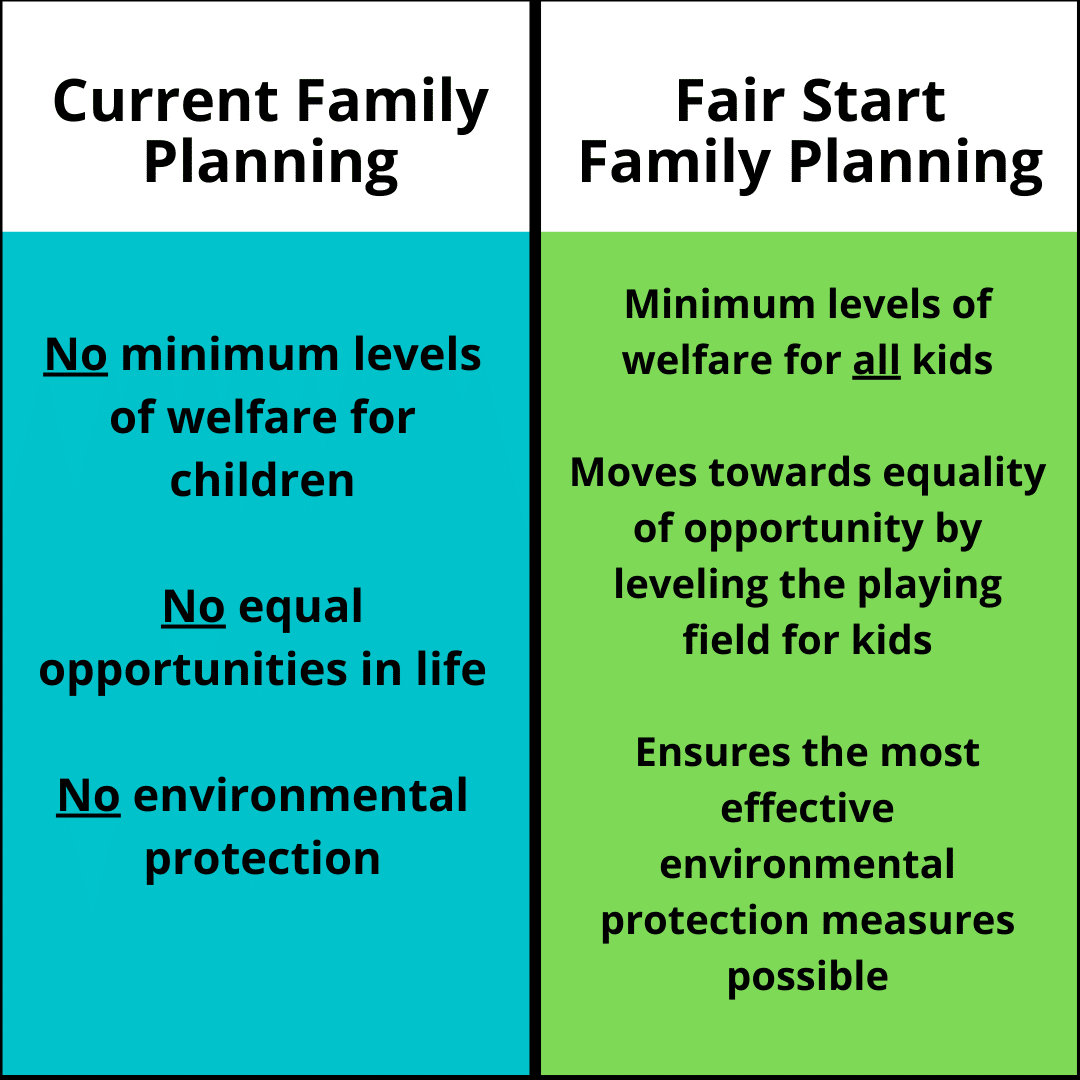
In a true democracy, we have to level the playing field for all kids. We have to move towards true equality of opportunity at birth. That’s what it means to constitute ourselves as free and equal people, and it’s the only way to understand what phrases like “We the People” in the United States Constitution, and other constitutions around the world, mean. Our constitutions must be interpreted to apply justice intergenerationally, and our failure to do so is driving the ecological and social crises we face today.
We owe our kids more than a world filled with rich families constantly passing their wealth and power forward, while other kids are born into conditions where statistically they have no chance to succeed.
It’s common to see people today sign their messages with a variety of pronouns. That act is meant to liberate people to identify themselves as they see fit – to self-determine, rather than be determined by others’ conceptions of gender, for example. Our language matters and shapes our experience, and self-determination – or freedom – is at the core of human rights.
Could pronouns be the key to an even larger form of self-determination?
Keep in mind that groups of people are inherently dynamic, with people constantly being born, and dying. So for the pronouns that relate to who will exist in the future, has the claimant accounted the most basic of values and building blocks of freedom: For ensuring future persons minimum levels of wellbeing, equality, their need for a safe and natural environment, and an influential voice in democratic systems? In other words, has the claimant accounted for the most important factor in any claim that we should do something – the people at stake – and how to ensure those people can self-determine, relative to a zero baseline, rather than be determined by others. In other words, can they account for how all the pieces fit together?
What we find is that because the creation of people – or having kids – is considered a matter of parental autonomy and private decision-making, we largely overlook people as the key factor (always he first and largest driver) in all prescriptive claims. In almost every legal system in the world today parents who have severely abused children have the right to have more children, even when those children will raised by the state. At the same time those systems do nothing to ensure the average citizen has a right to a safe and natural environment. That sad reality shows how deeply embedded unsustainable population growth – anthropocentrism – is in our systems. And as a result, the most important aspect of policy claims – the creation and sustainable development of each person – is treated as none of our collective business.That reality epitomizes how those at the top pit the most vulnerable against one another, and shows the need for reproductive justices reforms that free us from one another.
Urging people to specify their pronouns can help fix this. For example, when governments claim to have a climate policy, we can urge them to account for the actual people causing the emissions, the people subject to them, the people in both categories who will exist in the future, etc. You will be shocked to see how little thought goes into these matters of how people came to be, and will come to be.
Do you support nonprofits that protect children, animals, the environment, or human rights and democracy? Urge them to explain how population growth – the entry of new persons into the world – impacted their missions, what they did about that impact, and what they are doing now. Again, you will find that most groups did not create the results they claimed to have because they ignored the key factor shaping outcomes. And in terms of for-profit businesses, query how many have produced anything of truly objective value, and how many just rode a wave of valuation, demand and population explosion created by poor and unsustainable family planning that ensured no minimum levels of welfare for children (in blatant violation of things like the Children’s Rights Convention), abysmal levels of education, extreme inequity ensuring cheap labor, and bloated nation-states where the average person had no real voice in political outcomes. Did they simply profit from a system that mass produced consumers instead of developing capable, and truly free, citizens?
We can sharpen the questions. Have the claimants noticed how their answers group together people who do not trust each other at all, and could not possibly operate in truly consensual, integrated, and democratic systems of relative self-determination? If people don’t trust one another, how can they be in truly consensual systems of governance with one another? For example, if you have to lock your home because you do not trust the people in your country, why would you trust them as citizens empowered to help decide the fate of the nation? How will the claimant deal with this, or what might be called the constitutional dilemma (or Lesser Power Asymmetry) of how to include and empower people in legal systems, at the same time?
Discourse using the pregnant pronouns elicits and brings to the surface something very specific about all “should” claims: It is ubiquitous that we ignore the people in, and subject to, prescriptive claims. We can’t allow ourselves to make this mistake.
Our evasion derives from the simple fact that for many reasons, including a series of mistakes in the development of legal and political systems (like seeing power as violent domination rather than more subtle things, like bad parenting and climate emissions), human cognitive dissonances like temporal myopia, cultural taboos, deference to religion’s role in the family, racial and political sensitivities, etc., we ignore people’s creation and how their creation impacts ethics, morality, rules, law, policy, etc. We think of people abstractly, exogenously, and statically, instead of dynamically focusing on their creation, their development and how they constitute themselves together in self-determining democracies where human power is limited and decentralized. And yet, if we truly value people and self-determination, they will always be the first and most important factor in the things we prescribe.
Why? Because we are before we do, people are always the factor that comes first (or “lexically prior”), and because the vast majority of people and other animals whom we should care about will exist in the future and as such are especially vulnerable, their interests outweigh the interests of people alive today.
What is the usefulness of the information we get in pregnant pronoun discourse? Questioning people about the pronouns in the things they are prescribing helps us divide people into those committed to freedom, and those who are not. The former will choose to orient their claims from the perspective of, and with pronouns that imply, self-determining people who are assured minimum levels of wellbeing, equity, nature, and democracy. They will orient the creation of future generations – or family planning systems, laws, and policies – from a child-centric perspective, as proof of their empathy, and in way that gives children these things and allows them to constitute themselves in just and relatively self-determining communities. This is not about population; it’s about freeing people.
A Useful Divide
The latter, who can be termed precons, will not – either because they cannot empathize with the people their prescriptions impact, wish to exploit rather than invest in them, do not care if those people will constitute themselves as free and relatively self-determining people and instead are content with centralized systems of top-down power, etc. In other words, the discourse helps us identify the people we should not trust in our democracies, where the act of constituting ourselves – intergenerationally – liberates us. Distinguishing between the two and knowing the threats for what they are can mean the difference between building a future where people are free and relatively self-determining, something countless people died in wars of liberation to ensure, and not doing that. No ethic, morality, law, policy – or systems comprised of such things – is legitimate if it cannot hold up in pregnant pronoun discourse as promoting relative self-determination, and we may be obligated to violate the prescription and its systems in favor of systems that do.