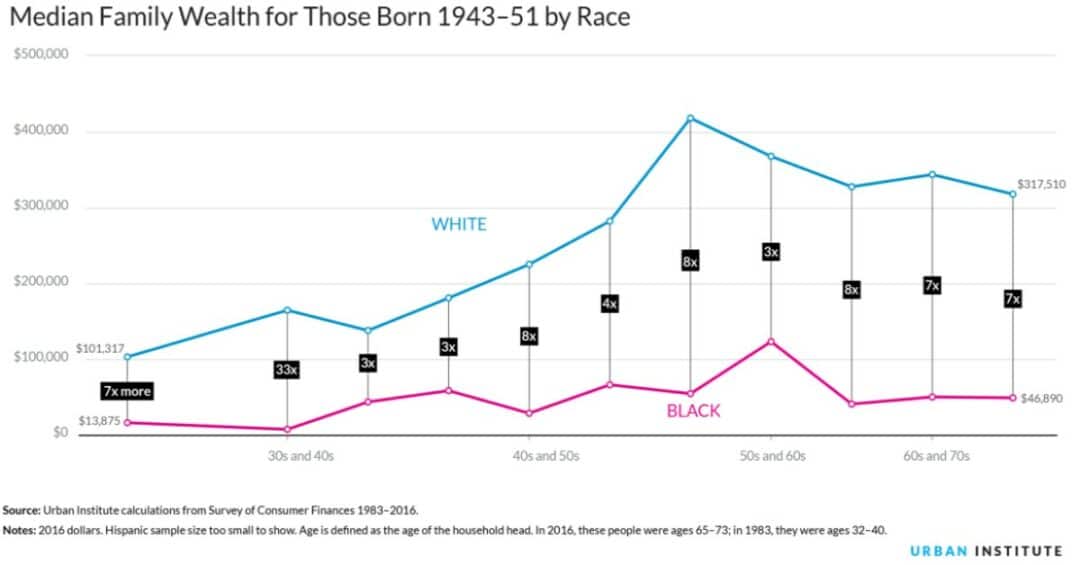
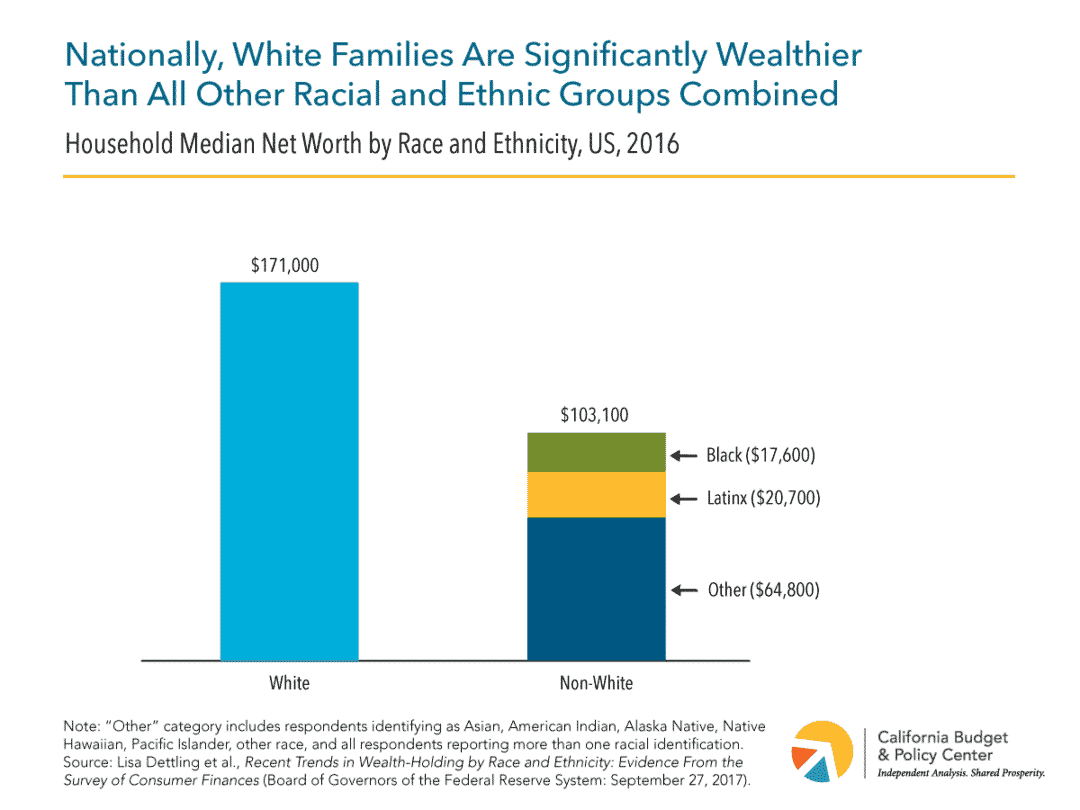
Ask most people to define racism and they will default to blaming individuals for discriminatory preferences. But could there be something larger driving racism? Imagine how a group of people would interact if some of those people had a tenth or even less of the wealth of the rest, and through that inequity, had a comparable lack of ability to set the group’s norms, whether in the context of politics, law, in settings of employment, etc. Would that impact – via power relations – how the group members interact?
There’s no need to imagine such a thing. Persons of color generally have, because of massive and historic birth inequity, less money – and hence less power – than white people.
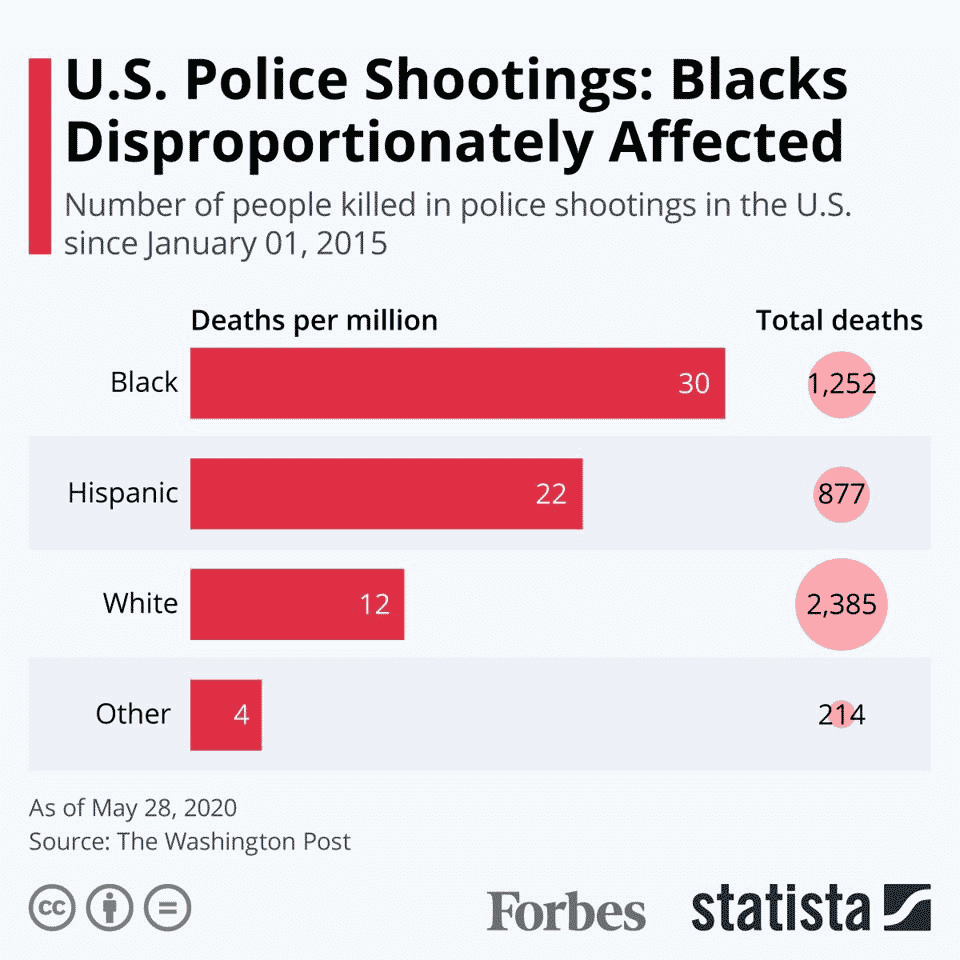
The role of birth inequity should in no way be seen to diminish other drivers of racism, including the personal animus that does exist, and which has been shown to drive police brutality and other forms of violence inflicted upon the black community. Those forms of violence, and the need to defund the police committing them, as well as other drivers, remain key.
Regardless, the assumption that being born poor is ok may drive much of what we see as racism, and we can certainly understand why concentrations of wealth and power would rather blame it on individual preferences. And they may feel secure because the possibility of true birth equity – or equal opportunities in life – has largely been hidden behind a dominant norm that treats the act of having children as a personal or private matter that entails no or miniscule obligations from the wealthy to those having children who will be born poor.
Fair Start board member Seeta Begui recently marched for reproductive rights in Florida. Go Seeta!
Check out the photos below:
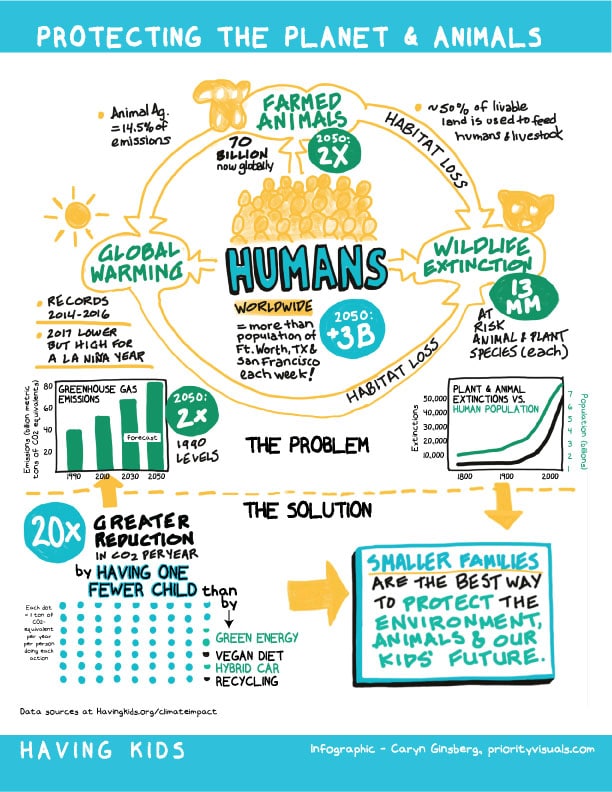
Many have chosen to remain childfree because of the impact that creating more people puts on animals raised for food, wildlife, the environment, and concern for the world that will be left to the next generation. The ability to choose has now been significantly limited, and for many, eliminated entirely. But we can push back.
Let’s take a clear position on the right to plan families as being instrumental to animal and environmental advocacy, and to mutual liberation. Planning is a human right. Help us improve and protect it.
TAKE ACTION: There are dozens of ways to make reproductive rights the centerpiece of freedom and democracy, including elevating every child’s right to a Fair Start in life.
Human rights override the authority of governments, and the first human right is the right to an ecosocial Fair Start in life. Today the Supreme Court made clear the United States government will not protect our right to be free from the climate crisis, or our children’s right to nature. Regardless those rights give us an overriding right to directly target the people who fundamentally violated them – people like the Raymond family.
The American Revolution was born on the idea of defeating tyranny. This is the same thing. This is a matter of defending ourselves and others.
Are we going to let men like Lee Raymond hurt our children while the government does nothing? Brave people will not.
Take action: Urge Lee Raymond to pay what he and his family owe in the form of family planning reparations that will most effectively offset the harms he and others have caused future generations.
Kimberly Atkins Stohr, The Emancipator’s senior columnist, a senior opinion writer and columnist at The Boston Globe, and author of “We Can Solve the Racial Wealth Gap” series highlights the black and white financial gap in the U.S. She suggests that a number of solutions are needed to reimagine reparations and dismantle systemic racism that fuels the racial wealth gap. We agree. And those solutions must include policies to ensure equity right from birth if we hope to effectively close that gap, because without a fair start in life, children will be playing a lifelong game of catch up.
Factory farming and every other animal and environmental crisis is fundamentally driven by human population growth. While Peter Singer is often credited with advancing the philosophy of animal rights, Paul Ehrlich probably did more to actually mitigate animal suffering and extinction through his influential work to slow population growth. Animal liberation, ours and nonhuman, begins with a family planning ethic that promotes sustainable and more equitable families who build empathy and fluid democracy in future generations. It’s not whether we talk about animal rights — it’s how we actually influence nonhumans and their worlds.
Learn more about why social justice for all starts with family planning reform and urge Editor Lauren Williams (@laurenwilliams) and Ezra Klein (@ezraklein) to support Fair Start sustainable family planning policies, and to stop pushing women to have kids.
The case is straightforward: The Declaration of Independence,
parts of the Constitution, and the Supreme Court have made clear that there is
a fundamental human right to be let alone, or free from others. The
Declaration, in particular, talks about freedom as based on Nature. Being
in nature, or wilderness more specifically, is the height of that experience,
and given that climate change is the greatest threat to nature, climate change
is the greatest threat to that right. How can you be free of others without
nature? If climate change is a bad thing, what’s the state of affairs we are
changing from, and don’t we have a right to that healthy and natural world? Nature is the buffer
between us and others – the thing that individuates us.
And the right to nature is not just part of our legal system. It’s fundamental to the concept of liberty, a necessary condition for any legitimate form of social contract. The right to nature, conceived specifically as a wilderness or regenerative ecological standard, is the highest environmental baseline possible. It’s the gold standard against which any environmental protection efforts must be judged. We are facing the climate crisis and other ecological catastrophes because we’ve failed to protect this right.
Dear Secretary General Gutteres, and Directors Kanem, Andersen, and Russell,
Several United Nations member states, ignoring the impacts on the climate crisis, the pandemic, human rights, and the sustainable development goals, are intensifying pronatal programs that are designed to push women to have children as a means of expanding economic and other forms of state power.
Not only do pronatal policies reverse progress in mitigating the climate crisis, but they fundamentally exacerbate the pandemics, which are killing millions. At the same time, faced with the United Nations’ historic failure to adopt a sustainable universal family model, nations like India and Nigeria are struggling on their own to stem disastrous growth.
By adhering to the isolation modeling the UN is enabling a false idea of autonomy and is perpetuating inequity that benefits white colonizing nations. (That colonialism is reflected in the current 1/10 wealth gap between black and white children in the U.S.) Instead the UN should promote birth equity to achieve true autonomy and as a reparations to future generations.
The UN has not taken action. It has failed to link its outdated modeling to the overcrowding and poor public health that helped drive the COVID-19 pandemic. It has failed to condemn China’s new pronatal family planning regime, which is intended to create a baby boom among a population that – because of its size – already poses the greatest threat to the world’s ecologies. Instead the UN has focused on downstream efforts while at the same time profiting, politically, from population-based GDP growth.
Inaction threatens the UN’s credibility. Pronatal policies being rolled out in response to a perceived economic “baby bust” show that our current systems of governance are fundamentally illegitimate. If we are willing to create lots of people in whom we invest relatively little in order to satisfy markets and economies, instead of fewer people in whom we invest more in order to build the democracies that must precede, justify and regulate those markets and economies, we are admitting fundamental illegitimacy, or as the peer-reviewed work shows, the preconstitutionality, of our political systems. This is especially true when doing so exacerbates the climate crisis. In that case, all effective measures to correct this inversion are just.
The costs of ignoring reproductive justice legal reforms are mounting. These include the costs of the climate emissions that could have been avoided since at least 2007, and the role the failure to require equitable family planning has played in driving the massive and growing gap between rich and poor across the globe. The Fair Start Movement is calculating those costs as harms, and believes world leadership must – and one day will – be held fully accountable for them.
Will you join that call? Nothing would have a greater long-run impact on restoring our environment than simultaneously compensating future generations, while helping them become parts of legitimate democracies, via Fair Start investments in their empowerment and resilience.
“Beauty has no age limit. Fertility does.” Ad issued by Italian government in campaign to boost fertility rate.
Let’s find a way to reduce child poverty without signaling that society needs to exploit more babies to grow economies. There was a time when a case could be made that bringing more children into the world was a benefit to society. Today, with the overwhelming demands of nearly 8 billion people inflicting serious damage on the planet’s life-supporting ecosystems, there is no case for encouraging births, especially when it will harm the very children we have. More births portend a bleak future for today’s and future children – whom we should be protecting, not exploiting. Public policy needs to catch up with this harsh reality.
For too long, the decision to bring a child into this world has been all about the “rights” and desires of the prospective parent, with little regard for the rights of children. The rights of children should be paramount, eclipsing other rights and agendas. Nothing could be more important. That’s one reason I admire and support the work of the Fair Start Movement.
Today, we’re witnessing unenlightened state and business agendas to reverse the trend of dropping birth rates. “People want it. Society needs it. We want the economy to grow,” proclaims Lyman Stone, an adjunct fellow at the pro-growth American Enterprise Institute (AEI).
On a full planet, it’s time we put an end to pro-natal agendas and rhetoric that pressure, incentivize or otherwise encourage prospective parents to add to our numbers. Let’s consider pro-natal public policies because they are surging today.
Bear with me while I set the stage:
Birth rates have been dropping around the world for 60 years, and that drop may be accelerating today – for many reasons. There is some lag, but after birth rates drop below replacement rate, a population eventually begins to contract. While that’s not happening yet to our global numbers, many countries have begun to experience this contraction. And there are more to come. Sadly, this is getting negative attention.
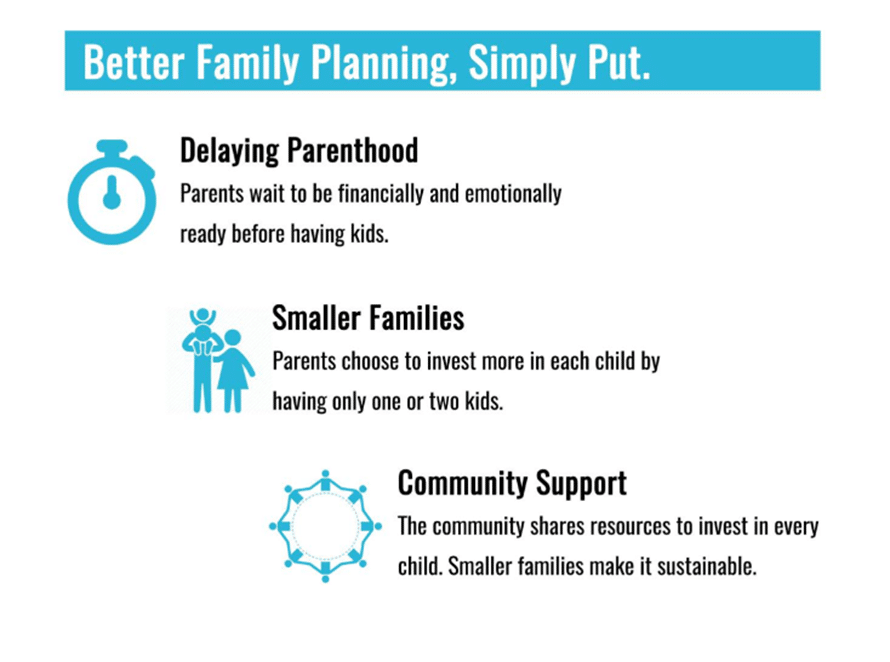
But it’s actually really good news. It’s an indication that we’re collectively planning for and investing more in each child, which naturally brings down family size. It also means more female autonomy, improved access to education and employment opportunities for women, better access to contraception and other family planning services, and a reduction in teen pregnancies.
Another contributing factor is it’s become SO apparent that we’re doing serious damage to our home planet. Our climate, biodiversity, soil, and water are all degrading before our eyes. Young adults today are reluctant to bring a child into such an uncertain world, and many do not want to contribute to this destruction by adding more people.
On an overpopulated planet, we ought to celebrate declining birth rates. It’s exactly what is needed so we can ease our pressure on ecosystems, allowing them to return to health and meet our needs, the needs of other species, and especially the needs of the world’s children. Unfortunately, I’m observing the exact opposite. There’s an unexamined assumption that, “of course we must replenish ourselves” (replenishing is something we should do when we’re at a sustainable population).
Growth-addicted policymakers in numerous nations have been panicking about what’s being termed a “baby bust.” These fears over a shrinking population are so common, they’ve earned the labels, “depopulation panic” and “baby-bust alarmism.” Some of this panic stems from the fact that governments have been engaged in a population Ponzi scheme, relying on tax revenue from an ever-growing pool of citizens to fund services for those born decades earlier. Plus, a growing population means more workers and more consumers year after year, an easy recipe for GDP growth. New York Times columnist Ross Douthat wrote, “Today’s babies are tomorrow’s taxpayers and workers….”
Of course, a high rate of GDP growth is the Holy Grail. Economic growth is the most universal public policy goal on the planet. AEI’s Stone, who is also a research fellow at the conservative think tank, Institute for Family Studies, laments, “There is no economy that has managed to knock out gangbuster growth with a declining population.”
If you’re addicted to growth and running a Ponzi scheme, it can be very alarming to see it begin to unravel. And if you’re running for reelection and you can’t brag about economic growth during your administration, you’re pretty much done.
So, officials in numerous countries are instituting policies designed to boost the birth rate. According to the U.N., 10% of the world’s nations had explicitly pro-natal policies in 1976, but that number began to rise sharply at the turn of this century, and has almost tripled (28% in 2015, the most recent data). Hungary, Poland, Greece, Japan, and Korea are just a few of the nations very actively attempting to reverse population contraction.
It’s too seldom discussed, but pressuring women to birth more taxpayers, workers or consumers is an abhorrent violation of their human rights. It commodifies children and dehumanizes women, reducing them to incubators in service to an overheated economy hooked on unsustainable growth. Women and couples should be making family-size decisions free from political and cultural pressure to procreate. As for future children, they have a right to inherit a healthy planet and a shot at living decent lives.
Even in the U.S., where social support programs have traditionally received limited funding, support for unsustainable and inequitable baby-making has begun ratcheting up. Child tax credits, child allowances, paid family leave, and child care subsidies are getting miraculous bipartisan support. The American Rescue Plan (a response to COVID) has been providing $3,000 to $3,600 per child in tax credits annually – through the end of 2021. Efforts are underway to extend it. Senator Mitt Romney this year proposed The Family Security Act, which would also send a monthly check to families for each child.
In defending the proposal, Senator Romney said, “We’re creating an incentive for people to be able to form families and to have children because we’re recognizing that we’re not reproducing ourselves.” In one interview, Romney stated, “Our population is declining pretty substantially. We’re down, I think, 5.8 million people from where we would have been had we maintained the birth rate of the last decade. So, we’ve got some work to do.” Clearly, he is not aware that we’re in overshoot (the scale of the human enterprise – our economy and our population – has outgrown our planet).
Policies and projects to increase birth rates in several nations have met with mixed results. That’s not deterring policymakers desperate for growth. Advice from New York Times columnist Ross Douthat: “America needs more babies. Public policy alone cannot deliver them, but it can help.”
Pro-natal public policy emerges in – and helps perpetuate – a pro-natal culture. Emma Green, in The Rebirth of America’s Pro-Natalist Movement (The Atlantic, 2017) wrote, “Ultimately, a shared cultural commitment to the importance of children is the factor that will determine America’s baby-making future.”
While it is concerning that today we live in a pro-natal culture, I’m optimistic because young adults today are transforming that culture. They are choosing to delay childbearing and choosing to have fewer children. They understand a meaningful life does not require motherhood. They recognize that raising a child is a huge commitment, it’s expensive, and it does require sacrificing career and other priorities. And, of course, many appreciate that a full planet doesn’t benefit from a growing human population.
Protecting today’s children from poverty is a noble goal. But encouraging higher birth rates isn’t the way to do that. It guarantees those children will inherit a dead planet. It’s challenging to develop policy that alleviates child poverty but does not incentivize prospective parents to bring more children into the world. I don’t know the answer to that dilemma. But policymakers working on this must have a full understanding of the fact that we’re in overshoot. This means we need to embrace and celebrate dropping birth rates and contracting population, not fight it.
Let your elected representatives know you do not support policies that attempt to bribe women to birth more taxpayers, workers, and consumers. Let them know you support policies that reduce child poverty, but only those that do not also increase the number of children.
How did we end up in a world with massive wealth in the hands of a few and ecosystems crashing as our climates degrade? The answer is surprising. Rather than invest in early childhood development, at the crucial phase in the middle of the Twentieth Century, world leaders chose population growth and the creation of mass consumers, cheap labor and large bases of taxpayers.
Because legitimate governance derives from people, who derive from the norms that create them, there are no such things as just societies, political legitimacy and freedom without the sort of Fair Start reforms discussed in this site. Without them we are always coming from an unjust place.