There is an argument that he has no such authority, an argument that transcends reliance on written constitutions or even international law.
This is the argument: Nations are not magically constituted in the past, but either constituting inclusive democracies or not, depending on the laws and policies that surround having children. If those laws and policies ensure minimum levels of welfare, at least begin to ensure equality of opportunity, restore the climate and biodiversity using ecocentric approaches, and treat the addition of each new person as inverse to absolute self-determination, they are constituting legitimate societies.
If we wish to maximize relative self-determination, where else would we find that value but family reforms? There is nowhere else.
An easy proxy for all of this might be the Children’s Rights Convention – and pegging family planning to it to ensure birth and development conditions consistent with it
If nations do not do this, they are constituting something other than democracy.
Moreover, these truly constitutive laws and policies must override all conflicting interests, at least if we take freedom and democracy seriously. They come first. And we certainly imagine people like Judge Kacsmaryk value freedom, and value the people who died fighting in the name of it.
In the case of contraceptive access the application of such primary laws and policies is clear. We need universal access, and courts have no authority to prevent it.
This new model – where we take human rights and their ability to limit governmental authority seriously – could present a difficult choice for your organizations. It will mean abandoning the privacy model of family planning based on the Cairo Consensus as a failure that helped ensure the climate crisis and massive inequity, though it was the model we all long relied upon. That model also – by ensuring growth – made some of your key funders (and we know one of them well) a lot of money.
But the upside would be a better vision of and argument for reproductive freedom, and one that does not rely on a system of government that long ago undercut it’s own authority to rule. And if we choose the override model, there are incremental ways short of all out revolution to guarantee that we constitute legitimate – by which we mean simply inclusive – democracies.
The alternative would be for everyday citizens, like the our members, to simply wait for courts and Congress to mitigate the climate crisis, and protect and ensure the development of the children who will comprise our future, while watching Congress operate in total attenuation from its constituents, and amid widening inequity that empowers some at cost to others.
Free people would not be willing to do that. We are not willing to do that.
Dear Ayesha Imam, Norma Torres, and Annie Leonard,
We write with great admiration for what you have done for the environment. But our generations made mistakes that fundamentally led to the climate crisis and vast inequity we see today. We treated the act of having children as more personal to the parents than interpersonal for the children who would be born, and the communities they would comprise. Instead, we should have used child equity – ecosocial equity – as a standard for our family policies.
Please consider changing your approach to family policies, and embracing something at least approaching Fair Start in your programming, including a vision of future families that can rewild the Earth.
Scan the headlines of news today and you will see stories about celebrities hard working while also having kids.
These stories are not news, if we assume news should be about what really impacts readers’ lives.
Instead it’s content to carry advertising. In normal circumstances this is fairly benign stuff. But the world we live in today does not reflect normal circumstances. Media highlighting families – reinforcing different choices – without reporting the impact on our environment and communities is imposing costs – on at least five levels including exacerbating the crisis and expanding vast inequity – on you and your children.
Recently Fair Start added an addendum to this letter. Read it here.
Open Letter to Prime Minister Shri Narendra Modi Regarding India’s Human Rights Obligations in Developing New Family and Population Policies sent January 29th, 2023
This is the key thing to know: India should consider itself bound by international human rights and obligations to future generations when devising a new policy, which it needs desperately. The best human-rights based guidelines for that policy are described in filings now before the United Nations, and which treat Article 16 of the International Bill of Human Rights as the most basic norm – or grundnorm – around which all family and population policy must orient.
We, the undersigned are writing to urge you to bring your legislation in line with international human rights obligations to future generations, an opportunity signaled by Dr. Natalia Kanem of the United Nations Population Fund’s (UNFPA) via her bold statement on World Population Day that equality is not about counting people but making sure people count. India can use international law, the binding sources rather than the flawed Cairo Consensus, to guide its family policy reforms to ensure every child a fair start in life.
Fair Start as the First and Overriding Human Right
All forms of political obligation begin with a list of norms, or human rights, that attempt to objectively limit the subjectivity of democracy. The order of these lists – from the International Bill of Human Rights to India’s constitution, show why the Cairo Consensus, which was driven by elites who did not want to invest in children but rather exploit population growth for profit, ensured an unsustainable population explosion, massive inequality, and the climate crisis, is a failure.
The first norm that must begin any set of human rights is the right to have children, accounting for the people themselves, and that norm – despite what Cairo intended – cannot be subjective to the parents but must be based on the fair and objective needs of children, as outlined in the Children’s Rights Convention. To give parents unlimited power over their future children is a form of property in persons. Many charities, funded by wealthy persons more interested in protecting their wealth than doing good, push distracting campaigns that do little good in the face of things like massive inequity and a climate crisis set to kill millions.
They are hiding something called the “constitutive fallacy,” basing one’s obligation to follow the law on top-down instruments like written constitutions rather than bottom-up family reforms that actually empower and liberate people – in terms of their actual relations – and in a measurable way, enabling them to physically constitute – under the Children’s Convention – legitimate power relations between people from whose authority things like written constitutions must derive.
Truly free people will limit and decentralize the power others have over them, including via reallocating property rights, by actually constituting systems in which they are empowered.
This means changes in the actual practice of India’s family and population changes can happen bottom-up, through class struggle that seeks to invest more in planning for the future of families at the bottom of India’s economic demographic.
An example of the fallacy involves what’s been called the #famscam, in which several civil society organizations were outed by a whistleblower in 2023 for violating ethics rules and knowingly undoing claimed progress with outdated family policies that disempowered most people in order to – per one Nobel Laureate – grow economies that benefitted a few at cost to freedom and democracy.
We urge you to continue your bold actions, and to take a clear public position recommending just and sustainable family planning to address rising global inequality – including gender inequity and the climate crisis. Governments, NGOs, and major foundations are failing women, children and future generations. Without a universal effort to implement equitable and sustainable family planning programs, Sustainable Development Goals (SDGs), FP2030 commitment, and Human Development Index benchmarks cannot be achieved, and human rights will continue to erode.
And they will do so in a world where the climate crisis continues to unfold more quickly than expected, leaving the dead in its wake.
Just and sustainable family planning centers on human rights and accounts for the needs of women, children and future generations – something that current family planning programs across the globe fail to do. Family planning that is just and sustainable:
● Ensures equitable access to family planning and education
● Ensures equitable entitlements at birth and moves towards using fiscal and other policies to ensure that all children are born and raised in conditions that comply with the Children’s Rights Convention
● Ensures every child is born with a fair start with sufficient resource
● Reflects the disparity of ecological impacts between wealthy nations and less wealthy ones, and allocates responsibility proportionally, including calling for the waiving of property claims where appropriate to account for the costs externalized – relative to the Children’s Convention – in the creation of concentrations of wealth
These resources empower individuals and families and enable communities and governments to sustainably and equitably invest more in each child and their future while upholding reproductive rights.
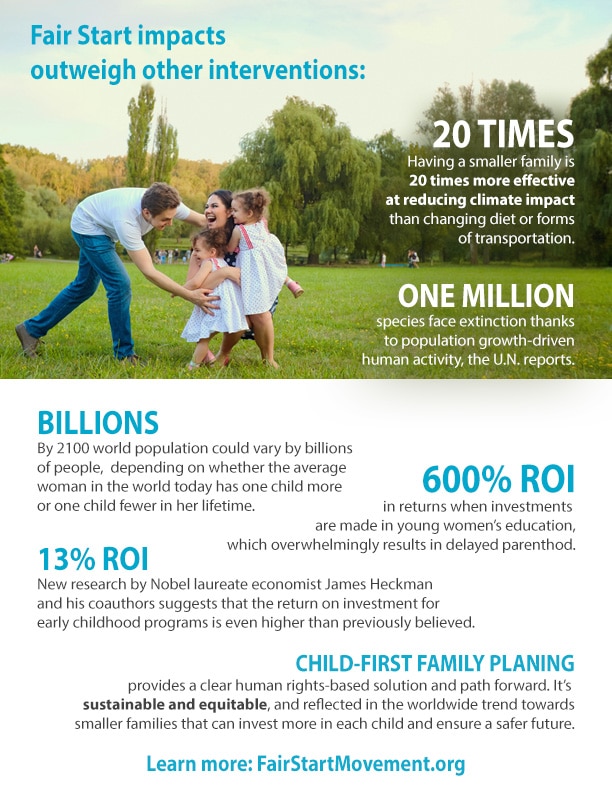
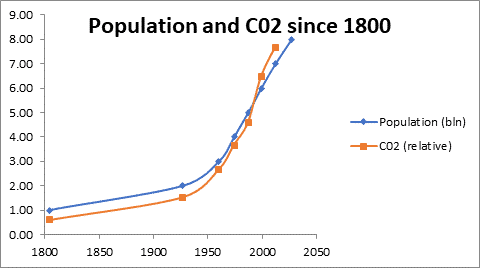
However, current political, religious, economic, and cultural pressures to increase births and obstruct family planning programs are driving our biggest global crises and putting the health, safety, and welfare of current and future generations in peril. The growing human population, with 8 billion alive today, is already too much for earth to sustainably and ecologically support.
Unsustainable population growth, a documented threat multiplier, contributes to catastrophic climate change, unprecedented flooding, pandemics, ecosystem destruction, groundwater depletion, mass extinctions, and environmental degradation. Worsening inequality, in large part driven by our growing population, is also a grave threat to democracy and political stability across the globe.
The Right to Found a Family
Current family planning programs and policies demonstrate clearly the UN’s misinterpretation of the right to found a family under Article 16 of the Universal Declaration of Human Rights. Article 16 should have been exercised in a way that protects all generations – from the middle of the 20th Century to those in 2050 – equally. The United Nations also should have interpreted Article 16 as being consistent with other human rights obligations, such as the Children’s Rights Convention, FP2030, as well as the SDGs.
Because they see the conditions being created today, 40 percent of young people have expressed concerns about exercising their right to plan a family. A robust application of Article 16 could allay those concerns. Instead, the United Nations succumbed to member state pressures to promote and coerce large, unsustainable families and increase population growth rates in the 20th century.
Children’s Rights and Intergenerational Justice
The misreading of Article 16 enabled pro-growth economic and pronatalist pressures to directly undermine the UN’s clear commitment to the rights of children, sustainable development, and intergenerational justice. As things stand, young and future generations face the prospect of significant reversals in human rights.
Mountains of evidence show that because of population-driven environmental threats, children born today and tomorrow will live “an unprecedented life”, facing “conditions older generations have never experienced.” The most recent report from UNICEF indicates that almost half the world’s 2.2 billion children face an “extremely high risk” from the impacts of the climate crisis and pollution. The inequities created by unsustainable growth policies also gravely impact the estimated 356 million children living in extreme poverty worldwide.
Just and Sustainable Family Planning
The global community has failed to promote or support family reproductive decisions that lead to healthy and sustainable ecosystems and equitable prosperity. Quite the opposite, in fact.
The best way to compensate current and future generations for this failure would be to reinterpret Article 16 as stated above and create an equitable balance of resources. Equitable distribution would ensure that children are born into just conditions including entitlements and a global vision that puts them first – with a fair start to a path forward.
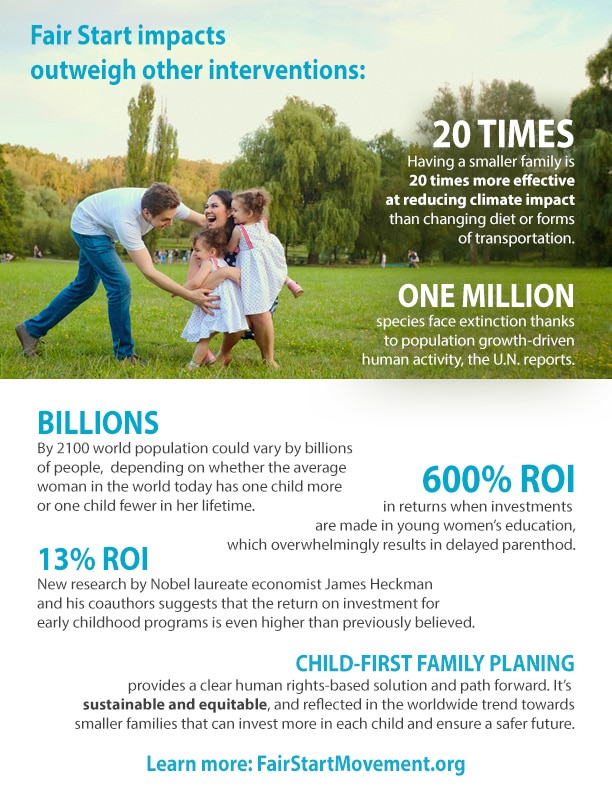
Governments and community institutions must make sustainable, equitable investments in current and future families. They must be required to educate would-be parents about the benefits of delayed parenthood, birth spacing, and smaller families – including those with no children. These investments would create greater family financial stability, better social and emotional outcomes, higher standards of living, women’s empowerment, greater investment in each child, and would result in a more sustainable planet.
A declaration by the The Prime Minister would be a powerful step toward dispelling the myths that underpin pronatalism and challenging the reluctance to address unsustainable population growth. Such a statement would elevate discussions around the needs and wellbeing of existing and future generations.
Such a declaration also would highlight the urgency of substantial investment in comprehensive and equitable family planning programs. These programs not only realize individual rights but also advance the legitimate goal of creating equitable and sustainable birth conditions.
The United Nations has been criticized for not intervening to protect human rights in other contexts. This negligence has already resulted in calamitous consequences for the planet and the human species. It is therefore imperative that the Prime Minister call on governments, NGOs, and major foundations to promote equitable and sustainable family planning to ensure intergenerational justice and achieve true liberation for all people, starting with women and children.
Faced with these facts Bryan’s reaction is to double-down, and simply push women to have more kids to further build the unsustainable pyramid schemes that prop up Bryan, Elon Musk and others like them. He makes four obvious mistakes in his opinion piece (framed as an article) which show the fundamental cause of the crises we face today.
He conflates economies with democracies: Per Bryan, “Declining population growth really does pose existential challenges to America, and without more children, the country really does face a future that is less innovative, less wealthy, and less vibrant.” The ideal of the United States is democracy, but inequity, growth and ecocide has degraded that ideal, and traded it for the gross domestic product (probably preference-based utility) that is the base value from which Walsh operates. He’s talking about an America of crowded shopping malls, not town halls in biodiverse nature where people are actually free. That freedom is a value we can test and measure with a simple inversion test. That inversion test – which Bryan’s proposal fails – has survived five positive peer-reviews. Bryan, conversely, has no expertise in population ethics, and his opinions conflict with leaders in this space.
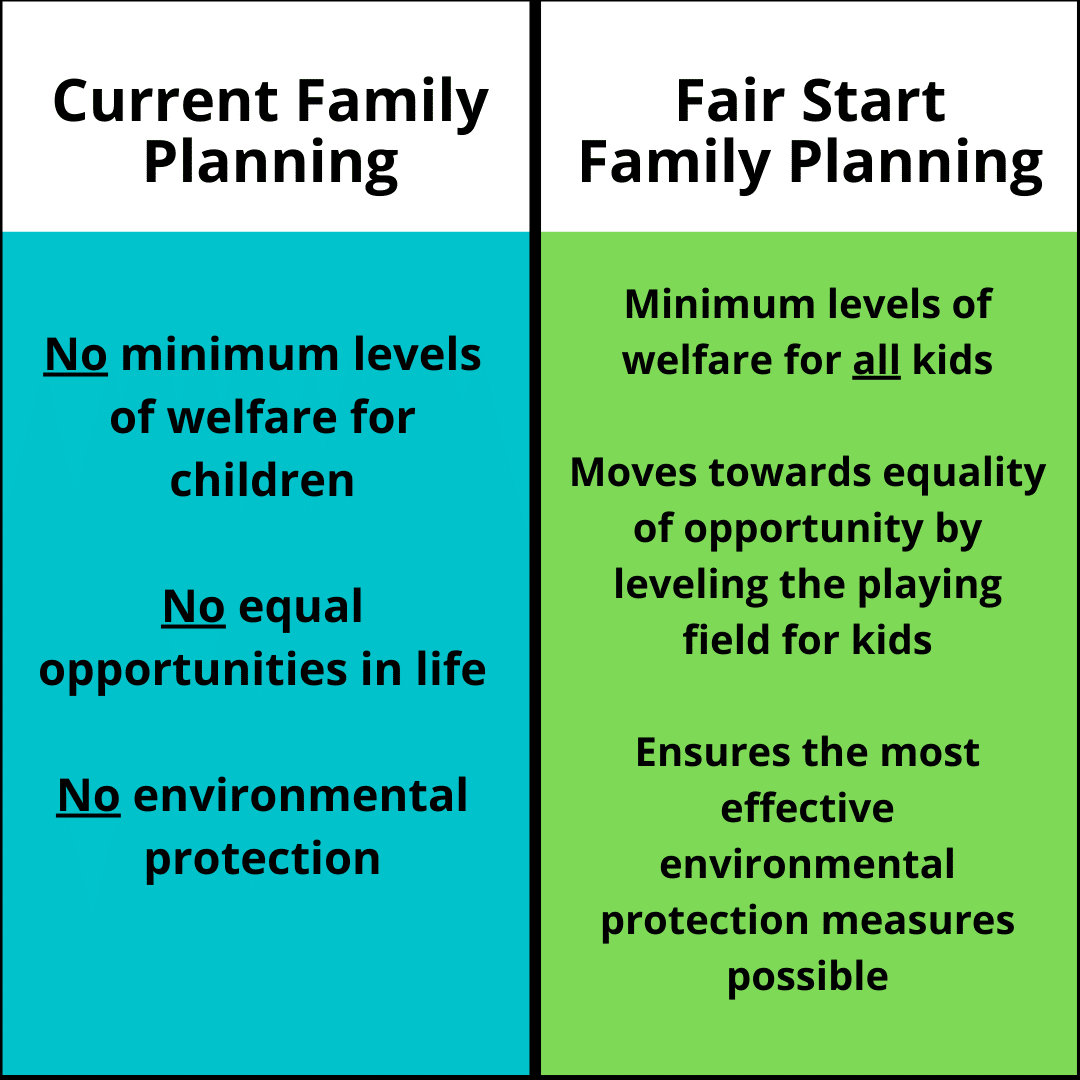
Bryan undercuts all of the values he purports to promote: Per Bryan, “[t]he progressive agenda should be about empowering people to live the lives they desire, to pursue their own path to happiness, and children can and should be part of that. Conservatives are right that a baby bust without end threatens America’s future…” Nowhere does he promote minimum levels of welfare for children, equal opportunities in life for children, restoration of nature and climate restoration, or democracy where citizens actually have influence on systems of governance. These are the basic values that comprise a good life. The United States, like most nations, has used family planning policies throughout the past several decades that treated the act of having children as a matter of parental autonomy, rather than ecosocial child equity (children have the most at stake when it comes to having kids), rather than acting in compliance with the values that underlie the Children’s Rights Convention – which is the standard by which we judge whether we are actually creating democracy. Byran’s writing reflects these mistakes.
People like Bryan Walsh can be useful in this regard, and targeting him and other powerful people publicly to show truth can save millions of lives.
Bryan is using his position to impose costs on others, relative to a democratic baseline. We can make examples of people like Bryan, ensuring they account for their role in the crises we face today, and taking from them the relative wealth and power future generations deserve as we physically constitute true democracies though climate restoration funded by birth equity redistributions of wealth. Bryan only has to address the points above in his work, or to agree to publicly debate them, in order to actually free people. He just have to tell the truth. And while the average citizen does not have the power of a Vox editor, they have the capacity to be activists, and approach Bryan and confront him simply as a citizen who is harming others.
TAKE ACTION: In his article Bryan accepts that “very real suffering that will be unavoidable thanks to warming, especially in poorer countries.”: He is willing to accept the suffering of others – especially children in the global south, while protecting his own children from that suffering, and rather than taking simple steps to prevent it.
Think about that as you engage Bryan in person or online – https://www.linkedin.com/in/bryan-walsh-9881b0/, in a peaceful and lawful way, to admit his mistakes, and to pay for the benefits he and his family received in a system that was imposing costs – ecologically and socially – on others. Use him as a fulcrum to bend the arc of our species away from exploiting children for economic growth, and towards justice.
The climate crisis is causing many to forgo children, even when they want them. Why consign a child to such an uncertain and dangerous future?
How did this situation develop? Clearly having large and unsustainable families impacts the right of future persons to themselves have children, as growth degrades our ecosystems.
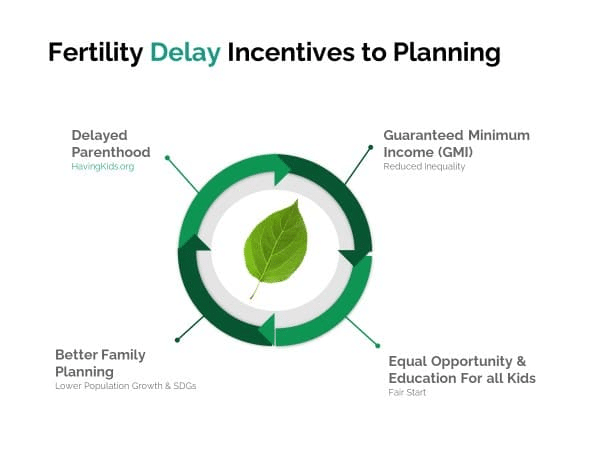
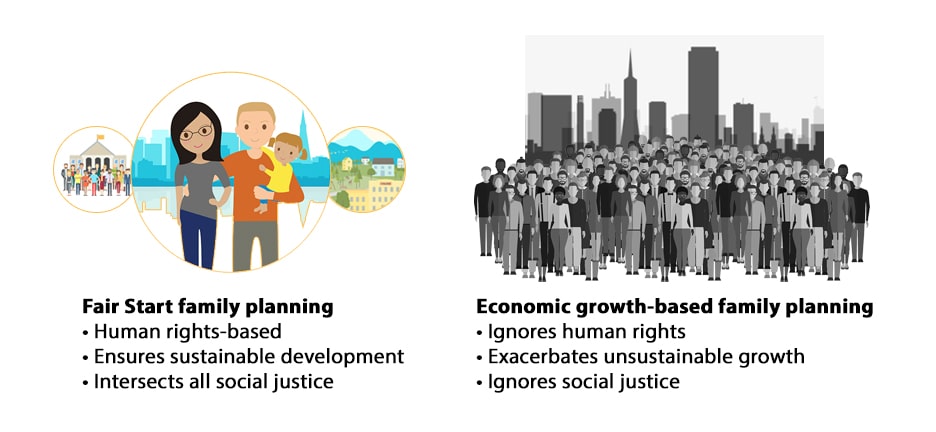
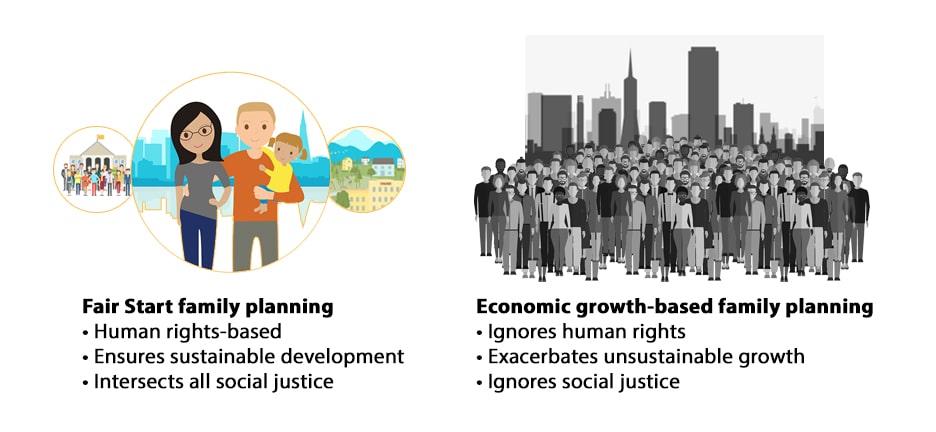
Fair Start helps shift unjust concentrations of wealth and power towards funding policies that instead empower all children with equal opportunities in life and a natural, biodiverse environment, by incentivizing and entitling well-planned, well-located, sustainable and more equitable families. In short, we promote fundamental justice and freedom by actually accounting for, and improving, fundamental power relations between people, and between people and their ecologies. This is not charity – this is fundamental justice, or ensuring that the true costs of wealth are paid back into communities in the most effective way possible.
What’s the solution to the Baldwin problem? How do we prevent some families from impacting others families, and violating their rights?
TAKE ACTION: Urge Alec Baldwin – @AlecBaldwin – and Hilaria Baldwin – https://www.instagram.com/hilariabaldwin/?hl=en – to support just family planning policies that do not put costs on others.
The complaint and update make a few simple demands:
First, the United Nations must treat the correct interpretation of universal family policies (which should require climate restoration through birth equity redistribution of wealth in the form of family planning entitlements) as the fundamental and overriding human right.
Second, to admit that the United Nations failure to do this previously led to the climate and inequity crises we face today, including violations of future generations’ right to have children in safe and natural environments, and for that right to be safeguarded in perpetuity.
Third, to endorse loss and damage payments as overriding property rights, if used for the family planning entitlements described above.
Put simply: There is a universal human right that overrides domestic climate policies – most of which are anthropocentric and insufficient – in part because climate emissions do not respect borders and the “business as usual” approaches most governments and groups use disproportionately harm the peoples and nations least responsible for the crisis.
Be effective.
As the update argues:
One clear step towards compliance with the best interpretation of Article 16 (the right to found a family) would be to urge that programming around the education of young women – throughout the world – begin with ensuring they know that all children’s right to an ecosocial Fair Start in life (defined by concrete climate restoration and birth equity measures) – now and for generations to come – overrides all competing rights and interests as the first and peremptory human right, including any conflicting property rights.
To say patriarchy, or anthropocentrism, or exploitation, would all be correct. But is there something antecedent, something lurking upstream, that precedes these words? Perhaps it is simply the failure to take a base condition like human rights and democracy seriously, seriously enough to let it dictate our fundamental social relations, or the power structures that flow from how we are created or more specifically, pro-created.
If we took human rights and democracy in any particular nation seriously, we would start all laws, policies, and practices with one rule: We would first treat the capacity for each person’s political self-determination as directly inverse to the creation and emancipation of each child in that nation, relative to a neutral baseline such as the nonhuman world. And that would have meant that we would have been investing a lot more into family planning and child development, what the Children’s Rights Convention requires at a bare minimum.
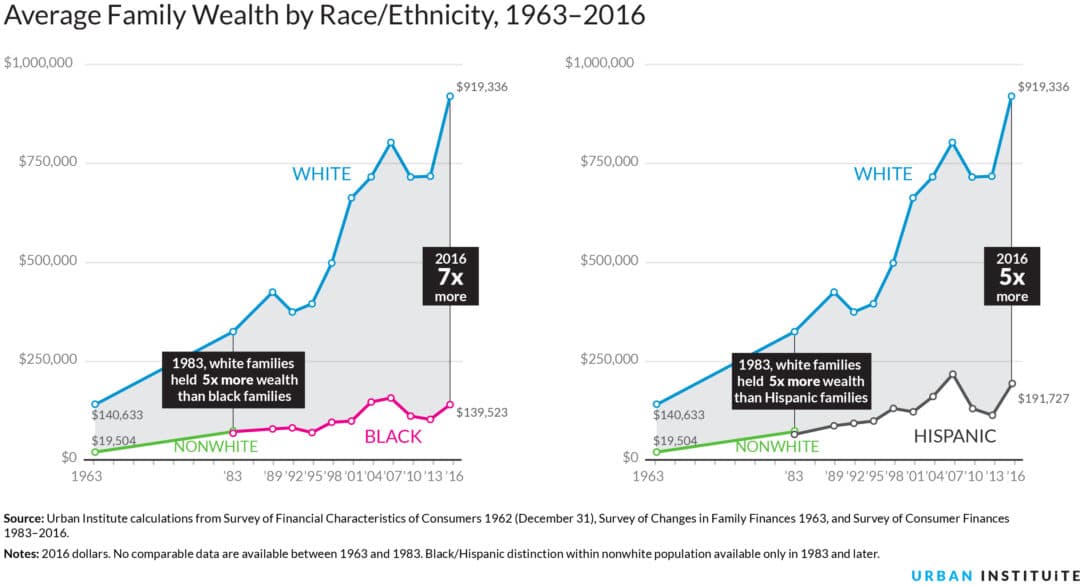
One reason we don’t do this is that most nations live under an international consensus (called the Cairo Consensus) controlled by wealthy white people who decades ago chose to privilege their children over poor kids. Under its guidance we wrongly treat the act of having children as more self-determining for the parents rather than other-determining for the children born.
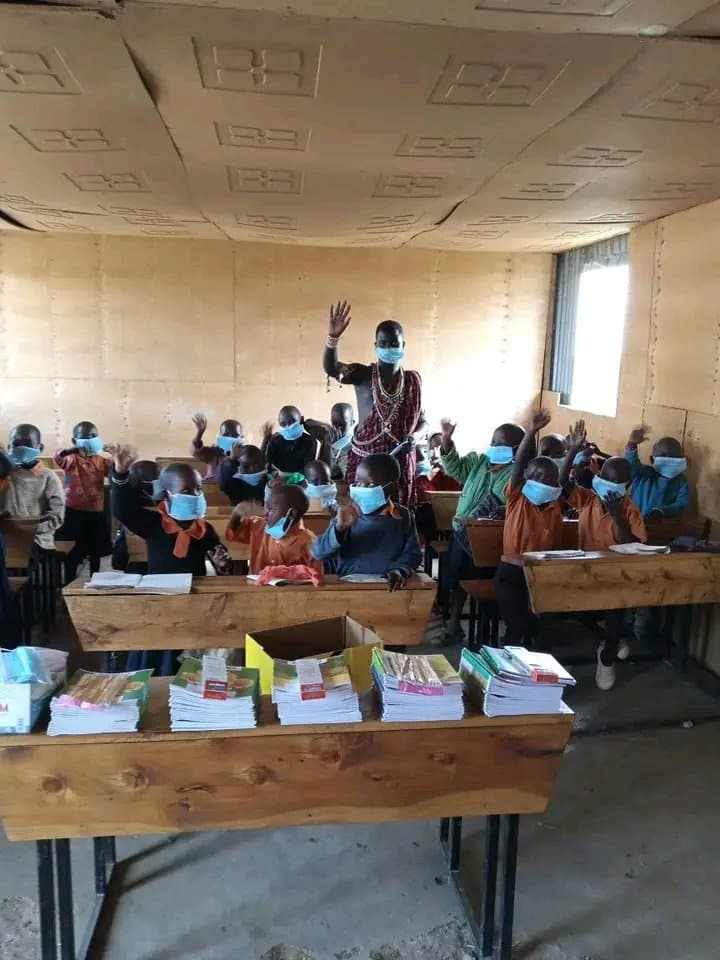
An effort in Amboseli Kenya to move to child-centric planning.
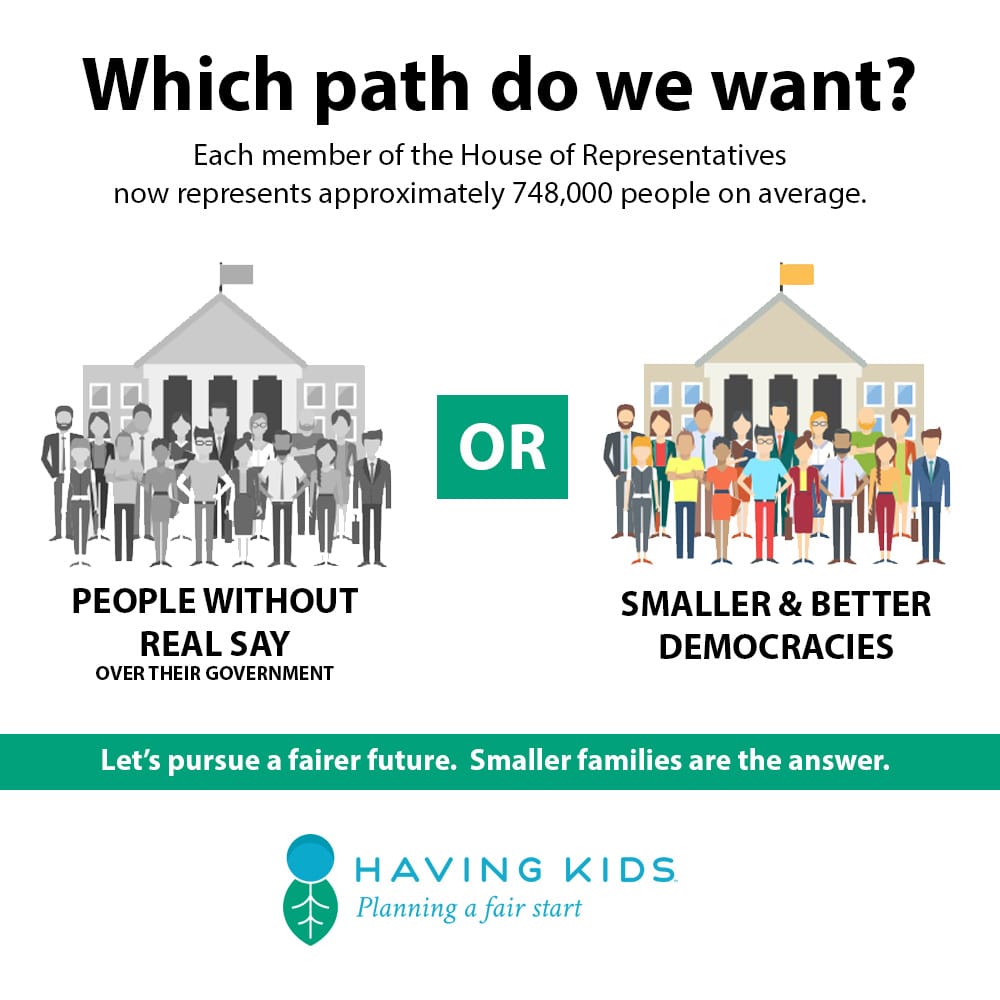
If we imagine a town hall where you were empowered to influence the rules you would have to live, each person would have less time to speak and influence the outcome as more people are added. If we believed in freedom, consensual governance and political self-determination, we would aim – through family reforms – for optimally ranged populations of people who would be relatively self-determining per the formula above. In practice polities/legalities like nation states would use the inversion to know when to divide off into a new entity. While fluid division is unusual in geopolitical affairs, it is actually quite common if we think about other forms of social organization that share power with nation states, like corporations and social movements. And we would start all laws, policies, and practices with such a requirement because who we should be precedes what we should do, and the former is best accounted for by the norms that create us.
As a practical matter this inversion, and optimal world population ranges, could have been achieved in the 20th Century with progressive scaled family planning obligations/entitlements meant to ensure ecocentrism and equal opportunities in life.
But that would have only happened if we wish for people to be actually empowered.
If people are empowered equally and thus matter politically – the hallmark of human rights and democracy – this direct inversion relative to a neutral position that makes the concept of self-determination coherent, is inevitable. We would offset each other, politically, and a first order of business before we do anything as a legitimate and inclusive group. Our creation would limit and decentralize the power others have over us. Representative government does not change this, given that we would have to be empowered – to have meaningful time at the podium – to participate in the election of representatives. And while many would argue that massive population growth enabled markets that produced true value – like mass advertising – these arguments miss the point: That to know what’s a benefit and what’s a cost first requires being a group of people capable of assessing such things. Democracy precedes and regulates economy. But because of the Ponzi scheme Chu notes above, these decisions were made for us, not by us.
If we think that creating lots of people results in innovation, like modern medicine, we should instead realize that actually educating and developing the children who are here now – through things like a college education – does so much more effectively. We will make that investment when we see past the myths: That rich children were just fortunate to be privileged, that some children are just “gifted,” that white children deserve their massive head start in life, etc. If we invest in people, right from the start, rather than exploiting them, we will start to see the things we value align.
We will ignore this inversion if we are just faking human rights and democracy, because people won’t really need to matter politically. And if you Google the term “baby bust” you will see that most media in the United States (like the New York Times) do not engage in the inversion. Instead, they choose what Nobel Laureate Steve Chu called a Ponzi fraud scheme. The policies they promote seek to pump more people into the system to create profits for a few at the top. They do not account for justice in the actual creation of power relations, or the need to invest in children, but instead choose to exploit children – and their impoverished birth position – as cheap labor and drivers of consumption/demand. They chose policies that created people for shopping malls, not town halls. And that move fundamentally created the climate crisis.
But do we really have to respect rules, like the property “rights” of people like Elon Musk, if we played no meaningful role – and could play no such role – in creating such rules? People who value freedom – and the value of relative self-determination – will not.
This photograph captures interconnection, crucial social bonds that are strained as groups grow for the benefit of a few at the top.
The best reason persons would be obligated to follow laws is if their legal system intentionally includes, and reflects the will, of its constituents. That is what makes us free, and the inversion test determines whether we are being equitably empowered – or taking human rights and democracy seriously – and thus included, and thus freed. Refusal to empower people equitably means one is preconstituting (a “precon”), or refusing to constitute just communities. Free people will condition their political obligations on their capacity, as equals, to change those obligations.
While nations are apt to go to war, perhaps a sea change in our political evolution comes when we use the inversion test to determine who is free, and who is preconstituting, and use discourse (or other means?) to solve this hidden conundrum – the one that lies at the first border of human power, our creation. There is a unity of values if we start justice at the very beginning, in our creation.
Also at a macro level, urge anyone making a claims about what a policy should be to account for the actual people in their claim, for the actual power relations that are being fundamentally created by the claimant’s family planning norm. In many cases you will find that the person making the claim is misleading you, undoing the value they claim to be creating – like reducing climate emissions, and instead concentrating power in the hands of a few.
Now, ultraconservative lawmakers have combined with the administration of hard-line President Ebrahim Raisi, who was elected last year, to criminalize the termination of pregnancies except in cases of rape, incest and risks to the mother’s life. Many officials speak of producing offspring as a moral duty, with Supreme Leader Ayatollah Ali Khamenei condemning those who don’t as indulging in a decadent bourgeois affectation. . . . Some of the Youthful Population office’s inducements for childbearing have invited ridicule and criticism, such as making family expansion a factor for university professors to climb up the academic ladder.
Not only will Iran’s policies exacerbate the climate crisis by multiplying the nation’s environmental impact, but they do nothing to ensure that children will be born into conditions that ensure equal opportunities in life, or that will eventually lead to the development of democratic society Iran.
And that’s the whole point.
Iran’s move is enabled by the United Nation’s family planning model, which ignores human rights and environmental sustainability – never ensuring the conditions of democratic development required by things like the Children’s Convention – and instead permits unsustainable growth that favors concentrations of wealth and power in member states.
TAKE ACTION: Urge @Atayeshe, the head the UN’s Population Fund, to condemn the policy as the first and overriding human right, the right to an ecosocial Fair Start in life, the right that liberates people by limiting and decentralizing power and thereby building true democracy.