Category: Social Justice & Equity

  • Is WaPo Promoting Nationalism Over Democracy?

    Is WaPo Promoting Nationalism Over Democracy?

    In a recent news analysis article, not an editorial, a Washington Post writer lamented the recent drop in U.S. fertility rate:

    A news article discusses economists’ predictions of a decline in U.S. births due to COVID-19, referencing a Brookings Institution report. A chart below shows how the Great Recession impacted birth rates.

    “Rather, the pandemic left a permanent mark on American families, with many having fewer children than they would have otherwise, leaving tens of thousands of future American citizens permanently unborn.” The author, Christopher Ingraham, went on:

    Of course, at the individual level, the fertility cost is literally incalculable. How does a parent put a price tag on a child that was never had? What is the loss to an only child who will never have siblings to play with? The discussion is a reminder that even after the pandemic is behind us, it is likely to leave a deep scar on society for years to come.

    — Christopher Ingraham, The Washington Post, June 17, 2020

    Does this rhetoric — the assertion that birthing fewer children exacts a toll on society — sound familiar? It might, because this has been a talking point of nationalist leaders across the globe. Recently, Venezuelan strongman Nicolas Maduro recently called on women in the country to have more kids to “let the homeland grow.” U.S. President Donald Trump chimed in as well, approving a barely noticed tax tweak that pays people even more money to have kids.

    This policy promotes nationalism over democracy because it pushes society away from improving birth conditions for every child; giving kids a fair start in life; ensuring that children grow up in a natural, healthy, and safe environment; and allowing everyone to exercise meaningful voices in their democracies that won’t get lost in the chaotic crowd.

    The problem with this reasoning is that the state and other institutions are artifice: Democracy and legitimate societies derive power from the individual, not the other way around. We should not have children for the state or the economy. Instead, we should cooperatively plan to have kids in ways that empower them to comprise a better future and build real democracies, not bloated nation-states and economies that demand more bodies — even in the middle of ecological and social crises.

    More crowding and poor family planning exacerbates the spread and threat of pandemics, is the worst way to exacerbate the climate crisis, and expands the inequity tearing our communities apart.

    TAKE ACTION: The Washingtion Post holds itself up as a champion of democracy, but it is promoting nationalistic policies. Because family planning is truly constitutional in nature and because the right to a fair start in life is the first and most fundamental human right, we can engage people (and especially wealthy people) pushing women to have kids to instead help pay for sustainable family planning, and for every kid to get a fair start in life. Write the Post editor Marty Baron @PostBaron, or engage him in person, and urge him to reconsider what democracy means and to pay his share to support better family planning.

  • “Reversing the Gender Imbalance With Male Contraceptives”

    “Reversing the Gender Imbalance With Male Contraceptives”

    [et_pb_section fb_built=”1″ admin_label=”section” _builder_version=”3.22″][et_pb_row admin_label=”row” _builder_version=”3.25″ background_size=”initial” background_position=”top_left” background_repeat=”repeat”][et_pb_column type=”4_4″ _builder_version=”3.25″ custom_padding=”|||” custom_padding__hover=”|||”][et_pb_text admin_label=”Text” _builder_version=”4.7.4″ background_size=”initial” background_position=”top_left” background_repeat=”repeat” hover_enabled=”0″ sticky_enabled=”0″]

    By Erika Mathews

    Earlier this month, The New York Times published an article that made us feminists shake in our boots. “The crisis seems to be cementing traditional gender roles,” the piece read. A poll for the Times found that women with families are bearing the brunt of the increased workload due to coronavirus stay-at-home measures. Even if women earn more than their husbands, the responsibility of housework, childcare, or distance learning for their school-age children tends to fall upon the mother.

    Unfortunately, it may not come as a surprise to many that women in opposite-sex partnerships often disproportionately shoulder certain loads within the partnership. As an example, this has been happening with our bodies in the realm of family planning for millennia.

    The Coronavirus and Inequality

    Given that May is the month back in 1968 that the U.N. declared family planning a human right, it seems fitting to shine light on an opportunity before American society to drill away at outdated gender roles. It’s also an opportunity to tackle the socioeconomic inequality we’ve witnessed the coronavirus expose.

    The opportunity I’m referring to lies in male contraceptives. The challenges around gender parity and socioeconomic inequality that are now staring us in the face amid this pandemic are exactly why Having Kids is calling upon Congress and the National Institute of Health to prioritize the research, development, and deployment of the male pill and other long-acting, reversible male contraceptives — or “LARCs,” for short. 

    Male Birth Control and Greater Equality

    How can LARCs address such longstanding problems so deeply embedded within our society? 

    Research shows that smaller families benefit children and that the economic disadvantage correlated with the alternative tends to perpetuate a greater divide between those with and without. Still, we see the U.S. tax system incentivizing larger families, though incentivizing pregnancy delay may better set up women and future generations for greater equality. 

    Since family planning was declared a human right five decades ago, women have made great strides in terms of physical and economic well-being. Still, nearly half of pregnancies in the U.S. today are unintended, which costs taxpayers $15 billion annually. In a few short months, the COVID-19 pandemic has made family planning even more difficult due to lack of access to contraceptives and to reproductive healthcare.

    While the discussion around family planning often centers on abortion, it should go without saying in today’s politically polarized America that any solution propelling us forward — while side-stepping partisan hot spots — should be a no-brainer. This should be baseline territory. Pre-fertilization forms of birth control, a category into which male contraception falls nicely, show promise to be excellent candidates for building bridges across the political aisle. Unfortunately, apart from the “pullout” method and abstinence, women in the U.S. currently have over a dozen options for pregnancy prevention while men have only two: condoms and vasectomies. 

    Why Men Should Take Larger Role in Family Planning

    Recent studies show that American men want the ability to use their bodies to further participate in their right to family planning. While vestiges of a more sexist yesteryear set speed bumps on the track toward deploying more viable male options, we’re incredibly close to breakthroughs in the field, and this is no time to let up on the gas pedal. If fully tested and approved in the U.S., LARC options like RISUG and Contraline could empower men to share more equally in family planning through leveraging their own bodies, helping reverse the trend of traditional gender roles being “cemented.” Our friends at the Male Contraceptive Initiative have outlined several others.

    Again, men want more options to play a larger role in family planning. We women — certainly in our new, less certain reality when fewer couples are opting to get pregnant — could use the support. Ultimately, when communities and parents cooperatively embrace better family planning, we can invest more in every child and create the future we all deserve.

    For these reasons, we at Having Kids call upon the National Institute of Health and U.S. Sen. Rand Paul and U.S. Rep. Anna Eshoo — chairpeople of congressional committees on health that oversee family planning matters — to increase funding for the research and development of male contraceptives. 

    A variety of safe, commonsense, accessible options, along with communities and parents cooperatively embracing better family planning, are key to providing coming generations the future they deserve. Male LARCs would serve as a huge step forward in getting us there.

    Erika Mathews is the executive director of Having Kids, a U.S.-based non-profit organization dedicated to raising awareness for The Fair Start Model, a human rights-based, child-focused approach to family planning. Erika holds a bachelor’s degree in English/Journalism and German from Rutgers University.

    [/et_pb_text][/et_pb_column][/et_pb_row][/et_pb_section]
  • Elon Musk Is Threatening Our Democracy. What Do We Do?

    Elon Musk Is Threatening Our Democracy. What Do We Do?

    Elon Musk puts the wealth of elites over democracy. We see that this week as he flagrantly defies Covid 19 lock down orders for one of his factories, putting an entire community as risk. Does he, and people like him, wield too much power? Is there a solution to the threat their power poses to others?

    Consider these the facts about Musk: 

    • Musk has claimed that his wealth is self-made, but he was born a relatively wealthy white child in South Africa during apartheid. His family owned an emrald mine in Zambia. He left South Africa amid the turmoil, while others stayed to reform the system.
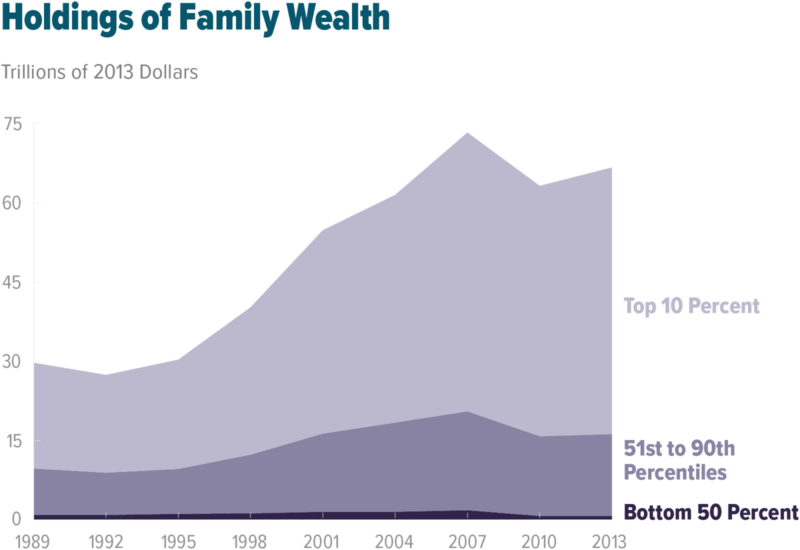
    • As of May 2020, he has a net worth of $36.5 billion and is listed by Forbes as the 31st-richest person in the world. By contrast, the median American household worth is roughly $97,300. Musk has used this wealth to create a level of influence over industry, media, and politics that dwarfs average Americans’ influence over public affairs and their futures and that drowns out their voices.
    • Musk is part of the top of a power dynamic in which the world’s richest people own the same wealth and influence as as roughly the poorest half of humanity.
    • Musk is seen by some as an environmentalist, but he has consistently stoked fears of underpopulation and has promoted population growth policies that would exacerbate the climate crisis and many other environmental crises more than almost anything else we could do. In addition to the impact of his various industries, his commercial space ventures are a massive and growing source of light pollution that obscure one’s view of space and interfere with the practice of astronomy. 
    • As discussed above Musk, in a growing display of antisocial behavior, consistently violated the law, and risked lives, to maintain production and profits at one of his factories in California. The state appears to be acquiescing to the violation. He is being treated as if he is above the law because of his wealth and influence.

    These Facts Raise Questions

    Why is Musk above the law? Is he a fundamental threat to our democracy — and to our right to be self-determining people rather than people whose lives are determined by a small group of people? It’s undemocratic that some individuals, usually born wealthy, wield such disproportionate influence over our lives. If Musk is a threat, and if elected officials do nothing, are free people obligated to act to protect what so many have died for?  

    The problem we face is in knowing what to do, but that problem comes with a solution. We resist taking action against individuals like Musk because rather than using violence, he uses money to wield massive power over others. But as the climate crisis has shown, more subtle human power and influence, like social positioning and climate emissions can pose the greatest threat of all. Money is no exception. As Musk’s defiance of the order shows, money can easily threaten lives. 

    So What’s the Solution?

    The answer lies in Musk’s promotion of population growth, which is consistent with his response to the pandemic. Both evidence his disdain for human rights and democracy, and make him a unique target for those who want to promote human freedom.

    Musk’s statements show that he mistakenly equates democracies with economies in which future children are labor, consumer, and taxpayer inputs and in which the nonhuman world is a resource. That is incorrect. Democracies precede economies and are defined by strict human-rights parameters that make them function, such as the right to speak freely (and have an equal voice). Those rights give us a baseline for what’s an entitlement, cost and benefit, rather than the random “good fortune” Musk had of being born a wealthy white man in South Africa. He has actually invoked the concept of freedom, that countless people died to protect, in order to risk innocent lives as a means of extending his undemocratic control of others. That deserves a response, and his position on family planning gives a pathway for it.

    Musk is pushing for population growth and family planning policies that would try to replace democracies with economies that are devoid of human rights and would ensure that those with wealth control others. He is pushing for kids to be born irrespective of the number born, their levels of welfare and education, and their positioning relative to rich kids, He’s pushing for growth irrespective of its impact on our natural ecologies. In other words, he promotes the family planning model that created the climate crisis. He is pushing for a massive populace designed for economies and not democracies, and world where markets seem like the natural and inevitable state of affairs, and one that ensures the positioning of people like him. 

    And it’s the first, or lexically prior, human right – the right to a Fair Start in life – Musk may be trying to avoid when he ignores human rights and promotes the chaos of anarchic markets over the freedom of democracy. The right to have children, the right that puts the “human” in human rights, best orients from the perspective of the future child and their right to fair starts in life. That right is the engine that keeps democracies going, and it overrides competing interests, like Musk’s interest in dominating others and the skies, as well as his his passing that dominance onto his progeny. What he thinks is wealth he created is the product of a much larger and more complex social ecology that he is ignoring. And the fundamental right to a fair start in life, which represents the first peremptory norm and the constant reconstituting of our social ecology and democracy, overrides his claims to disproportional wealth, enabling free people to target Musk and other threats like him with a specific demand that would actually level the economic playing field. And it’s not about choosing government over people. That right also overrides the interests of big government and their bureaucracies, especially when the government (who these days is largely comprised of the uber-wealthy themselves) disregard the rule of law and let the wealthy take over.

    People like Musk exist because we have yet to take the overriding right to a fair start in life seriously and have instead pretended it was the hand of God that determined who won the birth lottery. Perhaps, given that right’s efficacy in addressing the crises we face, we should take it seriously now. 

    This Isn’t Socialism or Capitalism; It Isn’t Economics at All

    No economies exist without laws, and no laws exist without a people capable of making them – imagine something like a town hall setting. Both the left and the right value protecting children’s future and their right to equal opportunities in life. But to get there requires limiting the total quantum of human power exerted upon our surroundings and decentralizing it intergenerationally — or finally realizing the duality of freedom from others and the freedom to equal opportunities in life.

    Both Big Business and Big Government, at the top of a Ponzi Scheme pyramid, are pushing women to have more and more kids as a means of creating future labor, and needy consumers, instead. Thy are making economies before democracy. Reasonable people on both the left and the right can work together to target key figures at the top of that pyramid to – instead – to build free democracies through better family planning. Together, we can secure that true form of freedom over its imitation: the anarchical and infantile “I get to do whatever I want to do” sort of freedom that has never made sense, that ends up hurting people and compromising their own freedom, and the form that is promoted by people like Musk who want to change town halls into shopping malls and to replace political freedom into employment and consumption.

    Look for the wizard behind the curtain in the case of Musk. You will see the appropriation and rebranding of other persons’ work by one individual, using wealth enabled by a system of laws he now flouts. The disparity of wealth and influence he enjoys is the product of mistakes in our system, not something naturally occurring.

    Musk appears publicly. Engage him, as you would in a town hall, personally, peacefully, and legally, and demand that he fund Fair Start family planning. Do what our government should be doing to make us free, and use Musk as an example.

    We have a right to a Fair Start share of his resources, and his violating the law presents an opportunity to truly build democracy, taking down the powerful who control us in the spirit of liberation. And while you are at it, urge the United Nations to speed along that liberation, take human rights seriously, and recognize Fair Start as a fundamental human right.

    Those most able must do what’s most effective to maintain a just system.

  • New York Times: Population Is About People and Shared Values, Not Economic Growth

    New York Times: Population Is About People and Shared Values, Not Economic Growth

    It’s downright jarring to see the New York Times report on the climate crisis and mass extinction with alarm but subtly treat low birthrates as similarly threatening to our future. Smaller families are the most effective way to mitigate the threat of the climate crisis and many other environmental and social dilemmas.

    Lower birthrates might be a threat to unsustainable growth-based economics, where we see babies as free money in the form of new consumers, cheap future labor, and compliant taxpayers. But lower birthrates are a boon to shared values like investing more in each child and creating a safe and healthy environment. And they are a boon at the key moment in human development where those values matter most of all. 

    What matters most is the people with whom we and our kids will share this planet as its ecology degrades. That is the most fundamental question of all.

    Take action: Contact the Times at nytnews@nytimes.com and urge them to deal with the values at stake and not to promote unsustainable growth.

  • Does Freedom Require Intergenerational Secession?

    Does Freedom Require Intergenerational Secession?

    Beneath many of the headlines today there lurks a tension few see: Communities of people fighting for autonomy from the massive nations, and multinational corporations, that work together to control them.

    Our default tendency is to see these struggles in three dimensions – as groups of people struggling against one another. That would not be accurate. All groups of people are in constant demographic change, with new members being born and old members dying. The struggle is in this sense four-dimensional, though its hard for our human brains to perceive this. This seemingly mundane fact could hold the key to opening a new front, or more accurately limitless fronts, in the struggle for human rights and democracy, and the creation of truly free communities where everyone has an effective voice.

    How so?

    Four-dimensional freedom

    The climate crisis had laid bare serious mistakes in the way the world has connected the concepts of family planning and human rights. The modeling was deeply flawed. The mistakes enabled nations and multinational corporations to rise to their hegemony by treating future generations as economic inputs, and exploiting the explosion of a world population who necessarily sees itself as confined to economies, rather than democracies where they play an effective role in their own governance.

    If we correct for those mistakes we arrive at a surprising, but apparently unavoidable, conclusion. There is no conception of human freedom – including equal opportunities in life, a voice in one’s democracy, and the liberty and safety of nature – without intergenerational secession. We have to free future generations from the hegemony of, and unlimited control by, the generations that are alive today.

    And as such, truly human rights-based family planning models give us something new: Shared values, conceptions and language for an emancipated future – a new normative vocabulary that cuts across fundamental political ideologies like liberalism and communitarianism, joining the two. Under this new modeling we can begin to “constitute” communities of free and equal people in ways we never have before.  These new models also have the quality of lexical priority, because we are before we do, and as such they override the property claims and tax obligations that prop up the massive nations and their multinational corporate allies. We have the necessarily antecedent and superior right, and obligation, to constitute free communities before turning to any of the rights and obligations that functioning economic systems require.

    In other words, seeing freedom as four-dimensional and reforming family planning systems and policies accordingly, give us new and deeply compelling reasons for people of all political ideologies to target top-of-the-pyramid national and multinational corporate leaders in to order to decentralized their power – in a new four-dimensional pathway – into future generations. These compelling reasons include finally making sense of social contract theory in a way that appeals to a broad swath of values and thereby justifies governance, and the incomparable impact doing so would have on improving child welfare, reducing inequity, building democracy, and mitigating the climate and other ecological crises.

    This new process and understanding of freedom redraws the battle lines as between pre-constitutional, subjectivist, and economically-minded systems and their supporters (or “precons,”), and democratically constituted systems comprised of free people.  The demand at the front becomes simple but forceful: A cooperatively arrived at fair start in life for every child defined by five objective and irrefutable values.

    Next steps

    The first step to opening the endless fronts of an intergenerational secession starts with a simple statement by the Secretary General of the United Nations acknowledging the mistakes the UN made, and moving towards better modeling. TAKE ACTION: Urge him to open the fronts.

  • It’s Not About Population. It’s About an Intergenerational Revolution.

    It’s Not About Population. It’s About an Intergenerational Revolution.

    The media is abuzz these days about women not having enough kids. It’s an odd thing to hear, given that population will continue to explode by billions of people in the decades to come, exacerbating the population-driven climate crisis, and causing untold suffering

    Are we missing a more important conversation though?

    Let’s start with the premise that framing is crucial. 

    Whether we think about population, or start from a different concept, framing could change everything about how we perceive the subject. The debate surrounding “population” tends to focus on quantity, which is actually misleading. Shouldn’t we think of people in the world, and the act of having kids, as more qualitative? Shouldn’t we be talking about quality of life? The truth is that what we think of as population is actually at least four things: 

    1. The quantity of the people we create.
    2. Their qualities, like empathy, and other key traits that will determine how people socialize and that are largely a product of early childhood development. These are inextricable from things like the levels, or quality, of personal well-being and development they are ensured.
    3. Their positioning in life relative to other children (the opportunities they have in life, with some kids today born billionaires and others born slaves, etc.). This positioning includes the inevitable attenuation from one another that comes with population growth.
    4. Their relation to their ecologies, i.e. are generations degrading the systems on which they depend?

    These four things are inevitably intertwined in the act of having kids. That act is more complex than the traditional concept of population implies, and can capture.

    Moreover, population is not some exogenous policy area we can choose to work in, or ignore. The people on the planet today, and how they limit what’s possible, are largely the product of what was done or not done in past family planning systems. We just have to shift and temporalize our thinking, or overcome the cognitive dissonance of temporal myopia, that makes it hard for us humans to see this. If a policy choice involves people, it involves family planning. Family planning, and the failure to plan, is the foundation of everything social. People are the first building blocks of any policy, and that which creates people, develops their traits, and gives them agency most accounts – and in free societies should most account – for the quality of life on this planet.

    It’s time for a new, and more helpful, conversation. 

    Given that the population is always changing and is the product of our actions, it’s probably more accurate to use a verb, and to focus on the cause (having kids) before the effect (population growth). The concept of “constituting,” as in the reference to “We the People” in the United States’ and other constitutions, could be ideal.

    Remember, framing matters. Technically, we were not constituted as a nation; if we value each person equally, we have to believe that we constantly reconstituting as future children enter the word. Constituting captures, much better than population, the antecedent, normative, dynamic and endogenous nature of the thing, and proceeds from a perspective of needing to justify the social organization (or the social contract) around us, or the power others have over us. That’s the perspective from which free and equal people would orient.

    “Constituting,” as opposed to “population,” captures the fundamental human rights-based lens or perspective free people would have when thinking about the people with whom they share communities: How is the power others have over us justified? Are we constituting a community of free and equal people, or something else, like a hierarchical economy? What control do you really have over the rules under which you are forced to live? Aren’t you worth more than being one vote lost in a sea of millions of votes, for presidents and other antiquated figureheads with massive control over our lives? 

    Why does this change in framing matter? 

    For some, it lets them see past myths, like the myth that population, or the people with whom we share and will share the world, is something amorphous and out of our control. Or, the myth that some kids are born into fortunate conditions, with what they need to succeed in life, while others are simply not. That’s nonsense. Our birth conditions have nothing to do with fortune, God, or some invisible force at work. Inequity at birth is simply humans’ failure to ensure fair start family planning. Thinking about how we constitute, and beyond population, helps us see this. 

    What’s another myth? Often we limit our thinking, “inside the box,” to current nation-states. We assume they are the fundamental political entity, and all that is possible. In other words, a lot of population-driven thinking wrongly assumes we are stuck with the countries that exist today. This is exemplified by the media’s reaction to falling birth rates in China, and calls to strengthen China’s economy with larger families. China is perhaps the greatest threat in the world to human rights, democracy, and nature – why would any free person want to strengthen the country or its economy, rather than see it disintegrate into the various groups it colonized? Can’t we imagine better societies, and political entities, than the countries we have now? New frames let us see past myths. 

    And for others, moving past the concept of population, and towards constituting, goes past simple myth-breaking and will lead to effective ways to promote human freedom. 

    The U.S. Constitution was born of a revolution to ensure that people could constitute independent, or free and equal, people. But for many reasons, the Constitution was never applied intergenerationally. And human rights and democracy are in decline today. Instead of constituting communities of people where everyone has a voice over the rules under which they live, we have media pushing women to have kids in failing social systems, and in the face of ecological crisis, to further inflate the economy. Instead of seeing communities as a free and equal people in a town hall, the politicians, pundits and companies pushing women to have babies envision a world of crowded shopping malls. But how you would see people and want them to be in a democratic town hall, versus a shopping mall, is very different. 

    People who want to grow economies push women to have more kids, with less investment in each child, and no minimum level of welfare, or equity, for each child born. In these schemes people are just economic inputs, rather than citizens who must be sufficiently developed to co-rule their democracies. In these constant-growth schemes, it’s OK to push more and more children through failing educational, welfare, healthcare and other systems. In this worldview it’s perfectly acceptable – if not desirable –  that the average American adult reads at the level of an eighth-grader. The idea of endless growth proceeds from state-based, and top-down, views of people as consumers and labor, rather than a bottom-up view of people as citizens with control over the world around them. Constant-growth systems push in the opposite direction from inclusive family planning systems that would create, or constitute, true democracies of capable and self-determining people. 

    The constant-growth worldview is antithetical to the personal autonomy that would be promoted and protected by a human right to nature, guaranteed minimum levels of well-being for children, and limitations on the right of abusive parents to have unlimited numbers of children who will be seized and spend much of their lives in state custody. Make no mistake – the people pushing poor family planning because they see babies as money are hurting people, and at the most fundamental level. They help ensure that children are born into horrible conditions, a culture where women are expected to have children, the exacerbation of the climate and other ecological crises, and the dominance of massive economic systems where the average citizen has no effective role in making the rules under which they are forced to live.

    We can reverse the exploitation of future generations, and nature, by using Fair Start family planning to take resources from the entities at the top – both public and private – who have benefited from growth at cost to kids and our communities, and instead investing those resources in ways that give kids a fair start in life. And because constituting comes first, and involves the very first rights and obligations that lead us to become free and equal, the process overrides other rights and obligations – like property claims – that interfere. We are before we do, and the process of constituting – and thereby legitimating our societies – overrides everything.

    It’s time to truly constitute, from the roots up.

    Let’s move past the concept of population and towards the action of constituting free and equal societies. We cannot be free until we account for and include the people with whom we do and will share this world, the way we would in a democratic town hall, rather than ignoring them the way we would – and those entities in control would want us to – in a shopping mall. 

    Where do we go from here?

    It’s time for another American revolution, but this time, a bottom-up intergenerational one that – simply by demanding more for each child – actually ensures the constitution of capable people democracies require. The social contract only works if it is made intergenerational, and if we constitute as such. Doing so will free us from ourselves and from the hegemony we hold over each other.

    The revolution begins with parents demanding the resources they need, and deserve, from those who are destroying our future in order to give all kids a fair start in life.  Parents have a right to those resources, in exchange for responsible and cooperative planning, and it’s time we help parents take them. 

    TAKE ACTION: 

    1. Speak out for the building of true human rights-based democracies by fighting for every child’s right to a fair start in life, as well as your fundamental right to nature, at the same time. These are the ethical borders of free communities. We cannot be free until these two rights are established, from the United Nations, and down through every member state.

    2. Then lets turn our attention to the United States, and urge Elizabeth Warren, at 202-224-4543, 1) to use a child-centric and inclusive family planning model, 2) to seek bi-partisan support from Republicans who – like Democrats – should support family planning systems that ensure future citizens rather than economic inputs, and 3) to link her extensive child-care proposals to ecologically and socially regenerative future child entitlements. 

    3. And finally lets urge Lee Raymond, https://fairstartmovement.org/he-helped-create-the-climate-crisis-tell-him-to-make-it-right-for-kids/, to lead by example and voluntarily relinquish the extensive resources he and his family have taken by harming future generations, so that they may be used for Fair Start family planning. Those most capable, and responsible, must pay. 

    Constituting free and equal communities is the first and overriding human right. We are before we do. Let’s start at the source.

  • Worried About Democracy? Trump is Merely A Symptom.

    Worried About Democracy? Trump is Merely A Symptom.

    Democracy is eroding. The cause? It’s not what you think.

    Minorities are having their voting rights strangled. Gerrymandering is subverting legitimate representation, as is the interference of foreign adversaries who are manipulating voters. Democracy is crumbling beneath our feet. 

    Believe it or not, the greatest threat to democracy isn’t Trump, or even Vladimir Putin. They are only symptoms of a greater problem.

    The greatest threat to democracy is inequality.

    A major report earlier this year described as such, including the fact that the U.S. (#1) and U.K (#2) have the highest level of inequality in the developed world. Forbes now reports that the “humongous wealth gap” is only getting worse. Furthermore, a 2014 study which concluded that the U.S. is more of an oligarchy than a democracy. It should come as no surprise that moneyed interests control Washington.

    But what does that have to do with democracy? The wealthiest citizens enjoy far greater influence on policy, government and our daily lives than the rest of us. The Koch brothers are the most obvious example. We typically don’t recognize the extent to which it affects our families though.

    And that’s where inequality undercuts democracy – our voice as “the people”, as those with extreme wealth steer policy in their favor. Ask yourself, why is income from hard earned labor is taxed at a higher rate than income from stocks and investments? Who is responsible for that? You can bet that it’s not the majority of Americans.

    “In country after country, the influence of rich elites over policymaking is skewing economies in favour of those at the top, at the expense of economic progress for all,” explains the UN Association – UK. 

    The theory is not new. Former US Supreme Court Justice Louis Brandeis famously weighed in.

    “We can have democracy in this country, or we can have extreme wealth concentrated in the hands of the few, but we can’t have both.”

    The Guardian also argued that the higher the inequality, the more likely we are to move away from democracy.

    The most effective way to address inequality:

    What is the most effective way to address the inequality that is eroding our democracies? Better family planning. 

    Yes, helping parents wait and plan is the proven most effective way to break the cycle of generational inequality and poverty – which is now at a staggering 40%. And it’s not just about being effective, or outcomes. A fair start in life is the first and overriding human right. It takes precedence over anything with which it conflicts, including the wealth that people at the top are using to destroy democracy. Parents and communities have a right to those resources to give kids a fair start. 

    Let’s start the Second American Revolution, the one where we come together as free and equal people with future generations, in our nation’s capital. The idea is simple: The District can reach many of its goals at once by promoting smaller families so that communities and families can invest more in each child. It is centered around every child’s right to a fair start in life, and is designed to address the greatest threats facing the District and nation, including inequality and climate change.

    Take Action:

    Help kids get a fair start. Support our effort for Guaranteed Minimum Income for kids in D.C. by tweeting @MayorBowser. Read more here.

  • Time for a Worldwide Small Family Ethic? Newsweek Breaks the Taboo

    Time for a Worldwide Small Family Ethic? Newsweek Breaks the Taboo

    Smaller families are the trend as our species seems to react – in a positive way – to the ecological and social crises that plague our world. And while the developmental benefits of smaller families are proven, and well appreciated by bioethicists, many in the media have been slow to catch up.

    Thanks to Michael Shank, that’s changing. Newsweek published his powerful piece last week. In it he refers to child-centric family planning – the most ethical form of family planning – and a win-win for parents, kids, and their communities. Many are hoping the message reaches world leaders at the world climate conference in Madrid next month.

    It’s not just about family size. Opening a public dialogue regarding better family planning policies could enable new modeling that targets horrific inequity too (the sort that shut down Chile as a location for the climate conference recently). Starting at the source has many benefits.

    Who’s really pushing for bigger and poorly planned families? The elite at the top of a population Ponzi-scheme pyramid that keeps them in power. Poor family planning is a like a bank account. Women, children, and the natural world pay into the account, and businesses and politicians withdraw money in the form of a glut of cheap future labor, hungry consumers, and compliant taxpayers. The process works by using things like tax incentives, cultural pressure, celebrity role models, and propaganda like this, to push women to have kids irrespective of the conditions in which those children will be born and the ecology they will impact.

    It’s time to reverse that flow, and Fair Start family planning – which decentralizes centers of power by investing their resources into future generations – is one way to do it.

    Learn more.

  • Economists to Women: Make More Babies AND Work More

    Economists to Women: Make More Babies AND Work More

    Yesterday, Bloomberg added to the chorus of demographic decline alarmism. This time, the authors don’t even make an attempt at subtlety. “Population growth is vital for the world economy.” Yep, it’s about money.

    Corporate interests exercise influence in the media and over politicians to promote higher fertility. And economists’ solution to the global trend toward smaller families? Put the burden on women to have more children and to work more. As if they don’t shoulder enough already. 

    Family planning, for most of our species’ history, has involved thinking that bigger is better. It’s a patriarchal perspective, showcased by tycoons who push women to have more kids, despite how doing so will exacerbate the climate crisis. More kids mean more consumers, a larger workforce to supply a cheaper labor force, and complaint taxpayers.  

    And for these regressive thinkers, the Earth is still a resource to be divvied up and owned. Big business and big government supporters both love growth and their attack dogs are brutal haters. They are targeting people for simply asking questions about population growth in a presidential town hall. They don’t care about democracy, which has always required smaller communities of highly developed people. For big family supporters, strength, size, and the exploitation of future generations, or power rather than reason, is the goal.

    There is a way out. We can confront this greed and create the freedom that comes with true human rights and democracy. Fair Start family planning does just that. It puts children first and enables would-be parents to raise children in a safe and habitable world. It is the most effective way to improve child welfare, reduce the gap of economic inequity, and protect our environment. In fact, it is ten-to-twenty times more effective than downstream alternatives such as choosing a Prius or a vegan diet. 

    Here’s how it works:  

    Communities ensure that parents have the resources to plan families and guarantee kids a fair start in life. Each of us delay parenthood until we are financially and emotionally ready, and we then choose to have small and sustainable families that put less demand on our shared resources and our world.

    Here’s the best part.

    We are giving all kids a fair start in life AND doing what is most effective to mitigate climate change. It’s a win/win for all, as our world should be! Fair Start planning is a community approach to creating a world we all want to live in for generations to come. 

    Lean more and TAKE ACTION.