Category: Social Justice & Equity

  • Tell Ivanka to Stop Throwing Women Under the Bus

    Tell Ivanka to Stop Throwing Women Under the Bus

    Ivanka Trump and her three kids were all born wealthy, with privileges in life they did not earn, and a massive head start over people who will never be able to catch up. She and her kids enjoy such advantage in part, because of the tax, family planning and economic policies that enable the rich to become richer while the middle class shrinks.

    Meanwhile, Ivanka and her husband personally lobbied to reducing access to abortion. More importantly, as the President’s Senior Advisor, she had a hand in the sweeping and harmful Title X changes. The changes implemented in February shifted federal funding from organizations that provide birth control, STD screenings and preventative health exams to faith-based and pregnancy crisis centers and abstinence only education.

    family planning
    Results of access to long-acting reversible contraceptive in Colorado. Photo: LARC4CO

    The ability to control the timing and number of children is one of the most critical factors in determining a woman’s empowerment, independence and success. Research indicates that women who delay motherhood and have smaller families are significantly better off economically than their peers who started families at the average age. Smaller families tend to result in a more equal distribution of parental responsibility. Women who have fewer children also tend to have greater decision making power in the household, and are less likely to be drowned out by a spouse or relatives.

    Ivanka is instead advancing policies that ensure a steady stream of poor future laborers, consumers, and taxpayers. Need proof? While she purports to be a champion of women, she recently expressed opposition to a minimum wage increase, stating:

    “I’ve spent a lot of time traveling around this country over the last four years. People want to work for what they get, so I think this idea of a guaranteed minimum is not something most people want.”

    That increase would raise their standard of living and ability for mothers to give kids a fair start. People like her – who live on investments rather than hard work, rely on a future underclass of workers to support her and her family. They feed off the growth that poor family planning creates.

    Infographic with two women: one 15–19 years old, one 20–24. Between 2009–2017, birth and abortion rates dropped 59%/60% for teens, and 35%/41% for young women; 51,427 women benefitted since 2008.
    Photo: LARC4CO

    But there are efforts to counter these regressive policies. Having Kids is part of a coalition of groups in Colorado, LARC4CO, that are pushing for affordable access to effective contraception and other reproductive health services for all women. We just re-upped. Read two key fact sheets about the coalition’s work here and here.

    TAKE ACTION: Tell Ivanka to act like the champion for women she claimed to be and advocate for universal access to family planning services to empower women and give every child a fair start in life. Tweet her at @IvankaTrump.

  • Hungary: Close Borders, Pay Women to Have Big Families

    Hungary: Close Borders, Pay Women to Have Big Families

    The Washington Post recently reported that Hungary is so desperate for kids that mothers of four won’t need to pay income tax. Leaders like Hungary’s Viktor Orban and Senator Marco Rubio here at home call for more births to counter demographic declines while at the same time demanding closed borders and blocking migration that could solve that problem.

    Nevermind that it’s undeniably racist. These short-sighted, tribalist, and ill-informed cash for babies schemes are regressive as well. Fertility is not limited to national boundaries. The impact larger families have spill out across the world. We know that we are twelve years from catastrophic climate change. Even accounting for closed borders, the resources used by each person impose a significant strain on the planet.

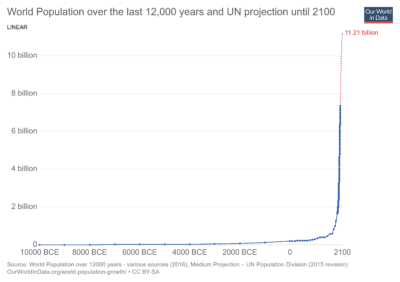
    Line graph showing world population from 10,000 BCE to 2100. Population remains low until a sharp rise after 1800, reaching over 8 billion in 2020 and projected to reach 11.21 billion by 2100. Economists and the media are just as guilty in the hysteria over declining fertility rates. But the bigger picture shows that there is no shortage of people. World population is projected to grow exponentially, despite the growing trend towards smaller families.

    Shouldn’t we demand modernized thinking of our leaders and see beyond borders to the world we all share? Our kids and future generations are counting on us.


    TAKE ACTION
    We can counter the regressive rhetoric. We’re asking the U.N. Secretary-General to recommend smaller families to create a better future for kids. Add your name here. 

  • 2020 Candidates: We Can’t Fight Inequality Without Family Planning Investments

    2020 Candidates: We Can’t Fight Inequality Without Family Planning Investments

    As 2020 contenders like Warren, Booker, Harris, Gillibrand, Schultz, and others make the media rounds, we’ve been hearing a common theme: creating a future where Americans have the opportunity to succeed. They talk about getting a fair shot and the struggle to get ahead.

    Elizabeth Warren frequently declares that it shouldn’t matter where you come from. She wants to fight for “…an America where every kid, no matter what that kid’s zip code is, has that same fighting chance.” It’s a trope used frequently by candidates.  

    But the reality is, it does matter what zip code a child is born into. If we want a country where the zip code in which you are born doesn’t matter, family planning HAS to be part of that picture. There’s no way around it.

    In “Giving Kids a Fair Chance,” Nobel Prize Economist James Heckman argues, “the accident of birth is the greatest source of inequality in America today. Children born into disadvantage are, by the time they start kindergarten, already at risk of dropping out of school, teen pregnancy, crime, and a lifetime of low-wage work.”

    Being born into poverty harms kids for life, and the longer it is experienced, the harder it is to overcome. Unequal opportunities translate into unequal lifelong outcomes by the time children reach the age of five. And right now a whopping 41% of American children live in or near poverty. Inequality in the U.S. is so pervasive that the UN has called us “the most unequal society in the developed world.”

    There’s no level playing field without a fair start in life.
    If we’re not talking about fairness from birth, we are not addressing the disparities in cognitive, emotional and health development that are inflicted. We’re not addressing the gap between young children who receive full attention from their parents and those who are missing critical early learning and social skills because their parents are working multiple jobs to get by.

    We squabble about how to improve school performance while ignoring the fact that 14.8 million kids in the U.S. don’t have enough to eat. It doesn’t take an expert to recognize that hungry kids cannot concentrate and do well in school. 

    As the Huffington Post explained:

    “The root of the problem of school performance is that we do not know how to effectively respond to the impact of poverty on a child’s readiness to learn or how to provide more effective instruction to accelerate progress for low-income students who find themselves behind their peers.

    Children born into poverty must overcome significant obstacles to their educational success before ever stepping a foot into a classroom or school. And once they do enter school, they encounter a system designed to provide instruction to groups of children that are expected to learn in the same environment and at the same pace. For children in poverty who began their formal schooling already behind other children, this uniform pace and structure assure that they will never catch up to their peers.”

    How Family Planning Reduces Inequality
    The decades of evidence is clear. Parents who plan, wait, and focus resources on smaller families are more financially secure and stable, parent better, and invest more in each child. The results pay off for kids in the form of greater academic achievement, emotional health, social mobility, health, community participation, gender equality, lifetime success, and more. Research indicates that better family planning is the most effective way to end the cycle of poverty.

    Fixing Our Broken System
    Some candidates are exploring the idea of a Green New Deal among other fixes. Yes, corporations and the 1% need to pay their fair share in taxes, adults need a living wage, and the cost of higher education needs to be addressed. But history shows that fairer taxes and better jobs are not enough. All of that must go hand-in-hand with investments in children and family planning to enable every child to succeed throughout their development and into adulthood.

    One solution? Guaranteed Minimum Income tied to family planning. Having Kids has proposed such a plan to reduce inequality in D.C. Another approach is having great success in Colorado through the LARC4CO program, a partner of Having Kids. They offer affordable long-acting reversible contraception (LARC) to reduce unintended pregnancy and empower families to achieve greater stability before having kids. Investments like these are powerful tools in reducing economic inequality. 

    Until we invest in better family planning to give all kids a fair start, zip codes will continue to matter in the fight for equality. We implore the candidates to start the conversation.

    TAKE ACTION: Tweet the candidates and tell them that we must invest in family planning to reduce inequality. Use the hashtag #fairstart.

  • What the Occupy Movement Should Have Said

    What the Occupy Movement Should Have Said

    Thanksgiving is not about turkey and football. For thoughtful and caring people, it goes much further, and is tied to the American ideal of democracy.

    In 1896, Abraham Lincoln made the Thanksgiving proclamation to a weary country, divided by civil war, with the fate of the democracy in peril. Many believe that the purpose of the Mayflower Compact was to protect the liberty of dissenters from the tyranny of those in power. These and many other points in history remind us why Thanksgiving is a good opportunity to reflect on democracy. One recent attempt to reset our system to the ideal was the Occupy Movement. It has been described as:

    [A]n international progressive, socio-political movement against social and economic inequality and the lack of real democracy around the world. It aimed primarily to advance social and economic justice and new forms of democracy. The movement had many different scopes; local groups often had different focuses, but among the movement’s prime concerns were how large corporations (and the global financial system) control the world in a way that disproportionately benefited a minority, undermined democracy, and was unstable.

    The movement has been criticized for lack of a centralizing vision, and specific demands for changes in policy. Could it have taken a longer-term view of change, one related to family planning?

    Democracy relies on a fundamental premise: That societies form, and remain legitimate, through the consensual coming together of free and equal people. The reason is simple. How else would you justify the authority of the state, and government?

    Here’s the thing. For many centuries that premise was thought to apply to the people alive at the time, adults who could choose – as free and equals – to enter and leave societies and nations as they pleased. But that static view of freedom and equality is riddled with problems. The idea of “coming together as free and equals” works much better if we think of it in terms of planning for future generations, and what it would mean if we apply it to them. Thanks to modern contraception, reduced infant mortality, the (too slow) recession of religious and other forms of oppressive patriarchal families, and about a dozen other things, we can now do that. We can make democracy inter-generational, and realize it in ways it’s not easy to imagine in today’s world, where democracy is virtually meaningless.

    The child-first Fair Start family planning model does just that.

    It’s simple: Parents plan a fair start in life for their kids. Communities, in exchange, help fund that start – proportional to need. Parents and communities both promote an ethic of smaller families to make the whole thing work, and to free us from crowded societies where the average person’s voice is lost in the crowd and does not matter, where people live in fear of one another, where they are not raised to run their own democracies, and where the freedom and security of nature is disappearing every day, etc.

    Occupy started something. Fair Start family planning can finish it. Learn more, and join us.

  • Inequality and Children: Why A Head Start for Some, Hurts All Kids

    Inequality and Children: Why A Head Start for Some, Hurts All Kids

    Bloomberg recently posted a story about a summer camp for the ultra-rich, that teaches them how to get richer.

    What?

    Why should a select few get to have their hands held to jump to the front of the line? Children born with a head start are handed opportunities, access, guidance, trust funds, and connections that allow them to easily generate wealth in adulthood. The doors are opened to them to simply walk through. Compare that with the rest of Americans who struggle to find affordable housing, healthcare and fair paying jobs, and are often burdened with student loan debt.

    But inheriting a massive head start in life from wealth and privilege is not simply unfair. It degrades democracy. Because as the rich getting richer at the expense of a shrinking middle class, powerful interests wield their power to influence policy and keep our economy working only for themselves.

    Furthermore, we know that the economic inequality created by such policies is closely tied to poverty and crime, and results in a number of negative health and development outcomes for children. As inequality increases, child welfare decreases. And that is the direction we are going. How is that progress? Our standard of living should improve over time, not worsen.

    So then, how can we create more fairness and take a serious approach in attacking inequality? The answer is not simply a redistribution of wealth from a system flawed at its foundation. It’s looking at our values as Americans, as humanitarians, and recognizing that children deserve to be born with a fair start. That means safe neighborhoods, healthcare, a quality, equitable education, and nutrition. It also means having parents that are able to give them the time and attention that they need to thrive and be successful.

    This can be accomplished with a cooperative family planning framework. Fair Start family planning brings us together to invest in all kids, to improve equity and create a better society.

    Who would argue against a level playing field?

    TAKE ACTION: Ask him to respond to Having Kids’ questions. Fairness for children starts with those questions. Add your name here.

  • It’s Time to Address Child Poverty in the U.S.

    It’s Time to Address Child Poverty in the U.S.

    Headlines tell us that the U.S. economy is strong and that the unemployment rate is low. But those positive indicators don’t reflect the reality for the 40 million Americans living in poverty. As politicians thirst to slash safety nets, many take the stance that people need to pull themselves up, and simply work hard.

    It’s not that simple, however. Wages are stagnant, inflation is rising, and hourly jobs are not guaranteeing hours to employees, which leaves many struggling to stay afloat week to week.

    But aren’t we losing sight of who is most vulnerable? When we talk about welfare programs and SNAP food assistance benefits, there’s often an undertone of judgement focused on the adults. What if we brought the focus back to kids, and the staggering fact that nearly half of U.S. children live near the poverty line, according to a study in 2014?

    Addressing this epidemic requires solutions from many angles. But one of the most critical answers is ignored by our leaders and most of the child welfare community. And that is family planning. Never mind the expenses for basic needs. The cost of childcare is a significant barrier to employment. When parents can’t find affordable child care, they stay home.

    If we’re serious about addressing increasing inequality, child welfare and working to reduce the number of people relying on social programs, we must improve family planning. It is essential to tackling systemic low income.

    Last week we asked Secretary of Health and Human Services, Alex Azar to respond to a few questions regarding child welfare. Better family planning starts with those five questions. Let’s refocus towards the needs of children from the start, rather than the failing downstream approaches currently in place.

    Take action: Add your name here.

  • TAKE ACTION AGAINST TRUMP’S ATTACK ON WOMEN AND CHILDREN

    TAKE ACTION AGAINST TRUMP’S ATTACK ON WOMEN AND CHILDREN

    The Trump administration is trying to amend our family planning policies in ways that hurt women and children, including imposition of a domestic “gag rule.” They are proposing changes to Title X – the only federal program dedicated to increasing access to contraceptive care for low-income women. It would take away funding to providers who simply mention abortion as an option.

    The Title X changes are an obvious effort to defund Planned Parenthood, who is the only healthcare service for many. The proposed rules are intended to mislead women about their health care options and would encourage the use of ineffective birth control methods. Women deserve facts. The proposed Title X changes will affect people for their entire lives.

    TAKE ACTION – Comments are due 07/31/2018 at 11:59 PM EDT.

    Draft key points are below – feel free to copy, modify and/or otherwise use: 

    • This radical proposal has never been implemented in the United States and it would jeopardize the trusting relationship between women and their providers and put the health of the 4 million women nationwide who use Title X clinics at risk.
    • The proposed rule could increase the rate of unintended pregnancy by eliminating the requirement that Title X clinics provide access to the full range of FDA-approved contraceptive methods,
    • Methods encouraged in this rule such as “natural family planning” and “fertility awareness-based” methods are significantly less effective with typical use than long-acting methods, leading to a higher number of unintended pregnancies.
    • Reducing unintended pregnancy helps families get off to the best possible start. It empowers women to attain their education goals, helping create financially secure and strong families, lowers the abortion rate and reduces the number of people who need to use Medicaid and other public assistance programs.


  • Freedom Starts With Cooperative Family Planning

    Freedom Starts With Cooperative Family Planning

    Each child’s freedom to succeed in life depends on better family planning, and their getting enough love, attention, nutrition, healthcare, and education. We should hold parents accountable and make that investment.

    Your right to be free from a dysfunctional society, disastrous climate change, massive inequality, and a crowded and polluted world also depends on better family planning, and the cooperation between would-be parents to ensure a future filled with fewer and better-prepared people. We should make that investment.

    America is not a place, a group of people, an economy, or a flag. It is the ideal that people should govern themselves. That ideal starts with capable people, and capable people start with better family planning.

    Help us break the taboo that treats family planning as a personal or private matter. Let’s instead work together to guarantee that all kids have a fair start in life and create the free world we were all meant to have.

    Happy Fourth of July.


  • Effective Environmentalism? Make Sure Future Generations Are Better People Than We Have Been

    Effective Environmentalism? Make Sure Future Generations Are Better People Than We Have Been

    Today, on Earth Day 2018, you might hear a familiar expression: “Be the change you wish to see in the world.” It’s an amorphous and difficult thing to live up to. But if we temporalize our thinking and relate the expression to family planning, it can become deeply meaningful and actionable. Who do we want future generations to be, literally, in terms of their quantity and quality? There are plenty of studies that show the quantity of future generations is a key determinant when it comes to things like mitigating climate change. But of course the quality of future generations matters as well – will they care about and care for the environment, or consume it into degradation, as we and prior generations have done?

    While most environmental, child welfare, human rights and other progressive organizations are silent on the issue of family planning, a whole faction of industrialists and politicians is pushing for larger families as a means to create a glut of cheap labor and voracious consumers in the future. Yes, Elon Musk, we heard you. They know who they want future generations to be: People who will make them money.

    How do we confront that threat?

    Human rights are designed to protect the vulnerable from the powerful. Future generations are vulnerable to the sort of exploitation the faction of industrialists and politicians described above are intent upon. Having Kids is pushing back against them with something called child-first Fair Start family planning. It’s a human rights-based family planning model designed to ensure future generations a fair start in life, functional democracies (not simply growth economies) where their voices will be heard and matter, and a clean and safe environment in which they can thrive. Its core moves are  1) to shift public thinking about family planning as something we do in isolation from others to something that is cooperative, 2) to use the benchmark of fair starts in life as something around which to orient that cooperation, and 3) to recognize the simple fact that smaller families mean a healthier environment and the ability to invest more time and love in each child.

    Fair Start family planning is not designed to create future generations who will just make rich people richer.

    For Earth Day, make being the change you wish to see in the world mean even more. Take action here.