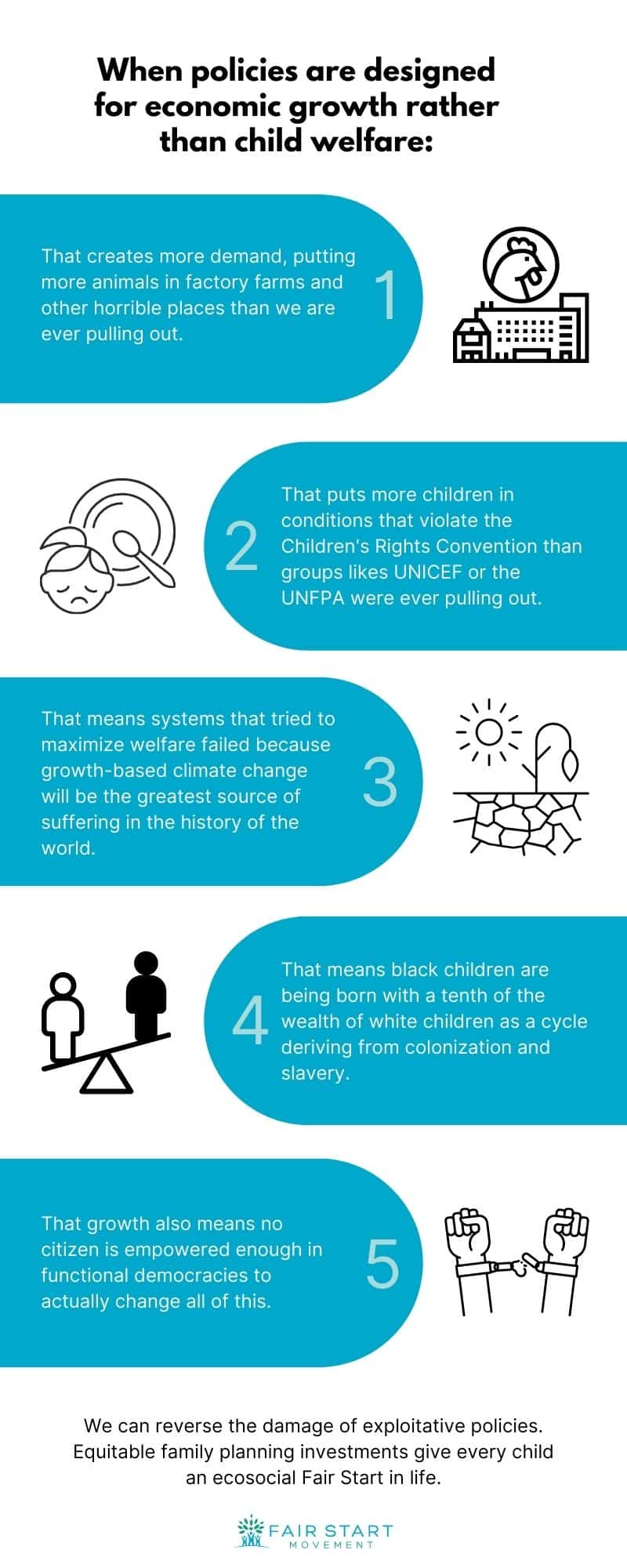
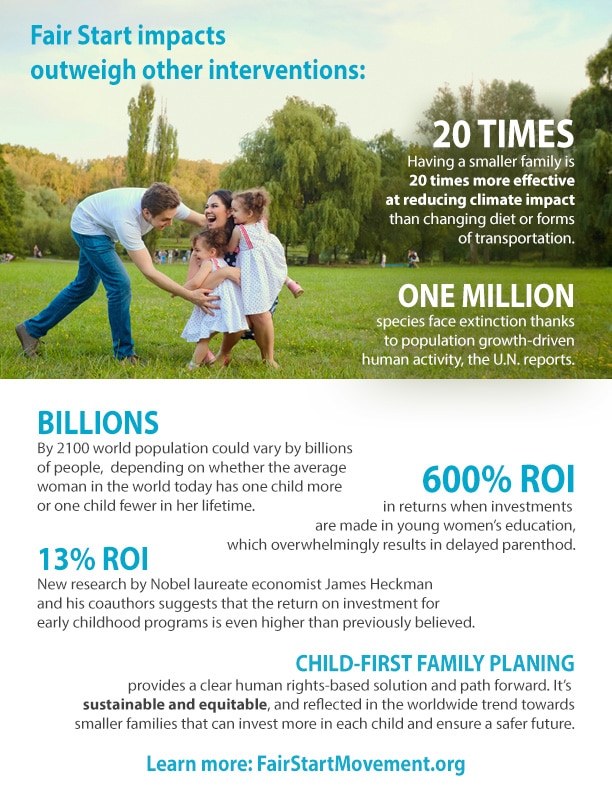
The essence of this urgent appeal lies in the recognition that our current norms and policies lack a crucial element—a just creation norm that centers on children’s rights and birth equity as fundamental benchmarks for assessing costs and benefits. It’s a call for a paradigm shift, urging us to become a society capable of inclusively evaluating decisions based on the well-being of our children. This call is underscored by the looming climate crisis, which poses an existential threat to future generations. Our current growth-driven systems are proving to be exploitative, particularly for vulnerable communities and the generations to come.
Born in response to the threats against children’s rights, the Fair Start Movement offers a universal model built upon the principle of self-determination. This model aims to eliminate threats and serve as the bedrock for legitimate and inclusive policymaking. Central to this endeavor is the acknowledgment that investing in children and ensuring birth equity is not just a gesture of goodwill; it’s a moral obligation. Prioritizing these aspects propels sustainable development, protects our environment, and upholds the rights of generations to come.
As we stand at this critical juncture, it is a collective responsibility for entities, policymakers, and individuals to rally behind these reforms. It’s a joint commitment to center children’s rights and birth equity in our policymaking, charting a course towards a future that is not only sustainable but also fair and inclusive.
In conclusion, the importance of establishing a fair start for all, anchored in the empowerment of our children and the preservation of our planet, cannot be overstated. Let us band together in this noble pursuit to create a world where every child has the opportunity to thrive in a sustainable and equitable environment.
My journey towards becoming a climate justice activist was not straightforward.
I was born in Kabarole western Uganda from a poor family of 10 children of which four are males and six females am the third born child my parents were poor to give us basic needs in life. My parents forced me to get married to old man at age of 16 years , my parents wanted dowries to support my younger brothers and sisters , I dropped out school after completing primary seven and obeyed my parents to and get married .
During my stay in marriage I got challenges with my husband and divorced him with a lame child, then my parents chased me away from home and left to be maid for church priests in town, I exhibited discipline and commitment to my job then one day one priest picked interest of sponsoring to back to school, I started a gain schooling up to Nursing Profession but my dream was to be a doctor. Growing up in a big family it was challenging, my parents used to depend on agriculture of food crop and we had small portion of land that could not provide us enough food. Fortunately, I got a job to work in the refugee settlement in western Uganda where I was getting salary to support my younger sisters and brothers, witnessed how refugees struggle in the Refugees settlement.
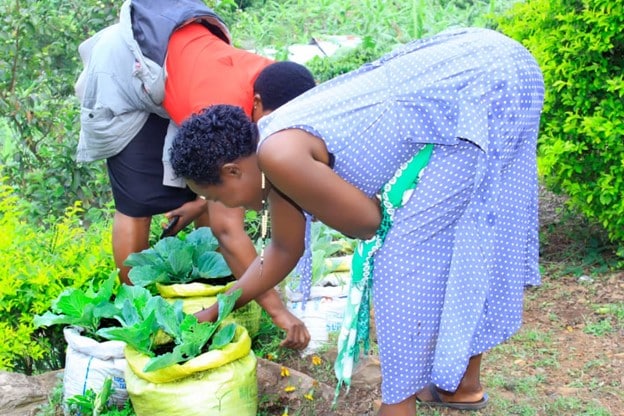
At the age of 27 and nurse by professional, I began my activism passion by engaging in planting trees, community gathering teaching them importance of family planning and delayed parenthood, teaching adolescent girls how to cope up with puberty stages and advising them on prevention of sexually transmitted and how to use sanitary pads .My passion to discourage early girls marriage , teenager pregnancy while promoting girls education and improving food security in the community and desire to make a difference led me to continue my activism work. I’m focused on various areas such as agroforestry, sexual reproductive health for adolescent girls, water accessibility and women and children rights. I have also mentored students in various schools to create climate awareness through singing, poems, storytelling and skits about climate change.
Her work did not perish, and I was soon called to start Rejoice Africa Foundation as the co-founder. In this role, I have participated in the development of Rejoice Africa Foundation.
However, I realized that creating systemic change was not enough. I understood that the fight against climate change required a shift in mindset and individual responsibility. I embarked on a mission to build a mindset shift change by encouraging people to take responsibility for their actions through a human rewarding system.
My work as a climate justice activist has not been easy for me, but I remain focused to meet my goal of saving the next generation.
The future are in our hands , if we don’t respond to climate change , soon the earth will reach on climate devastating situations and it will be hard to reverse this.
These efforts urge concentrations of wealth and power to offset the harms they are causing, and their wealth externalized on future generations by paying family planning and birth equity and development reparations that change the location, timing, manner, and with what resources women have children to ensure those children thrive rather than suffer because of the wealth-driven climate crisis.
This is not altruistic. This about liberation. Neither I nor you can be free in world with people who did not get enough what they needed growing up to constitute groups of free and equal persons actually capable of asserting authority and obligating persons to follow laws, especially when that allows the creation of so many people that we lose nature, which is simply the relative absence of the power of other persons. That is the logic of self-determination in a world with more than one person.
Many in positions of power like Peter Singer evade this discussion and refuse to exit a political system that benefits them at deadly cost to others. How they handle this issue – from their position of wealth and entitlement – screams that it’s not their life on the line; that it’s other lives, and other parents’ children’s lives, on the line. Singer’s evasions are unique give his urging policies to liberate animals, the benefit of which were undone by family and growth policies. Also, by siloing off the liberation of nonhumans from social justice more generally, he ensured concentrations of white wealth and privilege, at cost to general justice.
For example, Elon Musk makes money selling electric cars to a growing population that needs them because that growth is destroying our atmosphere. The policies that ensured that growth also ensured birth-based black poverty relative to the massive head-start position in which white South African Musk was born, and a dilution of the average citizens power to use their democracies to reverse things like the climate crisis and birth inequity. Those policies did more harm, especially using a metric like self-determination, than Musk and his car sales did good. This is not about population as much as power relations, and not about growth as much as inequity, understood as an equal and influential role in determining the rules – formal and informal – one has to live under. If every child that could be born in South Africa at the time of Musk’s birth had equity in governance, had a role in making the rules, would they have chosen the outcomes we see today? If exclusion was a violation of human rights, can we take back that amount of wealth that derived from the violation? Who would choose to use the same form of legitimacy that enriched a few at deadly cost to a blameless billion?
Remember that – and that their wealth was created at cost to your freedom and the lives of others – when you engage those in positions of power as co-subjects in a shared democracy and bring them the reality of their position.
Freedom really – or physically – means some relative level of self-determination. You would control your life and what influences you. Influence over you would be limited and highly decentralized.
And if you wanted to maximize freedom, you would have to create a background environment that acts as a buffer between people that minimizes human influence, through things like the climate crisis, we we have over one another. That requires climate and biodiversity restoration.
And assuming you believe people should be political equals, with equal influence under the most basic rules under which they must live, you would ensure their birth and development so that they offset each other’s capacity to influence those rules equally. Freedom always requires some rules – even if just to ensure children are protected from the sort of harm in childhood that limits their freedom in the future – and we should all have equal and influential say over those basic rules.
Freedom – or maximizing relative self-determination – without these conditions would be physically impossible. Our families have to create and develop people for democracies, not economies, because the former precedes and regulates, assign property rights for, etc. the latter. Consider it this way: Much of our lives today is dominated by the need for employment, social positioning relative to others in our economies, titles, etc. That control over our lives is asserted through wealth and other forms of influence. If we are to be free, that influence must be redirected and reprioritized so that would-be parents are incentivized and entitled to first or peremptorily build democracy – town halls where each matter – not economies, or crowded shopping malls.
You and others should be an influential citizen, not just a worker, consumer, and taxpayer. And doing that depends on how you are created and the conditions in which you develop.
Those reparations can get us towards a biodiverse, climate restored, equitable and democratic future and they are first human right and thus override current state-issued property rights because they make us who we should be – free. Many who owe those reparations and owe them because their wealth was made by externalizing costs on future generations, are trying to block this process and send us into a future crowded future with vast inequity, and a dangerous and degraded environment.
Their thinking is fallacious, hypocritical, and oppressive. All have the right to move cost-externalized wealth to young women to evade millions of deaths by all nonviolent means effective because the first legal inevitably obligations deal with creating persons in conditions – fair conditions – where they can comprise self-determining communities.
All of this is evident in reviewing basic conceptions of intergenerational justice. If we substitute the more antecedent value of self-determination for welfare (which legitimate political entity ensures the latter value?), the threshold specified by Meyer leans towards egalitarian, and more importantly, it becomes the first and overriding norm because who we should be always come first in any policy analysis.
Forget figurehead politicians or the fantasy world created constant commercials. Your day-to-day life is and should be determined by the liberty-quality of your relations with your fellow citizens, those with whom you interact every day. And who they are and should be is determined by the conditions in which they are born and raised. How is self-determination possible without such a thing? It’s not, but what we do now can be improved by using children’s rights as the fundament of state legitimacy.That would reform a system where can be coerced or socially cajoled to follow laws that are not theirs at all.
What you thought of as a written constitution or set of rights that ensured your self-determination did not. Freedom is four dimensional. The only possible source of self-determination, the creation, family and child welfare ethics, law and policy of who we should be, slowly undid that value for us in favor of the wealthiest, and certainly for future generations subject to wealth-driven heat waves and social controls.
Most of the academics in these debates contradict in their writings the basic values they exhibited throughout their lives, e.g., seeking minimum thresholds of personal welfare, expecting equal access to opportunities, participating in and adhering to political/legal systems that purported to represent the governed, using and enjoying an environment relatively conducive to human and nonhuman health, enjoying a right to have a child in relatively safe conditions, etc. You can identify these academics because they will avoid discussions of how shared values interrelate to the actual creation of power relations. They will avoid discussions of their full positionality. They will avoid explicitly conditioning state authority on empowering each person equally.
Given their privileged intergenerational positionality, and the fact that they sent their lives generally relying on and participated in legal/political systems of coercive obligation premised on the idea of self-determination (evidenced through things like the holding of elections) that benefitted them at deadly cost to others, they should at least begin from a default or provisional position of extending those values to future generations.
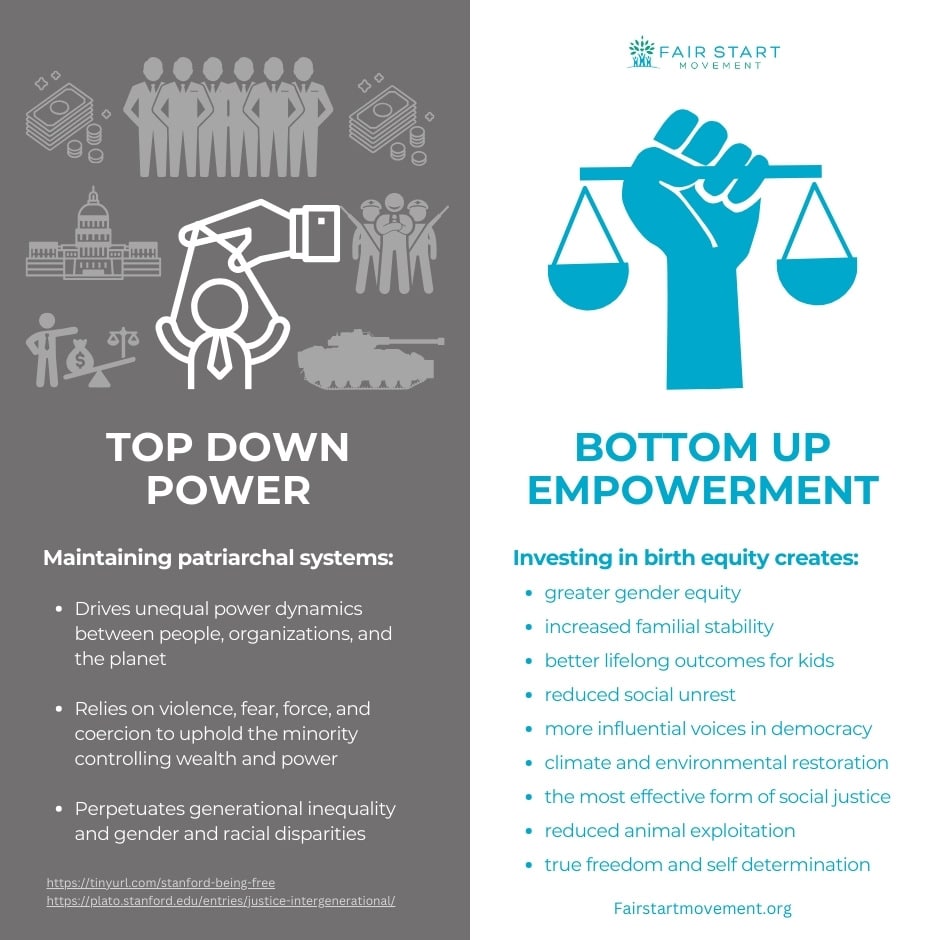
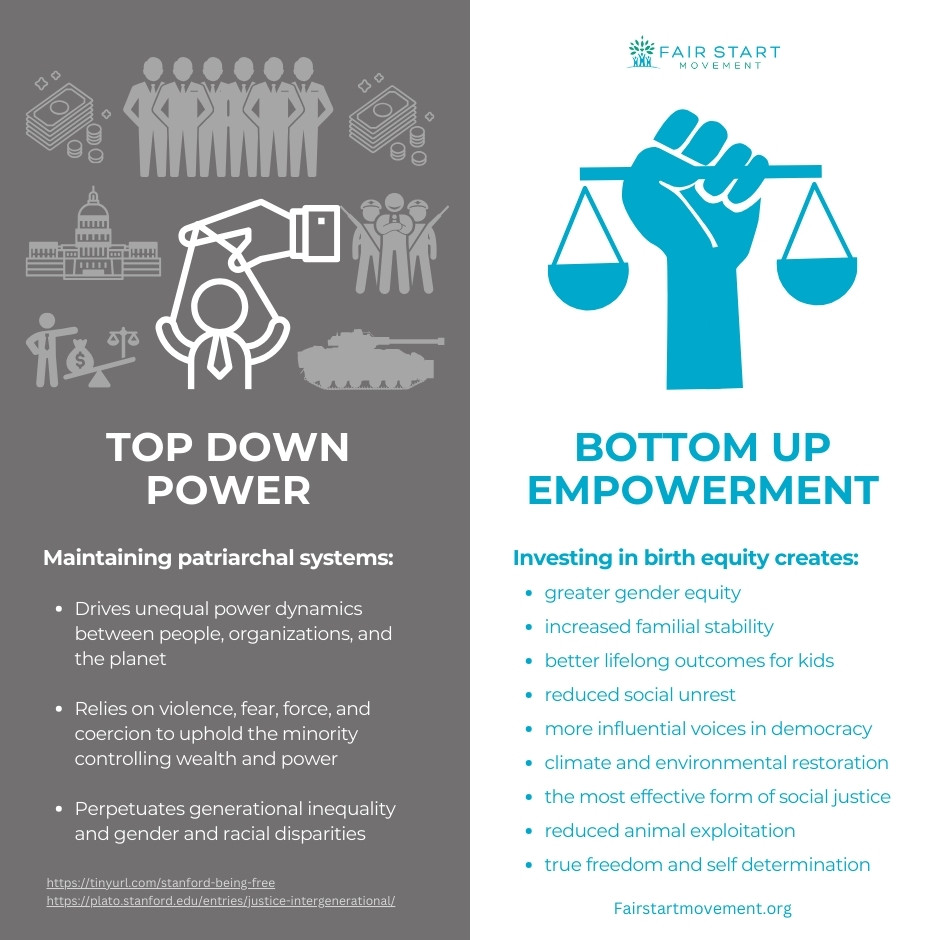
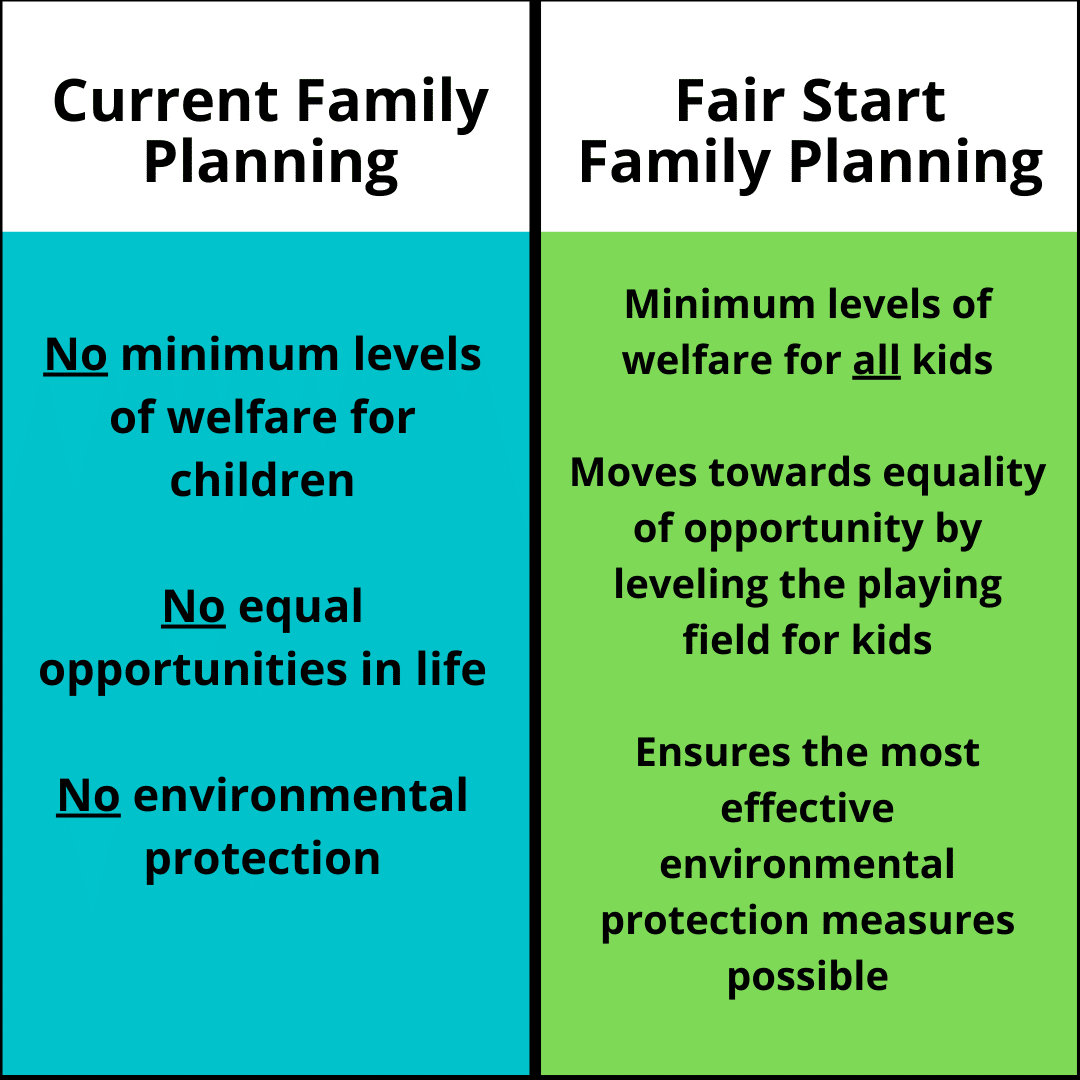
They can begin by saying — as a fundamental premise of justice over top-down power — that basic human-rights systems should prioritize the child welfare/equity in instruments like the Children’s Rights Convention over parental subjective choice in the ethics, law, and policy of family planning, population, and procreation so that future generations can also debate these issues from the comfort and security these academics do.
By asking this question you are looking for policy scam that fundamentally created the climate crisis. You are looking for those who are willing to benefit by exploiting those children’s birth positionality for economic growth, thus benefitting at deadly cost to others. You are looking those who choose a fundamental political system/orientation system with no functional protections for children, and thus none for the ecologies those children would consume.
Freedom may best be conceived as the conditions of influence (cash or other incentives, entitlements, coercion, renown, group belonging, the inclination of humans to imitate one another to ensure group safety, etc.), and polarity, where organizations of free and equal persons can form, dissolve, and reform — more like bubbles than an extended organizational chart. What would it take in the creation and development of persons to ensure they acted as free and equal persons and be able to look each other in the eye without fear or deference – in the formation of groups, the state of affairs implied by the “We” in the beginning of the U.S. Constitution. What would it take to ensure that across generations so that we were not imposing our ecological and other costs on future generations? Given that self-determination by definition requires birth and development conditions ensuring all children an open future, that is where we start.
One way to envision the difference would be as between a shopping mall in which business owners try to fill the thing in order to maximize profit, and a rule-making town hall in which citizens fill it while ceding an equal capacity to influence outcomes to all members. Savvy freedom fighters will physically constitute nations, not be constituted by some document or documents to which they have, and can only have, little relation.
This is not capitalism or socialism, but constitutionalism, the creation of duty-based systems that enable member obligation and authority by actually – physically – limiting and decentralizing influence. The unique value of investing in young girls is both evidence of how this can work, and a toehold for major reforms.
Instead of random written constitutions one can imagine modifying GMI systems via a progressive scale of democracy-building payments, inverse to wealth and income and contingent on positionality, that either charged wealthy young women for having a child before their 27th birthday and/or without certain parental readiness benchmarks, or on the other end of the wealth spectrum, covered significant incentives consistently paid out for them to build birth equity and ensure delay.
We owe our first obligation to other members of our nations, as they enter and develop, horizontally, rather than vertically to the powerful – the wealthy or politicians. To think otherwise is to replace the real – authority derived from the people – with the symbolic: documents or representatives.
Free people will target extreme and increasingly vulnerable concentrations of wealth and power to repay the true costs of their wealth to young women, protect millions of innocent lives, and help move the world towards true freedom. This inverts power from deference to coercion from above to exclusive deference to empowering those who are vulnerable – and who we might have been – below. The former cannot create obligation because it undermines self-determination, and hides equity’s demand that privilege be earned, and that all have a right to be heard and matter.
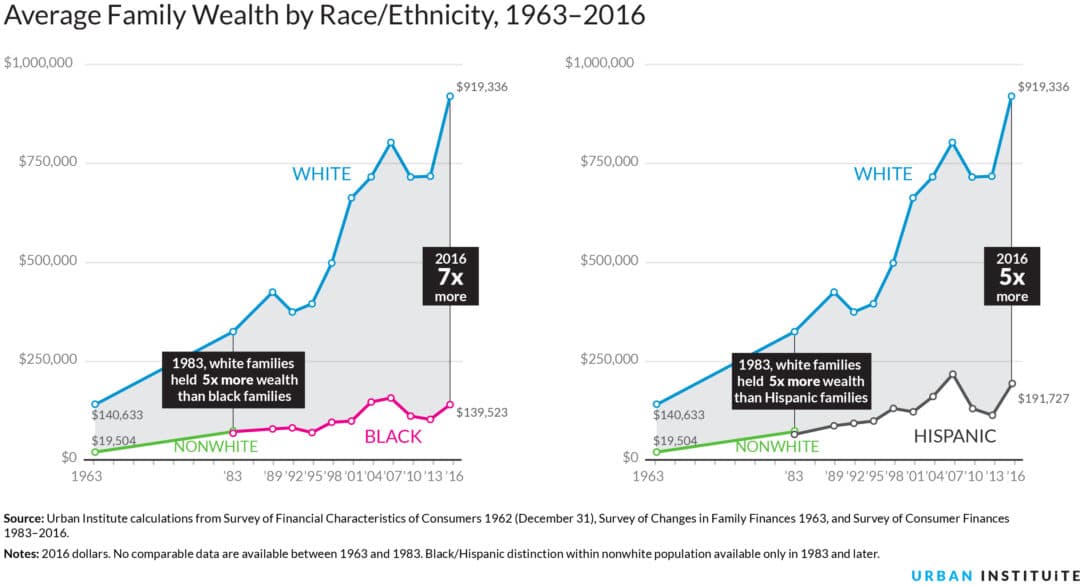
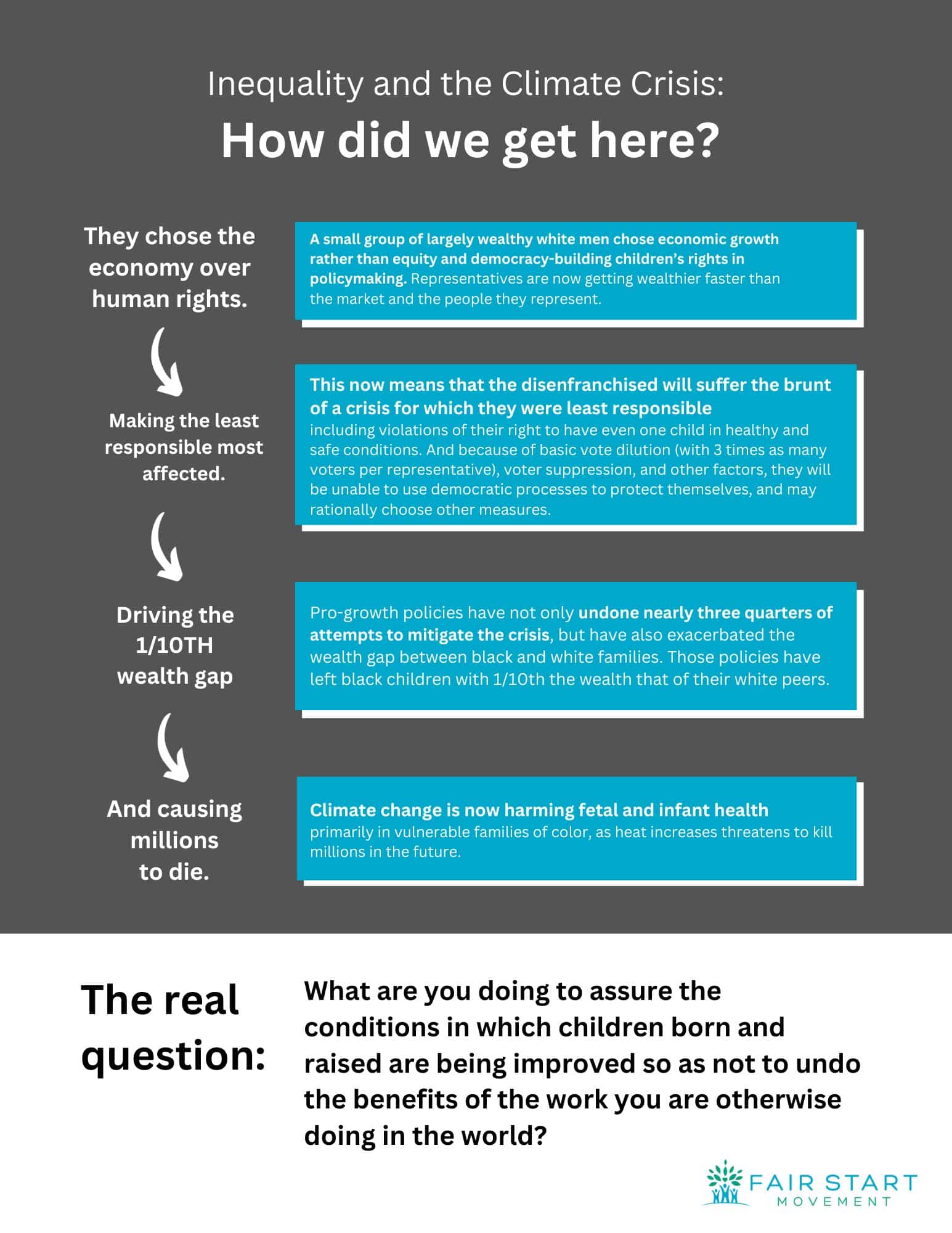
That inequity, coupled with growth, has ensured that many will die as the climate crisis unfolds, with those who benefitted from the crisis using their wealth to thrive while the least wealthy face the greatest risks. The stakes for a correction are high, with those who benefitted from creating the crisis on the verge of escaping its harm.
A nonviolent revolution moving wealth from the top to fund all of this could ensure freedom for many.
In other words, we have many seeking liberties, and a small group blocking it. A peaceful revolution based on fair starts in life for all kids would by more evolved than other revolutions, happening at the true border of human power: Our creation and development, which is where true self-determination occurs.
Singer fails because he does not push for what true animal liberation, the title of his famous book, requires: Restoration of the nonhuman world through family planning entitlements. Had he done so during the climate-crucial decades in which could have, he might have helped mitigate the climate crisis, the greatest threat to nonhumans.
His mistake is what we might call the constitutive fallacy. The fallacy means Singer never accounts for the actual relations between humans and nonhumans (a random person abusing their companion animal, growth driving extinction, utility-based consumerism demeaning the nonhuman world more generally, etc.) because he never accounts for the creation of those relations.
But the fallacy does something more insidious. It robs us of our freedom, or relative self-determination.
When we create people, we are also creating the fundamental power relations between them, and between them and their otherwise nonhuman ecologies, and in a way that precedes written constitutions or other binding sets of rules. If we want justice, bottom-up in the style of true democracy, just creation must come first. Imagine this process as a sort of “first election” – the one that means we all consent to be a “we” then capable of doing things like electing officials. And that mistake – not requiring things like the Children’s Convention standard in family planning policies to improve those relations, which would physically constitute just communities – does more than just harm animals.
It fundamentally permits anthropocentric changes that cause irrefutable harm to all, against an absolute standard like infant health. Singer might counter that “ought to imply can” and effective family reforms were not politically feasible. But as discussed below, incentives/entitlements work where coercion does not, but were never promoted by people like Singer, even when the wealth the absence of these incentives created was shuttling into the hands of a few during the critical decades we had to evade the worst of the crisis.
TAKE ACTION: Find and urge Singer to admit the overall impact of the changes he promoted could not have, and did not, liberate animals.
If you read about the controversy swirling around the head of Harvard regarding her recent statements on Hamas, and other instances where the university took a stance on political controversies, you might notice something odd:
In upholding certain values, like democracy, nonviolence, and human rights, Dr. Claudine Gay simultaneously accepts status quo family norms – in the region and elsewhere – that quietly undermine the values. We see this if we focus on the actual creation – through families and childbearing – of power relations.
Claudine might seem to value human rights. She does nothing to end a fundamentally unjust family system based on top down adult choice, rather than a bottom up system where – through entitlements – children are born and reared in conditions that comply with, minimally, the Children’s Rights Convention.
We can’t truly call ourselves civilized if we don’t protect our most vulnerable. The Fair Start Movement gives current and future children the advocates they need to get the life they deserve.
Anne Green, PhD Former Professor at Carnegie Mellon University Executive Director, One Step for Animals
For all of the reasons given above, many reasonable people would consider the young mother taking peaceful action to achieve birth equity for her future child, and setting an example that others might embrace to protect all future children the height of working towards freedom and justice. Free people will follow rules that start by limiting the influence others have over them. The process of her seeking birth equity would be, in that sense, liberating.
She can leave the money with the wealthy family, knowing it was made at cost to others, or move it and save lives.
Those on whom she would make the demands – who would choose preventable deaths – seem tiny and worthy of targeting relative to all of that. Her move to demand is a move towards knowing her and many other children, under a test laid out by one of the leading political philosophers in the world, will live free.
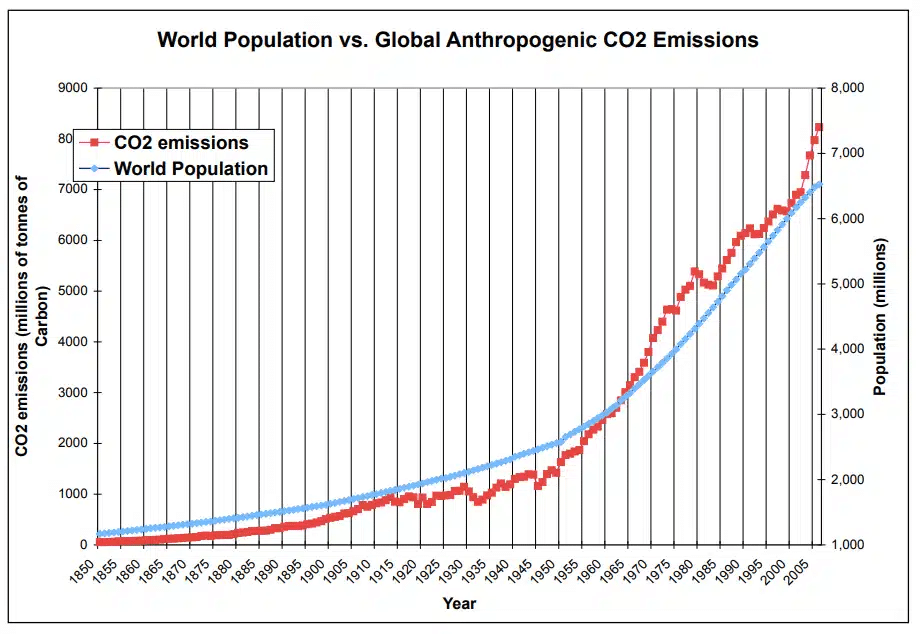
The climate crisis is not just about emissions. It’s about how children, animals, and adults will actually experience the crisis, and that depends long run on the mental and physical resources they have, their location, those people that surround them, etc. And that depends on what they have at birth.
Impact, on many levels. depends on how we have kids.
Consider this fact: People, not documents, constitute nations, and the creation of their power relations through birth and development – by definition and inevitably – determines whether they are relatively self-determining or determined by others. These relations are part of the implied “we” in every statement, the often-unspoken presence of the dominant political/legal system – usually the nation – from which the statement is orienting. How would you ever really account for inclusive power relations to allow a say in what the law should be without starting at creation, and accounting for the move from minor to adult that makes persons full citizens capable of making the rules.
You would not, and the failure to halt the climate crisis is evidence of this. And there is a clear formula to assess reparations. The would-be mother would be truly constituting democracy, speaking the truth and logic of self-determination to power.
So . . . if that young mother were charged with trespassing in making the demand, could she challenge it – and expect a jury to side with her – because the state cannot limit access to property without first empowering (actually or physically constituting) its people to be involved in the making of such property rules, i.e. empowering them through just the sort of constitutive discourse in which she seeks to engage? How do we every get to governance by the people without elevating her pre-political right above the process-based rule of trespass? Do we really choose to constitute our relations via top-down force in a system run by men, versus a system of bottom-up empowerment run by women, via the act of care?
Her act is fundamentally liberating, and the best explanation of political obligation, because free people will start by limiting and decentralizing the influence others have over them.
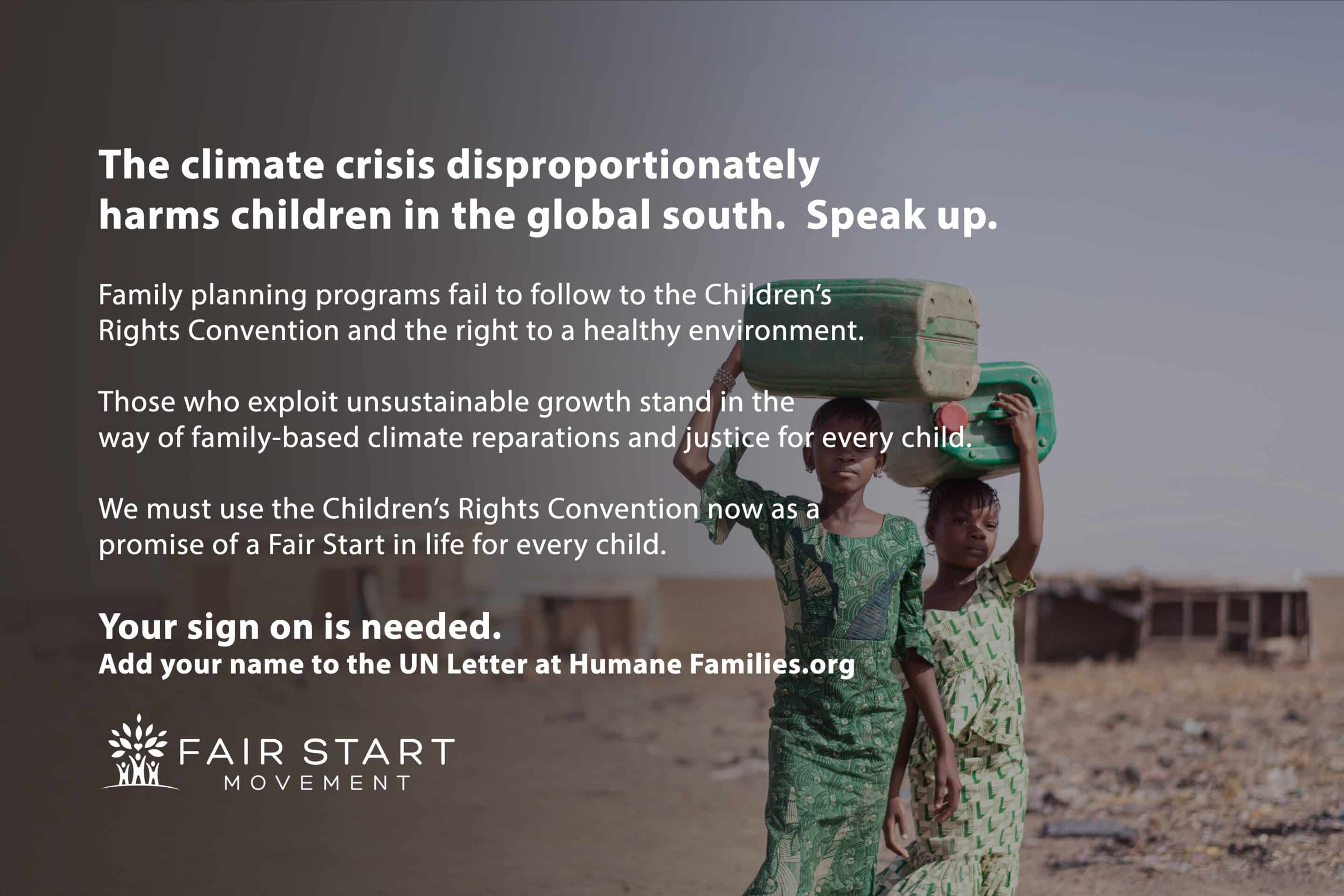
This is not theoretical. A complaint reflecting the right to make such demands is now before the United Nations, to benefit the most vulnerable communities impacted by the crisis.
For all of the reasons given above, many reasonable people would consider the young mother taking peaceful action to achieve birth equity for her future child, and setting an example that others might embrace to protect all future children the height of working towards freedom and justice.
She would be ensuring self-determination for many, true freedom, instead of them being determined by others. What is the right way to deal with someone who insists on participating in a system that risks millions of lives in order for that person to make more money?
She can leave the money with the wealthy family, knowing it was made at cost to others, or move it and save lives. She can empower children equally and help solve another problem: Acts of mass violence do not stem from mental illness as much as from a sense of disempowerment, and the need to matter in one final act within what shooters perceive as an unjust world. We were sold sustainable town halls where we matter and can control the world around us to a degree, but got unsustainable, massive shopping malls where most do not matter and have no say. And those that benefitted from this system, at cost to others, want to block media from reporting things like mass shootings to hide the costs of their systems.
Those on whom she would make the demands – who would choose preventable deaths – seem tiny and worthy of targeting relative to all of that. Her move to demand is a move towards knowing her and many other children, under a test laid out by one of the leading political philosophers in the world, will live free.
Do you support an academic institution? Most of the academics in debates about family reforms contradict in their writings the basic values they exhibited throughout their lives, e.g. seeking minimum thresholds of personal welfare, expecting equal access to opportunities, participating in and adherence to political/legal systems that purported to represent the governed, use and enjoyment of an environment relatively conducive to human and nonhuman health, etc.
Given their privileged intergenerational positionality, and the fact that they sent their lives generally relying on and participated in legal/political systems of coercive obligation that benefitted them at cost to others, they should at least begin from a default or provisional position of extending those values to future generations by saying – as a fundamental premise of justice over top-down power – that basic human rights systems should prioritize the child welfare/equity in instruments like the Children’s Rights Convention over parental subjective choice in the ethics, law and policy of family planning, population, and procreation so that future generations can also debate these things from the comfort and security these academics do. Urge any academic institution you support to back Fair Start family reforms.