“Policies that empower families to have fewer children who are better cared for is important both for those families and for the world. That’s why I’m glad to support Fair Start.” — Paul Shapiro
Paul is an early supporter of Fair Start.
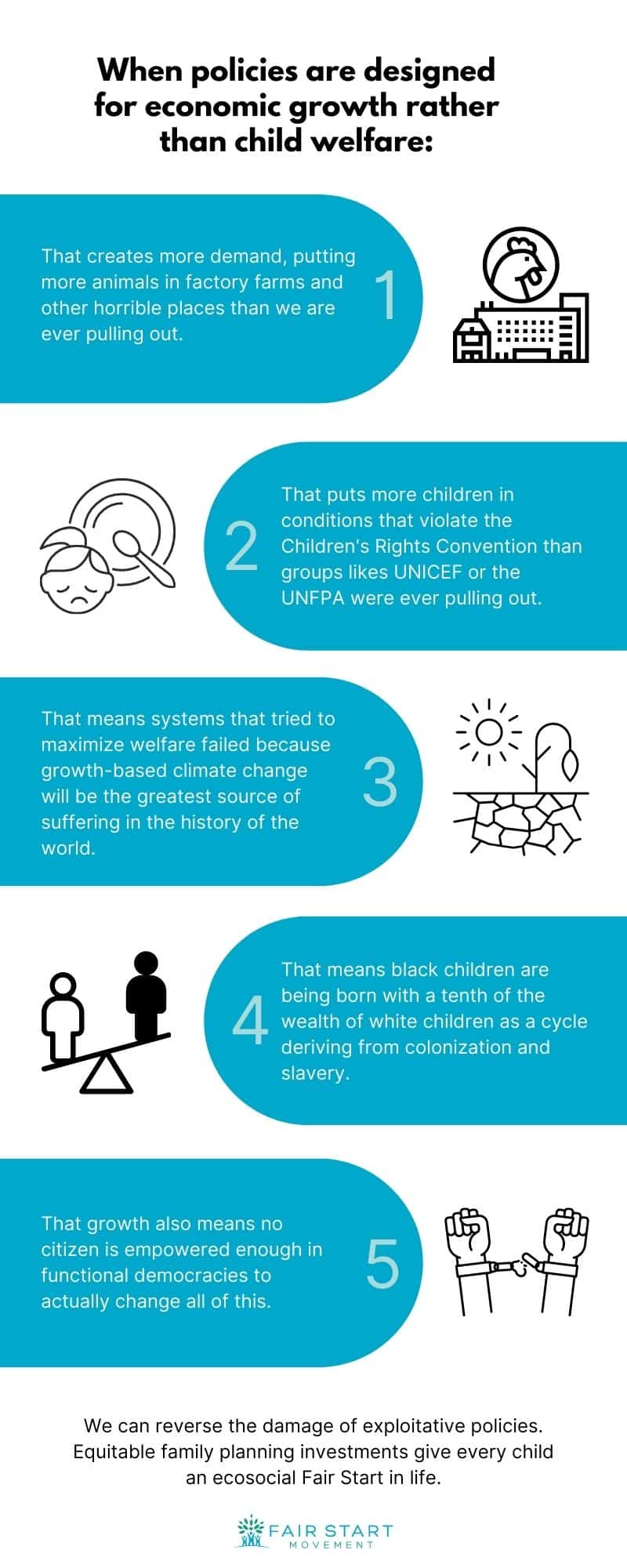
Our work is needed because most of the efforts to mitigate the climate crisis have been undone by exploitative growth-based family policies that literally undo efforts to protect children, animals, and the environment. These policies underlie everything we do, as this Stanford University article shows.
Our staff has records of discussions with philanthropists, famous academics. managers at nonprofits, decorated reporters, politicians, etc., all of whom (or whose wealthy children) personally benefitted from these policies – and the silence that surrounds them – at deadly cost to others but refused to change course.
And don’t get scammed. Ask anyone claiming to do good this question: How are you accounting for how children being born into the world impacts the values you express? In some cases – if you gave money – suing for greenwashing would be the right thing to do.
The climate crisis is not just about emissions. It’s about how children, animals, and adults will actually experience the crisis, and that depends long run on the mental and physical resources they have, their location, those people that surround them, etc. And that depends on what they have at birth.
Impact, on many levels. depends on how we have kids.
Consider this fact: People, not documents, constitute nations, and the creation of their power relations through birth and development – by definition and inevitably – determines whether they are relatively self-determining or determined by others. These relations are part of the implied “we” in every statement, the often-unspoken presence of the dominant political/legal system – usually the nation – from which the statement is orienting. How would you ever really account for inclusive power relations to allow a say in what the law should be without starting at creation, and accounting for the move from minor to adult that makes persons full citizens capable of making the rules.
You would not, and the failure to halt the climate crisis is evidence of this. And there is a clear formula to assess reparations. The would-be mother would be truly constituting democracy, speaking the truth and logic of self-determination to power.
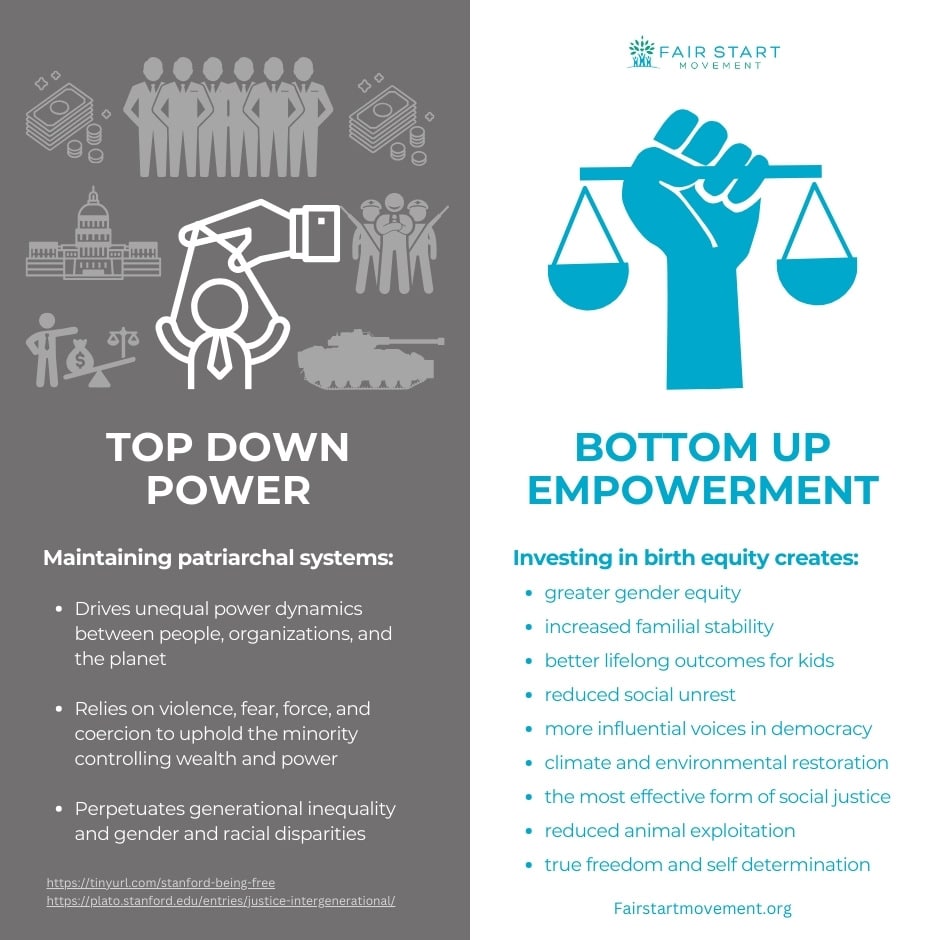
So . . . if that young mother were charged with trespassing in making the demand, could she challenge it – and expect a jury to side with her – because the state cannot limit access to property without first empowering (actually or physically constituting) its people to be involved in the making of such property rules, i.e. empowering them through just the sort of constitutive discourse in which she seeks to engage? How do we every get to governance by the people without elevating her pre-political right above the process-based rule of trespass? Do we really choose to constitute our relations via top-down force in a system run by men, versus a system of bottom-up empowerment run by women, via the act of care?
Her act is fundamentally liberating, and the best explanation of political obligation, because free people will start by limiting and decentralizing the influence others have over them.
This is not theoretical. A complaint reflecting the right to make such demands is now before the United Nations, to benefit the most vulnerable communities impacted by the crisis.
For all of the reasons given above, many reasonable people would consider the young mother taking peaceful action to achieve birth equity for her future child, and setting an example that others might embrace to protect all future children the height of working towards freedom and justice.
She would be ensuring self-determination for many, true freedom, instead of them being determined by others. What is the right way to deal with someone who insists on participating in a system that risks millions of lives in order for that person to make more money?
She can leave the money with the wealthy family, knowing it was made at cost to others, or move it and save lives. She can empower children equally and help solve another problem: Acts of mass violence do not stem from mental illness as much as from a sense of disempowerment, and the need to matter in one final act within what shooters perceive as an unjust world. We were sold sustainable town halls where we matter and can control the world around us to a degree, but got unsustainable, massive shopping malls where most do not matter and have no say. And those that benefitted from this system, at cost to others, want to block media from reporting things like mass shootings to hide the costs of their systems.
Those on whom she would make the demands – who would choose preventable deaths – seem tiny and worthy of targeting relative to all of that. Her move to demand is a move towards knowing her and many other children, under a test laid out by one of the leading political philosophers in the world, will live free.
Do you support an academic institution? Most of the academics in debates about family reforms contradict in their writings the basic values they exhibited throughout their lives, e.g. seeking minimum thresholds of personal welfare, expecting equal access to opportunities, participating in and adherence to political/legal systems that purported to represent the governed, use and enjoyment of an environment relatively conducive to human and nonhuman health, etc.
Given their privileged intergenerational positionality, and the fact that they sent their lives generally relying on and participated in legal/political systems of coercive obligation that benefitted them at cost to others, they should at least begin from a default or provisional position of extending those values to future generations by saying – as a fundamental premise of justice over top-down power – that basic human rights systems should prioritize the child welfare/equity in instruments like the Children’s Rights Convention over parental subjective choice in the ethics, law and policy of family planning, population, and procreation so that future generations can also debate these things from the comfort and security these academics do. Urge any academic institution you support to back Fair Start family reforms.
People, not documents, constitute nations, and the creation of their power relations through birth and development determines whether they are relatively self-determining or determined by others. These relations are part of the implied “we” in every statement, the often unspoken presence of the dominant political/legal system – usually the nation – from which the statement orients. How would you ever really account for inclusive power relations to allow a say in what the law should be without starting at creation and accounting for the move from minor to adult that makes persons full citizens capable of making the rules? You would not, and the failure to halt the climate crisis is evidence of this.
Your deadly cost-benefit modeling, which can be easily revised, is blocking fundamental life-saving solutions to the climate crisis: Family reforms that reorient entitlements to ensure climate restoration, as well as resilience-building resources for children who need them.
COP 28 Leadership is using fundamental growth-based (rather than child rights-based) policy, baseline and cost/benefit modeling that is a proven failure and that has undone more than three-fourths of the climate mitigation efforts over the last few decades, putting tens of millions of lives at risk. Your model error contradicts encyclopedic philosophy that has been widely accepted, published by Stanford University, since at last 2003. Just on the measure of simple welfare, your most basic modeling, described further below, fails. Reliance on basic norms other than a just creation (or birth and development) norm as a logical fallacy and engaging in the fallacy fails to limit and decentralize the power others have over us. COP 28 Leadership can, in its members’ official and unofficial capacities, engage in the various steps outlined in Section 4 below, to correct this failure and save countless lives.Public action around entitlement programs — changing the basic model — have saved countless lives in other contexts, like the reduction of famine. Your model makes the same mistake that caused the crisis: exploiting children for growth-based economies, in violation of their rights, rather than investing in them. Growth is largest driver of climate change and the larges inhibitor of climate resilience.
This is simple: Infants are being harmed by the crisis, so fundamental change begins by altering the conditions in which they’re born and raised, and the resources they have. Wealth at the height of the economic pyramid was made by harming these infants, so we should use the wealth to alter those conditions and provide resources. We should not constantly compound the problem. Your modeling to the contrary moves the goalposts on climate reparations, reducing the reparations and ignoring how human rights mandate we spend them.
The growth-based modeling you use undercuts the object values that enable self-determination, as described in Section 2.
The modeling does nothing to ensure children minimum levels of welfare in their birth and development conditions because those children are instead treated as economic inputs. There are approximately 6,700 newborn deaths every day because your model does not require planning entitlements. The climate crisis will only increase those numbers. One other acute cost of your “growth for profit” model? Constant child abuse by unready parents (it is estimated that up to 1 billion children aged 2–17 years have experienced physical, sexual, or emotional violence or neglect recently). Consider the cost, in simple terms of efficiency, of treating humans capable of so much as mere economic inputs, killed and abused as art of the system of growth meant to benefit a few.
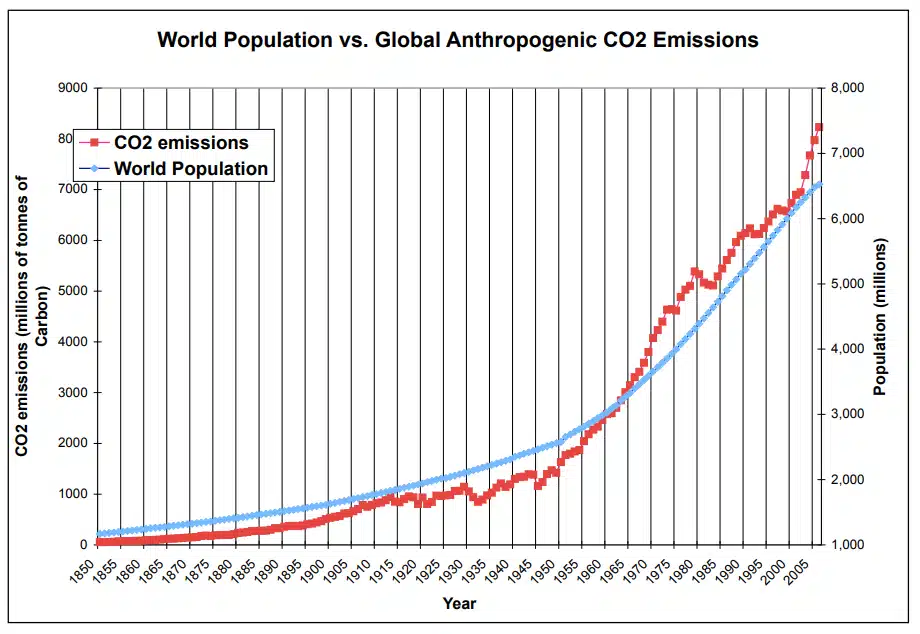
The modeling ensures that climate emissions and other deadly forms of ecocide are exponentially multiplied in ways that will kill many, including the infants mentioned above. That is not a sustainable system.
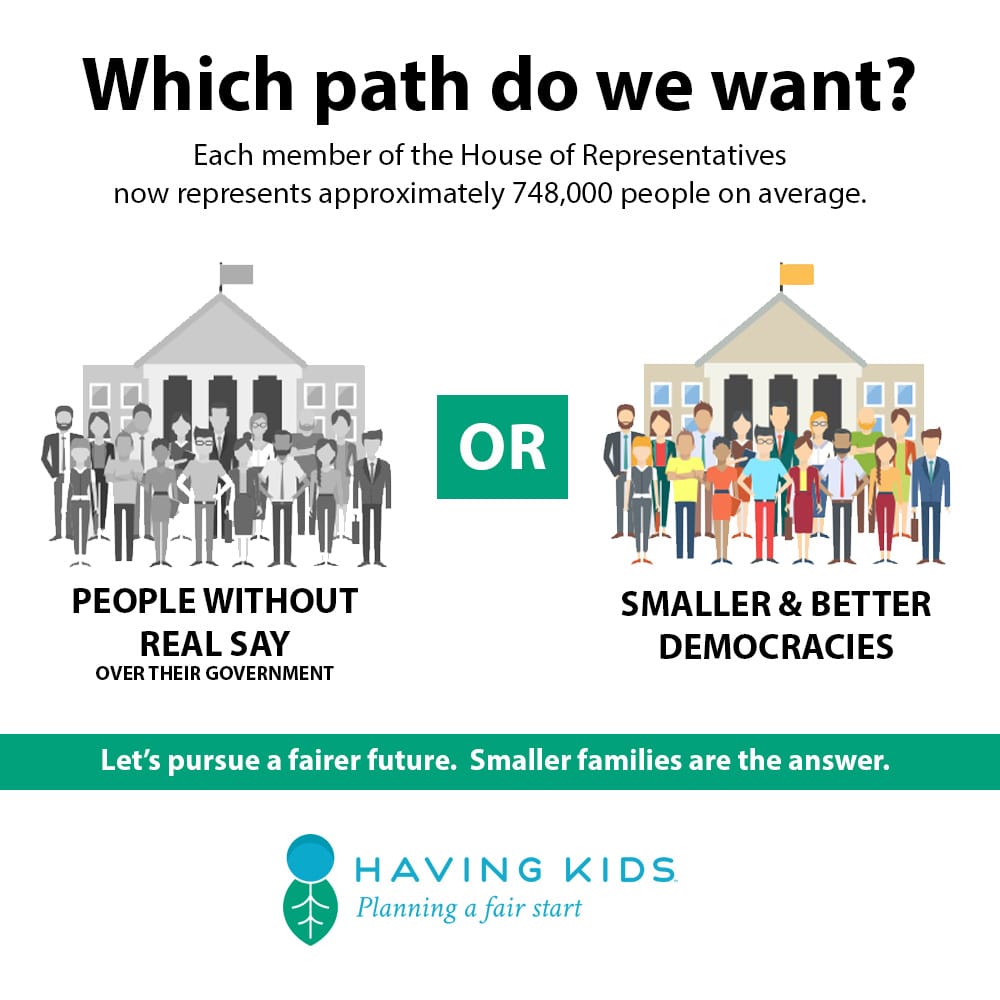
The modeling undercuts your own legitimacy by diluting the average citizens’ influence over their governments, and thus international bodies, which is inherently unsustainable. At what point do figureheads cease to represent at all? In many areas, that threshold has been crossed. Climate reparations are a chance to reorient the entitlements toward families bottom-up creating inclusive democracy, not the evidently failed growth-based economies the crisis threatens.
Many will use modeling that does not contain these errors when assessing damage and the reparations owed.
The error you make, the one blocking these reparations, can be described by simply assessing costs and benefits in the manner done in derogation of our first being – existing as politically empowered and participatory groups of mutually self-determining persons capable of making such assessments, and in ways that are inclusive and reflective of the group constituents. Conversely, the climate crisis represents the ubiquitous – through our environment – influence of others against our will. This error resulted in benefit to some at deadly cost to others, and robbed systems of legitimacy, systems in which free persons will make their compliance with the law contingent on being equally empowered to determine its content, and with it control the influence (including climatological) others have over them. Your statements, and the underlying model you rely on, interfere with what is essentially the lien on wealth represented by climate reparations, reduce what the reparations should be, and hide the most effective uses of those funds.
COP 28 Leadership can, in its members’ official and unofficial capacities, engage in the various steps outlined in Section 4 below, to correct this failure and save countless lives. The error we describe has been described by Nobel laureate Steven Chu. If a Nobel laureate economist calls the inequity and growth in your model a Ponzi scheme and finds accord with dozens of other laureates, we should all expect those harmed by the scheme to be repaid. If we are witness to ecocides that threaten more lives than those taken in the world wars, we should expect a sea change in authority and a rejection of an obligation to follow the laws of those who failed us. Family planning entitlements work in both of these regards.
Because the Children’s Rights Convention details the minimum standards that children need to comprise human rights-based, or legitimate, nations and bodies of international law, and because your model does nothing to limit children to being born and raised in these conditions but rather exploits them as economic inputs, your base modeling fails. While concentrations of wealth and power are terrified of correcting this failure, and have interfered with efforts to do so, this change will save countless lives.
Your modeling can simply be described as anthropocentric instead of liberatingly eco-centric, and it repeats the same basic mistake that many mainstream environmental organizations – funded by extreme wealth – have made and that fundamentally led to the climate crisis, as detailed in this Newsweek piece. These organizations, their media, and certainly their funders, are unlikely to admit they failed in something as ethically simple as whether family planning is better based on unsustainable growth — or constitutive child equity — and contributed, partially through exacerbating inequity, to the likely death of millions.
In the climate crisis, birth and development reparations taken from wealth and given directly to families can save lives and restore biodiversity. Decolonial scholars have described family systems that can be truly democratic in this regard. We can leave ill-begotten wealth based on externalizing deadly costs at the top of the economic pyramid, and millions will die, or we can pay it back to the future generations: those on whom its true costs are being imposed. This is about bottom-up power — it’s relational — not just population or people as numbers. And based on many peer reviews, nothing has greater impacts on basic values we all share. We can choose freedom, justice, and decolonizing the future, and start by being fair.
Direct action activists who view themselves as freedom fighters may pursue nonviolent means against leadership, to change the model, as detailed in this Newsweek piece and other writings that specify targets whose resource reallocation to those harmed by the crisis could expedite long-run decolonization.
This move would reverse racist ecocide, taking decolonization to its logical conclusion and a new level by liberating the most vulnerable — future children and nonhumans — at the same time through eco-centric and equitable family reforms. We cannot decolonize using traditional Eurocentric family models that treat future persons and the nonhuman world as resources to be exploited. Instead, we have to empower them with a norm that ensures biodiversity and minimum levels of welfare and equity. I cannot limit and decentralize the power others have over me, and I over them — we cannot be free — without ensuring birth and development conditions consistent with mutual self-determination, which requires delaying having kids until parents are ready to parent well (not torturing one’s infant to death, for example), allocations of wealth that ensure all children equal opportunities in life not defined by race, and smaller or more eco-centric families for all — the most effective climate solution. Freedom is not possible without this change, and many leading philosophers seem to agree. Not ensuring these things slowly converted the liberating possibility of town halls filled with empowered citizens in a biodiverse world instead into shopping malls filled with workers and consumers enriching a few, and created a pre-constitutional world where we are all subjected to others’ ecological impacts against our will, some are born to slave for others’ benefit, and we are controlled by governments over which the average person has no control. Free persons will target those who benefitted from this process, to pay what they owe to end it, turning shopping malls back into town halls, in a restored climate and a world filled with nature. Decolonization means pulling the right high-profile levers to change entitlements and reverse the power polarity, replacing mostly white men with wealth-based authority from above ensuring a life for all of market or employment-based incentives, to other identities first empowering children, biodiversity, and inclusive democracies with family entitlements and incentives — that override all — from below.
All of this means that Professor Solum should back the concrete demand for resources described at the end of this letter as the first ought or obligation, that set of entitlements that justify any system of governance. And he should back the demand not in the abstract, but against specific targets like John T. Raymond, and with payments made to specific beneficiaries in Uganda, under a system of women-led democratic decision-making that came before any of the white and Western thinkers he cites. How else do we even begin to describe systems that are inclusive and representative of their members? How could we ever approach the ideal of something like animal law, or a system that actually protects the most vulnerable? Or are we abandoning those ideals? We can do better by orienting continued human existence from a just position.
2.
The fundamental policy, baseline and cost-benefit modeling error involves your misunderstanding your most fundamental obligation to remain legitimate in your governance: The obligation to ensure and maintain systems of relative and actual self-determination for all. This claim is backed by several peer reviews and supporting statements from leading philosophers.
Your statements and work to date precede from this incorrect assumption about political obligation, and your authority to act in the climate crisis. That obligation and authority does not flow top-down from documents; it flows bottom-up from the creation of empowering relations — among people, and between people and their ecologies.
If we take freedom, or a relative state of self-determination, as our most basic value (many act as if they do, and many have died and will die to further that value), then we are obligated to fundamentally rely on a system of obligation that enables each subject to limit via law the influence others have. The failure of our current systems to fulfill this condition — to actually account for the creation of power relations — can be explained by the positionality (social and intergenerational) of those who created them and the undemocratic influences they were subject to.
Self-determination occurs in empowering conditions of birth and development that flow from a based creation norm where absolute self-determination is inverse to growth, relative to nature (or the absence of human influence), or 0123…0, which entails climate restoration via birth equity as the fundamental human right, thus pointing toward future population ranges specified by Sir Partha Dasgupta and Dr. Chris Tucker. In other words, if people are democratically empowered under human rights — if free, equal, and thus self-determining — they will offset each other equally, relative to nature or the nonhuman world. The idea of self-determination makes no sense against a background constantly influenced by others. All human behavior orients from some level of coercive obligation to a legal/political system that after the advent of liberalism, is justified because of some relation to fairness, participation, inclusion, representation, etc., in political units separated by neutral/nonhuman/natural areas, such that the collective is a form of the self. What more basic norm could precede or better describe the idea of freedom and political equality? None could — and there is no freedom without a fundamental norm that is this objective. We become free with a starting point of actually not exploiting the most vulnerable: future children and nonhumans.
If we do not account for fundamental values, ones we all share, in the act of creating others, and thus in the formation of fundamental power relations, we risk undoing those values. That is, in fact, what has now happened, with a few benefiting at a deadly cost to others. Your model error contradicts encyclopedic philosophy that has been widely accepted, published by Stanford University, since at last 2003. The fact that humans are not separate from nature is now well-established but descriptively complex. But as a normative matter — that we should not be separate from nature — is captured in ecocentric liberation of the inverse growth model described above. Forget nation-states: Such political units might look more like unionized corporations in the modern world, constantly forming and dissolving, albeit with conditions that reflect the application of universal human rights.
If we really value self-determination, which is the premise of current U.N. family and reproductive rights policy, then all – as political equals – should have equal influence over most basic rules that control how others actually influence us. The sovereignty of any group derives only from the sovereignty of its members. If we value relative self-determination and a one person-one vote system, then the first human right, primary obligation, and most basic and overriding rule is a rather specific set of procreative ethics, laws, and policies that reverse the current system of growth, and instead start with deontological population ethics that look to create political units akin to the 0123…0 described above. If people are really free because they are empowered at birth, if we take human rights and democracy seriously, growth is seen as slowly disenfranchising absolute self-determination, which is acceptable within a certain range not exceeding – at most – ecological carrying capacities.
This is about choice. No reasonable person would choose to come into certain conditions of birth and development below a particular threshold. No reasonable member of a political unit would choose to allow persons, with whom they must eventually share power, to come into certain conditions of birth and development below a particular threshold. And no reasonable person would ignore the number of persons entering a political unit because they would lose choice through vote dilution. Instead, the zeitgeist in wealth-backed media today sees women as not having enough children in the middle of the climate crisis as a baby bust of exploitable infants. As the crisis deepens, this will change and the wealth behind that messaging should expect to pay, not exploit. Liberalism has been plagued by not knowing how minimally communitarian or other-regarding one has to be a member of a political unit without losing self-determination. The Children’s Rights Convention – to use objective levels of investment to physically constitute ourselves as free or self-determining persons – becomes the clear answer.
In other words, we need to fit everyone into human-rights-based and democratic town halls, separated from the influence of other town halls by nature, so we can all actually regulate economies more generally, or to even decide how to have representatives do it, how to federalize, which areas of life not to regulate, etc. We can’t create billions of happy consumers, workers, and taxpayers for shopping malls, high in quantity and irrespective of civic quality, without losing the relative self-determination of instead having created fewer numbers of highly developed, self-determining, and politically equal citizens for the town halls. What is a good test for the latter obtaining in the world? Assessing whether fundamental political units can break into functional constitutional conventions, or whether, without external forces holding persons in place, they would devolve into chaos. Disenfranchising through growth, and then profiting from the struggle of persons to matter or regain their role through things like social media, and belonging/inclusion-based consumption, does not set a good stage for such a convention.
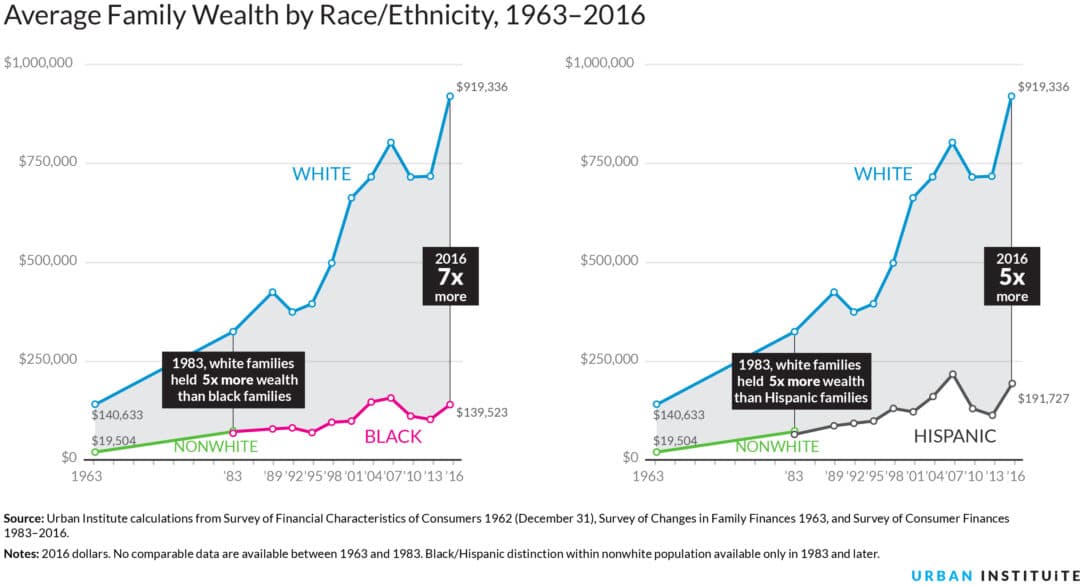
Imagine creation as a start line in a race. To be fair, you want horizontal equity with the other racers, and vertically with prior generations so they have not compromised the self-determining nature of the racetrack. To ensure this, the fundamental creation of power/obligation relations – our birth and development – should have been determined over the past several decades by incentivizing resources that would have ensured birth equity for all children, and equal influence over the laws under which we must live. That never happened. Yes, Donald Trump is a threat to democracy, but he is a symptom of the disease of documented oligarchical family policies antithetical to democracy, the disease that nests in unfair “private” family policies based on white supremacy, inequity, and the exploitation of nature.
To treat any conflicting rule, including the current state-issued property rights of the wealthy, as more primary and controlling than the self-determination rule described above, would be fundamentally fallacious. Your statements and modeling show you engage in this fallacy. You can make statements, remodel your cost-benefit analysis, and do other things, to the contrary.
Even if law, ethics, and policy should revolve around parental subjective choice, the mistakes that have led to the crisis have stymied the rights of untold future parents to have children in safe conditions, free from others.
Abstract academic debates about population ethics, often funded by concentrations of wealth and power reliant on inequity and growth, threaten to exacerbate the results of the climate crisis by forestalling law and policy reforms. Many of the debates derive from the same Eurocentric vestige of colonialism described above – the historic entitlement of wealthy families to exploit birth positionality relative to colonized nations – nesting in the human-rights regime. Most of the academics in these debates contradict in their writings the basic values they exhibited throughout their lives, e.g., seeking minimum thresholds of personal welfare, expecting equal access to opportunities, participating in and adhering to political/legal systems that purported to represent the governed, using and enjoying an environment relatively conducive to human and nonhuman health, etc. Given their privileged intergenerational positionality, and the fact that they sent their lives generally relying on and participated in legal/political systems of coercive obligation that benefitted them at cost to others, they should at least begin from a default or provisional position of extending those values to future generations by saying — as a fundamental premise of justice over top-down power — that basic human-rights systems should prioritize the child welfare/equity in instruments like the Children’s Rights Convention over parental subjective choice in the ethics, law, and policy of family planning, population, and procreation so that future generations can also debate these issues from the comfort and security these academics do. Again, the model error that is the premise for many of these debates contradicts encyclopedic philosophy on intergenerational justice that has been accepted, published by Stanford University, since at least 2003.
Authority to govern derives from people, whose capacity to govern derives from empowering birth and development conditions that emancipate us into adulthood. Free people will condition compliance with the law on it first empowering its subjects, through the conditions of their birth and development, to shape the law, and thus fundamentally limit and decentralize the power others’ have over them. No matter what someone says, most will act as if they value the self-determination this rule reflects, but they either misunderstand how it works or wish to increase their power at cost to others. The equity the left wants, used as the basis for creation, gets us the autonomy the right wants.
Free persons will target those who most benefited from process of family-based disempowerment, to pay what they owe to end it, using family reforms to turn shopping malls back into town halls, in a restored climate and a world filled with nature. Is it really that wrong to simply want to be empowered? The border of human power is not a series of lines a map. It’s the edge of the creation and development of the persons from whose authority line drawing derives. Savvy freedom fighters, not tricked by the human brain’s tendency to think in the short term and ignore the unity of value once we think long-term, won’t overthrow governments. Those who want to matter and make their life count toward others will overthrow bad family planning and parenting to create instead the conditions, and polarity, where organizations of free and equal persons can form, dissolve, and reform — more like bubbles than an extended organizational chart — given the right creation and background conditions. And the way to do that is by taking the wealth created by years of bad family policy and using it instead to entitle young women to plan their families, and physically constitute free and just communities. Savvy freedom fighters will physically constitute nations, not be constituted by some document or documents to which they have, and can only have, little relation.
3.
The fundamental policy, baseline, and cost-benefit modeling error can be easily corrected, beginning with simple informal statements by COP 28 Leadership that show support for every child’s overriding human right to a fair start in life. Start by telling the truth. There are legal, financial, cultural, and other vectors below.
Simply tell the truth: Admit publicly your errors, described above, which has exposed millions of those least responsible for the crisis to its deadliest effects. Admission of the truth enables change and can save lives. Admit publicly that all children deserve a fair start, concretely defined as climate restoration via birth equity entitlements, and that living according to such a fundamental obligation – the most fundamental obligation – is a necessary condition of human freedom and the legitimacy of governance. Urge your adult children to join you in these admissions, because they can lay a key role in creating a change towards child-centric, or constitutive, systems.
Support with public statements green- and growth-washing litigation targeting the lies from companies, nonprofits, academics, and media that caused the crisis and threaten the death of millions. To the extent the lies furthered inequity, support unionization of the targets to ensure change. Concentrations of wealth and power to create commercial noise in media, through nonprofits, and otherwise, that drown out simple truths – like the value and impact of fairness.
Acts of mass violence do not stem from mental illness as much as from a sense of disempowerment, and the need to matter in one final act within what shooters perceive as an unjust world. We were sold sustainable town halls where we matter and can control the world around us to a degree, but got unsustainable, massive shopping malls where most do not matter and have no say.
Recognize that not engaging in direct action could be an abdication of freedom. For example: Would it be wrong for a young intending mother to secure birth equity resources from a family that externalized the deadly environmental and social costs of its wealth upon a child she wished to have, and then exploited birth inequity and growth to not only harm her future child, but ensure that child would be likely to work at penury for the wealthy family and their children, with her unable to even challenge that injustice through participatory democracy where her voice mattered? If she were charged with trespassing in making the demand, could she challenge it — and expect a jury to side with her — because the state cannot limit access to property without first empowering (constituting) its people to be involved in the making of such property rules, i.e., empowering them through just the sort of constitutive discourse in which she seeks to engage? How do we ever get to governance by the people without elevating her right above the process-based rule of trespass? Do we really choose to constitute our relations via top-down force in a system run by men versus in a system of bottom-up empowerment run by women via care? Even if we could fund the latter with the wealth taken by the former?
For all the reasons given above, many would consider her taking peaceful action to achieve birth equity for her future child, and for all future children, and even against international figureheads blocking her way, the height of working toward freedom and justice. There would be serious winds at her back: Countless children’s lives such a sea change in entitlements would save from early death, the billions who would get a fair chance rather than be born, work for the wealthy, and die — all in poverty, the countless animals who would not suffer and die in the deadliest phases of the Anthropocene, and the billions whose voices would actually matter in functional democracies.
She can leave that money there, or move it and save lives. Those on whom she would make the demands — who would choose preventable deaths — seem tiny and worthy of targeting relative to all of that. Her move to demand is a move toward knowing her child, under the tests laid out by one of the leading political philosophers in the world, will live free.
What COP 28 Leadership does now will assist in determining how such events unfold.
Their legacy and extractive way of life endures. Maui’s most dominant corporations today, like Alexander & Baldwin, embody the legacy of those same barons who once sought to profit from our fertile lands. Their ethos of extraction and destruction persists in Maui’s most dominant industries: land speculation and tourism. These industries seek to destroy much of Hawaii’s natural beauty while gatekeeping sections of it for the privileged few.
KANIELA ING AUGUST 17, 2023 11:58 AM EDT Ing is the National Director of the Green New Deal Network, former state legislator, and a seventh-generation Kanaka Maoli (Native Hawaiian) from Maui, Hawaiʻi
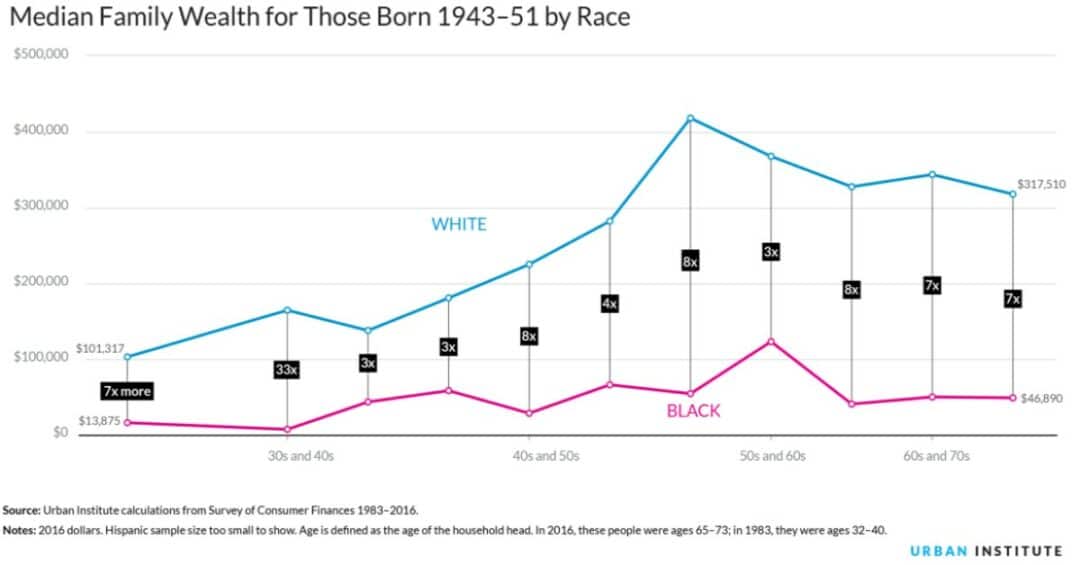
We at the Fair Start Movement write to you with thanks for the truth, and to add one arrow to the quiver of tools you will use to dismantle colonization. Based on over a decade of research and nearing ten positive peer-reviews, it’s now clear that governments cannot assign property rights – including claims to wealth at the top of the economic pyramid – without first satisfying their obligation to ensure all children an ecosocial Fair Start in life, concretely defined as climate restoration and birth equity (or a 280 or lesser ppm climate emissions standard combined with progressively scaled birth equity entitlements (tied to race reparations in some cases)). Fairness in who we are, our basic power relations, comes first.
Why all means effective? All rules must be fair, and the first rule is that which should create us. It comes first. As we argued in Newsweek,climate reparations are the ideal vehicle to ensure this birth equity. Only a creation norm would have this antecedent, or overriding, capacity.
This move reverses racist ecocide, but takes decolonization to its logical conclusion and a new level by liberating the most vulnerable – future children and nonhumans – at the same time through ecocentric and equitable family reforms. We cannot decolonize using traditional eurocentric family models that treat future persons and the nonhuman world as resources to be exploited. Instead, we have to empower them with a norm that ensures biodiversity and minimum levels of welfare and equity.
If the authority of government and our obligation to follow the law fundamentally derives from people who are empowered at birth, then the only way for me to be free of their power, socially and ecologically, would be through a first and overriding rule that ensures birth and development conditions of mutual self-determination in which we offset each other equally. This would entail high enough levels of investment in those conditions, enough to limit growth towards the optimal population ranges specified by Sir Partha Dasgupta and Dr. Chris Tucker. That would require the opposite of the policies now in place (the ones lauded by conservatives and socially liberal commentators), and the opposite of a culture of unsustainable growth based on insufficient social and ecological birth conditions for children.
Not ensuring these things slowly converted the liberating possibility of town halls filled with empowered citizens in a biodiverse world instead into shopping malls filled with workers and consumers enriching a few, and created a preconstitutional world where we are all subjected to others’ ecological impacts against our will, some are born to slave for others’ benefit, and we are controlled by governments over which the average person has no control.
Free persons will target those who benefitted from this process, to pay what they owe to end it, turning shopping malls back into town halls, in a restored climate and a world filled with nature. The border of human power is not some line a map. It’s the creation of the persons from whose authority line drawing derives.
If freedom always requires some level of self-determination, it would be impossible to ensure any version of it without birth and development conditions for all children that meet minimum thresholds so they can self-determine rather than be determined (e.g., climatologically and through inequitable birth-based power relations ) by others, and one test for whether that is occurring equitably would be treating growth as inverse to self-determination, relative to the absence of human power/nature (which requires, at a minimum, climate restoration). This precedes all legitimate governance. This formula leads to a free and equal future – again, Tucker/Dasgupta’s optimality. Who we should be, via children’s rights, logically always comes first – and sets an overriding baseline for all cost and benefit analysis, including climate reparations.
Yes, Donald Trump is a threat to democracy, but he is a symptom of the disease that nests in unfair family policies based on inequity, and the exploitation of nature.
The wealthiest and the charities they fund want to pretend the world was always meant to look like a massive shopping mall, and that climate damages should be evaluated on that basis. The truth is human rights guaranteed functional town halls in biodiverse nature. That is what was lost. That is how we measure the harm.
While charities were touting the benefits of saving a particular forest, ending certain diseases, or enlarging cages for laying hens, they were also ignoring the growth-based economic systems that were enriching their largest billionaire funders. Those same growth-based systems have undone three quarters of the climate crisis mitigation attempts made over the last several years.
That growth, from which these charities and their funders profited, now threatens millions of lives. That growth will cause more animal suffering and ecocide than many of the myopic, window-dressing campaigns these organizations ran and used for fundraising actually prevented.
The wealthiest and the charities want to pretend the world was always meant to look like a massive shopping mall, and that climate damages should be evaluated on that basis. The truth is human rights guaranteed functional town halls in biodiverse nature. That is what was lost. That is how we measure the harm.
But if the basic condition for any rule is that it be fair, and the first rule is that which accounts for our creation and development, e.g. the right of parents to freely have kids, then that rule must be made fair. And fairness begins with all children’s rights to a restored climate and ecosocial birth equity – true relative self-determination.
And we need not wait for governments to recognize and fix the issue. Many are using the correct baseline to cover effective reparations already.
Why don’t we have to wait?
Free people will condition compliance with the law on their being fundamentally empowered by it, and that’s physically impossible without treating an ecosicial fair start in life as the first and overriding human right, a right that includes actual participation in governance – being created for town halls, not shopping malls. Governments cannot assign property rights – to Musk or others – without first ensuring the human rights that justify governmental authority.
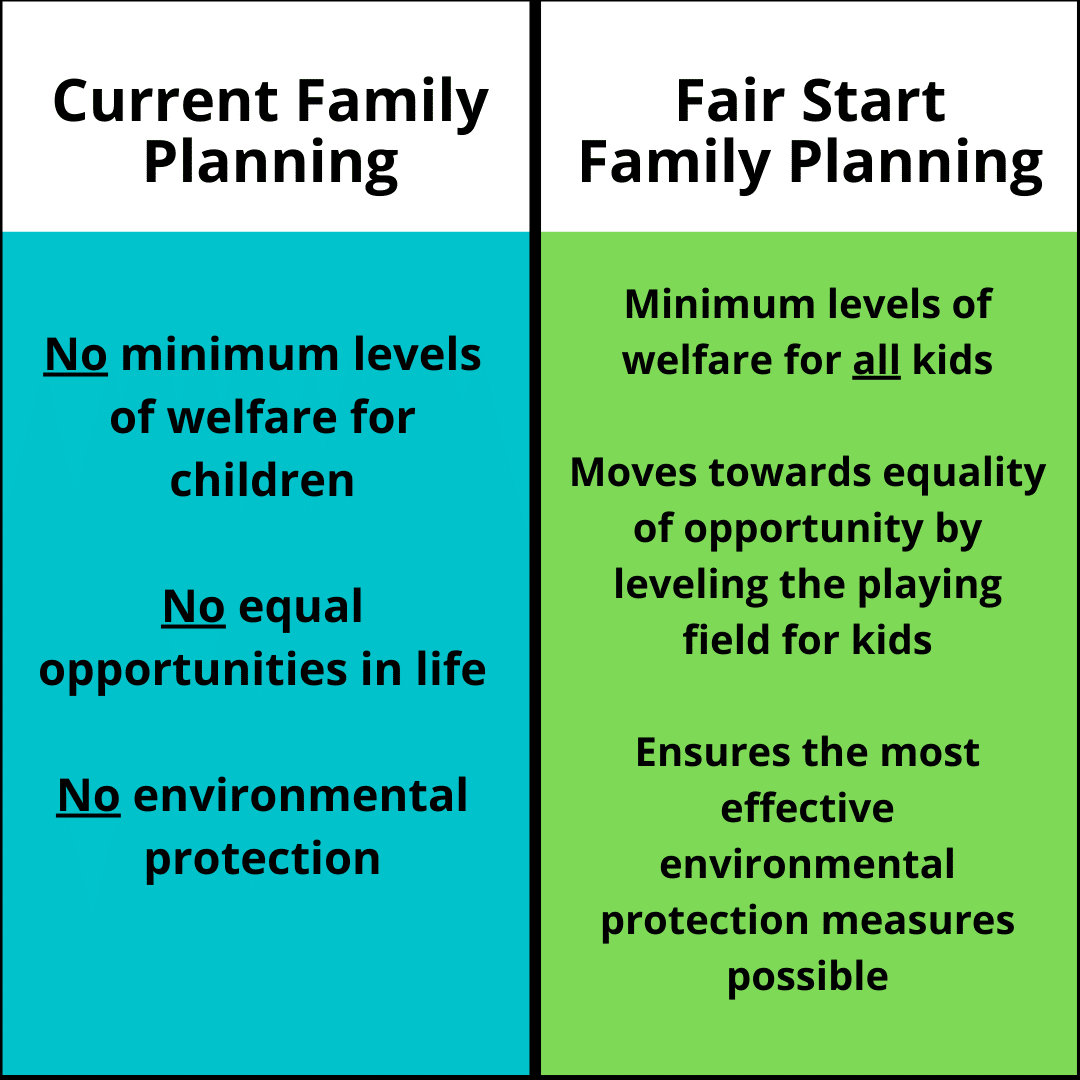
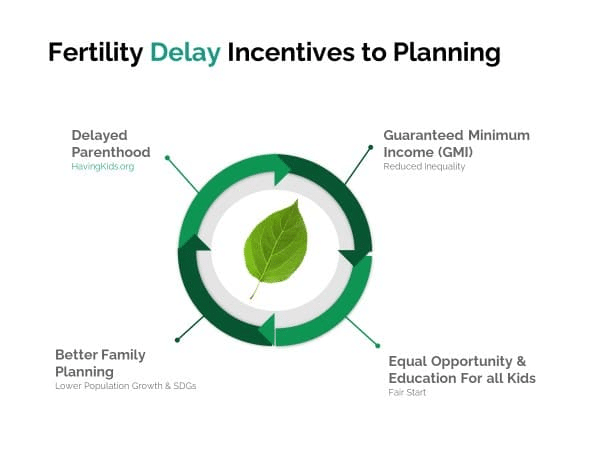
Today’s freedom fighters move beyond the outdated idea of national borders and fight for fundamentally liberating family policies that free us all ensuring climate and biodiversity restoration through birth equity entitlements that ensure parenting delay, a level playing field for all kids, and smaller or more eco-centric families.
Today it’s common for parents to have kids without thinking of how doing so impacts others’ children. That causes harm. Here are seven ways family planning today hurts impoverished kids, and how to end the harm.
4. All of the above limits the freedom, or the relative self-determination of future generations, the vast majority of persons who will ever live. Free people will fight to change this, and liberate others.
The fix?
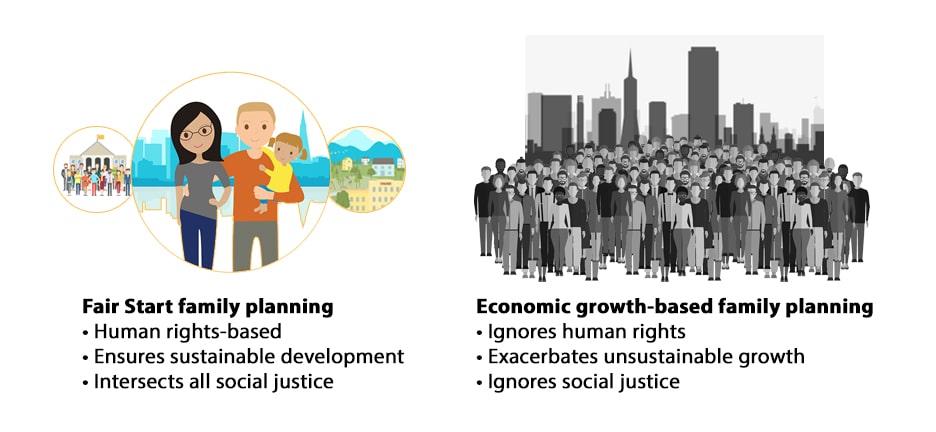
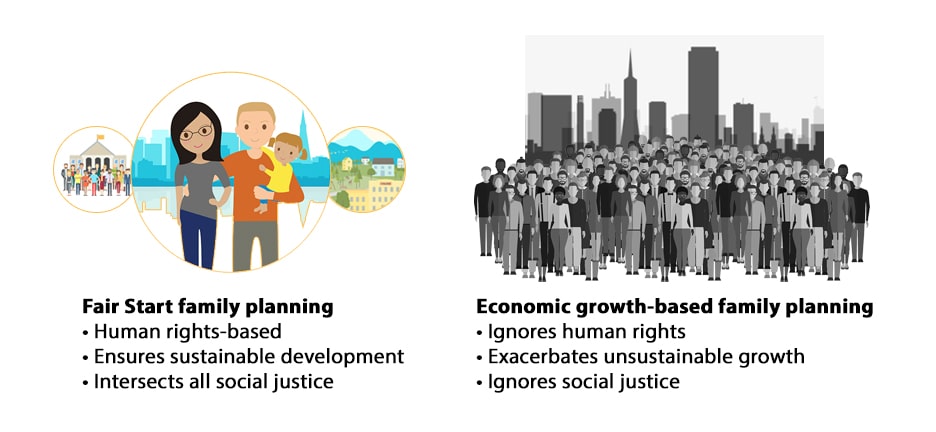
We can end this harm by moving from top down and dysfunctional parent-focused planning towards child-centric or bottom up systems of Fair Start family planning. This move ensures climate and biodiversity restoration through birth equity entitlements that ensure parenting delay, a level playing field for all kids, and smaller more sustainable families. It’s fairness and freedom for all.
TAKE ACTION: SIGN OUR LETTER TO THE UNITED NATIONS URGING THEM TO DO THEIR JOBS, AND SECURE HUMAN RIGHTS, STARTING WITH CHILDREN’S RIGHTS FOR ALL FUTURE GENERATIONS.
There is a truth many are hiding via greenwashing and other moves, to avoid or reduce climate liability: The obligation to pay just and effective Fair Start family reparations.
The portion of wealth made at cost to this baseline is subject to that use now as the most effective form of climate reparations today, and many are leading by example, paying those costs to families to avoid million dying as temperatures rise. Government cannot assign wealth until they fulfill fair start obligations, the obligation that justifies their authority. Why? Law is a unique obligation because it can be coerced. After the Enlightenment and the development of democracy, that is so because we assume law represents the will of the governed. Logically then, the first obligation is to have and raise children in a way that actually makes that true.
We caused harm by using family policy to quietly convert public progress into private benefits, and must pay now, compensate the harmed and be free of that obligation. Some of those who benefited the most from not giving what they should have in the past are covering those reparations, via effective programs like Seeds, using hard metrics like the Children’s Rights Convention, climate restoration via birth equity, and Tucker/Dasgupta’s optimality.
These entitlements ensure parenting delay, readiness, reallocation of entitlements for birth and rearing equity, and smaller or ecocentric families that raise influential citizens – not economic inputs with little say over the rules under the rules they must live. We are not bound by written constitutions, but whatever justly constitutes our power relations to make those relations consensual, which comes very close to the ideal of decolonization, ensuring at the same time the protection of the most vulnerable: Future children and nonhumans.
If freedom always requires some level of self-determination, it would be impossible to ensure any version of it without birth and development conditions for all children that meet minimum thresholds so they can self-determine rather than be determined (e.g., climatologically) by others, and one test for whether that is occurring equitably would be treating growth as inverse to self-determination, relative to the absence of human power/nature (which requires, at a minimum, climate restoration). This formula leads to a free and equal future – Tucker/Dasgupta’s optimality.
Who we should be, via children’s rights, logically always comes first – and sets an overriding baseline for all cost and benefit analysis, including climate reparations. One’s positionality, intergenerational and otherwise, is key in this analysis. Money often controls how one sees this work.
Be effective.
Take Action: Find and “pull” high profile levers to be effective family role models by paying what they owe, and bend the arc of who we are becoming towards justice. How? Start by asking public figures claiming to do good in the world to actually tell the truth. Ask them to account for how the family norms, policies and relative ranking of obligations they never accounted for has undone those values and created the climate crisis and vast inequity.
Effective Altruism (EA), described at the most general and inclusive level, involves prioritizing charitable funding using a particular standard:
“People in effective altruism typically try to identify issues that are big in scale, tractable, and unfairly neglected. The aim is to find the biggest gaps in current efforts, in order to find where an additional person can have the greatest impact.”
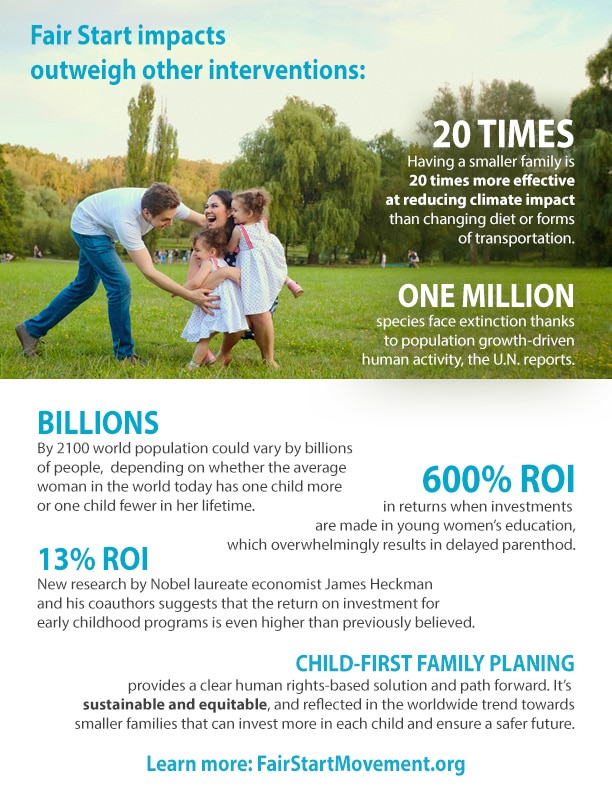
Reason 1: Focusing on scale and wellbeing, the climate crisis is the greatest threat to human and animal welfare, accelerating beyond what we have expected. Recovering the costs that were externalized and using them to fund effective family reforms to protect kids through better birth and development conditions, is the most effective long-run way to address the crisis.
Be effective.
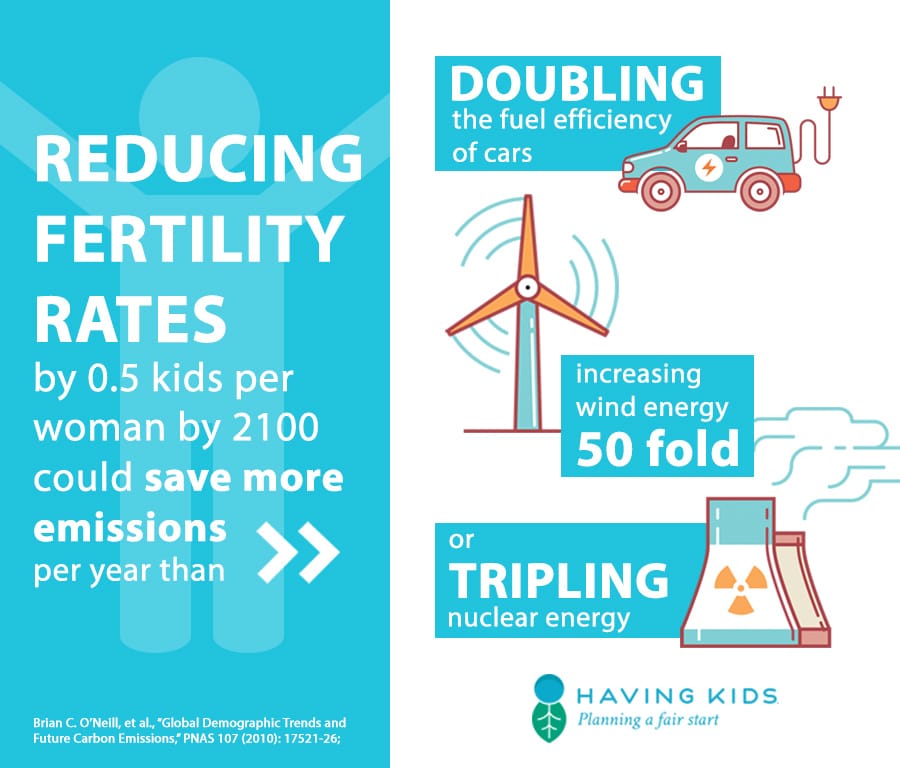
Family reforms have the greatest long-run impacts on everything, including climate emissions, child welfare, animal suffering, and human rights and democracy. That’s not odd. We, and what we do, are the products of our creation and pasts.
Many EA funders ignore the issue because they have made money on growth (including the sale of plant-based products), wish to continue doing so, and wish to avoid family reform based reparations. But those are not good reasons, and the benefits of many EA funded efforts (and veracity of fundraising claims) have been reversed when one factors in growth. Not starting with child rights also commits the fallacy in Reason 4, below – ignoring child-centric human rights as the system of actually inclusive obligation that overrides all competing interests and sets the baseline for cost and benefit analysis, telling us what words like “good,” “impact,” and “problem” mean.
Reason 4: This broad description of EA at the beginning of this blog reveals a fallacy. The term “altruism” frames the thinking in a way that excludes human rights obligations (which override decisions based on personal altruism) on the wealthy funders who back EA to first pay for costs their wealth has imposed on others. And those costs were imposed by fundamental reliance on a system of coercive legal obligation that did not include the average person, including black persons in the United States, at any real level of influence over the rules under which they would be forced to live. To the extent EA advocates believe in self-determination they have a fatal problem in using people for economic growth. They have to fit all those they create in terms of quantity and civic quality for shopping malls back into the participation-capable town halls meant to regulate the former. That’s impossible, and truly free persons will make compliance with the law contingent on their role in making it.
For example, initiatives to study wild animal welfare would logically have to start from a position that protects the animals being studied, which requires climate restoration as part of an overriding human right to birth equity. Funding a research project while simultaneously relying on system of growth eradicating those animals and harming the poorest humans is disingenuous.
This is not about different worldviews.
EA advocates all live day-to-day the values of not wanting to fall below minimum thresholds of welfare and self-determination in their lives – they are often simply too antisocial to extend the values to kids like Jazmine, who was slowly beaten to death as an infant, and would rather use a system of oppressive, “growth over parental readiness” power relations to make returns on investments.
TAKE ACTION: Urge EA advocates, like@dylanmatt, to be both just and effective in their thinking and funding.
Today, as we reflect on the incredible potential that lies within every child, let us reaffirm our commitment to ensuring that every child, regardless of their background or circumstances, has an equal opportunity for a bright and promising future.
To avoid scams and see the truth you can ask one simple question of any person or group claiming to do good: What have you been doing to deal with the basic connection between children being born, and things like child welfare, the climate crisis, animal rights, or anything else you might claim to care about?
Every child deserves a fair start in life, and it’s up to us to make it a reality!