Freedom really – or physically – means some relative level of self-determination. You would control your life and what influences you. Influence over you would be limited and highly decentralized.
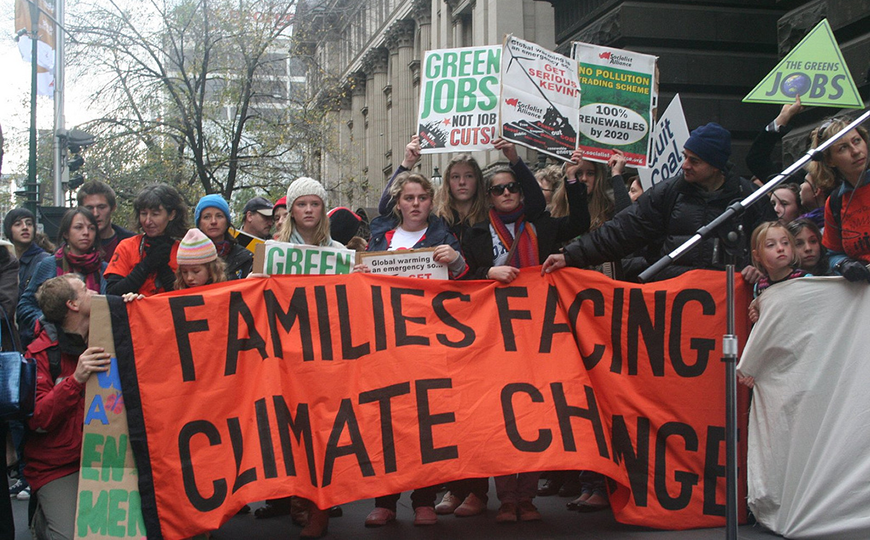
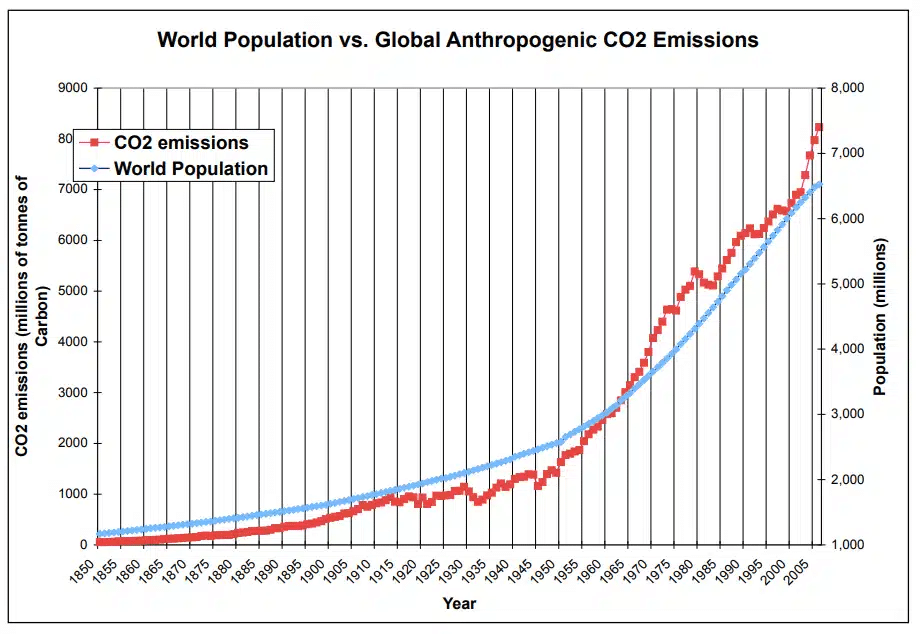
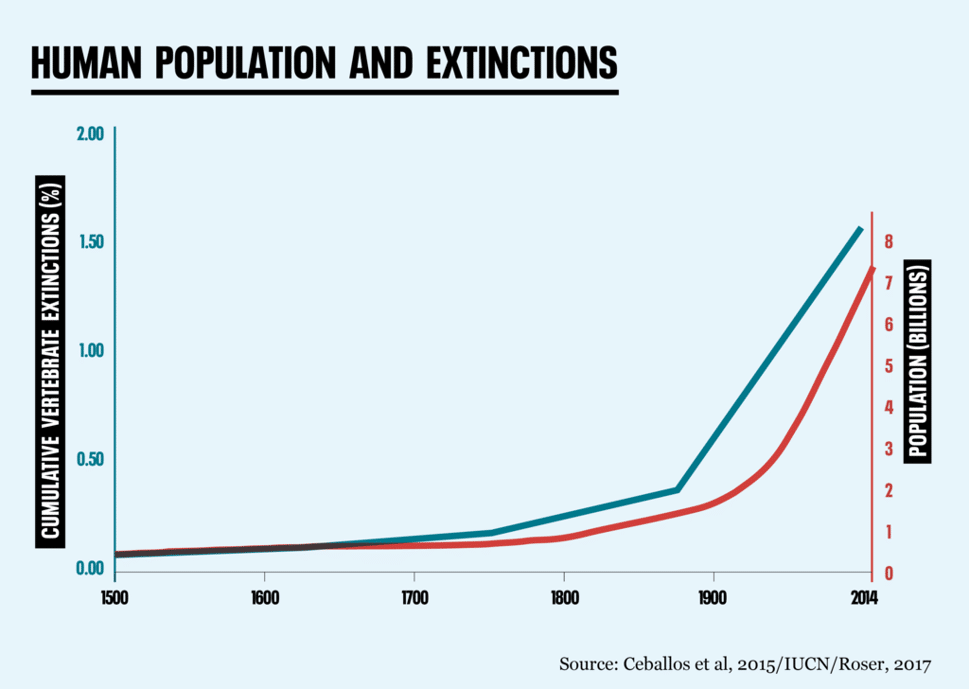
And if you wanted to maximize freedom, you would have to create a background environment that acts as a buffer between people that minimizes human influence, through things like the climate crisis, we we have over one another. That requires climate and biodiversity restoration.
And assuming you believe people should be political equals, with equal influence under the most basic rules under which they must live, you would ensure their birth and development so that they offset each other’s capacity to influence those rules equally. Freedom always requires some rules – even if just to ensure children are protected from the sort of harm in childhood that limits their freedom in the future – and we should all have equal and influential say over those basic rules.
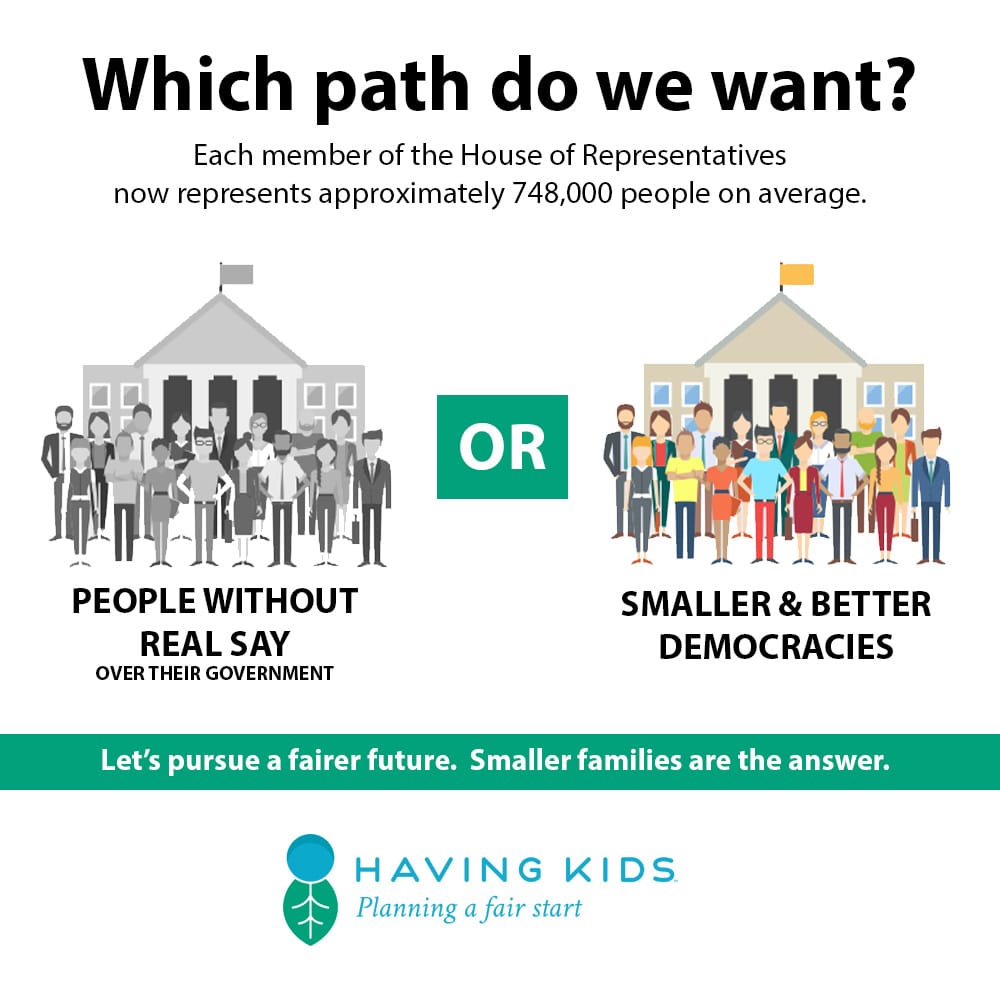
Freedom – or maximizing relative self-determination – without these conditions would be physically impossible. Our families have to create and develop people for democracies, not economies, because the former precedes and regulates, assign property rights for, etc. the latter. Consider it this way: Much of our lives today is dominated by the need for employment, social positioning relative to others in our economies, titles, etc. That control over our lives is asserted through wealth and other forms of influence. If we are to be free, that influence must be redirected and reprioritized so that would-be parents are incentivized and entitled to first or peremptorily build democracy – town halls where each matter – not economies, or crowded shopping malls.
You and others should be an influential citizen, not just a worker, consumer, and taxpayer. And doing that depends on how you are created and the conditions in which you develop.
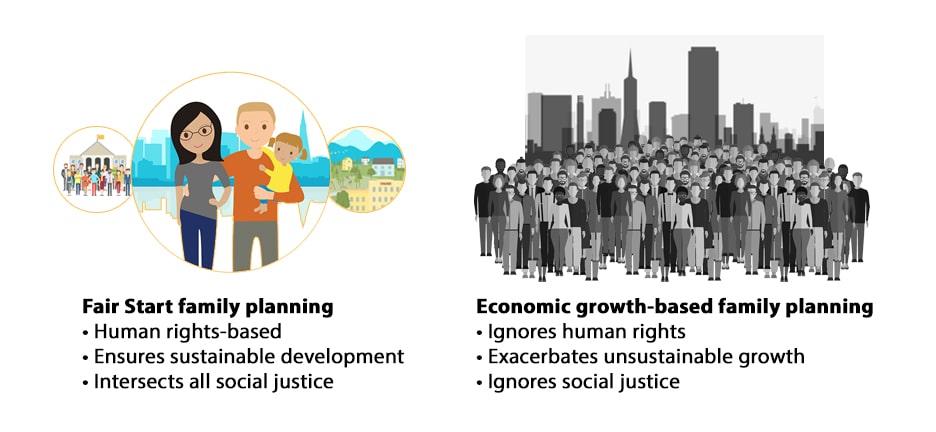
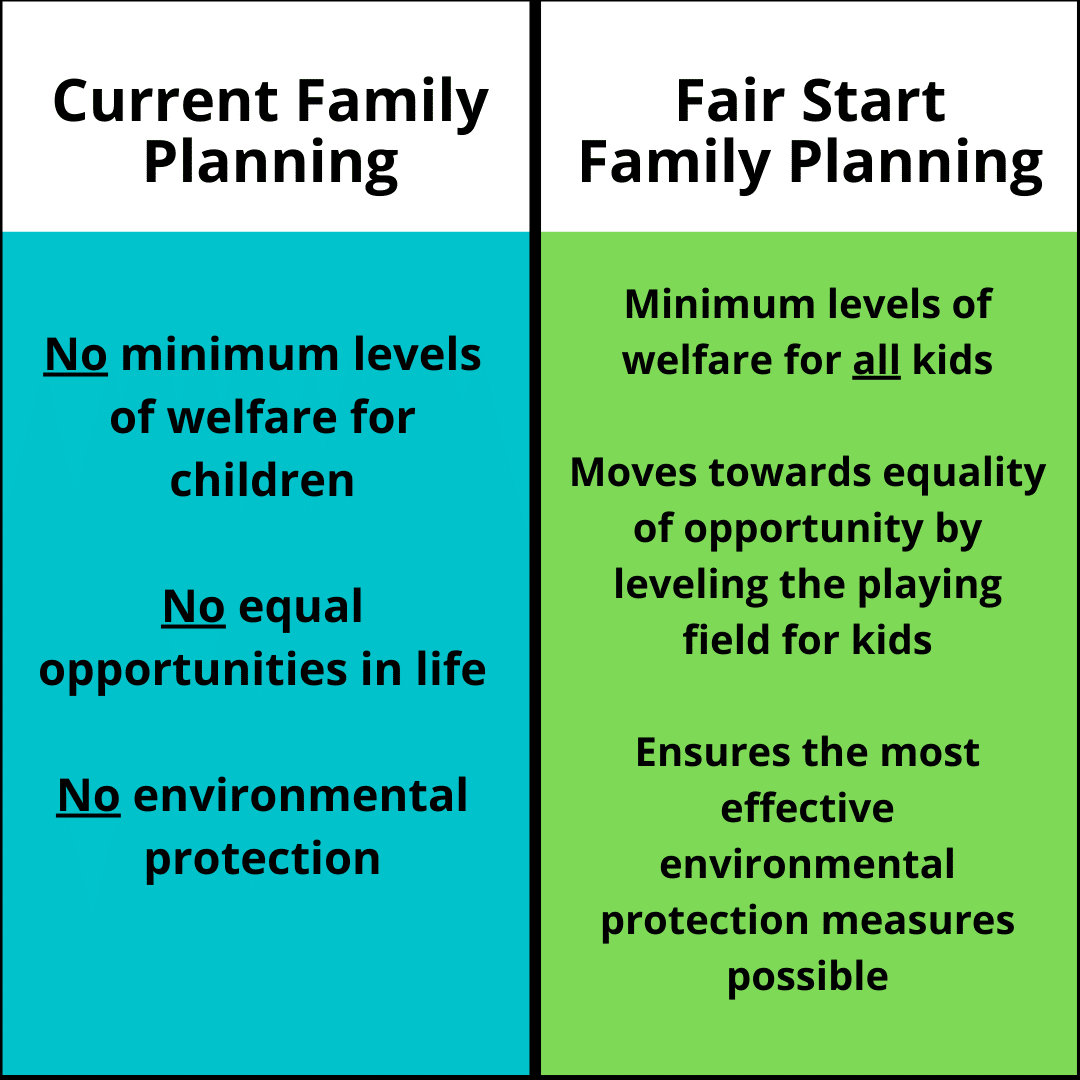
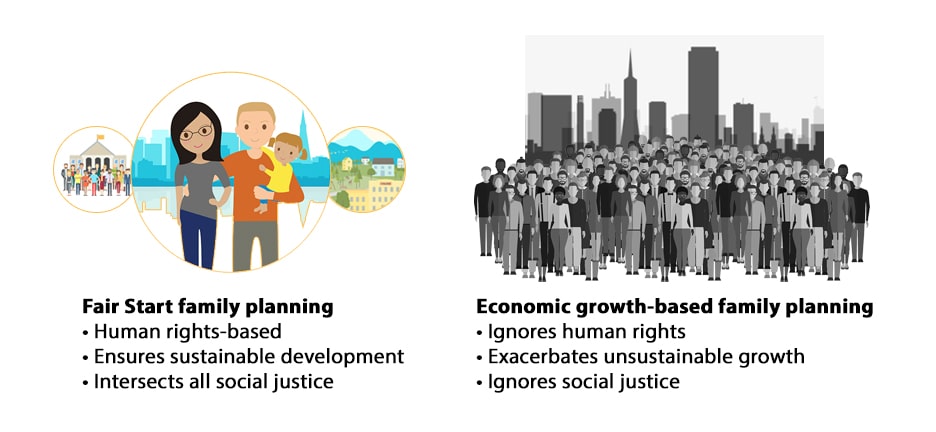
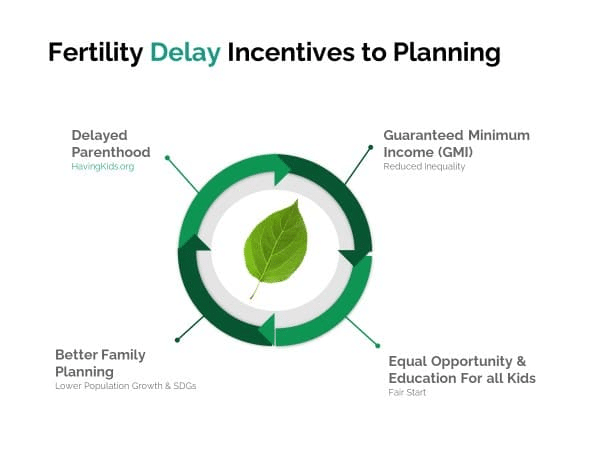
Ensuring this form of actual – not rhetorical – freedom is practically feasible through birth-equity based climate reparations that incentivize delayed parenthood and parental readiness, equitable children’s birth and early and resourced development conditions, and smaller or more ecocentric families. This is the most just and effective way for us all to ensure freedom, protect nature and offset through investment the harm the climate crisis is causing children. These efforts urge concentrations of wealth and power to offset the harms they are causing, and their wealth externalized on future generations by paying family planning and birth equity and development reparations that change the location, timing, manner, and with what resources women have children to ensure those children thrive rather than suffer because of the wealth-driven climate crisis. These are for the future majority, human and nonhuman, and the undoing the system that caused the crisis, not for a handful of humans alive today.
Those reparations can get us towards a biodiverse, climate restored, equitable and democratic future and they are first human right and thus override current state-issued property rights because they make us who we should be – free. Many who owe those reparations and owe them because their wealth was made by externalizing costs on future generations, are trying to block this process and send us into a future crowded future with vast inequity, and a dangerous and degraded environment.
They are insufficiently other regarding to be included in political units of free persons because they choose to benefit at deadly cost to others.
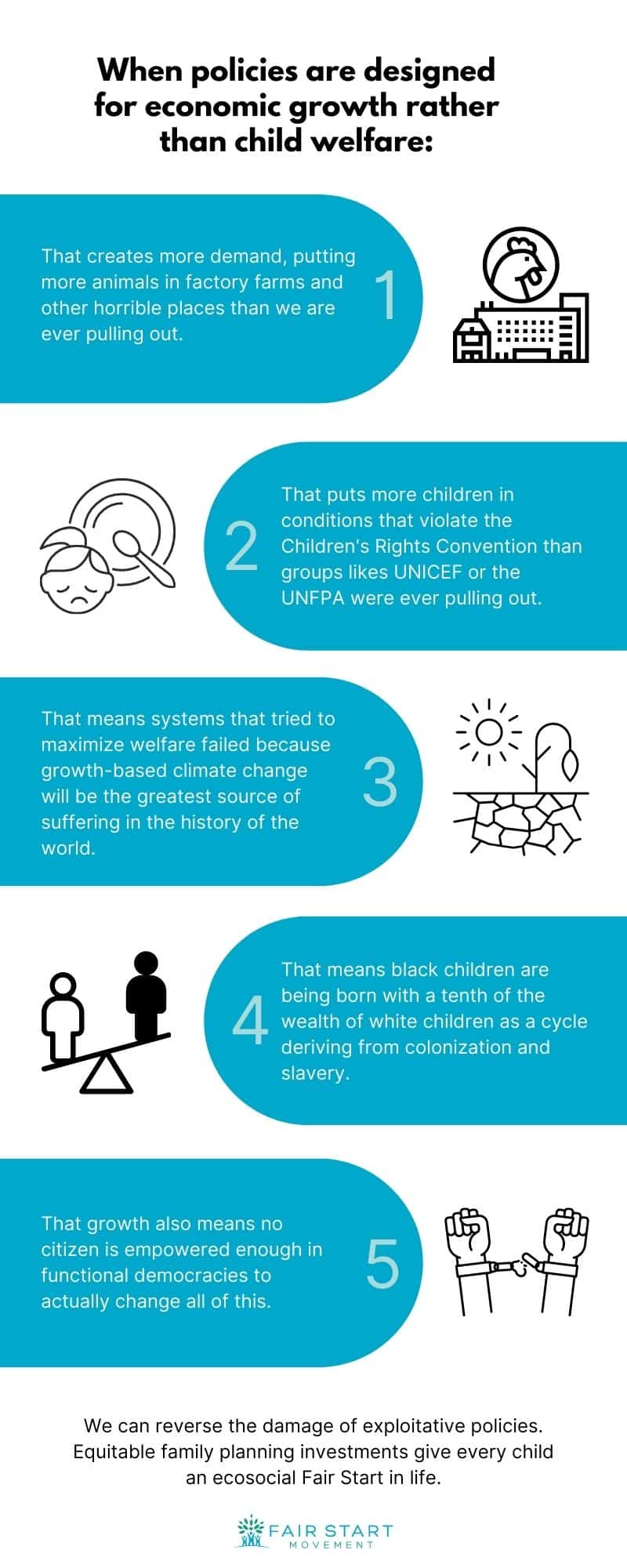
They are doing so even though they benefitted at deadly cost to others through coercive and rights-assigning political systems, the legitimacy of which was premised on supposed democracy, one-person-one-vote actual influence in elections, relative self-determination, etc. Ignoring their own full positionality (which included intergenerational positioning), they risk millions of lives doing so.
Their thinking is fallacious, hypocritical, and oppressive. All have the right to move cost-externalized wealth to young women to evade millions of deaths by all nonviolent means effective because the first legal inevitably obligations deal with creating persons in conditions – fair conditions – where they can comprise self-determining communities.
Nations cannot constitute, i.e. create their authority and subjects’ obligation, without starting from children’s rights because they would bypass the first obligation, e.g., what your creator owed you in terms of your and their mutual self-determination. State authority conditioned as being deliberately included as equals in decision-making process. The genesis of obligation is being other regarding. The act of creating a child is more other determining than self-determining, for the child and those they influence. The climate crisis (contrasted with what charities wrongly sold as progress) shows this well, as would models for what constitutional conventions in our dysfunctional political systems would actually look like.
All of this is evident in reviewing basic conceptions of intergenerational justice. If we substitute the more antecedent value of self-determination for welfare (which legitimate political entity ensures the latter value?), the threshold specified by Meyer leans towards egalitarian, and more importantly, it becomes the first and overriding norm because who we should be always come first in any policy analysis.
Forget figurehead politicians or the fantasy world created constant commercials. Your day-to-day life is and should be determined by the liberty-quality of your relations with your fellow citizens, those with whom you interact every day. And who they are and should be is determined by the conditions in which they are born and raised. How is self-determination possible without such a thing? It’s not, but what we do now can be improved by using children’s rights as the fundament of state legitimacy. That would reform a system where can be coerced or socially cajoled to follow laws that are not theirs at all.
As it stands now our freedom does not exist because your functional democracy is actually an bloated economy. There was never an inclusive “We the People” justifying your obligation to follow the law.

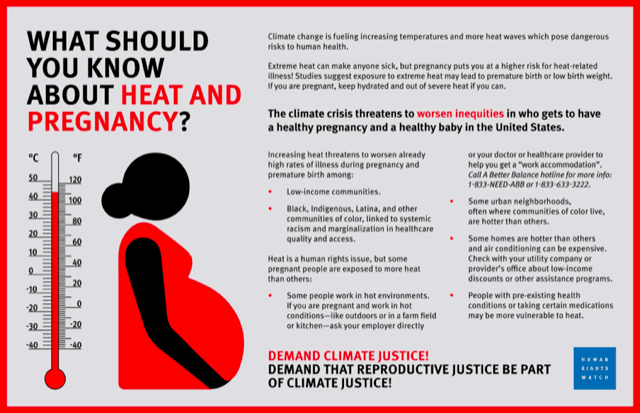
What you thought of as a written constitution or set of rights that ensured your self-determination did not. Freedom is four dimensional. The only possible source of self-determination, the creation, family and child welfare ethics, law and policy of who we should be, slowly undid that value for us in favor of the wealthiest, and certainly for future generations subject to wealth-driven heat waves and social controls.
Abstract academic debates about population ethics, often funded by concentrations of wealth and power reliant on inequity and growth, threaten to exacerbate the results of the climate crisis by forestalling law and policy reforms. Many of the debates derive from the same Eurocentric vestige of colonialism described above – the historic entitlement of wealthy families to exploit birth positionality relative to colonized nations – nesting in the human-rights regime. They recolonize the future with wealth, money that is owed to future generations because it was made at deadly cost to them.
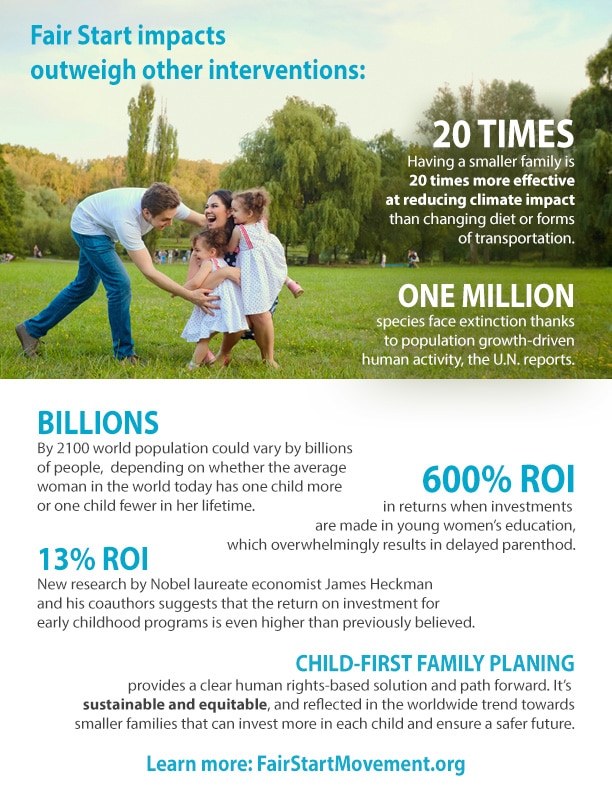
Most of the academics in these debates contradict in their writings the basic values they exhibited throughout their lives, e.g., seeking minimum thresholds of personal welfare, expecting equal access to opportunities, participating in and adhering to political/legal systems that purported to represent the governed, using and enjoying an environment relatively conducive to human and nonhuman health, enjoying a right to have a child in relatively safe conditions, etc. You can identify these academics because they will avoid discussions of how shared values interrelate to the actual creation of power relations. They will avoid discussions of their full positionality. They will avoid explicitly conditioning state authority on empowering each person equally.
Given their privileged intergenerational positionality, and the fact that they sent their lives generally relying on and participated in legal/political systems of coercive obligation premised on the idea of self-determination (evidenced through things like the holding of elections) that benefitted them at deadly cost to others, they should at least begin from a default or provisional position of extending those values to future generations.
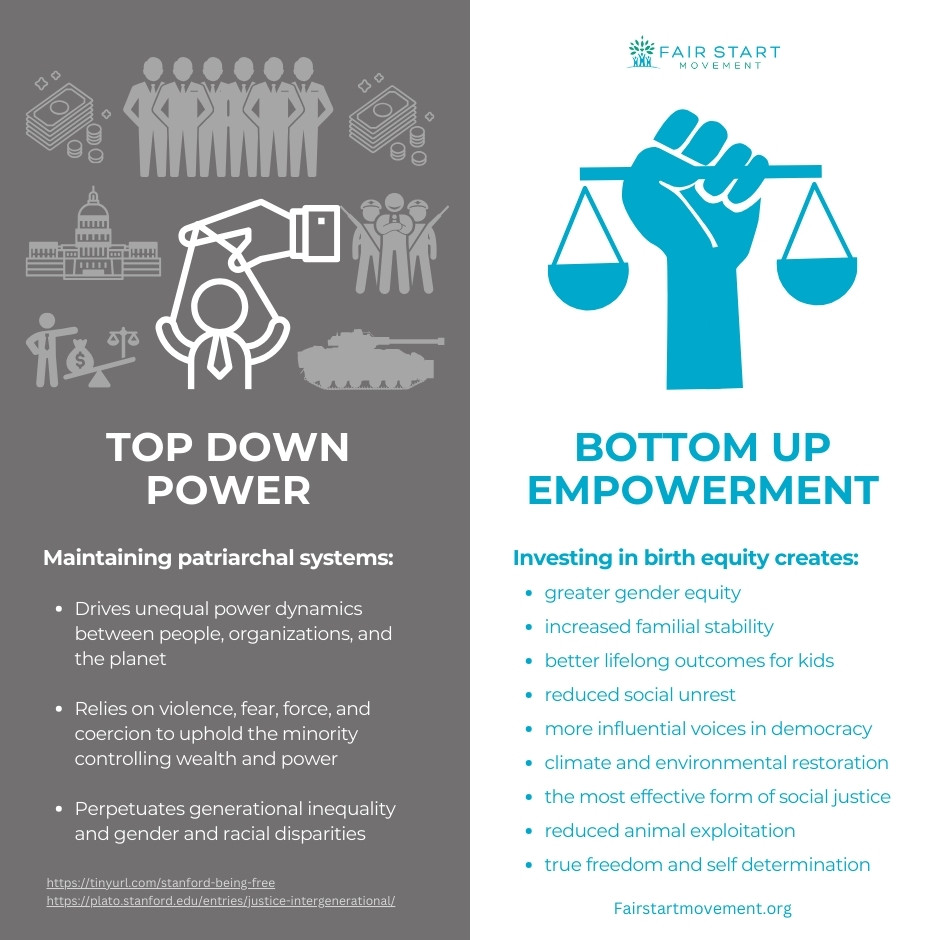
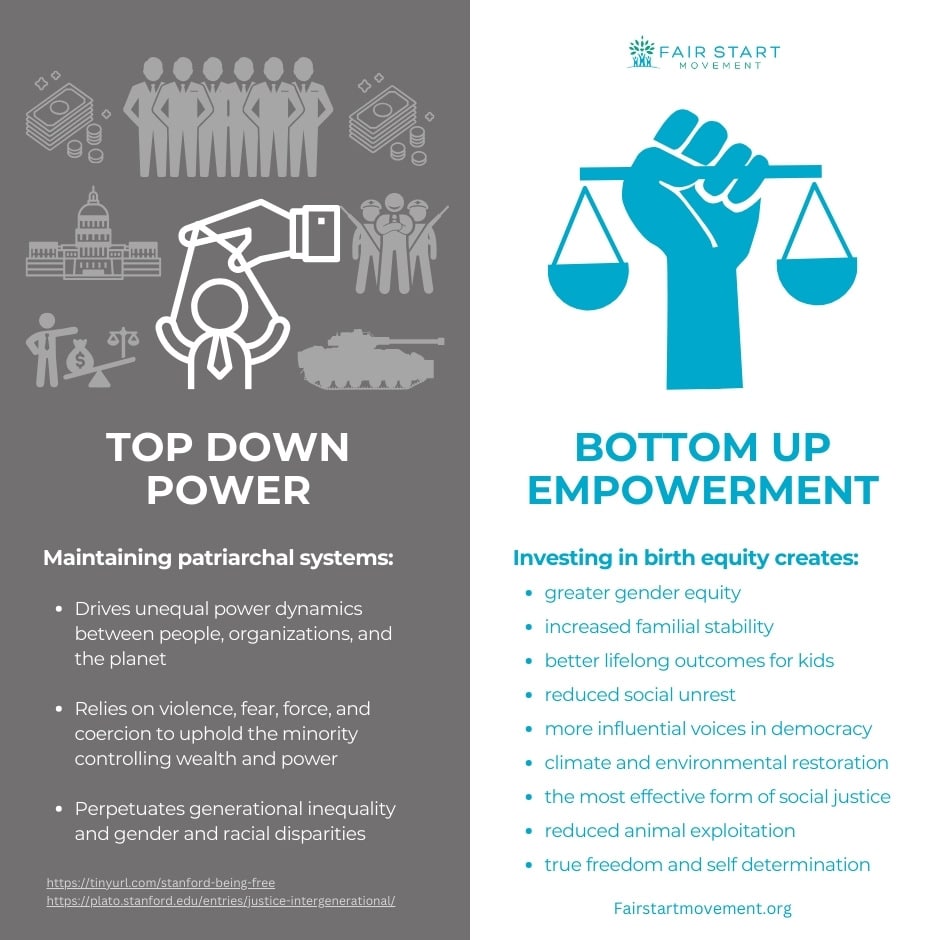
They can begin by saying — as a fundamental premise of justice over top-down power — that basic human-rights systems should prioritize the child welfare/equity in instruments like the Children’s Rights Convention over parental subjective choice in the ethics, law, and policy of family planning, population, and procreation so that future generations can also debate these issues from the comfort and security these academics do.
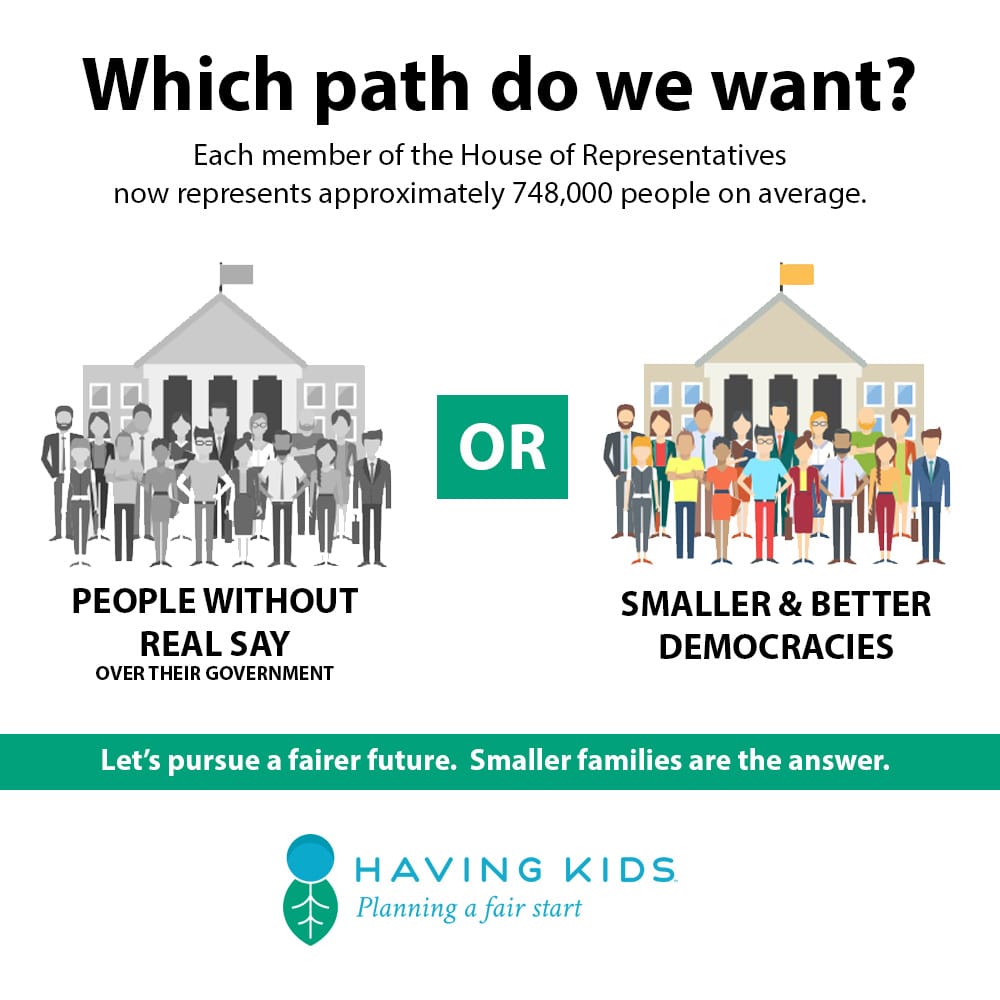
As a public interest attorney for many years, I was not allowed to discuss these facts, and organizations have quietly killed attempts to change the policies.
Simply ask them: What are you doing to invest in resourcing young women to have their children in a time, place, manner, and with the necessary safeguards that protect those children and their rights, and avoids those children degrading their own environment in deadly ways?
By asking this question you are looking for policy scam that fundamentally created the climate crisis. You are looking for those who are willing to benefit by exploiting those children’s birth positionality for economic growth, thus benefitting at deadly cost to others. You are looking those who choose a fundamental political system/orientation system with no functional protections for children, and thus none for the ecologies those children would consume.
A classic example of this are funders backing the sale of vegan food products as a form of animal rights because they are invested in the companies that produce them, even when the family and growth policies they rely on does exponentially more harm to animals (and humans) than their food advocacy does good.
Freedom may best be conceived as the conditions of influence (cash or other incentives, entitlements, coercion, renown, group belonging, the inclination of humans to imitate one another to ensure group safety, etc.), and polarity, where organizations of free and equal persons can form, dissolve, and reform — more like bubbles than an extended organizational chart. What would it take in the creation and development of persons to ensure they acted as free and equal persons and be able to look each other in the eye without fear or deference – in the formation of groups, the state of affairs implied by the “We” in the beginning of the U.S. Constitution. What would it take to ensure that across generations so that we were not imposing our ecological and other costs on future generations? Given that self-determination by definition requires birth and development conditions ensuring all children an open future, that is where we start.
Freedom and any obligation to a political authority is thus dynamic and four-dimensional. And the way to ensure those conditions – instead of the undemocratic economies regulated by force that have infected the world – is by taking the wealth created by years of bad family policy and using it instead to entitle young women to plan their families, and physically constitute free and just democratic communities.
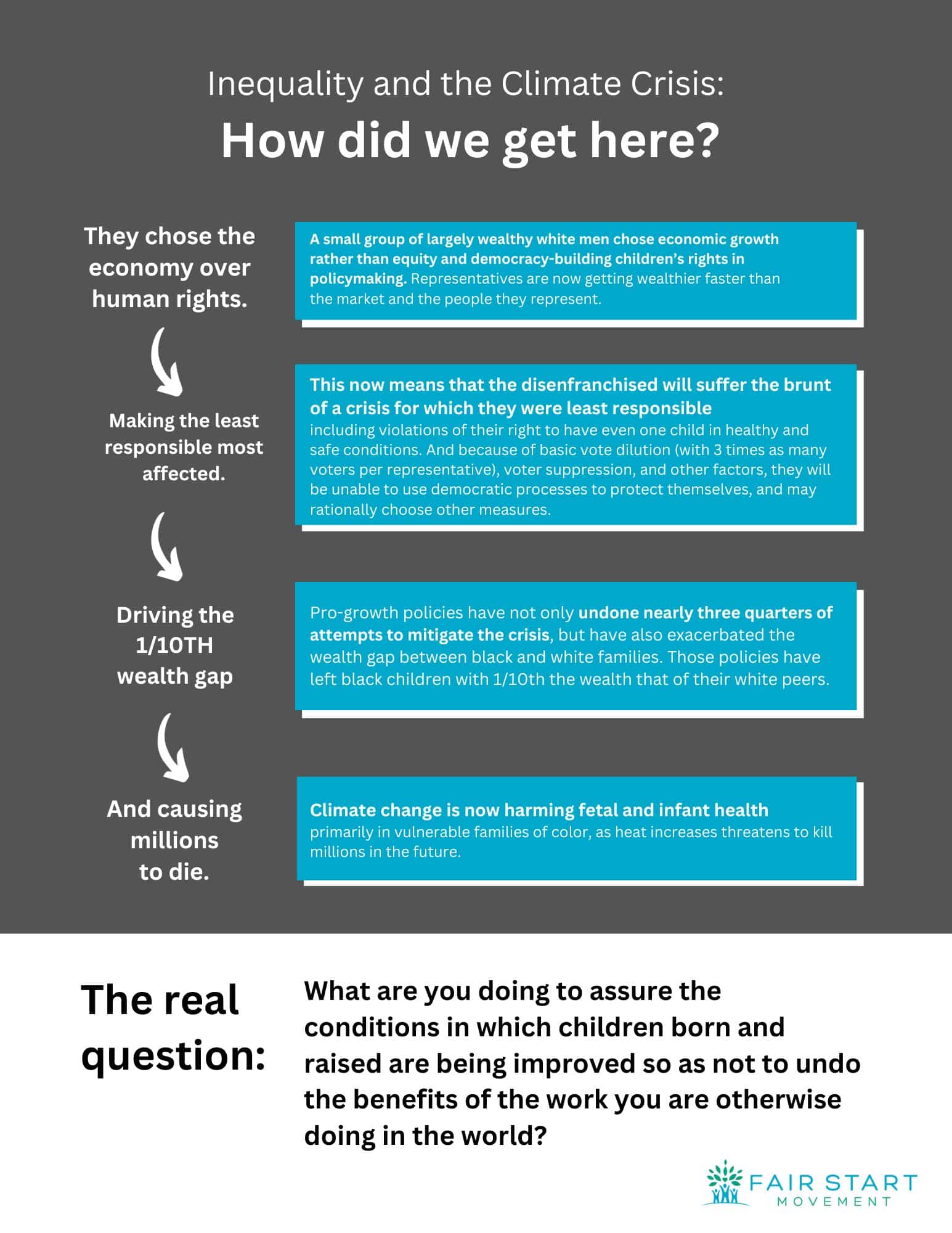
One way to envision the difference would be as between a shopping mall in which business owners try to fill the thing in order to maximize profit, and a rule-making town hall in which citizens fill it while ceding an equal capacity to influence outcomes to all members. Savvy freedom fighters will physically constitute nations, not be constituted by some document or documents to which they have, and can only have, little relation.
This is not capitalism or socialism, but constitutionalism, the creation of duty-based systems that enable member obligation and authority by actually – physically – limiting and decentralizing influence. The unique value of investing in young girls is both evidence of how this can work, and a toehold for major reforms.
Instead of random written constitutions one can imagine modifying GMI systems via a progressive scale of democracy-building payments, inverse to wealth and income and contingent on positionality, that either charged wealthy young women for having a child before their 27th birthday and/or without certain parental readiness benchmarks, or on the other end of the wealth spectrum, covered significant incentives consistently paid out for them to build birth equity and ensure delay.

This scale could be combined with other factors that amount to “survive, self-determine, and thrive” financial kits for the most vulnerable children funded by the parents of the least vulnerable children. Dysfunctional versions of such GMI systems already exist and could be easily modified around a universal metric.
We owe our first obligation to other members of our nations, as they enter and develop, horizontally, rather than vertically to the powerful – the wealthy or politicians. To think otherwise is to replace the real – authority derived from the people – with the symbolic: documents or representatives.
If the government’s authority truly derives from the people, young women urging justice bottom-up are more of a legitimating authority capable of building democracy than men using top-down power to try to do it. Would it be wrong for a young woman with little wealth or income intending to become a mother to demand birth equity resources – resources that simply ensure a level playing field for her child and thus offset the harm – from a wealthy family that externalized the deadly environmental and social costs of its wealth upon the child she wished to have?
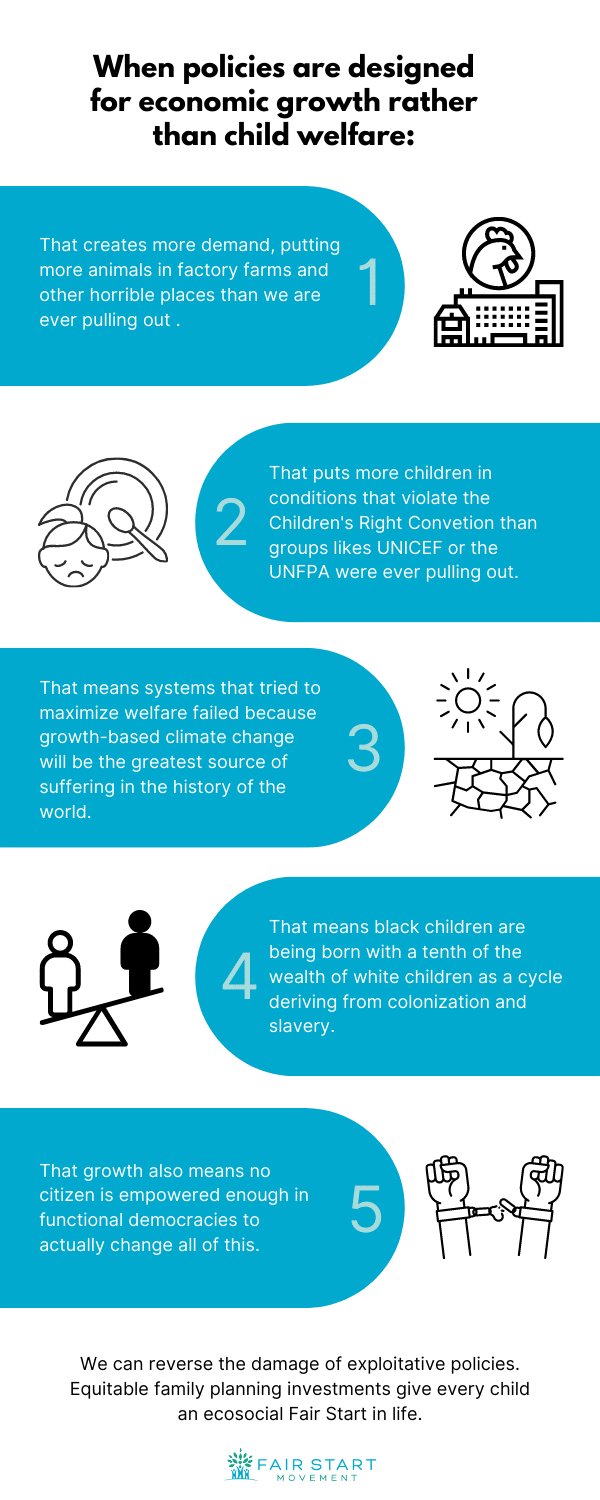
What if that family exploited that birth inequity and growth to not only harm her future child, but ensure that child would be likely to work for little money for the wealthy family and their children? What if the young woman were black, and whose child would have 9/10th less wealth than white kids because they would be black, and the white family she asked could afford to share by choosing to have fewer children?
Free people will target extreme and increasingly vulnerable concentrations of wealth and power to repay the true costs of their wealth to young women, protect millions of innocent lives, and help move the world towards true freedom. This inverts power from deference to coercion from above to exclusive deference to empowering those who are vulnerable – and who we might have been – below. The former cannot create obligation because it undermines self-determination, and hides equity’s demand that privilege be earned, and that all have a right to be heard and matter.
These reparations are the most just and effective way to offset the harm caused by the crisis, and they can help evade acts of mass violence driven by disempowerment, heat, frustration with tradition justice systems, and increasingly nothing to lose. Many are already paying these reparations directly, and concentrations of wealth and power that do not can be forced to using their deadly greenwashing liability.