My journey towards becoming a climate justice activist was not straightforward.
I was born in Kabarole western Uganda from a poor family of 10 children of which four are males and six females am the third born child my parents were poor to give us basic needs in life. My parents forced me to get married to old man at age of 16 years , my parents wanted dowries to support my younger brothers and sisters , I dropped out school after completing primary seven and obeyed my parents to and get married .
During my stay in marriage I got challenges with my husband and divorced him with a lame child, then my parents chased me away from home and left to be maid for church priests in town, I exhibited discipline and commitment to my job then one day one priest picked interest of sponsoring to back to school, I started a gain schooling up to Nursing Profession but my dream was to be a doctor. Growing up in a big family it was challenging, my parents used to depend on agriculture of food crop and we had small portion of land that could not provide us enough food. Fortunately, I got a job to work in the refugee settlement in western Uganda where I was getting salary to support my younger sisters and brothers, witnessed how refugees struggle in the Refugees settlement.
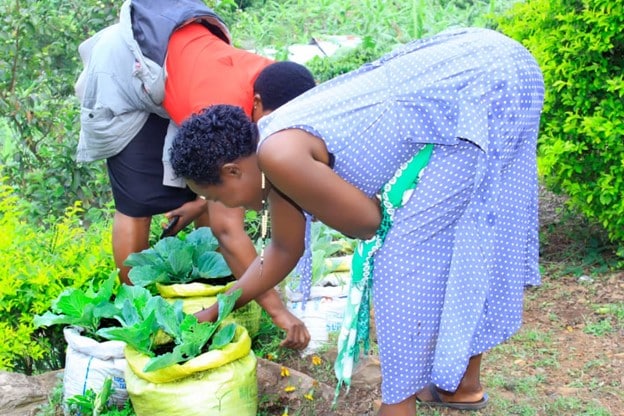
At the age of 27 and nurse by professional, I began my activism passion by engaging in planting trees, community gathering teaching them importance of family planning and delayed parenthood, teaching adolescent girls how to cope up with puberty stages and advising them on prevention of sexually transmitted and how to use sanitary pads .My passion to discourage early girls marriage , teenager pregnancy while promoting girls education and improving food security in the community and desire to make a difference led me to continue my activism work. I’m focused on various areas such as agroforestry, sexual reproductive health for adolescent girls, water accessibility and women and children rights. I have also mentored students in various schools to create climate awareness through singing, poems, storytelling and skits about climate change.
Her work did not perish, and I was soon called to start Rejoice Africa Foundation as the co-founder. In this role, I have participated in the development of Rejoice Africa Foundation.
However, I realized that creating systemic change was not enough. I understood that the fight against climate change required a shift in mindset and individual responsibility. I embarked on a mission to build a mindset shift change by encouraging people to take responsibility for their actions through a human rewarding system.
My work as a climate justice activist has not been easy for me, but I remain focused to meet my goal of saving the next generation.
The future are in our hands , if we don’t respond to climate change , soon the earth will reach on climate devastating situations and it will be hard to reverse this.
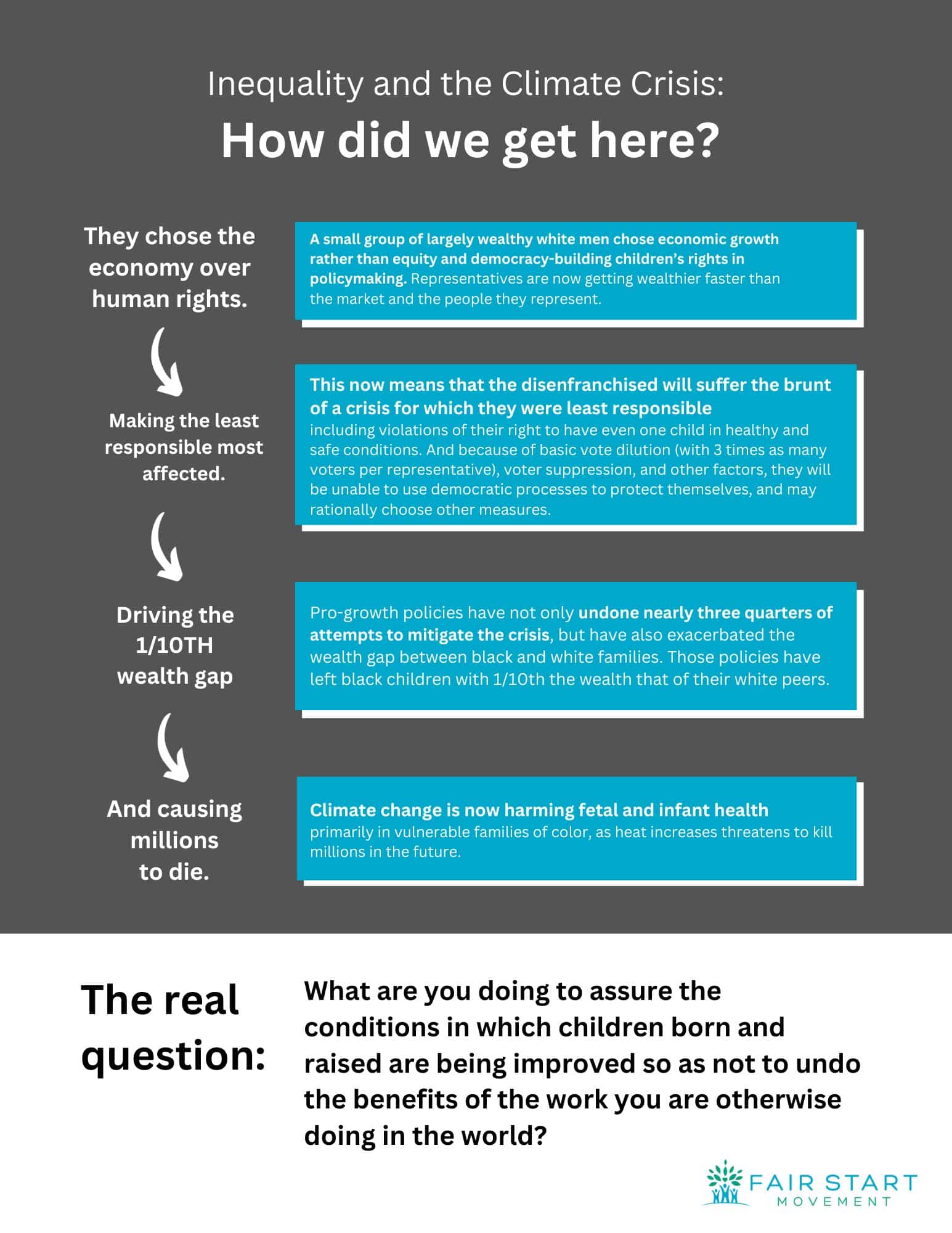
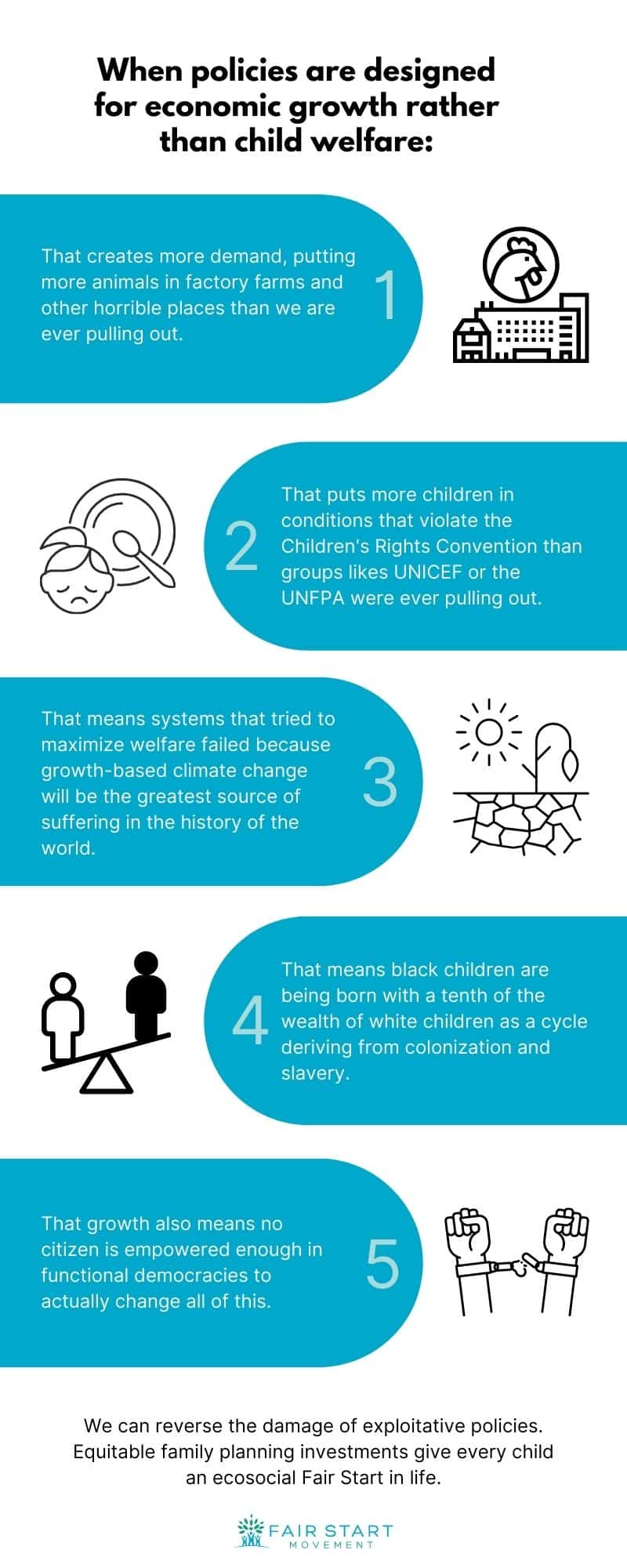
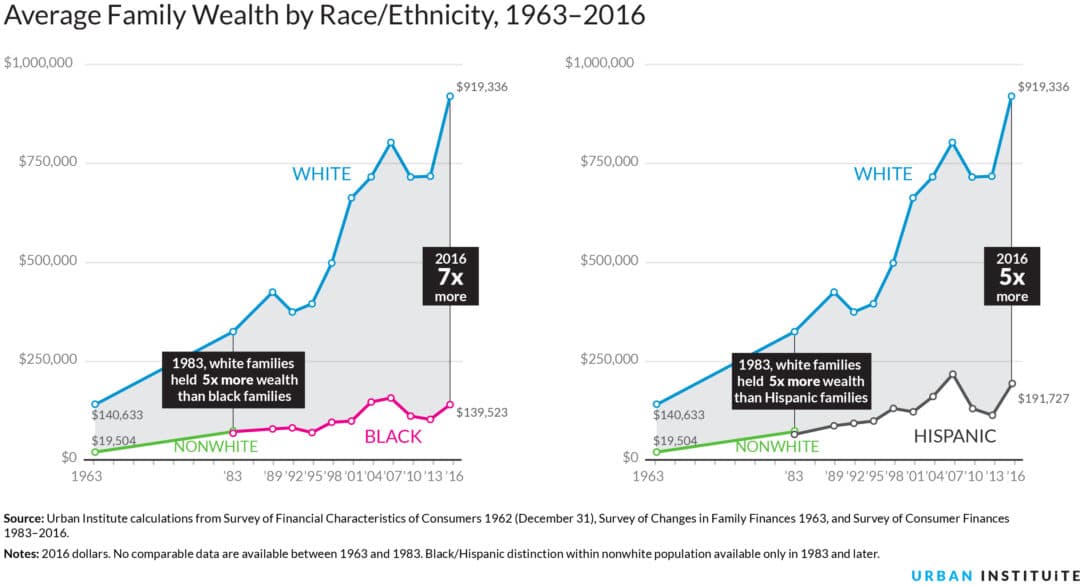
The extreme wealth we see in the world today was made by through a system of unsustainable growth, and illegitimate cost/benefit models, that forced costs on most vulnerable and degraded the climate in a way that is taking millions of innocent lives.
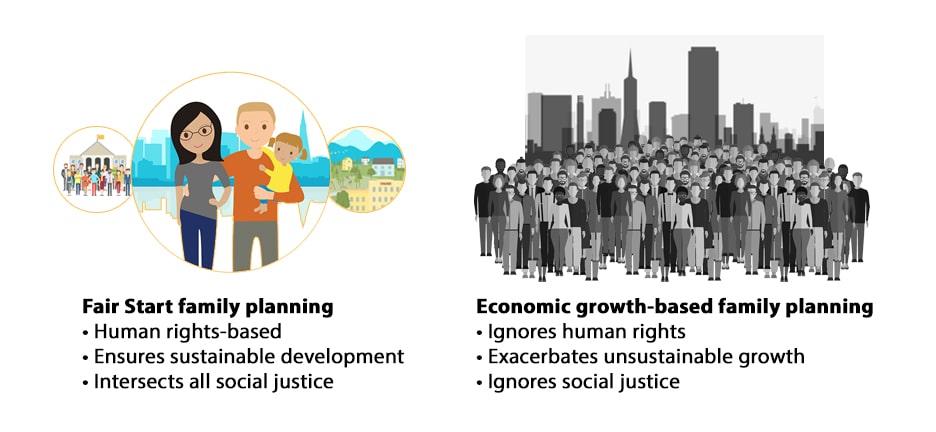
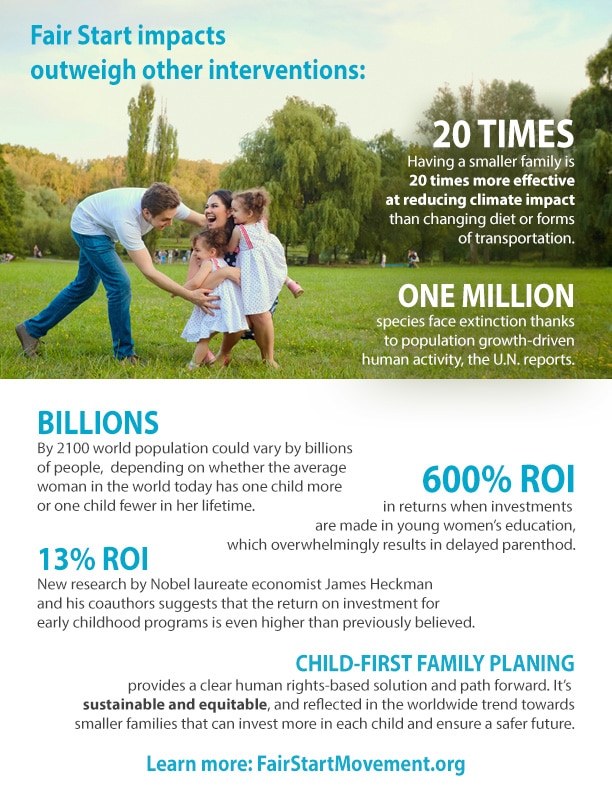
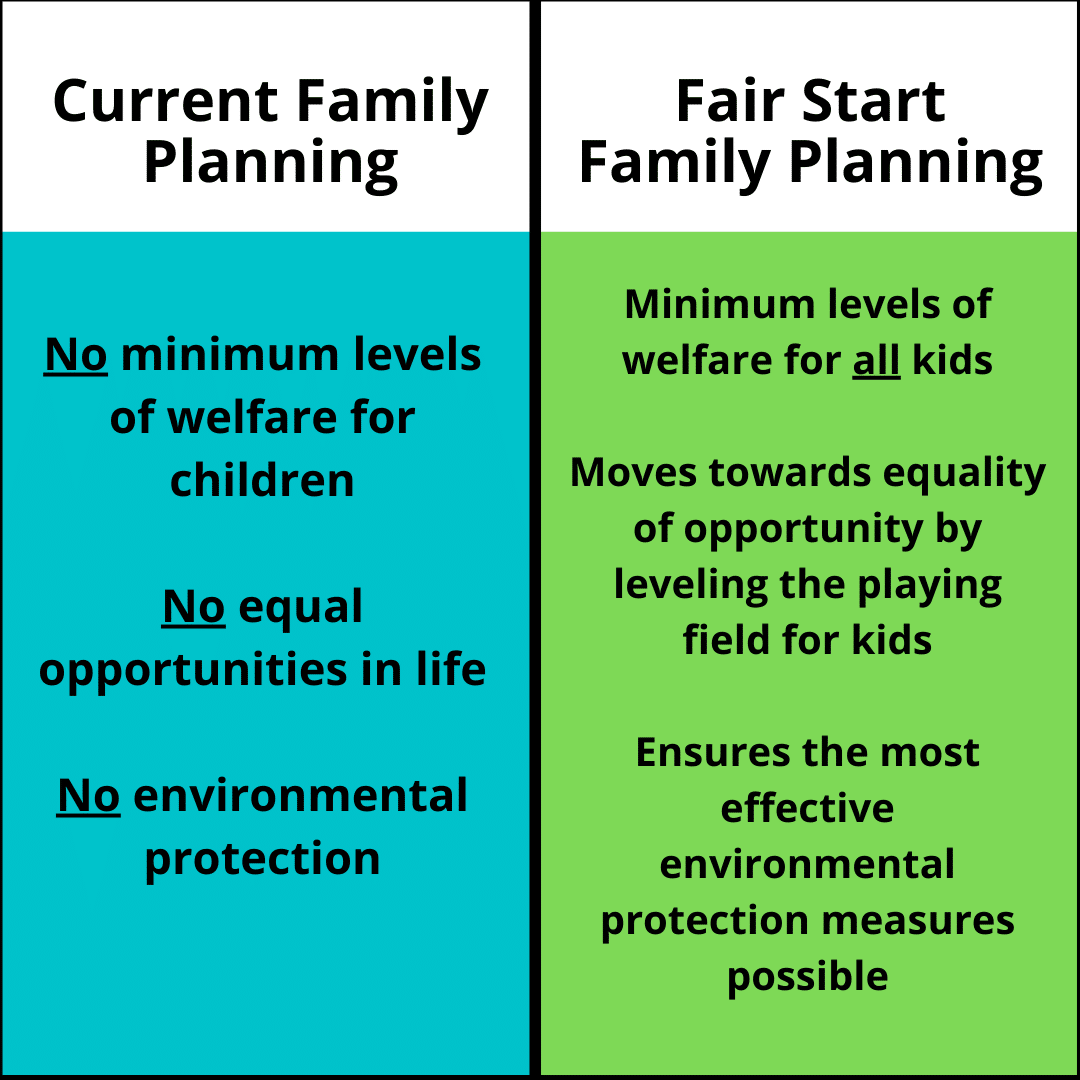
The most just and effective solution is to calculate those costs and use them to pay young women to ensure they have any children at a time, place and with resources that compensate the harm and protect the child and their environment. This replaces illegitimate political systems with no functional protections in the having and rearing of children, and thus none for the ecologies those children would consume.
We begin by simply asking: What are we doing to assure the conditions in which children born and raised, including their environment and role models, are being improved so as not to undo the benefits of the work we are otherwise doing in the world? In asking the question we are looking for those who use child welfare policy to undo the values they claim to promote and are thus being unjust and ineffective.
Why lawyers?
Lawyers, tasked with interfacing between citizens and their legal obligations, are key to upholding the legitimacy of any law-making political system. And since at least the Enlightenment, the legitimacy of political systems has been contingent upon those systems including and representing their subjects. Any obligation to follow the law, like laws that entitle wealth, derives from our participation in making it.
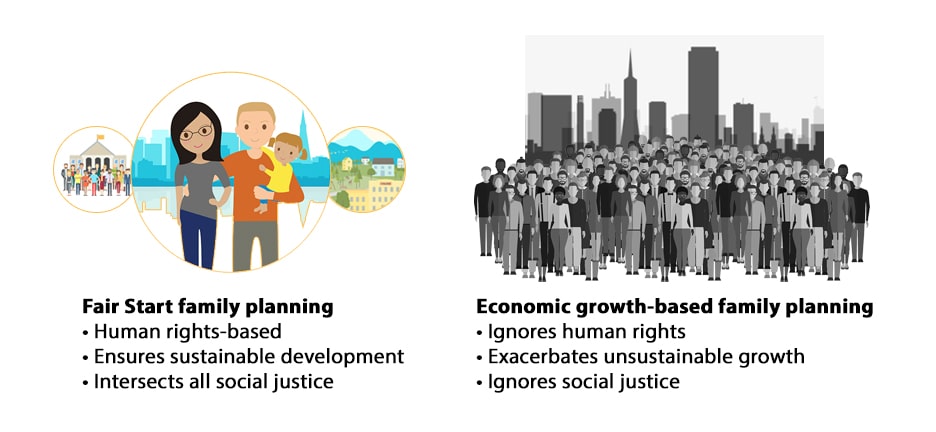
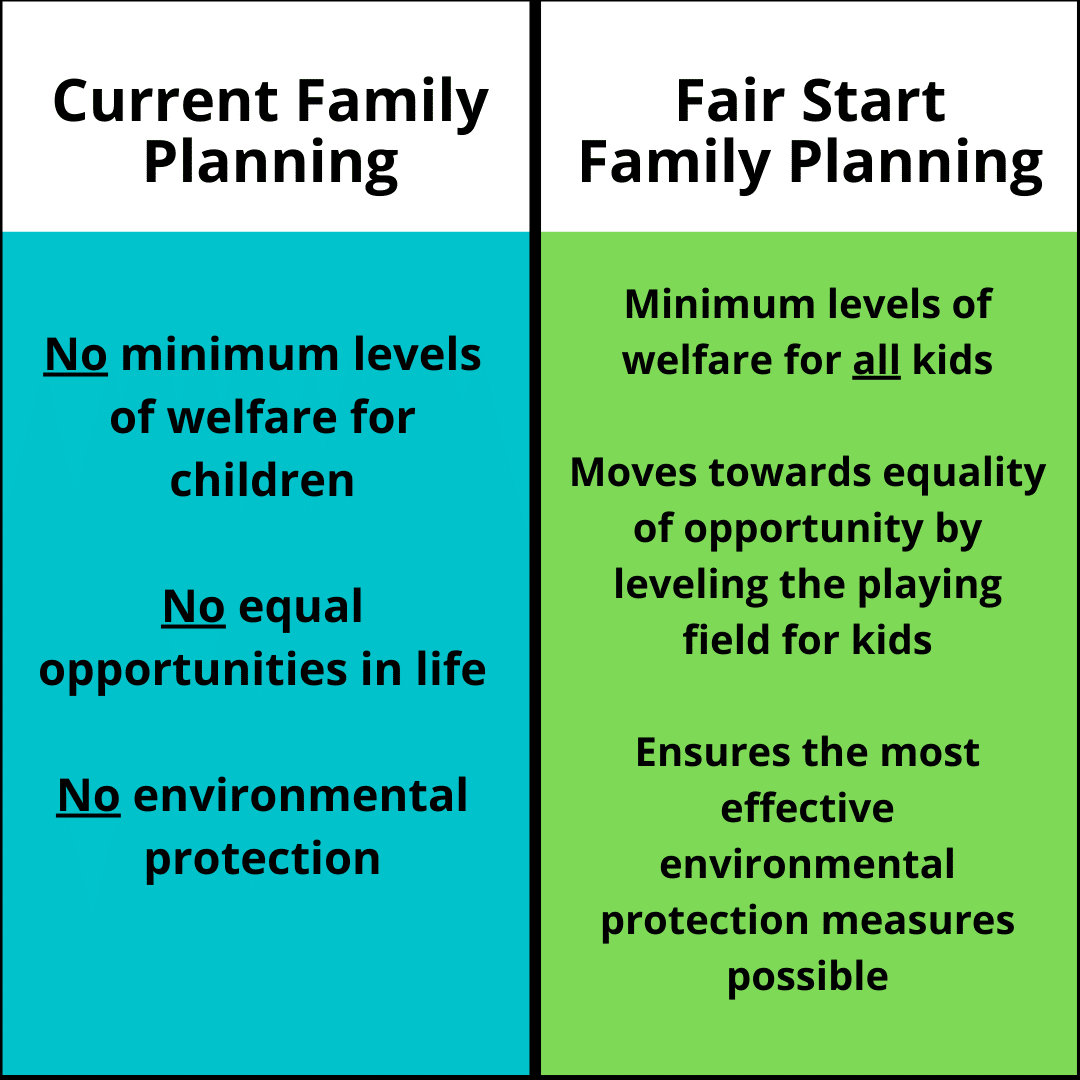
The system of assessing costs and benefits never started justly, with family planning that would actually ensure children’s rights. Instead it exploited them for economic growth, a move that destroyed our environment to enrich a few.
It was the freedom of some – mostly white privileged men – to exploit birth and generational positionality at cost to others and their true (o mutual) freedom.
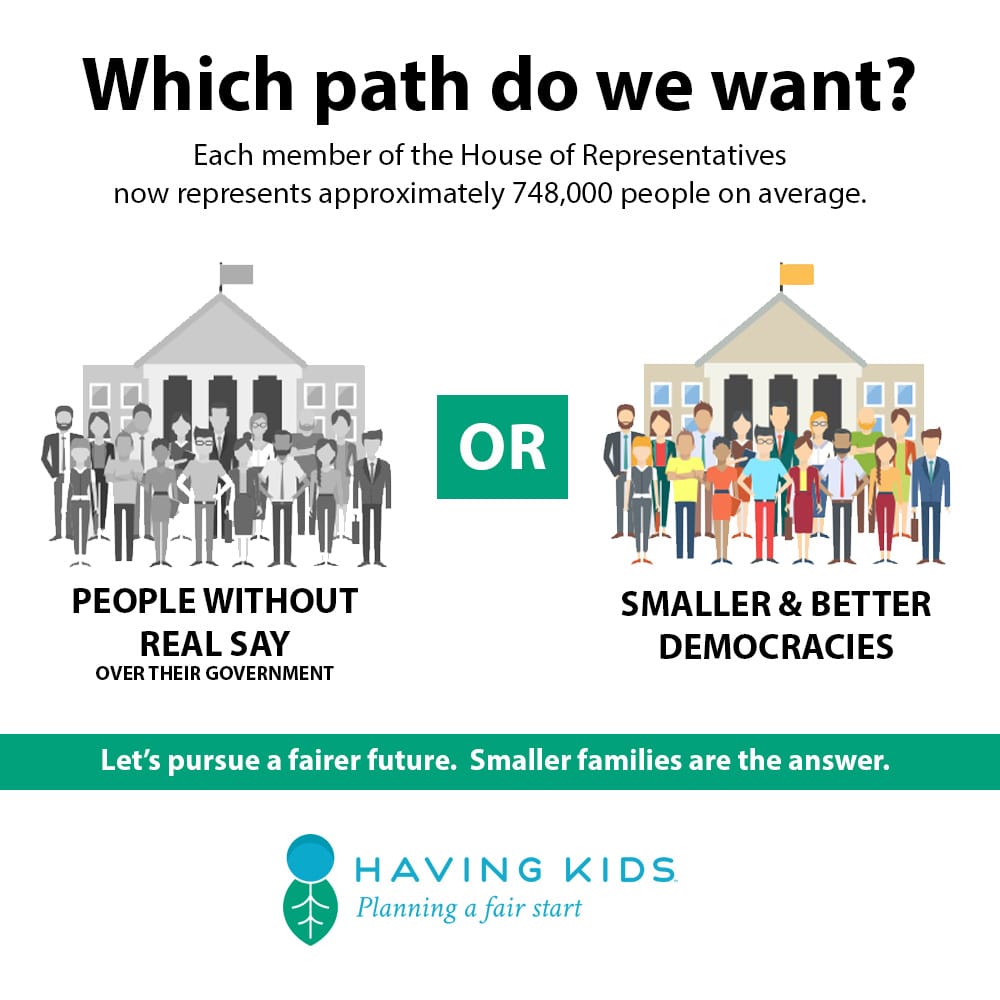
As such we are not included as influential and equal participants. We do not offset equally each other’s capacity to influence the rules (e.g., equal influence over the rules of our democracies) we must live by and thus the power others have over us, even when moving towards that ideal would be as simple as investing in parenting delay and equity funds, which create smaller and more equitable families.
It is this dynamic inclusion of voices as political equals, as a duty to them and from below, not might-makes-right coercion from above around rules vulnerable future persons would not agree to, that legitimates systems.
Justice starts with protecting the most vulnerable, future children and thus indirectly the nonhumans they would otherwise consume, to ensure climate/biodiversity restoration via birth equity (defined as an equal and influential role in one’s democracy) and thus a form of modernizing Diversity-Equity-Inclusion – and-Justice that ensures mutual self-determination for all.
How could there be a binding social contract that does not even begin justly, with minimum thresholds all would want for their birth and development, assessed with simple metrics? To the extent legitimacy is remised on the self-determination or sovereignty of the government’s constituents, this is where it would have to start.
They chose to deny future children the values their lives reflected, e.g., seeking minimum thresholds of personal welfare, expecting equal access to opportunities, participating in and adhering to political/legal systems that purported to represent the governed, using and enjoying an environment relatively conducive to human and nonhuman health, enjoying a right to have a child in relatively safe conditions, etc.
Free people will prioritize the demands over competing interests, and adhere to a fundamental system of obligation that empowers its members.
The baseline error can be summed this way: Why could the most vulnerable could not use their role in their democracy to evade the climate crisis and the death and cataclysmic inequity it will bring, and to protect their own kids and the nonhuman world those children need?
The lies lawyers told, that systems were legitimate even when they did not include and represent their subjects, ensured they could not. Lawyers should know all of this, and act on it, if they want to avoid benefitting from a system that harms others.
Reliance on any basic norm, political obligation, or fundamental baseline for cost/benefit assessment other than a just and inclusive (pro)creation norm is a logical fallacy. In other words, to properly assess costs and benefits we have to first become groups of people capable of doing so in a way that is actually inclusive and reflective of the group constituents. This means that things like the Children’s Rights Convention and even more demanding birth and development standards (like climate and biodiversity regeneration through a peremptory norm to birth equity) regeneration would preempt state constitutions and state-issued property rights. Who we should be always comes first, indisputably derives from our social birth and development, and is objective and measurable when geared to the basic value of a capacity for relative self-determination and valuable autonomy. This child-rights based legitimacy would replace unsustainable and extractive growth systems harshly criticized by Nobel laureates.
The climate crisis represents the failure of governments to protect our species from an existential threat likely to kill millions – those least responsible for causing it. Think now of the infants that will die, and the species that will burn. At the same time, we can save many of those lives by targeting those who benefitted from and exacerbated the crisis to pay – under strict liability frameworks – life-saving family planning, relocation and birth equity reparations.
We are looking for those who willingly benefit at deadly cost to others, when there is an alternative. They are worth no more than those at risk, those with the least, in the future.
These targets can be identified and urged – by anyone near them – to pay and publicly announce it. That can save lives, and role model for others to do the same. The formulas for the demands, the priority list for who owes them, and what exactly is owed are being developed and they are fair – mathematically so – more unbiased than a coin toss.
And the best part of starting justice by actually empowering children? The world today continues lurching towards libertarian free market governance, rather than coercive states. But those systems (incentives backed by coercion) cannot correctly assign property rights to ensure even basic economic functions – they just carry over the rights from the systems before, recreating illegitimacies like oligarchies.
Fair start demands and payments can create legitimate property rights, and move us towards true freedom, or relative self-determination. Freedom may best be conceived as the conditions of influence (incentives, entitlements, coercion, renown, group belonging, etc.), and polarity, where organizations of free and equal persons can form, dissolve, and reform — more like bubbles than an extended organizational chart.
This is not capitalism or socialism, but constitutionalism, the creation of duty-based systems that enable member obligation and authority by actually – physically – limiting and decentralizing influence. The unique value of investing in young girls is both evidence of how this can work, and a toehold for major reforms. Fair start in not an academic undertaking but the praxis of being sufficiently other regarding to maintain one’s own relative self-determination.
Instead of random written constitutions one can imagine modifying GMI systems via a progressive scale of democracy-building payments, inverse to wealth and income and contingent on positionality, that either charged wealthy young women for having a child before their 27th birthday and/or without certain parental readiness benchmarks, or on the other end of the wealth spectrum, covered significant incentives consistently paid out for them to build birth equity and ensure delay.
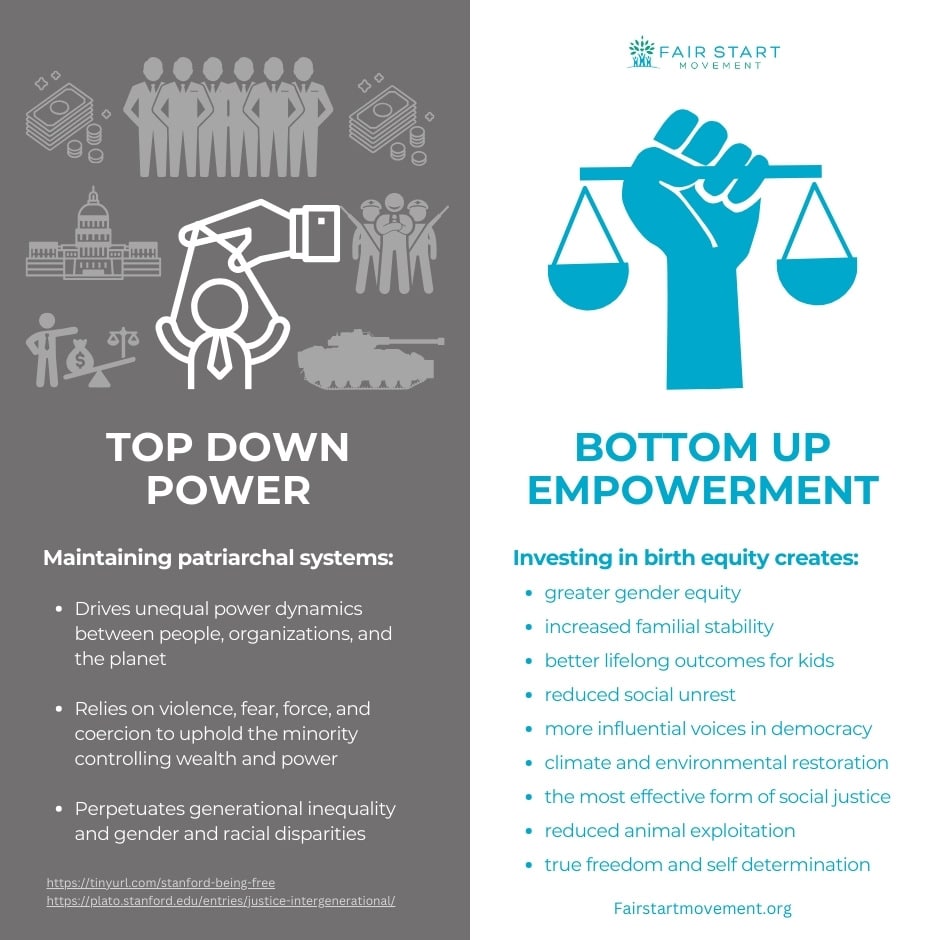
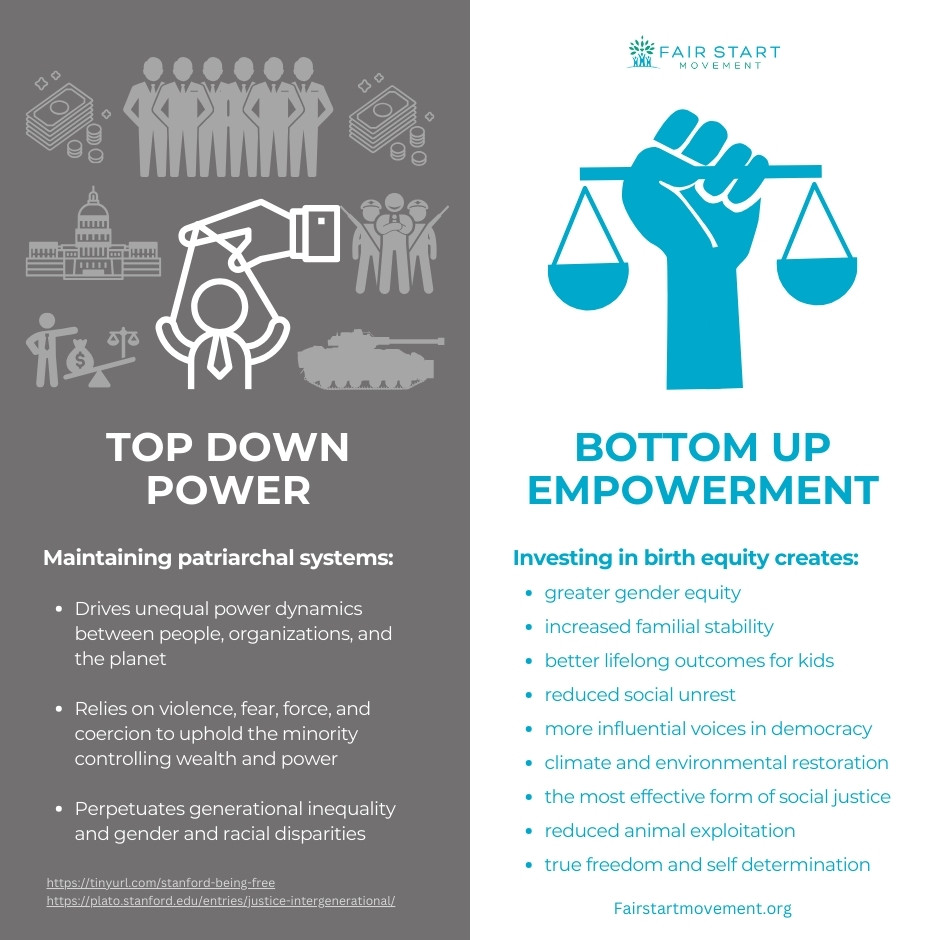
Free people will target extreme and increasingly vulnerable concentrations of wealth and power to repay the true costs of their wealth to young women, protect millions of innocent lives, and help move the world towards true freedom. This inverts power from deference to coercion from above to exclusive deference to empowering those who are vulnerable – and who we might have been – below. The former cannot create obligation because it undermines self-determination, and hides equity’s demand that privilege be earned, and that all have a right to be heard and matter.
These efforts urge concentrations of wealth and power to offset the harms they are causing, and their wealth externalized on future generations by paying family planning and birth equity and development reparations that change the location, timing, manner, and with what resources women have children to ensure those children thrive rather than suffer because of the wealth-driven climate crisis.
This is not altruistic. This about liberation. Neither I nor you can be free in world with people who did not get enough what they needed growing up to constitute groups of free and equal persons actually capable of asserting authority and obligating persons to follow laws, especially when that allows the creation of so many people that we lose nature, which is simply the relative absence of the power of other persons. That is the logic of self-determination in a world with more than one person.
Many in positions of power like Peter Singer evade this discussion and refuse to exit a political system that benefits them at deadly cost to others. How they handle this issue – from their position of wealth and entitlement – screams that it’s not their life on the line; that it’s other lives, and other parents’ children’s lives, on the line. Singer’s evasions are unique give his urging policies to liberate animals, the benefit of which were undone by family and growth policies. Also, by siloing off the liberation of nonhumans from social justice more generally, he ensured concentrations of white wealth and privilege, at cost to general justice.
For example, Elon Musk makes money selling electric cars to a growing population that needs them because that growth is destroying our atmosphere. The policies that ensured that growth also ensured birth-based black poverty relative to the massive head-start position in which white South African Musk was born, and a dilution of the average citizens power to use their democracies to reverse things like the climate crisis and birth inequity. Those policies did more harm, especially using a metric like self-determination, than Musk and his car sales did good. This is not about population as much as power relations, and not about growth as much as inequity, understood as an equal and influential role in determining the rules – formal and informal – one has to live under. If every child that could be born in South Africa at the time of Musk’s birth had equity in governance, had a role in making the rules, would they have chosen the outcomes we see today? If exclusion was a violation of human rights, can we take back that amount of wealth that derived from the violation? Who would choose to use the same form of legitimacy that enriched a few at deadly cost to a blameless billion?
Remember that – and that their wealth was created at cost to your freedom and the lives of others – when you engage those in positions of power as co-subjects in a shared democracy and bring them the reality of their position.
Freedom really – or physically – means some relative level of self-determination. You would control your life and what influences you. Influence over you would be limited and highly decentralized.
And if you wanted to maximize freedom, you would have to create a background environment that acts as a buffer between people that minimizes human influence, through things like the climate crisis, we we have over one another. That requires climate and biodiversity restoration.
And assuming you believe people should be political equals, with equal influence under the most basic rules under which they must live, you would ensure their birth and development so that they offset each other’s capacity to influence those rules equally. Freedom always requires some rules – even if just to ensure children are protected from the sort of harm in childhood that limits their freedom in the future – and we should all have equal and influential say over those basic rules.
Freedom – or maximizing relative self-determination – without these conditions would be physically impossible. Our families have to create and develop people for democracies, not economies, because the former precedes and regulates, assign property rights for, etc. the latter. Consider it this way: Much of our lives today is dominated by the need for employment, social positioning relative to others in our economies, titles, etc. That control over our lives is asserted through wealth and other forms of influence. If we are to be free, that influence must be redirected and reprioritized so that would-be parents are incentivized and entitled to first or peremptorily build democracy – town halls where each matter – not economies, or crowded shopping malls.
You and others should be an influential citizen, not just a worker, consumer, and taxpayer. And doing that depends on how you are created and the conditions in which you develop.
Those reparations can get us towards a biodiverse, climate restored, equitable and democratic future and they are first human right and thus override current state-issued property rights because they make us who we should be – free. Many who owe those reparations and owe them because their wealth was made by externalizing costs on future generations, are trying to block this process and send us into a future crowded future with vast inequity, and a dangerous and degraded environment.
Their thinking is fallacious, hypocritical, and oppressive. All have the right to move cost-externalized wealth to young women to evade millions of deaths by all nonviolent means effective because the first legal inevitably obligations deal with creating persons in conditions – fair conditions – where they can comprise self-determining communities.
All of this is evident in reviewing basic conceptions of intergenerational justice. If we substitute the more antecedent value of self-determination for welfare (which legitimate political entity ensures the latter value?), the threshold specified by Meyer leans towards egalitarian, and more importantly, it becomes the first and overriding norm because who we should be always come first in any policy analysis.
Forget figurehead politicians or the fantasy world created constant commercials. Your day-to-day life is and should be determined by the liberty-quality of your relations with your fellow citizens, those with whom you interact every day. And who they are and should be is determined by the conditions in which they are born and raised. How is self-determination possible without such a thing? It’s not, but what we do now can be improved by using children’s rights as the fundament of state legitimacy.That would reform a system where can be coerced or socially cajoled to follow laws that are not theirs at all.
What you thought of as a written constitution or set of rights that ensured your self-determination did not. Freedom is four dimensional. The only possible source of self-determination, the creation, family and child welfare ethics, law and policy of who we should be, slowly undid that value for us in favor of the wealthiest, and certainly for future generations subject to wealth-driven heat waves and social controls.
Most of the academics in these debates contradict in their writings the basic values they exhibited throughout their lives, e.g., seeking minimum thresholds of personal welfare, expecting equal access to opportunities, participating in and adhering to political/legal systems that purported to represent the governed, using and enjoying an environment relatively conducive to human and nonhuman health, enjoying a right to have a child in relatively safe conditions, etc. You can identify these academics because they will avoid discussions of how shared values interrelate to the actual creation of power relations. They will avoid discussions of their full positionality. They will avoid explicitly conditioning state authority on empowering each person equally.
Given their privileged intergenerational positionality, and the fact that they sent their lives generally relying on and participated in legal/political systems of coercive obligation premised on the idea of self-determination (evidenced through things like the holding of elections) that benefitted them at deadly cost to others, they should at least begin from a default or provisional position of extending those values to future generations.
They can begin by saying — as a fundamental premise of justice over top-down power — that basic human-rights systems should prioritize the child welfare/equity in instruments like the Children’s Rights Convention over parental subjective choice in the ethics, law, and policy of family planning, population, and procreation so that future generations can also debate these issues from the comfort and security these academics do.
By asking this question you are looking for policy scam that fundamentally created the climate crisis. You are looking for those who are willing to benefit by exploiting those children’s birth positionality for economic growth, thus benefitting at deadly cost to others. You are looking those who choose a fundamental political system/orientation system with no functional protections for children, and thus none for the ecologies those children would consume.
Freedom may best be conceived as the conditions of influence (cash or other incentives, entitlements, coercion, renown, group belonging, the inclination of humans to imitate one another to ensure group safety, etc.), and polarity, where organizations of free and equal persons can form, dissolve, and reform — more like bubbles than an extended organizational chart. What would it take in the creation and development of persons to ensure they acted as free and equal persons and be able to look each other in the eye without fear or deference – in the formation of groups, the state of affairs implied by the “We” in the beginning of the U.S. Constitution. What would it take to ensure that across generations so that we were not imposing our ecological and other costs on future generations? Given that self-determination by definition requires birth and development conditions ensuring all children an open future, that is where we start.
One way to envision the difference would be as between a shopping mall in which business owners try to fill the thing in order to maximize profit, and a rule-making town hall in which citizens fill it while ceding an equal capacity to influence outcomes to all members. Savvy freedom fighters will physically constitute nations, not be constituted by some document or documents to which they have, and can only have, little relation.
This is not capitalism or socialism, but constitutionalism, the creation of duty-based systems that enable member obligation and authority by actually – physically – limiting and decentralizing influence. The unique value of investing in young girls is both evidence of how this can work, and a toehold for major reforms.
Instead of random written constitutions one can imagine modifying GMI systems via a progressive scale of democracy-building payments, inverse to wealth and income and contingent on positionality, that either charged wealthy young women for having a child before their 27th birthday and/or without certain parental readiness benchmarks, or on the other end of the wealth spectrum, covered significant incentives consistently paid out for them to build birth equity and ensure delay.
We owe our first obligation to other members of our nations, as they enter and develop, horizontally, rather than vertically to the powerful – the wealthy or politicians. To think otherwise is to replace the real – authority derived from the people – with the symbolic: documents or representatives.
Free people will target extreme and increasingly vulnerable concentrations of wealth and power to repay the true costs of their wealth to young women, protect millions of innocent lives, and help move the world towards true freedom. This inverts power from deference to coercion from above to exclusive deference to empowering those who are vulnerable – and who we might have been – below. The former cannot create obligation because it undermines self-determination, and hides equity’s demand that privilege be earned, and that all have a right to be heard and matter.
By asking this question you are looking for policy scam that fundamentally created the climate crisis. You are looking for those who are willing to benefit by exploiting those children’s birth positionality for economic growth, thus benefitting at deadly cost to others. You are looking those who choose a fundamental political system/orientation system with no functional protections for children, and thus none for the ecologies those children would consume.
Instead, to avoid fundamental change, many organizations will choose less effective work – distractivism – that attracts wealthy donors who want to externalized the costs of their wealth. Our impact on the Earth, and how we experience that impact, fundamentally depends on when, where, how, with what resources, etc. women have children. Right now – according to this Nobel laureate – the system under which this all happens is exploitative.
This is what those men enabled: Alaska now uses wealth made by killing children in the most vulnerable nations to exacerbate that process using family policy. They’ve found a way to increase fossil fuel production and then use the profits to subsidize larger families and the need for greater fossil fuel production.
That move in 1968 ensured:
That wealthy elites could avoid funding child development rights, and could instead privilege their own children; at base, the standard showed that ,many elites reject political equity, or participating in and adhering to political/legal systems that actually represent the governed, where each has an equal influence on the outcome and thus maintains their relative capacity to choose or control who has power or influence over them.
A framing of the issue of birth justice around population, which treated people as numbers and avoided justice – or the always-first-threshold question examining the power relations between them, and between them and their ecologies, as they are created. This is not about population as much as power relations, and not about growth as much as positionality and inequity, understood as an equal and influential role in determining the rules – formal and informal – one has to live under. Population framing evaded an analysis of relations and equity, and the possibility that property rights built on racist ecocide were not legitimately allocated – and it did so by ignoring the most basic logic of human rights;
A cementing of the patriarchy in place by creating a wall of familial privacy and autonomy around relations in which there were massive power differentials;
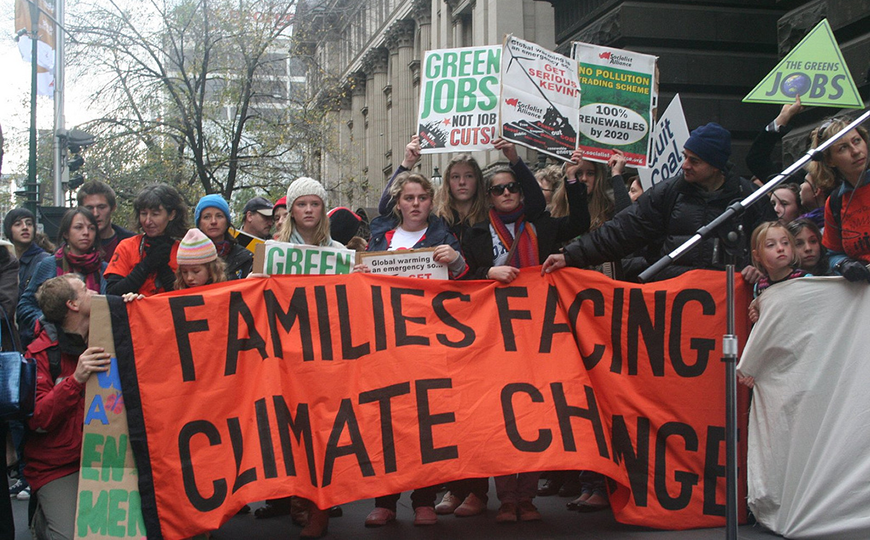
Climate Emergency by Takver on Flickr
The creation of sufficient vote dilution to ensure the average citizen – who was being slowly disenfranchised – would not have enough influence in their political system to change this. This was designed to treat people as economic inputs, not empowered citizens;
The creation of false political dichotomies, like the current paradigm of left versus right, by hiding the way equity (a value treated as left-leaning) in birth and development can ensure autonomy (a value treated as right-leaning) for all later in life. We can agree on children’s rights, on who we should be – and not hide a division that is more about wealth than ideology. Evading the ethics of our creation allowed elites to silo the protection of the vulnerable, like children, animals, and the environment, which are normally aligned, and to create watered down solutions to each area, heading off more effective and equitable solutions.
The avoidance of the issue of whether fundamental fairness in our creation precedes and overrides property rights. In fact it does because nations cannot constitute, i.e. create their authority and subjects’ obligation, without starting from ecosocial children’s rights because they would bypass the first obligation/relations, e.g., what your creator owed you in terms of your and their mutual self-determination. Who we should be, the legitimating force of children’s rights to control fundamental power relations, comes first. We should not be distracted by the threat of unjustified violence as power – we would do that at threat to our own children.
The assurance that rights to bodily autonomy, including to using contraception and terminating one’s pregnancy, would not be safe from attack and rollback.
The override is key because it means we can ensure the taking of the resources needed for ecosocial fair starts in life by all means effective. It would be physically impossible for the authority to govern to derive from an empowered governed, with each person empowered as ends rather than means, and equitably under a one-person, one-vote rule, without starting from such rights, including climate and biodiversity restoration via ecosocial birth equity as the fundamental and overriding human rights. Free ersons will make authority of the state contingent on their being actually and equitably empowered
One can imagine modifying GMI systems via a progressive scale of democracy-building payments, inverse to wealth and income and contingent on positionality, that either charged wealthy young women for having a child before their 27th birthday and/or without certain parental readiness benchmarks, or on the other end of the wealth spectrum, covered significant incentives consistently paid out for them to build birth equity and ensure delay.
Most of the academics in these debates contradict in their writings the basic values they exhibited throughout their lives, e.g., seeking minimum thresholds of personal welfare, expecting equal access to opportunities, participating in and adhering to political/legal systems that purported to represent the governed, using and enjoying an environment relatively conducive to human and nonhuman health, etc.
You can identify these academics because they will avoid discussions of how shared values interrelate to the actual creation of power relations. Given their privileged intergenerational positionality, and the fact that they sent their lives generally relying on and participated in legal/political systems of coercive obligation that benefitted them at cost to others, they should at least begin from a default or provisional position of extending those values to future generations.
Ask the hard question, and identify and help us target those risking millions of lives to profit from the fundamental system – exploiting future children and the nonhuman world they were created to consume – that created the climate crisis and ensured billions would not be resilient enough to resist it.
Everyone has used terms that expressed or implied public benefit that were inaccurate. Measured against the true north of human and nonhuman health, the background systems they usually did not question and in fact implied the legitimacy of, were benefitting the claimant while unleashing significant and increasing harm to infant humans and nonhumans alike because of all of the factors described above. That true north – the harm – is what we can use, regardless of dysfunctional human political processes and language, to assess damages and create new policy.
Avoid this untruth by asking the right questions. Look for words the persons and organizations you engage use – words like green, eco, sustainable, equitable, democratic, human-rights based, humane, restorative, regenerative. These and many other terms are inaccurate if not backed by consistent family policies that ensure minimum levels of wellbeing, equity, democracy, nature, and a sustainable right to have children for all, through birth equity entitlements and wealth GMI distributions that ensue parental delay and readiness, equal opportunities for all children, and smaller or more ecocentric families. Many are getting paid to omit the truth at deadly cost to others. Knowing these things – you can demand the truth.
On August 24th, 1992, Hurricane Andrew slammed into Miami. They called it “the Big One” with winds recorded at 177mph. At the time it was only the third category 5 storm to hit the U.S. since 1935, making it a precursor to the category 4 and 5 storms that now make landfall in the southeast every year thanks to global warming. It forced climate displacement for 250,000, including my family, and arguably altered the outcome of the 1992 presidential election as a consequence of George H.W. Bush’s failed response, which left South Florida without aid for the first week following the storm. It was the costliest storm in U.S. history up to that time with damage of $27.3 billion (equivalent to $57 billion today) and 65 lives. It was before the internet and cellphones as we know them. With no power, water, or way to communicate with the outside world, most of Miami was off the grid.
Fear. The days leading up to and following the storm are still fresh in my memory 31 years later. Our area was one of those hardest hits, located in the storm’s eyewall. The storm made landfall around 4am. We sat for 4 hours fearing for our lives in the laundry room as the roof tore off in sections and every window in the house broke as water shot under the door next to us like a firehose. We heard a loud creaking sound. Thinking the carport had torn off, it turned out to be the two large oak trees that once stood on either side of our house falling to the ground.
My brother and I sat in 3 inches of sea water as our ears popped from the pressure. My mom made us wear bike helmets and forced us down under a king size bedspread, worried the leaking ceiling above might collapse or that the nearby kitchen window might break as it bowed inward. I still have claustrophobia to this day as a result. My dad would step away to do damage checks as he and my mom considered whether we might have to somehow evacuate the house in the middle of the storm.
Physical danger. The storm finally passed, and we ventured beyond large shards of broken glass floating in our living room to check on our neighbors. We had no way of knowing if the rest of our family across town was safe. The scenes and stories from those few days would probably fill a book. We saw looters and “looters shot last night” signs. We had to hitchhike with a couple kind strangers after being stranded with two flat tires. We climbed through a block of downed trees that resembled a jungle and past downed power lines to reach my aunt and grandmother. We trespassed into a blown out Little Caesars restaurant with a few others to reach a phone. We watched the National Guard march down our street. And we came together with neighbors sharing food and information through word of mouth. Those were scenes I could have never imagined a week prior.
Our house.
Broken glass outlined.
The Eckerd’s near our house.
Family disruption and displacement. We were very lucky to have our family in New York who arranged plane tickets for my brother and I to get out of town to safety. Most kids don’t have the ability to get away from danger like we did. Our parents stayed behind, living without power for a month, and without a phone for 3 months. Undocumented families face an even more difficult struggle after such disasters.
My brother and I started the new school year with our cousins in New York. Almost 12 years old at the time, I just wanted to get back home. I missed my pets. I hadn’t yet processed the loss of our home, our hometown, and nearly all of our possessions. And I was distressed at the idea of my friends starting school back at home without me – lifelong friends I hadn’t seen since before the storm and desperately wanted to be with after going through a shared trauma.
But that had to be put aside to adjust to a new school, far from anything familiar. The stress still affected my school performance. Because of the instability I was experiencing losing my home and being separated from my parents for months, I didn’t take school in New York seriously. Their curriculum was also far ahead of the curriculum in Florida. I barely followed along and my grades dropped from my usual As to Cs.
Thankfully, my parents were able to visit during Thanksgiving. I had hoped that my brother and I could finally go home. But that was not possible. The house was still condemned. Insurance and contractors would be behind for a long time to come. My parents both lost their jobs as a result of the storm and put their focus into getting things back in order. Every week I hoped for news about coming home. Christmas passed and I was let down again. A few months to an adult feel like a year to a kid and it took an emotional toll. At the end of January, after five torturous months away from home, my brother and I finally were able to return to Miami to stay at my grandmother’s house while my parents continued to rebuild ours. Though I was very glad to be back in my hometown, it was still far from normalcy. The place we came home to was barely recognizable.
Friends and neighbors in Miami had a difficult recovery as well. Some were forced to move into FEMA trailers in their front yard. Some relocated. The stress of the aftermath took a toll on marriages, and a number of my friends’ parents divorced.
It can take communities years, and in this case, more than a decade to rebuild. My family relocated and started our lives over in a town three hours away. The aftermath of Hurricanes Katrina, Ian, and countless others forced displacement as well. The population displacement from New Orleans to Houston following Katrina was reported to be the greatest U.S. migration since the Dust Bowl in the 1930s.
“A decade after Katrina, thousands of the hurricane’s victims have yet to return to home. In 2005, an estimated 1.5 million people from Alabama, Mississippi, and Louisiana fled their homes in the face of Katrina.” – Center for American Progress
Ecological impacts.
Lives along with the physical landscape had been permanently altered. Hundred-year-old Banyan trees that were uprooted in the storm had left behind an uncomfortable, empty brightness where they had previously enveloped long stretches of roads with dark canopies. Portions of the landscape around the city were flattened. It was a jarring loss that we were all too shell shocked and overwhelmed to mourn. Wildlife also suffers significantly, forcing displacement as habitats are lost. Our natural surroundings are something we take for granted. But it alters your sense of place when it’s gone, in addition to ecological damage incurred by the loss of biodiversity.
Bill Baggs State Park “Before”. Photo via Pinterest
After the storm from the other side of the cape. Photo: Sun Sentinel.
Lasting effects. Losing everything can result in lasting mental health impacts. For a time, my panic would be triggered by a windy day, as I braced for the gusts to get worse. I also frequently feared that something terrible would happen. I have since mostly recovered from the many years of hurricane PTSD. But I still sometimes battle anxiety about leaving home when a trip is more than a car ride away. Our next-door neighbor experienced agoraphobia and was afraid to go outside for a long while. Disasters affect people for life. Everyone I know who experienced Andrew still remembers it on the anniversary.
That is a horrific prospect. And it’s already underway. A recent UN report found that 43.1 million children were displaced over the six-year period between 2015 and 2021, linked to weather-related disasters. 95% of the child displacements were the result of storms and floods.
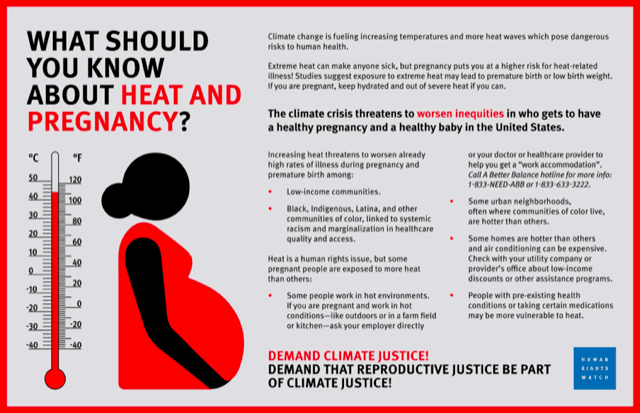
Whether it is hurricanes, floods, drought, extreme heat, wildfires, sea level rise, or any other climate disaster, the effect on children is severe. Immediate and lifelong adverse outcomes include malnutrition, increased risk of exploitation and trafficking, abuse, disruption to healthcare and immunizations, disruption to education, violence, and poverty. My family was lucky. Most of the world’s children who are in danger will never have the resources or security to withstand and overcome a climate disaster the way we take for granted here in the U.S. Even in a developed country with resources for aid, kids are irrevocably impacted.
Reports have found that the lower a child’s socioeconomic status, the greater the risk for climate impact. Those in the global south are particularly vulnerable. Those inequalities and adverse childhood experiences affect children for life.
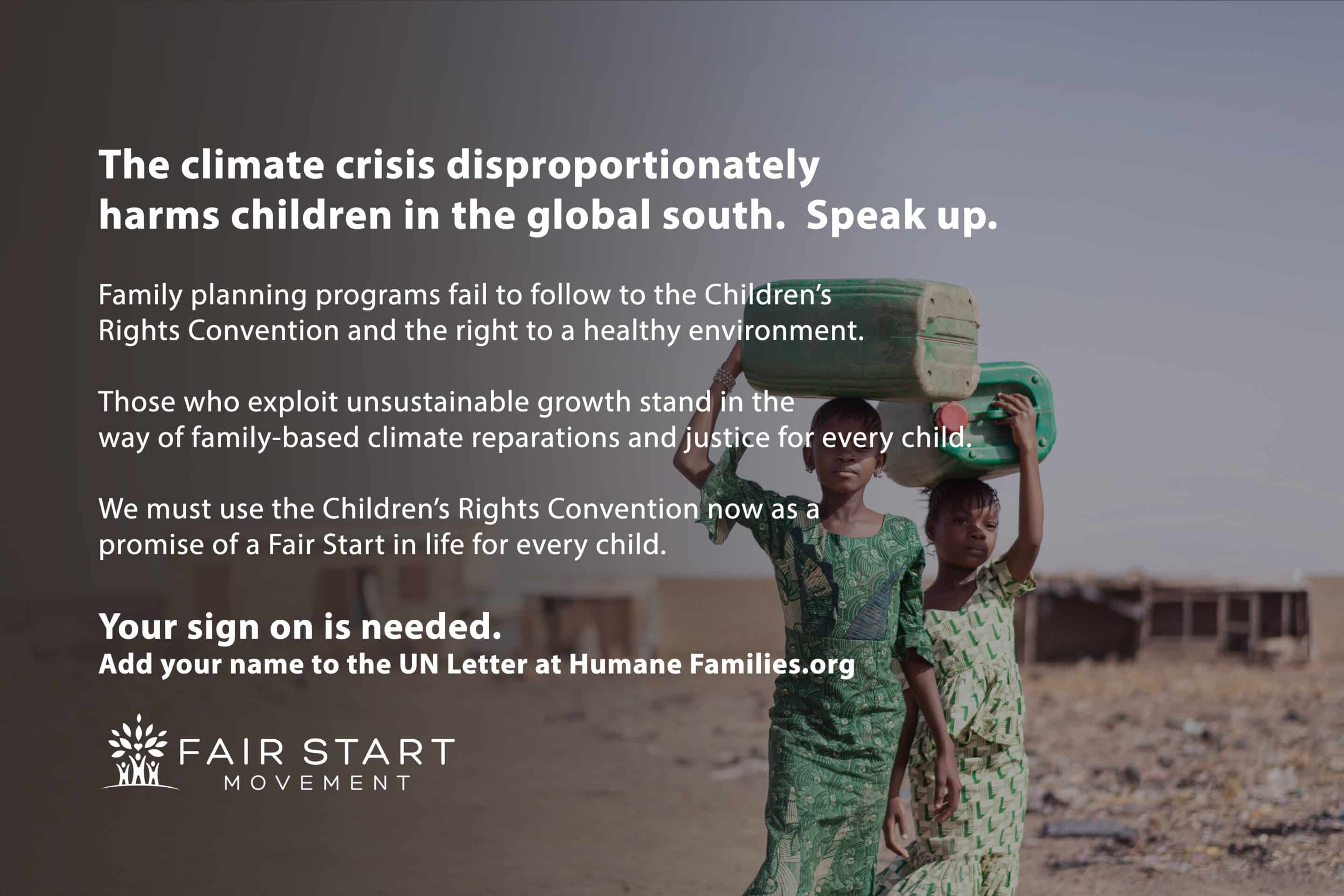
Climate displacement is one of the greatest crises threatening children today. The world must act by demanding that we ensure safe, stable, and sustainable conditions at birth for every child to protect them from the worst of the climate crisis. We didn’t find ourselves in the climate crisis by accident. It was directly caused and concealed by those who control wealth and power. Now they owe climate reparations for the trauma they have sentenced to the next generation. Those reparations are needed for climate resilience infrastructure, voluntary migration, and birth equity investments for the safety and security of children.