Singer fails because he does not push for what true animal liberation, the title of his famous book, requires: Restoration of the nonhuman world through family planning entitlements. Had he done so during the climate-crucial decades in which could have, he might have helped mitigate the climate crisis, the greatest threat to nonhumans.
His mistake is what we might call the constitutive fallacy. The fallacy means Singer never accounts for the actual relations between humans and nonhumans (a random person abusing their companion animal, growth driving extinction, utility-based consumerism demeaning the nonhuman world more generally, etc.) because he never accounts for the creation of those relations.
But the fallacy does something more insidious. It robs us of our freedom, or relative self-determination.
When we create people, we are also creating the fundamental power relations between them, and between them and their otherwise nonhuman ecologies, and in a way that precedes written constitutions or other binding sets of rules. If we want justice, bottom-up in the style of true democracy, just creation must come first. Imagine this process as a sort of “first election” – the one that means we all consent to be a “we” then capable of doing things like electing officials. And that mistake – not requiring things like the Children’s Convention standard in family planning policies to improve those relations, which would physically constitute just communities – does more than just harm animals.
It fundamentally permits anthropocentric changes that cause irrefutable harm to all, against an absolute standard like infant health. Singer might counter that “ought to imply can” and effective family reforms were not politically feasible. But as discussed below, incentives/entitlements work where coercion does not, but were never promoted by people like Singer, even when the wealth the absence of these incentives created was shuttling into the hands of a few during the critical decades we had to evade the worst of the crisis.
TAKE ACTION: Find and urge Singer to admit the overall impact of the changes he promoted could not have, and did not, liberate animals.
On August 24th, 1992, Hurricane Andrew slammed into Miami. They called it “the Big One” with winds recorded at 177mph. At the time it was only the third category 5 storm to hit the U.S. since 1935, making it a precursor to the category 4 and 5 storms that now make landfall in the southeast every year thanks to global warming. It forced climate displacement for 250,000, including my family, and arguably altered the outcome of the 1992 presidential election as a consequence of George H.W. Bush’s failed response, which left South Florida without aid for the first week following the storm. It was the costliest storm in U.S. history up to that time with damage of $27.3 billion (equivalent to $57 billion today) and 65 lives. It was before the internet and cellphones as we know them. With no power, water, or way to communicate with the outside world, most of Miami was off the grid.
Fear. The days leading up to and following the storm are still fresh in my memory 31 years later. Our area was one of those hardest hits, located in the storm’s eyewall. The storm made landfall around 4am. We sat for 4 hours fearing for our lives in the laundry room as the roof tore off in sections and every window in the house broke as water shot under the door next to us like a firehose. We heard a loud creaking sound. Thinking the carport had torn off, it turned out to be the two large oak trees that once stood on either side of our house falling to the ground.
My brother and I sat in 3 inches of sea water as our ears popped from the pressure. My mom made us wear bike helmets and forced us down under a king size bedspread, worried the leaking ceiling above might collapse or that the nearby kitchen window might break as it bowed inward. I still have claustrophobia to this day as a result. My dad would step away to do damage checks as he and my mom considered whether we might have to somehow evacuate the house in the middle of the storm.
Physical danger. The storm finally passed, and we ventured beyond large shards of broken glass floating in our living room to check on our neighbors. We had no way of knowing if the rest of our family across town was safe. The scenes and stories from those few days would probably fill a book. We saw looters and “looters shot last night” signs. We had to hitchhike with a couple kind strangers after being stranded with two flat tires. We climbed through a block of downed trees that resembled a jungle and past downed power lines to reach my aunt and grandmother. We trespassed into a blown out Little Caesars restaurant with a few others to reach a phone. We watched the National Guard march down our street. And we came together with neighbors sharing food and information through word of mouth. Those were scenes I could have never imagined a week prior.
Our house.
Broken glass outlined.
The Eckerd’s near our house.
Family disruption and displacement. We were very lucky to have our family in New York who arranged plane tickets for my brother and I to get out of town to safety. Most kids don’t have the ability to get away from danger like we did. Our parents stayed behind, living without power for a month, and without a phone for 3 months. Undocumented families face an even more difficult struggle after such disasters.
My brother and I started the new school year with our cousins in New York. Almost 12 years old at the time, I just wanted to get back home. I missed my pets. I hadn’t yet processed the loss of our home, our hometown, and nearly all of our possessions. And I was distressed at the idea of my friends starting school back at home without me – lifelong friends I hadn’t seen since before the storm and desperately wanted to be with after going through a shared trauma.
But that had to be put aside to adjust to a new school, far from anything familiar. The stress still affected my school performance. Because of the instability I was experiencing losing my home and being separated from my parents for months, I didn’t take school in New York seriously. Their curriculum was also far ahead of the curriculum in Florida. I barely followed along and my grades dropped from my usual As to Cs.
Thankfully, my parents were able to visit during Thanksgiving. I had hoped that my brother and I could finally go home. But that was not possible. The house was still condemned. Insurance and contractors would be behind for a long time to come. My parents both lost their jobs as a result of the storm and put their focus into getting things back in order. Every week I hoped for news about coming home. Christmas passed and I was let down again. A few months to an adult feel like a year to a kid and it took an emotional toll. At the end of January, after five torturous months away from home, my brother and I finally were able to return to Miami to stay at my grandmother’s house while my parents continued to rebuild ours. Though I was very glad to be back in my hometown, it was still far from normalcy. The place we came home to was barely recognizable.
Friends and neighbors in Miami had a difficult recovery as well. Some were forced to move into FEMA trailers in their front yard. Some relocated. The stress of the aftermath took a toll on marriages, and a number of my friends’ parents divorced.
It can take communities years, and in this case, more than a decade to rebuild. My family relocated and started our lives over in a town three hours away. The aftermath of Hurricanes Katrina, Ian, and countless others forced displacement as well. The population displacement from New Orleans to Houston following Katrina was reported to be the greatest U.S. migration since the Dust Bowl in the 1930s.
“A decade after Katrina, thousands of the hurricane’s victims have yet to return to home. In 2005, an estimated 1.5 million people from Alabama, Mississippi, and Louisiana fled their homes in the face of Katrina.” – Center for American Progress
Ecological impacts.
Lives along with the physical landscape had been permanently altered. Hundred-year-old Banyan trees that were uprooted in the storm had left behind an uncomfortable, empty brightness where they had previously enveloped long stretches of roads with dark canopies. Portions of the landscape around the city were flattened. It was a jarring loss that we were all too shell shocked and overwhelmed to mourn. Wildlife also suffers significantly, forcing displacement as habitats are lost. Our natural surroundings are something we take for granted. But it alters your sense of place when it’s gone, in addition to ecological damage incurred by the loss of biodiversity.
Bill Baggs State Park “Before”. Photo via Pinterest
After the storm from the other side of the cape. Photo: Sun Sentinel.
Lasting effects. Losing everything can result in lasting mental health impacts. For a time, my panic would be triggered by a windy day, as I braced for the gusts to get worse. I also frequently feared that something terrible would happen. I have since mostly recovered from the many years of hurricane PTSD. But I still sometimes battle anxiety about leaving home when a trip is more than a car ride away. Our next-door neighbor experienced agoraphobia and was afraid to go outside for a long while. Disasters affect people for life. Everyone I know who experienced Andrew still remembers it on the anniversary.
That is a horrific prospect. And it’s already underway. A recent UN report found that 43.1 million children were displaced over the six-year period between 2015 and 2021, linked to weather-related disasters. 95% of the child displacements were the result of storms and floods.
Whether it is hurricanes, floods, drought, extreme heat, wildfires, sea level rise, or any other climate disaster, the effect on children is severe. Immediate and lifelong adverse outcomes include malnutrition, increased risk of exploitation and trafficking, abuse, disruption to healthcare and immunizations, disruption to education, violence, and poverty. My family was lucky. Most of the world’s children who are in danger will never have the resources or security to withstand and overcome a climate disaster the way we take for granted here in the U.S. Even in a developed country with resources for aid, kids are irrevocably impacted.
Reports have found that the lower a child’s socioeconomic status, the greater the risk for climate impact. Those in the global south are particularly vulnerable. Those inequalities and adverse childhood experiences affect children for life.
Climate displacement is one of the greatest crises threatening children today. The world must act by demanding that we ensure safe, stable, and sustainable conditions at birth for every child to protect them from the worst of the climate crisis. We didn’t find ourselves in the climate crisis by accident. It was directly caused and concealed by those who control wealth and power. Now they owe climate reparations for the trauma they have sentenced to the next generation. Those reparations are needed for climate resilience infrastructure, voluntary migration, and birth equity investments for the safety and security of children.
We can’t truly call ourselves civilized if we don’t protect our most vulnerable. The Fair Start Movement gives current and future children the advocates they need to get the life they deserve.
Anne Green, PhD Former Professor at Carnegie Mellon University Executive Director, One Step for Animals
For all of the reasons given above, many reasonable people would consider the young mother taking peaceful action to achieve birth equity for her future child, and setting an example that others might embrace to protect all future children the height of working towards freedom and justice. Free people will follow rules that start by limiting the influence others have over them. The process of her seeking birth equity would be, in that sense, liberating.
She can leave the money with the wealthy family, knowing it was made at cost to others, or move it and save lives.
Those on whom she would make the demands – who would choose preventable deaths – seem tiny and worthy of targeting relative to all of that. Her move to demand is a move towards knowing her and many other children, under a test laid out by one of the leading political philosophers in the world, will live free.
The Fair Start Movement is working to create a new paradigm for animal rights as the first form of law – or the protection of the most vulnerable, the antithesis of might makes right.
We cannot actually protect animals without accounting for how the children we have and raise will relate to them.
The new paradigm will not ask not how humans should treat nonhumans, which is the arrogant and anthropocentric mindset that led to a climate crisis set to kill millions of humans and countless nonhumans.
The new imperative works through animal rights/law in particular, because the concept obligates us to protect the most vulnerable. That’s true justice, but unlike a lot of traditional animal rights and law, it’s a threat to concentrations of wealth and power because it will force them to internalize their costs, and at a level that liberates nonhumans.
Those who have historically blocked it, or benefitted from its blocking, must be held accountable for the death to come.
That accountability threatens concentrations of wealth and power. Why? Because in an ecocentric world they would have to pay back for the harm the system that created their wealth caused. And not just compensate for the harm but be subject to a demand to do that overrides their property rights because it entails the necessary creation of fundamental human-rights based relations that create the human rights system of creating downstream rights, like property rights. Who we should in terms of justifying political obligation inescapably comes first and would be based on values even its hypocritical critics exhibit in the daily lives.
But this is the crucial thing to focus on as we move in this direction it will threaten concentrations of wealth and power that formed thanks to anthropocentric growth and inequity. These concentrations have historically funded nonprofits engaged in distractive – separating off and creating walls between issues like human rights, child welfare, environmentalism/rewilding, animal rights, democracy, inequity, etc. – and urging a focus on what to do in each silo, rather than an upstream focus on who we should become – a focus which instead unifies these interests. These concentrations don’t openly don’t oppose social justice movements. They imitate, coaptate, and redirect them.
Unlike traditional forms of animal rights, this imperative does not start with family norms that exploit nonhumans and future children (the link is to a universal human rights treaty that reiterates a limitless human right to procreate irrespective of others’ needs), thus undermining the values we claim to promote.
This new imperative for animals’ rights has the advantage of focusing on the majority category of nonhumans, those who will live in the future, One initial answer to the question of who humans must become is that we should be brave enough to halt the abuse and neglect of nonhumans when we learn of it, and rescue and rehome them if feasible – regardless of what unrepresentative governments captured by industries say. In other words, we should become empathetic persons that see it as our right and maybe duty to rescue animals from cruelty.
Here is what our becoming a better species, in these two ways, looks like:
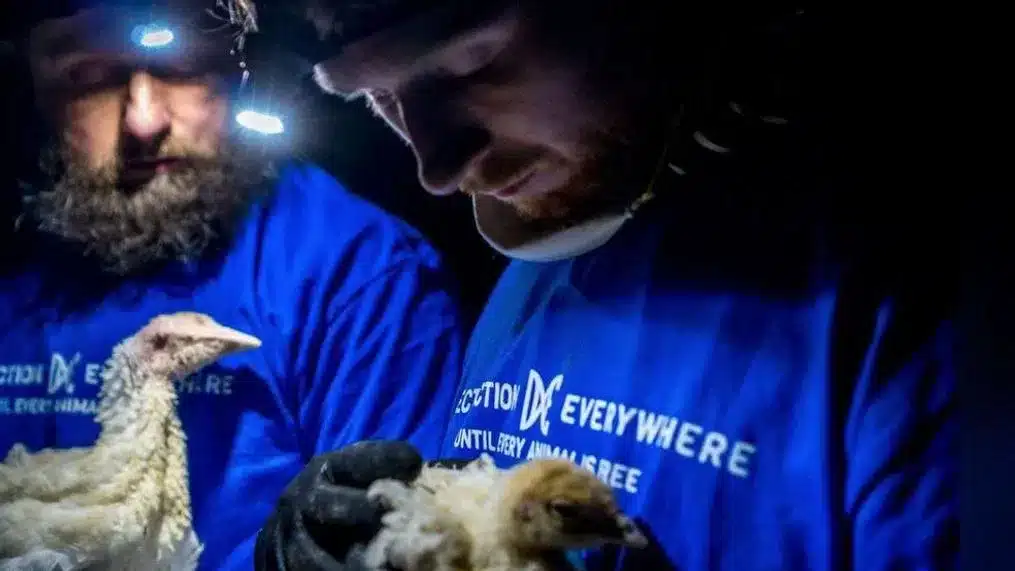
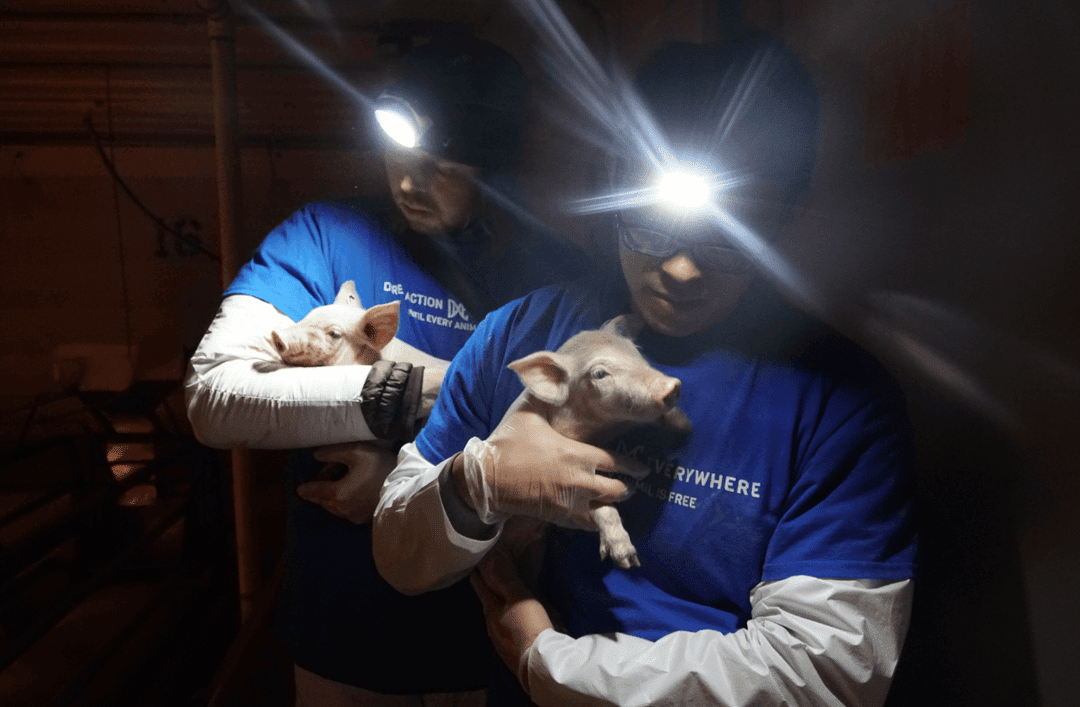
Ruby the horse was brutally killed in Sonoma County, California because state authorities neglected their duties. This neglect is the norm, and the reason groups like Direct Action Everywhere (DXE) are doing the work necessary to actually protect animals by rescuing them from cruelty. As someone who worked in animal protection law for decades, I can honestly say that nonenforcement, certainly when it comes to the animals we use for food, fiber, transportation, entertainment, etc. is the norm.
Government officials are more likely to prosecute activists exposing industrial cruelty than prosecute the cruelty itself, because industry influences them. Activists, not government, ensure animal protection from industries. Taking animal personhood seriously means actually not treating them as property – and not recognizing any right of others to do so.
So . . . if that young mother were charged with trespassing in making the demand, could she challenge it – and expect a jury to side with her – because the state cannot limit access to property without first empowering (actually or physically constituting) its people to be involved in the making of such property rules, i.e. empowering them through just the sort of constitutive discourse in which she seeks to engage?
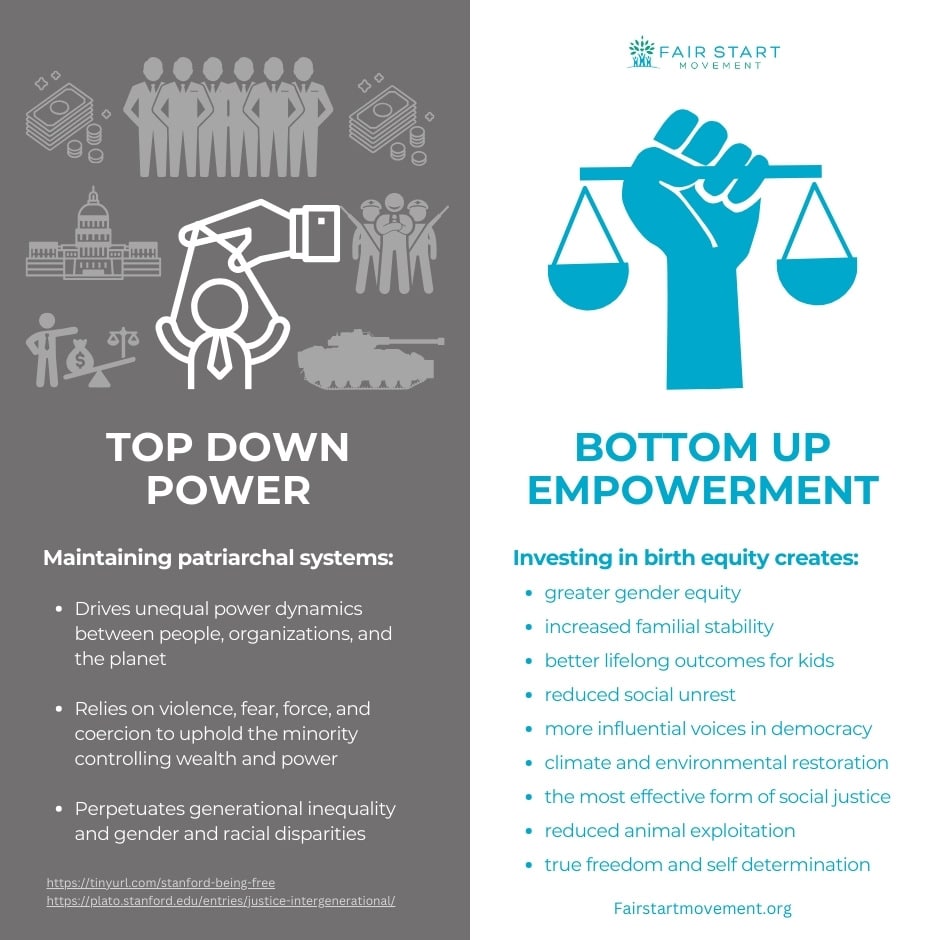
How do we ever get to governance by the people without elevating her pre-political right above the process-based rule of trespass? Do we really choose to constitute our relations via top-down force in a system run by men, versus a system of bottom-up empowerment run by women, via the act of care?
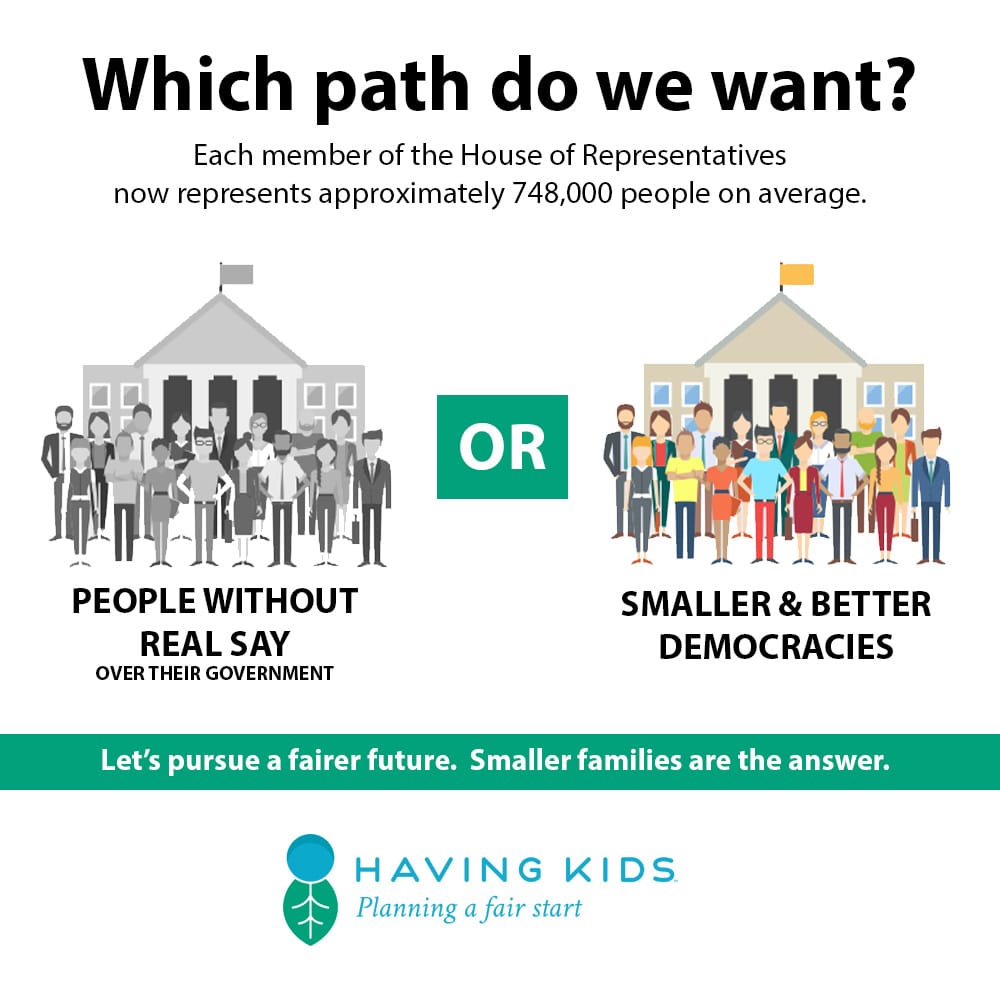
Her act is fundamentally liberating, and the best explanation of political obligation, because free people will start by limiting and decentralizing the influence others have over them. Acts of mass violence – like school shootings – do not stem from mental illness as much as from a sense of disempowerment, and the need to matter in one final act within what shooters perceive as an unjust world. We were sold sustainable town halls where we matter and can control the world around us to a degree, but got unsustainable, massive shopping malls where most do not matter and have no say.
The activism described here is true micro and macro personhood, co-existential for nonhumans and future humans, treated as a pre-political right that liberate all at the most basic level. The latter question and work around it mean direct action “micro personhood” activists will not be wasting their time under a macro paradigm of commercialization and growth that undoes their work. That’s comprehensive.
Yes, such legislation is laudable, but without the changes described above it just hides the overwhelmingly larger negative impact our growth and inequity-based family policies have on big cats, including in deadly ways through the climate crisis. And it assumes our increasingly illegitimate system of governance is the one to decide their fate, rather than activists who treat them as non-property. That allows some to raise money on a relatively ineffective things, while reinforcing (and personally benefitting from) a system that actually does more harm to animals and their functional legal status.
I know this because I was paid to do it, to omit the on-balance impacts and to engage in distractive, so that wealthy charity managers and funders could feel good but avoid actually changing the fundamental power structure. We knew that our family policy choices, and a near-total lack of animal cruelty law enforcement, meant our impacts on animals were minimal. We raised lots of money regardless.
That’s a scam, with many leeching off a concept – obligations to the most vulnerable – that actually demands much (the most?) from us. And we can test for the scam with a few questions There is no such thing as an anthropocentric animal right, or (from what we now know from the climate crisis) human rights activist.
All of this suggests the need for a certain matrix when thinking about animal law, which in its ideal form may simply be a perfectionist view of law itself, which is necessary if we are to actually account for thephysical and day-to-day relations between powerful humans and vulnerable nonhumans. How do we maximize consent in those relations? (And yes, consent can be measured and quantified, much like utility, but unlike utility consent is primary, necessary to justify the governance that makes systems of utility – like economies – possible). Town halls precede shopping malls if actually take democracy seriously.
The matrix would have two axes. The first, 1) where personhood as consensual relations bookends one end of a continuum, would be 2) bookended on the other end by property hood (the total control of animals in a CAFO, unlimited procreative “autonomy” that appropriates future children, and anthropocentric approaches to environmentalism for example).
Take action: Urge the UN to embrace this liberating form of animal rights – at humanefamilies.org – one that really works for humans and nonhumans alike and ensure that animal advocates are not constantly undoing their own work.
The climate crisis is not just about emissions. It’s about how children, animals, and adults will actually experience the crisis, and that depends long run on the mental and physical resources they have, their location, those people that surround them, etc. And that depends on what they have at birth.
Impact, on many levels. depends on how we have kids.
Consider this fact: People, not documents, constitute nations, and the creation of their power relations through birth and development – by definition and inevitably – determines whether they are relatively self-determining or determined by others. These relations are part of the implied “we” in every statement, the often-unspoken presence of the dominant political/legal system – usually the nation – from which the statement is orienting. How would you ever really account for inclusive power relations to allow a say in what the law should be without starting at creation, and accounting for the move from minor to adult that makes persons full citizens capable of making the rules.
You would not, and the failure to halt the climate crisis is evidence of this. And there is a clear formula to assess reparations. The would-be mother would be truly constituting democracy, speaking the truth and logic of self-determination to power.
So . . . if that young mother were charged with trespassing in making the demand, could she challenge it – and expect a jury to side with her – because the state cannot limit access to property without first empowering (actually or physically constituting) its people to be involved in the making of such property rules, i.e. empowering them through just the sort of constitutive discourse in which she seeks to engage? How do we every get to governance by the people without elevating her pre-political right above the process-based rule of trespass? Do we really choose to constitute our relations via top-down force in a system run by men, versus a system of bottom-up empowerment run by women, via the act of care?
Her act is fundamentally liberating, and the best explanation of political obligation, because free people will start by limiting and decentralizing the influence others have over them.
This is not theoretical. A complaint reflecting the right to make such demands is now before the United Nations, to benefit the most vulnerable communities impacted by the crisis.
For all of the reasons given above, many reasonable people would consider the young mother taking peaceful action to achieve birth equity for her future child, and setting an example that others might embrace to protect all future children the height of working towards freedom and justice.
She would be ensuring self-determination for many, true freedom, instead of them being determined by others. What is the right way to deal with someone who insists on participating in a system that risks millions of lives in order for that person to make more money?
She can leave the money with the wealthy family, knowing it was made at cost to others, or move it and save lives. She can empower children equally and help solve another problem: Acts of mass violence do not stem from mental illness as much as from a sense of disempowerment, and the need to matter in one final act within what shooters perceive as an unjust world. We were sold sustainable town halls where we matter and can control the world around us to a degree, but got unsustainable, massive shopping malls where most do not matter and have no say. And those that benefitted from this system, at cost to others, want to block media from reporting things like mass shootings to hide the costs of their systems.
Those on whom she would make the demands – who would choose preventable deaths – seem tiny and worthy of targeting relative to all of that. Her move to demand is a move towards knowing her and many other children, under a test laid out by one of the leading political philosophers in the world, will live free.
Do you support an academic institution? Most of the academics in debates about family reforms contradict in their writings the basic values they exhibited throughout their lives, e.g. seeking minimum thresholds of personal welfare, expecting equal access to opportunities, participating in and adherence to political/legal systems that purported to represent the governed, use and enjoyment of an environment relatively conducive to human and nonhuman health, etc.
Given their privileged intergenerational positionality, and the fact that they sent their lives generally relying on and participated in legal/political systems of coercive obligation that benefitted them at cost to others, they should at least begin from a default or provisional position of extending those values to future generations by saying – as a fundamental premise of justice over top-down power – that basic human rights systems should prioritize the child welfare/equity in instruments like the Children’s Rights Convention over parental subjective choice in the ethics, law and policy of family planning, population, and procreation so that future generations can also debate these things from the comfort and security these academics do. Urge any academic institution you support to back Fair Start family reforms.
Social justice does not start with consumerism, but with fairness.
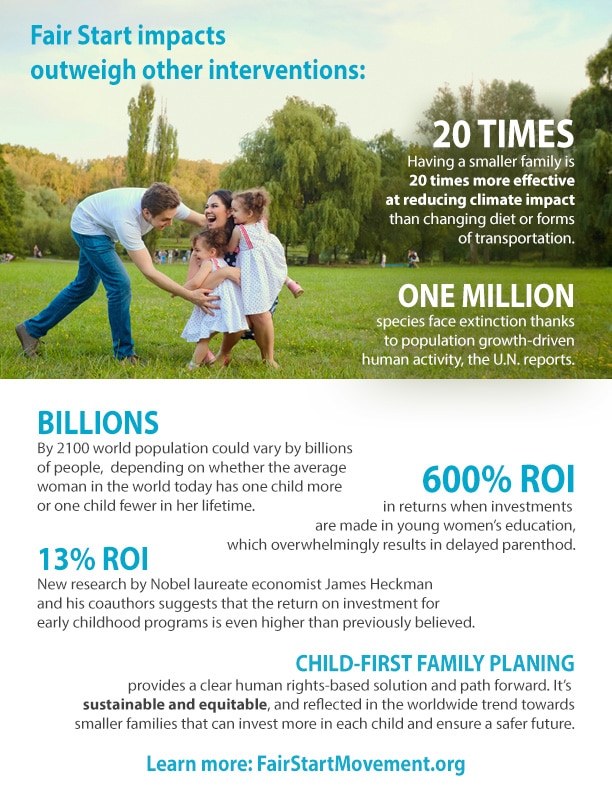
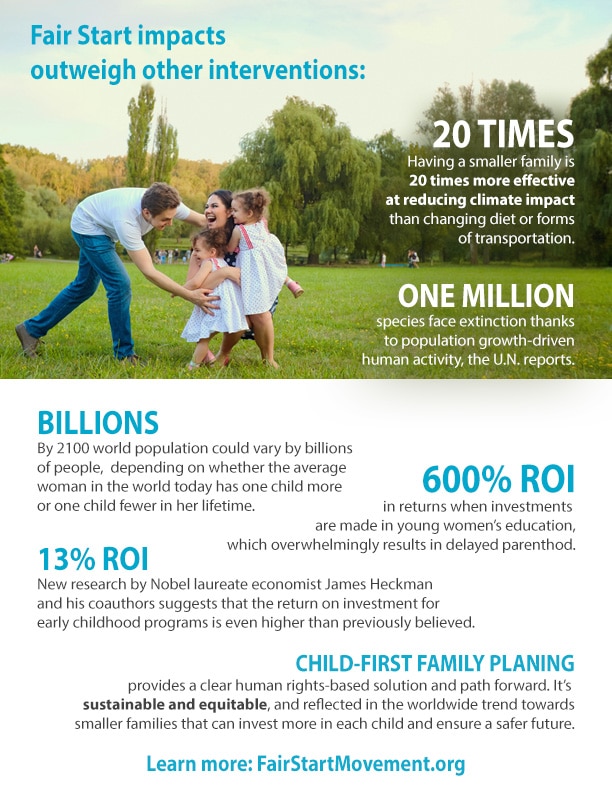
Changing to a plant-based diet does have environmental and animal welfare benefits. But the impact is low relative to Fair Start family reforms. It’s best to do both, if you can.
You hear much about food reforms because many companies, and the nonprofits and media outlets that front for them, want to sell you food products. They ignore family reforms because they can sell more products to a growing population.
Myth: Vegan food policies mitigate the climate crisis.
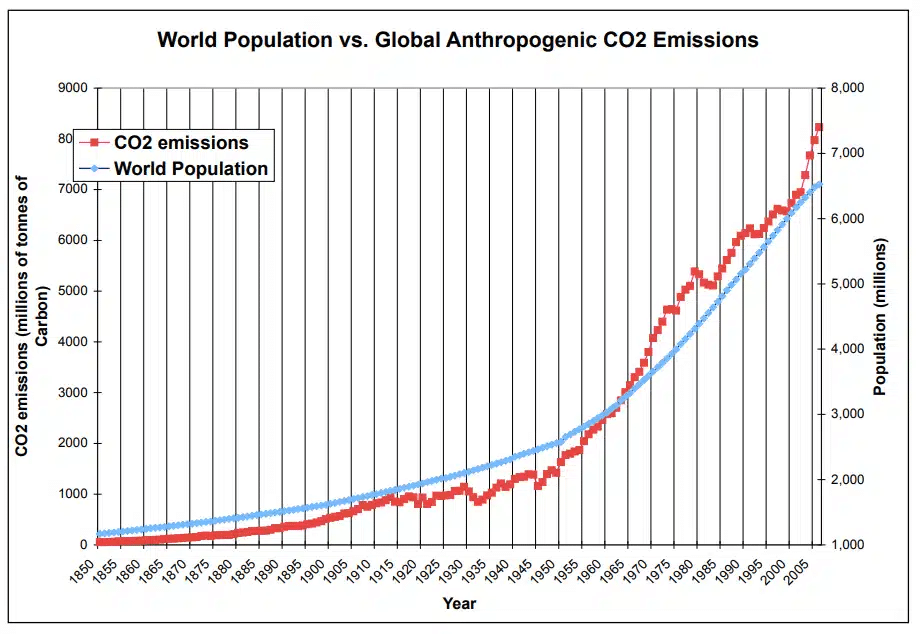
Fact: Family policies have an exponentially greater reduction in emissions. Why? Humans have impacts on the environment well beyond diets.
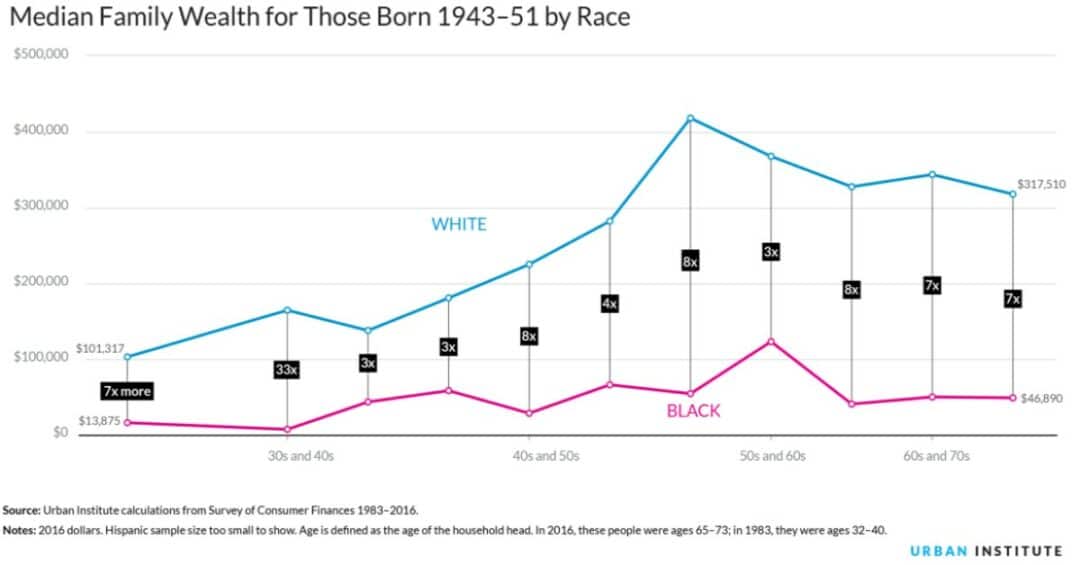
Fact: Vegan food policies do nothing to alleviate the driver of inequity: Family policies that do little to ensure birth and developmental equity and replicate the effects of colonization and slavery. Many funders plant-based campaigns personally benefited from racist and ecocidal family policies that robbed black children of the wealth they deserve. Fairness is the last thing they want to talk about.
Again, eating veggie burgers is great. But it cannot replace fairness, and all of the money flowing into distracting people from effective reforms will cost human and nonhuman lives, lives that could have been saved through family reforms.
The wealthiest and the charities they fund want to pretend the world was always meant to look like a massive shopping mall, and that climate damages should be evaluated on that basis. The truth is human rights guaranteed functional town halls in biodiverse nature. That is what was lost. That is how we measure the harm.
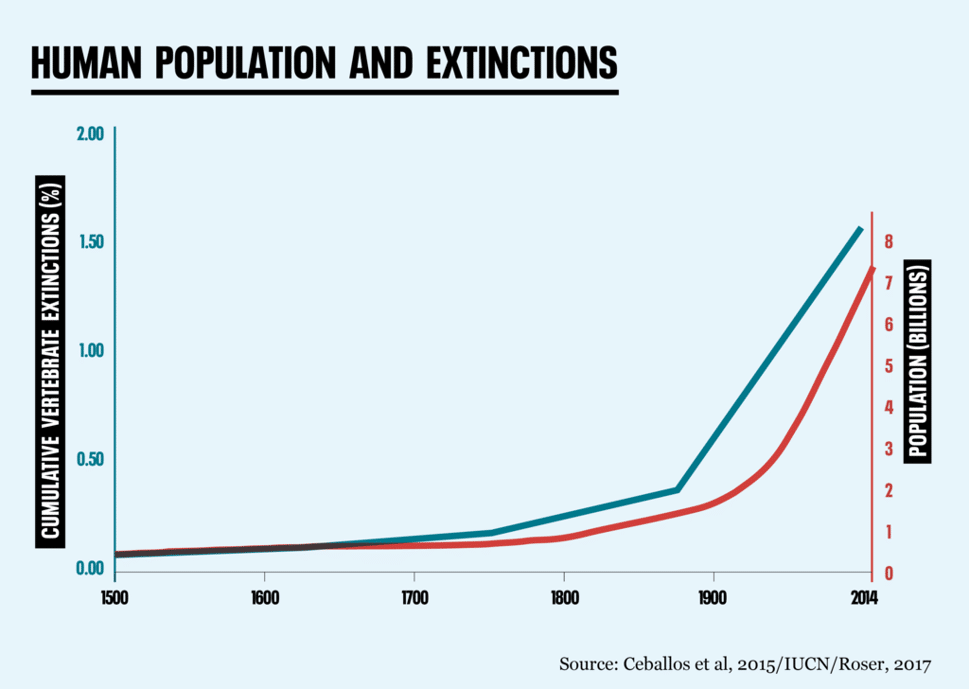
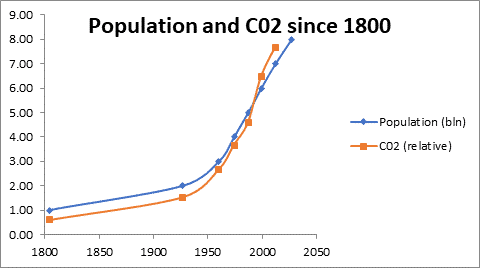
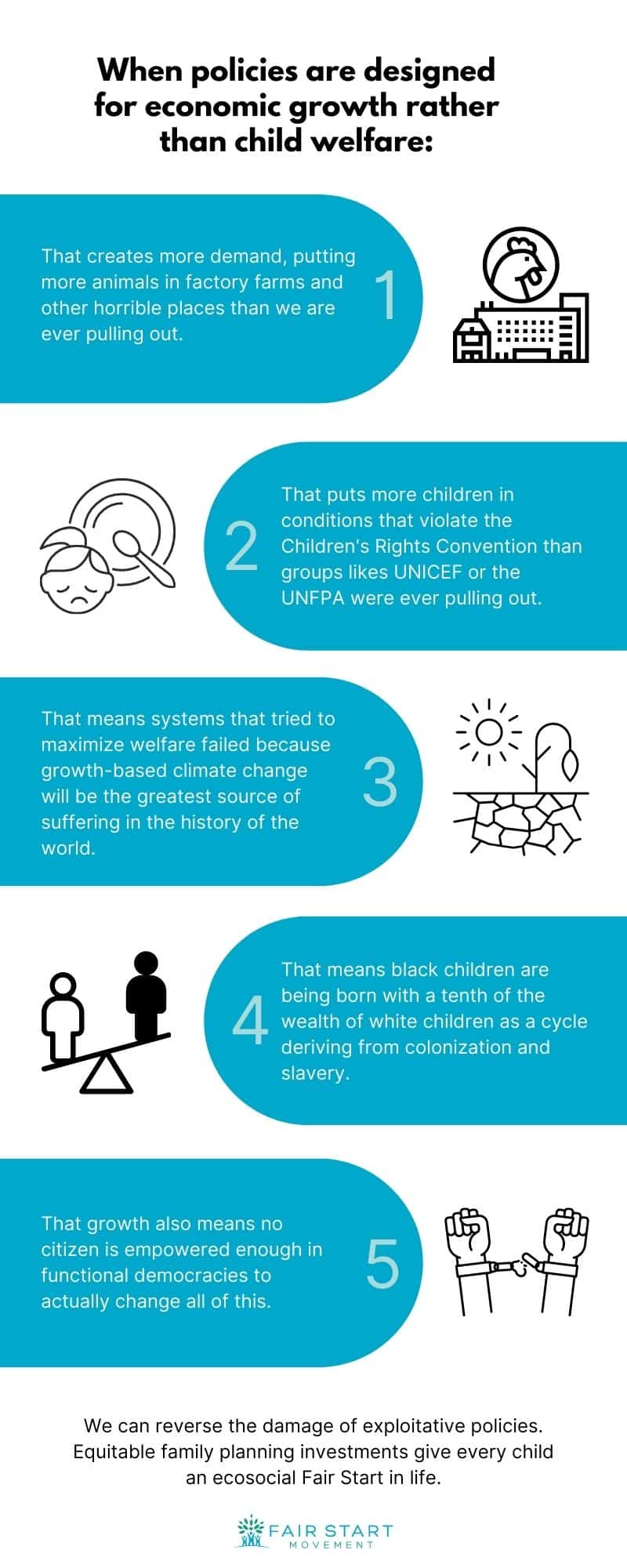
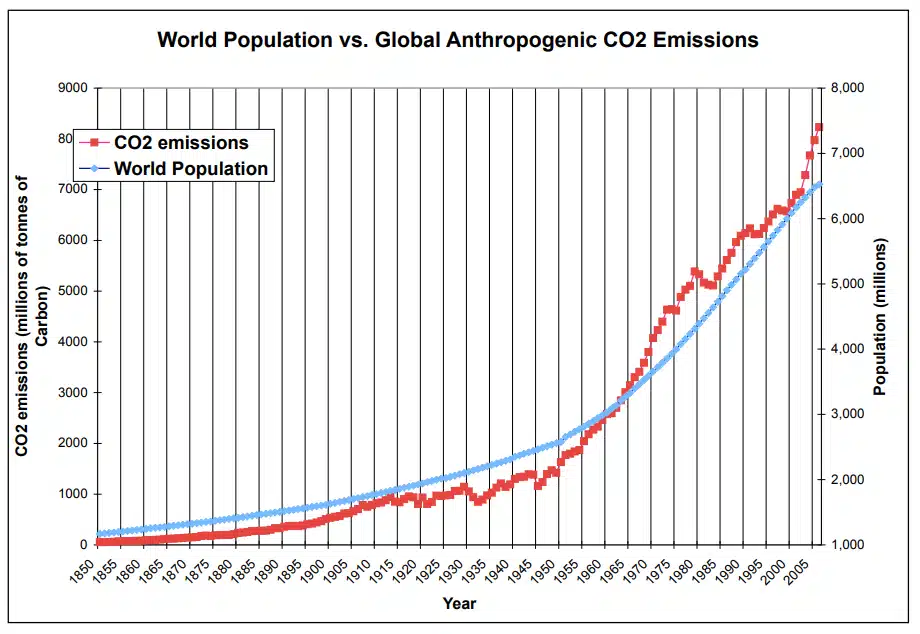
While charities were touting the benefits of saving a particular forest, ending certain diseases, or enlarging cages for laying hens, they were also ignoring the growth-based economic systems that were enriching their largest billionaire funders. Those same growth-based systems have undone three quarters of the climate crisis mitigation attempts made over the last several years.
That growth, from which these charities and their funders profited, now threatens millions of lives. That growth will cause more animal suffering and ecocide than many of the myopic, window-dressing campaigns these organizations ran and used for fundraising actually prevented.
The wealthiest and the charities want to pretend the world was always meant to look like a massive shopping mall, and that climate damages should be evaluated on that basis. The truth is human rights guaranteed functional town halls in biodiverse nature. That is what was lost. That is how we measure the harm.
But if the basic condition for any rule is that it be fair, and the first rule is that which accounts for our creation and development, e.g. the right of parents to freely have kids, then that rule must be made fair. And fairness begins with all children’s rights to a restored climate and ecosocial birth equity – true relative self-determination.
And we need not wait for governments to recognize and fix the issue. Many are using the correct baseline to cover effective reparations already.
Why don’t we have to wait?
Free people will condition compliance with the law on their being fundamentally empowered by it, and that’s physically impossible without treating an ecosicial fair start in life as the first and overriding human right, a right that includes actual participation in governance – being created for town halls, not shopping malls. Governments cannot assign property rights – to Musk or others – without first ensuring the human rights that justify governmental authority.
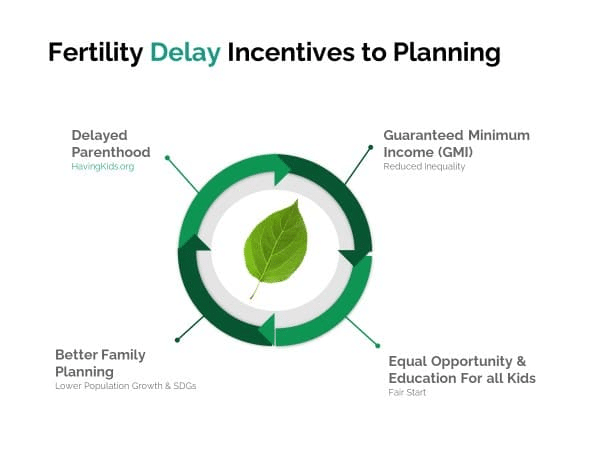
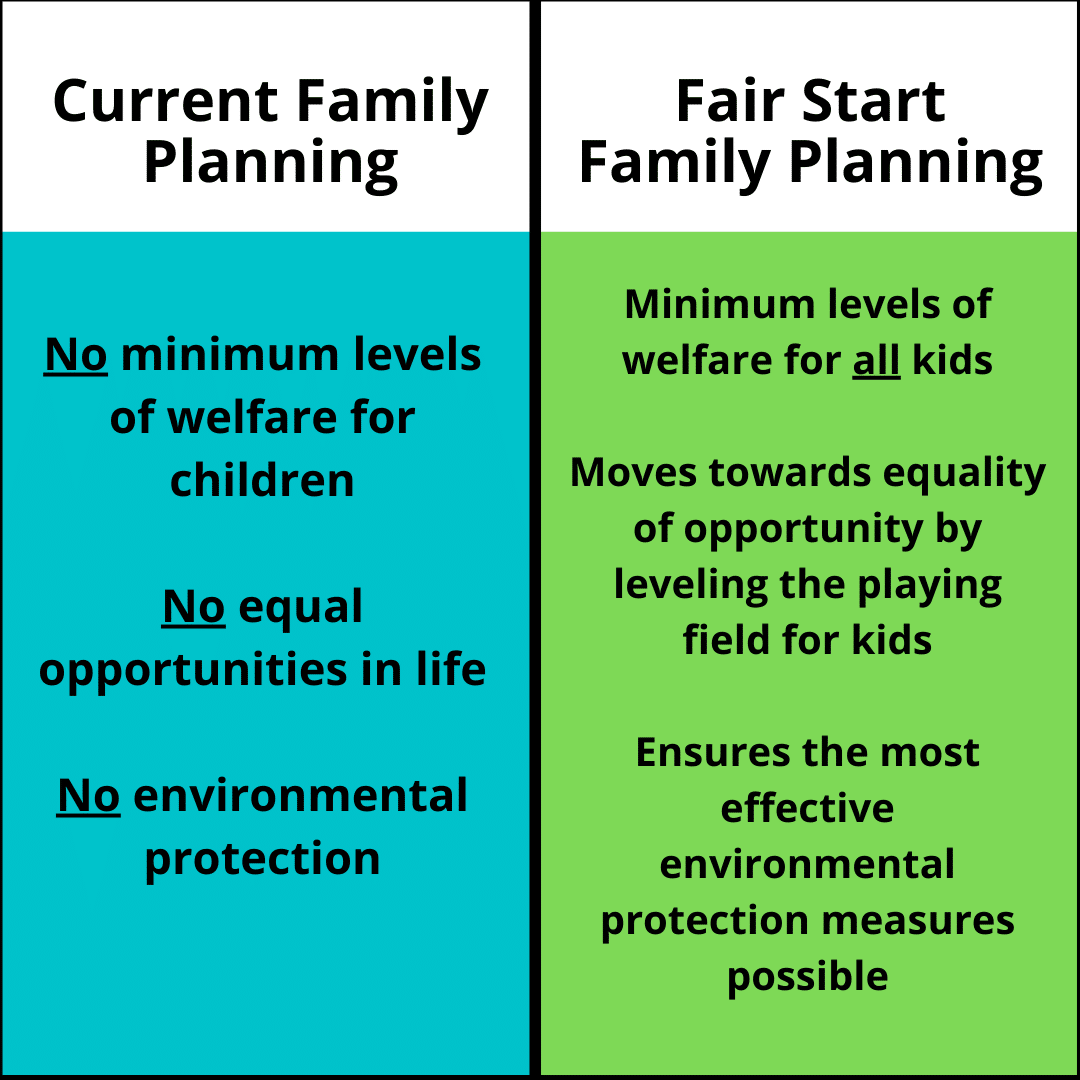
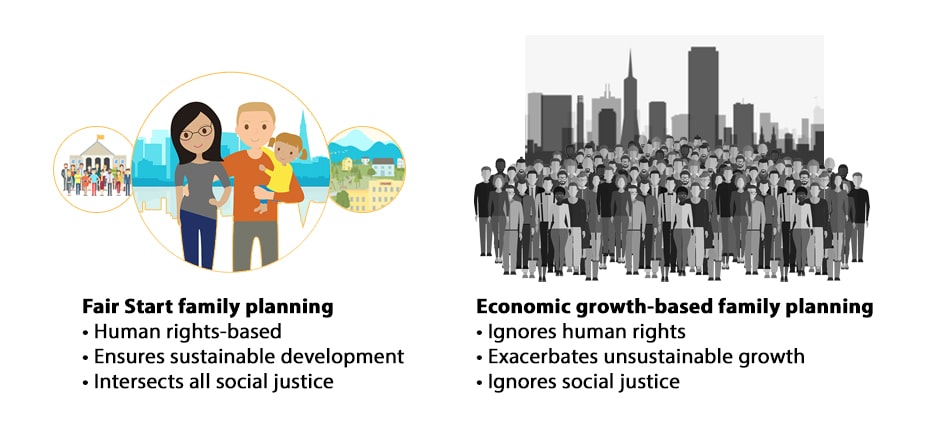
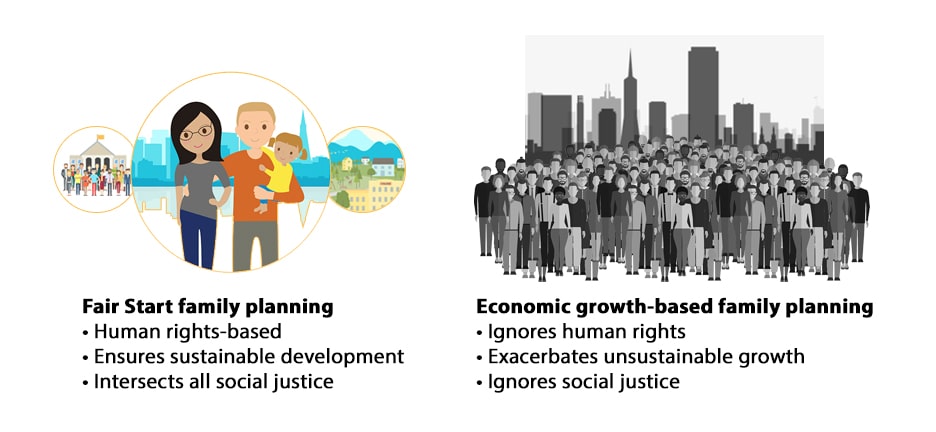
Today’s freedom fighters move beyond the outdated idea of national borders and fight for fundamentally liberating family policies that free us all ensuring climate and biodiversity restoration through birth equity entitlements that ensure parenting delay, a level playing field for all kids, and smaller or more eco-centric families.
There is a truth many are hiding via greenwashing and other moves, to avoid or reduce climate liability: The obligation to pay just and effective Fair Start family reparations.
The portion of wealth made at cost to this baseline is subject to that use now as the most effective form of climate reparations today, and many are leading by example, paying those costs to families to avoid million dying as temperatures rise. Government cannot assign wealth until they fulfill fair start obligations, the obligation that justifies their authority. Why? Law is a unique obligation because it can be coerced. After the Enlightenment and the development of democracy, that is so because we assume law represents the will of the governed. Logically then, the first obligation is to have and raise children in a way that actually makes that true.
We caused harm by using family policy to quietly convert public progress into private benefits, and must pay now, compensate the harmed and be free of that obligation. Some of those who benefited the most from not giving what they should have in the past are covering those reparations, via effective programs like Seeds, using hard metrics like the Children’s Rights Convention, climate restoration via birth equity, and Tucker/Dasgupta’s optimality.
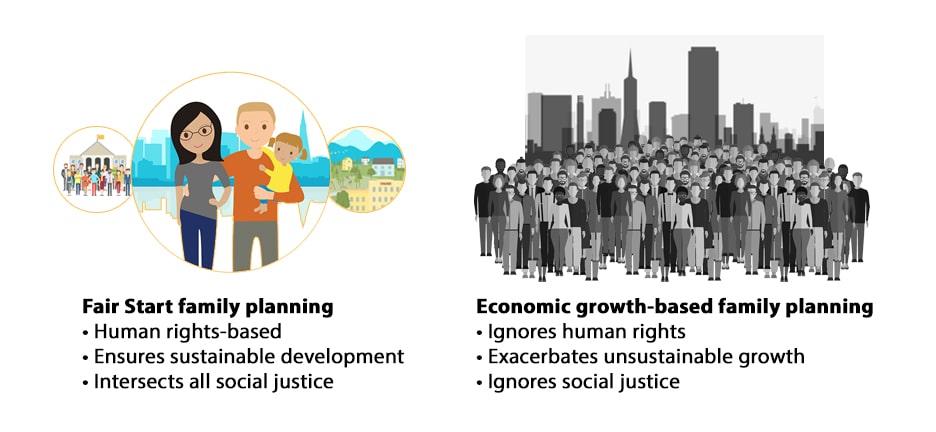
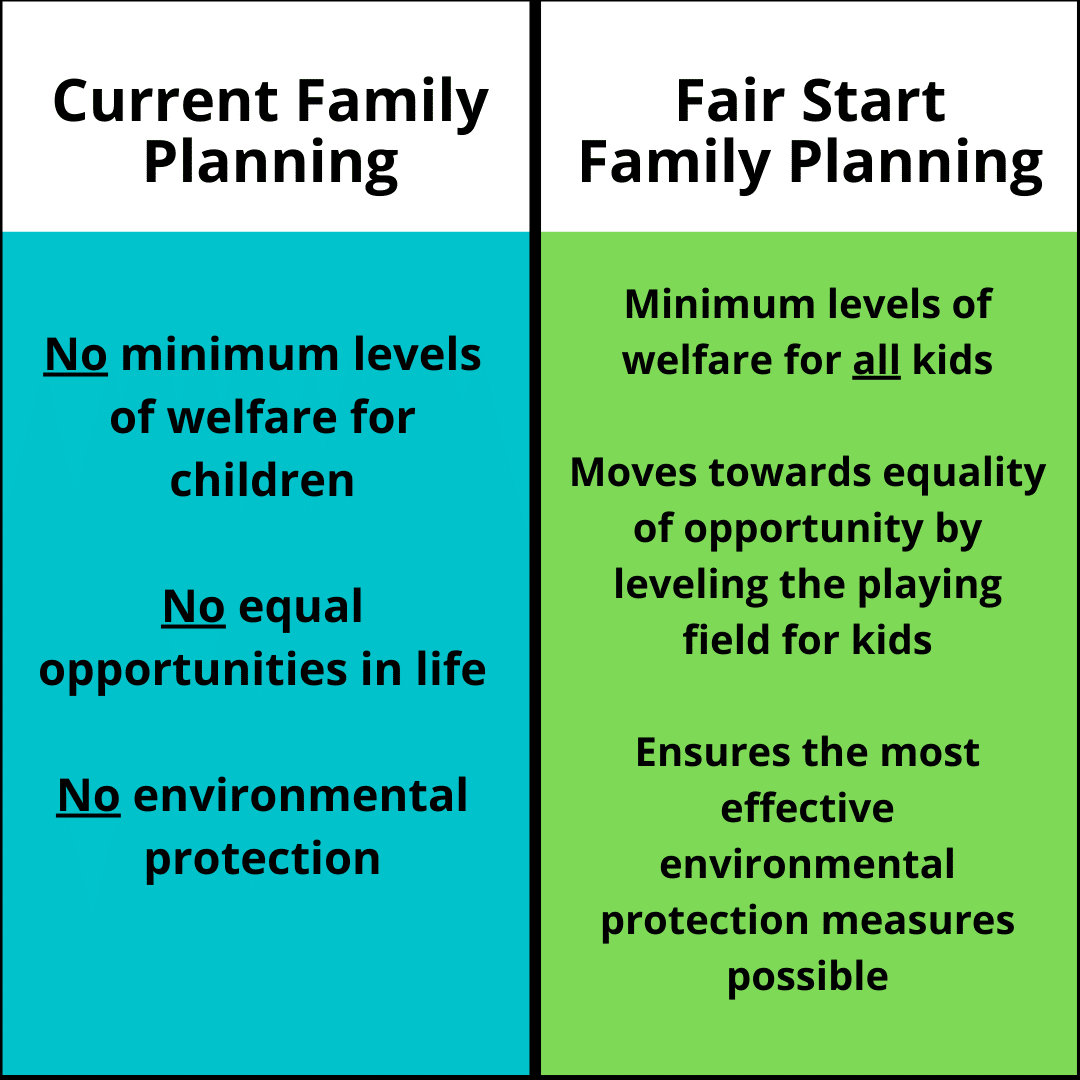
These entitlements ensure parenting delay, readiness, reallocation of entitlements for birth and rearing equity, and smaller or ecocentric families that raise influential citizens – not economic inputs with little say over the rules under the rules they must live. We are not bound by written constitutions, but whatever justly constitutes our power relations to make those relations consensual, which comes very close to the ideal of decolonization, ensuring at the same time the protection of the most vulnerable: Future children and nonhumans.
If freedom always requires some level of self-determination, it would be impossible to ensure any version of it without birth and development conditions for all children that meet minimum thresholds so they can self-determine rather than be determined (e.g., climatologically) by others, and one test for whether that is occurring equitably would be treating growth as inverse to self-determination, relative to the absence of human power/nature (which requires, at a minimum, climate restoration). This formula leads to a free and equal future – Tucker/Dasgupta’s optimality.
Who we should be, via children’s rights, logically always comes first – and sets an overriding baseline for all cost and benefit analysis, including climate reparations. One’s positionality, intergenerational and otherwise, is key in this analysis. Money often controls how one sees this work.
Be effective.
Take Action: Find and “pull” high profile levers to be effective family role models by paying what they owe, and bend the arc of who we are becoming towards justice. How? Start by asking public figures claiming to do good in the world to actually tell the truth. Ask them to account for how the family norms, policies and relative ranking of obligations they never accounted for has undone those values and created the climate crisis and vast inequity.
Many promote his dietary focus because they are invested in plant-based companies, companies that embrace growth even though it does more harm to humans and nonhumans than these companies do good. His mistakes here, turning animal liberation into mass consumerism, bleed into his work on Effective Altruism, risking millions of lives with misleading information about entitlements and what has impact. His work siloed off animals from social justice, and the natural alignment we find there.
Cheerful African Ethnicity Infant Carrying Healthy Water for a dehydration concept
He should embrace true animal liberation, and not mislead as to what that means. We don’t liberate animals by humanizing the world.
Solution:
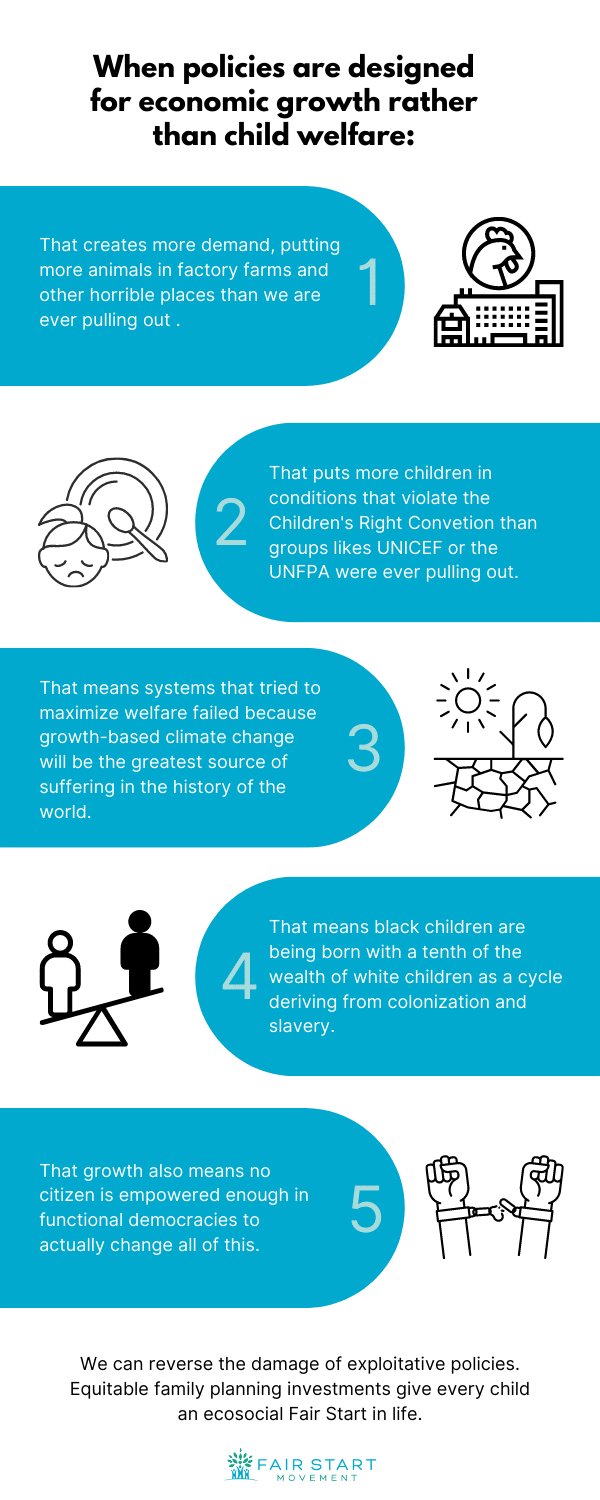
Ask anyone – like Singer – claiming to promote certain values about how their approach to families and child welfare undid and is undoing the values they otherwise promote. Exploiting children to ensure economic growth is the system we are all used to and largely ignore. We do this, rather than requiring equitable investments in their birth and development conditions. That move has now reversed most of the progress in fighting the climate crisis, and inequity. That fundamental injustice, which made a small percentage of mostly white men wealthy by violating human rights, will kill millions.
In the climate crisis reparations in the form of family planning entitlements save lives and restore biodiversity. They return wealth to those who deserve it. We can leave wealth at the top of the economic pyramid, and millions will die, or we can pay it back to the future generations – those on which its true costs are being imposed.