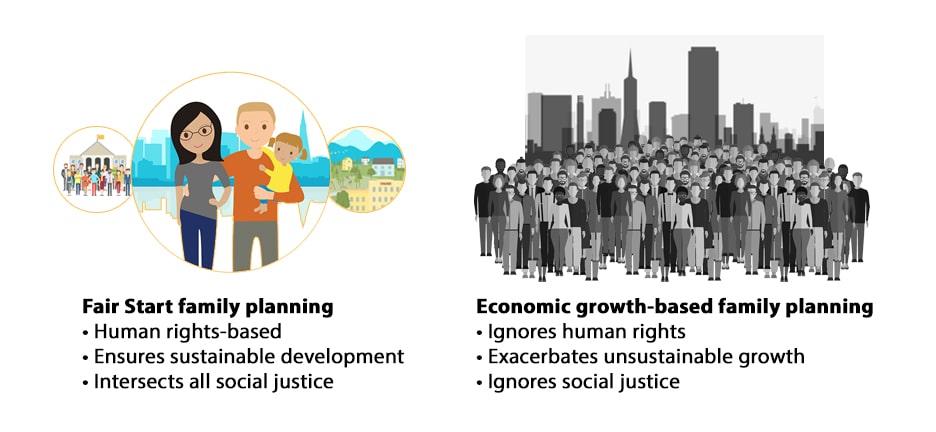
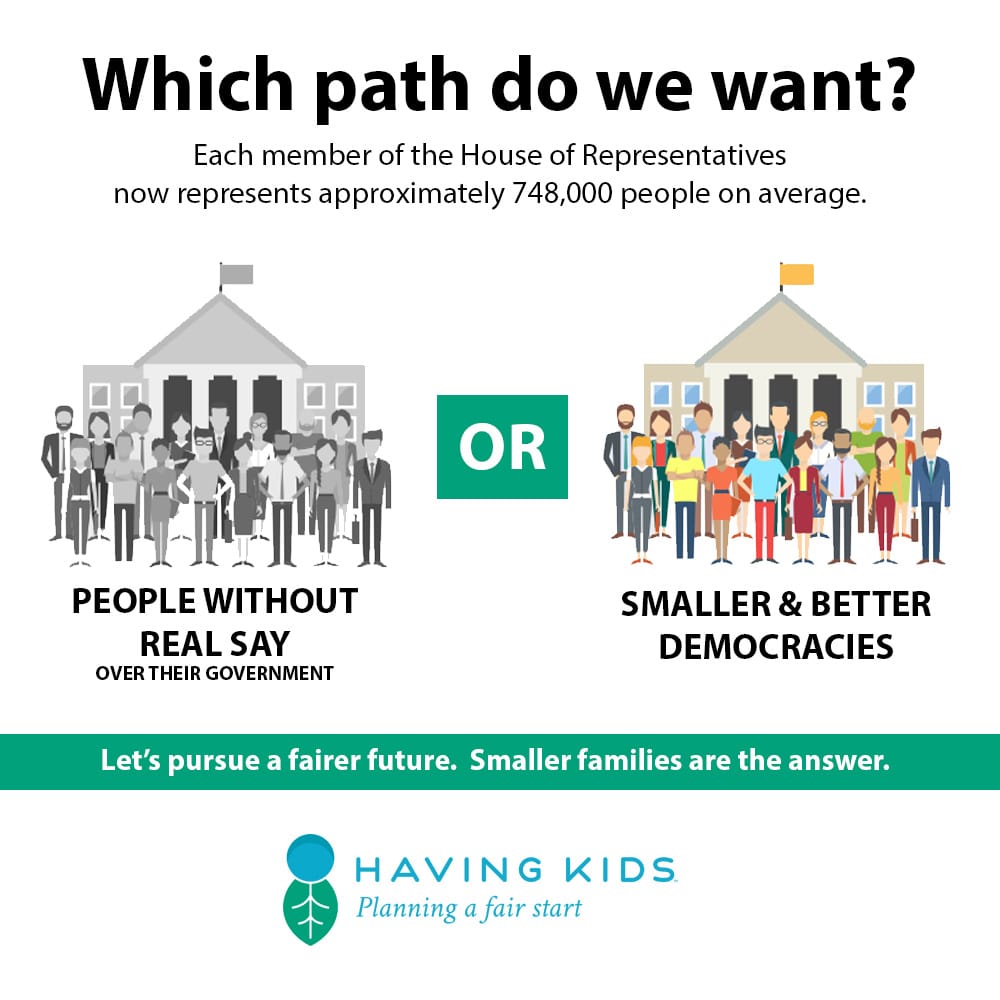
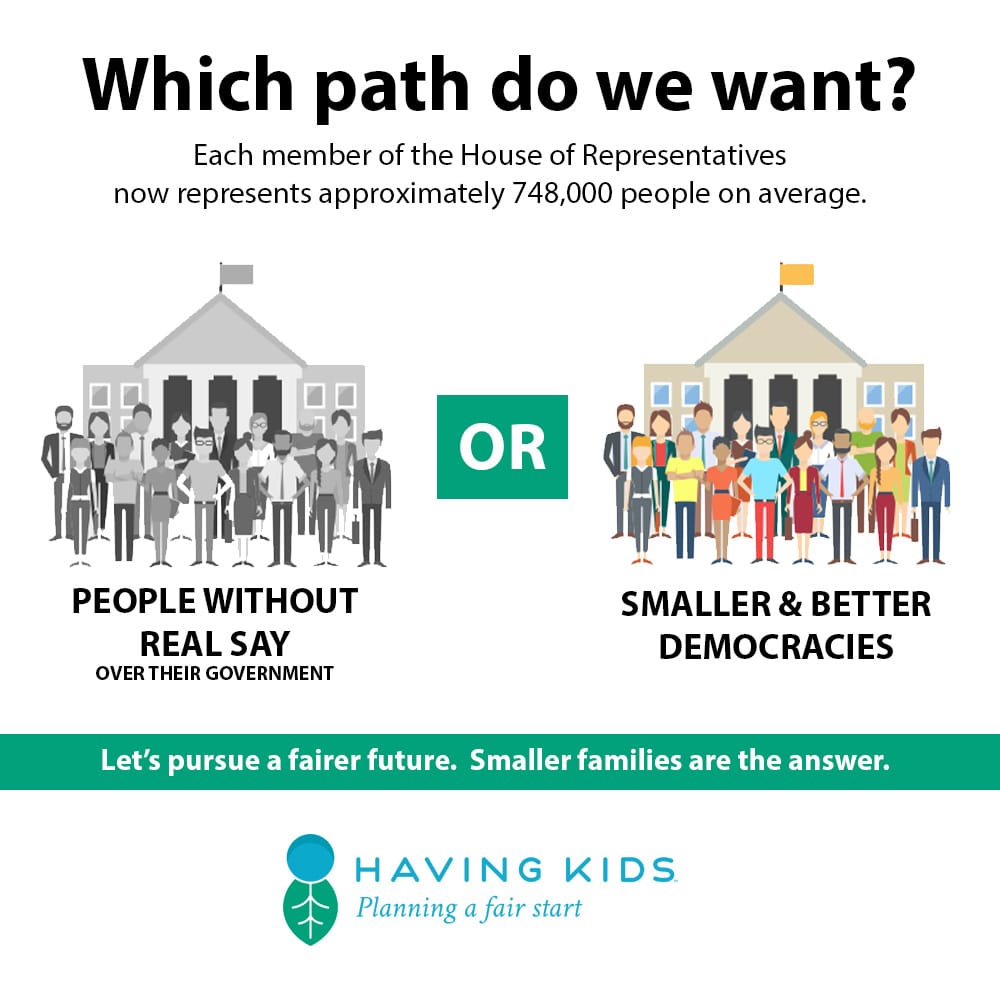
All of the crises we face today stem, fundamentally, from family planning systems that violate human rights regimes by ignoring children’s rights under the Children’s Rights Convention, including the right to a meaningful voice in democracies surrounded by a safe and biodiverse natural world.
To engage in true human rights and bend the arc of population growth towards justice, many are speaking out about the obligation of wealthy and powerful families to take action. Megan Markle recently spoke out.
Estamos escrevendo para pedir que pudessem ser a voz em apoio aos direitos de todas as crianças a um movimento ecossocial Fair Start na vida, justo primeiro e primordial de direitos humanos.
The longer we delay replacing dysfunctional family planning policies with the Fair Start model, the wider the gap between rich and poor will grow. At the same time, Having Kids and other organizations that support giving all kids a fair start in life rely on wealthy philanthropists and foundations to help fund this reform. While many funders want to, and want to eliminate giving their own kids a massive head start in life, others want to pass their privileged positions in life along to their kids.
In one extreme case, a family of billionaires is enabling their young children – through a family foundation – to drive the direction of several policy reforms, including the type of legislation progressive environmental groups would be allowed to introduce. Consistent with a trend that was thoroughly documented in a recent New York Times bestseller, the parents would prefer to enable their kids to disproportionately shape public policy, and in ways that make the average voter irrelevant.
What’s wrong with this picture? In a true democracy, there is no justification for giving some kids wealth and power at birth while allowing other kids to die from starvation, neglect, and abuse. But that happens in the United States and elsewhere all the time – and many of us just treat it as something that is beyond our control.
In a true democracy, we have to level the playing field for all kids. We have to move towards true equality of opportunity at birth. That’s what it means to constitute ourselves as free and equal people, and it’s the only way to understand what phrases like “We the People” in the United States Constitution, and other constitutions around the world, mean. Our constitutions must be interpreted to apply justice intergenerationally, and our failure to do so is driving the ecological and social crises we face today.
We owe our kids more than a world filled with rich families constantly passing their wealth and power forward, while other kids are born into conditions where statistically they have no chance to succeed.
It’s common to see people today sign their messages with a variety of pronouns. That act is meant to liberate people to identify themselves as they see fit – to self-determine, rather than be determined by others’ conceptions of gender, for example. Our language matters and shapes our experience, and self-determination – or freedom – is at the core of human rights.
Could pronouns be the key to an even larger form of self-determination?
Keep in mind that groups of people are inherently dynamic, with people constantly being born, and dying. So for the pronouns that relate to who will exist in the future, has the claimant accounted the most basic of values and building blocks of freedom: For ensuring future persons minimum levels of wellbeing, equality, their need for a safe and natural environment, and an influential voice in democratic systems? In other words, has the claimant accounted for the most important factor in any claim that we should do something – the people at stake – and how to ensure those people can self-determine, relative to a zero baseline, rather than be determined by others. In other words, can they account for how all the pieces fit together?
What we find is that because the creation of people – or having kids – is considered a matter of parental autonomy and private decision-making, we largely overlook people as the key factor (always he first and largest driver) in all prescriptive claims. In almost every legal system in the world today parents who have severely abused children have the right to have more children, even when those children will raised by the state. At the same time those systems do nothing to ensure the average citizen has a right to a safe and natural environment. That sad reality shows how deeply embedded unsustainable population growth – anthropocentrism – is in our systems. And as a result, the most important aspect of policy claims – the creation and sustainable development of each person – is treated as none of our collective business.That reality epitomizes how those at the top pit the most vulnerable against one another, and shows the need for reproductive justices reforms that free us from one another.
Urging people to specify their pronouns can help fix this. For example, when governments claim to have a climate policy, we can urge them to account for the actual people causing the emissions, the people subject to them, the people in both categories who will exist in the future, etc. You will be shocked to see how little thought goes into these matters of how people came to be, and will come to be.
Do you support nonprofits that protect children, animals, the environment, or human rights and democracy? Urge them to explain how population growth – the entry of new persons into the world – impacted their missions, what they did about that impact, and what they are doing now. Again, you will find that most groups did not create the results they claimed to have because they ignored the key factor shaping outcomes. And in terms of for-profit businesses, query how many have produced anything of truly objective value, and how many just rode a wave of valuation, demand and population explosion created by poor and unsustainable family planning that ensured no minimum levels of welfare for children (in blatant violation of things like the Children’s Rights Convention), abysmal levels of education, extreme inequity ensuring cheap labor, and bloated nation-states where the average person had no real voice in political outcomes. Did they simply profit from a system that mass produced consumers instead of developing capable, and truly free, citizens?
We can sharpen the questions. Have the claimants noticed how their answers group together people who do not trust each other at all, and could not possibly operate in truly consensual, integrated, and democratic systems of relative self-determination? If people don’t trust one another, how can they be in truly consensual systems of governance with one another? For example, if you have to lock your home because you do not trust the people in your country, why would you trust them as citizens empowered to help decide the fate of the nation? How will the claimant deal with this, or what might be called the constitutional dilemma (or Lesser Power Asymmetry) of how to include and empower people in legal systems, at the same time?
Discourse using the pregnant pronouns elicits and brings to the surface something very specific about all “should” claims: It is ubiquitous that we ignore the people in, and subject to, prescriptive claims. We can’t allow ourselves to make this mistake.
Our evasion derives from the simple fact that for many reasons, including a series of mistakes in the development of legal and political systems (like seeing power as violent domination rather than more subtle things, like bad parenting and climate emissions), human cognitive dissonances like temporal myopia, cultural taboos, deference to religion’s role in the family, racial and political sensitivities, etc., we ignore people’s creation and how their creation impacts ethics, morality, rules, law, policy, etc. We think of people abstractly, exogenously, and statically, instead of dynamically focusing on their creation, their development and how they constitute themselves together in self-determining democracies where human power is limited and decentralized. And yet, if we truly value people and self-determination, they will always be the first and most important factor in the things we prescribe.
Why? Because we are before we do, people are always the factor that comes first (or “lexically prior”), and because the vast majority of people and other animals whom we should care about will exist in the future and as such are especially vulnerable, their interests outweigh the interests of people alive today.
What is the usefulness of the information we get in pregnant pronoun discourse? Questioning people about the pronouns in the things they are prescribing helps us divide people into those committed to freedom, and those who are not. The former will choose to orient their claims from the perspective of, and with pronouns that imply, self-determining people who are assured minimum levels of wellbeing, equity, nature, and democracy. They will orient the creation of future generations – or family planning systems, laws, and policies – from a child-centric perspective, as proof of their empathy, and in way that gives children these things and allows them to constitute themselves in just and relatively self-determining communities. This is not about population; it’s about freeing people.
A Useful Divide
The latter, who can be termed precons, will not – either because they cannot empathize with the people their prescriptions impact, wish to exploit rather than invest in them, do not care if those people will constitute themselves as free and relatively self-determining people and instead are content with centralized systems of top-down power, etc. In other words, the discourse helps us identify the people we should not trust in our democracies, where the act of constituting ourselves – intergenerationally – liberates us. Distinguishing between the two and knowing the threats for what they are can mean the difference between building a future where people are free and relatively self-determining, something countless people died in wars of liberation to ensure, and not doing that. No ethic, morality, law, policy – or systems comprised of such things – is legitimate if it cannot hold up in pregnant pronoun discourse as promoting relative self-determination, and we may be obligated to violate the prescription and its systems in favor of systems that do.
Family planning is a driver behind many of the crises we read about in today’s news. But journalists rarely connect the dots.
A federal judge begins to question the wisdom of parents having unlimited numbers of children they cannot care for, and who live awful lives, raised by the state.
Studies confirm that the conditions in which kids are born determine their opportunities in life, destroying a myth that had legitimated the system of governance in the U.S. for decades.
Help journalists connect the dots! Contact Having Kids at media@fairstartmovement.org. We’ll help you submit editorials and letters to the publications you care about.
If you belong to a human rights, environmental or animal protection, and/or child protection organization or funder, ask them about their position on family planning. How is their position furthering their mission?
Speak out and protect your future. A better future means reforming family planning to focus on the child, first and foremost, to give every child a fair start in life.
Groups urging Secretary-General Antonio Guterres to recommend smaller families.
A coalition of child protection, animal rights, and environmental organizations are coming together for World Population Day on July 11th. They hope to urge U.N. Secretary-General Antonio Guterres to issue a statement on the need for smaller families and sustainable family planning as a vital step toward attaining the U.N.’s Sustainable Development Goals. Activists will also gather at the U.N. for a peaceful demonstration to mark the day and to raise awareness on the issue. The event will take place from 11:30 a.m.-1:30 p.m.
By 2100, world population could vary by billions of people depending on whether the average woman in the world has one child more or one child fewer.
Simply stated, the current family planning model used by United Nations was developed prior to awareness of climate change, the disproportionate impact of early childhood development on human well being, how birth conditions and early development exacerbate inequality and other factors. This old model makes our future less secure, healthy and equitable.
“Our world leaders have failed to recognize the greatest driver of climate and other anthropogenic impacts –unsustainable family planning. We’re working hard to change that by bringing organizations together representing a range of global issues. It’s time for those causes and the media to talk about the most effective way we can protect the future for the next generation,” said Ashley Berke, Director of Communications at Having Kids.
Robin Maynard of Population Matters says, “There’s an ever-growing scientific consensus that population growth is a primary driver of climate change and biodiversity loss. The equation is simple: too many of us, taking too much (especially, but not uniquely in rich, developed countries) from a finite planet. This is a global problem, demanding global action. The Sustainable Development Goals are the mechanism through which the international community seeks to achieve a sustainable future – but unless the SDGs incorporate the goal of achieving a sustainable population through people choosing smaller families, they will not succeed in that noble mission.”
TAKE ACTION: Add your name to our letter.
And if you’re near NYC, join us at the U.N. on Thursday, July 11th for World Population Day. RSVP here
* This is authored by a mother of one child. The author preferred to remain anonymous.
Small families in America routinely pay insurance premiums, taxes, childcare fees, and other costs that incentivize large and unsustainable families. These costs often masquerade as discounts as families grow, translating into cost savings to add more children to otherwise complete families.
While this may seem benign or even generous to some parents, this archaic “bigger is better” policy is destroying our environment and our quality of life and is unfairly penalizing smaller families.
Here are some examples:
Insurance schemes often offer family plans that favor large and unsustainable families, rather than charging for each person enrolled. Alternatives exist that don’t ask smaller or nontraditional families to subsidize their larger brethren. In my son’s school (yes, I have only one child) and many others, childcare plans often don’t charge per child, but instead offer reduced fees and more openings for larger families.
Do we really want to punish responsible families just so that governments and big businesses can have more taxpayers and cheap labor for the future? Especially when study after study shows that this trend is bad for kids and is destroying our environment and our quality of life?
Instead of incentivizing large and unsustainable families, polices should be based on the first human right: ensuring every child their right to an ecologically and socially fair start in life.
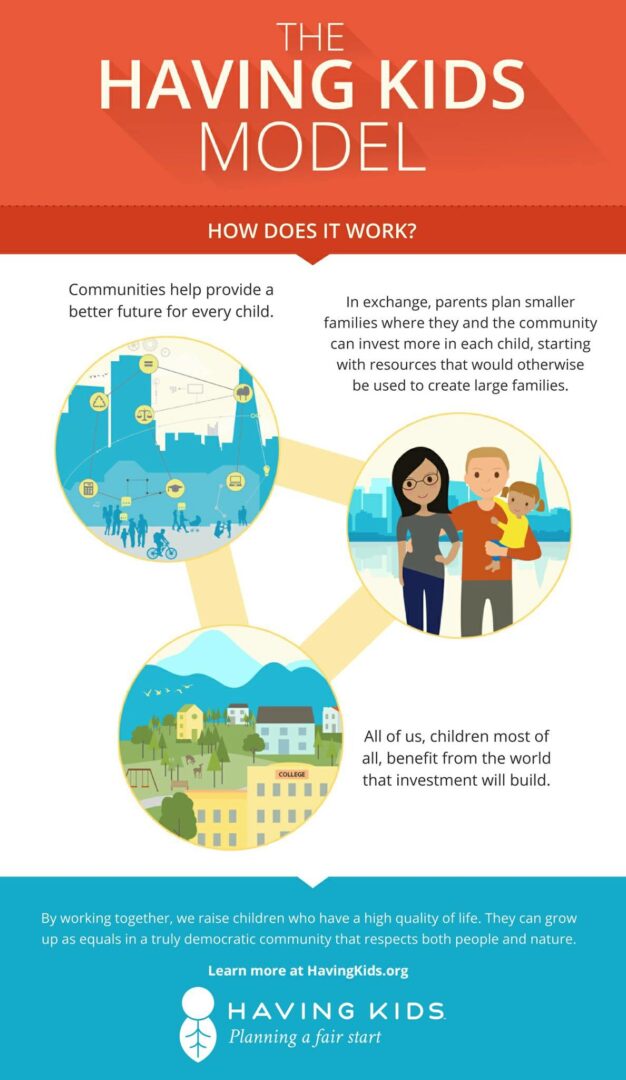
That means incentivizing smaller and more sustainable families who invest more in each child and who can use the resources they save to help improve the conditions into which other families bring their children.
*After this initial post was written another anonymous mother, who works as an executive in one of the largest companies in the United States, came forward and had this to say: “Even in the arts and other places where there is say a single or couple membership, the options often jump to a family membership of 4 kids and sometimes more, without an in-between option if you only have one kid. I’ve seen that a lot and it pisses me off.”
Congratulations on Google’s recent plans to invest in U.S. job creation, and on your ongoing commitments to social justice in this country. Our organization, Having Kids, is reaching out to you regarding an issue fundamental to social justice – the laws and policies that control the way we plan families and raise our children.
Google recently announced plans to disrupt liberal arts educational systems with its career certificate program. While the move expands economic opportunities for many, it places Google – an influential actor – at a crossroads between two directions this country may go in terms of family planning and educational policy, culture, and practice. The choice is fairly binary, given the nature of population growth.
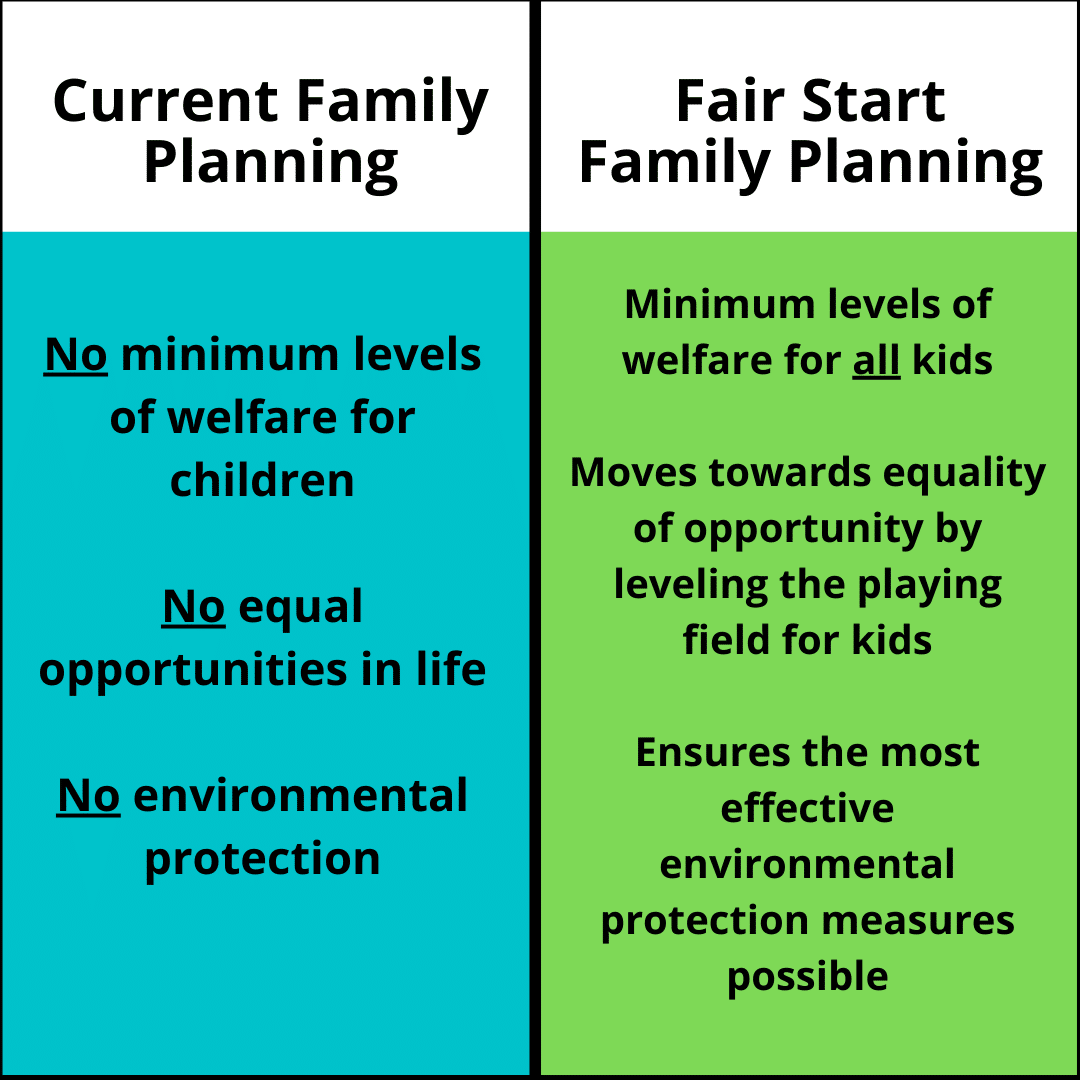
A. We can treat the country as an economy to be driven – as Nobel Laureate Steven Chu recognized – by unsustainable population growth, buoyed up by family planning, rearing and educational policies that ensure no minimum levels of welfare at birth, no equal opportunities in life, political systems where the average person has little impact, and no fundamental right to a biodiverse and natural world. This approach responds to a perceived “baby bust” in population growth by simply creating more and more people as economic inputs. This is the approach championed by Ivanka Trump in her policies on family planning and education, and much of this was recently adopted by Congress in its stimulus legislation.
There are compelling reasons to choose the latter, or more investive than exploitative, approach. It has ten to twenty times the beneficial impact on key crises facing our species, from the climate crisis, to massive inequity, to failing democracies. But more importantly, it is the best interpretation of the Universal Declaration of Human Rights promise of a fundamental human right to have children – one that every generation should enjoy. And because that right is uniquely peremptory, or lexically primary in that we are before we do, we are simply obligated – under international law – to implement it. Put another way, because human rights and democracies must precede and regulate economies, they come first and we must plan to comprise future generations as such.
Last year, Having Kids proposed an amendment to the Colorado Constitution that would have enshrined into law, policies that reduced inequality of resources and opportunities for all children born in the state, as well as enhanced natural environmental protections to ensure Colorado’s children had access to the rich natural resources of the state’s ecosystem.
Louisiana policymakers have expressed support for similar policies, or at least the importance of addressing [through the laws] the inequities of children. Louisiana policymakers have also fought and won major victories to pass laws protecting the state’s vast natural resources; especially along its coasts.
It is important to note, in Louisiana, political ideologies amongst the two major political parties rarely align when it comes to family planning matters, and the state is deeply religious. However, support for children’s equity policies have been supported by lawmakers and policymakers across the political and religious spectrums.
The Colorado fair start approach would enshrine “ . . . freedom and equality from the moment of birth . . . ” into the Constitution. The proposed constitutional amendment also places the state’s natural resources in a trust – held by the State – with the goal of protecting them for the “ . . . benefit of present and future generations . . . “
Perhaps, Louisiana would support a “fair start” plan as a legislative policy if supporters of the policy could unite a coalition of parents, educators, environmentalists, and lawmakers – convincing them of the need to dedicate new laws that would cause a reduction in inequity among children and provide for the protection and use of public lands.
Louisiana currently ranks last in the U.S. among the best states for children to live, according to a 2020 report from Save the Children. Among the organization’s recommendations to provide better opportunities for children, they call for governmental investment in the future [lives] of all children:
“We therefore call on policymakers at all levels of government to . . . craft strong policies, provide sufficient resources, and create an appropriate regulatory environment for relevant childhood programs and interventions to flourish.”
As the Colorado Fair Start proposal gains traction, Louisiana must begin rethinking its approach to providing for the fair, holistic, and equitable development of and investment in children.
Having Kids is working closely with leaders in Colorado to develop an amendment to the state’s constitution that would guarantee every child a fair start in life, both ecologically and socially. Click below to read the proposal:
The United State and much of the world believed that new bodies were needed to produce more labor. This pro-natal, pro-capital belief has created a world in which huge inequities exist. For example, the world’s 2,153 billionaires have more wealth than 4.6 billion people, which is more than 60% of the planet’s population.
A recent study from Stanford has found that efforts to mitigate climate change could yield trillions in economic benefits. And the best wayto mitigate climate change is by choosing smaller families. Yes, it’s more effective than changing diet or forms of transportation.
By the year 2100, the world population could vary by billions of people, depending on whether the average woman in the world today has one child more or one child fewer in her lifetime. If the average woman alive today has between 2 and 3 children, the world population will grow to as many as 16 billion by 2100.