The UN has been obligated to interpret the promise of Article 16 of the Universal Declaration of Human Rights, that of a right “to found a family,” in a way that would protect the right for all generations equally. This includes those in the middle of the Twentieth Century, and those in 2050 for example, equally. It should have also interpreted Article 16 consistent with other human rights obligations, like the Children’s Rights Convention, and well as the Sustainable Development Goals.
Mountains of evidence show young persons are not able to exercise their right equally because of many population-driven threats to the children they would have, including significant birth impacts. In other words, the UN failed to interpret and administer Article 16 correctly.
In fact it caved to member state pressures to maintain large and unsustainable families and population growth rates in the Twentieth century, and violated future generations’ rights to safely and sustainably found their families under Article 16. Because men – under enabling from the UN – pushed women to have large families in the past, younger generations today have to worry about having even one child, given the ecological future that child faces. Moreover, women who were pushed to have children under the growth paradigm enabled by the UN’s modeling – and have children despite the risks of Covid-19 – are dying in massively disproportionate numbers. We need to hold those who enabled this accountable.
Activists should start by engaging the relatively wealthy children of UN officials, in this special form of lawful and peaceful constitutional dialogue and social change, geared around our just desert to family planning incentives/entitlements. There is nothing more just than targeting an extant minority for the benefit of the countless future majority. This process will build, targeting the concentrations of wealth and power – both public and private – most responsible for the climate and other crises we face today, including those that most benefited from past, inequitable and unsustainable interpretations of Article 16.
Take action: Urge United Nations Secretary General Antonio Guterres @antonioguterres to speak out and act to protect all generations’ right to found a family.
The greatest power we have over others is the power of creation, to create future generations – the majority of people – and shape their destinies. We do this through family planning policies, and practice, at the first border of human power.
This child-centric and collective form of family planning is how we constitute communities of free people. Any policy – on any subject – that does not start with a fair start in life is fundamentally unjust, and disregarding of the right of the majority.
We can also pursue policies, like those focused on parents doing whatever they want (the sort of thinking displayed by those who refuse to wear masks in a pandemic), and those that ensure a growing population of workers and consumers to serve concentrations of wealth and power, that do not do not ensure values like welfare, equity, nature, or democracy. This approach is preconstitutional, and not sufficiently other-regarding or child-centric to physically constitute free communities.
We either proceed from an unjust position and remain precons, or choose to be just and free people going forward. Precons are dangerously shortsighted, and the only truly fundamental threat to freedom in the long run.
The right to a Fair Start in life is the first and overriding human right, obligating us to target those concentrations – and people like Ivanka Trump and other wealthy families like the Raymonds – to limit and decentralize their power and pay what they owe. They benefited from, and furthered, a lie at the heart of our systems of human rights and democracy. Government and all political obligations derive from people, who derive from their creation. The duty to ensure a Fair Start in life – the god norm – overrides all other rules, like the property rights that empower people like Ivanka.
Making them first apologize and then pay, via Fair Start incentives and entitlements, is the most just and effective way to compensate future generations for things like the climate crisis, with impacts that are ten to twenty times more effective than the downstream measures other nonprofits are promoting. Don’t get scammed. First things first – let’s start by creating optimal and just populations.
Our forbearers died to protect freedom. What will you do?
This cognitive dissonance creates a special problem when it comes to systems of justice and freedom, normally things that we first deal with through laws, nations’ constitutions, and international human rights conventions. This is the problem: We tend to think of constitutions, or other fundamental and dominant systems of norms, statically. We think of them as fixed things. That is incorrect. The legitimacy of systems of governance derives from people, and people are not static. They are constantly being born and dying. They are dynamic. And most people, all of whom matter, will live in the future. What lies at the base of things like justice and freedom – the dynamic “we” in “We the People” – is more fluid than our brains usually perceive.
It is thus more accurate and true to our values of deriving legitimate governance from the people themselves (per a recent peer-reviewed article), to say that we are constantly constituting as we create new persons, not constituted by god-like founders in the past.We have to account for justice and freedom in the fundamental and ongoing formation of power relations, in the act of having children and ensuring their capacity to consent to the power of others. We thus “constitute” by accounting for the key stages in our development, early childhood and the creation of things like empathy, and the collective impact of that on our ability to socially self-determine. This is how we truly come together, or constitute, as free and equal people. We surpass our constant confusion about what it means to be free by seeing that such a state of being first lies in who we are – the fundamental power relations formed between us as we are created – before freedom can emerge, or not, in what we do.
Making that change, using a verb, frees us from what might be called the constitutive fallacy, an erroneous deference to power structures that oppresses us – like property entitlements that prevent equal opportunities in life for all. Or treating the planning of our families – the creation of children – as “nobody else’s business.”That sense of privacy was not meant to protect would-be parents or children, but was instead designed for concentrations of wealth and power to evade collective obligations to give kids a fair start in life via things like family planning incentives/entitlements pegged to literal birth equity.
How does the verb form free us? If we are dynamically constituting, then that process – limiting and decentralizing power to ensure future generations are free – becomes the dominant norm or ubernorm. We have to first and constantly make a free “We the People.” It precedes and overrides other norms. If we value justice and freedom (or self-determination over top-down systems of influences outside of ourselves like coercion or even incentives, which we can think of as simple sticks and carrots), we have to start from the premise that governance derives its legitimacy – its compelling oughtness – from the norm which through our creation ensures consensual governance.
We have to create future generations in ways that assure they are relatively self-determining, part of a system of laws that reflects their will, and as such free from all forms of power to which they cannot consent.
Using the verb constituting may feel nebulous, leaving us lost in time and space without the familiar static concept of a written constitution, sitting under glass in some far-away place, or militarily defended lines on a globe that define some amorphous “we.” There is a simple way to fix this. If we are constituting or in motion, we will necessarily be focused on where we are going, prioritizing a universal and child-centric (as opposed to parent-centric) system for planning our families that ensures justice and freedom for the majority (those that will live in the future) of persons. We will be sufficiently other-regarding – and free enough – to physically constitute just communities.
In the Fair Start Movement a collective of diverse people are discussing what it means to physically constitute those communities, using the simple and most basic value parameters of 1) minimum levels of welfare approaching birth equity for all, 2) an effective voice for everyone in more participatory democracies, and 3) restoration of nature, or the nonhuman world, which we can also think of as nonpolity, or the original positions/states of nature that undergird all theories of freedom. These values, just relations between people, and freedom, are simply inseparable from who we are and should be. And who we are and should be first depends on our creation. It’s about people, not population, and a physicalizing of justice through an existential norm that would include all other forms of traditional justice, e.g. distributive, environmental, intergenerational, procedural, retributive. We cannot be free if we carry pre-ordained hierarchies into our creation.
In other words, if we don’t start from a just people policy that gives all kids an ecosocial Fair Start in life, we can never proceed from a just position.We can never really be free. Our language and vision for the future will not orient from any of the values that comprise freedom.
As we move to correct the fallacy in our thinking, we will find ourselves divided between free people, and those who are entrenched in preconstituting modes (whom we might call “precons”), often because they benefit at cost to others from those modes. The divide, at this first and uniquely critical border of human power, is binary: We either support sufficiently just beginnings and are sufficiently other-regarding to constitute, or not. We either constitute/maintain polities and their citizenry in the position of being able to effectively participate in a constitutional convention, and have the capacity to consent to others’ power, or we give up the pretense of being free and equal people.
How can we identify precons?While forthcoming federal policies requiring disclosures regarding the role large companies play in the climate and other crises will help out these people, we can force the conversation with a few questions: How do they account for freedom and justice if not in the ongoing formation of power relations, as we have children? How could they care about children without caring about the conditions in which they are born? Is one’s birth position really a matter of fortune, or the result of things we can control? Is procreation more self, or other, determining? How can we consent to others’ power over us without accounting for the fundamental formation of power relations? If we value welfare, equity, democracy, or nature, wouldn’t we want to reflect those values in the norms that create us? Won’t we want to avoid relegating untold numbers of children to an ecologically degraded future with no guaranteed levels of resource or resilience?
TAKE ACTION:
These facts are indisputable: 1) Many benefitted from the mistakes described above by placing costs – ecological and social – on others. They did so in violation of multiple universal human rights that would have otherwise allowed us to constitute as free and equal people. And they did so in part by hiding the impact of the unjust family planning policies from which they were benefitting, instead using distracting downstream policies to prevent effective upstream reforms. 2) Most justly and effectively compensating future generations, who should be treated as a majority, for those violations requires targeting those precons most responsible, and those precons who benefitted the most, from blocking the process of constituting. They stand between us and legitimate systems of governance. 3) We right the fundamental wrong by taking and using portions of their concentrated power and wealth, measured against the relevant fundamental baseline, to constitute free and equal groups of future people via the effective vehicle of Fair Start incentives/entitlements.
Free people will demand these resources, and be opposed by precons, who should be treated as the fundamental threat to our freedom.
In other words these entities, like Exxon, should pay for the costs they externalized on others. And they must do so by complying with the first and overriding human right – Fair Start. We can spread this modeling, and this simple discourse: “Part of your wealth is my and my future child’s family planning entitlement and incentive.” If justice is meant to protect the most vulnerable, and it is, then it starts by protecting future persons, including nonhumans, which are the most vulnerable entities in the moral universe.
Who has the most at stake when we have children? The children, given the impact on their lives. One would think, then, that in designing family planning systems our governments – which undertook that task in the mid-20th Century – would make them child-centric. They did not – largely because that would have entailed investing heavily in each child, and cooperatively giving each child a fair start in life, or things like minimum levels of well-being, equity relative to other children, an effective voice in their democracies, and a natural world.
Instead governments, and the interests that control them, lied and intentionally misinterpreted Article 16 of the Universal Declaration of Human Rights – the right to have children. They treated the act of having children as something self-determining for the parents, rather than other-determining, for the children we have. They did so, employing the concept of privacy, not to protect people but to protect their concentrations of wealth from collective obligations to invest in all children.
Governments and special interests opted to ignore basic values and the needs of future generations, and embrace a strategy that would ensure population-based economic growth, exploiting children as consumers, workers, and other forms of economic input. They used people to create profits. The move converted politically empowered citizens into consumers, workers, and taxpayers with almost no influence over the systems they are subject to. These concentrations of power used people against people, filling the word with uneducated and vulnerable followers wiling to give up values, like democracy, for higher incomes. These concentrations did not produce actual and objective value as much as they exploited patriarchal policies mass producing people in violation of human rights, including the right to participatory systems from which we could reasonably asses values, costs, and benefits. Every crisis we face today, from the population-driven climate crisis, to the overcrowding and poor public health that causes pandemics, to massive political and economic inequity, flow from this maneuver, or the scam one Nobel Laureate recently described.
Empirically, the most just and effective response to these crises is to target the growth-based concentrations of power, and their modern adherents and beneficiaries, to limit and decentralize their power into future generations, through Fair Start distributions of wealth as ecosocially equitable family planning incentives and entitlements. We can go into a future ridden by climate and other crises with more and more unprepared and unequal people, or with fewer and highly prepared people. There is no real choice to make here.
How can do we we proceed? How can we bend this arc of growth?
We all grew up with the myth that we were abstractly “constituted” in nation states by founding fathers in the past. That is inaccurate. For human rights and democracy to make any sense, it is more accurate to say we are constantly and physically constituting, as new generations join the dynamic “We the People” of us. For those things to make sense, we have to correct the self v. other determining lie, discussed above. Again, think a switch to child-centric and values-based family planning, or physically constituting through a just creation (or re-creation) norm – the norm which no other norm can precede.
Think getting past the systems of coercion and incentive that the scam described above maintains, the systems by which we are determined by others. Instead, imagine reaching the self-determination/actualization of democracy where our voice matters and we trust the people around us. In this process we find a binary distinction between those free people sufficiently other-regarding to constitute democracy through child-centric collective family planning, and those who are not – people who in the end we we would reasonably exclude from constituting, or precons. A classic example would be those who reject the values above and who see people as a resource, rather than an end in themselves. If the creation of persons represent the truest border of human power – to follow a “one border” thesis – we can envision precons on one side, and free people on the other. And whether someone or some group embraces child-centric and fair family planning is the test.
Government and its rules derive from people, who derive from their creation. A just creation norm is the ultimate obligation, and there are no just systems without it. Put another way, to be free people we have to first orient the formation of power relations around the justice of child-centric and fair family planning, over the inevitable resistance of the precons described above.
This is not an abstract proposition. Imagine a group of people, in quantity and quality, you would need to host an effective constitutional convention. That is what a truly free and equal “We the People” means, and falling fertility rates globally signal a sea change in our species that makes a shift to a qualitative, people-not-population, and Fair Start revolution feasible. Bending the arc of growth around this change, towards values and equity, is an act of self-defense, defense of others, and liberation.
These facts are indisputable: 1) Many benefitted from the scam describe above by placing costs – ecological and social – on others, in violation of multiple universal human rights that allow us to constitute as free and equal people. 2) In order to most justly and effectively compensate future generations, who should be treated as a majority and whose rights matter, for those violations we have a fundamental right to target those most responsible and who benefitted the most from blocking the process of constituting. They hold power over us and future generations because people with guns defend the status quo, and not because it is just. 3) We best do that by taking and using portions of their concentrated power and wealth, measured against the relevant fundamental baseline, to constitute free and equal groups of future people via the effective vehicle of Fair Start incentives/entitlements.
In other words these entities, like Exxon, should pay for the costs they externalized on others. And they must do so by complying with the first human right – Fair Start.
Take action: Fair Star will be urging the Biden Administration to issue an executive order that would require U.S. firms to disclose their past, present and future role in promoting that Ponzi demography and the harm it caused. Contact info@fairstartmovemeny.org to participate.
That is where we have to start. And today’s populace was created to fill shopping malls – not town halls. We know this from the ubiquitous references to a “baby bust” in reaction to falling fertility rates. We are used to creating lots of people with the economic capacity to consume, work, and pay taxes, not fewer and highly developed people capable of collectively operating a democracy where each sovereign voice actually matters.
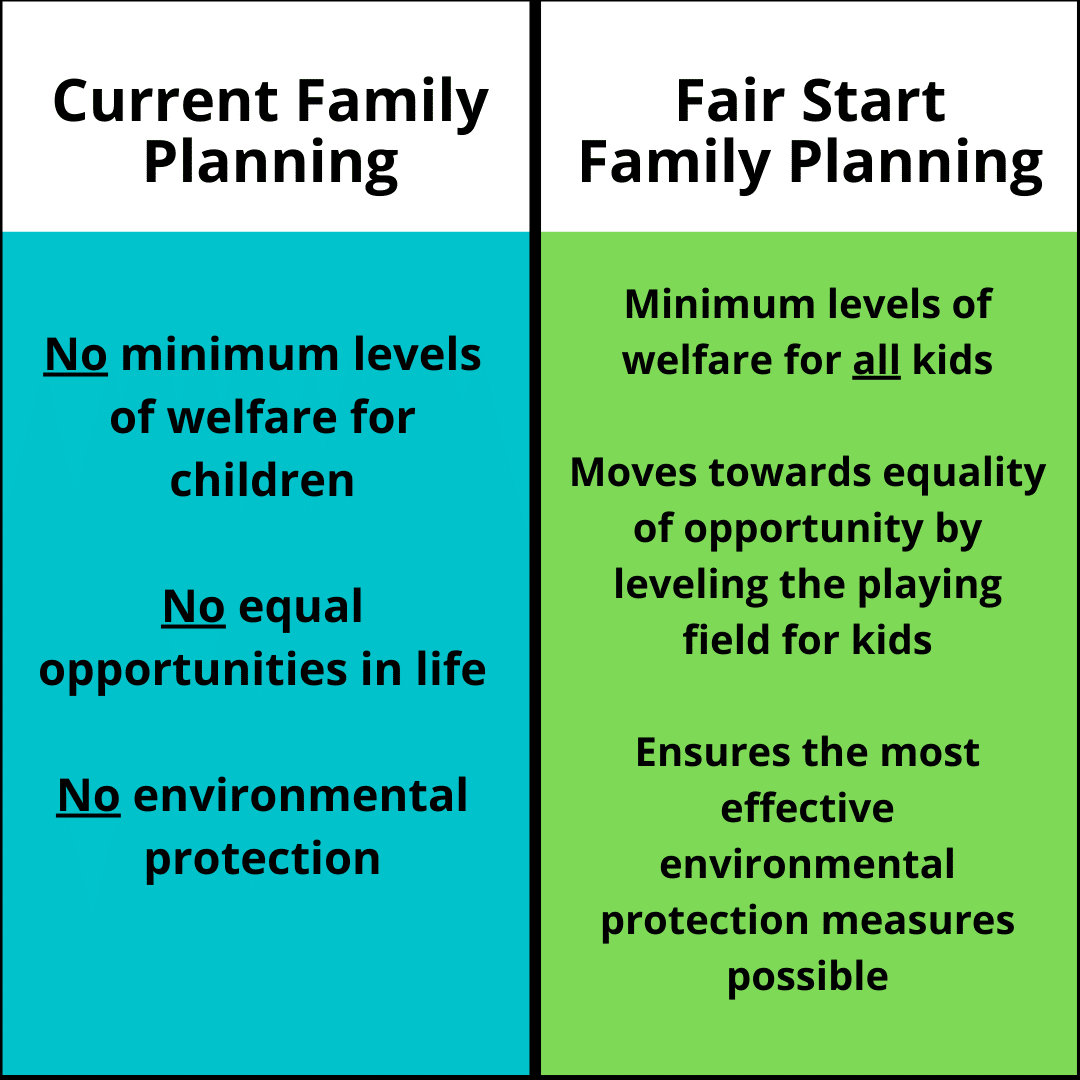
Our current family planning policies, which encourage economic growth irrespective of individual levels of child welfare, fair starts in life, and environmental consequences, have made things worse. The United States is a largely unrepresentative democracy where family planning policies are designed to create large future populations of consumers, workers, and taxpayers, rather than a sustainable number citizens capable of collective self rule. They create people for shopping malls, not town halls.
By starting at the source, and using Fair Start family planning to decentralize concentrations of power, including governments, large corporations, and wealthy families and individuals, we can shift resources to empower and free future children
Let’s first address the root questions of who we are and should be when we talk about amending the Constitution, and embrace reforms that will enable future generations to take the idea of amending more seriously.
TAKE ACTION: Urge the NYT editor @ @deanbaquet to take human rights and democracy seriously, and embrace Fair Start as the fundament of justice.
Given this, did the United Nations intervene decades ago to protect women and children through aggressive family planning programming meant to ensure compliance with the Children’s Rights Convention, and to free women from the structure that treated them primarily as mothers? It did not, instead choosing to embrace the isolation modeling that treats the act of having children as as something left to the subjective whims of the parents, and nobody else’s business.
This was a major missed opportunity, laying the foundation for the birth and development of a ballooning number of children in conditions that would ensure the chaos we see today. In creating its system, the UN bent to pressure from male-dominated members – including the United States – who saw population growth as an easy way to create economic growth.
What’s the solution? Had the United Nations adopted and implemented the correct interpretation of Article 16 of the Universal Declaration of Human Rights, the right to found a family, which treats the provision as the dominant human right and child-centric in nature (focused on the most vulnerable entities, and those with the most at stake), this situation could have been avoided.
Systems of governance and their laws derive from people, who derive from their creation. Justice (distributive, procedural, retributive, ecological, intergenerational, etc.) and the rule law therefore begin in the dynamic formation of our first relations, or ideally, as we physically and constantly reconstitute democratic communities through forward looking child-centric family planning reforms under Article 16 of the Universal Declaration of Human Rights.
We scam ourselves and others out of justice by pretending to do it downstream, after the fact of the formation of our power relations, and usually because we personally benefit from doing so. That scamming is rampant in civil society and politics, where those purporting to protect animals, the environment, children and other vulnerable categories of persons utterly fail to do so – and mislead – because they embrace inequity in creation, and the resulting power differentials that make formal and downstream law ineffective. This is especially so for the most vulnerable, like animals, for whom formal law offers little protection.
Why focus on our creation? It is not fortune, or the will of a god, that some are born poor and others rich or in other inequitable positions of power. The belief in fortune is part of a myth meant to preserve power structures, and to justify our using future generations as unequal economic inputs who will concentrate wealth and power in the hands of a few. The core of that myth is the isolating idea that having children is matter of personal privacy, and that such privacy protects parents. If we really care about people we will be collectively focused on the wellbeing of future children, who have more at stake than their parents, and future generations more generally, who vastly outnumber persons alive today. Our failure to focus forward in this way fundamentally created the ecosocial crises we face today, like the climate crisis, as we avoided ensuring ecological justice in our creation and instead opted for downstream – and now utterly failed – corrective environmental interventions.Environmental groups curried favor with concentrations of power that rely on population growth, despite the risk – now a reality – that their conservation programs would eventually be undone by that growth and the climate crisis it created.
Evading the constitutive fallacy allows us to avoid the lie of seeing ourselves as constituted into nation states – where we have little role over public affair and are hardly self-determining – by god-like founders in the past. First deriving justice and rules from that ancient process would require ignoring the formation of the power relations that justice is designed to shape. Committing that mistake or fallacy means denying people the relative self-determination, or fairness, of constituting just communities where their voice actually matters, and ignoring the drivers of our daily experience in favor of the abstraction of celebrities and politicians, divorced from the creation and reality of the lives of the people with whom we share the world. The verb form, constituting, instead empowers people, and focuses us linguistically on relative self-determination rather than being determined by others.
To constitute means first and always accounting for the future generations impacted by our lives and ensuring that their creation is just, via Fair Start reforms or comparable modeling that uses the entitlements future children deserve as a correlative incentive to ensure – universally – small, sustainable and well-planned families. This includes ensuring minimum levels of welfare, a move towards birth equity, restorative environmentalism or rewilding, and physically constituting participatory democratic communities along the physical borders of human power. If we don’t do this, we are relying on and furthering an illegitimate system that undemocratically exploits the most numerous and vulnerable category of entities – future generations – in a way that retards freedom, or relative self-determination, for all. The freedom that comes from our existential role as sovereigns in a democracy precedes and enables the personal freedom and empowerment we experience, as workers, consumers or otherwise, in that democracy.
What’s an example of moving past the constitutive fallacy? Consider what rules for containing Covid-19 are most just, balancing public health, personal choice, and the maintenance of one’s livelihood? To answer this question we would have to be constituted into relatively self-determining groups or democratic communities capable of answering the question, and our having first done that would have likely evaded the overcrowding, poor public health, destruction of nature, etc. that drove the pandemic. The same revision in thinking would apply to the climate crisis, and dozens of other problems.
Practically we can do this – as free and equal people – by limiting and decentralizing existing concentrations of private and public power, taking the resources the people in those concentrations hoarded by externalizing costs, and instead investing them in Fair Start reforms as the entitlements/incentives described above. We may do so because the act of constituting overrides downstream rules, like property entitlements. This will happen over the opposition of preconstitutional people, or precons, who simply block justice. We can test the progress of this process – the ongoing first and fundamental election – by looking for its application in the pronouns in our language, and to see whether we are constituting together the persons those pronouns explicitly and implicitly refer to.
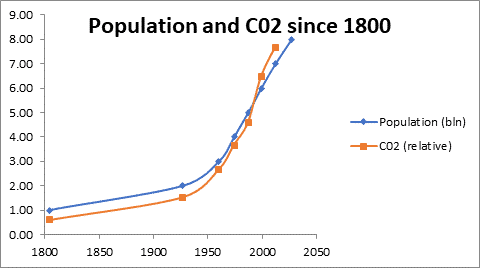
The climate and nature crises that our planet faces are rooted in both population and consumption. We cannot waste precious time by pointing fingers between consumption and population – we need to talk about both in tandem, as our survival and quality of life, and those of our children, depend on it.
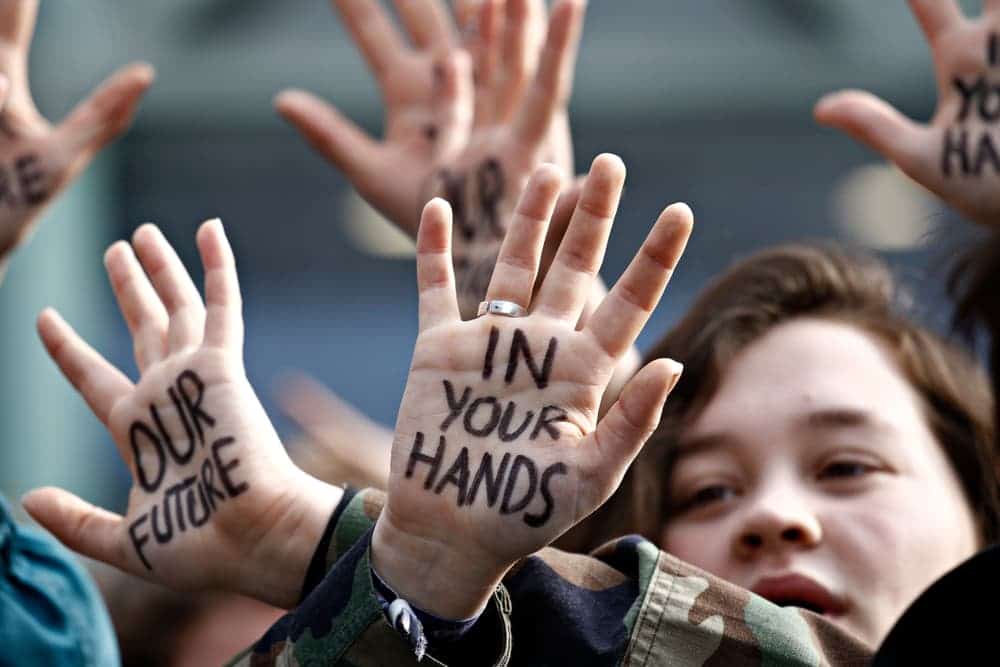
On the heels of Independence Day demands from people like Cassie King for the resources all kids deserve to ensure their eco-social Fair Start in life, and others who see their future child’s entitlement to birth equity as a sustainable family planning incentive, dozens of young women have come forward to speak out for more sustainable families. It’s a message for every young person’s future on planet earth.
On World Population Day, July 11, 2021, GirlPlanet.Earth will launch as an informal forum for global dialogue by women and teenage girls from around the world on population, consumption, planetary boundaries, and personal choices. Featuring the voices of women from Africa, Europe, North America, Central America, and Asia, GirlPlanet.Earth will enable honest, authentic, lively conversations between women and girls about our future.
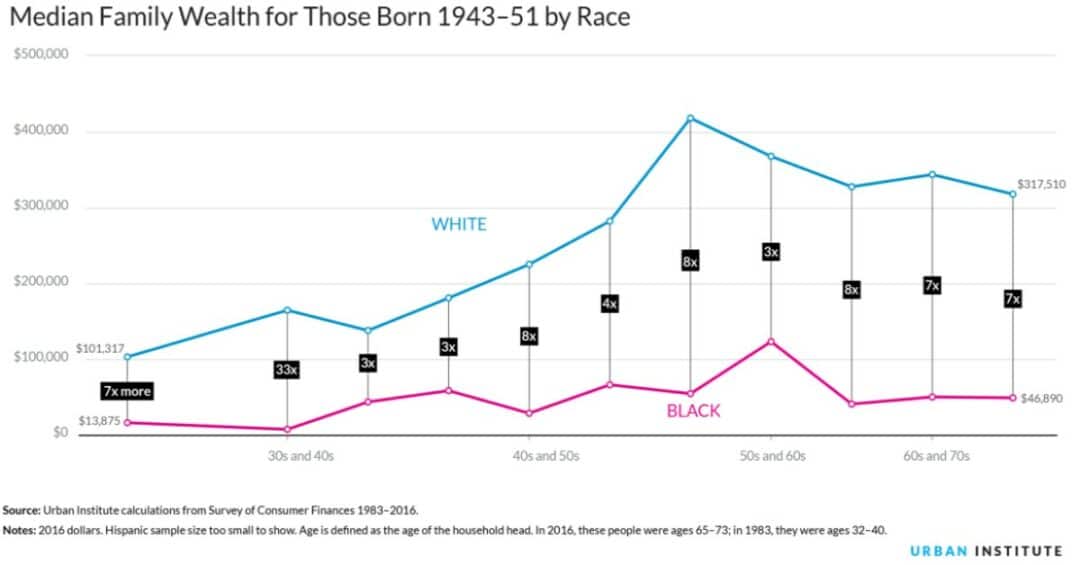
Courtesy of the Urban Institute.
Join the conversation.
In addition to young voices pushing back on unsustainable population growth, this Sunday – World Population Day – key experts will make clear the pathway to an optimal world population, at this special event.
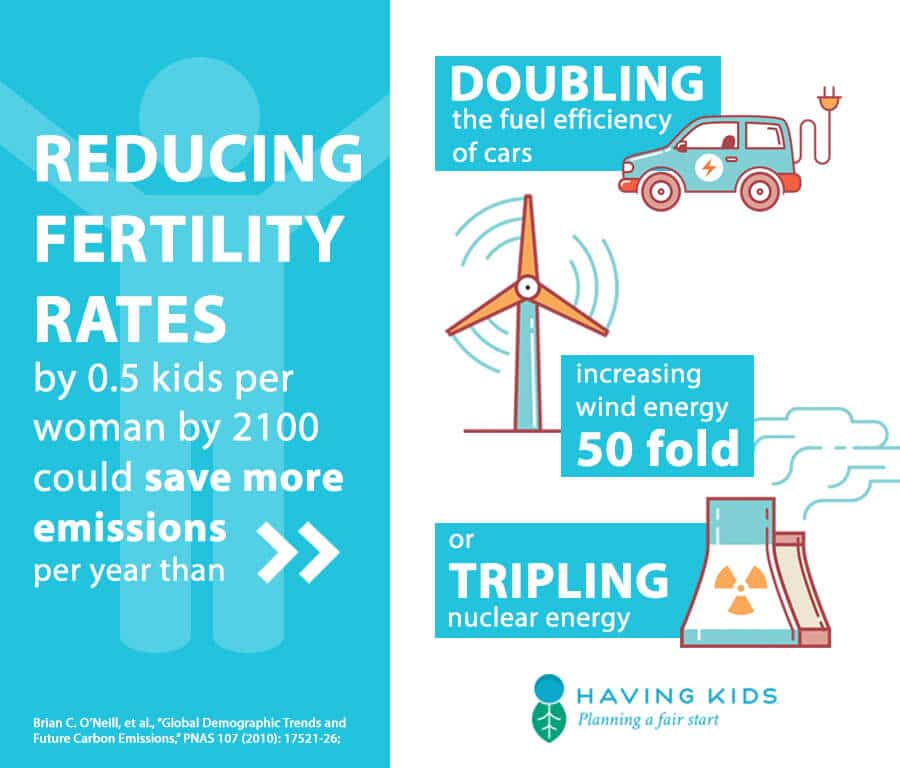
Having one fewer child actually reduces your carbon footprint more than any other single move you can make. We owe it to future generations to ignore advertiser-bound media pushing women to have kids to grow their economies. Instead, those intending to have small and sustainable families should approach concentrations of power for the wealth – and birth equity – their child has a fundamental right to under the Children’s Rights Convention and other human rights instruments.
This is the time to restart the conversation about family sizes, resources, population, personal choice, climate change and the future of our planet. The science is clear – we get the best outcomes, for everyone, when families plan for and invest more love, time, and attention in each child.
Stabilizing our human population, even through the most fundamental educational and economic advancement of women, has been taboo for too long. Humanity has made terrible mistakes through coercive practices and policies, and stabilizing our population needs to be instead profoundly rooted in improved justice, education, and economic opportunity, especially for women and girls.
How do we know what counts as a cost or benefit in a particular transaction? Enter the idea of normative baselines, or the theoretical states of affairs by which we can answer the question.
But is there an antecedent question nesting in the above-linked list of possible states of affairs we might use, from human rights to process-based positive law? From what justifiable social organization, of free and equal people, are we orienting when we assess the states of affairs? Perhaps we first have to be, existentially, a group of self-determining people capable of democratically deciding what’s a cost and what’s a benefit?
We can think of this in another way. John Rawls is famous for articulating the basic framework of a just and free society. But what rule precedes the existence of the actual people who will eventually comprise Rawlsian systems? Is the rule that determines their creation the first issue that must be decided? How will the quantity of persons, the civic qualities of its members, and their initial relative positioning to their ecology and each other – the conditions of their early development – be determined? What creates the first relations of these people, whom Rawls wished to assure would be free and equal? How, in accounting for those relations, do we account for the dynamic or intergenerational nature of such a group, i.e. that they would die, and others would replace them?
As a new peer-reviewed article on fair start family planning argues, the most basic criteria for assessing costs and benefits has to be the ideal creation (or procreation) norm, or the norm that first creates the people – and their relations, power differentials, relation to their ecology, etc. – who are making the assessment. Moreover, as the article argues, using such initial criteria to assess what counts as a cost or benefit is actually practicable, given what we know about intergenerational justice, optimal world population ranges, and the need for very specific policies, like education, to ensure relative self-determination or what we commonly call freedom. This differs from the intergenerational justice work of Rawls and others who have asked what we owe, or what we might save for, future generations. Here the question is whether the dynamic “we” – any grouping of people from which we might consider these questions – is a justifiable group of people, in terms of the assuring each member the correct relative degree of self-determination. That difference matters, because the latter approach – or Fair Start reforms – trigger the override of competing norms, very specific criteria for behavior change, and other implications. They would fulfill what might have been the Rawlsian answer to the background question – we must create people in a way that makes them free and equal.
As part of revisiting the baseline issue for policy reforms, Fair Start is working with IAMECON on the development of further research, specifically around the role of the nonhuman world as an ideal in ecological restoration. Per a lead on the project:
“In this [forthcoming] paper, we study the relationship between human actions and the wilderness using a static game theoretical framework, and determine the parameter space that manages the gap between the payoff functions required for sustainable action vs payoff functions that leads to unsustainable actions observed in the last two centuries. When agents are not impacted at all from the harm wilderness suffers (as a result of human actions), i.e. zero empathy for the wilderness case, lack of environmental awareness, we find that unsustainable actions are always a dominant strategy for all individuals. When agents are somewhat impacted by the harm the wilderness suffers, i.e. flexible awareness case, we find that the benefit an individual gets from her unsustainable actions should be outweighed by the pressure to conform (to society) plus the negative consequences of the harm wilderness suffers on the individual herself, in order to arrive uniformly sustainable action as nash equilibrium.”
This is one way to fundamentally assess costs and benefits, by orienting from the most basic notion of a justifiable, or relatively self-determining, social organization constantly recreated through Fair Start family planning.
What is the upshot of all of this? If Fair Start is the first and overriding human right we have the right to implement it, over all other obligations – like property rights – by all means effective.