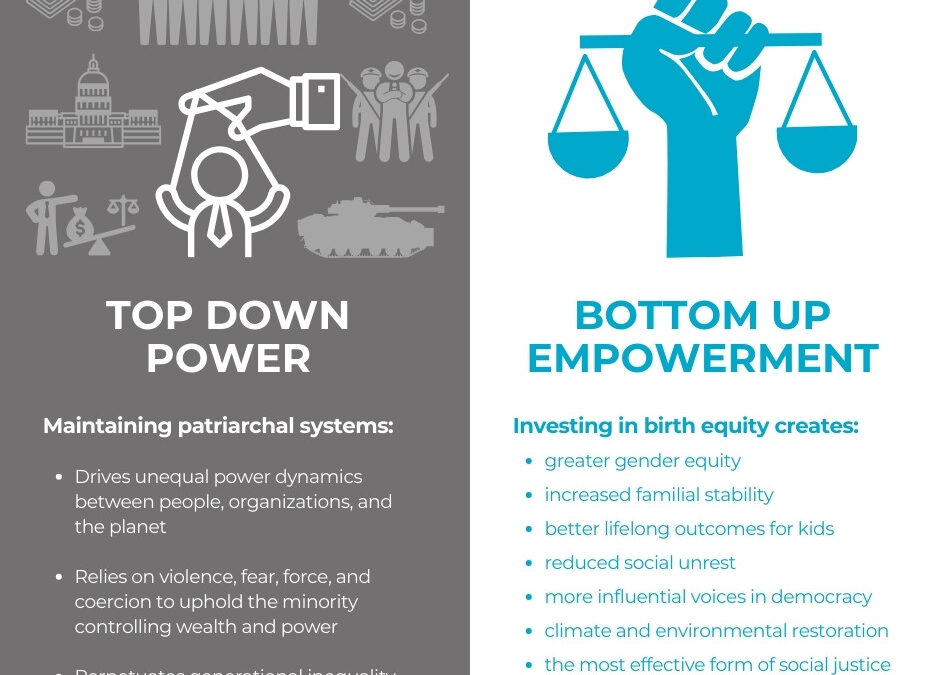
What has fundamentally caused and exacerbated the climate crisis? Look to corruption in legal systems for the fundamental, and illegal, shifting of costs onto future generations. Even as the crisis has been unfolding in catastrophic ways, legal scholars have persisted in the legal fiction that there is justice, and binding, legitimate legal systems, without an obligation on those systems to measureably empower those subject to them. Many, like Heather Gerken, have obstructed the intergenerational justice threshold of self-empowerment that would have avoided the crisis. Instead they have converted empowering legal relations into exploitative of economic ones in order to make money through inequitable and disenfranchising growth, throwing future generations under the bus. But the value of self-determination in one’s political system is primary to the welfare outcomes that system creates.
How should advocates deal with powerful people when their authority, and entitlements, originate from a foundational norm that actually precedes constitutions? Engage them in a truth telling discourse about what they did not do to empower children as those children entered the world – because the discourse itself, and the accounting for those costs, is the basis of national legitimacy and entitlements.
“National legitimacy is, and should have always been, contingent on measurable birth equity or the empowerment of each child to eventually control the outcomes of their political systems. The Tell the Truth campaign, which is a universal discourse in which all admit wrongly assuming children legally deserve the prospects they are born with rather than what racial justice, their rights, and political equity require, and commit to prioritizing those things, is the best pathway to that legitimacy.”
Pierrette Kengela
Here is an early video compilation of the deadly flooding in Nepal. The climate crisis is helping ensure more events like this.
Heather Gerken, Yale Law School and intentional illegal discounting
When Fair Start activists in 2022 urged then Dean, Heather Gerken, of Yale Law School to act regarding climate risks and the innacurate evaluation and impact modeling she used for public interest work, she never responded. Gerken now runs the Ford Foundation, and while advocates normally would avoid criticizing powerful funders, we know that birth equity reforms are not bout charity, but about legitimacy and fundamental and binding obligations on all of us.
Fair Start activists had written openly to her as part of the direct action that animal activists were engaged in at the time, to ensure macro animal liberation through reforms of actual, or birth-based, human and nonhuman relations.(Fair Start activists would later find out that activists like Wayne Hsuing and Direct Action Everywhere, as well as their funders, were intentionally illegally discounting, which has made their work for animals a low-impact charade easily undone by growth, a model they did not provide full information on to the countless persons they exposed to criminal liability.)
Gerken not responding was odd, because Professor Philip Pettit of Princeton called the outreach “home truths.”
And we had reached out because while academics often write about values, it’s odd that they would then do nothing to ensure then at the most basic level – at a constitutional level that accounts for birth-positionality and basic empowerment – in the “real world.” We wanted her to do that, and with the basic constitutive discourse that precedes written costitutions. Shouldn’t academics default to birth equity as a metric for justice, even while debating these issues, given the irreparable harm that otherwise occurs?
Academics otherwise free ride on the unsustainable and inequitable birth lottery – our system of reproductive rights and birth positionality – that is the fundamental or existential driver of the polycrisis.
Gerken was chosen as a key leader in our legal system, and because her entire career as a lawyer and law professor seems to be based on false assumptions: That children deserve what they are born with, rather than what their rights and political equity – and hence national legitimacy – require. And that children of color deserve less resources, and more risk, in this regard. That means Gerken’s extreme influence in the world was – fundamentally, through creation ethics – ensured by robbing children of their influence in fair, democratic systems.
Douglas Kysar, and “animal law” as a basis for change
Instead of Gerken acting in response to the urging from Fair Start, Yale Law School Professor Douglas Kysar contacted and chastised the activist in a soon to be released exchange, noting that raising questions about the baseline Yale used would threaten his animal law program, a program with little beneficial impacts on animals relative to the inequitable and disenfranchising growth it has always ignored.
Instead its broad and innacurate claims of public impact have masked the climate crisis now being felt in Nepal, and the vulnerable parts of New Haven that surround Yale.
Traditional “animal law” is one of the most culpable areas of research when it comes to the polycrisis. It’s based on a system of illegally disenfranchising future human and nonhuman lives – and in part because it has been funded by wealthy philanthropists like Brad Goldberg who intentionally ignore illegal discounting of future life in valuation and impact reporting.
Goldberg intentionally siloed animals as a vulnerable category from their inseparable lived experience of birth-based relations to avoid the implications of birth-equity override, a move that cost countless lives.
Kysar’s work epitomizes the core problem:Wealth made decimating the nonhuman world now funds a charade version of protecting it. The question is why leave this matter in the fora of academic debate, rather than holding him, and those like him, accountable? The constitutive discourse around birth positionality gives us all a way to do that.
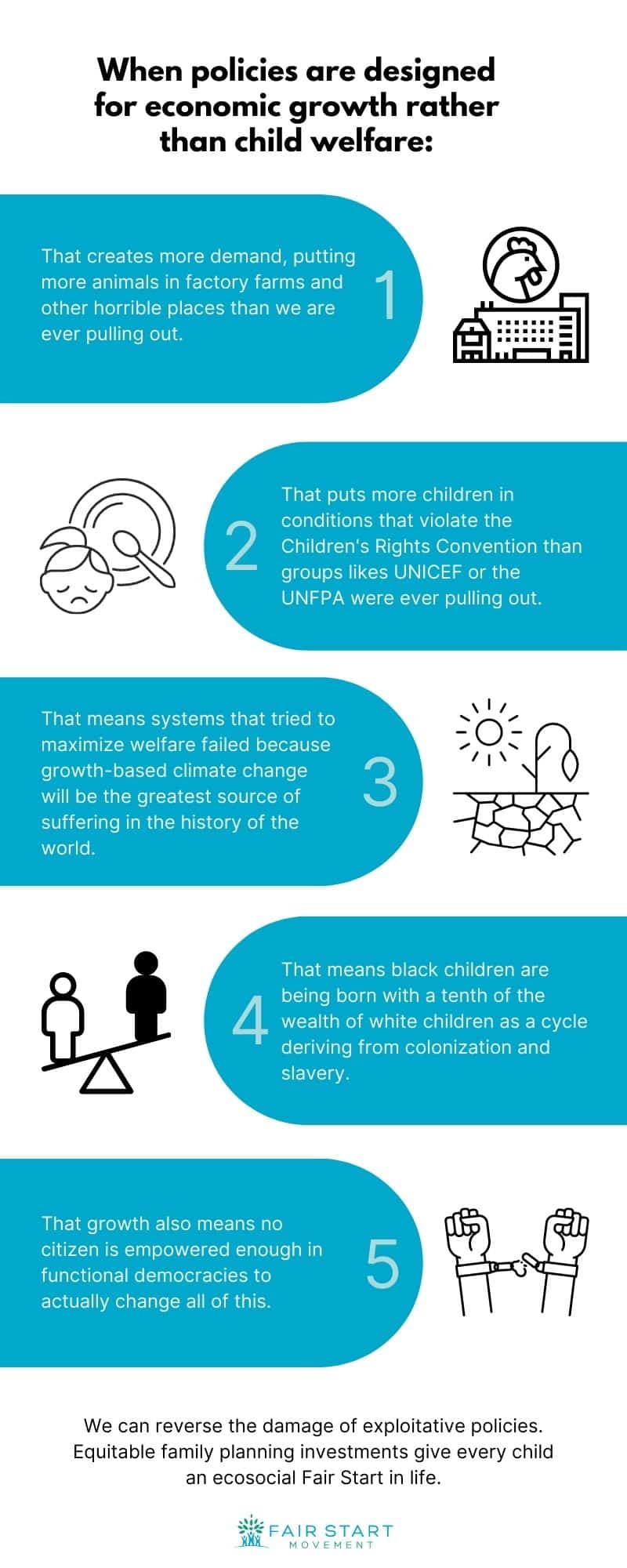
What Kysar and others like him – Tim Midura of the Brooks Institute for example – have sold as “animal law” for years did more to protect mostly white generational wealth than animals. Why? Their version of “animal law” involves omitting the countervailing impacts of growing, birth-based political inequity from their valuation and impact reporting – and in a way that illegally disenfranchises and harms mostly children of color.
Why animal impact claims? If you care about animals, you will find legitimacywashed claims about them to be the most falsifiable. Add law as as a factor which accounts for legitimacy to the idea of helping animals, and you have a way to understand how the polycrisis was exacerbated by those claiming to be engaged in public interest work.
Kysar is not alone.
Daina Bray, who Fair Start activists have long engaged to change her modeling, first spent years at Mercy for Animals creating a fantasy world of impact that used sensational downstream victories to hide the upstream forces undoing them every day, a move that benefits her at deadly cost to many.
She is doing the same thing at Yale, funded by wealth that was made – through growth – at greater cost to animals than any benefit she provides them.
People who want to on balance benefit animals cannot compete against those willing to pretend to help them. Those funding and engaging in public interest work, like Bray, start their projects with a “triple dip” – 1) assume the legitimacy of their privileged birth positionality, 2) exploit it by using inequitable and unsustainable growth-based economic systems, and 3) use micro, downstream progress to hide the reality of upstream growth and political inequity that undoes the benefits claimed.
This is not about academic opinion, or freedom.
Nothing comes before birth equity because there is no “oughtness” without it.
“National legitimacy is, and should have always been, contingent on measurable birth equity or the empowerment of each child to eventually control the outcomes of their political systems. The Tell the Truth campaign, which is a universal discourse in which all admit wrongly assuming children legally deserve the prospects they are born with rather than what racial justice, their rights, and political equity require, and commit to prioritizing those things, is the best pathway to that legitimacy.”
Pierrette Kengela
This is instead about employees getting paid by a wealthy institution, and whether they are preemptively obligated to accurately account for the costs of their benefits, and report their impacts consistent with that accuracy.
The Fair Start Constitutional Challenge campaign is designed to overcome that problem by treating business models that illegally discount future lives as a violation of unfair competition and civil rights laws. This overcomes the corruption and collective action problem. We can all be obligated to ensure that political authority and entitlement to wealth pays the actual costs needed to remain legitimate, and based on the inclusion and empowerment of others. Documents like constitutions and treaties don’t automatically constitute legal systems. Only a discourse that accounts for the costs of measurably empowering children as they enter the world can do that. And siloing animals lives from that process, treating them as property by accepting our current Anthropocentric system of reproductive/human rights, has ensured the failure of animal rights.
Creation ethics – the lens through which we see and value others in the world – are primary, or before all else, and that means there are preemptive legal causes of action to block illegal discounting as unfair competition (or unconstitutional competition) in court.
New scholars who think they are, are now pushing back.
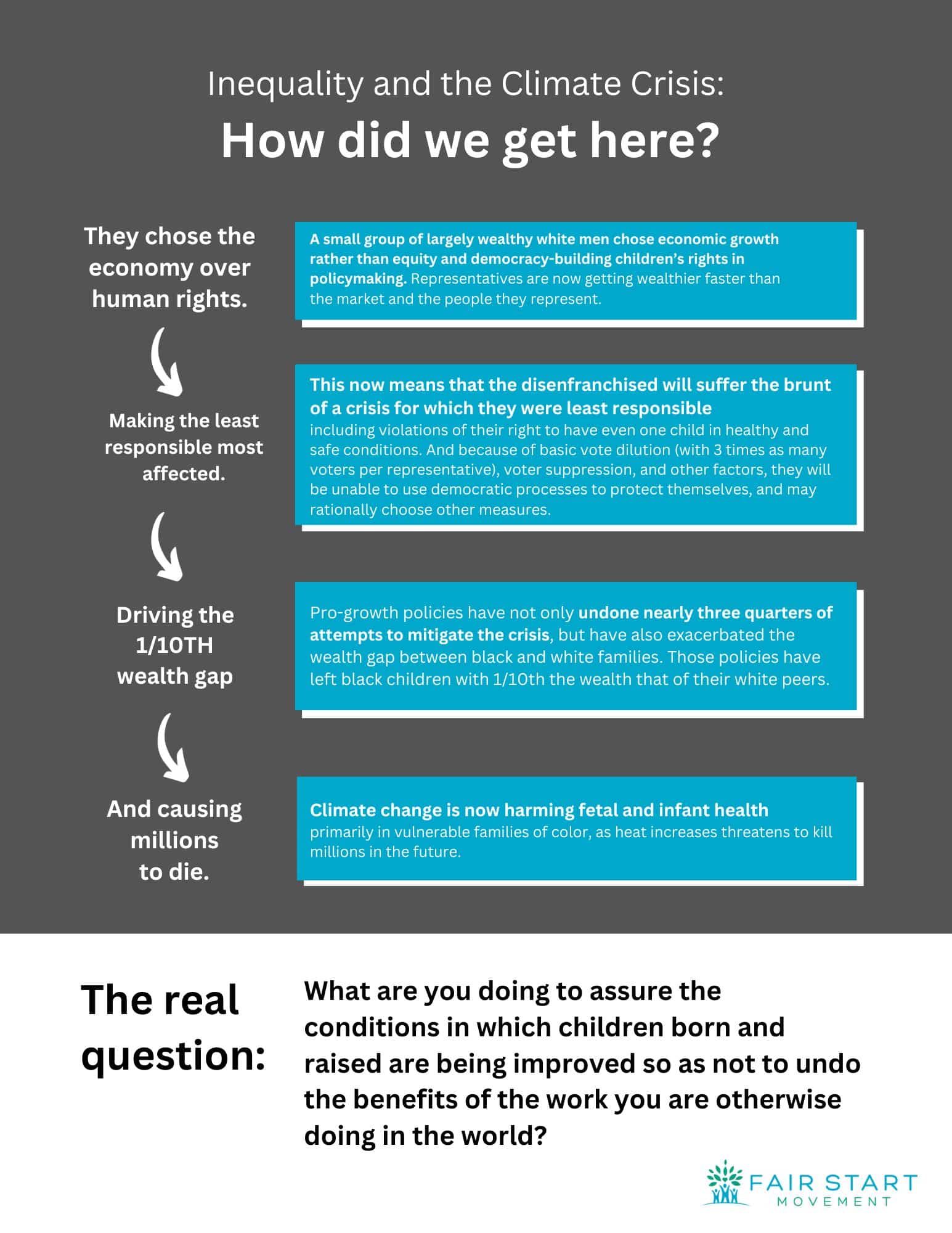
The forthcoming paper, Child-First Theory: Exposing Equity Fraud at Yale Law School, examines theoretically the origins and evolution of the institutional conflict between Yale Law School (YLS) and the Fair Start Movement (FSM), while identifying pathways toward systemic resolution and institutional transformation.
Here is some background on the dispute, and the Fair Start Movement complaint to the Connecticut Attorney General.
Yale has an endowment of almost 50 billion dollars.
How much of that was made by illegally discounting the value of future lives, and especially lives of color in New Haven and Nepal? Yale did not create value – in shifted costs through intergenerational injustice.
The faculty at Yale benefit from the illegal discounting – which benefits their children at deadly cost to mostly children of color. Yale, by embracing the privitization of the birth-creation of power relations, exemplifies the failure of public interest over decades that created Trump.
A new paper examines Yale and illegal discounting in detail
Child-First Theory (CFT) places the interests of newborns and children at the center of political, legal, economic, cultural, and ecosocial evaluation, regardless of circumstance. The paper argues that elite legal institutions such as YLS can reproduce what CFT conceptualizes as equity fraud when rhetorical commitments to fairness and symbolic diversity coexist with insufficient challenges to underlying structural privileges.
The FSM emphasizes birth-centered equity, child-oriented rights, newborn-centered justice, infant-focused ecological sustainability, and upstream structural transformation as necessary conditions for securing equitable and dignified circumstances for every child from birth. By contrast, the paper characterizes YLS’s dominant legal framework as emphasizing constitutional doctrine, adult autonomy, legal precedent, procedural safeguards, and incremental institutional reform. Situated within the broader tension between transformative change and incremental reform, the study analyzes documented FSM–YLS exchanges since 2021 through an integrated theoretical framework encompassing conflict theory, Grundnorm theory, equity washing, disenfranchisement, baseline theory, Ponzi-scheme theory, impact-fraud theory, and conflict-transformation theory.
Building on this analysis, the paper proposes an upstream, peace-oriented model of institutional transformation that integrates indirect and direct mediation, informal and formal dialogue, institutional accountability, and structural reform. The model seeks to move beyond the management of visible disputes by addressing the underlying institutional, legal, and structural conditions that generate and sustain inequity.
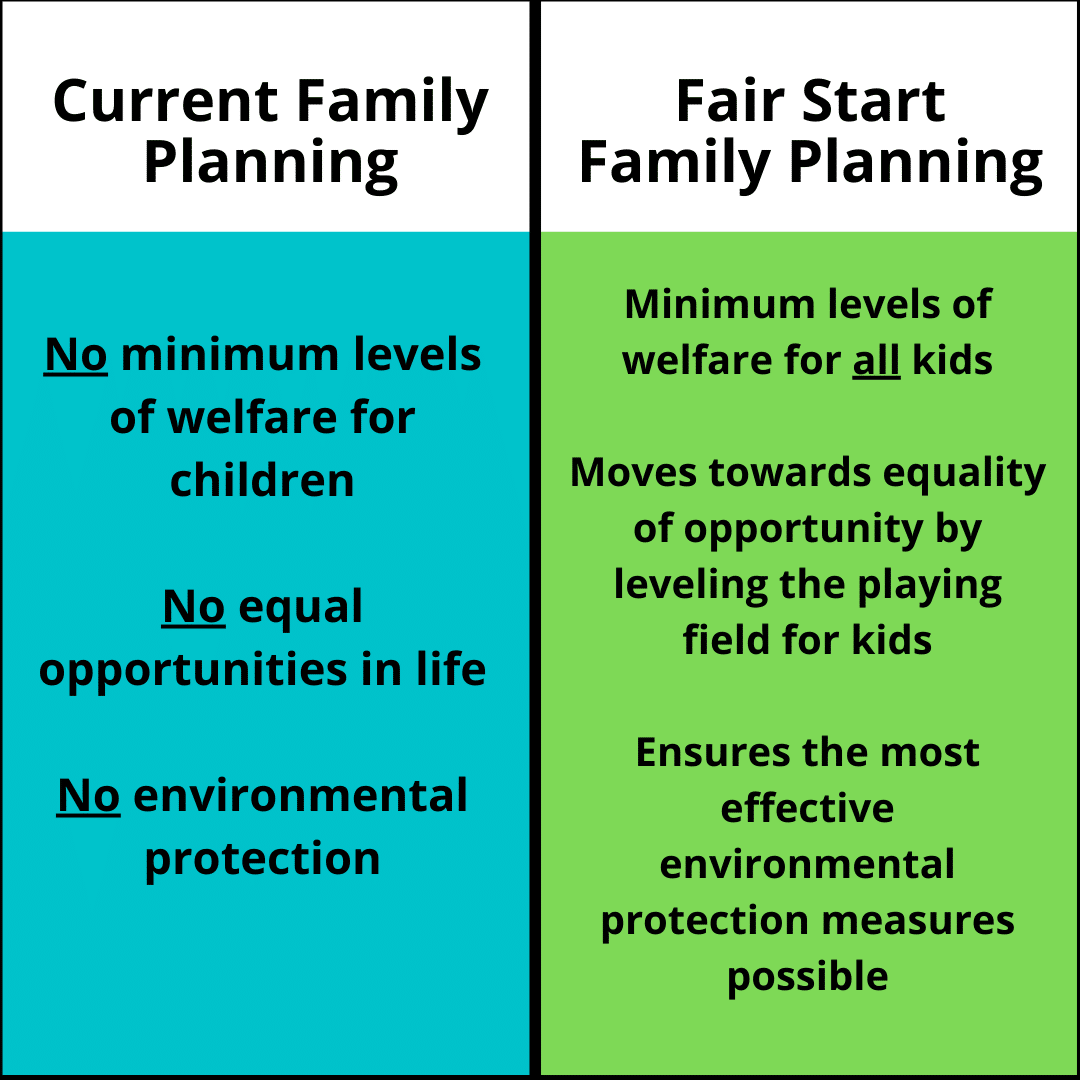
Our values are inseparable from the creation of power relations, but decades ago world leaders privatized that process through the same human rights and reproductive health policies that would cause the polycrisis. These policies blocked the threshold for intergenerational justice, a threshold of empowerment beneath which no child should be born, thereby subverting for decades racial justice and decolonial movements.
It’s physically impossible impossible to be self-determining without this threshold, without elevating the line beneath which no child should be born.
Gerken and Kysar should admit omitting the countervailing impacts of growing, birth-based political inequity from their valuation and impact reporting – and in a way that illegally disenfranchised and harmed mostly children of color.
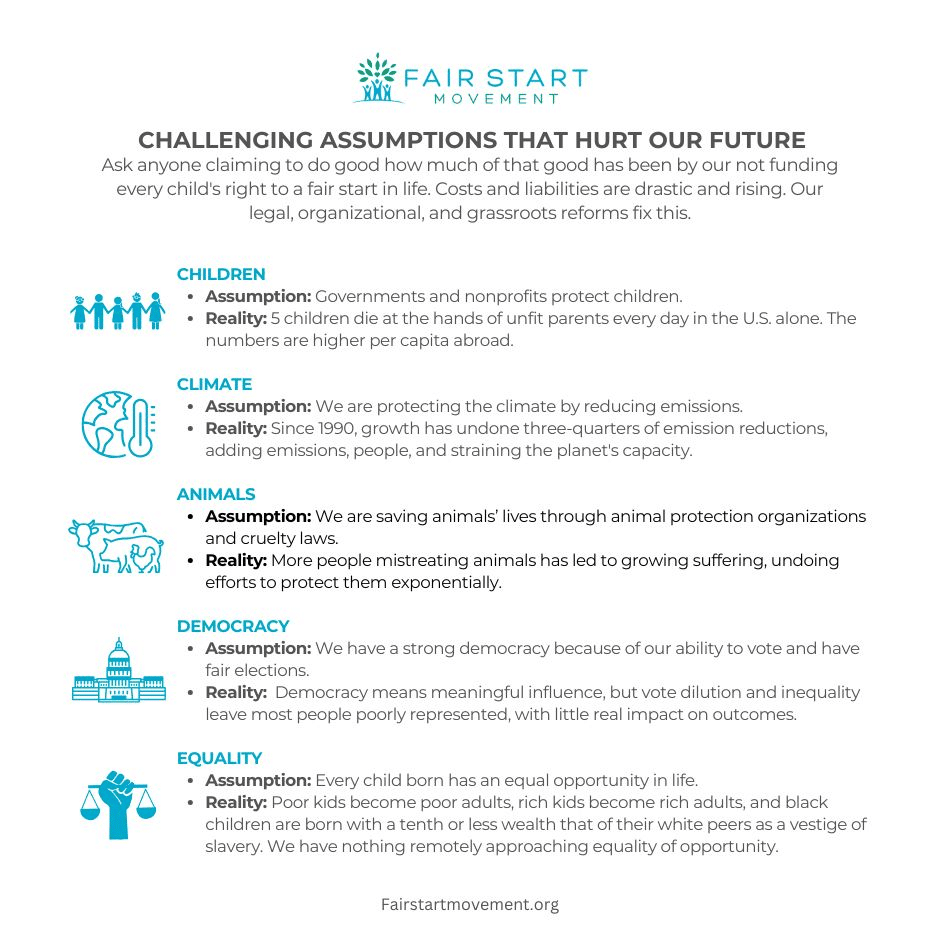
Market autonomy without the embedding political equity needed to empower citizens to regulate markets – at base – ensured the undervaluing of ecological damages measures for decades, and has become the largest driver of the polycrisis.
Moreover, doing so makes us part of a system of skewing the baseline for things like climate reparations. Relative to a legitimate basic standard, like a “one person, one influential vote” metric, Yale’s illegal discounting did more harm to values like ecological protection than it did good. Why? Again, because the work operated from a false premise of discounting.
Yale and Gerken can best fix this by admitting the above, and agreeing that we are all preemptively obligated – through a primary discourse that accounts for the costs of empowering all children – to be part of a legitimate system.
Freedom, it turns out, begins not with ourselves but with the most vulnerable – the intergenerational justice threshold that elevates the relations between people, and between people and the nonhuman world, which precedes and justifies national borders.
Gerken, now leading the Ford Foundation, is a key “trolley target” in the war to ensure freedom for all, as we discuss in this Newsweek article. Decentralizing her power to ensure and elevate the threshold can save countess lives whose voices are being elevated by Truth Alliance.
Our freedom is sitting in the bank accounts over which Gerken has influence. She could have chosen a legal regime that empowered future generations. Instead she chose one that exploited them for economic growth. Our votes have been diluted through decades of inequitable and disenfranchising growth based on illegal discounting, a process that enriched Gerken. She knew people were being disempowered relative to things ecological carrying capacities, and in ways that made political representatives completely unrepresentative, and she continued doing it. That, at base, is what created those like Trump.
Moving the wealth over which she has control to now ensure the legitimacy and empowerment threshold is the essence of freedom fighting.
Constitutionally challenging illegal discounting – through a variety of crowdsourced tactics – is a permanent and unpredictable form of resistance to oppression. Targeting the powerful to personally account for the most vulnerable, via elevating the birth empowerment threshold for intergenerational justice, and riding on the preemptive nature of true self-determination, which is primary or preemptive, is a just move to make.
Take Action:
Urge Heather Gerken, at Heather.K.Gerken@Yale.edu, to act now, admit the above – especially omitting the countervailing impacts of illegal and growing political inequity, and change course.