
Did the University of Denver really spend millions of dollars to create charade of animal liberation, saving a few here and there, while embracing an underlying model of animal propertyhood, birth inequity, and unsustainable growth that kills countless more, and harms vulnerable children?
“Today’s animal rights movement is hindered by an unmet need: While relying heavily on activists and insiders to uncover wrongdoing and urge systemic reform, there has historically been a dearth of available legal support. The Animal Activist Legal Defense Project fundamentally alters this state of affairs, with significant and distinctive benefits for the future of the animal rights movement and for the future of animal well-being.”
—Professor Justin Marceau, Director, Animal Activist Legal Defense Project
That statement is not accurate.
Relative to what standard does Marceau, or those like Paul Shapiro, benefit animals? Factor in the inequitable growth that put vastly more animals into suffering than they saved, and you find them moving the goalposts away from on-balance protecting animals in order to to appear to win, and appear so for those who use growth-based wealth to fund the efforts. That well-funded charade drowns out the voices of those who engage in fundamental reforms, and it costs lives as the climate crisis intensifies and women and children go without the resources they need to respond to it.
I co-founded the Animal Activist Legal Defense Project with Justin, in the wake of serious misconduct at the Animal Legal Defense Fund, including illegal baselining skewing how courts evaluate harm to the environment, the Board paying a settlement to the former executive director Stephen Wells to hide this, and continued illegal baselining that hides liability for philanthropists’ and nonprofits’ role in exacerbating the climate crisis. Part of the founding of the clinic at Denver, in records now removed from the school’s website, was a commitment to total liberation that accounted for many forms of justice. That quickly changed – consistent with funders’ growing concern about what the commitments would reveal and require.
When I mentioned to Justin the book “Winners Take All: The Elite Charade of Changing the World,” he responded: “This is a story as old as time. I admire the fact that you think you can solve it.” The work we did, if anything, exacerbated this phenomenon.
In the years that I served with the program we never implemented that standard, but used the same illegal, racist (it starts with the assumption children of color deserve less than white children) and anthropocentric standard for evaluating the value and impact of our work that fundamentally caused the climate crisis, the standard the Animal Legal Defense Fund has used and still uses.
In fact, leadership at the school removed me from a grant project involving a funder I had brought in to the process, one willing to address the macro issues (or what he calls the “necro”), and then repurposed the grant towards low-impact, charade-level work, keeping part of the grant even after the funder broke from the school and asked that it be returned.

Justin’s statement above reflects a fantasy world that hides the liability of those who benefited from decades of anthropocentric, inequitable and disenfranchising growth – those who fund his work.
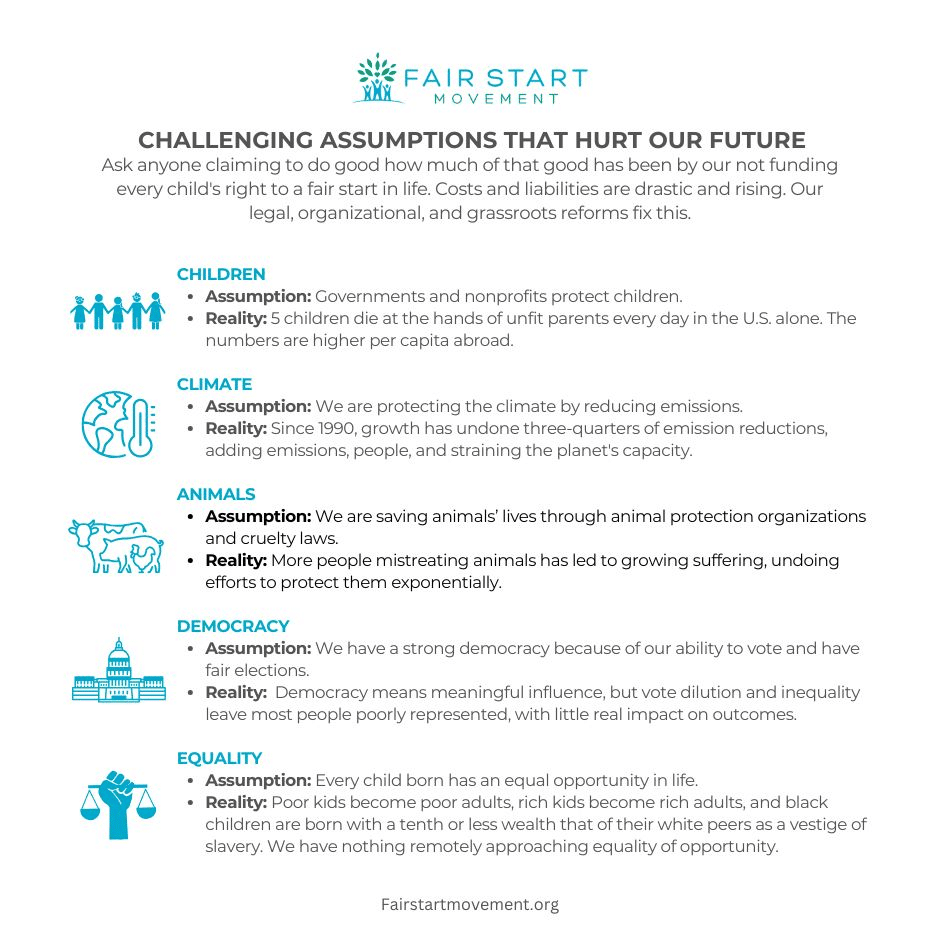
Fact: Inequitable growth that enriched mostly wealthy, white children at deadly cost to countless children of color did exponentially more harm to animals than we, at the program, ever did good. Use of that valuation and reporting model hides liability for the deaths of tens of millions as the climate crisis intensifies, and reflects the academic and public interest practice that ensured the polycrisis: Constantly moving goalposts away from the absolute infant-health-as-enfranchisement standard necessary for political legitimacy in order to falsely claim truth, or victories, and to thus raise funds.
Relative to that harm, on many levels, our work was insignificant and thus performative – and in terms of the underlying business model – mimics Coca-Cola’s model of discounting future lives, especially lives of color, at exponential levels.
Marceau’s work is a facade meant to create the impression of animal rights and law, while maintaining an illegal anthropocentric standard from which he benefits. While originally part of Animal Legal Defense Fund litigation that would have reset the baseline around the unity of interests between nonhumans and vulnerable persons, Marceau dropped out after leadership caved to Julia Olson and Our Children’s Trust – an anthropocentric environmental group – pressured the organization to drop the case. His advocacy since derives from illegal baselining that, like the advocacy of Tim Midura at the Brooks Institute for Animal Rights Law and Policy, does more to protect wealth and white privilege than on balance benefit animals.
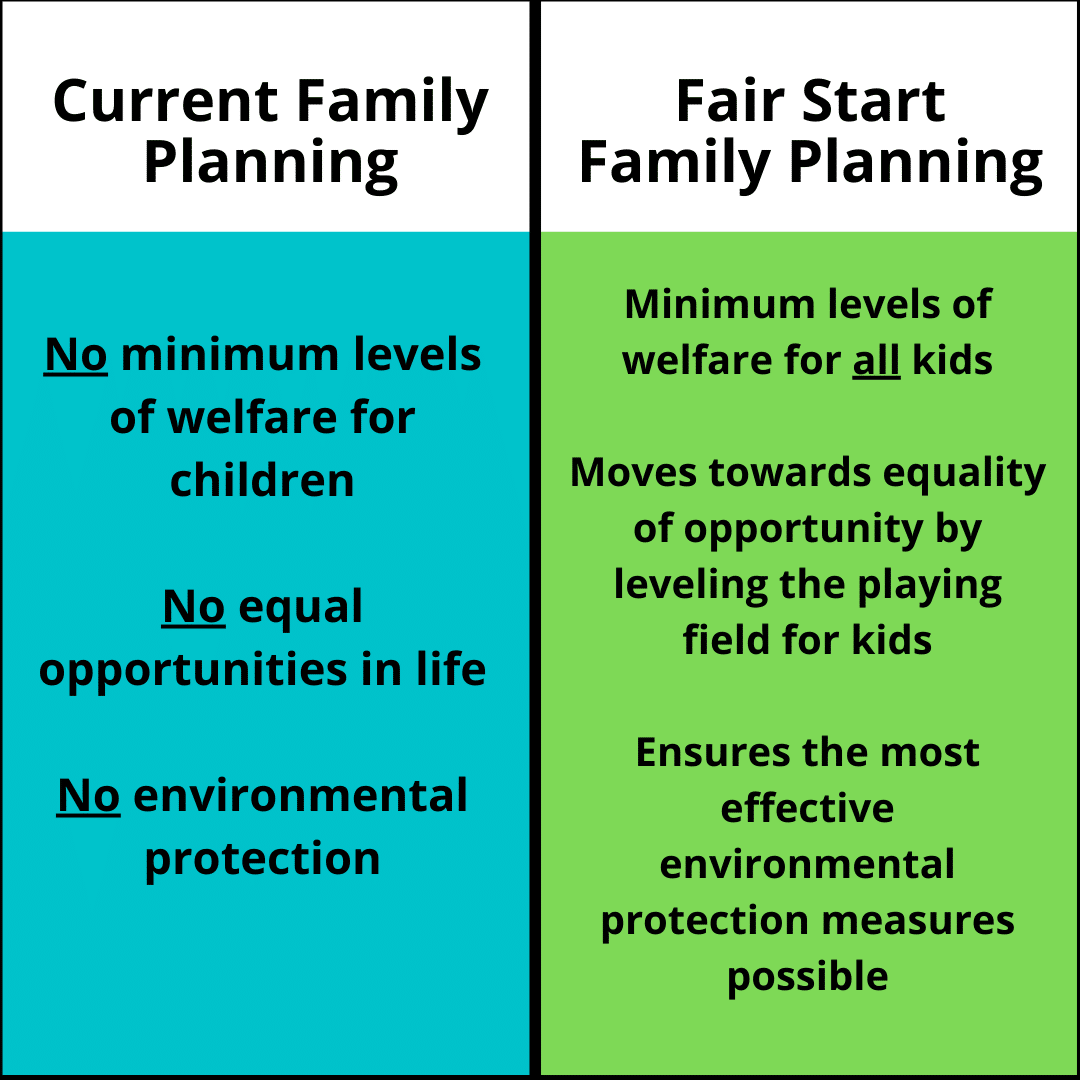
How could that happen? For decades reproductive rights systems built on “separate but equal” ideology enabled inequitable growth that – absolved from having to pay the costs of equitizing birthrights – created extreme concentrations of wealth. That wealth now funds downstream, micro, and charade-level interventions that hide the macro process and create a fantasy world of progress that hides liability for the polycrisis.
That wealth, not on-balance values like the full measure of protecting animals, accounts for public interest policy and interventions.
Animal liberation can entail the symbolic rescuing a handful of animals and doing a few show trials, while growth drives the harm of trillions of more animals than activists protect.
To protect animals – to practice animal law actually capable of that – requires accounting for the relations they have with humans, relations that start as humans enter the world. But that entails accounting for things like racist child inequity, the countervailing impact of growth, questions of what we owe future children harmed by the climate crisis and whether that debt overrides competing interests, etc.
We, like the Brooks Institute for Animals Rights Law and Policy that funds the animal law program Justin manages as well as his title, chose greater harm to animals than we as animal lawyers could ever do good with our downstream and micro interventions, a choice made we made in order to evade difficult questions around birth inequity, while benefitting ourselves and those funding us, at cost to animals. It was a deliberate choice of macro (human / nonhuman indivisible) animal propertyhood over macro personhood, and in contravention of the wishes of Brooks McCormick Jr. to protect animals – a fact that Fair Start will show in the years to come.
Following the true intent of Brooks McCormick Jr. to protect animals requires the funding of reforms at the level of the creation of power relations between humans and animals. Based on what I saw at the University of Denver, Tim Midura and his daughters – whom he hired to lead the Institute – will have spent more on lavish events than on developing and implementing a norm that could on-balance protect animals by rearranging entitlements at the most fundamental level, accounting for and reversing overshoot and the inequitable and disenfranchising growth that causes it.
Relative to inequitable and disenfranchising growth, Midura’s use of the money had a negligible beneficial impact on animals – and he made that choice, to not even take the first necessary step of altering his conception of animal law and its basic content.
Trump did not simply win. The public interest sector became corrupt, and they and those they fund are betting they can use their wealth to suppress these truths, and that audiences will simply not hear them nor act upon them. The programming is further evidence that public interest interventions often do more to protect the growth-based wealth that funds low-impact charades, made at cost to children’s and animals’ rights, than to actually further those rights.
The baseline for progress in the programming, and the school in general, was set closer to growth economics based on treating children of color as deserving less that white kids, a standard that has nothing to do with animal welfare, exacerbating situations like the ejiao trade in equines and it’s projected growth. Original intent in the founding of the programming aside, that standard used is illegal because it violates a host of laws, including the fundamental rule that persons obligated to a legal system should first be empowered by it.
Marceau, instead of dealing with animal rights in the context of the subject-level relations of reproductive rights, intentionally chose to silo the issue away from birth equity in order to triple-dip: 1) benefit from his arbitrary but very privileged national/racial/class birth positionality, 2) benefit from growth-based wealth unimpeded by the rights of future children, and 3) pretend to be an animal savior while ensuring a comfortable life for him and his children at cost to animals. Pushed to do animal law as reforming the express or implied “we” reference that is the premise of all fundamental legal instruments like constitutions and covenants, their concern for animals fades relative to their desire to preserve their children’s unearned privileges.
Macro animal personhood and rights, the sort that accounts for the actual lived experience of all nonhumans, marked from the birth-creation of their relations with humans, is designed to prevent this sort of charade-level work and distractivism.
The lives animals experience cannot be separated from the creation of the humans with whom they will interact. Justin divides the two issues to get the benefit of appearing to be a hero, while using an underlying system – and its funds – that does much more harm to animals than he does good.
That’s a charade. And it’s illegal.
What Marceau did – part of a larger example of public interest advocates selling out, cost macro reforms that on-balance benefit animals substantial funding and time. And that cost the lives of mostly persons of color.
The University of Denver, and its funders, now have an opportunity to change the way it assesses value and report impacts – to eventually be able to substantiate its claims of furthering animal rights and liberation, the highest standard of environmental protection one can imagine and something that cannot be separated from the future prospects and lives of all children.
Fair Start and Truth Alliance activists have called upon the University to join the Tell the Truth campaign, and back preemptive standards for human rights and constitutional reforms that would truly liberate all animals.
The University has done the micro version of animal liberation and personhood. Now it can do the macro.
If it’s illegal to use a business model that prohibits hiring or housing persons of color, it’s illegal to structure cost/benefit business models to enrich some children at deadly cost to children of color. Use of that model hides liability for the deaths of tens of millions as the climate crisis intensifies, and reflects the academic and public interest practice that ensured the polycrisis: Constantly moving goalposts away from the infant-health-as-enfranchisement standard necessary for political legitimacy in order to falsely claim truth, or victories, and to thus raise funds.
Unless a person or company claiming to add value to the world can show they were evaluating and reporting by accounting for the preemptive costs of having to measurably empower all children equitably as they enter the world – and at a standard where those children could protect themselves from the climate crisis, autocracy deadly inequity, etc. – the person or company making the claims was using an illegal baseline, a Ponzi/equity-fraud standard that benefits them at deadly cost to others, and mostly children of color.
What do we do about it?
Use of that illegal baseline constitutes unfair and illegal (actually uniquely unconstitutional) competition. Entities willing to pay the costs of legitimacy by refusing valuation and reporting models that don’t actually empower children as they enter the world at a measurable level of “one person, one equal and influential constitutional vote” could never compete against those who refuse to do that, those who triple dip on their arbitrary birth positionality in an unsustainable system of growth to benefit from a system that quietly does more harm to their professed cause than they do to further it.
And the just need not be subjected to unfair and unconstitutional competition: Because governments’ authority, including to entitle /incorporate private entities and assign wealth, derives uniquely from the obligation to empower those subject to that authority and those entitlements, governments are under a preemptive obligation to prioritize the elimination, through things like consumer protection actions that can enjoin the underlying business models, of illegal baselining.
“National legitimacy is, and should have always been, contingent on measurable birth equity or
the empowerment of each child to eventually control the outcomes of their political systems. The
Tell the Truth campaign, which is a universal discourse in which all admit wrongly assuming
children legally deserve with the prospects they are born with rather than what racial justice,
their rights, and political equity require, and commit to prioritizing those things, is the best
pathway to that legitimacy. Ensuring this change, especially in post-reconstruction scenarios, is
the first order of business for everyone, and a discourse of our birth-equity obligations – in which
it takes a village to plan for a child – is preemptive.”