Tag: News & Fair Start Headlines

  • College Admissions Scandals Are ‘Tip of the Iceberg’

    College Admissions Scandals Are ‘Tip of the Iceberg’

    The ultra-rich bribing their kids’ way into elite colleges has dominated the headlines for weeks now, as have follow-on stories about the perfectly legal ways the wealthy use their influence to get slots at the top schools.

    Why do we care? We care because our society is built on the rule that people must earn the benefits they receive. This is a country born on an ideal that monarchies and other birth-hierarchies should be torn down and that each person should earn their benefits. Wealth and social classes are not supposed to dictate success in life. Rich kids should not have an advantage over others.

    That’s why this scandal has received so much attention – aided by the salacious celebrity connection.  But the media isn’t looking at the whole picture. If we are going to constitute true fairness and opportunity, we have to take the idea of giving every child a fair start from the beginning of life, when it really matters.

    That massive inequality is a significant factor in the college attainment rate being less than a third of our population. The reality is that rich kids stay rich and poor kids stay poor. 

    Anthony Jack, author and assistant professor at Harvard University made the critical observation that, “[college admissions bribery] is a continuation of things that wealthy things have been doing for their children since they were born… This is opportunity hoarding 101. These are wealthy individuals trying to amass every resource and opportunity at the expense of other people… These are the parents that pay a thousand dollars an hour for the SAT, or get people to write their children’s essays… This isn’t something that started in a student’s eleventh or twelfth grade year.”

    “This is opportunity hoarding 101.”

    To change that, we have to start at the very beginning – with the conditions in which people are born. We can create a more level playing field by changing the way we plan families. Fair Start family planning means delaying parenthood, working with others, and investing more resources in each child. When parents wait and have smaller families, they are more likely to break the cycle of poverty. It positions their kids for greater early learning, emotional development and academic achievement. Smaller families make also these investments sustainable for communities, and attainable for families.

    Our centers of power are morally obligated to ensure a fair start for all kids. Guaranteed Minimum Income tied to family planning is one way to achieve it. We have also asked Senator Elizabeth Warren to tie her universal child care plan to family planning.

    Before Fair Start family planning we did not have a clear way to fix the problem of massively unfair starts in life because we could not control for the conditions in which children were born or protect human rights. But with Fair Start, parents who need resources, and are willing to wait and plan, have an overriding moral entitlement to the resources they need from the greatest concentrations of power. And because giving kids a fair start in life – or the creation of what John Rawls called free and equal people – is the beginning of democracy, it has to be our primary – our priority – policy objective.


    What can you do to challenge the status quo?
    • Tweet @SenWarren asking her to tie her universal child care proposal to #fairstart family planning.
    • Ask Washington D.C. @MayorBowser to consider Guaranteed Minimum Income tied to family planning to reduce inequality in the district.
    • Tweet these influential journalists and ask them to cover the need for Fair Start family planning reform.
    • Engage a person you know is especially wealthy and giving their kids an unfair start in life  – unearned benefits and privileges – asking that they justify their actions. Report back your story so we can publicize it. 
  • George Mason Professor Pushes Women to Have More Kids

    George Mason Professor Pushes Women to Have More Kids

    Tyler Cohen is urging women to have more kids as a solution to climate change, despite clear evidence that larger families are the worst way to intensify it.

    His logic?

    To put those worries out of mind, ask yourself a simple question: Is the remedy for climate change, to the extent we find one, more likely to come from North America or New Zealand?  Obviously, the wealthier and more populous America is a more likely source of technological innovation, even though it is also a more significant source of greenhouse gases. So if you think progress in this fight is possible at all, you ought to be betting on the more populous nations. By having more children, you are making your nation more populous — thus boosting its capacity to solve the problem.

    Yes, he’s arguing we should randomly have more kids, and thereby intensify all anthropogenic impacts on the planet (including ocean acidification, mass extinction, increased risk of social conflict and competition for scarcer resources), in the hopes that one child might one day develop a solution. Forget taking more sustainable steps, like encouraging smaller families where children get more individual investment to be better equipped to solve our greatest problems. Let’s just roll the dice, grow our numbers, and hope for the best.

    Tyler Cohen is actually not that stupid. But he is intellectually dishonest. Why would an economics professor who does not appear to have kids himself, make silly arguments like this? Because he and other elites are stuck in a mindset of unsustainable population growth, or the Ponzi scheme of creating wealth and growing economies by simply adding more people. Tyler does not think that randomly having kids – as opposed to improving educational systems – will solve the problem. He just wants you to have more kids because that fuels the unsustainable system, which is designed to hide and externalize its costs, upon which he and so many misguided economists have built their careers.

    Here’s a better idea: Let’s do the most effective thing possible to address all of our ecological and social crises at the same time, and promote smaller, more sustainable families instead.

  • Kudos to Vox. Now Lets Connect the Dots on Climate, Kids, and Policies.

    Kudos to Vox. Now Lets Connect the Dots on Climate, Kids, and Policies.

    Vox has recently done a great job making the connection between the ethics of having kids and things like climate change, or the quality of the resulting lives. But can we urge Vox see the crucial need to revise our family planning policies to prioritize every child getting a fair start in life?

    Here’s one way. 

    Elizabeth Warren is right to focus on the need to improve child care throughout the United States. Vox knows this. But quality child care, and the sufficient development of children to ensure real democracy in the future, depends on both supply and demand. Any policy changes should be geared toward strengthening family planning and bringing kids into better conditions, as well as improving the overall conditions. Warren should distinguish herself from Ivanka Trump, who like her father, also supports child care, but because it is a way of maintaining the growth-based Ponzi scheme of creating profits for investors by creating more people.

    Warren should embrace a policy of smaller families sharing resources to invest more in every child. That’s the best way to protect our most vulnerable entities, mitigate climate change, and ensure an ecologically and socially sustainable future.

    Will Vox help? Tweet Lauren Williams at @laurenwilliams and ask her to publicize the difference between growth-based and child-centered child care policies, and call for the latter.

  • Two of the Most Effective Actions You Can Take to Fight Climate Change

    Two of the Most Effective Actions You Can Take to Fight Climate Change

    Anthropogenic climate change, as the name suggests, derives from humans – or an imbalance between the quantity of people on the planet, as well as our qualities (e.g. proclivity to consume), and our ecosystems.

    Things are projected to get much worse. But we can change that.

    You and/or you kids don’t have to live in a world with billions more people, massive inequality, a polluted environment, and democracies where citizens are powerless. Smaller families sharing resources to invest more in each child, right from the start, is the most effective way to fight climate change and all of the other crises we face.

    So what are the next steps?

    • URGE ORGS TO SPEAK OUT: If you are a member of a donor to an environmental, animal protection, or child welfare organization and they are not promoting policies that encourage better family planning policies and smaller families, urge them to do so, or move your support over to family planning organizations who are helping reduce fertility rates. It’s time to be as effective as we can.

    If you care about climate change and other environmental crises please take effective action now.

  • Kylie Jenner, Inequality, and the Future of America

    Kylie Jenner, Inequality, and the Future of America

    Twenty-one year old reality tv heiress Kylie Jenner has been called a “self-made” billionaire by Forbes Magazine. Given the wealthy family in which she was born and other massive unearned privileges, many are laughing at that claim. The key to being rich is being born rich, as evidenced by the lavish #StormiWorld amusement park party in which her one year old received her first Chanel purse.

    Displays such as this raise deep questions about what it means to live in a country where the wealthy easily multiply their fortune (see the chart below), while 41% are lacking in the most basic necessities and are becoming downwardly mobile. Our educational systems keep the average person in the United States reading at the level of a 7th or 8th grader.

    Tweet Kylie at @KylieJenner, and urge her to give a child in a need a fair start, relative to her start in life.

    income growth inequality
    Source: David Leonhardt, NY Times

    Climate change is now exacerbating this inequity as it disproportionately affects impoverished communities and drives up the painful costs of being poor. Is the playing field so slanted that it’s finally time to take bottom-up direct action to level it?

    Solutions like the Green New Deal fall short for the same reasons that all other new reforms fall short. They make the same mistake we have made for centuries – by failing to see the responsibility we have to future generations. This is not some abstract duty – it involves ensuring every child born a fair start in life. But we have made, and continue to make, that mistake in part because of built-in cognitive biases against long-term (and especially effective) planning. Those biases blocked thoughtful, sustainable, and cooperative family planning that – had it been instituted decades ago – would have prevented the climate change, massive inequality, and failing child welfare systems that threaten us today.

    All of this stems from the fact that our understanding of the social contract that legitimates our system of government is deeply flawed. How does it account for the fact that United States, through its climate change policies, has become a national security threat to itself?  Our social contract is only valid to the extent it ensures we remain free and equal people. That includes preventing the dystopian future of a degraded environment, massive inequality, a weaker voice in democracy, and the consolidation of power of the few over the many – the path on which we are heading.

    What then are we doing to protect those future generations, today?

    The Fair Start family planning model, corrects that shortsightedness and legitimates the social contract by putting children’s interests first. It does so by making the beginning of the social contract a simple two part agreement:  Communities ensure that parents have the resources to plan families and guarantee that all kids have the resources they need for a fair start in life. And parents delay having kids, and have small, sustainable families that put less demand on our shared resources and our world.

    That agreement creates the first term of the social contract – the first human right, the “we” in “We the People”. It creates an ecologically sustainable (if not regenerative) society of people who receive a fair start in life. It builds human rights-based democracies from the ground up by ensuring all kids get what they need growing up, or a truly level playing field, and is simultaneously the most effective way to mitigate the threat of climate change and other environmental crises. It is, hands down, the most effective way, to protect kids, animals and the environment.

    Unlike the current version of the Green New Deal, the real deal of child-first Fair Start planning appeals to the ideals of the most thoughtful conservatives and libertarians, as well as liberals. The model recognizes that 1) long-term planning and ensuring the actual development of each child is the most effective way to addresses our greatest threats, 2) that both Big Wealth and Big Government have utterly failed their obligations to ensure that development, and 3) that the assets of both should would best be redirected  – by the people – towards Fair Start funds, in an override of any claims people like Kylie might have to unlimited wealth, as well as any obligation to pay tax dollars that may simply be wasted. That’s the real deal – one between us and future generations to build democracy from the ground up – out of the actual people that will comprise it.

    Non-partisanship aside, this is key: Because Fair Start family planning is lexically prior to all other rights in the social contract (the first term), it overrides anything with which it conflicts. We are before we do. All kids have a fundamental human right to a fair start in life – which can be secured by any means effective. What does all of this mean? The right to a fair start in life, as the first human right, overrides both private property rights and tax obligations. The Fair Start model is a non-partisan real deal for conservatives and liberals to both make concessions. Big wealth and big government both need to decentralize influence and use resources to empower future generations and make them resilient. 

    Our world, and future, is defined by the people in it. But they are mostly defined by the conditions in which they were born and raised. Fair Start family planning ensures that all kids have the resources they need for a fair start – not a head start for a few, like Kylie. Fair Start family planning is a real deal – focusing on the creation of future generations, and it should be the foundation of modern attempts to revise the social contract, like the Green New Deal.  

    What would you do to protect future generations and ensure they get what they need? What have prior generations sacrificed to protect us, and ensure our freedom? Could the resources of the elite be put to the best use preventing climate change through the most effective means possible – better family planning? The ground to encourage and ensure Fair Start family planning lies everywhere in this country. Every person is a potential freedom fighter to create a real social contract. Kylie, and especially those bad actors like Exxon that have profited from creating the threat of climate change, should not underestimate what parents will do to protect their kids once they learn to question the legitimacy of unlimited property rights and other unquestionables that the elite take for granted.

    Someone like Kylie, who has colossal influence should openly endorse better family planning to help ensure other kids a fair start in life relative to her own and her daughter’s. Furthermore, the taxes that she and the rest of the ultra-rich are paying could be partially shifted into Fair Start funds. Ensuring all kids a fair start in life should not be a morally controversial thing. Together we can work together to make it happen – a much preferable scenario to the alternative.


  • Elizabeth Warren Proposes Free Child Care. But Will It Increase Births?

    Elizabeth Warren Proposes Free Child Care. But Will It Increase Births?

    Presidential Candidate, Senator Elizabeth Warren recently unveiled a plan for Universal Child Care and Early Learning. The proposal would shift resources from the mega-wealthy to fund the effort. But some have asked if it would encourage people to have more kids.

    Warren is one of the leading economic experts in our country. Surely, she is aware of the depth and effects of inequality as it relates to families and kids. Unsustainable and poor family planning is worst way to exacerbate climate change and inequality.

    The Universal Child Care and Early Learning Proposal would benefit millions of kids and help give them a fair start in life. But we can avoid the potential for free child care to incentivize poor family planning. With this in mind, we wrote to her with a suggestion for improving her Universal Child Care and Early Learning Proposal.

    Read our letter to Sen. Warren.

    We suggest an addition that ties universal child care and early learning to new parent education about the benefits of smaller families.

    overpopulation sustainability
    Click to enlarge

    In a 2.0 version of Sen. Warren’s plan, new-parent education could be required in order to enroll for free child care. This would create a long-term planning approach for family planning in the U.S. Encouraging smaller, well planned families addresses, rather than exacerbates, the greatest threats facing the country – the degradation of our social and natural environment through things like inequality and climate change.

    We can break down the barrier between family planning and child welfare, aligning need with resource, as outlined by the Fair Start Model. Sen. Warren’s proposal would shift resources to give kids a fair start in life. Why not take it a step further by planning for our future?  

    Better child care should be meant to help kids, not simply enable parents to afford larger families. To help kids effectively, we have to aim to protect future kids, because we get the best results when we all plan well ahead.

  • AOC Addresses the Big Question of Kids and Climate Change

    AOC Addresses the Big Question of Kids and Climate Change

    [et_pb_section fb_built=”1″ _builder_version=”4.16″ hover_enabled=”0″ global_colors_info=”{}” sticky_enabled=”0″][et_pb_row _builder_version=”4.16″ background_size=”initial” background_position=”top_left” background_repeat=”repeat” global_colors_info=”{}”][et_pb_column type=”4_4″ _builder_version=”4.16″ custom_padding=”|||” global_colors_info=”{}” custom_padding__hover=”|||”][et_pb_text _builder_version=”4.27.4″ background_size=”initial” background_position=”top_left” background_repeat=”repeat” hover_enabled=”0″ global_colors_info=”{}” admin_label=”Text” sticky_enabled=”0″]

    In a recent Instagram Live video, Congresswoman Alexandria Ocasio-Cortez raised a question many Millenials are asking in the age of climate change: is it ok to still have kids?

    “It is basically a scientific consensus that the lives of our children are going to be very difficult, and it does lead young people to have a legitimate question: is it OK to still have children?” – Rep. Ocasio-Cortez


    She is
    not the first to ask this question. It’s an existential worry many are asking as they consider whether to have kids, or have another.

    Given what we know about how climate change will affect the next generation, especially those most vulnerable, isn’t it a fair question? Or is it a fight too taboo to discuss?

    Sadly, some call such a question extreme. What’s extreme is the suggestion by some like Meghan McCain that action on climate change means supporting infanticide.

    Thankfully, AOC is more reasonable. While she did not give a definitive answer to the big question, she did explain:

    “…even if you don’t have kids, there are still children here in the world and we have a moral obligation to them to leave a better world to them.”

    But how do we get there?

    We could not agree more with Rep. Ocasio-Cortez. But the Green New Deal she’s advocating forgot to include the most important factor in creating a better world: better family planning. People drive emissions and use resources. While transitioning to a carbon-neutral economy is important, it’s not enough to protect natural spaces and species that are disappearing due to urban sprawl. 

    Family planning investments and policies not only improve lives and reduce inequality. Research indicates that they result in smaller families which demand less on our communities and more sustainable. Improving family planning in our country and across the world would allow us to fulfill the moral obligation we have to our kids.

    Reducing Rates

    TAKE ACTION:
    Tweet Rep. Ocasio-Cortez, @AOC and ask her to include family planning in the Green New Deal to give kids a #fairstart and #actonclimate.

    [/et_pb_text][/et_pb_column][/et_pb_row][/et_pb_section]

  • Hungary: Close Borders, Pay Women to Have Big Families

    Hungary: Close Borders, Pay Women to Have Big Families

    The Washington Post recently reported that Hungary is so desperate for kids that mothers of four won’t need to pay income tax. Leaders like Hungary’s Viktor Orban and Senator Marco Rubio here at home call for more births to counter demographic declines while at the same time demanding closed borders and blocking migration that could solve that problem.

    Nevermind that it’s undeniably racist. These short-sighted, tribalist, and ill-informed cash for babies schemes are regressive as well. Fertility is not limited to national boundaries. The impact larger families have spill out across the world. We know that we are twelve years from catastrophic climate change. Even accounting for closed borders, the resources used by each person impose a significant strain on the planet.

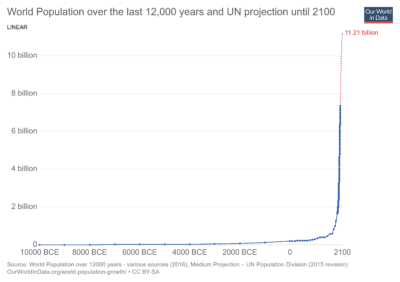
    Line graph showing world population from 10,000 BCE to 2100. Population remains low until a sharp rise after 1800, reaching over 8 billion in 2020 and projected to reach 11.21 billion by 2100. Economists and the media are just as guilty in the hysteria over declining fertility rates. But the bigger picture shows that there is no shortage of people. World population is projected to grow exponentially, despite the growing trend towards smaller families.

    Shouldn’t we demand modernized thinking of our leaders and see beyond borders to the world we all share? Our kids and future generations are counting on us.


    TAKE ACTION
    We can counter the regressive rhetoric. We’re asking the U.N. Secretary-General to recommend smaller families to create a better future for kids. Add your name here. 

  • One Mother’s Effort to Change the Way We Plan Families

    One Mother’s Effort to Change the Way We Plan Families

    Erika Mathews, Executive Director Having Kids, is taking the bold step of using her own family as a way to promote better family planning. This lone mother is breaking a taboo by speaking out about the need for everyone to choose smaller, better-planned families.

    The well-known animal rights activist chose to have one child, Willow, age 11. Erika is now promoting a smaller family ethic and policies, which study after study have shown is the most effective way to solve key environmental and social crises, like climate change and rising economic inequality.

    • The most effective way to address many of the impacts on our environment and other species, like climate change, is by choosing smaller families. Yes, it’s up to 20 times more effective than changing diet or forms of transportation. By 2100, world population could vary by billions of people, depending on whether the average woman in the world today has one child more or one child fewer in her lifetime
    • The science of early childhood development shows the disproportionate impact the beginning of our lives has on the rest of our lives. This holds true, among other things, for economic inequality. Better family planning is the best way to reduce inequality. Other interventions are simply too late.

    Why subject herself and her family to criticism? Erika says, “I care about my kid. I care about all kids. This is the most effective way to protect their future. What parent wouldn’t act to protect their kid?” For Erika the logic is simple. Smaller families can invest more in each child, and if parents take steps to plan their families, they can connect their kids with the crucial resources they need to have the most impact over the span of their entire lives.

    Erika, through her organization Having Kids, is urging other mothers to speak out. “We can change the direction the world is headed. We just have to start this conversation.”