
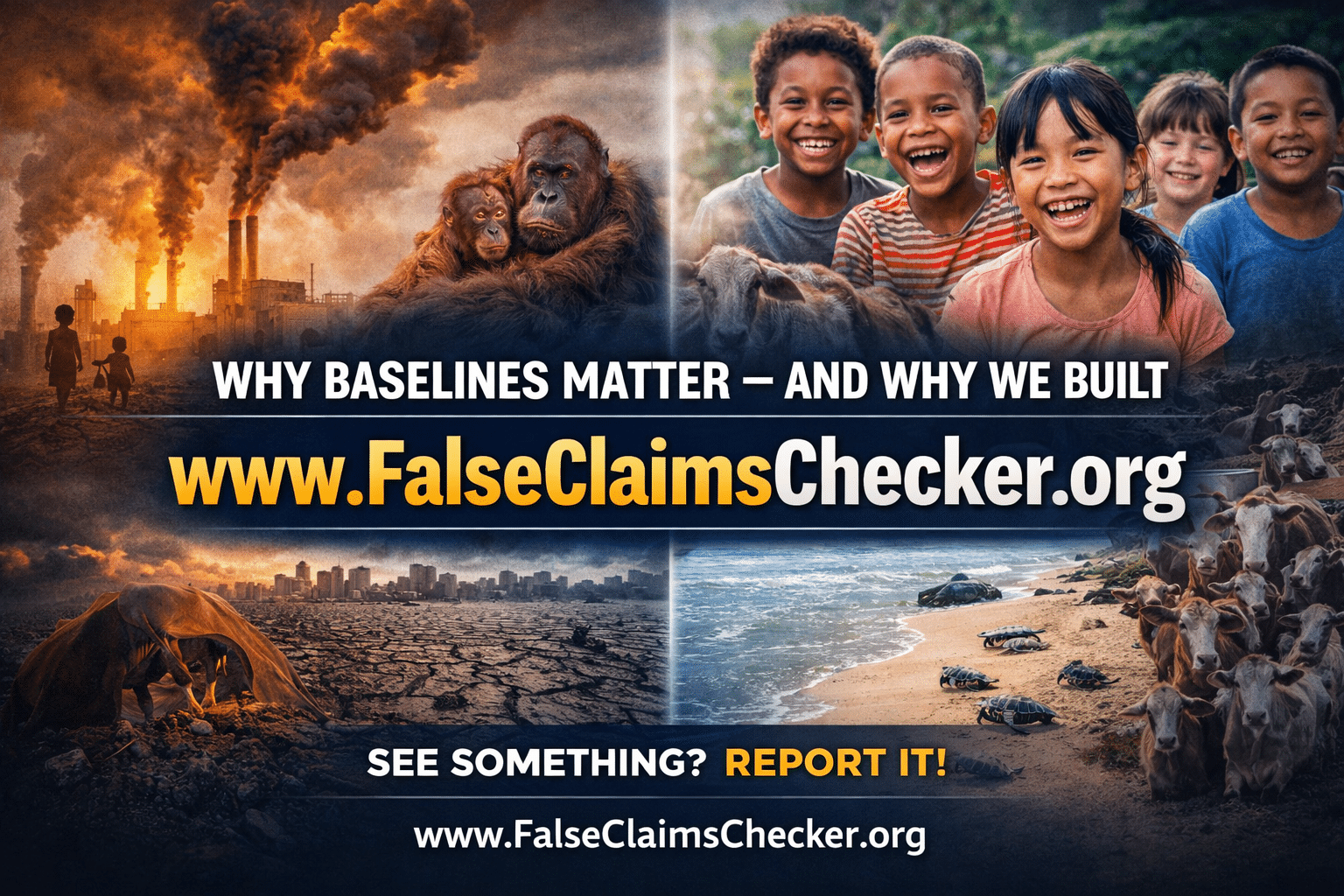
What is happening right now is bigger than one university, one legal program, or one public dispute.
Across the world, people are beginning to ask deeper questions about institutional accountability, transparency and truth. Whether in conservation, climate policy, social justice, public health or animal protection, the same concern keeps appearing: are institutions presenting real impact, or carefully managed narratives of impact?

That question now sits at the center of growing concerns surrounding the University of Denver Sturm College of Law’s animal-law programming.
And importantly, these concerns are no longer coming only from activists or campaigners.
On February 18, 2026, public health and systems governance specialist Pierrette Kengela submitted an expert perspective letter to Dean Smith of the University of Denver Sturm College of Law. Writing in his independent expert capacity, Kengela outlined growing cross-sector concerns regarding what he describes as “baseline transparency” and “impact integrity” in public-interest programming.
His letter matters because it places this issue into a much wider global context.
Kengela’s work focuses on child rights, intergenerational accountability, institutional integrity and African Union–aligned policy work examining long-term social and structural outcomes. In his letter, he explains that across multiple sectors there is increasing technical concern about how institutions communicate public-benefit impact to donors, students, stakeholders and the wider public.
At the center of that concern is one enormously important distinction:
The difference between “program outputs” and genuine “net outcomes.”
In simple terms, institutions may report actions taken, services delivered, advocacy campaigns launched or legal cases supported. Those are outputs. But the deeper question is whether overall conditions genuinely improved once the surrounding baseline realities and structural drivers are fully accounted for.
And that distinction changes everything.
Because if underlying systems continue expanding suffering faster than interventions reduce it, then institutions have a responsibility to communicate that reality honestly.
Kengela’s letter explains that this issue is now increasingly recognized across public health, climate accountability and governance sectors as a matter of evidence integrity and informed public reliance. Public-facing impact claims, he argues, should be clearly bounded by transparent assumptions, modelling limits and honest disclosure of baseline conditions.

That is not an attack on advocacy.
It is a call for credibility.
The concerns raised around Sturm’s animal-law programming center on whether public-facing impact language may imply meaningful net progress in animal protection without sufficiently disclosing the wider structural conditions shaping those outcomes. In other words, whether downstream successes are being publicly emphasized while upstream systems driving harm remain outside the accounting framework.
This matters deeply because law schools are not ordinary institutions.

Lady Justice on a desk by a scale on a desk near laptop
They train future legal professionals. They shape public discourse. They carry institutional authority. And when legal institutions communicate impact to the public, donors and students, there is an expectation that those representations are grounded in rigorous evidence and methodological integrity.
Kengela’s letter warns that when baseline assumptions remain implicit, program outputs can unintentionally be interpreted as evidence of broader net progress even when underlying structural conditions remain unchanged or continue worsening.
We see this problem across the world every day.
Wildlife conservation campaigns celebrate rescues while habitats continue disappearing at industrial scale. Sustainability initiatives market progress while ecosystems collapse in the background. Social justice organizations report outputs while inequality deepens year after year. While there are many great rescues happening, and conservation efforts are working, with rewilding and many species have been saved from extiction due to conservation efforts. Many species are in rapid decline, with direct conflict with people. Such as the lion.

And meanwhile, ordinary people are left believing the systems are working.
This is why transparency matters.
Not to destroy institutions, but to strengthen them.
Not to undermine advocacy, but to ensure public trust in it.
Kengela repeatedly emphasizes in his letter that this is ultimately a governance issue. From a public health and institutional integrity perspective, he argues that transparent disclosure of assumptions and modelling limitations is essential so that donors, students and the public can accurately understand what institutional metrics do — and do not — establish.
Because impact should never depend on selective visibility.
And that is the wider issue now being confronted.
Around the world, institutions have become incredibly skilled at marketing compassion. But increasingly, people are beginning to ask whether those narratives are supported by full accounting of the systems underneath them.

The world does not need more carefully managed branding around justice, sustainability or animal protection.
It needs honesty.
It needs institutions willing to openly examine whether the outcomes they publicly promote remain true once baseline realities are fully disclosed.
Because if we truly want to protect animals, protect people and create a sustainable future, then accountability cannot be treated as an inconvenience.
It must become the standard.
And perhaps most importantly, it must begin with the courage to tell the whole truth — even when the full picture is uncomfortable.
Letter –
February 18, 2026
Office of the Dean
University of Denver Sturm College of Law
2255 E. Evans Avenue
Denver, CO 80208
Subject: Expert Perspective on Baseline Transparency and Impact Integrity in Animal
Law Programming
Dear Dean Smith,
I write in my individual expert capacity as lead of the African Union–focused petition on birth
equity and intergenerational accountability, and as a public health and systems governance
specialist working at the intersection of child rights, equity, and institutional integrity.
My engagement on this issue is informed by cross-sector work examining how public-interest
claims are evaluated in contexts where structural conditions, including child-rights protections,
intergenerational equity, and climate-related vulnerability, materially shape real-world
outcomes. Across these domains, there is increasing technical emphasis on ensuring that
institutional impact language is analytically bounded by clearly stated assumptions and
methodological limits.
I am aware that FairStartMovement.org and TruthAlliance.global have filed an institutional
complaint with the University of Denver Sturm College of Law requesting written clarification
and internal review regarding (a) how animal-law programming and affiliated advocacy assess
and publicly represent impact and (b) whether public-facing claims clearly distinguish program
outputs from net outcomes once baseline variables and modelling limits are disclosed.
I offer this perspective to support careful institutional reflection on the methodological and
governance considerations raised in recent correspondence regarding impact representation in
animal law programming. At its core, the issue under discussion, namely, the use of impact
language that may imply net outcomes without explicit baseline disclosure, is increasingly
recognized across multiple sectors as a matter of evidence integrity, informed reliance, and
sound institutional governance.
This perspective is offered in the spirit of strengthening methodological clarity and informed
institutional practice. It does not seek to adjudicate underlying policy positions or advocacy
viewpoints. Rather, from a governance and public-reliance perspective, the central
consideration is whether public-facing impact representations are appropriately bounded by
transparent baseline assumptions, clear modelling limits, and a disciplined distinction between
program outputs and net system outcomes.
Context: Growing Cross-Sector Attention to Impact Integrity
Across multiple sectors, including global health, climate accountability, and social justice
programming, there is growing recognition that program outputs (e.g., services delivered, cases
supported, or interventions undertaken) must be clearly distinguished from net outcomes once
relevant baseline conditions and modelling limits are considered.
This distinction reflects well-established evaluation principles concerning attribution,
materiality of assumptions, and the decision-usefulness of public-facing evidence. It is not a
matter of perfection, but of analytical clarity and institutional credibility.
From a child-rights and intergenerational equity perspective, the question is straightforward:
public-benefit claims carry the greatest legitimacy when institutions clearly state the baseline
assumptions under which those claims are made and disclose any material limits in the
underlying models. Doing so protects donor intent, supports informed public understanding,
reduces the risk of reliance on overstated impact narratives, and strengthens confidence in
academic and advocacy work alike.
Cross-Sector Observations from AU-Aligned Work
The African Union–oriented work I help lead has emphasized that systems of accountability
across sectors increasingly require attention to how structural conditions, including
intergenerational equity dynamics, shape the real-world effects of well-intentioned
interventions. Across multiple policy environments, we have observed that where baseline
conditions and distributional assumptions remain implicit, program outputs can be
inadvertently interpreted as net progress even when underlying structural drivers of harm
remain unchanged. This is not unique to any single field; it is a recurring systems-governance
challenge with implications for evidence integrity, public reliance, and the credibility of
impact-oriented work.
During AU-aligned policy work and related cross-sector reviews, our analyses have similarly
emphasized the importance of testing whether publicly communicated program gains remain
robust once underlying structural conditions and distributional baselines are made explicit. In
practice, this involves examining (i) the stated program outputs, (ii) the baseline conditions and
equity assumptions under which those outputs are interpreted, and (iii) the extent to which the
institution has bounded any net-outcome implications through appropriate methodological
disclosure. Where these elements are not clearly aligned, even well-intentioned impact
narratives can outpace what the available evidence is positioned to substantiate.
In that spirit, I respectfully encourage continued academic engagement with evolving best
practices in impact transparency, baseline disclosure, and methodological clarity, particularly
where public-facing programs may reasonably be understood by external stakeholders as
demonstrating net social benefit.
Institutional Relevance for Academic Programs
Universities play a uniquely important role in modelling careful, evidence-based
communication for the broader public. Processes that review impact language, clarify
modelling assumptions where needed, and ensure alignment between program descriptions and
measurable outcomes can only strengthen institutional trust. This is particularly important in
fields such as animal law and social justice advocacy, where stakeholders, including students,
donors, and community partners, may reasonably rely on institutional representations when
making financial, legal, or professional commitments. Where baseline conditions materially
shape net outcomes, transparent disclosure is not merely a technical preference but an element
of sound governance and informed public reliance.
I note the University of Denver’s role in legal scholarship and animal law education and
encourage a constructive, evidence-grounded dialogue on these questions as the field continues
to evolve. Engagement with emerging standards on baseline clarity and impact framing offers
an opportunity for academic institutions to lead proactively in strengthening methodological
rigor across the sector, consistent with the broader accountability principles increasingly
recognized in global health, sustainability, and intergenerational equity work.
From a public health and governance perspective, the distinction between reported outputs and
demonstrated net outcomes is not merely semantic; it is central to risk interpretation, resource
allocation, and institutional credibility. Where baseline conditions materially influence
downstream effects, good practice increasingly favors transparent disclosure of key
assumptions so that donors, students, and the public can accurately interpret what program
metrics do, and do not, establish.
Sincerely,
Pierrette Kengela
Public Health Expert
Lead Contributor, AU Birth Equity Petition
Founder, Joy4All Global Initiative