Category: Community & Stories

  • One Mother’s Effort to Change the Way We Plan Families

    One Mother’s Effort to Change the Way We Plan Families

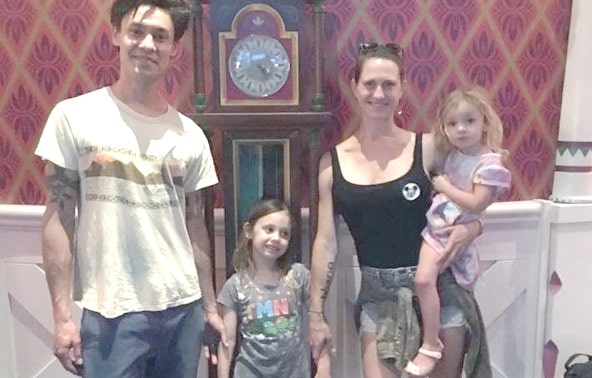
    Erika Mathews, Executive Director Having Kids, is taking the bold step of using her own family as a way to promote better family planning. This lone mother is breaking a taboo by speaking out about the need for everyone to choose smaller, better-planned families.

    The well-known animal rights activist chose to have one child, Willow, age 11. Erika is now promoting a smaller family ethic and policies, which study after study have shown is the most effective way to solve key environmental and social crises, like climate change and rising economic inequality.

    • The most effective way to address many of the impacts on our environment and other species, like climate change, is by choosing smaller families. Yes, it’s up to 20 times more effective than changing diet or forms of transportation. By 2100, world population could vary by billions of people, depending on whether the average woman in the world today has one child more or one child fewer in her lifetime
    • The science of early childhood development shows the disproportionate impact the beginning of our lives has on the rest of our lives. This holds true, among other things, for economic inequality. Better family planning is the best way to reduce inequality. Other interventions are simply too late.

    Why subject herself and her family to criticism? Erika says, “I care about my kid. I care about all kids. This is the most effective way to protect their future. What parent wouldn’t act to protect their kid?” For Erika the logic is simple. Smaller families can invest more in each child, and if parents take steps to plan their families, they can connect their kids with the crucial resources they need to have the most impact over the span of their entire lives.

    Erika, through her organization Having Kids, is urging other mothers to speak out. “We can change the direction the world is headed. We just have to start this conversation.”

  • Inequality and Children: Why A Head Start for Some, Hurts All Kids

    Inequality and Children: Why A Head Start for Some, Hurts All Kids

    Bloomberg recently posted a story about a summer camp for the ultra-rich, that teaches them how to get richer.

    What?

    Why should a select few get to have their hands held to jump to the front of the line? Children born with a head start are handed opportunities, access, guidance, trust funds, and connections that allow them to easily generate wealth in adulthood. The doors are opened to them to simply walk through. Compare that with the rest of Americans who struggle to find affordable housing, healthcare and fair paying jobs, and are often burdened with student loan debt.

    But inheriting a massive head start in life from wealth and privilege is not simply unfair. It degrades democracy. Because as the rich getting richer at the expense of a shrinking middle class, powerful interests wield their power to influence policy and keep our economy working only for themselves.

    Furthermore, we know that the economic inequality created by such policies is closely tied to poverty and crime, and results in a number of negative health and development outcomes for children. As inequality increases, child welfare decreases. And that is the direction we are going. How is that progress? Our standard of living should improve over time, not worsen.

    So then, how can we create more fairness and take a serious approach in attacking inequality? The answer is not simply a redistribution of wealth from a system flawed at its foundation. It’s looking at our values as Americans, as humanitarians, and recognizing that children deserve to be born with a fair start. That means safe neighborhoods, healthcare, a quality, equitable education, and nutrition. It also means having parents that are able to give them the time and attention that they need to thrive and be successful.

    This can be accomplished with a cooperative family planning framework. Fair Start family planning brings us together to invest in all kids, to improve equity and create a better society.

    Who would argue against a level playing field?

    TAKE ACTION: Ask him to respond to Having Kids’ questions. Fairness for children starts with those questions. Add your name here.

  • Why Can’t We Prevent Horrific Child Abuse?

    Why Can’t We Prevent Horrific Child Abuse?

    These are just a few of the incidents of child abuse and neglect reported around the country in the past few weeks.

    How many more cases go undetected? The reality is that between 3-5 children die every day in the United States from neglect and abuse.

    It’s time to stop this. And the best way to do that is  by creating a culture, derived from smart policies, that prevents abusive and neglectful parent from ever having kids. It’s time to get proactive, rather than reactive.

    Who would oppose this? Lots of politicians and big businesses make money off of our current family planning system, which pushes as many kids as possible into the world because doing so ensures a growing supply of hungry consumers, and a future filled with cheap labor and lots of taxpayers. They are to blame, and should be held accountable.

    Having Kids is promoting fundamental change through our Fair Start order campaign. It’s simple: If you’ve been convicted of a serious case of child abuse and cannot care for children, you will be ordered not to have additional children until the situation changes.

    These orders are a fair and constitutional way to change the way we plan our families. It’s called the child-first Fair Start model. 

    Let’s get ahead of the problem. Take action now and support Fair Start order legislation in your state.


  • Bucking Tradition: Why One Family Chose To Stop At Two

    Bucking Tradition: Why One Family Chose To Stop At Two

    The Brenn family speaks out to protect their kids’ future, and stop at two. In their own words:

    “My husband and I both come from large families. The fact that we were ‘stopping at two’ still seemed an almost radical concept for many of our loved ones. This is why we’re speaking out. A smaller family really shouldn’t be a radical concept anymore.

    The decision to have ‘only’ two children was not one we took lightly.

    Our kiddos are fun, challenging, full of energy, and fill our lives with love and joy. Sure there are times (ok maybe once or twice) when we thought it would be fun to have a whole football team of kids. BUT…we want the best for them now and in their futures. That is one of the reasons we decided it was best for us to “stop at two”.

    We also want to give each of them the time, love, resources, and attention they need and deserve. Additionally, we want to have time and energy left over to invest in our art and our community as we try to make the world they will live in a better place. Most importantly, we are well aware that given current fertility rates, the world is on course to add BILLIONS more people to our planet! It’s hard to even imagine. Such an increase in population will exacerbate climate change, mass extinction of other species, acidification of the oceans, mounting social pressures and conflicts, etc. Naturally, we want to avoid that our children would live in such a world.

    So no… a smaller family should not be a radical concept.

    Our choosing a smaller family where we do as much as we can to help our kids become good people and part of a thriving community,  won’t be effective, however, if other parents aren’t willing to do the same.

    Parents need to work together to build the future their kids deserve. They can’t do it alone.”

    This is a simple fact: Better family planning, where smaller families invest more in each child, is the best way to help kids and protect the environment.

    Will you speak out? Contact us at Info@HavingKids.org if so.

  • Giving Tuesday: Why Donate to Having Kids?

    Giving Tuesday: Why Donate to Having Kids?

    You care about kids. You care about the environment. You care about equality. Why not do something to protect the things you care about, all at the same time?

    You can, simply by helping people work together and think ahead when it comes to planning their families.

    This is the Fair Start family planning model, and Having Kids is finding ways to build it into our legal, corporate, and cultural systems:

    • We all help parents wait, plan, and be ready before they have kids.
    • We also help them fight for the resources they need, and have a right to, to give their kids a fair start in life.
    • We ease this process by helping to promote smaller, cooperative and more equitable families.

    On this Giving Tuesday please consider what Having Kids does, and give what you can.

    The image is a plain white background with no visible objects, text, or features.

  • Real Love, In Action

    Real Love, In Action

    Get parents talking about their kids and you’ll see a change come over their faces. The love parents have for their children draws out emotions that can’t be hidden, a unique connection that comes bursting through in giddy smiles.

    But to truly love someone else means more than just having feelings. It means showing it through our actions. And when it comes to children, loving them means giving them all the time, energy, resources and attention they need and deserve. It also requires taking action in the community to build a better future, the future in which our children will live.

    The two best things we can do for our kids are: 1. Build a culture of smaller and sustainable families that invests more in each child; 2. Make the world around all kids a better place.

    Today many parents are starting to build that culture – families like the Marsh family, featured in the video above. They are leading by example and showing their love for their children, their communities, and for nature. We owe them for what they are doing.

    If more families do this, we can change our policies to support those families. If we do this together, all our kids can live in a future world that is less crowded, safer, and filled with people that got a fair start in life.

    The future does not have to be crowded and polluted, with a degraded climate and massive gap between rich and poor. But changing it depends on how we approach family planning. Together we can do this. Please join us!

  • Featured Family Counters Growing Royal Family

    Featured Family Counters Growing Royal Family

    On the heels of announcements that Prince William and Kate Middleton are having a third child, another couple – Los Angelinos Mickey and Tricia Bhotiwihok – are setting a different example. Instead of putting money into their children, they are giving thousands to help other children.

    Like Having Kids’ other Featured Families, Mickey and Tricia chose a smaller family. That decision also allows Mickey and Tricia to act on their altruistic natures and help other families.

    To show just how powerful this approach to family planning is, Having Kids gave Mickey and Tricia a big choice: we sent them three thousand dollars that had been allocated for this purpose. The Bhotiwihoks could choose to apply this money to their family. Or they could donate the money. It was up to them.

    Mickey and Tricia chose to donate all three thousand dollars to Project Healthy Children, a Givewell.org standout charity working on fortifying food for kids in the developed world.

    They knew that the best way to ensure everyone’s kids live in a cleaner and safer world is to choose a smaller family and help other families do better too.

    Mickey and Tricia’s Statement
    “Before discovering Having Kids’ Fair Start Model, we did not know there were other ways to approach family planning.  Instead, we relied on generational, social, and cultural norms passed down to us. After considerable thought, we adopted the Fair Start Model, because it just made sense. We are a family of four in which both parents work. Like all parents, we want the best for our children. We are also thinking of the big picture. The Fair Start Model provides an indispensable tool for families and children. Participation in the Fair Start Model demonstrates our commitment to a brighter world for all children.”

    Please join us! HavingKids.org

    Screenshot of an email from GiveWell confirming a ,000 donation to Project Healthy Children, with details on how the funds will be used and additional information for the donor.

  • Why Write the Royals? A Thinking Person’s Guide to Family Planning

    Why Write the Royals? A Thinking Person’s Guide to Family Planning

    Having Kids recently wrote an open letter to Prince William and Kate Middleton to ask them to consider the Fair Start model in deciding whether to have more kids. The reaction of many proves that we need a public discussion of family planning, and we need it now.

    Much of the reaction to our letter fell into these categories:  

    1) Racist and eugenicist rants about why white and wealthy couples should have lots of kids to compete with birth rates in parts of the Southern Hemisphere. It’s hard to think of a more immoral or lose-lose proposition.

    2) Commentators who think royal family size shouldn’t be of interest to those from other countries. This ignores the global nature of climate change, which does not recognize antiquated national borders. Having Kids has been vocal against Mr. Trump, father of five, on these issues. And our points are equally and obviously applicable to any public figure – wherever they may be – pushing unsustainable families. It’s cognitive dissonance to say that choices which so profoundly affect our world are none of our business.

    3) Bloggers who seem creepily obsessed with celebrity babies, and who would subject the rest of us and our kids to a hotter and more crowded world so they can gawk at other people’s newborns. This seems almost too hard to believe, which explains why the blogs are sponsored by companies that sell baby products. These bloggers will have to tell their children, on one of the hotter days in the future, that they were more interested in the royal offsprings’ clothing than the degradation of the world’s atmosphere.

    4) Some asked why we didn’t write to enormous and less admirable families like the Duggars? The simple answer is that we did. But given the massive swings in population that even small changes to a typical worldwide fertility rate of 2.5 would create, the question of role modeling is best raised in the context of couples considering a second or third child rather than marginal families like the Duggars.

    5) Those who feel the right to have children is totally unlimited, and should not be publicly discussed. The fact is that bioethicists and legal scholars have obliterated all arguments for such a right, and instead shown that the right to have children is more akin to the right to speak freely, which is limited in a way that protects others’ rights. Governments have simply not acted because they benefit from growth, and continue to shuffle the problem off on future generations.

    At the core of the responses, however, was this message: Focus instead on would-be parents who won’t be able to give their kids a fair start in life. That is exactly our point.

    Within our current family planning models, there is no medium in which to have this discussion. Prince William and Kate can’t tell massive and irresponsible families to act responsibly while they ratchet up their family size, claiming their right to do so as a matter of personal privacy. We need a child-centered model that focuses on what all children need, as well as what parents want. We need publicly influential people to break the taboo, step forward and say “I gave my kid a great start in life and tried to protect their future and environment. For my own and your kids’ benefit, I want to help you do the same.”

    That is why we wrote to Prince William and Kate. Their leadership could be an effective way to build a better future by breaking the taboo and setting a new and crucial trend of public family planning. They can break that which keeps us paralyzed in the face of threats like climate change. That is what our letter asked them to consider. It’s not about altruism or charity. It’s about working together to help the actual people who will comprise the future, our future. Many in the past have given their lives to protect this world from various threats. The least we can do is plan our families in a responsible and sustainable manner.

    Our environment is degrading, the gap between rich and poor widens, and children are being born into worlds of unfathomable suffering. We can find the cause in large part in a family planning model that privatizes having kids and prevents vital social cooperation.. Having Kids asks you to change this, and join the discussion about child-centered family planning at Havingkids.org

  • Why This Royal Couple?

    Why This Royal Couple?

    Many supporters have questioned why Having Kids wrote to the royal couple Prince William and Kate Middleton to ask that they publicly choose a smaller and more sustainable family. We also requested that they use their public choice as an opportunity to encourage and help other families give their own children a fairer start in life. Our supporters have wondered whether a larger royal family is really the problem and whether our efforts would be better directed towards regions with higher birth rates and levels of infant mortality.

    Having Kids is focusing on the royal family because:

    1. Given their public stature, they can lead by example to impact family planning decisions around the world.
    2. The impact the wealthiest families have on the environment dwarfs the impact of children born in the developing world.
    3. Given exponential growth, large families – wherever they may be – are simply not sustainable.
    4. The royal family has the resources to cooperatively incentivize other families to plan a fairer start for their own children.  

    The most important part of our ask, however, is for the couple to engage in a child-centered form of family-planning based on objective values. None of us can continue to embrace the unsustainable, subjective, and parent-centered model, which has created the troubled world we live in today. If every one of us were to choose a smaller family, and to also work with other families to plan a fair start in life for their children, the world would be a much better place. We owe it to our children to make that change.

    And the best way to do that is by working together, agreeing that: “If you plan a smaller family with more investment in each child, we’ll do the same. We’ll also help each other whenever we can.” That is the Fair Start model.

    At Having Kids:

    We promote and protect every child’s right to a fair start in life by replacing unsustainable, parent-centered family planning models with the human rights-based and child-centered Fair Start family planning model. The model suggests a shift in family planning from a subjective focus on just the parents, to an objective focus that considers the interests of the potential child, the parents, and the community.

    It’s all about this: Smaller families working together to give every child a fair start in life.

    Today many families are adopting the Fair Start family planning model. First, they try to give their child a fair start in life by having a smaller family where they can invest more in their child. Often they also foster or adopt one of the many children eagerly waiting for parents rather than creating additional need. Second, they publicly role model their choices. Finally, these families join public advocacy campaigns to shift resources from extractive centers of power like governments, corporations, and wealthy families in order to democratically empower children and future citizens by incentivizing better family planning by all parents. Why? All parents know that the quality of their own child’s life will depend on how other parents decide to have and raise their kids.