Category: Community & Stories

  • Featured Families Form Community!

    Featured Families Form Community!

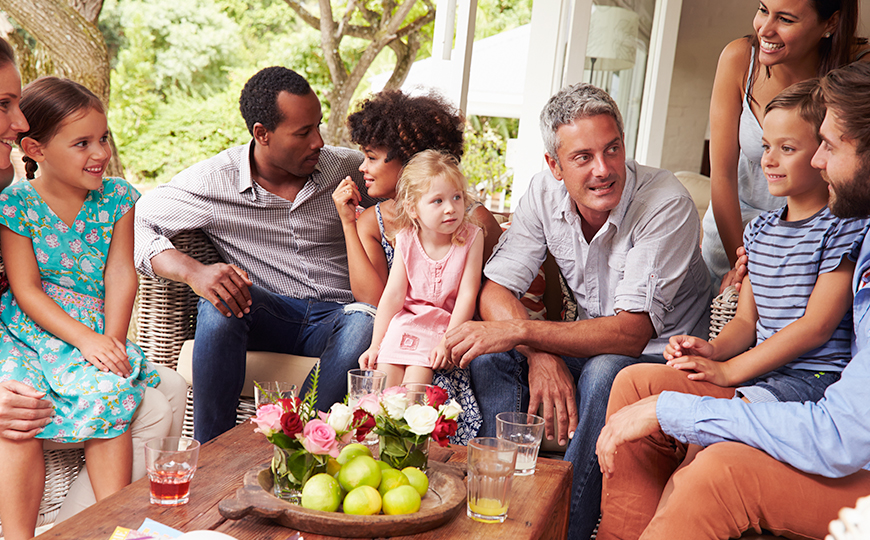
    We are grateful to the Having Kids families that shared their stories of how they are giving their children a fair start. By having a small family, they can invest more in each child, use extra resources to help others, and make a better future for all. These stories are the beginning of a larger community where parents lead by example. If you care about your children’s future, join us at fairstartmovement.org.

    –Anne (center in the picture above)

    At Having Kids:

    We promote and protect every child’s right to a fair start in life by replacing unsustainable, parent-centered family planning models with the human rights-based and child-centered Fair Start family planning model. The model suggests a shift in family planning from a subjective focus on just the parents, to an objective focus that considers the interests of the potential child, the parents, and the community.

    It’s all about this: Smaller families working together to give every child a fair start in life.

    Today many families are adopting the Fair Start family planning model. First, they try to give their child a fair start in life by having a smaller family where they can invest more in their child. Often they also foster or adopt one of the many children eagerly waiting for parents rather than creating additional need. Second, they publicly role model their choices. Finally, these families join public advocacy campaigns to shift resources from extractive centers of power like governments, corporations, and wealthy families in order to democratically empower children and future citizens by incentivizing better family planning by all parents. Why? All parents know that the quality of their own child’s life will depend on how other parents decide to have and raise their kids.


  • Families Making a Choice – Meet Astrid and John

    Families Making a Choice – Meet Astrid and John

    [et_pb_section bb_built=”1″ admin_label=”section”][et_pb_row admin_label=”row”][et_pb_column type=”4_4″][et_pb_text admin_label=”Post Text” background_layout=”light” text_orientation=”left” use_border_color=”off” border_color=”#ffffff” border_style=”solid”]

    Jon and Astrid waited until their careers advanced before having their two boys because they wanted them to have the best start in life possible! Consequently, they’ve decided not to have more kids because of their belief in ohana, the Hawaiian concept of the intentional family rather than the biological one, which emphasizes the notion that families and their friends are bound together and all members of the ohana must cooperate and help one another for the benefit of every member. Jon and Astrid have elected to use the time and resources that would have gone into creating a larger family to help the families around them, the ones that will help determine the world their own children inherit. They are aware of the relationship between the family size choices we all make today, our world’s environment, and kids’ quality of life. They are hopeful that other families will join them too!

    [/et_pb_text][et_pb_cta admin_label=”Action Button” button_url=”https://fairstartmovement.org” url_new_window=”off” button_text=”Take Action” use_background_color=”off” background_color=”#18aacc” background_layout=”dark” text_orientation=”left” use_border_color=”off” border_color=”#ffffff” border_style=”solid” custom_button=”on” button_letter_spacing=”0″ button_use_icon=”on” button_icon_placement=”right” button_on_hover=”on” button_letter_spacing_hover=”0″ saved_tabs=”all” button_bg_color=”#ea593c” button_border_color=”#ffac9b” button_font=”|||on|” button_icon=”%%20%%” button_bg_color_hover=”rgba(234,89,60,0.8)” title=”Sign the Fair Start Declaration ” /][/et_pb_column][/et_pb_row][/et_pb_section]

  • Let’s All Look Out for the Children

    Let’s All Look Out for the Children

    [et_pb_section fb_built=”1″ admin_label=”section” _builder_version=”3.22″ hover_enabled=”0″ sticky_enabled=”0″][et_pb_row admin_label=”row” _builder_version=”3.25″ background_size=”initial” background_position=”top_left” background_repeat=”repeat”][et_pb_column type=”4_4″ _builder_version=”3.25″ custom_padding=”|||” custom_padding__hover=”|||”][et_pb_text admin_label=”Post Text” _builder_version=”3.27.4″ background_size=”initial” background_position=”top_left” background_repeat=”repeat” use_border_color=”off” border_color=”#ffffff” border_style=”solid”]

    Look for advice on deciding whether to have a child and a theme will emerge: The articles are always written entirely from the perspective of the parent. The needs and interests of the future child are invisible.

    In some cases, we hear that kids are expensive, but those references are also written from the parents’ perspective. In other cases, parents will simply abandon the idea of considering a future child’s interests and embrace their own desires, even in pretty shocking circumstances or after significant reflection. This is surprising (to put it mildly), given the role this decision has on the environment in which all children will live.

    The parent-only perspective is understandable, however. Humans, as a group, are prone to many cognitive biases that determine how we plan families.

    Having Kids is focused on reversing this short-sighted and ultimately destructive bias. We are driving the change away from the view that family planning is a matter for parents and parents alone. We strive to reform family planning so that the future child emerges from invisibility and is part of the conversation.

    Share the story of how you included your child’s perspective in your decision-making process. You can help build a better future for all of us.

    At Having Kids:

    We promote and protect every child’s right to a fair start in life by replacing unsustainable, parent-centered family planning models with the human rights-based and child-centered Fair Start family planning model. The model suggests a shift in family planning from a subjective focus on just the parents, to an objective focus that considers the interests of the potential child, the parents, and the community.

    It’s all about this: Smaller families working together to give every child a fair start in life.

    Today many families are adopting the Fair Start family planning model. First, they try to give their child a fair start in life by having a smaller family where they can invest more in their child. Often they also foster or adopt one of the many children eagerly waiting for parents rather than creating additional need. Second, they publicly role model their choices. Finally, these families join public advocacy campaigns to shift resources from extractive centers of power like governments, corporations, and wealthy families in order to democratically empower children and future citizens by incentivizing better family planning by all parents. Why? All parents know that the quality of their own child’s life will depend on how other parents decide to have and raise their kids.
    [/et_pb_text][et_pb_cta button_url=”https://fairstartmovement.org/adopt-the-model/” button_text=”Share Your Story” admin_label=”Action Button” _builder_version=”3.16″ use_background_color=”off” background_size=”initial” background_position=”top_left” background_repeat=”repeat” custom_button=”on” button_bg_color=”#ea593c” button_border_color=”#ffac9b” button_font=”|||on|” button_icon=”%%20%%” text_orientation=”left” use_border_color=”off” border_color=”#ffffff” border_style=”solid” button_letter_spacing_hover=”0″ button_bg_color_hover=”rgba(234,89,60,0.8)” saved_tabs=”all” button_text_size__hover_enabled=”off” button_one_text_size__hover_enabled=”off” button_two_text_size__hover_enabled=”off” button_text_color__hover_enabled=”off” button_one_text_color__hover_enabled=”off” button_two_text_color__hover_enabled=”off” button_border_width__hover_enabled=”off” button_one_border_width__hover_enabled=”off” button_two_border_width__hover_enabled=”off” button_border_color__hover_enabled=”off” button_one_border_color__hover_enabled=”off” button_two_border_color__hover_enabled=”off” button_border_radius__hover_enabled=”off” button_one_border_radius__hover_enabled=”off” button_two_border_radius__hover_enabled=”off” button_letter_spacing__hover_enabled=”on” button_letter_spacing__hover=”0″ button_one_letter_spacing__hover_enabled=”off” button_two_letter_spacing__hover_enabled=”off” button_bg_color__hover_enabled=”on” button_bg_color__hover=”rgba(234,89,60,0.8)” button_one_bg_color__hover_enabled=”off” button_two_bg_color__hover_enabled=”off”][/et_pb_cta][/et_pb_column][/et_pb_row][/et_pb_section]

  • Rethinking the Language of Family Planning

    Rethinking the Language of Family Planning

    [et_pb_section fb_built=”1″ admin_label=”section” _builder_version=”3.22″][et_pb_row admin_label=”row” _builder_version=”3.25″ background_size=”initial” background_position=”top_left” background_repeat=”repeat”][et_pb_column type=”4_4″ _builder_version=”3.25″ custom_padding=”|||” custom_padding__hover=”|||”][et_pb_text admin_label=”Post Text” _builder_version=”3.27.4″ background_size=”initial” background_position=”top_left” background_repeat=”repeat” use_border_color=”off” border_color=”#ffffff” border_style=”solid”]

    Writing for The Guardian, Andrew Solomon explores the need for a better vocabulary, one that adequately serves all families raising future generations.

    People apply this [traditional] vocabulary with a blunt literalism, asking adopted children about their “real parents”, in keeping with the presumption that nature consistently trumps nurture. . . . Explaining a wider distribution of responsibilities among biological and non-biological parenting figures carries the risk of similar ostracism. In our ecstatic embrace of the nuclear family, we are told that a child “needs” a mother and a father, and that it is problematical for a child to be “missing” one of those archetypal roles, or to look to more than two people for ultimate guidance and reassurance. We should also question the tyranny of biological relatedness. Why should we presume that children are better off with their biological parents than with anyone else? Some children have biological parents who do not love them or are not competent to raise them; that is an old problem.

    What if we expanded Solomon’s call to include family planning? What if the new language focused on what future children and the community needed in the long term, rather than what parents wanted in the short term?

    Under our current static, parent-centered model for family planning, parents talk about wanting a boy or girl, a third or fourth child, or siblings for their current child. What if our language instead encouraged us to name and personify future children even before they were conceived? What if the needs of these future children were the center of our conversations? What if we included the community those children would both affect and rely upon: their teachers, our neighbors, their friends, their ecosystem?

    Solomon is right that our language does not serve non-traditional families. But it also doesn’t serve future children and our communities, who remain invisible in common discussions of would-be parents. Let’s expand the scope to include a fair start for all children.

    At Having Kids:

    We promote and protect every child’s right to a fair start in life by replacing unsustainable, parent-centered family planning models with the human rights-based and child-centered Fair Start family planning model. The model suggests a shift in family planning from a subjective focus on just the parents, to an objective focus that considers the interests of the potential child, the parents, and the community.

    It’s all about this: Smaller families working together to give every child a fair start in life.

    Today many families are adopting the Fair Start family planning model. First, they try to give their child a fair start in life by having a smaller family where they can invest more in their child. Often they also foster or adopt one of the many children eagerly waiting for parents rather than creating additional need. Second, they publicly role model their choices. Finally, these families join public advocacy campaigns to shift resources from extractive centers of power like governments, corporations, and wealthy families in order to democratically empower children and future citizens by incentivizing better family planning by all parents. Why? All parents know that the quality of their own child’s life will depend on how other parents decide to have and raise their kids.

    [/et_pb_text][et_pb_cta button_url=”https://fairstartmovement.org/take-action/” button_text=”Take Action” admin_label=”Action Button” _builder_version=”4.7.7″ use_background_color=”off” background_size=”initial” background_position=”top_left” background_repeat=”repeat” custom_button=”on” button_bg_color=”#ea593c” button_border_color=”#ffac9b” button_font=”|||on|” button_icon=”%%20%%” text_orientation=”left” hover_enabled=”0″ use_border_color=”off” border_color=”#ffffff” border_style=”solid” button_letter_spacing_hover=”0″ button_bg_color_hover=”rgba(234,89,60,0.8)” saved_tabs=”all” button_text_size__hover_enabled=”off” button_one_text_size__hover_enabled=”off” button_two_text_size__hover_enabled=”off” button_text_color__hover_enabled=”off” button_one_text_color__hover_enabled=”off” button_two_text_color__hover_enabled=”off” button_border_width__hover_enabled=”off” button_one_border_width__hover_enabled=”off” button_two_border_width__hover_enabled=”off” button_border_color__hover_enabled=”off” button_one_border_color__hover_enabled=”off” button_two_border_color__hover_enabled=”off” button_border_radius__hover_enabled=”off” button_one_border_radius__hover_enabled=”off” button_two_border_radius__hover_enabled=”off” button_letter_spacing__hover_enabled=”on” button_letter_spacing__hover=”0″ button_one_letter_spacing__hover_enabled=”off” button_two_letter_spacing__hover_enabled=”off” button_bg_color__hover_enabled=”on” button_bg_color__hover=”rgba(234,89,60,0.8)” button_one_bg_color__hover_enabled=”off” button_two_bg_color__hover_enabled=”off” sticky_enabled=”0″][/et_pb_cta][/et_pb_column][/et_pb_row][/et_pb_section]

  • Why Are We Pushing Women to Have Kids?

    Why Are We Pushing Women to Have Kids?

    [et_pb_section admin_label=”section”][et_pb_row admin_label=”row”][et_pb_column type=”4_4″][et_pb_text admin_label=”Post Text” background_layout=”light” text_orientation=”left” use_border_color=”off” border_color=”#ffffff” border_style=”solid”]

    A recent article in The New York Times bemoans the fact that as a reaction to the economic downturn, Greek women are not having “enough” children. But isn’t financial insecurity a good reason to forgo having children? Doesn’t every child deserve to be born into a financially secure situation so they can have a fair start? The article raises those questions — and more.

    Why is a nation’s current population size the baseline to judge what its population should be? Most developed countries are already well over their carrying capacity.Why are all of the personal stories in the article about women? Sure, sales may be down at fertility clinics. That isn’t necessarily a bad thing, just one symptom of the inevitable hangover of the Ponzi scheme of growth economics.

    Fundamentally, isn’t having smaller families an easier and fairer solution?

    Greece could solve its demographic problems by relaxing immigration restrictions and accommodating the elderly back into the economy. That might be preferable to arguing that all women must be mothers and encouraging larger families in periods of economic instability.

    It is time to start thinking in terms of everyone’s well-being — including a fair start for all children — rather than mindlessly pursuing economic growth regardless of the consequences.

    [/et_pb_text][et_pb_cta admin_label=”Action Button” button_url=”https://fairstartmovement.org/mission-values-and-vision/” url_new_window=”off” button_text=”Learn More” use_background_color=”off” background_color=”#18aacc” background_layout=”dark” text_orientation=”left” use_border_color=”off” border_color=”#ffffff” border_style=”solid” custom_button=”on” button_letter_spacing=”0″ button_use_icon=”on” button_icon_placement=”right” button_on_hover=”on” button_letter_spacing_hover=”0″ saved_tabs=”all” button_bg_color=”#ea593c” button_border_color=”#ffac9b” button_font=”|||on|” button_icon=”%%20%%” button_bg_color_hover=”rgba(234,89,60,0.8)”] [/et_pb_cta][/et_pb_column][/et_pb_row][/et_pb_section]

  • Why We March: Having Kids at the Women’s March On Washington

    Why We March: Having Kids at the Women’s March On Washington

    [et_pb_section admin_label=”section”][et_pb_row admin_label=”row”][et_pb_column type=”4_4″][et_pb_text admin_label=”Post Text” background_layout=”light” text_orientation=”left” use_border_color=”off” border_color=”#ffffff” border_style=”solid”]

    On January 21st, people and organizations from across the country will participate in the Women’s March on Washington to stand for women’s rights and reproductive rights and to protect our families and communities. Having Kids staff members and supporters will participate in both the core march in Washington, D.C., and in satellite marches in New York City and Trenton, New Jersey.

    Having Kids is marching for the future of our families, our communities, our children, and our planet. We believe that we all need to be intentional about the future that we want to create for future generations, and we need to make sure they have the resources they need and a healthy environment to have a better life than we did. However, this needs to be true for every child. We cannot be satisfied with the fact that most children born into this world will not have a high quality of life or even have their basic needs met. We need to create a community that cares about one another and sincerely wants to make life better for all.

    We also recognize that if we give people the tools to have smaller families—such as sex education, birth control, and access to reproductive health services—then they can ensure that more resources are available for each of their children to create this future. In fact, they might have more resources leftover to help other families that might be struggling.

    Having Kids believes that we need to look at things more holistically, and that we need to make sure that we have the ability to provide a healthy planet, safe communities, and the things children need to have a high quality of life. Next Saturday, we will march for these values and to protect the programs that help us move toward that future. Will you march with us?

    [/et_pb_text][et_pb_cta admin_label=”Action Button” button_url=”https://fairstartmovement.org/model/” url_new_window=”off” button_text=”Learn More” use_background_color=”off” background_color=”#18aacc” background_layout=”dark” text_orientation=”left” use_border_color=”off” border_color=”#ffffff” border_style=”solid” custom_button=”on” button_letter_spacing=”0″ button_use_icon=”on” button_icon_placement=”right” button_on_hover=”on” button_letter_spacing_hover=”0″ saved_tabs=”all” button_bg_color=”#ea593c” button_border_color=”#ffac9b” button_font=”|||on|” button_icon=”%%20%%” button_bg_color_hover=”rgba(234,89,60,0.8)”] [/et_pb_cta][/et_pb_column][/et_pb_row][/et_pb_section][et_pb_section fullwidth=”on” specialty=”off” admin_label=”Section”][/et_pb_section]

  • The Eberly Family

    The Eberly Family

    [et_pb_section fb_built=”1″ admin_label=”section”][et_pb_row admin_label=”row”][et_pb_column type=”4_4″ parallax=”off” parallax_method=”on”][et_pb_text admin_label=”Post Text”]

    We support the Having Kids model because we want to live out our commitment to protecting children, the environment, and the animals with whom we share the planet. We believe that smaller, loving families are critical to our future—to giving children the care and attention they need to thrive and learn, to an earth that can sustain us, to a world where our fellow creatures have a fighting chance to survive and live lives free of human harm. Investing our resources in fewer children means more attention to each child, a lesser impact on an already fragile planet, and a greater fostering of community. And because having fewer children means we have extra resources, we’re able to give to organizations that promote environmental protection, public interest causes, reproductive rights, and animal welfare. We also recognize that the surest way to create change is to start at home, and for that reason we’re are proud to support the Having Kids model and committed to instilling in our son the values it represents.

    [/et_pb_text][et_pb_cta button_url=”https://fairstartmovement.org/adopt-the-model/” button_text=”Adopt the Model” use_background_color=”off” text_orientation=”left” admin_label=”Action Button” custom_button=”on” button_bg_color=”#ea593c” button_border_color=”#ffac9b” button_font=”|||on|” button_use_icon=”on” button_icon=”%%20%%” button_bg_color_hover=”rgba(234,89,60,0.8)” saved_tabs=”all”] [/et_pb_cta][/et_pb_column][/et_pb_row][/et_pb_section]

  • The Evans Family

    The Evans Family

    [et_pb_section fb_built=”1″ admin_label=”section” _builder_version=”3.22″][et_pb_row admin_label=”row” _builder_version=”3.25″ background_size=”initial” background_position=”top_left” background_repeat=”repeat”][et_pb_column type=”4_4″ _builder_version=”3.25″ custom_padding=”|||” custom_padding__hover=”|||”][et_pb_text admin_label=”Post Text” _builder_version=”3.27.4″ background_size=”initial” background_position=”top_left” background_repeat=”repeat” use_border_color=”off” border_color=”#ffffff” border_style=”solid”]

    The decision to have one child was initially difficult. It became easier as I spoke with other families who had multiple children. I made a decision to focus my resources on one rather than have them compete. By making this decision, I have made a step towards a better life for my child and the community. The Having Kids model is consistent with my belief that change starts at home. Connecting with other like-minded people ensures a better world for my children and grandchildren. Becoming a parent has made me want to connect with others to prompt change. The Having Kids model provides me with a way to accomplish these goals.

    [/et_pb_text][et_pb_cta button_url=”https://fairstartmovement.org/take-action” button_text=”Take Action” admin_label=”Action Button” _builder_version=”4.7.4″ use_background_color=”off” background_size=”initial” background_position=”top_left” background_repeat=”repeat” custom_button=”on” button_bg_color=”#ea593c” button_border_color=”#ffac9b” button_font=”|||on|” button_icon=”%%20%%” text_orientation=”left” hover_enabled=”0″ use_border_color=”off” border_color=”#ffffff” border_style=”solid” button_letter_spacing_hover=”0″ button_bg_color_hover=”rgba(234,89,60,0.8)” saved_tabs=”all” button_text_size__hover_enabled=”off” button_one_text_size__hover_enabled=”off” button_two_text_size__hover_enabled=”off” button_text_color__hover_enabled=”off” button_one_text_color__hover_enabled=”off” button_two_text_color__hover_enabled=”off” button_border_width__hover_enabled=”off” button_one_border_width__hover_enabled=”off” button_two_border_width__hover_enabled=”off” button_border_color__hover_enabled=”off” button_one_border_color__hover_enabled=”off” button_two_border_color__hover_enabled=”off” button_border_radius__hover_enabled=”off” button_one_border_radius__hover_enabled=”off” button_two_border_radius__hover_enabled=”off” button_letter_spacing__hover_enabled=”on” button_letter_spacing__hover=”0″ button_one_letter_spacing__hover_enabled=”off” button_two_letter_spacing__hover_enabled=”off” button_bg_color__hover_enabled=”on” button_bg_color__hover=”rgba(234,89,60,0.8)” button_one_bg_color__hover_enabled=”off” button_two_bg_color__hover_enabled=”off” sticky_enabled=”0″][/et_pb_cta][/et_pb_column][/et_pb_row][/et_pb_section]

  • Japan and GDP: Rethinking Population Decline

    Japan and GDP: Rethinking Population Decline

    [et_pb_section admin_label=”section”][et_pb_row admin_label=”row”][et_pb_column type=”4_4″][et_pb_text admin_label=”Post Text” background_layout=”light” text_orientation=”left” use_border_color=”off” border_color=”#ffffff” border_style=”solid”]

    Panicked articles about the correlation between decreasing fertility rates and stalling GDP are a dime a dozen. Yet one economist recently took it a step further by ringing these familiar alarm bells while acknowledging in the very same breath that GDP is a poor metric for national prosperity.

    On the one hand, the author laments that Japan’s aggregate economy will inevitably shrink due to population decline, thereby jeopardizing “Japan’s place in the world” as a “trailblazer.” On the other hand, he writes that “[t]he primary objective of Japanese economic policy should be to maintain living standards and increase per capita incomes, not grow the aggregate economy.”

    Indeed, as the author points out, the quality of life enjoyed by Japan’s citizens has been consistently high since the early 1990s, notwithstanding Japan’s stagnant GDP throughout that time. Nor does a continuation of that negative GDP growth pose a threat to future living standards, as the author readily admits:

    “Many countries are fixated on achieving GDP growth and the target for Prime Minister Shinzo Abe’s Abenomics reform package is 1 per cent GDP growth a year. Japan’s GDP growth has been closer to zero in recent times. What does negative GDP growth — a technical recession if it continues for six months or more — mean when the population is shrinking? Perhaps not as much as we thought. If GDP does not grow, per capita incomes may rise as the population falls.”

    So how does the author justify his characterization of population decline as “Japan’s greatest challenge?” when Japan is likely to remain “safe, clean, comfortable and modern” despite said decline? The author’s argument is a bit muddled, but if you read between the lines, it seems to come down to a matter of values, where being “number one” in terms of aggregate growth is as important, or even more important, than the wellbeing of the individuals within that economy.

    In stark contrast with GDP-obsessed public policy, the Having Kids model seeks to achieve genuine economic prosperity, by contemplating (1) household incomes rather than national economies, (2) level of access to public services such as health, education, transportation, and (3) air quality, biodiversity, animal welfare etc. In this way, Japan’s population decline is far from “the greatest challenge,” but rather an outcome that other nations should seek to emulate through policies rooted in compassion for all rather than profit for a few.


    [/et_pb_text][et_pb_cta admin_label=”Action Button” button_url=”https://fairstartmovement.org/model/” url_new_window=”off” button_text=”Learn More” use_background_color=”off” background_color=”#18aacc” background_layout=”dark” text_orientation=”left” use_border_color=”off” border_color=”#ffffff” border_style=”solid” custom_button=”on” button_letter_spacing=”0″ button_use_icon=”on” button_icon_placement=”right” button_on_hover=”on” button_letter_spacing_hover=”0″ saved_tabs=”all” button_bg_color=”#ea593c” button_border_color=”#ffac9b” button_font=”|||on|” button_icon=”%%20%%” button_bg_color_hover=”rgba(234,89,60,0.8)”] [/et_pb_cta][/et_pb_column][/et_pb_row][/et_pb_section]