Category: Conservation & Environmental Justice

  • Does the UN’s Right to a Healthy Environment Require Restorative Environmentalism? Probably So.

    Does the UN’s Right to a Healthy Environment Require Restorative Environmentalism? Probably So.

    [et_pb_section admin_label=”section”] [et_pb_row admin_label=”row”] [et_pb_column type=”4_4″][et_pb_text admin_label=”Text”]

    The United Nation recently accelerated its human rights work by adopting the universal right to a healthy environment.

    But what does that mean? Is the Paris Agreement sufficient, or do we have to be more aggressive and pursue a restorative approach that removes greenhouse gasses and prioritizes #fairstart and other family ecocentric reforms that align our species with nature?

    The latter. The evidence is mounting that even small shifts in our climate have major implications for our health, and especially the health of the most vulnerable among us – like infants. Even under current climate changes, they are being harmed. Infants and children are already experiencing stunted growth and death – especially in the most impacted regions – because of our inaction.

    A young child in a white t-shirt holds a green apple above their head while standing outdoors on grass, surrounded by trees and greenery.

    What’s the solution? The UN should use the right to a healthy environment as a springboard to a more aggressive or restorative approach that restores nature and habitat, for all species.

    TAKE ACTION: Urge the UN’s Human Rights Council to adopt #FairStart as the anchoring standard for all human rights. Contact them at infodesk@ohchr.org and share the body of this post.

    The best way to compensate young people and future generations for this violation of their environmental rights is by properly interpreting Article 16 via Fair Start modeling, which encourages birth equity-level transfers of resources as Fair Start family planning incentives/entitlements, using an ecocentric standard as the environmental baseline. This is forward-facing climate reparations at their best. Given the special foundational nature of Article 16, and when properly interpreted its peremptory status as the grundnorm overriding even state-created property rights, younger persons have the right to take the Fair Start resources they need and we will encourage them to do, including those that will ensure future children’s enjoyment of their rights under the Children’s Rights Convention.
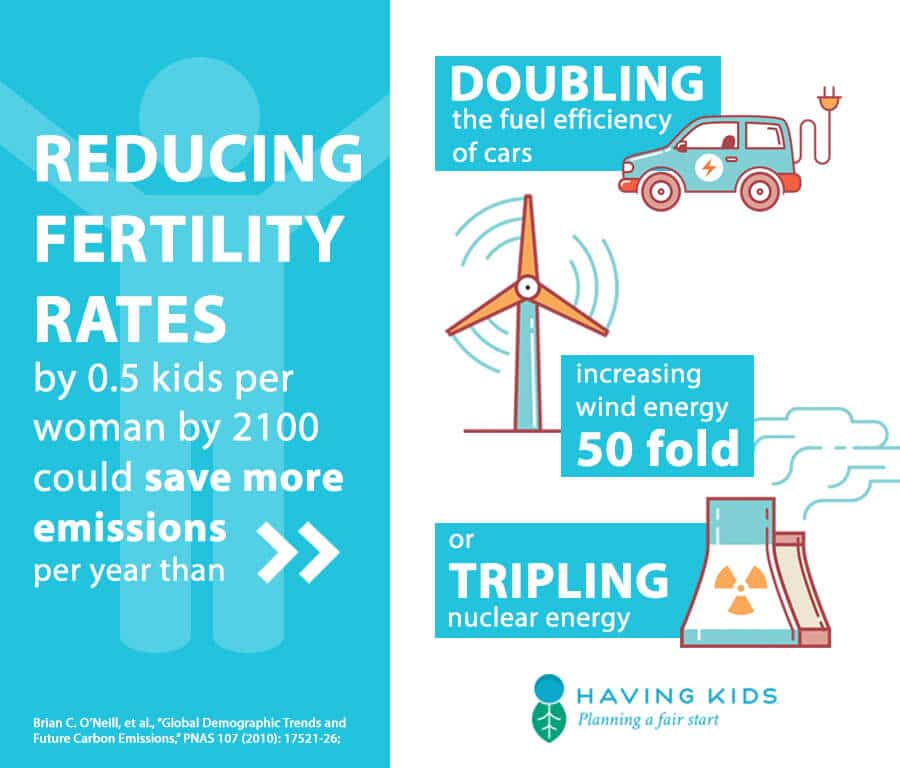
    Infographic showing ways to reduce carbon emissions: reducing fertility rates, doubling car fuel efficiency, increasing wind energy 50-fold, and tripling nuclear energy. Includes icons of a car, windmill, and nuclear symbol.

    [/et_pb_text][/et_pb_column] [/et_pb_row] [/et_pb_section]
  • NEW COALITION OF ORGANIZATIONS CALLS FOR SUSTAINABLE FAMILY PLANNING IN FACE OF CLIMATE CRISIS

    NEW COALITION OF ORGANIZATIONS CALLS FOR SUSTAINABLE FAMILY PLANNING IN FACE OF CLIMATE CRISIS

    National organizations urge COP26 leaders to protect most vulnerable

    San Francisco, CA – Dozens of leading NGOs are calling on the President and Delegates of the COP26 in this open letter to take an urgent and clear public position recommending just and sustainable family planning as the most effective solution to address the climate crisis, and rising global inequality, including gender inequity.

    The global community has failed to inform and support a universal effort towards just and sustainable family planning, which:

    • Is human-rights centered
    • Ensures sustainable and equitable resources for greater investment in each child
    • Enables communities and governments to protect children and future generations while upholding reproductive rights

    On the contrary, pressures to increase births, or to obstruct family planning programs, are driving our biggest crises and putting the health, safety, and welfare of current and future generations in peril. Unsustainable population growth, a documented threat multiplier, is contributing to catastrophic climate change, unprecedented flooding, pandemics, ecosystem destruction, groundwater depletion, mass extinctions, and environmental degradation. Worsening inequality, in large part driven by our growing population, is also a grave threat to democracy and political stability across the globe.

    Better family planning is the best way to reduce inequality. Other interventions alone are simply too late. 

    Nandita Bajaj, Executive Director of Population Balance says, “Our growth-driven policies are not only a cause of immense suffering for marginalized human and ecological communities, present and future, but they are premised upon oppressive power structures. Not only are reproductive, intergenerational, and ecological justice under attack, our current unsustainable growth-centred family planning policies are threatening all life on earth. We collectively need to acknowledge and address the urgency of this predicament.”

    Fair Start Movement is a 501(c)3 nonprofit organization dedicated to reforming family planning by replacing growth-centered family planning models with the human rights-based and child-first Fair Start model. 

    Population Balance is a 501(c) 3 nonprofit organization that provides education and solutions to address the impacts of human overpopulation and overconsumption on the planet, people, and animals.

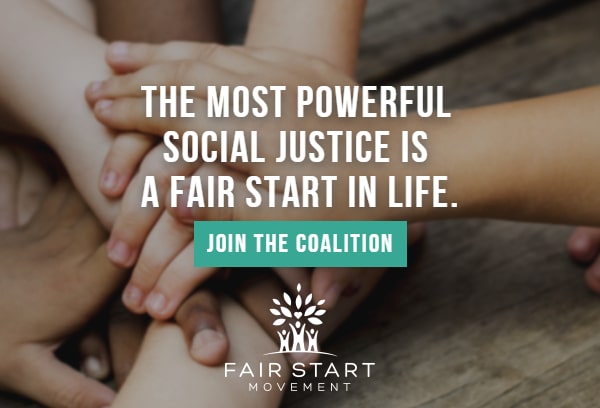
    Several hands of different skin tones are stacked together. Overlaid text reads, The most powerful social justice is a fair start in life. Join the coalition. The Fair Start Movement logo appears at the bottom.
  • Justice Without a Fair Start in Life? Don’t Fall for It. Help us Target Companies Greenwashing and Hurting Our Kids.

    Justice Without a Fair Start in Life? Don’t Fall for It. Help us Target Companies Greenwashing and Hurting Our Kids.

    Welcome to the Tell the Truth Campaign

    Which corporations and nonprofits are benefitting from unsustainable and inequitable family planning – the biggest driver of the climate and inequality crises – while pretending to further environmental and social justice? Federal Environmental, Social and Governance (ESG) disclosure requirements provide an opportunity to find out and act. Support Fair Start’s campaign for an executive order to require disclosure of policies and advocacy around the biggest factor of all – families – so that we can hold bad actors accountable.

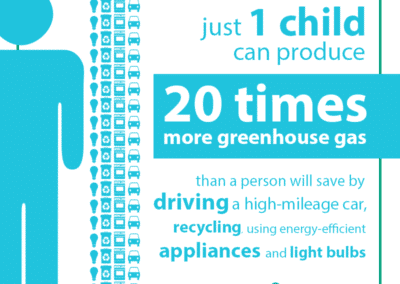
    Infographic showing that one child can produce 20 times more greenhouse gas than can be saved by driving a fuel-efficient car, recycling, or using energy-efficient appliances and light bulbs.
    Why not be effective?

    We are urging the Biden Administration to do what should be painfully obvious by now – actually account for the greatest driver of the climate and other crises that gave need for a new ESG disclosure framework: Our family and population growth policies.

    Nothing has a greater impact. Full stop.

    Why report at all if we do not account for the underlying driver/multiplier, and the volatility inherent in it?

    We need to know who, among us, promotes putting an unlimited number of children, without any guaranteed levels of preparation, equity, or influential role in their democracy, into an increasingly degraded ecological future. And in terms of the past, we need to know which groups said they were making progress, knowing the growth they supported was undoing that progress the whole time and moving wealth away from effective investments in children and into the hands of people at the top of the wealth pyramid.

    ————————————————

    TAKE ACTION:

    Read our letter urging Biden to issue an executive order here, and urge any organizations you work with or support to join our call for the order.

    ————————————————

    Support the Truth. Support Fair Start.

    Governments are failing children’s right to an eco social fair start in life. We know that early childhood experience is pivotal to lifetime outcomes. Why are we waiting for adverse childhood experiences to occur before acting? 

    Children deserve equitable conditions, right from the beginning. A fair start in life is the first human right – it overrides all others. It is what children are entitled to under the Children’s Rights Convention, and what allows them to eventually be free from the power of others, and truly self-determining. Because legitimate governance derives from people, who derive from the norms that create them, there are no such things as just societies, political legitimacy and freedom without the sort of Fair Start reforms discussed in this site. Without them we are always proceeding from, or reconstituting our political societies, from an unjust position. 

    Ensuring an eco-social #fairstart in life for all kids can have ten to twenty times the long run impact on the key social and ecological crises we are facing today relative to other interventions.

    It is the most effective and just thing we can do. And there is no justice without it.

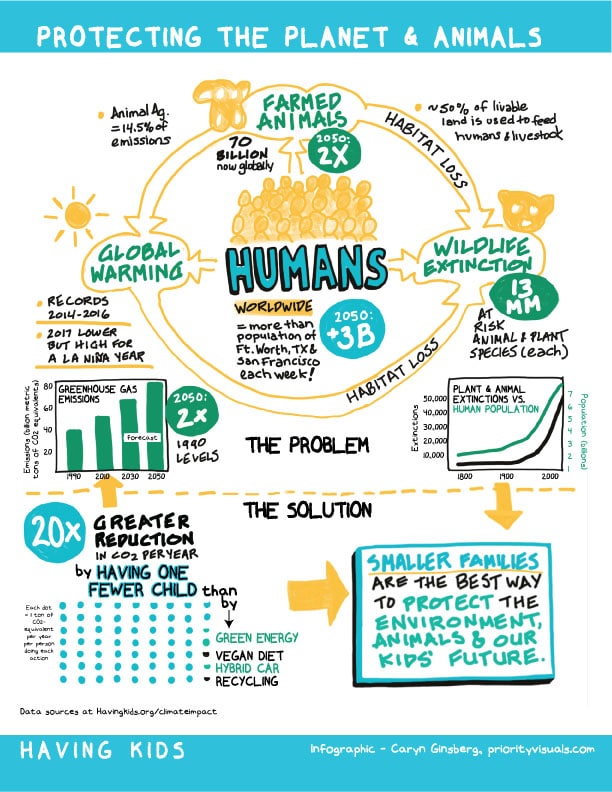
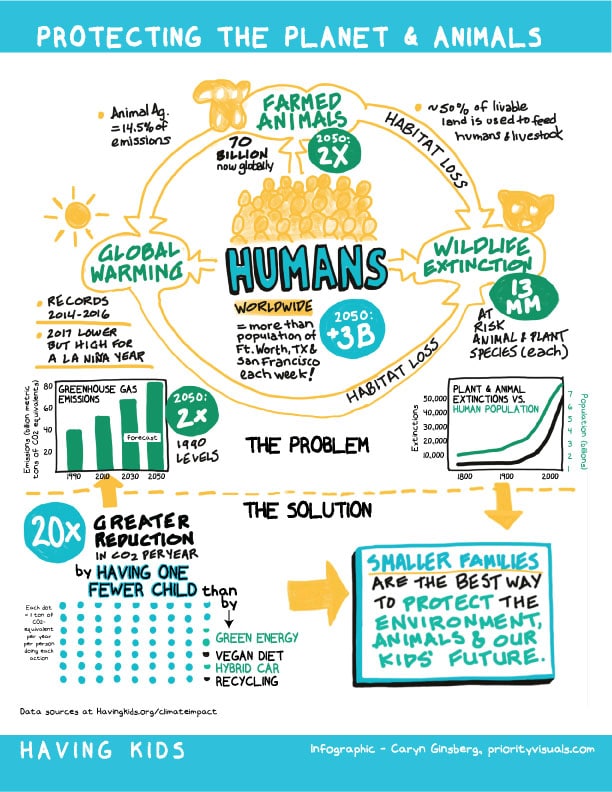
    Infographic illustrating the impact of human activity on the planet and animals, showing links between family size, resource use, global warming, extinction, and proposed solutions like smaller families and sustainable practices.
  • World Population Day: Young Women, Sustainable Families, and Our Right to Take the Wealth Our Kids Deserve

    World Population Day: Young Women, Sustainable Families, and Our Right to Take the Wealth Our Kids Deserve

    The climate and nature crises that our planet faces are rooted in both population and consumption.  We cannot waste precious time by pointing fingers between consumption and population – we need to talk about both in tandem, as our survival and quality of life, and those of our children, depend on it. 

    On the heels of Independence Day demands from people like Cassie King for the resources all kids deserve to ensure their eco-social Fair Start in life, and others who see their future child’s entitlement to birth equity as a sustainable family planning incentive, dozens of young women have come forward to speak out for more sustainable families. It’s a message for every young person’s future on planet earth.

    On World Population Day, July 11, 2021, GirlPlanet.Earth will launch as an informal forum for global dialogue by women and teenage girls from around the world on population, consumption, planetary boundaries, and personal choices.  Featuring the voices of women from Africa, Europe, North America, Central America, and Asia, GirlPlanet.Earth will enable honest, authentic, lively conversations between women and girls about our future.

    A group of students sit at desks in a classroom, attentively listening and taking notes. The focus is on a girl in a plaid shirt, resting her chin on her hand and looking forward thoughtfully.
    Courtesy of the Urban Institute.

    Join the conversation.

    In addition to young voices pushing back on unsustainable population growth, this Sunday – World Population Day – key experts will make clear the pathway to an optimal world population, at this special event.

    Having one fewer child actually reduces your carbon footprint more than any other single move you can make. We owe it to future generations to ignore advertiser-bound media pushing women to have kids to grow their economies. Instead, those intending to have small and sustainable families should approach concentrations of power for the wealth – and birth equity – their child has a fundamental right to under the Children’s Rights Convention and other human rights instruments.

    Infographic showing ways to reduce carbon emissions: reducing fertility rates, doubling car fuel efficiency, increasing wind energy 50-fold, and tripling nuclear energy. Includes icons of a car, windmill, and nuclear symbol.

    This is the time to restart the conversation about family sizes, resources, population, personal choice, climate change and the future of our planet. The science is clear – we get the best outcomes, for everyone, when families plan for and invest more love, time, and attention in each child. 

    Stabilizing our human population, even through the most fundamental educational and economic advancement of women, has been taboo for too long.  Humanity has made terrible mistakes through coercive practices and policies, and stabilizing our population needs to be instead profoundly rooted in improved justice, education, and economic opportunity, especially for women and girls.  


  • Open Letter to the UN Environmental Program: The Cost of Not Adopting Fair Start Reproductive Justice Is Mounting

    Open Letter to the UN Environmental Program: The Cost of Not Adopting Fair Start Reproductive Justice Is Mounting

    Dear Director Andersen,

    World Environment Day 2021 provided a crucial opportunity for the United Nations to make good on its promise to reset humanity’s relationship with nature. But by continuing to adhere to a family planning model that allows unfettered growth, despite every opportunity to simply issue statements that would initiate reform, it has failed to honor its pledge at the most fundamental and impactful level.

    Our relationship with nature is fundamentally defined by the laws that shape family planning and drive population size, and whether – in those laws – nature or the nonhuman world is seen as a resource for population growth, or instead a check on it.

    That is the fundamental question.

    Infographic showing ways to reduce carbon emissions: reducing fertility rates, doubling car fuel efficiency, increasing wind energy 50-fold, and tripling nuclear energy. Includes icons of a car, windmill, and nuclear symbol.
    Infographic showing humans impact on the planet: habitat loss, global warming, wildlife extinction, and farmed animals. Solutions proposed include smaller families, plant-based eating, renewable energy, and recycling.
    • Inaction threatens the UN’s credibility. Pronatal policies being rolled out in response to a perceived economic “baby bust” show that our current systems of governance are fundamentally illegitimate. If we are willing to create lots of people in whom we invest relatively little in order to satisfy markets and economies, instead of fewer people in whom we invest more in order to build the democracies that must precede, justify and regulate those markets and economies, we are admitting fundamental illegitimacy, or as the peer-reviewed work shows, the preconstitutionality, of our political systems. This is especially true when doing so exacerbates the climate crisis. In that case, all effective measures to correct this inversion are just.
    • The costs of ignoring reproductive justice legal reforms are mounting. These include the costs of the relevant climate emissions that could have been avoided since at least 2007, and the role the failure to require equitable family planning has played in driving the massive and growing gap between rich and poor across the globe. The Fair Start Movement is calculating those costs as harms, and believes world leadership must – and one day will – be held fully accountable for them.
    • Because Fair Start and comparable “creation norm” models are peremptory norms that precede other national and international processes and rights (including property rights), the Fair Start Movement is urging young activists to target concentrations of wealth and power to pay for these eco-social harms, derived fundamentally from poor family planning models, by funding Fair Start efforts and incentives.

    Will you join that call? Nothing would have a greater long-run impact on restoring our environment than simultaneously compensating future generations, while helping them become parts of legitimate democracies, via Fair Start investments in their empowerment and resilience.

    Sincerely,

    Ashley Berke, Co-Director at Fair Start

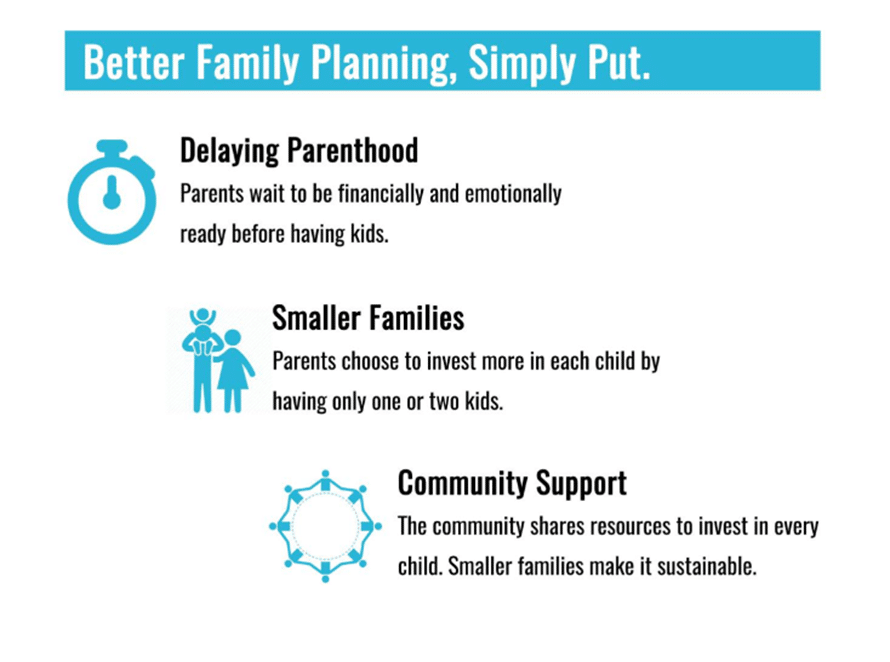
    Infographic titled Better Family Planning, Simply Put with icons and three points: Delaying parenthood, smaller families, and community support, each explained with brief text and blue graphics.
  • WaPo and the Population v. Consumption Debate: Three Questions to Move Forward on What Is Destroying Our Environment

    WaPo and the Population v. Consumption Debate: Three Questions to Move Forward on What Is Destroying Our Environment

    Kudos to Sarah Kaplan for covering the ongoing debate over whether population growth, or things like inequity, technology, and patterns of consumption, are to blame for the climate and other ecological crises.

    Is it wrong to blame overpopulation for the climate crisis? Perhaps it’s better to reframe the question: Is it wrong to blame overpopulation alone for the climate crisis?

    Of course.

    There are always multiple factors at play, from the growth that fundamentally creates demand to the inequity that’s driving overconsumption and the colonization of nature. The key to success is not to take any of the relevant factors out of our policy reforms, including the fundamental source of the Anthropocene: Treating the planet as a human resource in the design of our systems, from the economy to family planning. Doing so would replicate the mistakes that lead to the crisis. Instead let’s work together to give all kids a #fairstart in life.

    Here are three questions to help tie all of the relevant factors together, and move forward.

    Infographic showing ways to reduce carbon emissions: reducing fertility rates, doubling car fuel efficiency, increasing wind energy 50-fold, and tripling nuclear energy. Includes icons of a car, windmill, and nuclear symbol.

  • Alexandra Paul is Speaking Truth to the Power of Unsustainable Growth

    Alexandra Paul is Speaking Truth to the Power of Unsustainable Growth

    Kudos to Alexandra Paul for pushing back against the constant media messaging – often promoted by their advertisers – that falling fertility rates are a bad thing. Her recent letter, published in the LA Times, points out what should be obvious: Growth is not sustainable. She is speaking that truth to the powerful – media and corporate conglomerates – who would exploit future generations as cheap labor, and the Earth with them, to continue growth-fueled profits.

    The move towards better planned families is 1) the product of decades of intentional interventions to stave off disaster, 2) emblematic of the liberation of women, and 3) the most effective tool – on a scale of 20x the impact – we have to fight the climate crisis.


    Infographic showing ways to reduce carbon emissions: reducing fertility rates, doubling car fuel efficiency, increasing wind energy 50-fold, and tripling nuclear energy. Includes icons of a car, windmill, and nuclear symbol.

    But the fight is hardly over. Fair Start is one such approach to implement this.


  • The Rights Of and To Nature – What They Mean for Future Generations. Apr 7, 2021 09:00 AM in Pacific Time (US and Canada)

    The Rights Of and To Nature – What They Mean for Future Generations. Apr 7, 2021 09:00 AM in Pacific Time (US and Canada)

    Join the International Animal Law Committee of the American Bar Association’s International Law Section for a great discussion.

    Register here.

    As the rights both of and to nature emerge and solidify in the minds of the public, and in law and policy, they will entail greater investment in and empowerment of future generations. This panel will explain why.

    It begins with the lead attorney, Jessica Blome, in a case currently pending before the Ninth Circuit that argues the Constitution implies a right to nature, including a regenerative standard for environmental policies, under the liberty doctrine. That right aligns with the international rights of nature groups like Earth Law Center promote, and it would help further them, legislatively and otherwise.

    Tony Zelle, will present on those rights, from an international perspective, detailing their history and future. Cat Hughey, will explain what the rights to/of nature entail for reforming our family planning systems, from the United Nations to state ballot initiatives. And finally, Michael Swistara and Max Broad will discuss the local implications of these movements for the District of Columbia, where efforts to promote legislation that would ensure every child a socially and ecologically fair start in life might begin.

    A hazy, polluted city skyline with the quote: Explain to future generations that it was good for the economy when they can’t farm the land, breathe the air, or drink the water. - Unknown. Having Kids logo at bottom.
  • Meghan Markle: What You Need to Know

    Meghan Markle: What You Need to Know

    Meghan Markle and Prince Harry are not afraid to break taboos and do what’s right. Recently, they talked about their fears and hopes for their son Archie’s future, given the way humans are destroying the planet and our kids’ futures. They took a bold step last year, promoting the idea of smaller families as the most effective way by far to protect the future.

    A comparison chart showing Current Family Planning with no minimum welfare, equality, or environmental protection, versus Fair Start Family Planning with welfare for all kids, equal opportunity, and strong environmental protection.

    They are opening a conversation and laying the pathway for polices that promote sustinable and equitable family planning. Environmental organizations should be leading the charge but have been hesitant to do so, fearing backlash from donors. Urge them to stand up and support the most effective long-term solution to our biggest social and ecological crises.

    Contact the heads of these key organziations and urge them to support Fair Start family planning or other models that are as effective:

    Tweet:
    • Carter Roberts, @Carter_Roberts, president and CEO of the World Wildlife Fund
    • Annie Leonard, @AnnieMLeonard, executive director of Greenpeace USA
    • Michael Brune, @bruneski, executive director of the Sierra Club
    and urge them to take a stand on the most effective way to protect our future: policies that promote sustainable and equitable family planning.

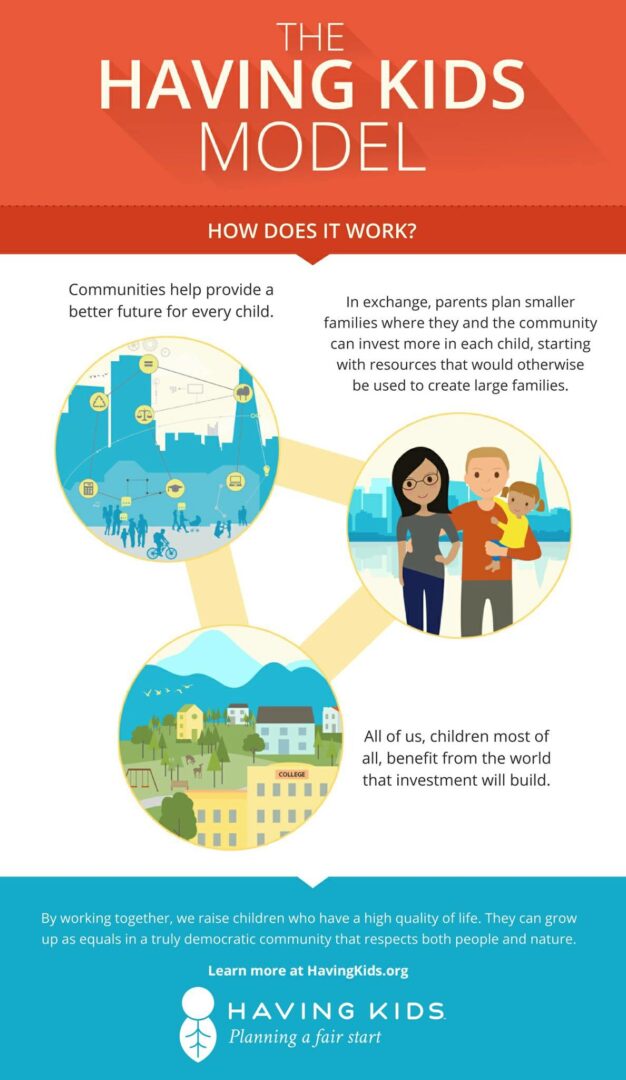
    Infographic explaining the Having Kids Model: communities invest in children’s futures, parents plan smaller families, and all children benefit from increased resources and a supportive environment. Includes illustrations and text.