Category: Conservation & Environmental Justice

  • Fighting For The Future Saving Animals, Nature, Future Generation, the Real Truth, a Letter Harvard – Letter Included

    Fighting For The Future Saving Animals, Nature, Future Generation, the Real Truth, a Letter Harvard – Letter Included

    Right now, across the world, people are beginning to open their eyes and realize something bigger is happening. We are being told humanity is progressing, that justice is advancing, that the world is becoming fairer — yet every day I see people struggling to survive, wildlife losing habitats, children being born into inequality, and entire ecosystems pushed closer to collapse.
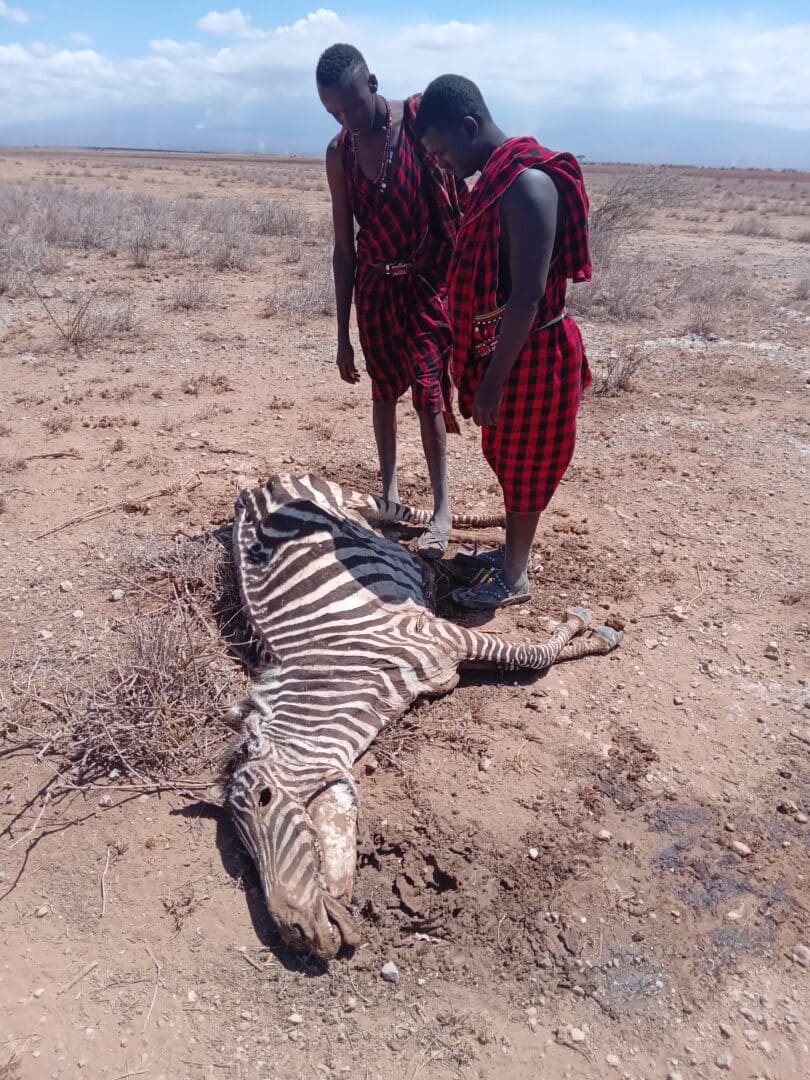
    Dying zebra from climate drought and starvation with two people looking concerned

    People are no longer just looking for hopeful words and polished campaigns. They are looking for truth. Real truth. Because if we truly want to save animals, protect people and give future generations a fighting chance, then we must have the courage to ask whether the systems shaping this world are actually creating meaningful change — or simply becoming better at marketing the appearance of it.

     

    having kids vegan

    That is the deeper conversation now being raised by the Fair Start Movement in relation to Harvard University and what the organization describes as a “fantasy world of social justice undone daily by birth inequity.”

    This is not about attacking good people.

    There are countless students, researchers, activists and educators who genuinely want to make the world better. Many dedicate their lives to helping vulnerable communities, challenging injustice and fighting for equality. That work matters. But the wider concern being raised is whether some institutions have become too focused on presenting narratives of progress while failing to fully confront the structural systems continuing to produce inequality underneath the surface.

    And that matters more than ever right now.

    The Fair Start perspective argues that many social justice institutions focus heavily on downstream solutions — programs, campaigns, reforms, diversity initiatives and public advocacy — while the upstream conditions driving inequality continue growing stronger every year.

    In simple terms, we may celebrate individual victories while the larger system producing suffering remains largely untouched.
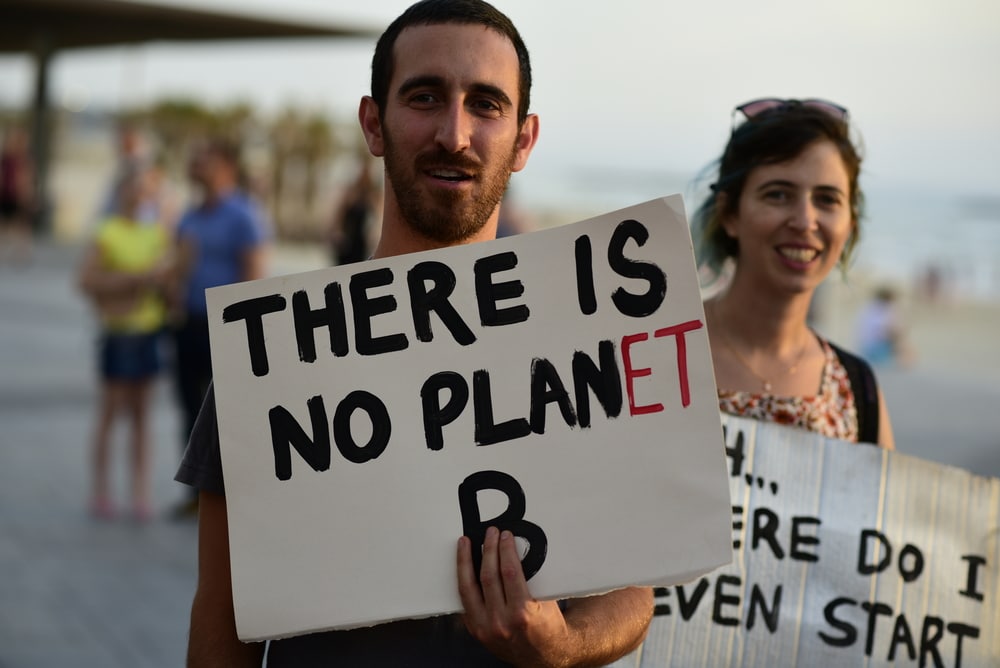
    climate crisis kids

    That is where the idea of “birth inequity” becomes central.

    The argument is that children are not entering the world on anything close to equal ground. Some are born into safety, wealth, opportunity and political influence. Others are born into poverty, instability, environmental decline and systems already stacked against them from the beginning.

    Mom with newborn baby; love

    And as climate instability, economic inequality and ecological collapse intensify globally, those gaps only grow wider.

    The concern being raised is that institutions can sometimes unintentionally create the appearance of meaningful progress by measuring outputs rather than genuine net outcomes. A university can point to programs launched, scholarships funded or initiatives promoted, but the deeper question remains: are the structural conditions affecting future generations actually improving overall?

    Because that is the truth people are beginning to search for now.

    Not branding.

    Not polished narratives.

    Not carefully managed public relations.

    Truth.

    The reality is that across the world we are seeing ecosystems pushed to breaking point. Wildlife is disappearing at terrifying speed. Communities are struggling under economic pressure. Young people are growing up with uncertainty about their future, while millions of children are born into conditions where survival itself becomes harder every single year.

    And yet many institutions continue presenting narratives that suggest society is steadily moving toward fairness and sustainability.

    That disconnect is what people are starting to question.

    For those of us working directly with wildlife and vulnerable communities, these realities are impossible to ignore. I see firsthand how deeply connected everything is. When forests disappear, communities suffer. When inequality grows, ecosystems come under pressure. When people are desperate, wildlife suffers too. The survival of humanity and the survival of nature are tied together whether we acknowledge it or not.

    That is why transparency matters.

    Not to tear institutions down.

    Not to shame people trying to help.

    But to ensure that the work being done in the name of justice, sustainability and equality is actually capable of creating long-term change in the real world.

    The Fair Start discussion ultimately asks a powerful question: are institutions willing to fully examine whether the outcomes they promote publicly still hold true once the wider baseline realities are honestly accounted for?

    Because if we truly care about future generations, then we cannot build systems based only on appearances.

    We need courage.

    The courage to question whether the current path is truly sustainable.

    The courage to confront uncomfortable truths about inequality, growth and ecological decline.

    And the courage to build a world where justice is not simply something spoken about in lecture halls or campaign slogans, but something reflected in the actual conditions people, animals and future generations are living through every day.

    That is the kind of future worth fighting for.
    Several childrens hands placed together in a supportive gesture over a wooden surface, with text reading, The most powerful social justice is a fair start in life. Join the coalition. Logo and Having Kids appear at the bottom.

    A future built not on illusion, but on truth.


    Letter –

    May 8, 2026

    Attorney General Andrea Joy Campbell
    Office of the Attorney General
    Commonwealth of Massachusetts
    One Ashburton Place, 20th Floor
    Boston, MA 02108

    Re: Request for Attorney General Review of Directional Impact Representations and Baseline Omission in Massachusetts Animal-Welfare Institutional Communications Under Chapter 93A

    Dear Attorney General Campbell,

    Fair Start Movement and TruthAlliance.global submit this letter to request review and guidance concerning a specific and recurring pattern in Massachusetts-based institutional communications: the creation of a directional impression of progress through public-facing language that does not disclose the baseline conditions necessary to interpret whether that progress is occurring on balance.

    This submission is narrow and disclosure-focused. It does not allege improper motive, and it does not dispute that the institutions discussed perform real work, expend real resources, and achieve identifiable outputs. The issue is whether public-facing representations—particularly those that operate in donor-facing, student-facing, or credibility-bearing contexts—are structured in a way that invites reliance on an implied trajectory of improvement without providing the baseline information required to evaluate that implication.

    The concern arises from a consistent pattern across multiple Massachusetts institutions. Language is often framed carefully to avoid explicit, measurable outcome claims. Terms such as “committed to,” “working to,” and “seeking to advance” appear frequently in institutional descriptions of animal-law programming and advocacy. At the same time, that language still communicates something to a reasonable reader. It conveys forward motion. It signals that progress is being made, or at minimum that support for the institution contributes to that progress. That signal influences behavior. It shapes donation decisions, student enrollment, partnerships, and policy attention.

    The problem is not the use of aspirational language itself. The problem is that the directional impression created by that language is not accompanied by the context needed to determine whether the implied progress is occurring when broader conditions are taken into account. Public-facing materials do not typically disclose the scale of countervailing forces—continued expansion of animal agriculture, growth-driven demand, ecological degradation, and structural conditions that perpetuate harm across generations. Without that context, the impression created by the language may be materially incomplete.

    This dynamic becomes more pronounced where institutions move from aspirational phrasing into definitive outcome language. In Massachusetts, MSPCA-Angell provides a clear example. The organization describes itself as “positively impact[ing] the lives of tens of thousands of animals each year” and as driving “meaningful, systemic change.” These are present-tense outcome statements. They communicate that impact is occurring and that systems have changed. At the same time, the organization has publicly disclosed that it no longer tracks the metrics used to measure its results. The combination of definitive outcome language and the absence of outcome measurement creates a gap between the impression conveyed and the substantiation available. That gap is not theoretical. It exists at the point where donors decide whether to contribute, and where the public decides whether progress is being achieved.

    A similar issue arises with quantified claims made by Humane World for Animals. Statements that millions of meals have been transitioned or that over a million animals have been improved are specific and concrete. They communicate progress through numbers. But those numbers operate within a broader system that is not disclosed alongside the claim. If the total scale of animal agriculture or confinement grows by more than the improvements cited, the directional impression created by the numbers may not reflect the net trajectory. The claim itself may be accurate in isolation. The impression created by the claim, absent baseline context, may still be incomplete.

    Across these examples, the same structural issue appears. Public-facing communications operate at the level of narrative, while the conditions necessary to interpret that narrative—what is counted, what is excluded, what baseline governs the claim, and how competing forces affect the outcome—are not disclosed at the point of reliance. This is the baseline omission problem. It is not a dispute about values. It is a question of whether the information environment in which decisions are made is complete enough to support those decisions.

    Massachusetts General Laws Chapter 93A provides a framework for addressing this issue. The statute does not require that a statement be literally false to be actionable. It encompasses conduct that creates a misleading impression through omission of material information. Where a representation invites reliance and the meaning of that representation depends on context that is not disclosed, the omission may be material if it would change the understanding of a reasonable audience.

    In this context, baseline conditions are not peripheral details. They are the elements that determine what the claim means. They define whether a statement reflects activity, projected contribution, or demonstrated net outcome. When those elements are absent, the resulting impression may be incomplete in a way that affects decision-making.

    This submission therefore requests that the Office consider whether directional impact representations in Massachusetts animal-welfare communications should be evaluated under a material-omission framework when they omit baseline conditions necessary to interpret implied progress. The request is not for punitive action based on isolated statements. It is for a structured review of whether current practices create reliance risks that can be addressed through disclosure.

    Specifically, we request that the Office consider initiating a Chapter 93A review of how animal-welfare institutions in Massachusetts communicate impact and progress, with attention to whether those communications distinguish between program outputs and net outcomes once baseline conditions are accounted for. We further request consideration of whether guidance should be issued clarifying that aspirational and outcome-oriented language can create materially incomplete impressions when baseline conditions are omitted.

    In addition, we request that the Office review MSPCA-Angell’s use of definitive outcome language in light of its disclosed cessation of outcome measurement, and that it examine whether quantified claims by Humane World for Animals create directional impressions that are supported when evaluated against broader system-level trajectories.

    The remedy sought is disclosure-forward and corrective, not punitive. The objective is to ensure that when institutions communicate impact, the public is provided with the information necessary to understand what that impact means and what it does not mean. This can be accomplished through baseline disclosure: clear statements of what is counted, what is excluded, the time horizon used, the presence of uncertainty, and the distinction between outputs and net outcomes.

    Fair Start’s Tell the Truth framework provides one model for this approach. It asks institutions to align public claims with the baseline conditions that determine their meaning, so that reliance is based on complete information rather than directional impression alone. The framework is designed to be applied cooperatively, allowing institutions to maintain their advocacy while improving the clarity and integrity of their communications.

    We recognize that the institutions discussed are respected and perform meaningful work. This request does not challenge that work. It addresses the structure of the information environment in which that work is presented. Where public trust is involved, clarity is not optional. It is the condition that allows that trust to function as intended.

    We respectfully request confirmation of intake and identification of the division or bureau assigned for review.

    Respectfully submitted,

    Suriya Khan
    Fair Start Movement / TruthAlliance.global
    suriya@fairstartmovement.org
    516-725-3157

  • FSM: See a History of Greenwashing and Reparations Fraud

    FSM: See a History of Greenwashing and Reparations Fraud

    The history 

    What the United Nations calls greenwashing begins as a much more deadly form of entitlement fraud. Wealthy families are literally using wealth made at deadly cost to the values they claimed to be protecting to drown out the voices of the most vulnerable.

    A chart with circles of varying sizes showing the impact of different actions on reducing carbon emissions. The largest circle says “Have one fewer child 58.6”. Other actions include living car-free, recycling, and using green energy.


    You can identify anyone willing to further the fraud by asking whether they back accurate climate reparations or not.  Those who do not are engaged in political equity or constitutive fraud, or choosing to start with zero actual protections for infants and animals in a way that contradicts stated values, enabling the powerful to punch down on the vulnerable

    These families have historically subverted civil rights by undoing with family inequity upstream the good they claim to be doing downstream – a move that masked the drivers of the climate crisis and who it would victimize. If the Three-Fifths Compromise made fractionalized the worth of persons of color, one-tenth and greater illegal disparities in generational wealth, disparities that violated legally enforceable children’s rights regimes, will now mean the death of millions of children of color in a climate crisis caused primarily by white wealth.

    To avoid black birth equity, the mostly white families that designed the near-universal reproductive rights regime bypassed equity entirely when defining reproductive autonomy, such that one can only use a thin form of autonomy to terminate their pregnancy, only to then die in a white-wealth-driven heatwave months later because they cannot afford air conditioning.

    Climate crisis infographic

    This move, of hiding the diminution of equity, relied on a sleight of hand: Defining freedom from power around the authority of the state to use violence, rather than broader definitions that would have captured all entitlements, like those between child and child-maker. The conceptions relied on almost all white and male theorists who abstracted far away from their own birth positionality, leaving us with abstract theories of liberation that would enable a climate crisis deadly to mostly children of color.

    These theories, minus the last two, are based on the misconception of existence without full positionality, and the abstraction of morality away from the creation of relations at birth. This thinking created decoys, like performative civil rights in employment or voting, masking birth inequity that would allow white wealth built on a lie of unsustainable growth. The theorists generally stopped short of requiring governance by free and equal persons because they did not derive an obligation to follow laws back to the measurable empowerment of subjects as constituents. They all seemed to focus on what the rules should be, not the  emancipation or capacity to be part of a rule-making process, probably because they assumed capacity that given their positionality.

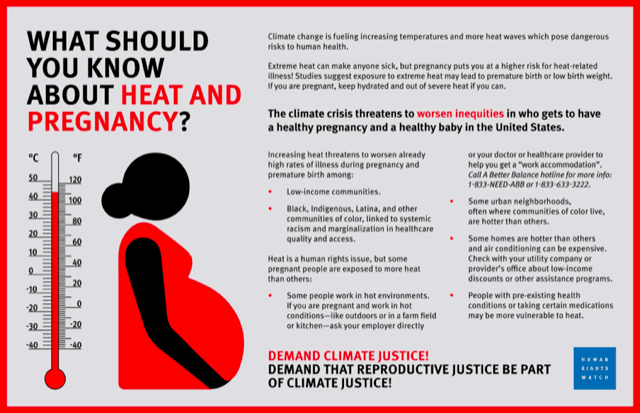
    Infographic titled What Should You Know About Heat and Pregnancy? showing a pregnant person by a thermometer. It explains how climate-driven heat risks pregnancy, especially for marginalized communities, and calls for climate and reproductive justice.

    These families and their concentrations of wealth and power have not created value. Instead, they first used unsustainable family planning to create their own growing audiences and artificial demand by ensuring dismal standards for child development and education, treating people as economic inputs rather than citizens while benefiting from the appearance of inclusive and functional democracies where the average vote was being diluted to uselessness.


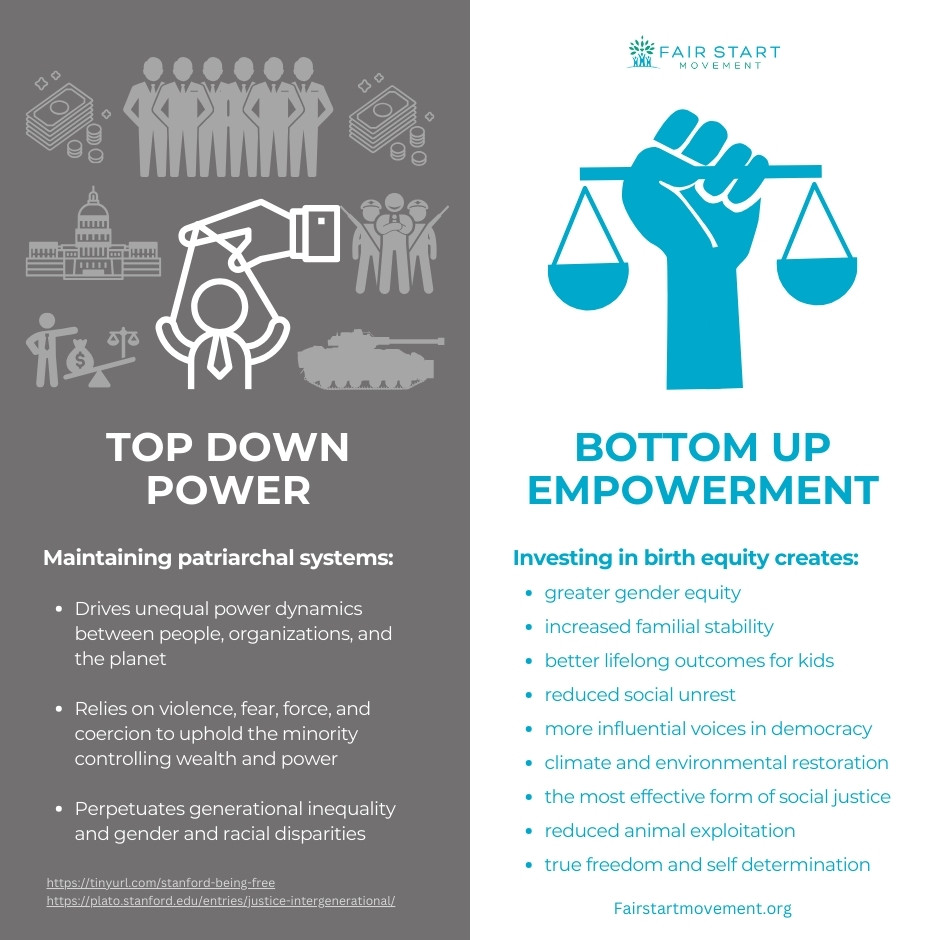
    Top Down Power and Bottom Up Empowerment

    A legal impossibility. 

    Law is different from other disciplines because it norms can be coerced, and firstly on the idea that subjects are  included as equals and thus made constituents. Constitutionalism, at bottom, premises obligation to follow the law on actual inclusion and empowerment.

    Again, given the climate harm to future generations, and our obligations to repair the harm, it would be physically impossible to constitute accurately obligatory relations – legal / obligatory relations – at the most basic level without some sort of truth and reconciliation process around the admission and inversion of empowering future generations more than those at the heights of our economic and political hierarchies. Without fair starts in life, there is no capacity to form organizations capable of representative governance, via the measurable self-determination of its constituents.

    Where else would the empowering relations come from? If defunding the police makes sense, it’s at least because our legal systems have never included constituents with measurable equity in a way that makes them capable of producing actual representatives, and laws – including property entitlements – that accurately represent the will of those subject to them.

    How to see the fraud?

    The claims these families make and fund are easily falsifiable, as are the claims of the funders backing decoy nonprofits that silo social justice into various downstream issues in order to hide upstream entitlement and reparations fraud, using a false premise to benefit from a system that undoes the good one seems to do. Focusing downstream, rather than on things like what Dr. Breeze Harper called the primacy of Black Birth Equity, avoids civil rights that actually account for the creation of power disparities in birth, development, and emancipation.

    What we think of today as procreative or reproductive autonomy was nothing more than cover for not disturbing mostly white birth privilege and positionality. It was the skin of freedom, not the body. Here are some questions one can ask to identify the fraud:

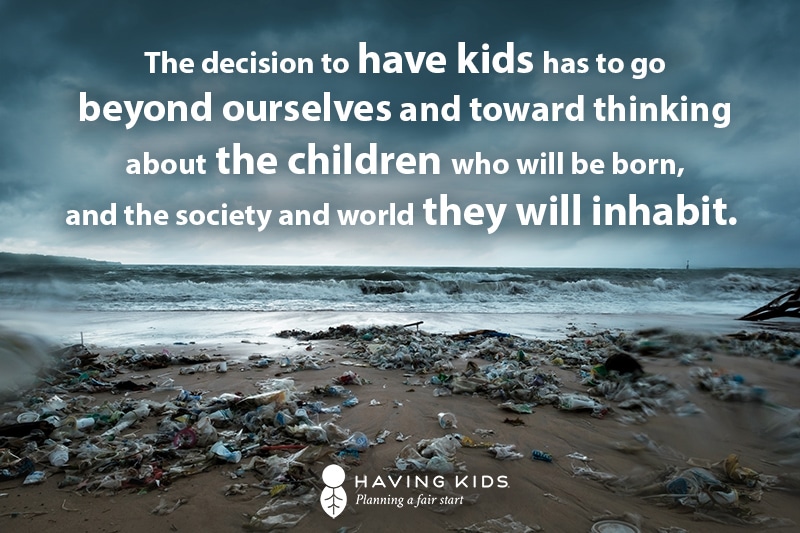
    A beach littered with plastic trash under a cloudy sky. Overlaid text reads: The decision to have kids has to go beyond ourselves and toward thinking about the children who will be born, and the society and world they will inhabit.


    If the claimant valued some outcome, who will cover the child inequity and entry costs to that outcome – growth undoing climate mitigation, for example – and evade more of it? Is the claimant doing more harm than good by ignoring entry without equity? Do they start with enabling the powerful over the vulnerable? Did the claimant spend more on undoing their mission than furthering it? What formula do they use to assess damages in climate, civil rights, environmental justice, etc. cases? How do they define the term power in the context of being free from power? Who is their intended audience?  

    This is a constitutive discourse. Again, this is not about population. It’s about lies and omissions to gain power by exploiting positionality. A concrete goal for a better future might entail functional constitutional conventions, where we can be self-determining rather than determined by others, and in concrete and measurable ways.

    Animal rights, law and policy as the most falsifiable examples of reparations fraud on almost a dozen levels, but also the standard for the highest level of clawback payments. 

    If one factors in children entering the world in inequity, the claims of success and impact made by most animal protection organizations are being undone daily. And they are false, with more vastly animals suffering and dying through the creation of their relations with humans than these organizations save.

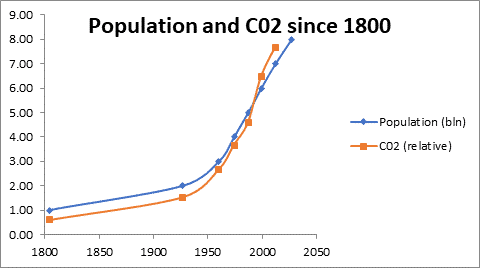
    Line graph showing global population (in billions) and CO2 (relative) from 1800 to 2050. Both lines rise slowly at first, then sharply increase around 1950, with population slightly above CO2 in recent decades.

    Those working in animal law, rights, and policy will have made the most falsifiable claims, claims that thus give a toehold for change.

    For example, many of the funders behind animal protections have been pushing what is a social justice movement for the most vulnerable, instead towardtowards investments in growth-based vegan food markets that do more harm to animals – by the numbers – than these funders and their leachy children do good. Many lawyers ostensibly working on behalf of animals made impact claims in this area that were easily being undone, every day, by inequity. Some call this the #demandscam, pretending to with one hand create value you undo with the other, and in a way that benefits the scammer at cost to others. In this case not only did growth do more harm to animals that food reforms did good, but that growth was replacing a chance for democratic relations with commercial ones via low investments in children, while concealing the death debt investors already owed for climate deaths.

    FSM members were actually told, by a leading animal law professor who was accustomed to not having to link legal institutions to the measurable empowerment of their constituents, that fair start reforms were natural rather than positive law, and that one could work to save animals through food reforms while not altering the underlying retrodictive rights that would – each day – undo any gains from food reforms.

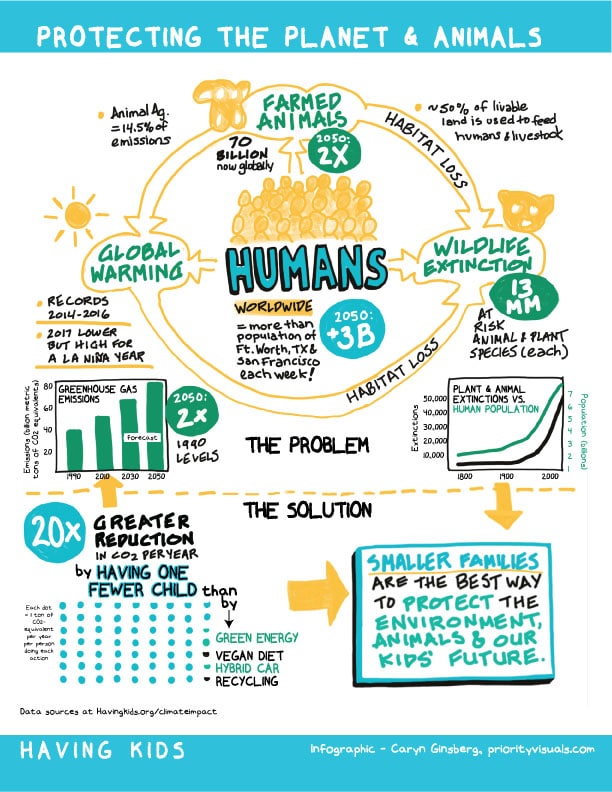
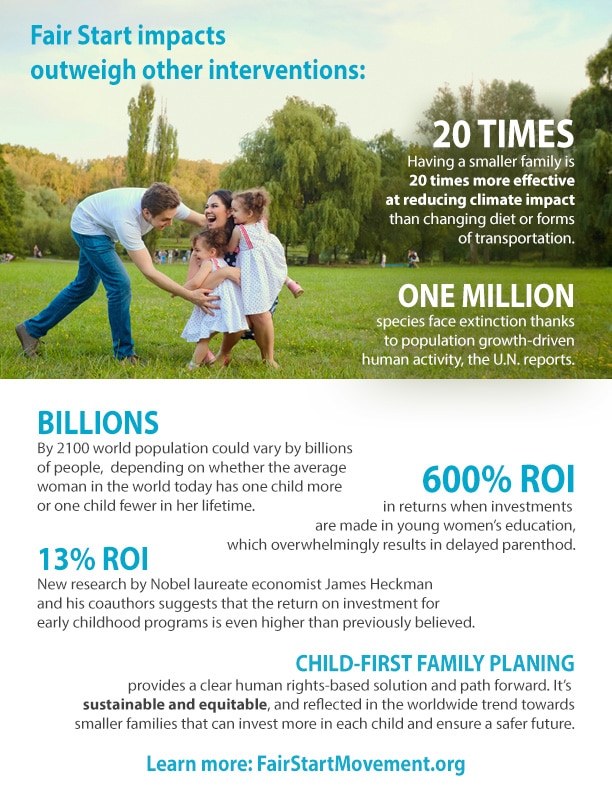
    Infographic illustrating the impact of human activity on the planet and animals, showing links between family size, resource use, global warming, extinction, and proposed solutions like smaller families and sustainable practices.

    Given that animal liberation is the highest form of environmentalism (treating ecologies as the homes of entities who have relations, families, and lives of their own rather than a human resource) the cooptation of animal liberation is horrific. The ideal requires equitable human and nonhumans relations. Instead it is funded towardtowards flashy, downstream, low-impact, micro-level campaigns and victories that get easily undone on a macro level.

    It is, by the numbers, the greatest example of “winner take all” greenwashing possible. Funders, and the performative advocates who take their money, decoy us all away from seeing animal law, rights and policy as the most demanding standard for who humans should become, ethically, because they would rather use an illegitimate system to improve their positionality and image than do the work of legitimating the system around liberation of humans and nonhumans.

    By RMBlaney - Own work, CC BY-SA 4.0, https://commons.wikimedia.org/w/index.php?curid=113952868

    Humans are animals. Seeing us as such moves us away from anthrocentric thinking that ensured the climate crisis, and will kill millions. So, what we refer to as animal rights and law focus on nonhumans not because of their species, but because of their unique vulnerability. Animal law is not merely law that refers to animals. Animal law would have to start with a capacity to actually protect nonhumans, especially in the creation of their relations with future humans who will determine much about their lives. Animal law in the best sense starts with inclusive birth and child welfare policies that create empathetic relations capable of benefitting animals.

    So animal rights, law and policy, if we want to protect nonhumans, is just a system of obligation oriented around the most vulnerable, the most demanding form of law and justice. That system has to have the capacity to actually benefit the beneficiaries, not just pretend to. What does pretending to benefit animals look like? Look at most of the micro victories for animal rights and personhood claimed by organizations over the last few decades, and contrast those with the impacts of growth on animals, and the reality, at a macro level, of embedded nonhuman propertyhood in our archaic reproductive rights regimes. Animal rights in the comprehensive sense is not just ecological – it involves the mots demanding levels of empathy in future generations. 

    Why then not focus on infants and animals, and – at a macro level of inclusive animal personhood – the creation of fundamental power relations between the two? Those like animal rights theorist Peter Singer, and others, do not do so because that level of comprehensive vision involves equity, race, democracy, and other factors that require true tradeoffs against one’s positionality. 


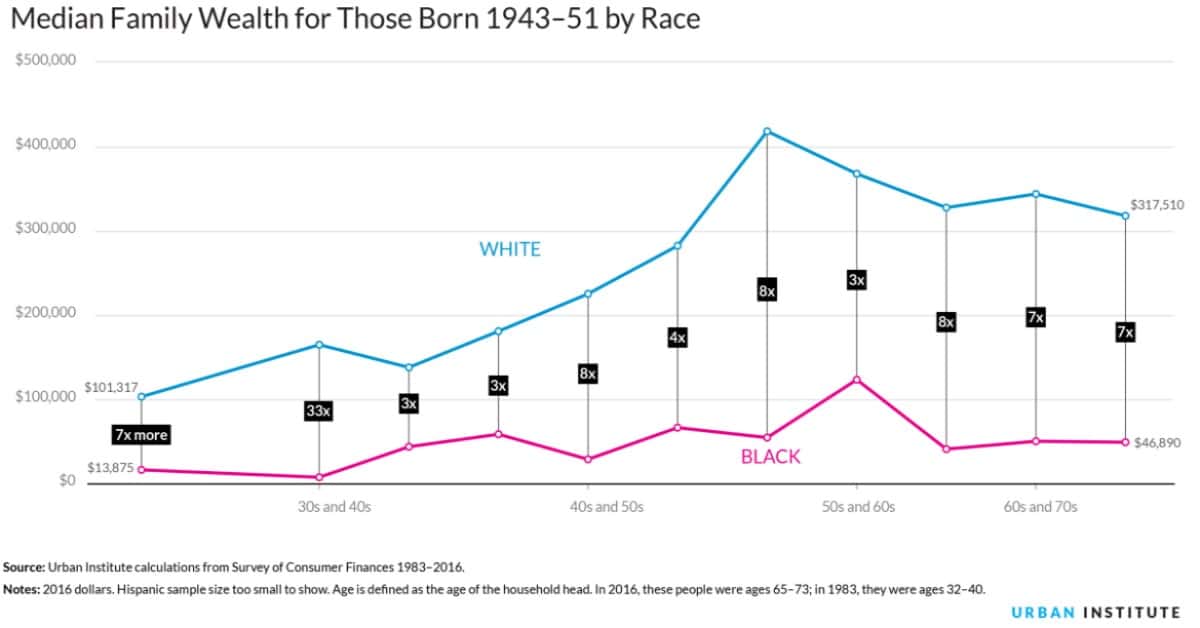
    A line graph compares median family wealth by age for White and Black Americans born 1943–51. White wealth is consistently much higher, peaking at $317,500 in their 60s, while Black wealth peaks at $54,800.

    The wealthy families funding animal rights, law and policy, for decades, refused to deal with this issue because they wanted to benefit from a system that quietly harmed animals, while seeming to be their saviors. Animal rights and law, in this sense, starts with the actual creation of power relations as children enter the world, represented by the collective pronouns implied or expressed in all statements, including purportedly “constitutive” statements like “We the People.” It is the most demanding standard, eco or animal centric, rather than anthropocentric, or punching down on the most vulnerable. But for Singer it was more important to raise his position as savior in an illegitimate system rather than focus on a better version of a “we” to legitimate it, and that did much more harm to animals than he did good.

    Claims many animal protection organizations make, like Mercy for Animals, are objectively false, in the sense that the impacts they claim cannot be squared with the reality of human birth, development. and inequity on nonhumans. But many funders, in those nations most responsible for the climate crisis, are using institutions and individuals – media, decoy nonprofits, universities, agencies, think tanks, celebrities, etc. – to create a fantasy world of equitable family planning, green environmental sustainability and social justice impact that is being vastly undone every day as children enter the world beneath the minimum of what they are owed. These entities are literally using wealth made at deadly cost to the values they claimed to further, wealth that is defended by the violence of the state, to drown out voices of most victims.

    Singer’s version of animal rights and law, the abstraction away from the creation of actual relations, is just charade version of animal liberation they need: Value animals in the abstract with one hand, make money on growth and privilege at cost to them with the other.

    Line graph showing world population (billions) from 1950 to 2100. It displays observed values, median projection, 80% and 95% prediction intervals, and scenarios for ±0.5 child, with population rising then diverging in future projections.

    Effective animal rights in the best sense is personally expensive, not profitable. It’s easier to ignore all of that and let the macro undo good for animals at the micro level. True animal rights and law focuses on the creation of power relations, and limiting capacity to harm others – the capacity that is the core of the Anthropocene and the antithesis of animal rights. True animal rights mean preemptive standards in things like assessing damages to animals (and children). If captivity harms elephants for example, it’s because it deviates from a biodiverse and less crowded world where elephants are free of most human influence, not deviation from a relatively dismal life at a sanctuary.

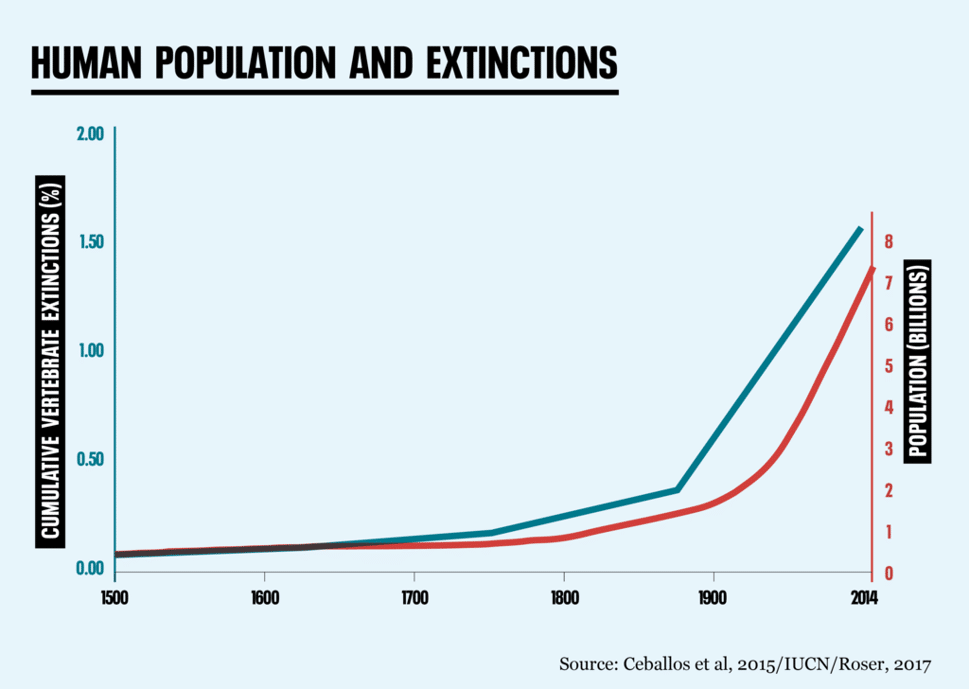
    Human Population and extinctions infographic

    Animal law starts with moving away from anthrocentric systems, toward seeing humans as the animals that they are, and situating them in equity, before we should have any sense that they can be free. But, as a close source to Fair Start said: “This is all the organizations will pay you to do. And if you love animals, that’s better than working for nonprofits.” Actually, research in the areas suggests the charade does more harm than good by moving the goalposts of social justice, and that in fact those engaged in it would never do so if they were not otherwise privileged to do so.

    Fair Start initiated whistleblowing in this area as the evidence arose that the climate crisis could actually reduce the carrying capacities of ecosystems, rather than just exceed them, and that birth and developmental positionality was the greatest determinant of one’s prospects to to live or suffer/die in the crisis.

    Implementing the fix: Being effective means addressing the root cause, not the symptom.

    The only way to engage in damage evaluation for reparations, and the fraud hiding them, is to peg them to a functionally inclusive baseline – children entering the world relative to certain counterfactual thresholds – that would not have caused the death of millions of innocent persons.

    Accurate reparations – relative to one’s positioning or membership position in the fundamental system of political obligation – fixes the problem of share inequity in one’s democracy vastly undoing the good many claimed to have done. Without them admitting the harm and fulfilling their obligations it would be impossible for any of us to live in a system of collective self-determination.

    You can take legal action against those entities engaged in the fraud, with climate and race reparations benchmarked to concrete metrics of democratic equity, and a preemptive claim to what is owed that means the state has no legitimate authority to defend the barriers to who owe payments. Fair Start is now moving towardtowards such a system evaluating the full spectrum of harms, and accurate damages, in matters like children dying of climate exacerbated malaria in western Uganda.

    We only owe others as much as they owe entrants into the world, because any claim of inalienable rights assumes fulfillment of a prior duty to others. One can use the discourse mentioned above, the questions, to force others to derive their thinking back to “might makes right” logic, such that they fall outside of any theory of legitimacy or political obligation that would create a duty ensuring their protection by others. Living such a logic makes those who refuse fundamental fairness – those who embrace missing a crucial step in the logic of their oughtness – fall outside of systems of mutual obligation.

    Here are some indicia that an entity is engaged in fundamental, or constitutive reparations fraud: 

    • They will silo justice into downstream issues to avoid dealing with the creation of power relations.
    • They will conflate the difficulty of inverting power systems with their desire to retain their privilege.
    • They will redefine values over time to evade having contradicted themselves when called for payments.


    Please consider making a contribution through Donate. Together, we can create lasting change to save next generation


  • Fair Start Reforms Are the Heart of Conservatism

    Fair Start Reforms Are the Heart of Conservatism

    Fair Start reforms would ensure the things those who love freedom care about. 

    • Eliminating entrenched and ineffective governments who survive by wasting tax dollars
    • Ensuring responsible parenting that halts the sea of child abuse and neglect which exists today
    • Ending unsustainable and universal growth models that are intended to ensure cheap labor via constant migration
    • Ensuring the protection of rights to bear arms consistent with governance by constituents who trust one another
    • And creating truly self-determining lives and relations that evade the need for climate migration, and are consistent with national security, etc.


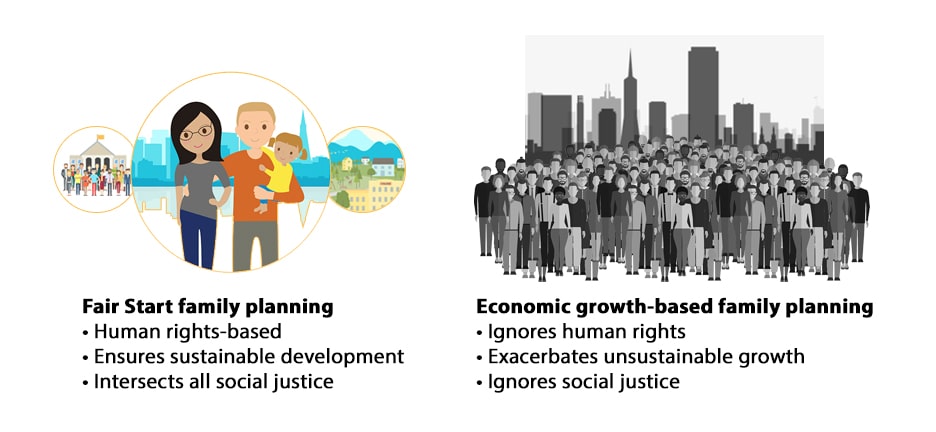
    Two illustrations compare family planning models: At left, a diverse happy family stands together with icons for community and health. At right, a monochrome crowd in a city. Text contrasts fair start (rights-based) with economic growth-based planning.


    Funding every child’s right to a fair start in life – over competing  rights – is the most just and effective solution to the many crises we face today. It has an exponentially greater impact than most other interventions, many of which are being undone as children enter the world without the things they need.

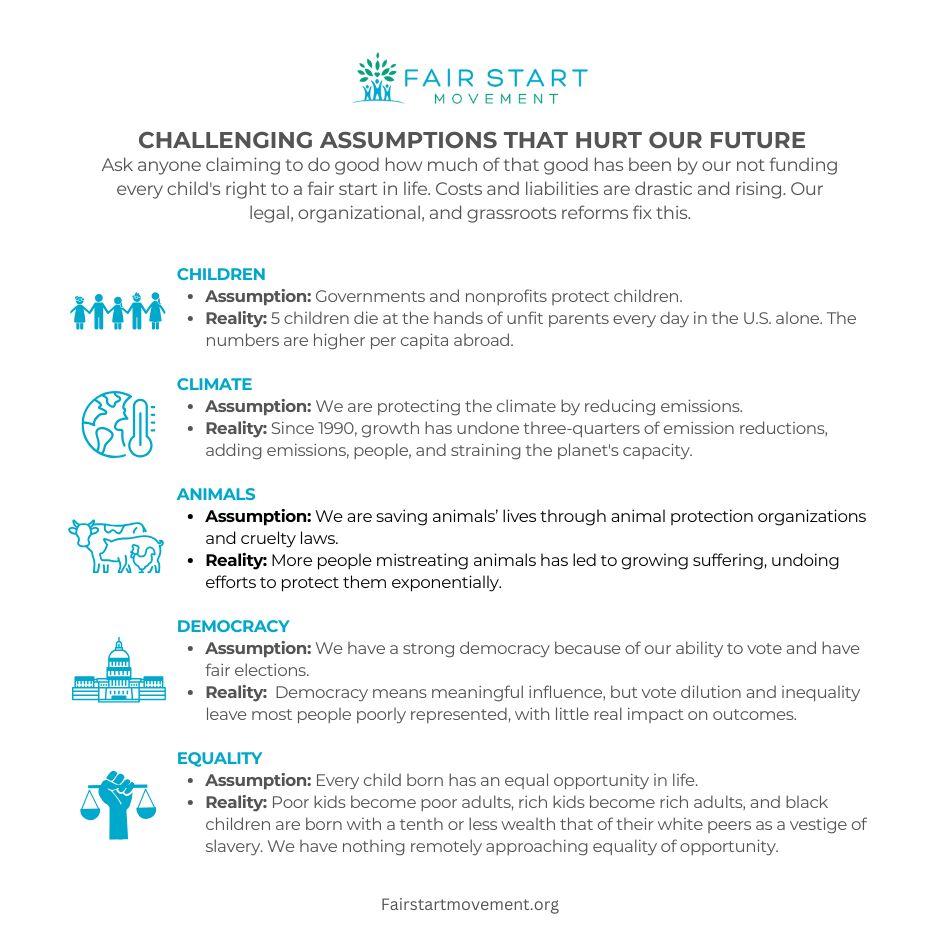
    Ask anyone claiming to do good in the world how children being born without what they need undid the claimed benefit. Current policies have increased overall child abuse and neglect – including child torture and death, undone most of the efforts to mitigate climate change, degraded democracy and increased racial and other deadly inequities.


    Challenging assumptions that hurt our future infographic


    No child should ever be born outside a structure of debt/savings accounts that protect all children from the climate crisis by including and empowering them with their universal birthright.

    Our obligations to fund that accounting come before anything we do because it ensures fundamental justice; it creates the inclusive and empowering “we.”  Without this we can’t choose who has influence, and control, over us. We can’t be free. 

    TAKE ACTIONS: 1) Donate here to enable Fair Start to change family systems,  2) sign here to say you think a Fair Start in life is the first human right, 3) urge any charity you support – regardless of the issue – to admit not prioritizing funding for young women and fair starts in life for all kids did more harm to their missions than they did good. 

  • Why, Fundamentally, Can Men Harm Women?

    Why, Fundamentally, Can Men Harm Women?

    Around the world women and girls are abused, trafficked and killed.

    Climate reparations are a chance to change that, giving many women and girls significant savings accounts that they can use to get away from their abusers – money that they can use to ensure any children they might have one day become truly free. 


    Two illustrations compare family planning models: At left, a diverse happy family stands together with icons for community and health. At right, a monochrome crowd in a city. Text contrasts fair start (rights-based) with economic growth-based planning.


    Funding every child’s right to a fair start in life – over competing  rights – is the most just and effective solution to the many crises we face today. It has an exponentially greater impact than most other interventions, many of which are being undone as children enter the world without the things they need.

    Ask anyone claiming to do good in the world how children being born without what they need undid the claimed benefit. Current policies have increased overall child abuse and neglect – including child torture and death, undone most of the efforts to mitigate climate change, degraded democracy and increased racial and other deadly inequities.


    Climate crisis infographic


    No child should ever be born outside a structure of debt/savings accounts that protect all children from the climate crisis by including and empowering them with their universal birthright.

    Our obligations to fund that accounting come before anything we do because it ensures fundamental justice; it creates the inclusive and empowering “we.” Without this we can’t choose who has influence, and control, over us. We can’t be free.

    TAKE ACTIONS: 1) Donate here to enable Fair Start to change family systems,  2) sign here to say you think Fair Start overrides barriers – like claims to wealth that could instead be used to protect women, and 3) urge any charity you support – regardless of the issue – to admit not prioritizing funding for young women fair starts in life for all kids did more harm to their missions than they did good. 

  • Black children are born with a tiny fraction of the wealth of white children. Take Action.

    Black children are born with a tiny fraction of the wealth of white children. Take Action.

    Those same black children will die by the millions in the climate crisis, while many white children get richer and richer. We can change that by taking birth equity seriously.


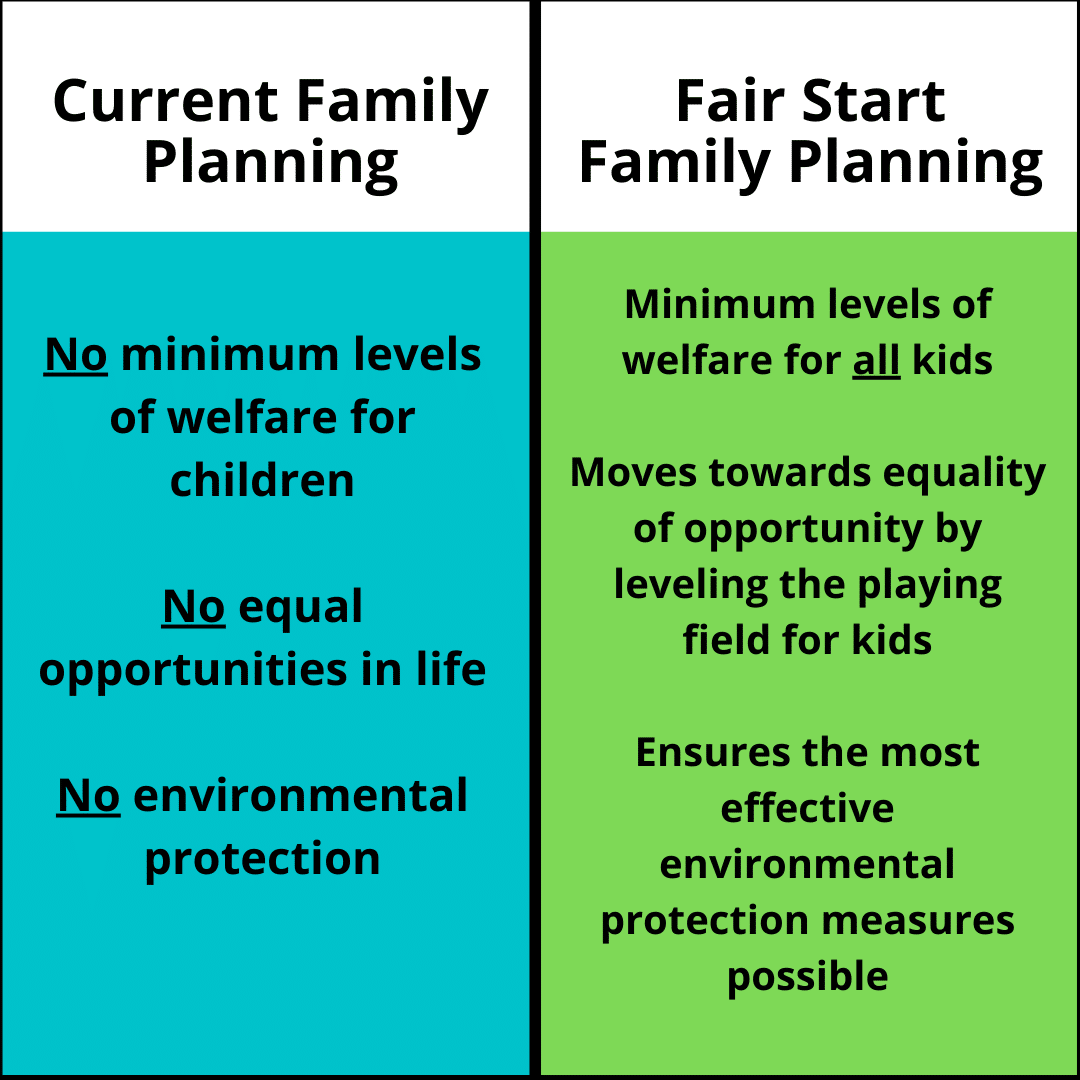
    A comparison chart of Current Family Planning vs. Fair Start Family Planning. The left side lists negatives of current planning; the right side highlights positive outcomes of fair start planning for welfare, equality, and environmental protection.


    No child’s life is worth the life of another. The climate and related crises we face today were largely driven by the absence of any child equity and empowerment standards in near-universal reproductive rights regimes dating back to 1948. 


    Family having coffee and eating snacks together in their kitchen


    The wealthy families and governments driving these regimes were avoiding measurable democratic equity as the overriding value behind political legitimacy. They were evading its ability to override existing entitlements. But by avoiding equity, they seeded racist inequity,  unsustainable growth that would trigger the climate crisis, and the development of fundamentally illegitimate political systems that never measurably empowered their subjects enough to gain representative capacity and authority.

    This created a fake, top-down version of social justice based on hollow legal institutions and laws that never derived from any legitimating authority, but rather hid the actual creation of power relations in birth, development, and emancipation. It allowed wealthy white families to amass wealth, at illegal and deadly cost to generations of black families. 

    There were two standards for justice: The real – measured at a zero baseline using concrete markers for assessing self versus other determination, and the decoy – which centered on an illusion of bodily autonomy, one conflated with the capacity to harm others. If after 1948 national legitimacy and authority were contingent on inverting the flow of authority from government to the governed, this move represents the height of colonization because it assumed claims to authority and wealth that should instead have gone through a process of familial legitimation. 


    Two illustrations compare family planning models: At left, a diverse happy family stands together with icons for community and health. At right, a monochrome crowd in a city. Text contrasts fair start (rights-based) with economic growth-based planning.


    Funding every child’s right to a fair start in life – over competing  rights – is the most just and effective solution to the many crises we face today. It has an exponentially greater impact than most other interventions, many of which are being undone as children enter the world without the things they need.

    Ask anyone claiming to do good in the world how children being born without what they need undid the claimed benefit. Current policies have increased overall child abuse and neglect – including child torture and death, undone most of the efforts to mitigate climate change, degraded democracy and increased racial and other deadly inequities.


    Climate crisis infographic


    No child should ever be born outside a structure of debt/savings accounts that protect all children from the climate crisis by including and empowering them with their universal birthright.

    Our obligations to fund that accounting come before anything we do because it ensures fundamental justice; it creates the inclusive and empowering “we.” Without this we can’t choose who has influence, and control, over us. We can’t be free.

    TAKE ACTIONS: 1) Donate here to enable Fair Start to ensure equity is made the center of all law,  2) sign here to say you think Fair Start overrides barriers – like claims to wealth that could instead be used to ensure birth equity, and 3) urge any charity you support – regardless of the issue – to admit not prioritizing funded fair starts in life for all kids did more harm to their missions than they did good. 

  • Many Regret Having Kids. Why Not Fund Delay and Readiness Instead?

    Many Regret Having Kids. Why Not Fund Delay and Readiness Instead?

    More and more people are coming forward to say they regret having kids, as many others struggle to keep up with the costs of parenting.

    And yet governments and big business are working together to try to push more women to have kids in order to create cheap labor, more consumers, and dumbed-down taxpayers. Fair Start is fighting back, and taking the money they stole to make sure families work for families, not governments and business.


    Two illustrations compare family planning models: At left, a diverse happy family stands together with icons for community and health. At right, a monochrome crowd in a city. Text contrasts fair start (rights-based) with economic growth-based planning.


    Funding every child’s right to a fair start in life – over competing  rights – is the most just and effective solution to the many crises we face today. It has an exponentially greater impact than most other interventions, many of which are being undone as children enter the world without the things they need.

    Ask anyone claiming to do good in the world how children being born without what they need undid the claimed benefit. Current policies have increased overall child abuse and neglect – including child torture and death, undone most of the efforts to mitigate climate change, degraded democracy and increased racial and other deadly inequities.


    Climate crisis infographic


    No child should ever be born outside a structure of debt/savings accounts that protect all children from the climate crisis by including and empowering them with their universal birthright.

    Our obligations to fund that accounting come before anything we do because it ensures fundamental justice; it creates the inclusive and empowering “we” that comes before the things we do. Without this we can’t choose who has influence, and control, over us. We can’t be free.

    TAKE ACTIONS: 1) Donate here to enable Fair Start to ensure parents are ready to parent before they have kids,  2) sign here to say you think Fair Start overrides barriers – like claims to wealth that could instead be used to avoid many from having kids before they are ready, and 3) urge any charity you support – regardless of the issue – to admit not prioritizing funded fair starts in life for all kids did more harm to their missions than they did good. 

  • The Idea of Democracy Without a Fair Start in Life is a Scam

    The Idea of Democracy Without a Fair Start in Life is a Scam

    Today the average person has less control over their lives as democracy degrades, and a few take over the lives of many – socially, and ecologically. 

    We can take that power back, because every child’s right to the things they need – like having a voice that matters and is heard in their democracies – comes first, and overrides any authority those above us claim.


    Two illustrations compare family planning models: At left, a diverse happy family stands together with icons for community and health. At right, a monochrome crowd in a city. Text contrasts fair start (rights-based) with economic growth-based planning.


    Funding every child’s right to a fair start in life – over competing  rights – is the most just and effective solution to the many crises we face today.

    It has an exponentially greater impact than most other interventions, many of which are being undone as children enter the world without the things they need. Ask anyone claiming to do good in the world how children being born without what they need undid the claimed benefit. Current policies have increased overall child abuse and neglect – including child torture and death, undone most of the efforts to mitigate climate change, degraded democracy and increased racial and other deadly inequities.

    Any day that any person or organization does not start their work by shifting wealth to its obligation to fund a fair start in life for every child is a day we undo our work. 


    Climate crisis infographic


    No child should ever be born outside a structure of debt/savings accounts that protect all children from the climate crisis by including and empowering them with their universal birthright. Our obligations to fund that accounting come before anything we do because it ensures fundamental justice; it creates the inclusive and empowering “we” that must come before all we do. Without this we can’t choose who has influence, and control, over us. We can’t be free.

    TAKE ACTIONS: 1) Donate here to enable Fair Start to ensure family laws consistent with democracy,  2) sign here to say you think Fair Start overrides barriers – like claims to wealth that could instead be used to ensure better family planning,  and 3) urge any charity you support – regardless of the issue – to admit not prioritizing funded fair starts in life for all kids did more harm to their missions than they did good. 

  • Sick of Rich Kids Who Don’t Deserve What They Have? Us Too.

    Sick of Rich Kids Who Don’t Deserve What They Have? Us Too.

    Today most children born will end up relatively poor, working for wealthy families who made their money ruining our environment and never having to invest in an equal opportunity for all kids.

    Fair Start is inverting that system with debt/saving accounts that gives meaning to the idea of equity, and planned parenting. 


    A child wearing worn sneakers sits on a wooden surface. Overlaid text reads: Economic Inequality. Children who grow up poor are more likely to be poor as adults. The likelihood increases with each year of poverty. – PBS Frontline.


    Funding every child’s right to a fair start in life – over competing  rights – is the most just and effective solution to the many crises we face today. It has an exponentially greater impact than most other interventions, many of which are being undone as children enter the world without the things they need.

    Ask anyone claiming to do good in the world how children being born without what they need undid the claimed benefit. Current policies have increased overall child abuse and neglect – including child torture and death, undone most of the efforts to mitigate climate change, degraded democracy and increased racial and other deadly inequities.

    Any day that any person or organization does not start their work by shifting wealth to its obligation to fund a fair start in life for every child is a day we undo our work. 


    Climate crisis infographic


    No child should ever be born outside a structure of debt/savings accounts that protect all children from the climate crisis by including and empowering them with their universal birthright. Our obligations to fund that accounting come before anything we do because it ensures fundamental justice; it creates the inclusive and empowering “we” that must come before all we do. Without this we can’t choose who has influence, and control, over us. We can’t be free.

    TAKE ACTIONS: 1) Donate here to enable Fair Start to make equity the center of family law, 2) sign here to say you think Fair Start overrides barriers – like claims to wealth that could instead be used to avoid having kids before they are ready, and 3) urge any charity you support – regardless of the issue – to admit not prioritizing funded fair starts in life for all kids did more harm to their missions than they did good. 

  • Scam Alert: Environmental Charities Allowed Growth to Undo Their Claimed Impacts

    Scam Alert: Environmental Charities Allowed Growth to Undo Their Claimed Impacts

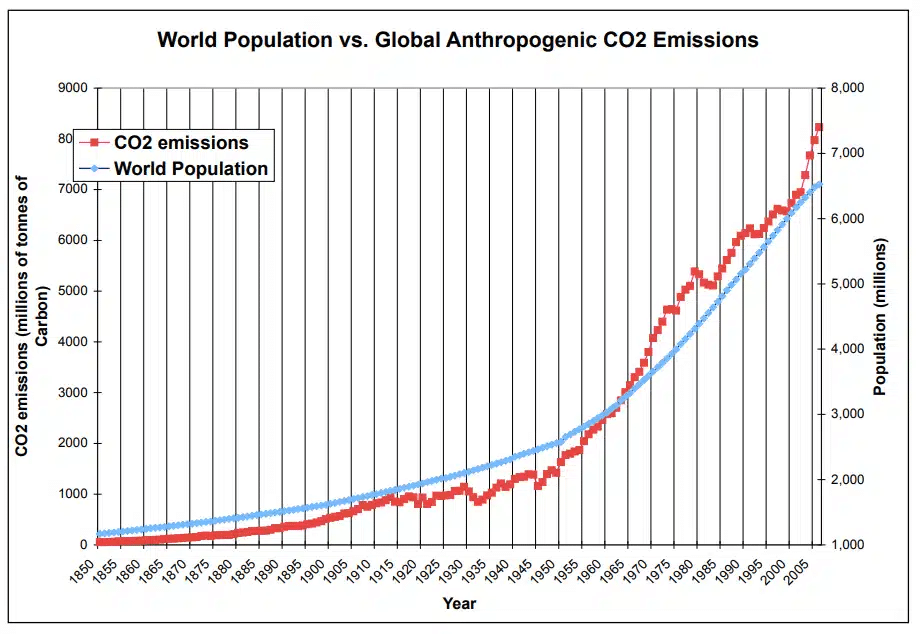
    As the climate crisis intensifies we might all consider getting our money back from those scammy environmental charities who refused to deal seriously with unsustainable growth.

    Why?

    World Population vs. Global Anthropogenic CO2 Emissions


    Bressler3

    The solution? 

    If an entity does not think children deserve a fair start in life, do not give them money.

    Funding every child’s right to a fair start in life – over competing  rights – is the most just and effective solution to the many crises we face today. It has an exponentially greater impact than most other interventions, many of which are being undone as children enter the world without the things they need.

    Ask anyone claiming to do good in the world how children being born without what they need undid the claimed benefit. Current policies have increased overall child abuse and neglect – including child torture and death, undone most of the efforts to mitigate climate change, degraded democracy and increased racial and other deadly inequities.

    Any day that any person or organization does not start their work by shifting wealth to its obligation to fund a fair start in life for every child is a day we undo our work. 


    Climate crisis infographic


    No child should ever be born outside a structure of debt/savings accounts that protect all children from the climate crisis by including and empowering them with their universal birthright. Our obligations to fund that accounting come before anything we do because it ensures fundamental justice; it creates the inclusive and empowering “we” that must come before the things we do. Without this we can’t choose who has influence, and control, over us. We can’t be free.

    TAKE ACTIONS: 1) Donate here to enable Fair Start to  block parents from having kids until they are ready to parent well and have sustainably sized families,  2) sign here to say you think Fair Start overrides barriers – like claims to wealth that could instead be used to avoid having kids before they are ready, and 3) urge any charity you support – regardless of the issue – to admit not prioritizing funded fair starts in life for all kids did more harm to their missions than they did good.