Category: Children’s Rights

  • Help HK Call Out Those Criticizing Alexandria Ocasio-Cortez on Family Planning Comments

    Help HK Call Out Those Criticizing Alexandria Ocasio-Cortez on Family Planning Comments

    Last week many news outlets, like Fox News, attacked Rep. Alexandria Ocasio-Cortez for breaking the long-standing taboo and asking whether we need better, and sustainable, family planning in the United States. Read our letter to AOC here.  Erika Mathews, Executive Director of the national child-protection organization Having Kids, is urging supporters to find and politely engage directly with AOC’s critics, by simply asking them a few questions either by email, social media, or in-person interviews. Her critics are easily identifiable online – just google “Alexandria Ocasio-Cortez” and “children,” and if you need help finding a particular person, just email us at info@fairstartmovement.org

    HK WILL PUBLISH AND PUBLICIZE A SUMMARY OF THE BEST ENGAGEMENT.

    Erika urges supporters to engage with AOCs critics using a few simple questions. She had this to say. “It’s time to have an open and honest conversation about the future, which will mostly be determined by the family planning decisions people make today. Smaller families are the best way to mitigate climate change and other environmental crises – are AOC’s critics saying we should not do what works best? Rich kids become rich adults and poor kids become poor adults. Better family planning can level the playing field. Are AOC’s critics against a level playing field? Nearly 700,000 kids are abused each year in the U.S. Are AOC’s critics suggesting we should arbitrarily push random people to have kids, people that might not be ready to be good parents? Is that the future we want?”

    It’s your future. It’s your kids future. Do we really want it filled with billions more people who did not get what they needed growing up?

    Here are the facts: The most effective way to address many of the impacts on our environment and other species, like climate change, is by choosing smaller families. Yes, it’s up to 20 times more effective than changing diet or forms of transportation. By 2100 world population could vary by billions of people, depending on whether the average woman in the world today has one child more or one child fewer in her lifetime. The science of early childhood development shows the disproportionate impact the beginning of our lives has on the rest of our lives. This holds true, among other things, for economic inequality. Better family planning is the best way to reduce inequality. Other interventions are simply too late.

    According to Erika, “We can change the direction the world is headed. We just have to start a serious conversation. AOC is right to break the taboo.”

    Having Kids is a 501(c)3 nonprofit nonprofit organization dedicated to reforming family planning by replacing parent-centered family planning models with the human rights-based and child-first Fair Start model.

  • AOC Addresses the Big Question of Kids and Climate Change

    AOC Addresses the Big Question of Kids and Climate Change

    [et_pb_section fb_built=”1″ _builder_version=”4.16″ hover_enabled=”0″ global_colors_info=”{}” sticky_enabled=”0″][et_pb_row _builder_version=”4.16″ background_size=”initial” background_position=”top_left” background_repeat=”repeat” global_colors_info=”{}”][et_pb_column type=”4_4″ _builder_version=”4.16″ custom_padding=”|||” global_colors_info=”{}” custom_padding__hover=”|||”][et_pb_text _builder_version=”4.27.4″ background_size=”initial” background_position=”top_left” background_repeat=”repeat” hover_enabled=”0″ global_colors_info=”{}” admin_label=”Text” sticky_enabled=”0″]

    In a recent Instagram Live video, Congresswoman Alexandria Ocasio-Cortez raised a question many Millenials are asking in the age of climate change: is it ok to still have kids?

    “It is basically a scientific consensus that the lives of our children are going to be very difficult, and it does lead young people to have a legitimate question: is it OK to still have children?” – Rep. Ocasio-Cortez


    She is
    not the first to ask this question. It’s an existential worry many are asking as they consider whether to have kids, or have another.

    Given what we know about how climate change will affect the next generation, especially those most vulnerable, isn’t it a fair question? Or is it a fight too taboo to discuss?

    Sadly, some call such a question extreme. What’s extreme is the suggestion by some like Meghan McCain that action on climate change means supporting infanticide.

    Thankfully, AOC is more reasonable. While she did not give a definitive answer to the big question, she did explain:

    “…even if you don’t have kids, there are still children here in the world and we have a moral obligation to them to leave a better world to them.”

    But how do we get there?

    We could not agree more with Rep. Ocasio-Cortez. But the Green New Deal she’s advocating forgot to include the most important factor in creating a better world: better family planning. People drive emissions and use resources. While transitioning to a carbon-neutral economy is important, it’s not enough to protect natural spaces and species that are disappearing due to urban sprawl. 

    Family planning investments and policies not only improve lives and reduce inequality. Research indicates that they result in smaller families which demand less on our communities and more sustainable. Improving family planning in our country and across the world would allow us to fulfill the moral obligation we have to our kids.

    Reducing Rates

    TAKE ACTION:
    Tweet Rep. Ocasio-Cortez, @AOC and ask her to include family planning in the Green New Deal to give kids a #fairstart and #actonclimate.

    [/et_pb_text][/et_pb_column][/et_pb_row][/et_pb_section]

  • Hungary: Close Borders, Pay Women to Have Big Families

    Hungary: Close Borders, Pay Women to Have Big Families

    The Washington Post recently reported that Hungary is so desperate for kids that mothers of four won’t need to pay income tax. Leaders like Hungary’s Viktor Orban and Senator Marco Rubio here at home call for more births to counter demographic declines while at the same time demanding closed borders and blocking migration that could solve that problem.

    Nevermind that it’s undeniably racist. These short-sighted, tribalist, and ill-informed cash for babies schemes are regressive as well. Fertility is not limited to national boundaries. The impact larger families have spill out across the world. We know that we are twelve years from catastrophic climate change. Even accounting for closed borders, the resources used by each person impose a significant strain on the planet.

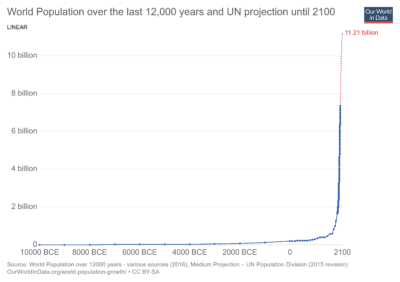
    Line graph showing world population from 10,000 BCE to 2100. Population remains low until a sharp rise after 1800, reaching over 8 billion in 2020 and projected to reach 11.21 billion by 2100.Economists and the media are just as guilty in the hysteria over declining fertility rates. But the bigger picture shows that there is no shortage of people. World population is projected to grow exponentially, despite the growing trend towards smaller families.

    Shouldn’t we demand modernized thinking of our leaders and see beyond borders to the world we all share? Our kids and future generations are counting on us.


    TAKE ACTION
    We can counter the regressive rhetoric. We’re asking the U.N. Secretary-General to recommend smaller families to create a better future for kids. Add your name here. 

  • One Mother’s Effort to Change the Way We Plan Families

    One Mother’s Effort to Change the Way We Plan Families

    Erika Mathews, Executive Director Having Kids, is taking the bold step of using her own family as a way to promote better family planning. This lone mother is breaking a taboo by speaking out about the need for everyone to choose smaller, better-planned families.

    The well-known animal rights activist chose to have one child, Willow, age 11. Erika is now promoting a smaller family ethic and policies, which study after study have shown is the most effective way to solve key environmental and social crises, like climate change and rising economic inequality.

    • The most effective way to address many of the impacts on our environment and other species, like climate change, is by choosing smaller families. Yes, it’s up to 20 times more effective than changing diet or forms of transportation. By 2100, world population could vary by billions of people, depending on whether the average woman in the world today has one child more or one child fewer in her lifetime
    • The science of early childhood development shows the disproportionate impact the beginning of our lives has on the rest of our lives. This holds true, among other things, for economic inequality. Better family planning is the best way to reduce inequality. Other interventions are simply too late.

    Why subject herself and her family to criticism? Erika says, “I care about my kid. I care about all kids. This is the most effective way to protect their future. What parent wouldn’t act to protect their kid?” For Erika the logic is simple. Smaller families can invest more in each child, and if parents take steps to plan their families, they can connect their kids with the crucial resources they need to have the most impact over the span of their entire lives.

    Erika, through her organization Having Kids, is urging other mothers to speak out. “We can change the direction the world is headed. We just have to start this conversation.”

  • 2020 Candidates: We Can’t Fight Inequality Without Family Planning Investments

    2020 Candidates: We Can’t Fight Inequality Without Family Planning Investments

    As 2020 contenders like Warren, Booker, Harris, Gillibrand, Schultz, and others make the media rounds, we’ve been hearing a common theme: creating a future where Americans have the opportunity to succeed. They talk about getting a fair shot and the struggle to get ahead.

    Elizabeth Warren frequently declares that it shouldn’t matter where you come from. She wants to fight for “…an America where every kid, no matter what that kid’s zip code is, has that same fighting chance.” It’s a trope used frequently by candidates.  

    But the reality is, it does matter what zip code a child is born into. If we want a country where the zip code in which you are born doesn’t matter, family planning HAS to be part of that picture. There’s no way around it.

    In “Giving Kids a Fair Chance,” Nobel Prize Economist James Heckman argues, “the accident of birth is the greatest source of inequality in America today. Children born into disadvantage are, by the time they start kindergarten, already at risk of dropping out of school, teen pregnancy, crime, and a lifetime of low-wage work.”

    Being born into poverty harms kids for life, and the longer it is experienced, the harder it is to overcome. Unequal opportunities translate into unequal lifelong outcomes by the time children reach the age of five. And right now a whopping 41% of American children live in or near poverty. Inequality in the U.S. is so pervasive that the UN has called us “the most unequal society in the developed world.”

    There’s no level playing field without a fair start in life.
    If we’re not talking about fairness from birth, we are not addressing the disparities in cognitive, emotional and health development that are inflicted. We’re not addressing the gap between young children who receive full attention from their parents and those who are missing critical early learning and social skills because their parents are working multiple jobs to get by.

    We squabble about how to improve school performance while ignoring the fact that 14.8 million kids in the U.S. don’t have enough to eat. It doesn’t take an expert to recognize that hungry kids cannot concentrate and do well in school. 

    As the Huffington Post explained:

    “The root of the problem of school performance is that we do not know how to effectively respond to the impact of poverty on a child’s readiness to learn or how to provide more effective instruction to accelerate progress for low-income students who find themselves behind their peers.

    Children born into poverty must overcome significant obstacles to their educational success before ever stepping a foot into a classroom or school. And once they do enter school, they encounter a system designed to provide instruction to groups of children that are expected to learn in the same environment and at the same pace. For children in poverty who began their formal schooling already behind other children, this uniform pace and structure assure that they will never catch up to their peers.”

    How Family Planning Reduces Inequality
    The decades of evidence is clear. Parents who plan, wait, and focus resources on smaller families are more financially secure and stable, parent better, and invest more in each child. The results pay off for kids in the form of greater academic achievement, emotional health, social mobility, health, community participation, gender equality, lifetime success, and more. Research indicates that better family planning is the most effective way to end the cycle of poverty.

    Fixing Our Broken System
    Some candidates are exploring the idea of a Green New Deal among other fixes. Yes, corporations and the 1% need to pay their fair share in taxes, adults need a living wage, and the cost of higher education needs to be addressed. But history shows that fairer taxes and better jobs are not enough. All of that must go hand-in-hand with investments in children and family planning to enable every child to succeed throughout their development and into adulthood.

    One solution? Guaranteed Minimum Income tied to family planning. Having Kids has proposed such a plan to reduce inequality in D.C. Another approach is having great success in Colorado through the LARC4CO program, a partner of Having Kids. They offer affordable long-acting reversible contraception (LARC) to reduce unintended pregnancy and empower families to achieve greater stability before having kids. Investments like these are powerful tools in reducing economic inequality. 

    Until we invest in better family planning to give all kids a fair start, zip codes will continue to matter in the fight for equality. We implore the candidates to start the conversation.

    TAKE ACTION: Tweet the candidates and tell them that we must invest in family planning to reduce inequality. Use the hashtag #fairstart.

  • How are Vaccinations and Family Planning Related?

    How are Vaccinations and Family Planning Related?

    In the new release, The Ethics of Vaccination, Alberto Giubilini argues, “Vaccination raises ethical issues about the responsibilities of individuals, communities, and states in preventing serious and potentially life-threatening infectious diseases.”

    Vaccination is about the collective responsibility to protect the herd through the choices we make ourselves. Can the same be said in regards to family planning?

    The Wall Street Journal’s Mark Oppenheimer said last fall, “…People should do what they want to do…And those of us who want five children should have them.” Father Rennier, who urges parents to have as many as God will allow, is another example of short-sighted thinking that ignores the needs of kids and the community.

    Like the anti-vax movement, it is isolationist thinking. The days of seeing family as the building of our own little kingdoms is over. Such a view ignores the attention and resources that every child deserves. Seeing kids as personal property is also a disaster for the world. Parents who choose to have large families do so without consideration for their impact on animals, the environment, or rising inequality.

    As with vaccinating, don’t we all have a responsibility do our part for the good of the whole? In this case, to plan our families in a way that is conscientious of the needs of both our kids and the world around us?

    Thoughtful family planning means delaying parenthood and having no more than two kids. Communities who do so make for increased stability, less crowding, a smaller impact on the planet, greater investment in each child, and more shared resources for everyone to get a fair start in life. Cooperating means better outcomes for all. 

    When we think of it in terms of the best interest of kids, it’s a no brainer.


  • Meghan and Harry: Consider Having a Small Family

    Meghan and Harry: Consider Having a Small Family

    Having Kids sent a letter today to Meghan, the Duchess of Sussex, respectfully asking that she and her husband Prince Harry consider setting an urgently needed example for the world by making the thoughtful choice to have a small family.

    Read the letter here.

    Having Kids promotes the sustainable and human-rights based Fair Start family planning model to ensure a fair start in life for every child. Small, well-planned families are the most effective way to end poverty and to reduce our impact on the planet at the same time.

    We previously sent a letter to the Duke and Duchess of Cambridge following news that the couple was considering having a third child. As we have said in the past, there are a number of reasons for writing to the Royals. With the simultaneous threats of accelerating climate change and rising inequality across the globe, there is a need for role models who have a global presence. The facts make it clear why:

    • 387 million children worldwide live in extreme poverty.
    • 4.5 million children in the UK live in poverty, and that number is expected to soar.
    • Children born into poverty are more likely to be poor as adults, passing it on to their kids.
    • As inequality increases, child welfare decreases.
    • Children of color are disproportionately affected.
    • Inequality manifests in a number of ways including child abuse, unsafe neighborhoods, poor health, and impeded cognitive development and ability to learn. In fact, 200 million young children do not develop at the same level as their non-poor peers.
    • Despite alarmist warnings about declining fertility rates, the population is growing.

    But when parents wait and have small families, they and their communities are able to invest more in every child to give them a fair start on a level playing field. Smaller families have also been shown to:

    • increase gender equality as women with small families tend to have greater decision making power and greater lifetime success
    • increase the standard of living of families
    • improve financial and familial stability
    • result in better parenting and increased levels of happiness

    The COP24 global summit this past fall showed that world leaders are failing in their duty to address the greatest threat to the stability and sustainability of our planet: large families. The world needs conscientious figures like Harry and Meghan to bring attention to the trend towards smaller families as a positive one, and to lead the discussion on the future that kids deserve.

  • What the United Nations Must Do Right Now

    What the United Nations Must Do Right Now

    [et_pb_section fb_built=”1″ admin_label=”section” _builder_version=”3.22″][et_pb_row admin_label=”row” _builder_version=”3.25″ background_size=”initial” background_position=”top_left” background_repeat=”repeat”][et_pb_column type=”4_4″ _builder_version=”3.25″ custom_padding=”|||” custom_padding__hover=”|||”][et_pb_text admin_label=”Text” _builder_version=”4.7.7″ background_size=”initial” background_position=”top_left” background_repeat=”repeat” hover_enabled=”0″ sticky_enabled=”0″]

    Having Kids is calling on United Nations Secretary-General Antonio Guterres to issue a new U.N. family planning statement, recommending a focus on children’s well-being and their need for a sustainable future.

    A better family planning model and policies – with a focus on smaller and more equitable families – is the most effective solution to most of the world’s crises today. 

    Several new developments underscore the need for truly fundamental change. Current and downstream attempts to deal with climate change are failing, as demonstrated by the recent events in France and elsewhere, and the United Nations own reports. The United States recently determined that climate change will shrink the U.S. economy and kill thousands.

    Simply stated, the current family planning model used by the United Nations is the fundamental source of the problem, ensuring unsustainable population growth in a way that degrades equality, democracy, and our environment. This archaic model was developed before we learned what we know today about climate change, the disproportionate impact of early childhood development on human wellbeing, the way birth conditions and early childhood can exacerbate inequality, etc.  

    The current family planning model makes our future less secure, healthy and equitable than it should be. Many better models have been proposed, including one by leading political theorist Sarah Conly, and Having Kids’ own model, the Fair Start approach (detailed here). To begin the process we have asked public figures to take action and speak out, but the United Nations should lead.

    “This is an opportunity for the United Nations to do what it was founded to do, and protect the world from dire threats through the promotion of human rights,” said Anne Green, the Executive Director of Having Kids. “There is no time left to dawdle with less effective downstream solutions. Our leaders will be held accountable for failing in this crisis – they must act now.”

    Read the full letter here.

    [/et_pb_text][/et_pb_column][/et_pb_row][/et_pb_section]

  • Exxon Knew It Was Destroying Our Kids’ Future. Tell Them To Make It Right.

    Exxon Knew It Was Destroying Our Kids’ Future. Tell Them To Make It Right.

    ExxonMobil, and many companies like it, are largely responsible for the climate change that is already wreaking havoc across the globe. The evidence has been mounting for years. Recent reports make clear that climate change will cause death and suffering on an unprecedented scale, that the situation is quickly worsening, and that our governments and the United Nations are utterly failing to protect us. Even former Exxon execs are calling for accountability.

    According to The Guardian, “ExxonMobil actively misled the public about climate science and its implications”.

    “In 2015, Inside Climate News and The Los Angeles Times reported that Exxon was well aware of the risks of climate change and used that research in its long-term planning for activities like drilling in the Arctic, even as it funded groups from the 1990s to the mid-2000s that denied serious climate risks,” explains the New York Times. Many have said that #ExxonKnew and even looked forward to profiting from melting ice caps in order to access new oil reserves. “…They chose to accept those risks on our behalf, at our expense, and without our knowledge,” per The Guardian. Former CEO Lee R. Raymond was a large part of that process.

    No system of government, nor system of corporate property and assets, override your kids’ right to a safe, healthy, equitable and democratic future. That right is supreme and superior to anything that interferes with it. You are morally entitled to defend that right. Just like those that defended human rights in the founding of the United States, or against aggressors in World War II, you can act against those threatening our freedom.

    We can’t rely on government anymore. We have to defend our right, ourselves. Exxon has an overriding moral obligation to answer for the consequences of its activities. It’s pretty simple: Those most responsible for, and capable of solving our greatest problems, must support the most comprehensively effective, and just, solutions.

    Exxon has proposed funding to support things like a carbon tax. We have a better idea. Rather than relying on piecemeal settlements and downstream solutions through government like failing carbon taxes, we need something more fundamental, and capable of accounting for the complex interplay of values like nature, equality, and democracy. We need to employ the most just and effective solution to climate change and other violations of human rights: We need Fair Start family planning, and by companies like Exxon owe it to us to fund it.

    The best solution is to start the source of the problem and finally initiate a true system of human rights, through a substantial transfer of resources from those most at fault to incentivize parents to choose smaller families, to help them give their kids a fair start in life, and to build the resilience our kids will need to thrive in a world degraded by climate change. Our human rights require this transfer of resources, and parents should act on their best instincts and act to protect future generations by demanding what is theirs.

    Take action:

    Politely ask ExxonMobil’s Chief Executive and Board Chair Darren W. Woods, as well as former executive Lee R. Raymond, to propose a comprehensive Fair Start solution that includes significant funding and the resources future generations will need. Contact the company at (972) 940-6000, and Lee Raymond at leeraymond@hotmail.com, or Tweet @ExxonMobil to urge them to support this proposal.