Category: Children’s Rights

  • One Mom Shares Why She Chose to Have a Small Family

    One Mom Shares Why She Chose to Have a Small Family

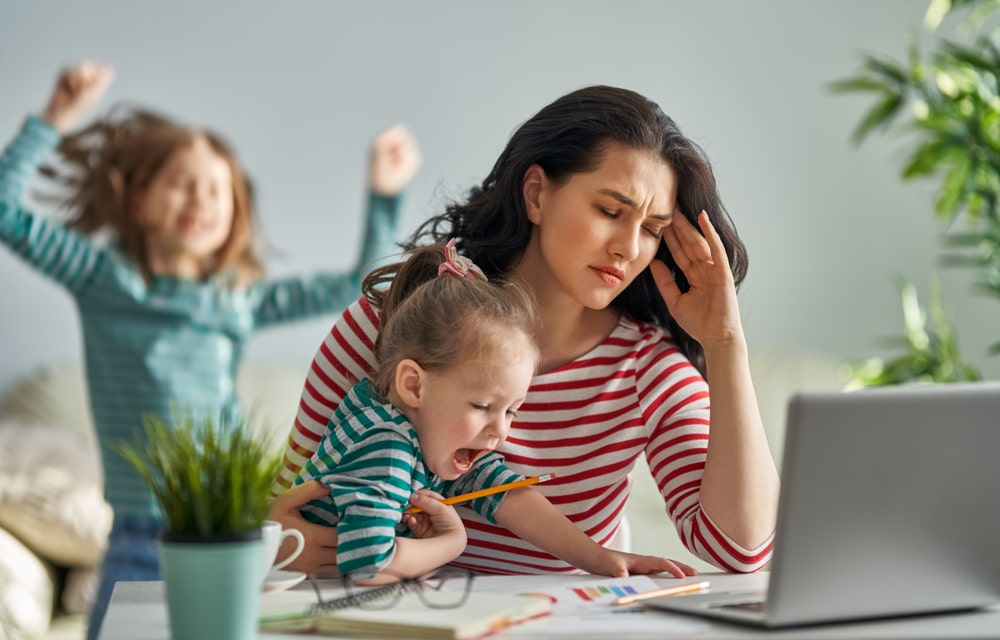
    Sam, mom of one, shares why she and her husband have chosen to have a small family.

    Why Should You Choose A Small Family?

    The advantages of planning small – that is only one or two kids, are numerous. Not only does having a small family enable greater empowerment for women, result in greater reported happiness, more individual attention and more resources invested in each child, greater achievement in school, and more engaged, less crowded communities. But most importantly, research indicated that small families are better for kids.

    This list is by no means exhaustive. The bigger picture is that families and communities benefit. Read more reasons to have a small family.

    Have you chosen to have just one or two kids? Send us a video and tell us why. Email info@fairstartmovement.org

  • Having Kids Urges UN to Include Family Planning to Combat Climate Change

    Having Kids Urges UN to Include Family Planning to Combat Climate Change

    On the eve of an international conference to fight climate change, the national human rights advocacy group Having Kids today urged the United Nations to incorporate universal family planning as the most effective long-term solution to the crisis.

    Read and share our letter here.

    “Let’s start at the source, and avoid the mistakes in past family planning modeling that created the ecological and social crises of today,” Having Kids executive director Erika Matthews wrote in a letter to Patricia Espinosa, executive secretary of the United Nations Framework Convention on Climate Change.

    The letter was also sent to dozens of other organizations participating in the 25th Conference of the Parties, or COP25, the UN global climate summit starting in Madrid next Monday.

    This month, the lead author of a climate emergency warning from more than 11,000 climate scientists published in the journal BioScience stated the connection clearly: “The greatest influence individuals can have in combating climate change is to have one fewer child.”

    Having Kids is urging the UN to push for policies that will reduce family size, such as replacing tax policies that encourage big families with ones that incentivize delaying parenthood and having smaller families; and fully funding the development of and availability of the male contraceptive pill.

    The group advocates a Fair Start family planning model, which promotes smaller, sustainable, and more equitable families.

    “If it takes a village to raise a child, it takes a village to plan for a child,” Matthews wrote. “Please consider promoting a universal ethic of cooperative Fair Start family planning, and smaller and more equitable families, as the most effective and comprehensive way to achieve a socially and ecologically regenerative society, and address the climate crisis.” 


  • What Does Better Family Planning Mean and Why Do We Need It?

    What Does Better Family Planning Mean and Why Do We Need It?

    Better family planning looks like:

    1. Delaying parenthood – Providing access to healthcare and education to help people wait until they are ready to become parents, and then spacing pregnancies. 
    2. Smaller families – Parents are able to invest more in each child and ensure a regenerative future.
    3. Community support – Communities guarantee that all kids have the resources they need for a fair start in life. Small families make this possible and sustainable.

    It’s simple: Fair Start family planning means smaller families sharing resources to invest more in every child. For some, the closest analog for this new model would be responsible family planning incentives. But Fair Start resources are actually entitlements held by future children, and funded through non-traditional means. Those opposed to remodeling favor our current system of unsustainable families, unearned privileges, and undemocratic influence, over giving kids a fair start in life.

    What the Fair Start Model Does

    The Fair Start model addresses the biggest problems affecting kids such as poverty, inequality, and neglect. The model breaks down the barrier between family planning and child welfare, aligning need with resource. The model links 1) where and when children enter the world, with 2) the provision of what those kids need for a fair start in life. In making that link the model has the greatest impact on child welfare, equality, animals and the environment – exponentially more impact than downstream approaches. In so doing the model corrects for cognitive dissonances that prevent us from seeing that how we plan families, more than any other one thing, determines the quality of life on Earth. By focusing our attention on future children the model temporalizes our thinking, allows us to plan ahead, requires us to cooperate, and thereby helps ensure the best outcomes. What’s a good analogy? In many ways our remodeling of family planning looks like the revision of the norms, in the late 20th Century, around using seat belts. Small improvements can lead to massive benefits.

  • Time for a Worldwide Small Family Ethic? Newsweek Breaks the Taboo

    Time for a Worldwide Small Family Ethic? Newsweek Breaks the Taboo

    Smaller families are the trend as our species seems to react – in a positive way – to the ecological and social crises that plague our world. And while the developmental benefits of smaller families are proven, and well appreciated by bioethicists, many in the media have been slow to catch up.

    Thanks to Michael Shank, that’s changing. Newsweek published his powerful piece last week. In it he refers to child-centric family planning – the most ethical form of family planning – and a win-win for parents, kids, and their communities. Many are hoping the message reaches world leaders at the world climate conference in Madrid next month.

    It’s not just about family size. Opening a public dialogue regarding better family planning policies could enable new modeling that targets horrific inequity too (the sort that shut down Chile as a location for the climate conference recently). Starting at the source has many benefits.

    Who’s really pushing for bigger and poorly planned families? The elite at the top of a population Ponzi-scheme pyramid that keeps them in power. Poor family planning is a like a bank account. Women, children, and the natural world pay into the account, and businesses and politicians withdraw money in the form of a glut of cheap future labor, hungry consumers, and compliant taxpayers. The process works by using things like tax incentives, cultural pressure, celebrity role models, and propaganda like this, to push women to have kids irrespective of the conditions in which those children will be born and the ecology they will impact.

    It’s time to reverse that flow, and Fair Start family planning – which decentralizes centers of power by investing their resources into future generations – is one way to do it.

    Learn more.

  • Fundamental Change Without Fair Start Family Planning?

    Fundamental Change Without Fair Start Family Planning?

    Adam Frank inspires in his recent Washington Post piece “Reframing climate change as a story of human evolutionary success.”

    But how is fundamental change possible without changing who we are, and how is that possible without changing the way we plan families and rear future generations? It’s not.

    A family planning ethic that ignores the need to develop empathy in each child, as well as our ecology, growing inequity, and receding democracy got us into the social and ecological mess that the climate crises epitomizes. Changing our subjective and isolating family planning ethic to one that focuses on the needs of children more than the desires of would-be parents will get us out. 

    TAKE ACTION: Urge Professor Frank, afrank@pas.rochester.edu, to include better family planning in his proposals.

  • Building A Bridge for All Kids

    Building A Bridge for All Kids

    Imagine our current world as a river. On one side of the river stand people who are going to be parents. On the other side stand the children they will have. The parents are inviting the children across the river and into our world.

    But like most rivers, there are safe and dangerous places to cross. Some kids never make it across. Some get across but with lasting damage because it was so unsafe for them. Others cross in ankle deep water with everything they need and more.

    Regardless of where they cross, the river is currently being destroyed because of too much strain on the fragile ecosystem, and as kids come across, chaos is ensuing all around the river, with crowds trampling the ecology and muddying the waters. The process has resulted in the river looking like chaos, inequity, and ecological collapse.

    What if the parents were to work together? Can we build a bridge in the middle of the river that will bring the children over in a way protects them, gives each what they truly need to be healthy and loving parents, ensures equal opportunities in life for all, and protects the ecology of our river? Can the bridge ensure socially and ecologically regenerative communities? Yes we can. 

    This is accomplished by gathering the resources and support from all in our communities to build the bridge, creating a world we all want to live in for generations to come. Fair Start family planning does just that. 

    Join us in building the bridge. Learn more and TAKE ACTION. 

  • Economists to Women: Make More Babies AND Work More

    Economists to Women: Make More Babies AND Work More

    Yesterday, Bloomberg added to the chorus of demographic decline alarmism. This time, the authors don’t even make an attempt at subtlety. “Population growth is vital for the world economy.” Yep, it’s about money.

    Corporate interests exercise influence in the media and over politicians to promote higher fertility. And economists’ solution to the global trend toward smaller families? Put the burden on women to have more children and to work more. As if they don’t shoulder enough already. 

    Family planning, for most of our species’ history, has involved thinking that bigger is better. It’s a patriarchal perspective, showcased by tycoons who push women to have more kids, despite how doing so will exacerbate the climate crisis. More kids mean more consumers, a larger workforce to supply a cheaper labor force, and complaint taxpayers.  

    And for these regressive thinkers, the Earth is still a resource to be divvied up and owned. Big business and big government supporters both love growth and their attack dogs are brutal haters. They are targeting people for simply asking questions about population growth in a presidential town hall. They don’t care about democracy, which has always required smaller communities of highly developed people. For big family supporters, strength, size, and the exploitation of future generations, or power rather than reason, is the goal.

    There is a way out. We can confront this greed and create the freedom that comes with true human rights and democracy. Fair Start family planning does just that. It puts children first and enables would-be parents to raise children in a safe and habitable world. It is the most effective way to improve child welfare, reduce the gap of economic inequity, and protect our environment. In fact, it is ten-to-twenty times more effective than downstream alternatives such as choosing a Prius or a vegan diet. 

    Here’s how it works:  

    Communities ensure that parents have the resources to plan families and guarantee kids a fair start in life. Each of us delay parenthood until we are financially and emotionally ready, and we then choose to have small and sustainable families that put less demand on our shared resources and our world.

    Here’s the best part.

    We are giving all kids a fair start in life AND doing what is most effective to mitigate climate change. It’s a win/win for all, as our world should be! Fair Start planning is a community approach to creating a world we all want to live in for generations to come. 

    Lean more and TAKE ACTION. 

  • Nonprofits Need to Start at the Source: Activist Urges Surfrider to Address Family Planning

    Nonprofits Need to Start at the Source: Activist Urges Surfrider to Address Family Planning

    What is the greatest threat to our oceans? Climate change and other population-driven crises are the greatest threats to our oceans. Better family planning policies are the greatest solution.

    So why is it still taboo to talk about those solutions? Why do so many concerned parents have to remain anonymous in order to speak out? Meet one parent and activist taking action: Adam Sugalski is an accomplished surfer and animal protection expert from Jacksonville, Florida. Adam is urging the Surfrider Foundation, one of the leading ocean protection organizations in the world, to speak out on the need for better family planning policies both in the U.S. and worldwide, through the United Nations. Why Surfrider? Overpopulation is not just destroying our oceans – it’s perhaps the biggest problem in the sport today.

    Adam’s efforts follow on the efforts of Willow Phelps, a budding 11 year old surfer who wrote personally to Surfrider recently.

    Kid Activist Asks Surfrider Foundation to Think of the Planet’s Future

    Willow has never shied away from asking the tough questions. That’s a noble trait in anyone, but Willow is only 11 years old. She just sent a letter to the Surfrider Foundation (one of her favorite organizations) about her passion for surfing and protecting the ocean. Willow also asked the organization to stand behind its mission to protect the ocean by embracing an ethic of smaller families. Having Kids stands behind Willow and all kids, who will have to live with the environment we leave for them.

    The Facts are Clear

    Do you have a young activist in your life? Encourage them to contact their own favorite environmental organizations about smaller, sustainable families.

  • Veganism: Is it about diet or family planning?

    Veganism: Is it about diet or family planning?

    It’s really about both things. Any success in animal protection during the past century has been overridden by the suffering, death, and extinction human population growth has caused. Since the modern advent of animal rights the number of animals driven into extinction, tortured and killed for food or fur, used in horrific experiments, bred in puppy mills, and exploited and harmed in every imaginable way has exploded.

    Having Kids teamed up with UK-based Population Matters on an article urging animal advocates to act on the trend that could derail the entire movement: the ballooning human population. 

    TAKE ACTION: Add your name to our call for the United Nations to recommend smaller families.

    Animal protection has always been a factor in Having Kids’ fight to change how people think about family planning. After all, it is humans that drive the demand for industries causing animal suffering on a massive scale. But the intersection of animal protection and a small family ethic is very rarely acknowledged by animal-focused groups.

    Our new article explains why advocates must change that. And this change is truly fundamental, going well beyond protecting animals and the environment to protect kids, and help build true human rights and democracy by focus on the people that actually comprise those systems.

    Some animal-focused groups are already recognizing the need for change, including In Defense of Animals, which recently signed on to Having Kids’ letter to the United Nations for World Population Day.

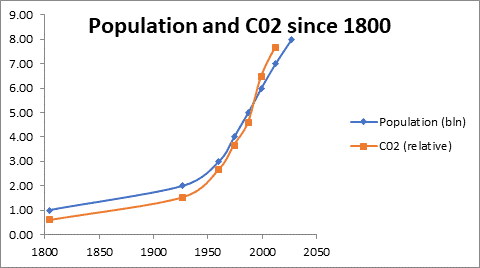
    By 2100 world population could vary by billions of people, depending on whether the average woman in the world today has one child more or one child fewer in her lifetime. From plummeting biodiversity and more habitat loss to increased demands for animal agriculture, the path we choose will have an immense impact on animals.

    Read the full article on Animal People Forum for a full explanation of why family planning reform is central to any movement to improve life for animals. 

    TAKE ACTION: Add your name to our call for the United Nations to recommend smaller families.