[et_pb_section admin_label=”section”]
[et_pb_row admin_label=”row”]
[et_pb_column type=”4_4″][et_pb_text admin_label=”Text”]Are you sick of hearing about climate change without being able to do anything truly meaningful about it? But we can take action! Today Having Kids is launching our Protect Your World campaign. It’s simple:
We all know that if you want to better the world, you can think globally but need to act locally. And when it comes to mitigating climate change (and almost every other way we are destroying our children’s environment), the best way is by working with others to plan smaller and more sustainable families.
Having Kids is working with local governments to adopt policies, often as part of their Climate Action Plans, to:
Explicitly recognize (in their climate action plan or in other ways) the role family planning plays in climate change;
Endorse and/or implement any family planning model that promotes smaller, more sustainable, and more equitable families that provide every child a fair start.
You can make this case in your community, too!
Please start with this sample letter, and use it to open a dialogue with your local town, city, or county government about the need to take a position on family planning.
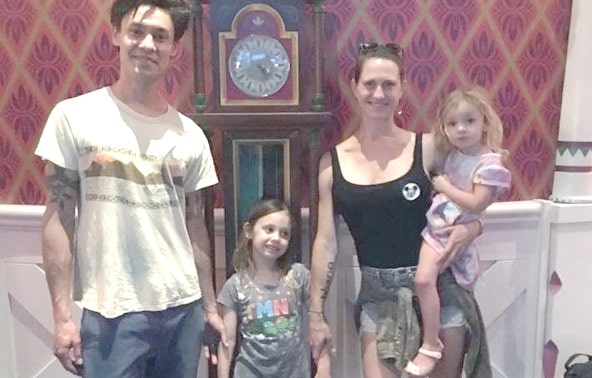
On the heels of announcements that Prince William and Kate Middleton are having a third child, another couple – Los Angelinos Mickey and Tricia Bhotiwihok – are setting a different example. Instead of putting money into their children, they are giving thousands to help other children.
Like Having Kids’ other Featured Families, Mickey and Tricia chose a smaller family. That decision also allows Mickey and Tricia to act on their altruistic natures and help other families.
To show just how powerful this approach to family planning is, Having Kids gave Mickey and Tricia a big choice: we sent them three thousand dollars that had been allocated for this purpose. The Bhotiwihoks could choose to apply this money to their family. Or they could donate the money. It was up to them.
Mickey and Tricia chose to donate all three thousand dollars to Project Healthy Children,a Givewell.org standout charity working on fortifying food for kids in the developed world.
They knew that the best way to ensure everyone’s kids live in a cleaner and safer world is to choose a smaller family and help other families do better too.
Mickey and Tricia’s Statement “Before discovering Having Kids’ Fair Start Model, we did not know there were other ways to approach family planning. Instead, we relied on generational, social, and cultural norms passed down to us. After considerable thought, we adopted the Fair Start Model, because it just made sense. We are a family of four in which both parents work. Like all parents, we want the best for our children. We are also thinking of the big picture. The Fair Start Model provides an indispensable tool for families and children. Participation in the Fair Start Model demonstrates our commitment to a brighter world for all children.”
[et_pb_section admin_label=”section”]
[et_pb_row admin_label=”row”]
[et_pb_column type=”4_4″][et_pb_text admin_label=”Text”]We reiterate our well wishes to the Duke and Duchess of Cambridge on the announcement of theirthird child.
This shouldn’t be that hard to understand: all of us at Having Kids simply want the best for all children. Not everyone will choose to switch from traditional models of family planning to the Fair Start model.
But we also need to recognize what it means when we reinforce the old model – either by our example, by our argument, or by our silence.
The Having Kids Fair Start model prioritizes children getting a fair start in life. That’s right – the children of poor families in the United Kingdom deserve the same level of nutrition, health care, and education as Prince William and Kate’s third child. This should be their birthright – and ignoring in the past ithas helped create the fatal chasm between rich and poor today.
The Independent notes: “While you celebrate the third royal baby, remember all of the women in Britain who aren’t allowed a third child: It’s an unhappy coincidence that the announcement of a third royal baby comes in the same year the Government deems third babies a luxury not every family has earned.” It is a great insight into the disparities built into our current society – the Royals set an example that the rest of us can’t afford to follow.
And for all those who try to follow the Royal example, who will pay for the third children?
If family planning stays a free-for-all, with the broader society expected to pay for every child, we will continue to have an unsolvable problem. This illustrates the problem with our current privatized family planning model: it creates a domino effect of larger families imitating one another, leading to more needy kids without the resources for their own children. This continues the cycle, and brings with it rising social and environmental costs.
It is a Sophie’s choice: Parents choose to have more kids, and society either pays the costs, or kids end up paying by not getting what they need and deserve.
Our short-sighted approach to family planning has broader implications as well.
Many of you were startled to see our discussion of William and Kate appear next to oursurvey regarding parents who abused their child with a stun gun and forced him/her to eat dog feces. The Royal discussion was also alongside our blog about limiting the right of members of Boko Haram to have kids after these parents offered up children to be usedas child bombs.
What is the connection? All this follows from the old, subjective family planning model of personal and private choice.
Focusing only on the “rights” of parents is the argument lawyers use to make sure anyone can have more kids – no matter how the children suffer. Many of us implicitly endorse this view. After all, if the Royal family’s family planning is none of anyone’s business, then other parents’ decision making is also none of anyone’s business.
If we put parents’ rights ahead of the rights of future kids, we get horrible abuse and child bombs, and no logical way to say anything against these outcomes.
By Bdm25 – Own work, CC BY-SA 4.0, https://commons.wikimedia.org/w/index.php?curid=51036438
There is no doubt that if the average parent plans smaller families, where we work together to ensure every child gets a fair start in life, you and your kids’ future will be less crowded, cleaner, and safer. If we continue on our current path, we get the opposite.
Who would knowingly choose to subject their kids to a hotter, more crowded, more polluted, and more dangerous world?
How can the future of the world not be our business? Don’t we have a right and the duty to make the future better for our kids? The only way we can improve our future – and everyone else’s – is if family planning becomes a topic we can all discuss honestly.
The solution is a child-first family planning model – an approach that balances all the values at stake in family planning. Let’s switch to that, and step out of the horrible cycle we’ve created for so many children.
Please be a part of this work today atHavingKids.org[/et_pb_text][/et_pb_column]
[/et_pb_row]
[/et_pb_section]
Addressing the Trump administration’s assault on efforts to prevent teenage pregnancy, the New York Timescommentary demolishes the administration’s stated rationales. But Trump and team’s underlying motivation is also suspect, and goes beyond any religious objections to contraception.
In the short-term, the economic elite might subvert democracy by subverting the press. How would they do it in the long-term? Various theorists might have noted that higher teen pregnancy rates translate into more consumers with less education. Over time, a less educated populace provides cheaper labor, higher profits, and a more easily manipulated electorate.
The 1% don’t benefit from a smaller and better-educated populace.
Babies are big business, with advertisers exploiting the appeal of infancy and motherhood to sell more and more products. If the economic elite can subjugate young women and force them to spend more at the same time, it’s a double windfall.
Like the European monarchs and oligarchs of old, Trump and his big consumptive family embody an unevolved and unsustainable model of domination and proliferation. Their example is harmful environmentally, socially, and politically.
How do we get rid of it? We can lead by example witha better model that says “I actually give a damn about children, equality, other species, and the future. I’m not just in this for myself and the narcissism of my bloodline.”
Want change? Change people. To do that, we need to start before the very beginning of life. Let’s make a Fair Start the very core of our thinking.
The title of Anna Goldfarb’s New York Times piece (“What to Say When People Ask Why You Aren’t Having Children,” August 8, 2017) implies that she’s embarking on an examination of the ethics of procreation. But instead, she repeats the trite mantra you’ll hear on trash television and at the grocery check-out: Family planning is only about personal fulfillment, and is a highly personal topic that should be considered off limits for discussion.
That mantra is simply false. People forgo having children for many altruistic reasons: to protect the environment, restore biodiversity, to retain time and money in order to do public interest work, etc. All of our decisions about having kids profoundly impacts others – that’s the whole point. If we care at all about the future, then we all have a stake in family planning decisions. The topic is inherently interpersonal.
Why would publicly thinking about our collective future be considered off limits?
The topic is inherently interpersonal, starting – obviously – with the potential child. Rather than trying to close public forums, why not seek common ground? Specifically, why don’t we have a discussion about what future we want? Why not collectively plan an escape from our current crowded, polluted, divided, unequal, and relatively uneducated world?
Beyond the Isolationist View
Goldfarb’s article rides upon the isolation model of family planning. This model focuses only on what parents want in the short term, rather than on what children and society need in the medium and long term. Isolationist views break the link between vital needs and available resources, and ignore the fact that having children is the most public thing most people will ever do.
Furthermore, the isolation model completely disregards the fact that children are born entirely vulnerable, dependent on the people around them. By focusing only on the parents’ wants, rather than the child’s needs, we have created a society where children are not guaranteed a minimum level of well-being. Arguing that having children is a private matter also eliminated the opportunity for parents to cooperate in their decision making to achieve the best outcomes for every child. Because of the lack of organized, collective action dictated by the isolationist model, the caring and thoughtful people who forgo having children don’t have as great an impact as would otherwise be possible.
In short, the isolation view harms everyone’s future and denies many children a fair start in life – a deprivation that tends to pass down over the generations. The Fair Star model breaks that cycle.
But we also drew threats of violence, racist and eugenicist rants about why white and wealthy couples should have lots of kids, and climate change denying bloggers who seem creepily obsessed with celebrity babies (and who use news of them to sell their advertisers’ products). We also heard fromTrump supporters who never questioned the possibility that replacement fertility is not a great a baseline. They think that even though family planning will define our futures and the futures of our children, it is “nobody’s business.”
It is clear that many people are simply in denial that the “nobody’s business” approach to (not) planning our families is exacerbating climate change and endangering our own children. They are also turning a blind eye to the immorality of some kids being born with everything and some kids nothing.
And they are also ignoring one simple fact: Caring and thoughtful parents are not going to stand by and ignore the fact that better family planning is quite possibly the single best way to mitigate climate change. These more responsible parents are not going to sit back and enjoy the last of nature while condemning their kids to a denuded, dangerous, crowded, and overheated world simply because people likethe Duggar family get famous by having kids.
These more responsible families are speaking out and moving us towards better family planning. They are not waiting for the government. As these families set this positive and life-affirming example, Having Kids will help their voices grow in number and strength.
Asking public figures to lead by example is one way to take action. We are moving beyond the Royals, asking other figures to speak out in favor of smaller families working together to plan a fair start in life for every child. Please be a part of this work!
The Royals: Will they be more like Trump, or Thoreau?
Recently Having Kids wrote an open letter to Prince William and Kate Middleton asking them to consider adopting the Fair Start model. Among other things, we noted a simple fact based on math and exponential growth: Large families of three or more children are not sustainable. Three kids each have three kids, each have three kids, each … you get the picture. It evoked a powerful response from some: “Mind your own business – it’s a matter of personal freedom.” Lessons learned (apart from the fact than many parents are really angry and openly racist): A lot of people think about freedom the way Trump does. For them personal freedom includes the right to harm others – to degrade our environment, to endanger our own children’s future, to exacerbate inequality, etc. Trump’s version of freedom is doing whatever he wants to do – like a petulant and greedy child.
Instead, Thoreau’s version of freedom was transcendent, like a child being emancipated into adulthood, or the becoming of someone with a deep empathy, who therefore wanted to and was able to control his behavior so as not to harm others.
Why do these different versions of freedom matter? It’s very important that we use the right version of freedom when we think about family planning.
Remember the story of the social contract, the historical basis for many modern systems of human rights and democracy? In essence, the story justifies today’s systems of government by treating them as the product of free and equal people voluntarily or consensually coming together to make the rules they will live by. The story tried to maximize human freedom. But – and this is crucial – that story relied upon people who were able to control their behavior so as not to harm others. In other words, people who were more like Thoreau than Trump, or Trump’s followers. How do we make sure future generations actually do grow up, and are more like Thoreau than Trump?
What if rather than thinking of the social contract as something that happens at a particular point in time, we instead temporalized the process to account for how we “come together” with future generations? Incoming generations might demand some minimum level of well-being at entry that would be consistent with child welfare laws and the Children’s Rights Convention, as well as a fair start relative to other incoming children. Extant members of democracies would also want to consent to incoming generations, their new fellow citizens, which would give a powerful reason for them to invest heavily in the development of those generations as democratic co-rulers. All persons would want, in the process of bringing in future generations, to preserve nature so that humans would be able to consent to coming together. In other words, so that there would be places, states of nature, or neutral political positions from which to consensually come together and to which persons could withdraw. Finally, in this process would-be parents would want to be assured a right to have children, and the help they need to give their kids a fair start, and a better life.
Our current family planning models do nothing to assure these things, and help us become emancipated or free. The Fair Start model does. Lessons learned? It’s time, more now than ever, to rethink the way we plan families.
[button link=”https://fairstartmovement.org/faqs/”] More about freedom in family planning [/button]
Much of the reaction to our letter fell into these categories:
1) Racist and eugenicist rants about why white and wealthy couples should have lots of kids to compete with birth rates in parts of the Southern Hemisphere. It’s hard to think of a more immoral or lose-lose proposition.
2) Commentators who think royal family size shouldn’t be of interest to those from other countries. This ignores the global nature of climate change, which does not recognize antiquated national borders. Having Kids has beenvocal against Mr. Trump, father of five, on these issues. And our points are equally and obviously applicable to any public figure – wherever they may be –pushing unsustainable families. It’s cognitive dissonance to say that choices which so profoundly affect our world are none of our business.
3) Bloggers who seem creepily obsessed with celebrity babies, and who would subject the rest of us and our kids to ahotter and more crowded world so they can gawk at other people’s newborns. This seems almost too hard to believe, which explains why the blogs aresponsored by companies that sell baby products. These bloggers will have to tell their children, on one of the hotter days in the future, that they were more interested in the royal offsprings’ clothing than the degradation of the world’s atmosphere.
4) Some asked why we didn’t write to enormous and less admirable families like the Duggars? The simple answer is thatwe did. But given the massive swings in population that even small changes to a typical worldwide fertility rate of 2.5 would create, the question of role modeling is best raised in the context of couples considering a second or third child rather than marginal families like the Duggars.
5) Those who feel the right to have children is totally unlimited, and should not be publicly discussed. The fact is that bioethicists and legal scholars have obliterated all arguments for such a right, and instead shown that the right to have children is more akin to the right to speak freely, which is limited in a way that protects others’ rights. Governments have simply not acted because they benefit from growth, and continue to shuffle the problem off on future generations.
At the core of the responses, however, was this message: Focus instead on would-be parents who won’t be able to give their kids a fair start in life. That is exactly our point. Within our current family planning models, there is no medium in which to have this discussion. Prince William and Kate can’t tell massive and irresponsible families to act responsibly while they ratchet up their family size, claiming their right to do so as a matter of personal privacy. We need a child-centered model that focuses on what all children need, as well as what parents want. We need publicly influential people to break the taboo, step forward and say “I gave my kid a great start in life and tried to protect their future and environment. For my own and your kids’ benefit, I want to help you do the same.” That is why we wrote to Prince William and Kate. Their leadership could be an effective way to build a better future by breaking the taboo and setting a new and crucial trend of public family planning. They can break that which keeps us paralyzed in the face of threats like climate change. That is what our letter asked them to consider. It’s not about altruism or charity. It’s about working together to help the actual people who will comprise the future, our future. Many in the past have given their lives to protect this world from various threats. The least we can do is plan our families in a responsible and sustainable manner.
Our environment is degrading, the gap between rich and poor widens, and children are being born into worlds of unfathomable suffering. We can find the cause in large part in a family planning model that privatizes having kids and prevents vital social cooperation.. Having Kids asks you to change this, and join the discussion about child-centered family planning at Havingkids.org
Many supporters have questioned why Having Kids wrote to the royal couple Prince William and Kate Middleton to ask that they publicly choose a smaller and more sustainable family. We also requested that they use their public choice as an opportunity to encourage and help other families give their own children a fairer start in life. Our supporters have wondered whether a larger royal family is really the problem and whether our efforts would be better directed towards regions with higher birth rates and levels of infant mortality. Having Kids is focusing on the royal family because:
Given their public stature, they can lead by example to impact family planning decisions around the world.
The impact the wealthiest families have on the environment dwarfs the impact of children born in the developing world.
Given exponential growth, large families – wherever they may be – are simply not sustainable.
The royal family has the resources to cooperatively incentivize other families to plan a fairer start for their own children.
The most important part of our ask, however, is for the couple to engage in a child-centered form of family-planning based on objective values. None of us can continue to embrace the unsustainable, subjective, and parent-centered model, which has created the troubled world we live in today. If every one of us were to choose a smaller family, and to also work with other families to plan a fair start in life for their children, the world would be a much better place. We owe it to our children to make that change.
And the best way to do that is by working together, agreeing that: “If you plan a smaller family with more investment in each child, we’ll do the same. We’ll also help each other whenever we can.” That is the Fair Start model.
At Having Kids:
We promote and protect every child’s right to a fair start in life by replacing unsustainable, parent-centered family planning models with the human rights-based and child-centered Fair Start family planning model. The model suggests a shift in family planning from a subjective focus on just the parents, to an objective focus that considers the interests of the potential child, the parents, and the community.
It’s all about this: Smaller families working together to give every child a fair start in life.
Today many families are adopting the Fair Start family planning model. First, they try to give their child a fair start in life by having a smaller family where they can invest more in their child. Often they also foster or adopt one of the many children eagerly waiting for parents rather than creating additional need. Second, they publicly role model their choices. Finally, these families join public advocacy campaigns to shift resources from extractive centers of power like governments, corporations, and wealthy families in order to democratically empower children and future citizens by incentivizing better family planning by all parents. Why? All parents know that the quality of their own child’s life will depend on how other parents decide to have and raise their kids.

 Having Kids is working with local governments to adopt policies, often as part of their Climate Action Plans, to: