Researchers in Ohio and North Carolina recently published and publicized research that suggested policy changes could increase birthrates by making it easier for Americans to have larger families, consistent with the desire many people have to do so.
That suggestion ignores that way population policies fundamentally drove the climate crisis, on many levels, and created a situation in which large families in the past interfered with the right of families today to have any children without having to condemn them to the threats of the climate crisis and other threats driven by family policy.
Caring about children means caring for the conditions in which they are born.
TAKE ACTION: Urge leadership at the universities in Ohio and North Carolina to admit these mistakes, and pivot research to promote all children’s right to a Fair Start in life.
The fundamental baseline for any form of cost/benefit analysis, assuming we take human rights, democracy and relative self-determination seriously, must be inclusive political systems characterized by climate restoration and birth equity, achieved through family planning reforms that ensure all children birth and development conditions consistent with the Children’s Rights Convention.
In other words, to properly assess costs and benefits we have to first become groups of people capable of doing so in a way that is actually inclusive and reflective of the group constituents. That baseline halts the Ponzi scheme demography Nobel laureate Steven Chu wisely noted was the basis of much economic growth.
In the Forum’s public commitment to address the climate crisis, the company uses a particular ecological goal or baseline for its risk assessments and climate mitigation strategy that – compliance aside – is at least comparable to the goals of the Paris Climate Accord. While we focus on the Forum in this letter, to be clear, the logic applies to many entities
The Fair Start Movement was formed because these goals or baselines are premised on an error. They were developed based on the assumption that nations operate from a place of historical political legitimacy, and can themselves freely define ecological goals, including anthropocentric ones like those of the Paris Accord. That assumption is incorrect. As recent peer-reviewed research shows, nations are constituting, not constituted in the past, and they are either doing so legitimately or not depending on their family policies. Nations cannot simply declare their legitimacy. Legitimacy is a political ideal based relative self-determination that would require, again minimally, that all children enjoy the ecosocial birth and development conditions required by the Children’s Rights Convention.
Resolving this baseline error involves treating legitimacy as contingent on our ongoing fulfillment of our obligations to future generations.
In other words, to properly assess costs and benefits we have to first become groups of people capable of doing so in a way that is actually inclusive and reflective of the group constituents. This is simply the ideal of the “we,” in “We the People.” The ideal political we, meaning fundamental power relations defined by the goals of the Children’s Convention, is the primary baseline. We cannot think of, or describe, an ecological outcome that is not first contingent upon family planning outcomes, on at least five levels.
If we value human self-determination or freedom, we have to begin from an ecocentric – rather than anthropocentric – baseline, because that makes relative self-determination possible, freeing us from the influences of others, including the harmful impacts of even the current rise in global temperature. Humans cannot self-determine when their childhood development is defined by the pollution of others. Moreover, climate goals cannot be limited to ecological outcomes, but should include changes in family policy that maximize the resilience, equity, and democratic cooperability of future generations to thrive despite the crisis. Our creation is the intersection of our values.
In other words, if we correct the error described above, the correct goal or baseline must entail our becoming democratic and legitimate groups of free and equal people, which requires concrete and specific restorative ecological policies much more aggressive than the Paris Accord, redistributive and equalizing family planning reforms that recognize the right to nature and level the playing field for all kids, financially and ecologically. A simple litmus test, given these standards, for our being free and equal persons involves whether we first treat the capacity for each person’s self-determination as directly inverse to population growth, relative to a neutral baseline such as the nonhuman world. This is proof that each person is politically, and equally, empowered. Not treating growth as such calls into question the true role of citizens in their own democracy.
Moreover, because this unifying goal or baseline is primary in nature, it overrides state issued property rights and entitlements enjoyed by members of the Forum, enabling intending parents claims to wealth at the top as part of their constituting just and sustainable societies. Our becoming just and sustainable people comes first. A helpful analogy relies on what is generally called the “myth of ownership,” which requires that ownership of wealth first account for the societal costs the creation of that wealth entails. Based on our research, the costs to our being free and equal people positioned to truly consent to the influence of others are first costs we must account for.
We cannot assign property rights in ways that undercut physically constituting and democratically empowering future generations. Our being, and in this case becoming, positioned to determine costs and benefits in a way that is inclusive of the reasoned views of all, is the first baseline.
Again, we can refer to this helpful summary of the baseline problem. All of the solutions to the problem Professor Solum gives jump to what we should do rather than who we should be, and thus ignore the need to be fair people, in terms of the physical power relations determined by our creation, before we can be positioned/empowered to make fair rules/laws. Ideally we would be created/grouped to look like a functional Rawlsian constitutional convention before fundamentally assessing costs and benefits, hence our being an ideal “We the People,” is the first baseline. And for that, the minimal guidelines that would apply to family planning would be the standards we hold up for extant persons, like parental fitness, the Children’s Convention, equality of opportunity, restoration-based climate sequestration targets, biodiversity restoration targets, historic voter-representative ratios, etc. Those point us towards the UN low-variant population, something aggressive family planning incentives – funded with claims to wealth at the top of the economic pyramid – could practically help achieve.
We are writing to urge the Forum to embrace the specific restorative ecological policies described above as the part of the first and overriding human right to a Fair Start in life, and to commit some share of its wealth and resources as Fair Start planning reparations to offset the harm it has done to future generations, relative to baseline discussed above. The Forum could easily practice this change by supporting the child tax credit reforms linked above, while treating them as a fundamental human right.
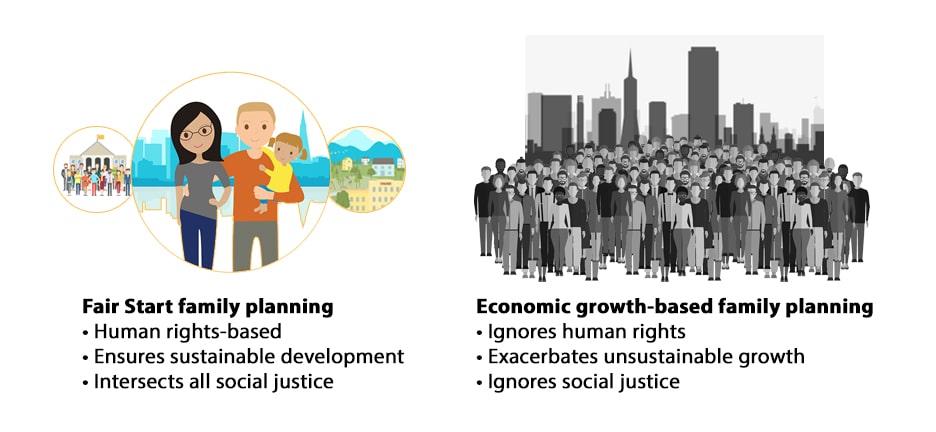
This is not about liberal or conservative politics. Family planning redistributions – as primary obligations – can replace wasteful tax obligations that would simply create larger governments which do not reflect the will of the people. This is about a commitment to human freedom and equality of opportunity, enabled by policies that ensure children can develop and physically comprise communities that liberate them from the threats they face today. This is something we all should value. Correcting the baseline error described above enables such a future.
Please let us know if the Forum will commit to these changes.
Sincerely,
The Team at Fair Start Movement
TAKE ACTION: Urge Klaus Schwab, @ProfKlausSchwab, to change baselines. There is no need to respect property rights that do not flow from inclusive and reflective political systems. The baseline the Forum promotes now converts your empowerment and freedom to wealth for their members.
Gabriel Fernandez was tortured and killed by his parents because the United States treats the act of having children as more personal and private than interpersonal, and subject to obligations like emotional readiness that protect those with the most at stake – future children. That’s an obvious mistake.
But it’s not a mistake. The privacy model was developed by wealthy elites in the 20th Century who 1) did not want to invest in all children but preferred to privilege their own, and 2) knew that ensuring child welfare in family planning would limit the population growth that creates great returns on investment.
Gabriel is not alone – 5 children die at the hands of their parents in the United States each week.
THERE IS ONE FUNDAMEMTAL CAUSE – OUR FAMILY POLICIES.
TAKE ACTION: The New York Times is complicit if upholding the privacy, over parental readiness, model. Urge Jessica Grose, @JessGrose, to write about these issues and save children like Gabriel.
How? He embraced anthropocentric population growth over the true liberation of animals, something only possible through rewilding and Fair Start family policies that require parental readiness, redistribution of wealth for child equity, and a default of smaller families.
Moreover, his approach has bred a generation of “distractivists” who pretend to help animals by selling vegan food products to a growing population, while even pushing for more growth, that on balance is at war with animals. They are using their wealth and power profit by imposing costs on others, disempowering the majority, and in a way that exacerbates acts of violence that are hitting innocent rather than those responsible for pushing unjust systems.
Singer committed the “constitutive fallacy,” or basing one’s obligation to follow the law on top-down instruments like written constitutions rather than bottom-up family reforms that actually empower and liberate people – in terms of their actual relations – and in a measurable way, enabling them to physically constitute – under the Children’s Convention – legitimate power relations between people from whose authority things like written constitutions must derive.
Urge Singer to embrace Fair Start reforms, or a comparably effective approach, here.
The first measure of doing good is not welfare or utility, it is consent, and whether we are constituting – physically – just and liberating societies. Singer, given his position, has the capacity to tell the truth and help change family policies in a way that could save millions of lives. Doing the most good means targeting concentrations of influence, like Singer, and using them to bend the arc of growth towards justice.
Faced with these facts Bryan’s reaction is to double-down, and simply push women to have more kids to further build the unsustainable pyramid schemes that prop up Bryan, Elon Musk and others like them. He makes four obvious mistakes in his opinion piece (framed as an article) which show the fundamental cause of the crises we face today.
He conflates economies with democracies: Per Bryan, “Declining population growth really does pose existential challenges to America, and without more children, the country really does face a future that is less innovative, less wealthy, and less vibrant.” The ideal of the United States is democracy, but inequity, growth and ecocide has degraded that ideal, and traded it for the gross domestic product (probably preference-based utility) that is the base value from which Walsh operates. He’s talking about an America of crowded shopping malls, not town halls in biodiverse nature where people are actually free. That freedom is a value we can test and measure with a simple inversion test. That inversion test – which Bryan’s proposal fails – has survived five positive peer-reviews. Bryan, conversely, has no expertise in population ethics, and his opinions conflict with leaders in this space.
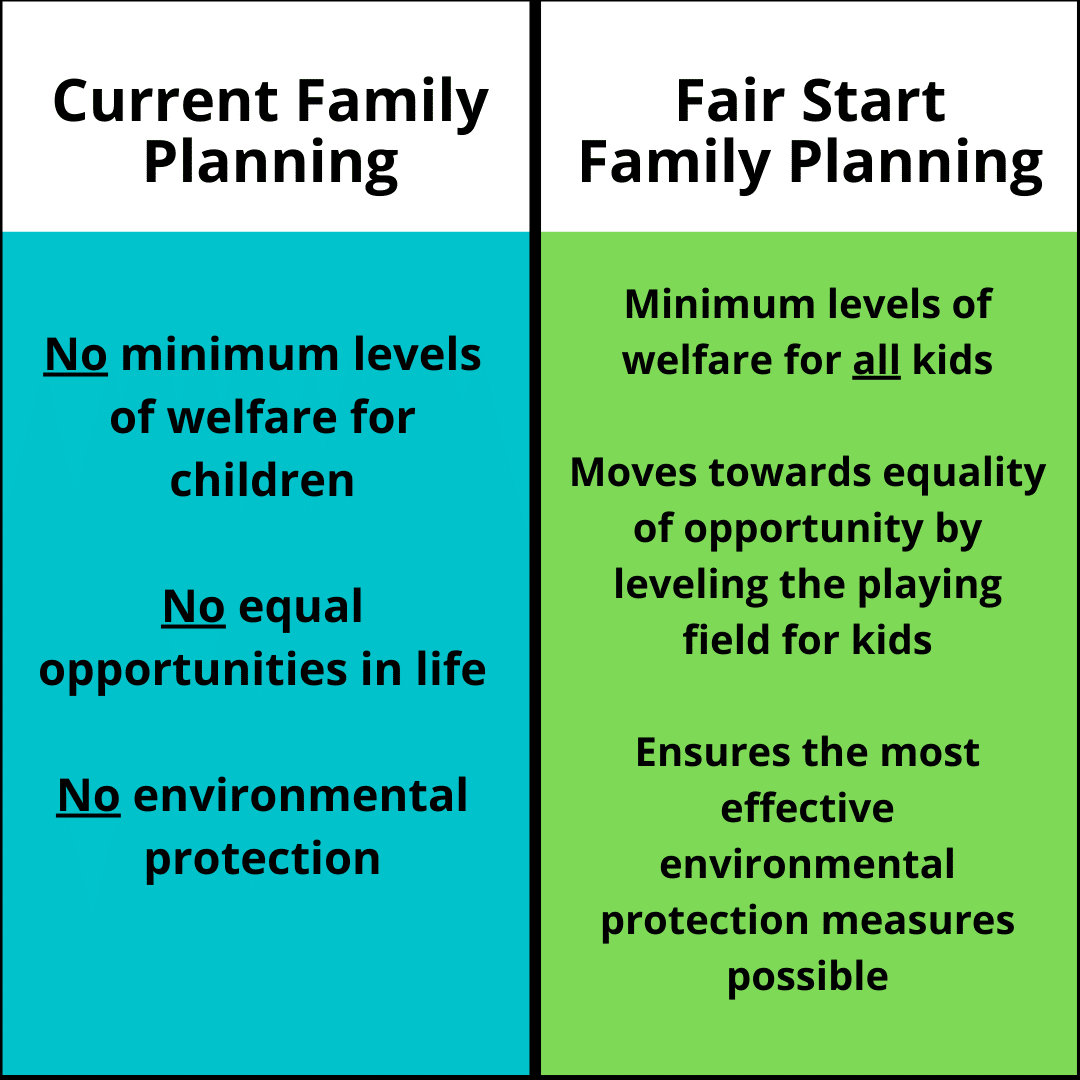
Bryan undercuts all of the values he purports to promote: Per Bryan, “[t]he progressive agenda should be about empowering people to live the lives they desire, to pursue their own path to happiness, and children can and should be part of that. Conservatives are right that a baby bust without end threatens America’s future…” Nowhere does he promote minimum levels of welfare for children, equal opportunities in life for children, restoration of nature and climate restoration, or democracy where citizens actually have influence on systems of governance. These are the basic values that comprise a good life. The United States, like most nations, has used family planning policies throughout the past several decades that treated the act of having children as a matter of parental autonomy, rather than ecosocial child equity (children have the most at stake when it comes to having kids), rather than acting in compliance with the values that underlie the Children’s Rights Convention – which is the standard by which we judge whether we are actually creating democracy. Byran’s writing reflects these mistakes.
People like Bryan Walsh can be useful in this regard, and targeting him and other powerful people publicly to show truth can save millions of lives.
Bryan is using his position to impose costs on others, relative to a democratic baseline. We can make examples of people like Bryan, ensuring they account for their role in the crises we face today, and taking from them the relative wealth and power future generations deserve as we physically constitute true democracies though climate restoration funded by birth equity redistributions of wealth. Bryan only has to address the points above in his work, or to agree to publicly debate them, in order to actually free people. He just have to tell the truth. And while the average citizen does not have the power of a Vox editor, they have the capacity to be activists, and approach Bryan and confront him simply as a citizen who is harming others.
TAKE ACTION: In his article Bryan accepts that “very real suffering that will be unavoidable thanks to warming, especially in poorer countries.”: He is willing to accept the suffering of others – especially children in the global south, while protecting his own children from that suffering, and rather than taking simple steps to prevent it.
Think about that as you engage Bryan in person or online – https://www.linkedin.com/in/bryan-walsh-9881b0/, in a peaceful and lawful way, to admit his mistakes, and to pay for the benefits he and his family received in a system that was imposing costs – ecologically and socially – on others. Use him as a fulcrum to bend the arc of our species away from exploiting children for economic growth, and towards justice.
Leading literature on political theory suggests we can recoup those costs by all means effective because fair creation norms – the ensure climate restoration and birth equity – precede government’s authority to issue property rights to the contrary.
The immigration issue she raises does not alter this problem – those children will be born somewhere, and rather than exploiting them Prarthana should be promoting systems that ensure they are born and raised in ecosocial conditions that comply with the Children’s Convention.
TAKE ACTION: Urge Prarthana at her LinkedIn to change course and promote investing in children, not exploiting them for growth.
And urge Fortune’s editor here to run articles that build a better future, not more of the same thinking that created the ecocide and inequity we face today. Fortune has the resources to improve our future, or continue systems that hurt people. They should choose the future.
Professor Philip Alston at NY is a leader in the field the field of international human rights. But like many in the field, he has relied on a failing system has put parental autonomy over child equity when it comes to family and family planning law and policy. That has fundamentally caused the climate and inequity crises we face today.
The Children’s Rights Convention sets out what children need to physically constitute just, sustainable and legitimate democracies, and it was designed to address the fundamental or familial political relations that make up the systems we all support (through taxes and otherwise), benefit from, are responsible for, and from which we cannot separate. What we often think of as population is really a matter of fundamental power relations.
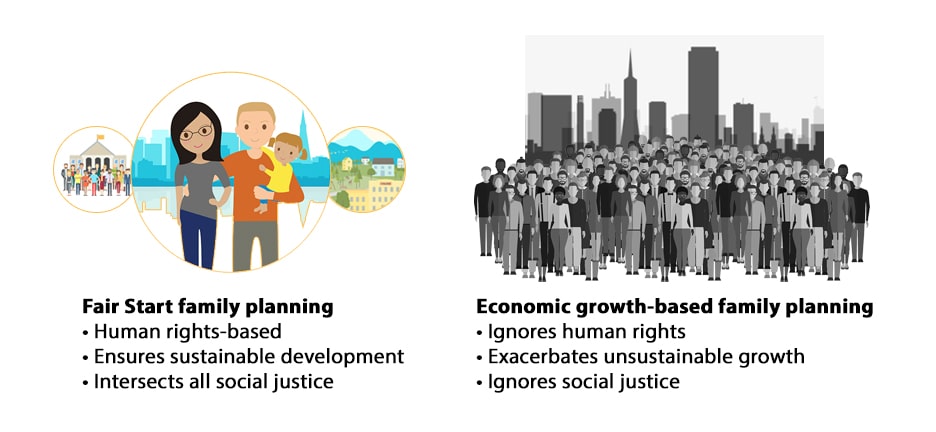
And yet the current and almost universal paradigm for family and population policy does nothing to ensure all children are born and raised in conditions that comply with the Convention. That paradigm is based on what is called the constitutive fallacy: Basing our individual obligation to follow the law on things like top down written constitutions rather than just and sustainable family policies that actually empower people bottom up to constitute just and legitimate nations, and do and should account for our actual relations and lived experiences. Law and policy derive from basic systems of rights, which are mandatory obligations.
The powerful do not need those obligations; the vulnerable, including nonhumans and future generations, do.
Philip Alston is influential. Getting him to admit that he UN knowingly used family planning policies that were illegitimate, and harmed people, would go a long way towards fixing the problem.
Here’s what to do: Almost every organization has workplace employment policies that quietly exacerbate child inequity. We can change that by urging leadership at those companies to adopt scaling of certain discretionary benefits.
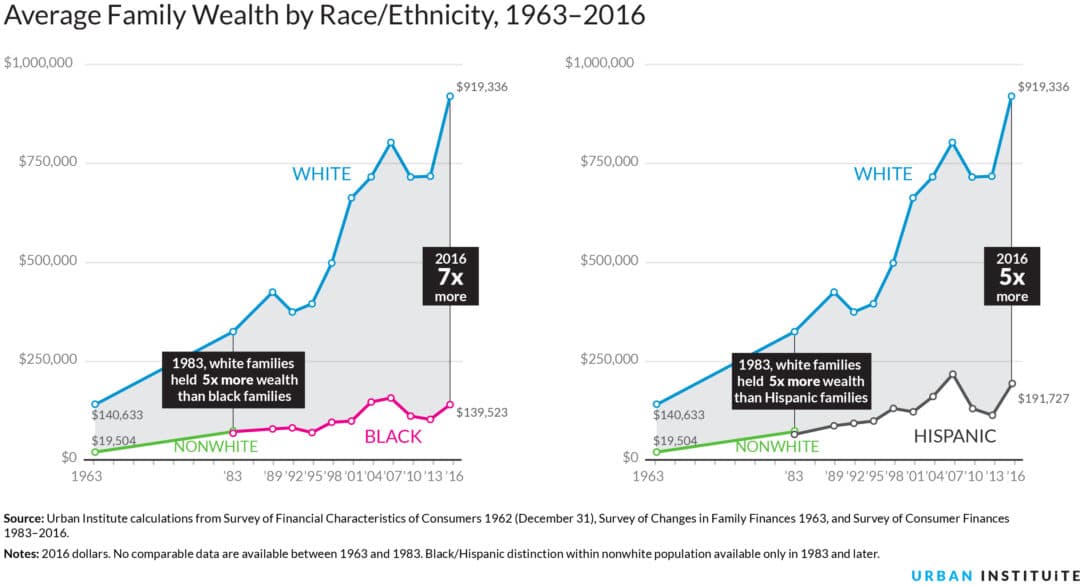
We encourage corporations, for-profit and non-profit, to adopt more equitable discretionary benefits that would start to level the playing field for the children of employees, using the base principle that discretionary benefits impacting kids should be scaled inverse to wages. We should do this to avoid passing massive privilege – including race-based privilege – through a process that fundamentally impacts the majority: future persons and nonhumans.
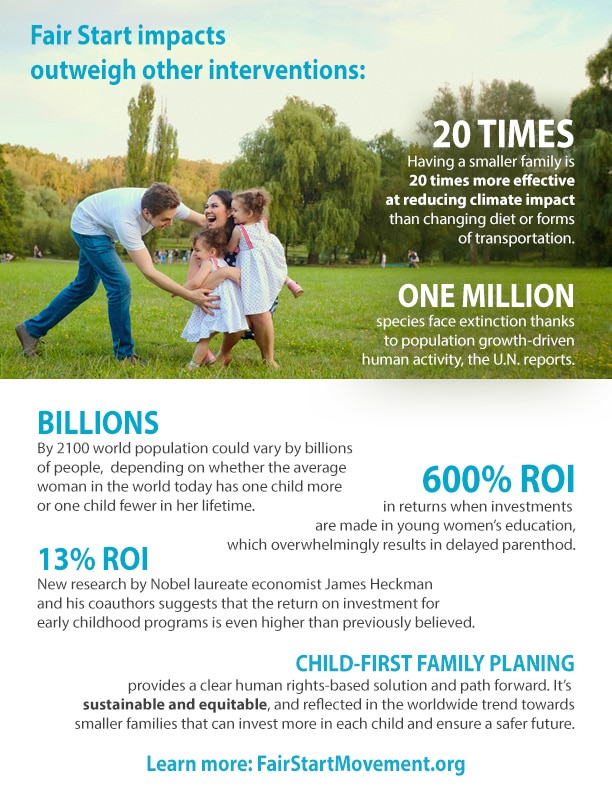
The Climate Crisis Happened Because World Leaders Evaded Regenerative Family Policies. Enacting Those Policies Now Is a Must Do.
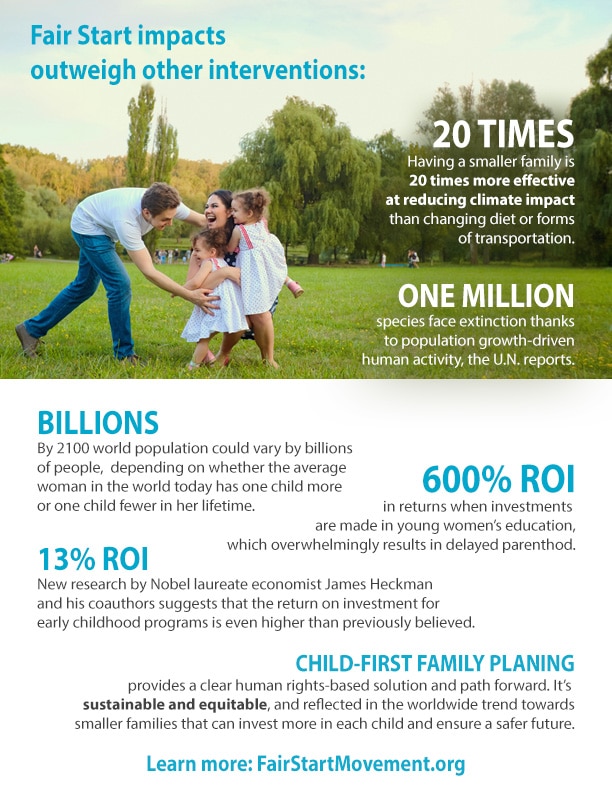
Anytime you hear that something is sustainable, or even better, regenerative, consider asking the person making that claim what family policies underly it. Businesses and sham nonprofits claim to be sustainable all the time. And yet inevitably they are intentionally undoing progress on things like climate emissions by pushing population-growth policies that produce unmaintainable profits through cheap labor, and lots of consumers.
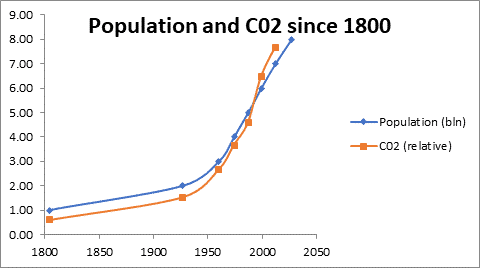
That lie – using family policies to undo with one what we do with the other – fundamentally created the climate crisis. Taking the money the lie created, from companies like Exxon, and using it to fund truly regenerative family reforms does the greatest good in the long run.
Don’t confuse chaos with freedom. Truly free people will fundamentally limit and decentralize the power (including subtle power like climate emissions, the impact of bad parenting on children and communities, massive disparities of wealth, etc.) others have over them, and by all means effective. And that limiting starts where power begins, with better family policies that focus on what children need, and the degree to which we are willing to actually empower (versus exploit) them. There is no other way to enable people in a democratic and bottom-up way. The act of deriving political obligation and freedom from something other than a just creation norm that actually accounts for fair power relations is a scam perpetrated on the vulnerable by powerful people.
Free people – on both ends of that creation – will condition their obligation to follow the law on their actually being empowered, assessed via a simple inversion test, in functional democracies where children are born and raised in conditions that comply with the democracy-building Children’s Rights Convention.
That test shows whether someone is orienting from a fundamentally just or unjust position. Fair and empowering creation is what obligates us to follow the law because it ensures we help make it. And we can start empowering people with discourse and direct action that makes property rights conditional on investing what we need in children and paying the true costs of wealth. Property is contingent on our constituting democracies where we are actually empowered – in order to obtain the resources to fund better family planning and stop things – like constant violence – that flow at the bottom from disempowerment. Many funders are recognizing this and acting accordingly, and you can too.