Fair Start is bottom-up democratic override using the first human right, rather than top-down authority.
The Ministry for the Future is a climate fiction (“cli-fi”) novel by American science fiction writer Kim Stanley Robinson published in 2020. Set in the near future, the novel follows a subsidiary body, established under the Paris Agreement, whose mission is to act as an advocate for the world’s future generations of citizens as if their rights are as valid as the present generation’s.
In contrast, the Fair Start Movement looks back toward the base cause of the climate crisis (and buttressing crises like deadly inequity): The failure of world leaders in the Twentieth Century to implement the Children’s Rights Convention and zero-baseline modeling as the standard for family policy, and as the first and overriding human right – a right that would override property rights of entities like Exxon, because such property rights can only be legitimately assigned after we have physically constituted functional democracies where people have influential voices through fair family policy.
Being free entails changing the way we create power relations at birth.
We then use a simple test to see who among us is continuing that failure, versus truly free people who are targeting concentrations of wealth and power to limit and decentralize that influence into functional systems of democracy. Limiting and decentralizing how? It involves taking back the costs that were imposed on women and children, described above.
* Special update: After writing this open letter Professor Philip Pettit of Princeton University called the claims in it “home truths” and allowed us to share his good words publicly. Take action below to urge Gerken to admit the fallacy in her work and support Fair Start legislation that moves us towards the first condition of being free.
Dear Dean Gerken,
This is a great headline: “‘You cannot be an academic or a lawyer and not believe in free speech’: Dean of Yale Law.” And the points you make are compelling. Yale Law School (YLS) is clearly taking a position on the value of free speech in the context of elevating controversial speakers, including some who might reinforce unjust hierarchies based on the history of colonization (Elon Musk leaving South Africa during apartheid with the wealth his family made under it would be an example).
YLS and its alums will have intimate knowledge of what concentrations of wealth and power – like working on or with the Supreme Court – look like, even when those concentrations are totally attenuated from the citizens over which they have authority. Would YLS take a position on ensuring liberating power relations through family reforms that should precede free speech forums, especially if the changes needed to ensure that would – by empowering people with meaningful voices in participatory democracies – would long-run mitigate the climate crisis?
And from your work on democracy, I will assume you want those relations to be formed bottom-up, in which case there seems to be only one pathway:
Free people will fundamentally limit and decentralize the power (including subtle influences like climate emissions, the slow dilution of democracy, the concentration of wealth, power and control in a few, and the impact of bad parenting on communities) others have over them. They will not allow themselves to be subject to political systems where they are not actually empowered. How do they do this? Fair Start family reforms, like climate restoration and #birthequity baby bonds to physically constitute democracy and consensual governance using an inversion test, ensure that people are actually empowered long-run – in places like town halls – to make the ultimate rules under which all must live.
This evades the undemocratic concentrations of power that – as Robert Tsai saw – prevent people from constituting true legalities by creating relationships between people that are more empowering than disempowering, relative to a neutral point, like Rawl’s original position. It evades the aborted version of freedom Joseph Raz exposed.
These reforms correct something called the constitutive fallacy: Ignoring the way our creation and development does and (assuming we use baselines like the Children’s Rights Convention) should – fundamentally – constitute actual power relations, between humans, and between humans and the nonhuman world or nature upon which freedom is based. Each person chooses to commit or evade the fallacy in every normative claim they make by accepting or rejecting particular forms of supreme political obligation like written constitutions and choosing to orient from a relatively just or unjust place. If they did not the idea that governmental authority derives from groups of people, the authority of which depends on the individuals in those groups, would make no sense. This is about the creation of power relations and relative self-determination more than “population.”
From your work I will assume you see the U.S. Constitution as supreme, perhaps limited by some form of international law. Could a more supreme norm exist in the form of whatever norm would best account for creating the people from whose authority these other norms derive?
One can imagine this process simply as using good democratic representative ratios to move toward what many see as optimal world population ranges. If government is to derive from the people, there must be a first election in which the people decide who is in their polity. Immigration/emigration might have determined that “first election” at one point, but how can we ignore family policy as a more primary form? We cannot and remain in a preconstitutional modes, choosing things like the creation of large populations in the hopes of geniuses magically emerging rather than seeing the genesis of efficiency as actually developing each child to their full capability, as long as we make that mistake.
Fair Start family reparations override because being just in who we are precedes being just in what we do. And we cannot assign things like property rights that derogate from our being (or constituting the fundamental power relations so that we are) free and equal people. Wealthy people, and the unscrupulous politicians and charities that shill for them, will hide the fallacy, and its overriding nature.
But without these reforms people will continue to try to wrongly empower themselves through acts of violence., and against the wrong targets rather than the people responsible for or who benefitted from the family policies that externalized the costs of their wealth and refuse to change course. They will harm innocents, rather than those extracting personal power from collective freedom by crowding people (including the future majority) out of town halls and into the shopping malls, the move that fundamentally created the climate and other deadly crises we face today.
Freedom requires forums of speech, like democracies, be bounded by objective norms of human rights, the first of which is the right to have children.
Help us make that right ecosocially fair, to decolonize the future and become sufficiently other-regarding to actually constitute just communities.
But that process was designed before the climate crisis, surely a threat to human freedom as it represents the imposition of others influence upon the natural (or nonhuman) background world that buffered us from one another for millennia.
Can we do more than family planning interventions designed decades ago? Yes – we can use this crisis as a chance to become – existentially – free.
These reforms correct something called the constitutive fallacy: Ignoring the way our creation and development do and (assuming we use baselines like the Children’s Rights Convention) should – fundamentally – constitute actual power relations, between humans, and between humans and the nonhuman world or nature upon which freedom is based.
Family reparations override because being just in who we are precedes being just in what we do. And we cannot assign things like property rights that derogate from our being (or constituting the fundamental power relations so that we are) free and equal people.
Without these things people will try to wrongly empower themselves, and against the wrong targets rather than the people responsible for or who benefitted from the family policies that externalized the costs of wealth by crowding people out of town halls and into shopping malls, through acts of violence.
TAKE ACTION: URGE CALDER, @vanessabcalder, AND CATO TO TAKE FREEDOM TO THE EXISTENTIAL LEVEL, APPLYING THE INVERSION TEST TO MAKE FAMILY POLICY FAIR AND LIBERATING.
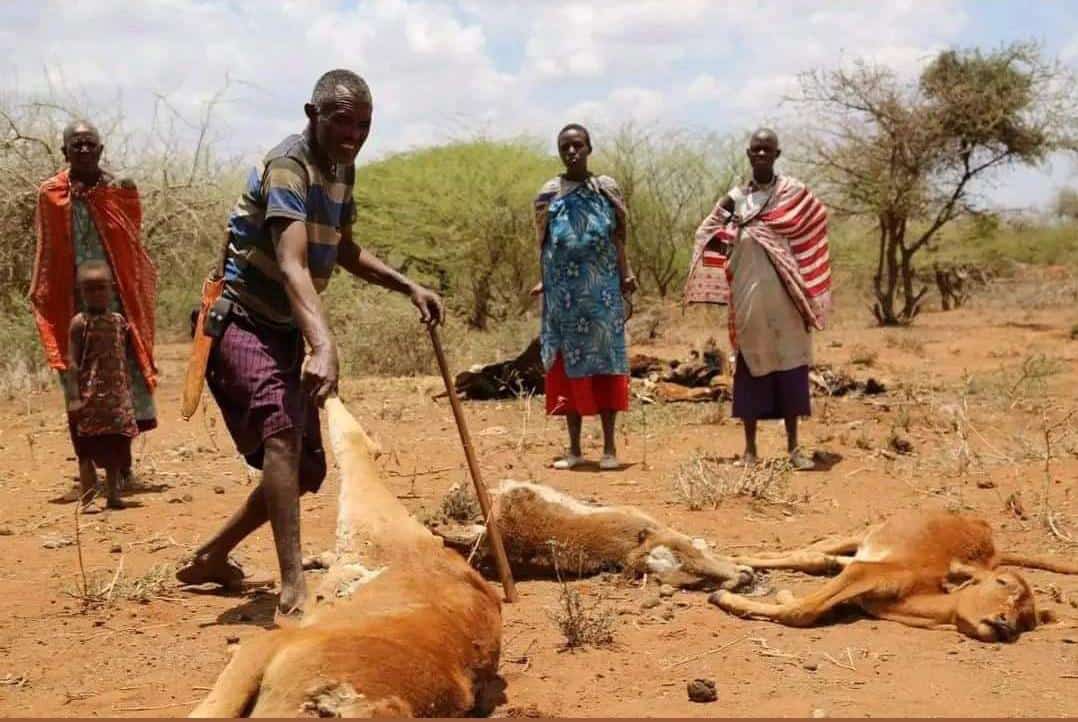
Climate loss and damage payments are now being approved by governments. RAFUG, Amboseli, Fair Start, and others are all partnering and quickly scaling up because the questions remain what the true amount of compensation should be, and how that money should be spent. Given that not ensuring family planning pegged to the Children’s Rights Convention, or what is called child-centrism, is what helped create the crisis, we are interceding to urge the funding to go to climate restoration and child-centric policies. We are asking donors to lead by example.
We are asking them to give for that purpose with the understanding that child-centrism overrides other policies.
TAKE ACTION NOW: DONATE TO THE AMBOSELI LOVE EFFORTS THROUGH RAFUG’S DONATE OPTIONS BELOW, AND URGE THE NEW YORK TIMES TO CORRECT ITS REPORTING ON THE CLIMATE CRISIS TO REFLECT THE NEED FOR CHILD-CENTRIC POLICIES.
RAFUG DONOR GUIDANCE DISBURSEMENT FORM
International wire
Please follow this form when disbursing donation to Rejoice Africa foundation. This form must guide you in doing international wire transfer and any inquiry you reach us info@rafug.org or robertmwesigye1990@gmail.com
The Council for the District of Columbia made history recently by moving towards #birthequity with baby bonds. Why should only rich kids get trust funds? Isn’t freedom about equality of opportunity?
TALE ACTION: Urge the Council to adopt Fair Start, and you can also work from the bottom up – urging relatively wealthy residents of the Washington D.C. area to lead by example and support Fair Start moves by donating in ways that all children get a fair start in life.
The reporting is based on a false assumption, and thus misinforms readers in a way that exacerbates the crisis and its impact on the most vulnerable people.
The reporting assumes the funding is contingent on the decision-making authority of current governments, like the Biden Administration. That is incorrect. There is a fundamental and existential human right to a safe environment now understood to require climate restoration, and such rights override governmental authority and authorize direct demands for payments – citizen to citizen if used to further the right.
Ignoring that right will lead to children being born into conditions in which they will needlessly suffer, while a handful of wealthy companies – many of whom advertise in the New York Times – profit from the status quo.
By hiding this fact, the reporters place excessive control in the hands of the leaders who caused the crisis and ignore the fundamental driver – power relations between people. Thus, these leaders are not properly held responsible, and the role power relations play in climate injustice is unrecognized. This is especially true given that family reforms and the correctly constructed right to have children (born into a healthy environment) precede and override competing rights and interests, like the property rights that prevent funding for effective family planning incentives/entitlements.
The existence and implications of that right are a fact, a much more important one than many of the facts covered in that article.
What is the most good we can do? This is a question effective altruists (EA) grapple with. And that community, which is large and comprised of many viewpoints, answers the question in a variety of ways.
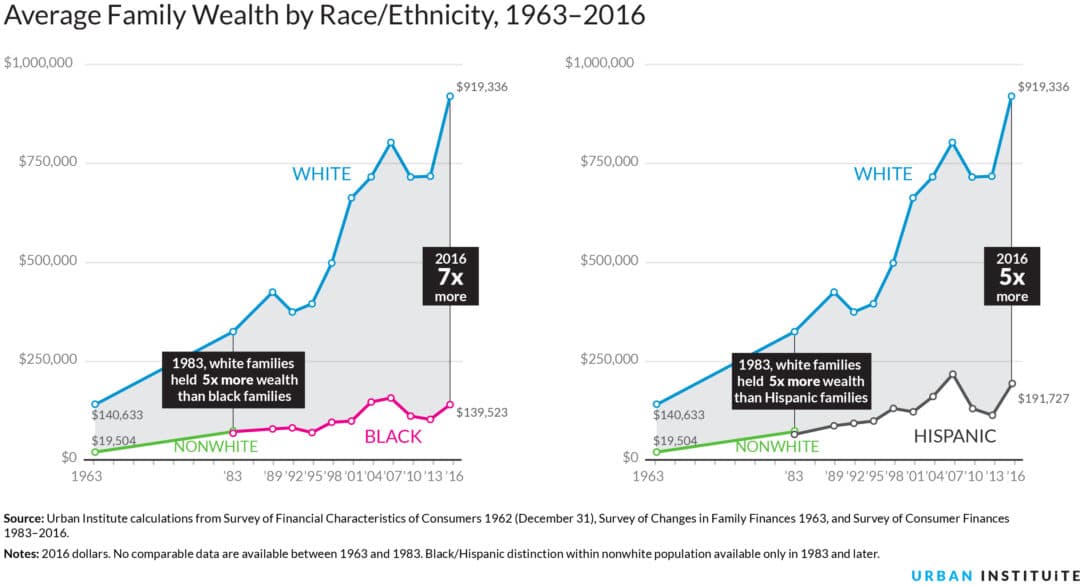
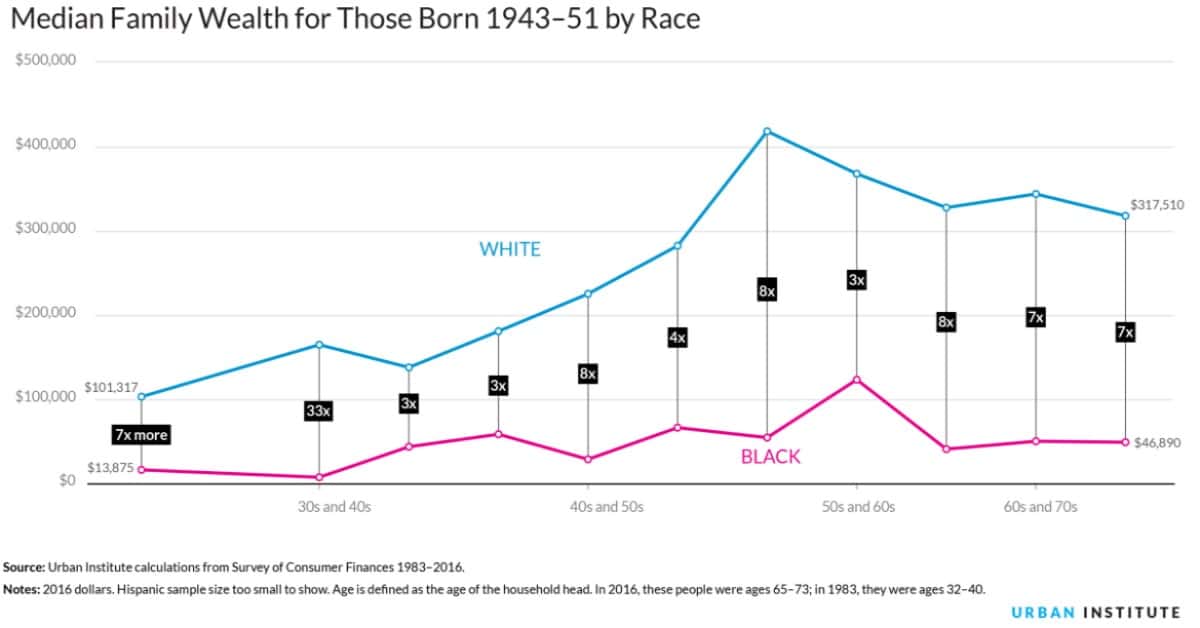
But doing the most good is a question that has already largely been answered by the Children’s Rights Convention, which acts as a binding assessment of the ecosocial conditions in which children should be born and develop in order to comprise just communities. These conditions include a restored climate, and relatively equal opportunities in life that are currently out of reach (see the chart above).
In other words, while we may wish to do good, we have a primary obligation to protect future generations, and in compliance with the Convention. EA is limited by this human rights regime and deontological population (or really, power) ethics, because while many in EA value economic growth, that growth is conditioned on our complying with human rights norms that – in instruments like the Convention – show how to empower people. We need to first use human rights standards to create people for town halls, rather than the utility-producing shopping malls many in EA favor, because the latter are only legitimate if they are regulated by functional – human rights-compliant – versions of the form.
For example, some in EA might assume a good use of corporate profits would entail charitable donations to things like animal welfare reforms. The reality is that if we do not use human rights to assess the true costs of those profits on people and future generations, we actually end up doing more harm than good to humans and nonhumans, as measured against things that override EA principles, like biding human rights instruments. Instead of a focus on stripped-down welfare, a human rights-based approach enables consent to power – a more basic value the precedes and allows us to truly do good.
Invest more in kids.
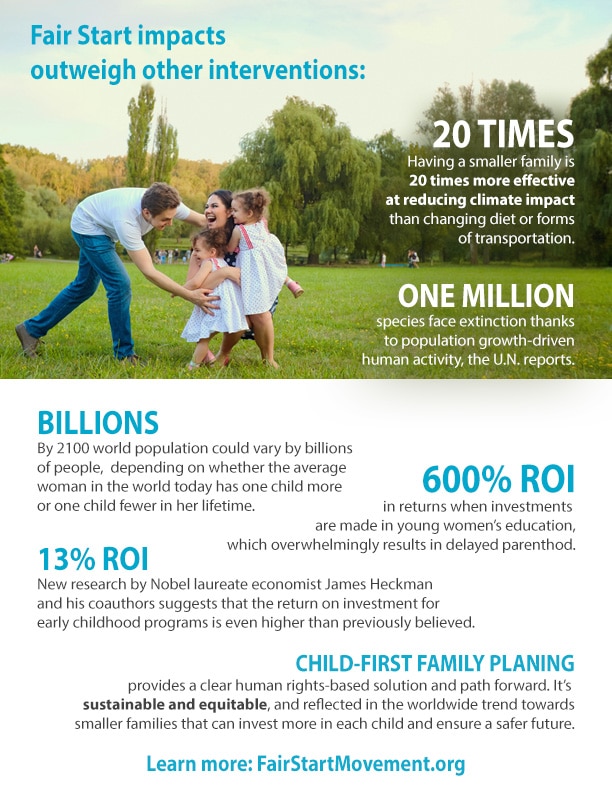
Admittedly the Convention has not been applied as a standard for family planning, but it could be, using family planning incentives/entitlements geared as climate reparations for future generations, with distributions/fees scaled inversely to wealth as a means of promoting climate restoration as well as parental readiness, birth equity, and sustainable families. How can we possibly be effective, or efficient, without developing each child to their full potential, in the freeness of nature that Henry David Thoreau described as the fundament of economy?
The climate and inequity crises we face today fundamentally flow from denying the eco-social conditions promised by the Convention (denied to them per one Nobel Laureate to ensure the growth the enriched a few), because in self-governing communities where authority flows bottom up, our fundamental power relations and development becomes the exclusive reason for such outcomes.
The fossil fuel industries currently being targeted at COP27 seem like ideal targets to urge to first fund this transition from parent-centric to child-centric planning. And using the Convention, perhaps reinterpreted as requiring that we take democracy seriously by applying this inversion principle, would avoid what might be called the constitutive fallacy, or treating anything other than a fair creation norm that empowers people (from whom the legitimacy of things like state constitutions derive) equitably – per the inversion – as the ultimate obligation. How can we separate our values from ourselves, and our creation?
Without ensuring minimum levels of welfare for future children, and the autonomy of the nonhuman world that is part of that welfare, EA is simply using its platform to exploit the most vulnerable entities. They were committing a simple baseline error – randomly assigning costs and benefits without first being a group of people who can inclusively engage in such analysis.
If we reject the fundamental fairness described here, we end up with a system that does not allow people to meaningfully participate in creating the rules under which they must live, a system that is thus backed by violence rather than consent. And we would force people to live, disempowered as such, amid massive and growing inequity and in an increasingly hostile environment.
We can use the great concentrations of wealth that growth created (wealth now defended by systems of violence) to fund incentives/entitlements to bend the arc of our existence away from that future, and towards a biodiverse future where each child gets what they need, and participatory democracy – or freedom – is the reality. It would be wrong not to shift that wealth, by all means effective, given that its true costs were externalized on the women and children the incentives/entitlements would go to.
If we do not, and the situation degrades as described above, many people in that situation will turn to self-defensive violence, free people who through effective leaderless resistance models will limit and decentralize the violence-backed power (like the property rights EA now relies upon) others have over them, in part by taking the resources necessary to invest in young women’s constituting true democracy through better family policies.
TAKE ACTION: THERE ARE DOZENS OF WAYS TO PROMOTE TRUE FAIRNESS AND JUSTICE. CHOOSE ONE NOW.
Kudos to Scott Mortman, a brilliant attorney and thought leader with Fair Start, who nailed the issue of what we owe the future in his letter to the New York Times below.
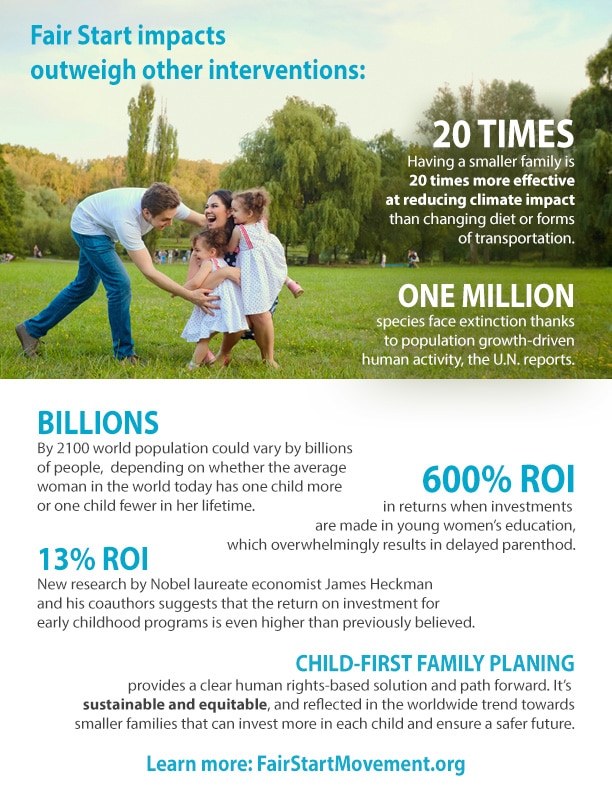
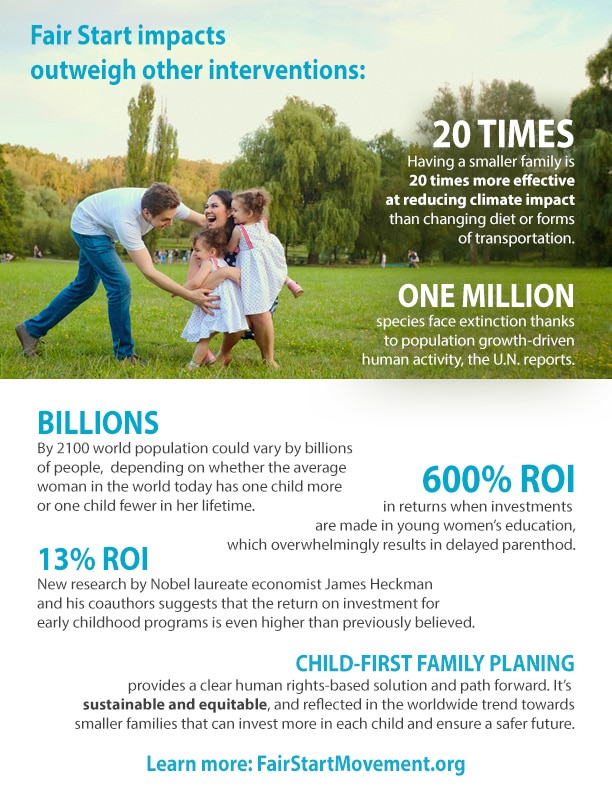
The climate crisis and worsening inequality are a threat to children everywhere – with effects being felt most by those communities least equipped to endure it.
We can change course. Children deserve equitable conditions, right from the beginning.
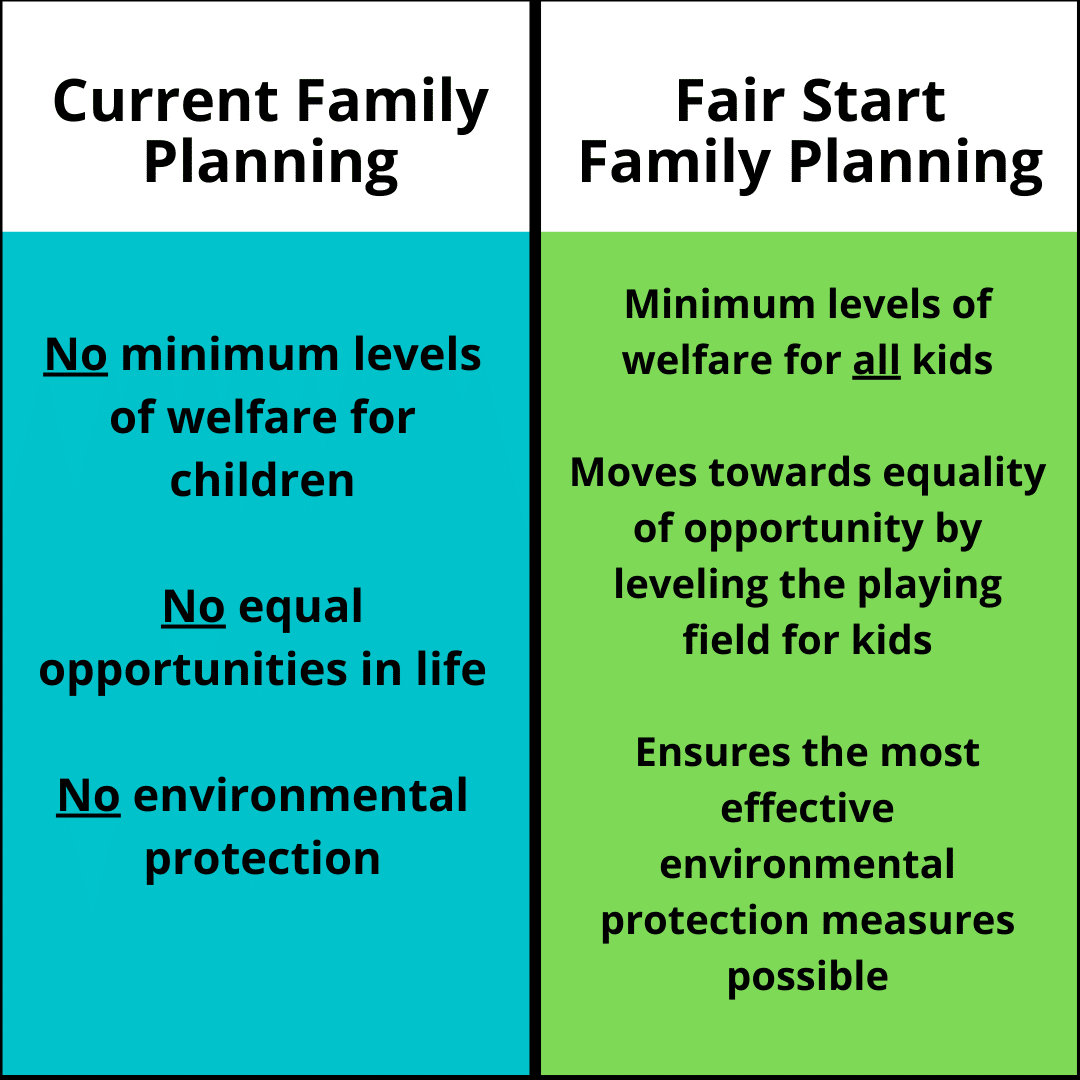
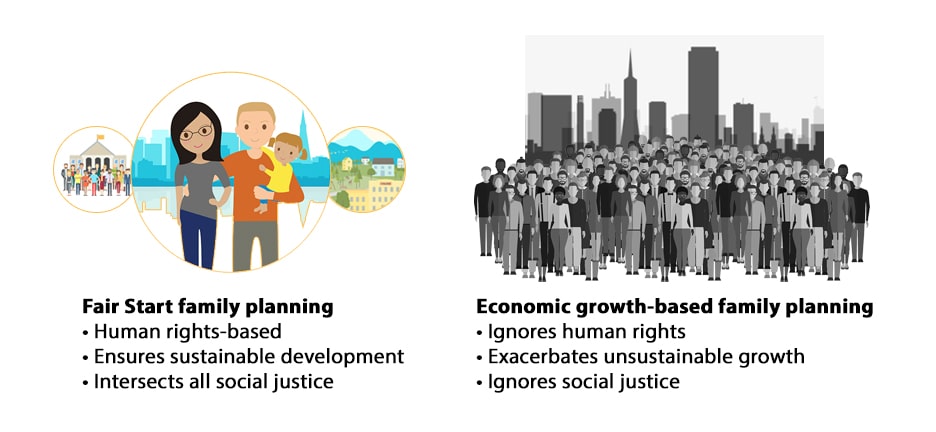
Fair Start helps shift unjust concentrations of wealth and power towards funding policies that instead empower all children with equal opportunities in life and a natural, biodiverse environment, by incentivizing and entitling well-planned, well-located, and more equitable families. In short, we promote fundamental justice and freedom by actually accounting for, and improving, fundamental power relations between people, and between people and their ecologies. This is something almost no other group does, and it’s the best way to avoid failed families and parental regret.
Per our Newsweek piece and multiple peer reviews, it is physically impossible for us to orient our lives and actions from a just and empowering place – or for governments to create obligations like property rights – without first ensuring through Fair Start planning truly fair, inclusive and participatory communities that can actually consent to such rules.
Now Take Action: Urge Exxon to move from the Paris Agreement to Fair Start as the standard for climate mitigation: https://fairstartmovement.org/earth-day-2022-climate-reparations-existential-justice-and-our-open-letter-to-exxon/
Peter Singer is regarded by many as a founder of contemporary animal rights, largely based on his book Animal Liberation. But few realize that he has also taken public and influential stances on family and population policies, in this 2018 public lecture, for example. He avoids making concrete conclusions about population policies in this lecture and elsewhere,
Nowhere has he advocated for effective interventions – like overriding property rights to wealth in order to fund Fair Start family planning incentives/entitlements – and other peremptory norm measures would have bent the arc of unsustainable growth downwards towards what many see as optimal world population ranges. Those ranges, like all population matters, actually involve people – and the fundamental creation of power relations between them. And power and population ethics begin with human rights, the objective frame that after WW2 should cabin utility, Effective Altruism, and all other lesser and more subjective forms of policy Singer normally employs.
How is animal liberation possible in the face of a wave of human population growth causing massive extinction? How is promoting veganism for what is effectively a small percentage of a growing human population that mostly exploits, tortures, and kills nonhumans true animal rights? How does that growth further human rights when the growth enriched relatively few people, at cost to equality and the political stability it brings?
Singer’s work is based on an error called the constitutive fallacy, or ignoring the way our creation and development do and (assuming we use baselines like the Children’s Rights Convention) should – fundamentally – constitute actual power relations, between humans, and between humans and nonhumans. Who we are might be different mixes of nurture, or nature, or influential power relations, but all flow (and among self-determining peoples should flow) from our creation. We cannot separate values like nature and equity from who we are and our power relations with others, which stem from our creation.
For example, our economic birth position mostly determines whether we are rich or poor as adults. Another example would be that it is impossible to ensure the empathy people need to treat nonhumans well without addressing the conditions in which people are born and develop because empathy largely depends on years zero to three in childhood maturation.
Another example would be that if we assume we ought to treat nonumans well, we would have to structure an effective legal system that would obligate that. But because there is such massive attenuation (caused by the growth that is eradicating the nonhuman world) between people and their representatives, we cannot do this. Another example would be world leaders attempting to determine the costs and benefits associated with Anthropocentric environmental baselines like the Paris Agreement, a mistake that only accelerated ecocide, rather than using an organic baseline like beingrelatively self-determining people and the conditioning of wealth on equitable family planning investments that make that possible. (This last example gels with the constitutive fallacy as political adherence to national constitutions, or even international law, as basic and overriding norms, as opposed to adherence the obviously antecedent and more basic family planning norms that create us, the people.)
In other words, in Singer’s prescriptions for animal liberation come from outside of who people ought to actually be, in terms of the creation of the fundamental power relations that define them.
Some have argued that it’s unfair to say that Singer’s population comments (or lack of comments) have “undone” his work for animals, given that virtually no one knows what his views on population are. Per this argument, there are probably zero policy-makers who’ve done anything based on Singer’s population views. Perhaps few or none have decided to procreate or not procreate based on Singer’s silence on the issue.
This response treats population as something, an issue, that we can separate from what we do. But how can we do anything, or suggest that others should do something, without first determining the acceptable power relations that determine who we are, and should be? We cannot separate what we narrowly think of as population – or who we are – from what we do. The former is always a factor and precedes the latter.
Singer’s claim that “we should help animals by not eating them” is wrong on its face because the “we” in his claim – the fundamental creation of power relations that permit growth, relations he accepts – does more harm to animals than changing diets does good. That’s the constitutive fallacy at play. And that mistake – not requiring things like the Children’s Convention standard in family planning policies to improve those relations, which would physically constitute just communities – does more than just harm animals. It fundamentally permits anthropocentric changes that cause irrefutable harm to all, against an absolute standard like infant health.
Don’t confuse chaos with freedom. Truly free people will fundamentally limit and decentralize the power (including subtle power like climate emissions, the impact of bad parenting on communities, massive disparities of wealth, etc.) others have over them, and by all means effective. They will condition their obligation to follow the law on their actually being empowered, assessed via a simple test, in functional democracies.
Singer never seriously addresses this issue, through redistributive birth entitlements that empower us in terms of who we are before turning to what we should do, for example. That mistake of ignoring the primacy of who we should be (and the best answer is fair), given his position of influence and the crucial time for mitigating the climate crisis in which he was working, harmed future generations.
And as a result his work does not effectively protect nonhumans, promote equity, restore democracy, or even protect considered parental desire. An alternative approach which does not make the error would value each person born, and the value of self-determination, above the growth Singer never seriously opposed.
Is this type of fairness a threat to the ongoing processes of decolonization. antiracism, and other forms of anti-oppression? Eliminating the massive birth inequity caused by colonization – the one that disempowers the majority of people, those who will live in the future – and doing so while restoring nonhuman autonomy is the height of anti-oppression. Though admittedly, all of this argument flows from Eurocentric framing and should also be done from more indigenous frames.
It would treat ensuring minimum levels of welfare, and freedom, as more important than total welfare indictors like gross domestic product. It would elevate ethics in the creation of people – and the conditioning of political obligation on family planning policies that ensure people will matter – over the constitutions and governments whose authority to assign property and other rights derive from such people, again something Singer never considered.
TAKE ACTION: Urge Singer to #tellthetruth and admit that his family and population ethics undid his animal liberation ethics. Urge him to support a pivot from parent-centric family planning to child-centric planning. He should admit that before we can engage in Effective Altruism we are politically obligated to constitute just communities – and total liberation – through socially and ecologically regenerative family reforms like Fair Start.
Without this, his work could in the end do more to protect concentrations of wealth and power than nonhumans.
He should not allow his work on animal ethics to mislead people from the truth that we are committing ecocide through poor family planning, and should support paying back the costs to freedom that population growth has imposed on future generations. Also urge him to lead by example and treat property claims – like the extreme wealth he helped create in the plant-based industry – as conditional on our fulfilling every child’s right to a fair start in life.That wealth, and the power disparity it represents, is defended by the threat of state violence, not the true justification possible amid fair power relations.