Summary “From the very beginning, a child’s chances are often shaped by circumstances beyond their control—and The Truth Alliance is calling you to change that early, so every child has a real and fair chance to grow and thrive”
There is a quiet injustice that begins long before a child speaks their first word or takes their first step. It starts at birth sometimes even before and it quietly shapes who gets a chance to thrive and who is left struggling to survive. The Truth Alliance brings this reality into the open with a simple but powerful truth: no child is worth more than another. And yet, the world we live in does not reflect this.
The Hidden Weight of Birth Inequality
From the very beginning, children are placed into different worlds. Some are born into safety and opportunity, while others arrive into hardship and uncertainty.
Where a child is born, who they are born to, and how society labels them can determine their access to education, healthcare, and even basic dignity. These invisible labels quietly decide how far a child can go before they even have a chance to try.
For many children, it’s not about lacking potential, it’s about being denied a fair chance to realize it.
Illegitimacy and the Denial of Dignity
In too many communities, children are still judged based on circumstances they had no control over. Being labeled “illegitimate” can mean exclusion from family support, from education, and from a sense of belonging.
This is more than unfair. It is deeply unjust. No child chooses the conditions of their birth. Yet some are made to carry that burden for life. Over time, these labels shape not just how others see them, but how systems treat them and how they come to see themselves.
Wealth, Borders, and Unequal Chances
The gap between the privileged and the vulnerable continues to grow, and children feel it most.
Access to food, healthcare, and education often depends on the wealth of a family or the country a child is born into. A border line on a map can mean the difference between life and death, between opportunity and struggle.
These differences are not inevitable; they are the result of human choices, policies, and priorities. And they can be changed.
The Cost of an Unfair Start
Every day, children lose their lives not because we lack solutions, but because those solutions do not reach them. A lack of basic needs, nutritious food, clean water, healthcare, and protection continues to claim lives that could have been saved. This is the cost of an unfair start. No child’s survival should depend on chance or circumstance.
Rethinking Family Planning: More than Numbers
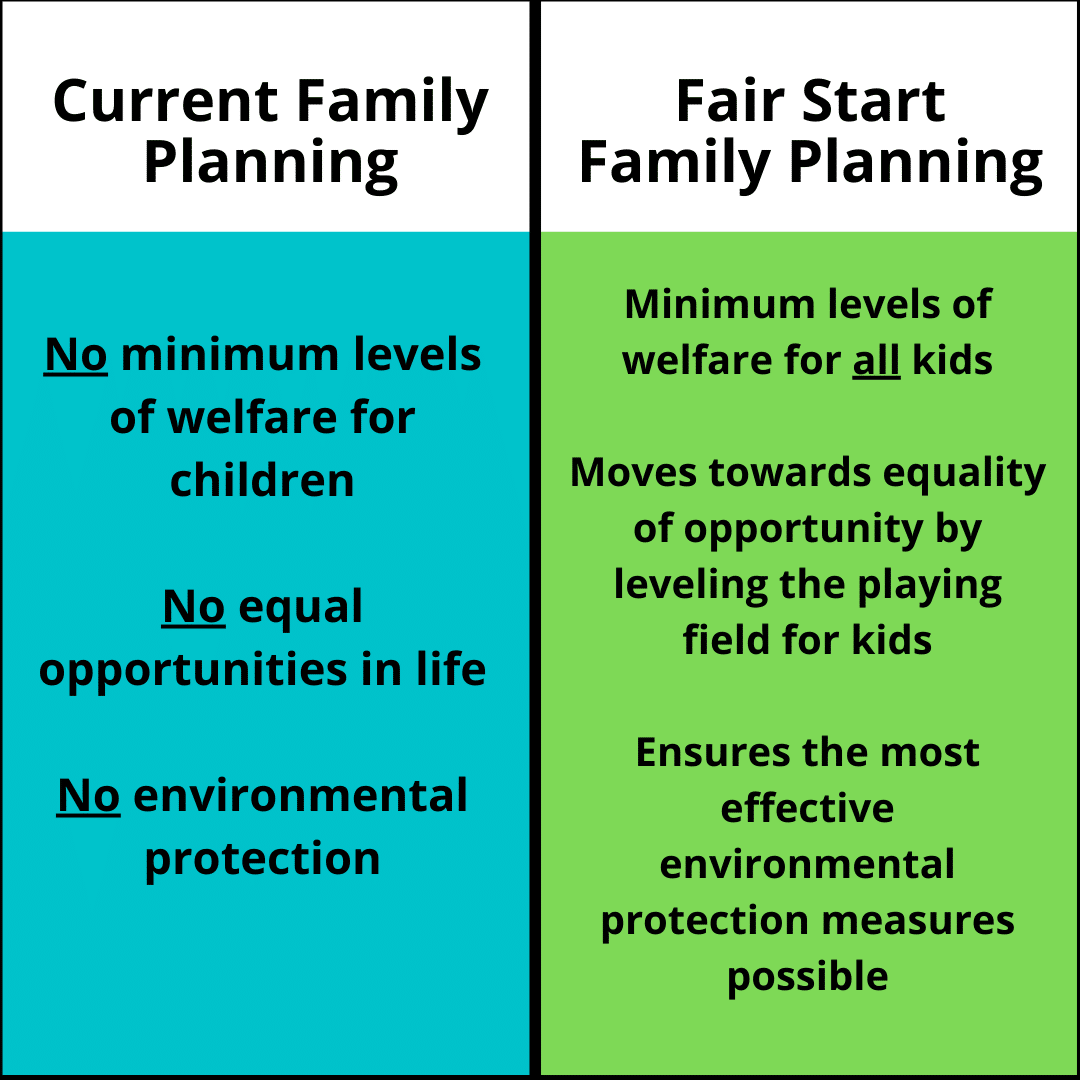
Family planning is too often reduced to a conversation about controlling population growth. But at its heart, it should be about something much deeper ensuring that every child is born into conditions where they can grow, thrive, and be supported. It is not just about preventing births; it is about preparing for them. When families are supported and systems are strengthened, children are given a better start. But when this issue is sidelined or misunderstood, the cycle of inequality continues.
An Unjust Starting Point
What we are seeing is a system that begins from an unfair starting point that can be called an “illegal baseline.” When some children are born with access to everything they need, while others are born without even the basics, the system itself is broken from the start. And no amount of effort later in life can fully erase that gap.
Why Preemption Matters
If we truly believe that every child matters equally, then fairness must begin at the very start. This means acting early before inequality takes hold. It means investing in mothers, supporting families, and removing harmful labels and barriers. It means ensuring that every child has access to the essentials from day one. Preemption is not just a strategy, it is a commitment to justice.
A Call to Reset
The Truth Alliance is calling for a shift in how we see and value children. A shift away from systems that quietly rank human worth, and toward a world where every child is given the same foundation to stand on. This is not an unrealistic dream. It is a necessary step toward a more just and humane future. Because if we do not address inequality at the beginning, we will always be trying to fix it too late. The question is no longer whether change is possible. It is whether we are willing to make it happen.