Tag: News & Fair Start Headlines

  • Having Kids asks Tully star Charlize Theron to speak out

    Having Kids asks Tully star Charlize Theron to speak out

    In an open letter sent today, Having Kids is urging the star of Tully, UN Messenger of Peace, and model parent Charlize Theron to break a universal taboo and call for a change to family planning laws, worldwide. Her public statements about parenting, UN title, and courageous portrayals of the lives of women in her films make her an ideal candidate to lead a change. The letter said this:

    That is why we are writing to ask you to break a universal taboo, and in your words and own way, speak out publicly for the worldwide need for a better family planning model, one that prioritizes the needs of future children and the universal value of smaller, more sustainable, and truly equitable families.

    Read the full letter here. 

    The facts are clear:

    Anne Green, Executive Director of Having Kids, said this to Ms. Theron: “We stand ready to assist you in any way we can, but are confident that you will find the best way to do this.”

    For more information, please visit HavingKids.org

  • The Fight for Our Future Too Taboo to Talk About

    The Fight for Our Future Too Taboo to Talk About

    A recent story in Utah had a lot to say about lower fertility rates in the state, and the need for better policies “[i]f we’re really serious about being pro-natal and wanting people to have children . . . . “ The article used an example of one young woman as an example, citing women seeking higher levels of education and entering the workforce, of the underlying problem.

    This study is exemplified in 28-year-old, Lauren Steadman. She has her master’s degree in information science and a well-paying job. Although she wants to be a mother someday, she’s forgone that life goal in order to be more financially secure. “My husband and I made a deliberate decision to wait until we have kids later specifically after school, after we were established in our careers,” said Steadman. Steadman also plans to have two to three children, a few less than her mother had. “(I have) no plans as of now to quit my job and stay at home,” said Steadman. Steadman says although she may change her mind when she has children, as of now, she plans to continue to work. She plans to either put her children in daycare or hire a nanny.

    Higher Housing Costs

    One of the reasons for lower fertility rates notes by the article is the price of housing, but that’s a result of increasing population and demand. Larger families won’t help reduce housing prices – though the housing industry is all for pronatal policies and the higher prices it brings. Will it otherwise help women like Lauren?

    Waiting To Have Kids

    One of the reasons fertility rates have fallen drastically around the world involves gender equality. Women with one child can experience motherhood as well as other things in life, rather than the more monochrome life of constant motherhood. Parents waiting to have kids in order to attain high education also benefits their future children. Short term pronatal incentives designed to override longer term thinking might not be the best way to help women like Lauren.

    How Kids Are Affected

    Will kids benefit from policies meant to increase family size? Utah ranks well in the nation for overall child welfare, but is one of the worst states in the U.S. for child abuse and neglect (especially sexual abuse). How do policies that simply to try to arbitrarily push for higher fertility rates prevent more creating abuse and neglect? Would investing in improving child welfare, rather than investing in creating more kids, be a better approach? More broadly, Utah’s kids are concerned about climate change – recently urging state legislators recently to do something about it, and the fact is that large families are the worst way to exacerbate climate change, and worsen other environmental impacts that have disparate impacts on children, like air pollution. Environmental threats like climate change are not just about protecting the environment – they determine social outcomes, and now present a threat to U.S. national security

    Who’s Behind The Fertility Push?

    As the article notes, Utah continues to have the highest fertility rate in the U.S., youngest population, earliest age at first marriage, and largest household size in the nation. If women and kids don’t necessarily benefit from such policies, who will? Big business loves Utah. The state consistently ranks highest in the nation for catering to business, in part because its population growth rate ensures a good supply of cheap labor, weak unions, and tax and regulatory policies that disfavor workers. Beyond Utah, big businesses like Toys “R” Us, which blamed women’s lower birth rate for falling sales and their eventual closure. Businesses push women to have kids because they benefit from population growth while always pushing the costs forward, in what U.N. chief likened to a Ponzi scheme robbing future generations.

    A Better Solution

    What would be the best policy for Lauren and women like her? One alternative to the growth model, and the parent-centered policies that promote it, is the child-first Fair Start model. It treats the trend to lower fertility rates for what it is: the evolution of our species towards more sustainable families that can invest more in, and better develop and protect, each child. The Fair Start model is simple: Child-first family planning means parents working with their communities to get the resources they need to give their child a fair start in life, with equal opportunities relative to the child’s peers. It also means planning a smaller family so that parents and others can invest more in each child. Whether the average woman in the world chooses larger families or the Fair Start model will change world population by billions in the decades to come, as well as determine who future generations become. Will we be workers and consumers in massive, unequal and unsustainable economies, or educated and empowered citizens in functional and sustainable democracies? The fight for the future is on, though few would ever recognize it. Planning smaller and more sustainable families liberates parents, kids and the community. More time for parents, more resources for kids, and a better us going forward.

    Giving up growth will not be easy. We feed off of ignoring minimum standards of child welfare, fair starts in life, protecting our kids future environment because doing so brings us easy wealth.

    But if we love our kids we will change our ways. Take action here to start.

  • Florida Child Abuse: Having Kids Responds to Critics

    Florida Child Abuse: Having Kids Responds to Critics

    This week Having Kids urged officials in Florida to consider a Fair Start order in the event of a conviction of a couple charged with child abuse. Part of the media coverage of Having Kids’ letter included a response by a Florida-based civil rights attorney, Andrea Flynn Mogensen, who expressed concern that a Fair Start order would infringe upon an individual’s constitutional rights, including one’s fundamental right to privacy.

    Having Kids agrees that preservation of fundamental rights is important, but all courts recognize that these rights are not unlimited. Specifically, when an individual is convicted of felony offenses, our legal system is rife with examples of limiting constitutional rights – convicted felons lose their right to possess weapons, for example, associate with other convicted felons, and even to vote for certain lengths of time. In fact, Florida is one of only two states in the country that imposes a lifelong denial of the right to vote to all citizens with a felony record.  

    If the legal system is able to put restrictions on certain fundamental rights for convicted felons, the government has the authority to impose narrowly tailored restrictions on the right to have children for those convicted of child abuse or neglect, for the rehabilitation of the parents, and for limited periods of time. Each person’s liberty is restricted by the liberties of others, and when it comes to parenting in the context of a child abuse conviction, we must protect the rights of future children.It’s the most compelling state interest of all – the most important collective concern, because it determines the future.

    To address additional points raised by Ms. Mogensen:

    • The United States is not the only country with constitutional liberties. But if we want our system of human rights to be the best in the world, we should understand that the right to have children is nuanced and not reducible to the nonsense of “it’s nobody else’s business.” 
    • The right to have kids is not unlimited; several high courts have upheld fair start-type probation orders. Ms. Mogensen’s statement that courts are limited to policing pregnant mothers is incorrect.  
    • The orders would ideally be authorized by state legislation. If Florida legislators want to protect kids and prevent their abuse, they will sponsor and pass such legislation, permitting judges the legal authority to make such orders in narrow circumstances, where appropriate. 
    • There is no legal or moral rationale for ensuring that abusive and/or neglectful parents have more kids while they are being rehabilitated. Doing so puts children into unfit surroundings (either the troubled home or failing child protection systems) and thereby harms them.  

    The bottom line is that we, as a society, show ourselves willing to tolerate child abuse and neglect until we embrace limitations like Fair Star orders. Are we really willing to make a policy decision that harms parents, kids, and the community, when we can’t even articulate a concrete reason for doing so? Think about it. Having Kids stands for reason, and for child-first family planning. Join us!

    Take action now to prevent, and not just react to, child abuse and neglect.

  • We Must Not Allow Child Abusers To Create More Victims

    We Must Not Allow Child Abusers To Create More Victims

    Since 1983, the month of April has been designated Child Abuse Prevention month in the US. Although there is certainly more awareness about child abuse today – 35 years later – the number of cases of abuse and neglect continues to rise. Having Kids is taking steps to protect children by urging judges to prevent convicted child abuse from having additional children. Even this very clearly defined and limited step is surprisingly controversial, as society currently privileges parents’ “right” to reproduce above what should be every child’s right to be born into even a minimum level of well-being.

    Recently, Having Kids targeted parents in a particularly egregious child abuse case in Tennessee for Fair Start orders. Having Kids selected Tennessee because their legislature is considering legislation HB 2520/SB2133, which would limit state courts’ authority from using coercive family planning as part of sentencing. The legislation is a direct response to one judge’s recent and controversial offers of reduced sentencing conditioned on sterilization. This legislation sets one end of the spectrum of state intervention in family planning – what is not permissible – and that is laudable. Permissible and necessary family planning must also be discussed, however. After all, the state has no greater interest than the well-being of its citizens, including its future citizens.

    Having Kids asked Tennessee Governor Haslam to consider working with the legislature to protect future children from abuse, using its existing and constitutionally approved probationary authority. Sharon Helene Robinson and Bradley Dwight Hill stand accused of criminal child neglect after their severely autistic child was found naked, and covered in both human and dog feces, which he was eating. The police reported: “Ms. Robinson stated that she is a meth user and this also contributed to her not caring for her autistic son.”

    Having Kids petitioned state authorities to seek a Fair Start court order, in the event the couple is convicted, temporarily prohibiting them from having additional children during the pendency of any probation, in order to facilitate the couple’s rehabilitation and recovery, and, more importantly, to prevent the neglect of any future children.

    Having Kids is targeting Tennessee because of what HB 2520/SB2133 expressly says regarding coercive family planning and sentencing, and the broader and problematic message it sends regarding family planning, in general. The model Fair Start order is non-coercive and seeks to strike a balance between the rights of parents and the needs of future children and the community. The charges against Robinson and Hill show a clear need for that balance, and Fair Start orders make clear the state’s compelling interest in the welfare of future children. We must not allow child abusers to create more of their own victims; Fair Start orders represent a clear and constitutionally appropriate step forward.

    Ultimately, a better future for all means reforming family planning to focus on the child, first and foremost, to give every child a fair start in life. Please join us in this work for a better future for all. 

  • Effective Environmentalism? Make Sure Future Generations Are Better People Than We Have Been

    Effective Environmentalism? Make Sure Future Generations Are Better People Than We Have Been

    Today, on Earth Day 2018, you might hear a familiar expression: “Be the change you wish to see in the world.” It’s an amorphous and difficult thing to live up to. But if we temporalize our thinking and relate the expression to family planning, it can become deeply meaningful and actionable. Who do we want future generations to be, literally, in terms of their quantity and quality? There are plenty of studies that show the quantity of future generations is a key determinant when it comes to things like mitigating climate change. But of course the quality of future generations matters as well – will they care about and care for the environment, or consume it into degradation, as we and prior generations have done?

    While most environmental, child welfare, human rights and other progressive organizations are silent on the issue of family planning, a whole faction of industrialists and politicians is pushing for larger families as a means to create a glut of cheap labor and voracious consumers in the future. Yes, Elon Musk, we heard you. They know who they want future generations to be: People who will make them money.

    How do we confront that threat?

    Human rights are designed to protect the vulnerable from the powerful. Future generations are vulnerable to the sort of exploitation the faction of industrialists and politicians described above are intent upon. Having Kids is pushing back against them with something called child-first Fair Start family planning. It’s a human rights-based family planning model designed to ensure future generations a fair start in life, functional democracies (not simply growth economies) where their voices will be heard and matter, and a clean and safe environment in which they can thrive. Its core moves are  1) to shift public thinking about family planning as something we do in isolation from others to something that is cooperative, 2) to use the benchmark of fair starts in life as something around which to orient that cooperation, and 3) to recognize the simple fact that smaller families mean a healthier environment and the ability to invest more time and love in each child.

    Fair Start family planning is not designed to create future generations who will just make rich people richer.

    For Earth Day, make being the change you wish to see in the world mean even more. Take action here. 

  • Earth Day: Challenge Environmental Organizations to Address Family Planning

    Earth Day: Challenge Environmental Organizations to Address Family Planning

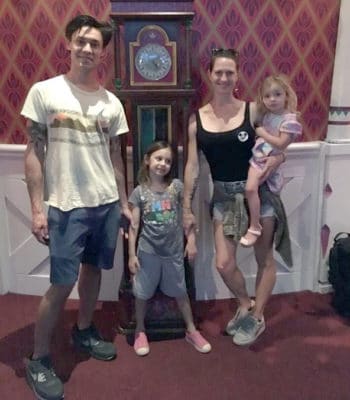
    Meet Tricia and Mickey Bhotiwihok.

    A man, woman, and two young girls stand in front of a tall grandfather clock with a red patterned wall as the background. The woman holds the youngest child, while the older girl stands in the center, smiling. Last year, on the heels of announcements that Prince William and Kate Middleton were having a third child, Los Angelinos Mickey and Tricia set a different example. Like Having Kids’ other Featured Families, Mickey and Tricia chose a smaller family, two children in their case. They understand that choosing a smaller family is the best way to protect their kids’ future and the environment at the same time. It’s a win-win. But only if we all work together.

    Tricia and Mickey are leading by example and steering the world towards a better future. We all benefit from what they’ve done.

    Here are the facts:

    For Earth Day, Having Kids is issuing this challenge:

    We are urging environmental and animal protection organizations to adopt a public position on family planning, simply one that furthers their mission, before Earth Day 2020.

    Want to take action? If you are a member of environmental and/or animal protection organizations politely encourage those organizations to meet the Having Kids Earth Day Challenge.

  • Earth Day: Speak Up And Act On Better Family Planning

    Earth Day: Speak Up And Act On Better Family Planning

    Earth Day is this Sunday. Time to start talking about better family planning for everyone.

    Nicholas Kristof, writing for the New York Times, recently examined where humans’ and animals’ interest seem to collide, but eventually flow into alignment. But he missed the biggest confluence of all, the significant drop in average fertility rates around the world. Smaller families have allowed more investment in and development of each child, a pronounced period economic growth, and perhaps our best chance to stave off the worst effects of climate change and the many related environmental catastrophes.

    Recent studies show that air pollution contributed to the deaths of six million people in 2016 alone. The number of deaths would have been reduced if world leaders had done a better job on family planning, had used modeling that reduced overall emissions and consumption, and at the same time had invested more in each person from the start, to make them more resilient. Inaction on family planning helped cause these deaths. When will that change? When will the United Nations Secretary General, for example, take the action we need?

    Smaller families that invest more in each child are the beginning of, and central to, any version of an environmental and animal protection ethic. Better family planning is a fair and win-win balance between what we need and animals need, between the human and nonhuman worlds. Better family planning helps humans and animals at the same time – more so than any of Kristof’s examples.

    For Earth Day, speak up and take action for better family planning now.

  • Will Racism Ever End Without Better Family Planning?

    Will Racism Ever End Without Better Family Planning?

    Denene Millner sketches out the lines of a blueprint for a new and better American Dream, born of the persistence of racism, and need for success to mean more than wealth. It’s a beautiful sketch. But she ends suggesting some form of voluntary economic segregation. “Segregation made the black community self-reliant.” Is there an alternative?Image result for black leaders quotes overpopulation

    Perhaps it lies in her focus on children, and the family. Could racism begin at home? Could home begin with family planning? Martin Luther King recognized the dangers of poor family planning and the growth of our population. What if we couple the solution, smaller families, to a public family planning ethic that treated the decision to bring every child into the world as an act of deliberate inclusivity, with everything that means for economic positioning, racial equality, and equity of opportunities in life.

    Racism persists in part because we tolerate a cavemanish family planning model that treats the act of parents creating and raising children as somehow personal and private, as if it did not create the social world we all share. Doesn’t that treat future children, and the nonhuman world we colonize, as if they were our property, and ours alone to control? Rather than resegregate as Millner might be suggesting, shall we go to the source of our deepest social insufficiencies? Racists don’t fall from the sky – they are born and raised in the shadows and illusion of isolation. We “come together” as future generations enter. Do we want to come together in the way Dr. King envisioned? Better family planning is the key.

  • Today’s Family Planning Is Shaping Your and Your Family’s Future

    Today’s Family Planning Is Shaping Your and Your Family’s Future

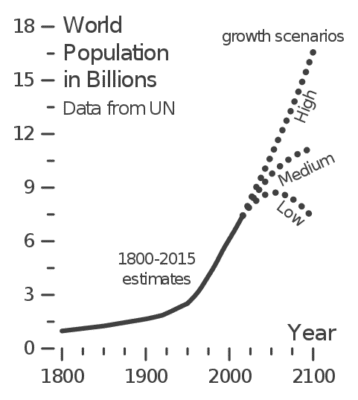
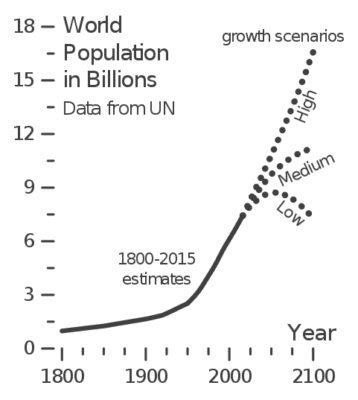
    Many caring and thoughtful people who are concerned about the future of the world are being pushed off the idea of having kids. They are concerned about climate change, the mass extinction of other species, and acidifying oceans filled with plastics. All of those things are driven by exploding population growth.

    A line graph shows world population (in billions) from 1800 to 2100, steeply rising after 2000 with three future growth scenarios: high, medium, and low. Data is from the UN, with estimates for 1800-2015.
    By Bdm25 – Own work, CC BY-SA 4.0

    At the same time, many other families are having as many kids as they can, often for religious reasons, or because it distinguishes them from other families, or because they see their family as a replacement for the community around them.

    Is it fair that some people, often the ones that care the most about our future, are put in the moral dilemma of whether to have children because other people are having so many? Do parents that ignore the risk large families pose to the future have the right to infringe on a well-prepared and thoughtful family’s right to have one or two children?

    Today we have a historic opportunity to protect the future, for ourselves and for our families. We can change the course on that graph. We can embrace the worldwide trend of people choosing smaller families. We can demand fairness, and the better world that better family planning can create.

    Child-first family planning means working with your community to get the resources you deserve to give your child a fair start in life, with equal opportunities relative to their peers, and planning a smaller and sustainable family where you and others can invest more in each child.

    Speak up, and speak out. Other peoples’ family planning decisions are deciding your future. Help them get it right.