Tag: Climate Crisis & Ecocide

  • The Lie at the Base of Our Language Creating the Climate Crisis

    The Lie at the Base of Our Language Creating the Climate Crisis

    Justice begins with the fair creation – or procreation – of power relations, but those at the top of our political systems have historically refused to cede (or “constitute”) their power and influence into future generations.

    The Lie

    Older generations lied to themselves and others by treating the most interpersonal act – having kids – as a matter personal and private to the parents (often just the father), isolating those parents in the decision-making process from the impact their decision would have on the children born, on our communities and on our world. Families would have no obligation to others’ children, rich or poor. If the state sought to protect children, it would have to wait for them to be harmed.

    That isolationism, in family planning, prevented the social contract – which includes the limitation of one person’s power over another, including would-be parents’ power over future children, rich kids’ power into their adulthood over poor kids, humans’ power to overrun the nonhuman world and create a climate crisis where freedom from others’ influence became impossible – from ever forming.

    But the act of creating others is more other-determining – for the children born and the societies they will comprise – than self-determining for the parents. The move of older generations, to ignore the impact we have on others, evaded collective obligations to invest in children and preserved and expanded existing power structures via population growth. What appeared to be social justice movements – for equity and the environment – were always being undone upstream by family policies that would eventually bring us to the place of` massive inequality in failing ecosystems in which we live today.

    Elites and those they controlled, throughout the Twentieth Century, did not want to pay their fair share to give all kids a fair start in life, a healthy environment, and a meaningful role in their democracies. Instead, they pretended that fortune, or some magical god, simply made it so that some kids were born poor, and others rich. They assumed nature, as a resource, was infinite and growth infinitely sustainable. Elites gave their own children a massive head start in life, contravening basic principles of democracy like the requirement that there be equal opportunities for all.

    They made money with policies that prioritized population growth over investing in women in children, turning democracies into massive economies of scale filled with consumers rather than influential citizens, and functional constitutional conventions. Lost in a sea of others elites could exploit, the average person became voiceless, with the choice of what to buy but not to help steer the polity around them. Elites made their wealth by simply evading paying the costs necessary to maintain nations of free people – people free from things like the anthropocentric climate crisis. And they have historically been assisted by media and unethical journalists, as they are today with constant stories of “baby busts” and underpopulation, who shill for their advertisers and the need for more and more consumers.

    That is the lie – that the generation of our societies, the base “we” from which all our language proceeds – should be determined by subjective autonomy rather than values and objective justice. That lie preserved fundamentally exploitative power structures and drove the crises causing immense suffering today, and the suffering – of the most vulnerable – that will occur in the future. And those who pushed and are pushing the lie are fundamentally responsible for the outcomes.
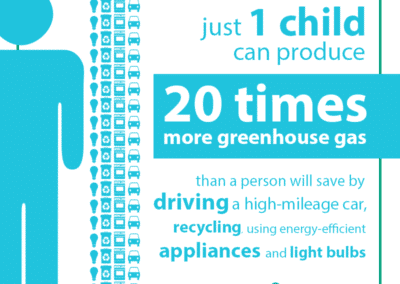
    Infographic showing that one child can produce 20 times more greenhouse gas than can be saved by driving a fuel-efficient car, recycling, or using energy-efficient appliances and light bulbs.

    They also sought to evade an obvious truth: The obligations we have to future generations come first, and override other obligations, like property rights. Why? Governments derive from people who derive from their creation, so a just creation norm precedes other rules. That norm represents the only opportunity to ensure consensual power relations, from the moment those relations are created. Maintaining an optimal world population range, in terms of the creation and continuation of power relations between people, and between people and their ecologies, is always the first question of ethics because we are before we do. Existential justice precedes and overrides other forms, like property allocation.

    We always have to ensure justice, in creation, first.

    But instead, under the isolation or privacy paradigm men, and especially rich ones, kept control of their castles. And governments were more than happy to go along with the lie and the subversion of human rights – backed by the excuse of the cold war – as long as they received their cut in taxes, and otherwise benefitted from the growth.

    That lie, the idea that what is interpersonal is really personal, fundamentally created the key crises – climate and inequity – we face today by driving the anthropocene over a more ecocentric world, and ensuring the massive inequality we now inherit at birth. It was assisted by religion – if we are made by gods rather than men, then the act is not really interpersonal, or subject to the demands of justice.

    Fact: Had world leaders adopted just and sustainable family planning policies in the middle of the Twentieth Century the world would not be facing the crises it is today. Whatever good politicians, wealthy philanthropists, or the nonprofits philanthropists usually control claim to have done, the underlying family paradigm they accepted and benefitted from over the past several decades on balance did more harm – especially given the climate crisis and what it will do to future generations. The lie that hid the fundament of justice, and the alignment of values, will cause immeasurable harm. The lie was furthered by anthropocentric environmentalists, the vast majority of environmentalists, who never bothered to actually define our species with the simple values that free us, like nature.

    Under this paradigm the wealthy and powerful, both public and private, benefitted from a family system of growth and inequity that harmed others – including depriving generations of the freedom democracy – the kind you actually participate in – required. As will be explained below, taking back that power and freedom is the height of justice.

    This is not about population. It’s about people and fairness. It’s not about a simple thing like numbers, but about a dynamic matrix of relations (four at least) and values that are inextricable from one another (e.g., birth inequity provided cheap labor, which along with large families, helped drive industrialization and its impacts on people and the world). Moving to a child-centric base norm is not just about emissions; it involves making resilient and cooperative (democratic) the people who will inhabit the ecological future.

    The curve represents the opportunity to promote values like child welfare, parental readiness, the restoration of nature, and democracies where each person plays a greater role, or alternatively, to continue to exploit people as consumers, workers, and taxpayers in a world filled with inequity, political voicelessness, and degraded ecologies.

    We should choose the former, and arc down.

    People are not numbers. They are entities that exert power over one another. We see this when we 1) understand power as any form of human influence (emissions, bad parenting, using language to exclude others, etc.) rather than focusing on the coercive (or official) power of the state, and 2) think about people in terms of their whole life span, including their earliest and most formative years. This is not John Rawls’ intergenerational justice – it’s about creating relatively self-determining people, as discussed below. If there is one condition for rules it is that they be fair, and the rule that creates us is no exception.

    If you want to see the lies, join our Tell the Truth campaign and simply urge people and organizations to show you what they were doing to give kids a fair start, ecologically and socially, in the past and how they plan to do it today. Ask them to show the impacts of their family policies – past and present – on things like the climate crisis, inequity, and participatory democracy. Ask them to explain how we can have a just society without fairness, right from the start.
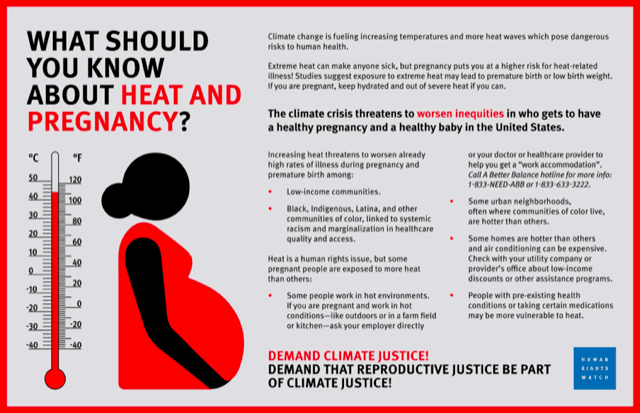
    Infographic titled What Should You Know About Heat and Pregnancy? showing a pregnant person by a thermometer. It explains how climate-driven heat risks pregnancy, especially for marginalized communities, and calls for climate and reproductive justice.

    The truth is that no legal system is legitimate and obligatory unless it is comprised of consenting subjects who matter or have an influential role politically, and who thus act as though their capacity for self-determination is inverse to – and balanced against – population growth (which is fundamentally the addition of other sovereign or relatively self-determining people) relative to the absence of human power, or nature. That is the base conception of a social contract – the device that fundamentally makes freedom work. Freedom is the capacity to consent to the influence of others, and as a default, we should not submit to those we do not trust. And with massive power differentials and lack of any common core that proceed from our creation, trust is unreachable.

    This is a condition for legitimacy prior to the development of downstream systems – like political representation, markets, or institutions. If power derives from people, is it more accurate to say that we are constituted into a system at some point in the past, through no role of our own, or actively part of a system of constituting physical democracies by taking part in a child-centric system that physically empowers people? Power derives from people who derive from their creation, and if it takes a village to raise a child it takes a village to plan for a child. While things like human rights, representative government, and checks and balances make democracy work, the first and most important device involves the rearing and development of children into people capable of democracy. The way we plan families is blocking this.

    It’s hard to make sense of any political or legal system, positive, natural, formal, interpretive or otherwise, without accounting for the creation and development of the people from whom law derives and to whom it should feel obligatory. While we are familiar with forms of social organization like states, corporations, families, and communities, resolving the lie blocking procreative justice opens up the possibility of undiscovered countries of truly consensual obligation – islands of democracy in a sea of nature.

    The lie regarding what is personal and interpersonal ensured growth that crippled this process of ensuring consensual governance. The quadrupling of populations in the Twentieth Century fundamentally replaced town halls with shopping malls by converting the possibility of fewer, well-developed citizens whose voices would matter into a mass of disconnected consumers with little influence over their governments, thus disempowering the average person. It ensured the endless greed and self-interest we see today, something Greta Thunberg has noticed, because it robbed people of secure and fulfilling communities that ground people and obviate the need for such things.
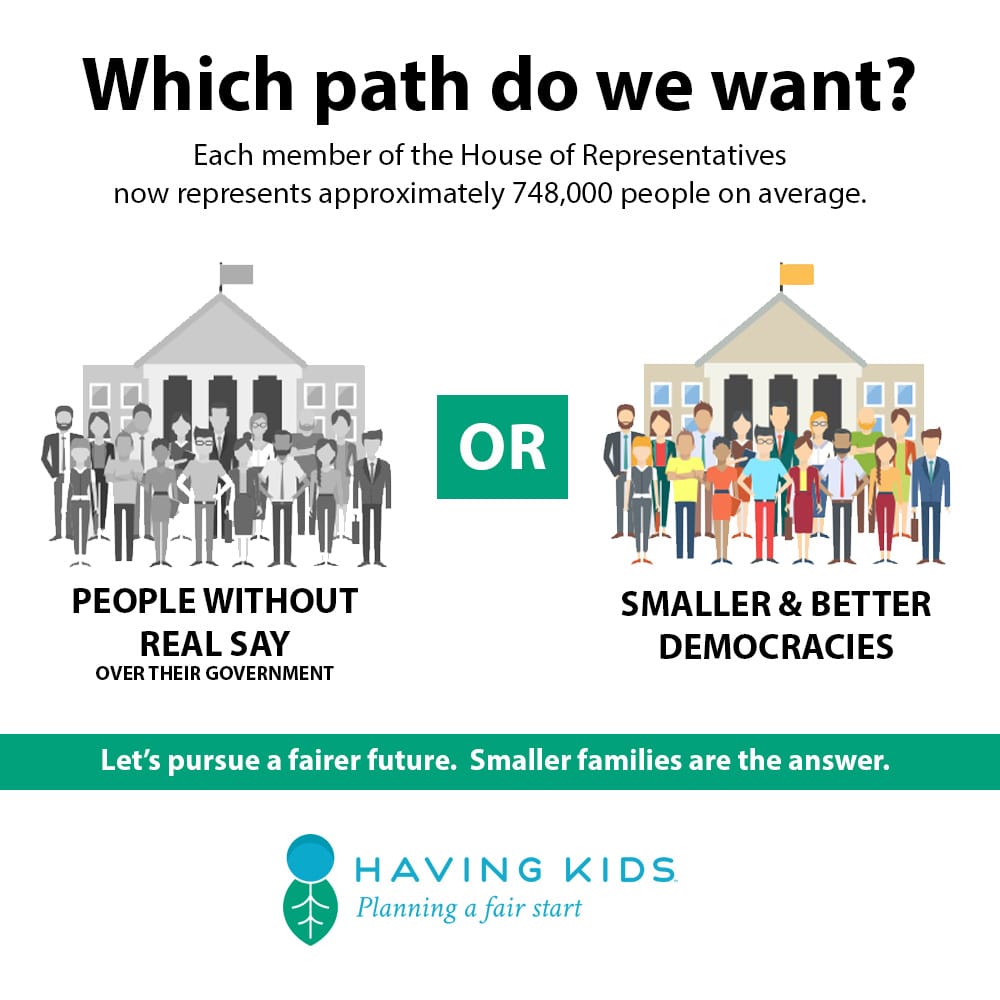
    An infographic compares two options: on the left, gray figures under “People without real say over their government,” and on the right, colorful families with “Smaller & better democracies.” Text promotes smaller families for fairer representation.

    The Truth and Resolution

    The most just and effective solution to the lie and its horrific impacts is to move the wealth and power that was made through growth – both public and private wealth and power – forward into future generations rather than continue to move it up to the top of the current structure, or what Nobel Laureate Steven Chu called the Ponzi scheme population pyramid.

    Just follow where the money that should have gone into investing in future children went by our ignoring their needs and opting for growth.

    The solution means taking and redistributing wealth, as the first and overriding human right, to incentivize family planning that ensures 1) fair starts and equal opportunities in life for all kids, 2) parental readiness instead of unsustainable population growth, and 3) more sustainable families for all that create truly bottom-up and inclusive democracies.

    Throughout the past century or so there has been more than enough wealth available to avoid the ecological and social crises we face today – had it been used to fund incentivized/entitlement-based family planning systems. As multiple peer-reviewed analyses show. taking that wealth now – by all means effective – as the first and overriding human right is the most just and effective way to solve the crises.

    Humane Families Becoming the Norm

    Dozens of groups are already beginning to move in the direction of just and sustainable families – and it looks like this. The kind of freedom these groups are building is true freedom – e.g., not the fake “I’m alone in the world” freedom to choose to wear or not wear a mask in the middle of a raging pandemic, but the intricate freedom represented by a fundamental state of affairs where any pandemics would have been substantially avoided or mitigated. This move – just and sustainable family planning – has the biggest long run impact by far. It also solves the dilemma at the heart of democracy, aligning 1) just or right outcomes with 2) popularity, by investing more in and developing each person. Through development we come together around truth. There are legitimate economies without democracies preceding them, which means our family policies must create citizens and not consumers. We can ensure that – the first condition of justice – by all means effective.
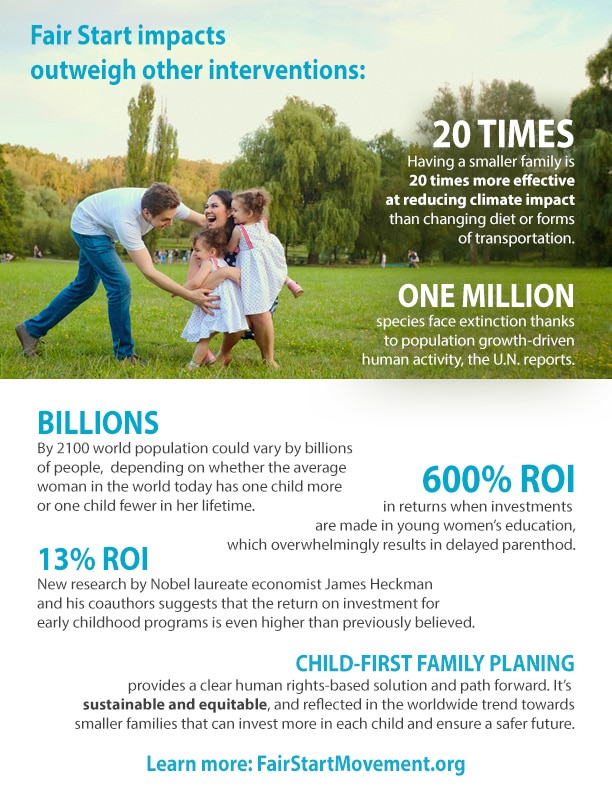
    Infographic about Fair Start family planning, highlighting climate impact, reduced extinction risks, 600% return on investment, findings by Nobel laureate Heckman, and the benefits of smaller families for sustainability.

    The facts :

    Don’t Get Scammed: Testing for Freedom

    There is a simple test for whether someone is part of this fix, and really accounting for freedom and justice, that involves looking at their language (much the way we look for binary gender mistakes in pronouns today). How? Ask anyone making claims about policies to define the people – the fundamental social organization – at the base of their claims, e. g. “tell me about the justifiable group that is making and implementing the policy you are discussing, in terms of basic values like the welfare, equity, ecological conditions, and effective roles in their democracy, both now and in the future,” and “tell me how they are consenting to the influence of others.” Ask them to unpack their claims in light of the open multiplier they are using, and the impact of that multiplier on child welfare, equity, nature and participatory democracy. Do they even have an intention for fundamental justice? How do they assess market costs and benefits without the primary baseline of a functional constitutional convention – or democracy – from which to do so?

    Most people will give answers that make it clear they never accounted for the actual people or these values – the values they will most certainly pursue in their own lives and that make us free and relatively self-determining. They will have simply planned to exploit the growth that comes from not having to think, the growth that created the crises. Ask them to do the numbers and admit the harm from the paradigm they accepted and likely benefitted from, the paradigm they planned to simply continue.
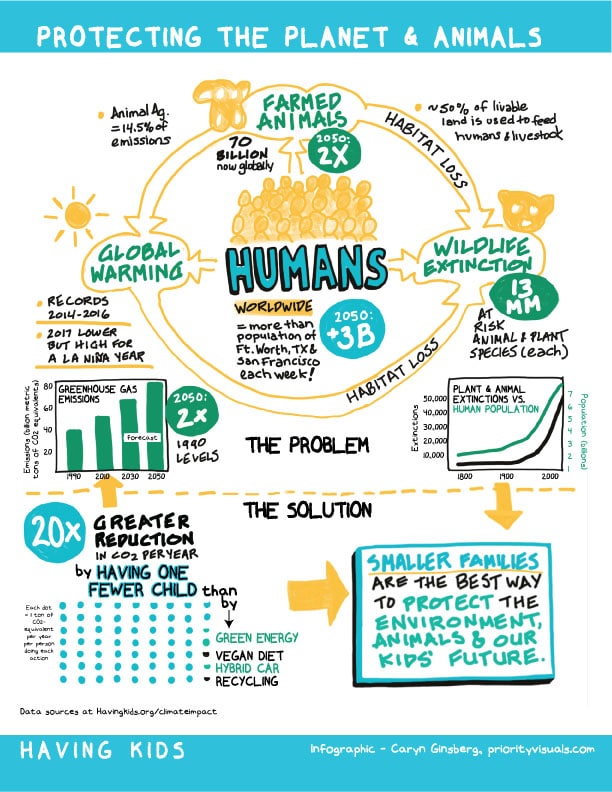
    Infographic illustrating the impact of human activity on the planet and animals, showing links between family size, resource use, global warming, extinction, and proposed solutions like smaller families and sustainable practices.

    Do the people in question act as though population growth is inverse to one’s capacity for self-determination, relative to nature or a zero-power baseline? Groups of relatively self-determining people are bordered by the absence of human power (nature, or the absence of being determined by others, which makes consent to power possible), accept loss of pure self-determination as they grow in number, but seek to divide and create new groups to maintain the relative power of each individual. This is the fundamental equation of free and equal people, one test for which will be the presence of fluid – not fixed – political borders defined by people and not arbitrary lines.

    This is not mere theory – this is what might be beginning to happen in places Catalan, against the will of autocrats like Donald Trump. This is what optimal world populations – using a base value of freedom – might begin to look like, and where people would matter politically rather than trying to matter by literally imitating figures in the advertising we were raised on as is the case in social media today. Free polities are formed through the rule that meets the basic test for all rules – one that is fair. And in the case of any truly first rule, it can’t be practical or even interpretive, but must be existential in nature. It must be a rule – God notwithstanding – about who we should be.
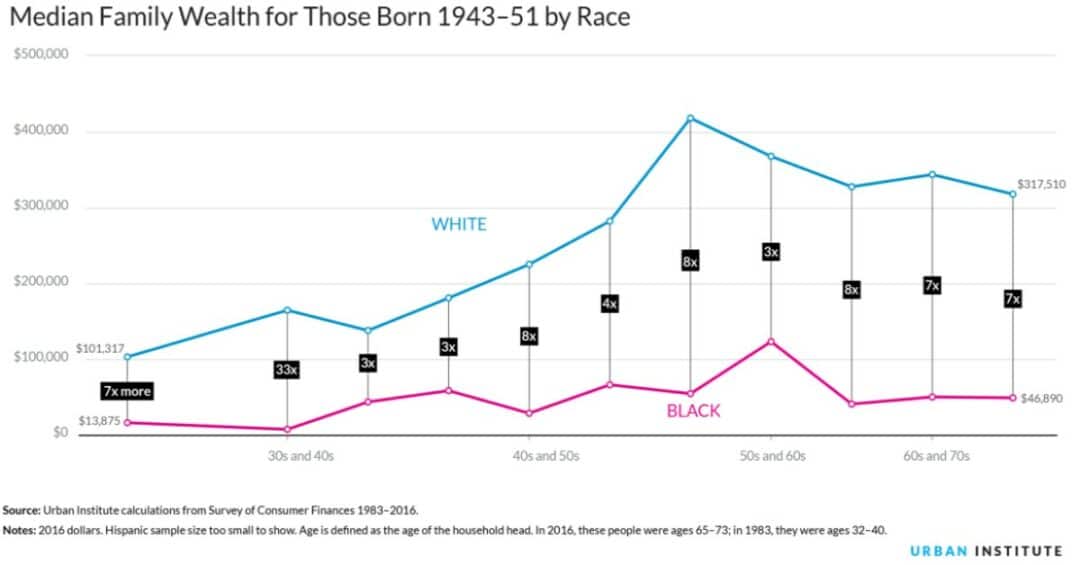
    A line graph compares median family wealth by age for White and Black Americans born 1943–51. White wealth is consistently much higher, peaking at 7,500 in their 60s, while Black wealth peaks at ,800.

    In other words, do the people making policy claims act as though people matter politically, and do they seek to empower the majority – future generations (which make the idea of population more normative than descriptive) – through family planning reforms that limit and decentralize (or reconstitute) the power each of us have over one another such that we reach qualitative optimal populations? If it takes a village to raise kids, it takes a village to plan for them – for the phase of entry into society, from their creation to their emancipation. If we want relatively autonomous families, where vulnerable entities like the poor, women, and children share in the autonomy, we have to plan for and create them as such and not pretend autonomy will magically appear.

    As a practical matter, do the claimants support a discourse where every child’s right to an ecosocial Fair Start in life overrides property rights? To constitute – politically – is to transfer power in a way that ensures the capacity for relative self-determination. It’s about making power flow bottom up, rather than top down and based on coercion, as it does today. Are the claimants willing to make that transfer of power, a sort of “first tax” that pays for existential justice? If they are not, they are putting property and things over people, rejecting the relative self-determination of peoples, and are choosing to remain part of fundamentally unjust systems. In other words, are they part of – or opposed to – constituting just societies comprised of democracies where voices of the people are heard and matter? If not, the people in question are preconstitutional, or “precons.” They cannot account for any form of justice because they cannot account for how people – the majority – will fit into those forms. They cannot account for “constituting” or the physical limitation and decentralization of power, regardless of its form. To the extent they are intending parents they would be unwilling to empower their children and may not be ready to parent. In other words, hey are insufficiently other-regarding to constitute just societies.

    Urge them to change course and help us liberate the majority of entities – those who will live in the future (both human and nonhuman) – by supporting our action before the UN Human Rights Council. We begin legitimacy by through the physical conditions that make social obligations genuinely reflective of the people subject to them.
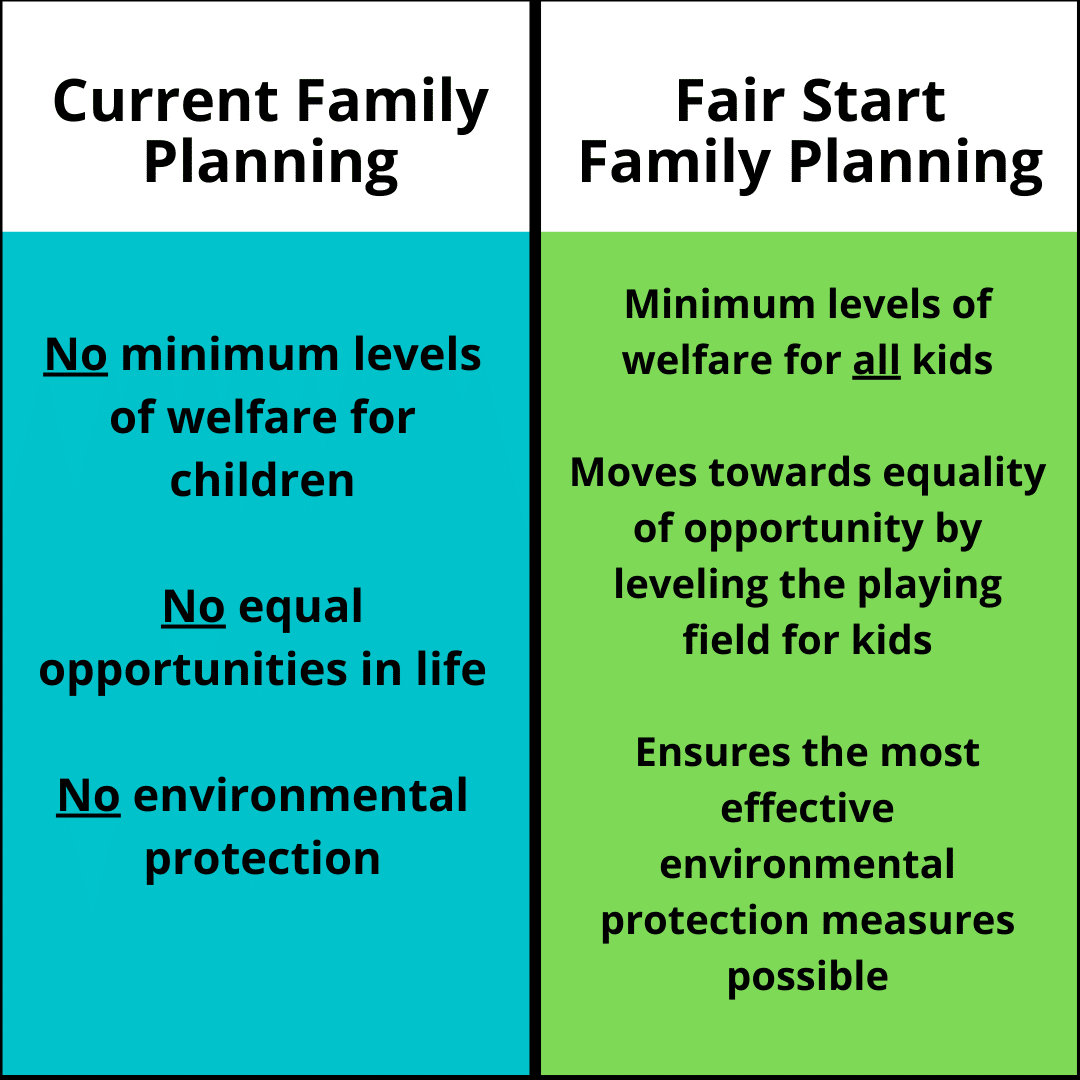
    A comparison chart of Current Family Planning vs. Fair Start Family Planning. The left side lists negatives of current planning; the right side highlights positive outcomes of fair start planning for welfare, equality, and environmental protection.

    Take action:

    We can use the values that free us to physically define our species. Click here for dozens of ways to take action to support true freedom for the majority, starting by engaging in the direct action discourse that puts people over property, and which helps us act against concentrations of wealth and power in ways the liberate and decolonize the future. Putting human rights, like Fair Start, before governmental processes will feel infeasible because we have lived in a world filed with people who did not get a fair start in life. We can change that.

    ——————

    Carter is author of Justice as a Fair Start in Life, works to resolve the constitutive fallacy, or the mistake of attempting to practice any form of freedom and/or justice without first ensuring the same in the dynamic creation – or procreation – of human power relations. Simply put, those that do not promote procreative justice can never orient from a just place or prioritize the needs of the future majoirty, while many have begun to move in the direction of actually doing so and physically constituting – via just power relations – free and equal societies.

    Doing so means treating every child’s right to an ecosocial Fair Start in life the first and overriding human right or grundnorm, a claim that was recently recommended reading by Larry Solum, a leading constitutional scholar at the University of Virginia, and the subject of a new legal action seeking priority reparations before the UNHRC. 

    Carter began his career as an Honors Program appointee to the U.S. Department of Justice. He later served as a legal adviser to the U.S. Department of Homeland Security, in the national security law division. He wrote his thesis reformulating the right to have children under Jeremy Waldron, his extensive academic work on family planning has been published by Yale, Duke, and Northwestern Universities, as well as in peer-reviewed pieces, and he has served on the Steering Committee of the Population Ethics and Policy Research Project and was a Visiting Scholar at the Uehiro Center, both at the University of Oxford. He has taught at several law schools in the U.S., served as a peer reviewer for the journal Bioethics, and most recently managed an animal protection strategic impact litigation program, with annual resources in excess of five million dollars. As early as 2007 his work provided a sufficient human rights basis for policy changes that could have significantly mitigated the climate, inequity and other crises we now face, and with the Fair Start Movement, Carter now works to hold those blocking the reforms – including those creating noise through self-serving ineffective reforms – responsible for the harm they caused.
  • Inside Climate News Speaks Truth to Power

    Inside Climate News Speaks Truth to Power

    Kudos to Inside Climate News for covering a topic many are hiding from: The fact that many benefitted from a clearly unsustainable family planning system that hurt future generations, and how to take wealth from the top to now compensate them.

    Read the full article here.

    The solution? The United Nations should shift from growth-based family policies to #FairStart family planning. Yes, it’s that simple, and we are urging the United Nations Human Rights Council to take action.

    A comparison chart of Current Family Planning vs. Fair Start Family Planning. The left side lists negatives of current planning; the right side highlights positive outcomes of fair start planning for welfare, equality, and environmental protection.

    These are the facts:


    Donate

    A group of logos from various organizations appears below the headline: International organizations urge COP26 to call for sustainable family planning in face of climate crisis.
  • NEW COALITION OF ORGANIZATIONS CALLS FOR SUSTAINABLE FAMILY PLANNING IN FACE OF CLIMATE CRISIS

    NEW COALITION OF ORGANIZATIONS CALLS FOR SUSTAINABLE FAMILY PLANNING IN FACE OF CLIMATE CRISIS

    National organizations urge COP26 leaders to protect most vulnerable

    San Francisco, CA – Dozens of leading NGOs are calling on the President and Delegates of the COP26 in this open letter to take an urgent and clear public position recommending just and sustainable family planning as the most effective solution to address the climate crisis, and rising global inequality, including gender inequity.

    The global community has failed to inform and support a universal effort towards just and sustainable family planning, which:

    • Is human-rights centered
    • Ensures sustainable and equitable resources for greater investment in each child
    • Enables communities and governments to protect children and future generations while upholding reproductive rights

    On the contrary, pressures to increase births, or to obstruct family planning programs, are driving our biggest crises and putting the health, safety, and welfare of current and future generations in peril. Unsustainable population growth, a documented threat multiplier, is contributing to catastrophic climate change, unprecedented flooding, pandemics, ecosystem destruction, groundwater depletion, mass extinctions, and environmental degradation. Worsening inequality, in large part driven by our growing population, is also a grave threat to democracy and political stability across the globe.

    Better family planning is the best way to reduce inequality. Other interventions alone are simply too late. 

    Nandita Bajaj, Executive Director of Population Balance says, “Our growth-driven policies are not only a cause of immense suffering for marginalized human and ecological communities, present and future, but they are premised upon oppressive power structures. Not only are reproductive, intergenerational, and ecological justice under attack, our current unsustainable growth-centred family planning policies are threatening all life on earth. We collectively need to acknowledge and address the urgency of this predicament.”

    Fair Start Movement is a 501(c)3 nonprofit organization dedicated to reforming family planning by replacing growth-centered family planning models with the human rights-based and child-first Fair Start model. 

    Population Balance is a 501(c) 3 nonprofit organization that provides education and solutions to address the impacts of human overpopulation and overconsumption on the planet, people, and animals.

    Several hands of different skin tones are stacked together. Overlaid text reads, The most powerful social justice is a fair start in life. Join the coalition. The Fair Start Movement logo appears at the bottom.
  • Worried About Having Children in the Climate Crisis? Your Human Rights Were Violated. Fight Back. 

    Worried About Having Children in the Climate Crisis? Your Human Rights Were Violated. Fight Back. 

    The UN has been obligated to interpret the promise of Article 16 of the Universal Declaration of Human Rights, that of a right “to found a family,” in a way that would protect the right for all generations equally. This includes those in the middle of the Twentieth Century, and those in 2050 for example, equally. It should have also interpreted Article 16 consistent with other human rights obligations, like the Children’s Rights Convention, and well as the Sustainable Development Goals.

    Mountains of evidence show young persons are not able to exercise their right equally because of many population-driven threats to the children they would have, including significant birth impacts. In other words, the UN failed to interpret and administer Article 16 correctly.

    In fact it caved to member state pressures to maintain large and unsustainable families and population growth rates in the Twentieth century, and violated future generations’ rights to safely and sustainably found their families under Article 16. Because men – under enabling from the UN – pushed women to have large families in the past, younger generations today have to worry about having even one child, given the ecological future that child faces. Moreover, women who were pushed to have children under the growth paradigm enabled by the UN’s modeling – and have children despite the risks of Covid-19 – are dying in massively disproportionate numbers. We need to hold those who enabled this accountable.

    Read the draft process Fair Start is developing to seek justice before the United Nations Human Rights Council.

    The best way to compensate young people and future generations for this violation of their rights is by properly interpreting Article 16 via Fair Start modeling, which encourages birth equity-level transfers of resources as Fair Start family planning incentives/entitlements. This is forward-facing climate reparations at their best. Given the special foundational nature of Article 16, and when properly interpreted its peremptory status as the grundnorm overriding even state-created property rights, younger persons have the right to take the Fair Start resources they need and we will encourage them to do, including those that will ensure future children’s enjoyment of their rights under the Children’s Rights Convention. 

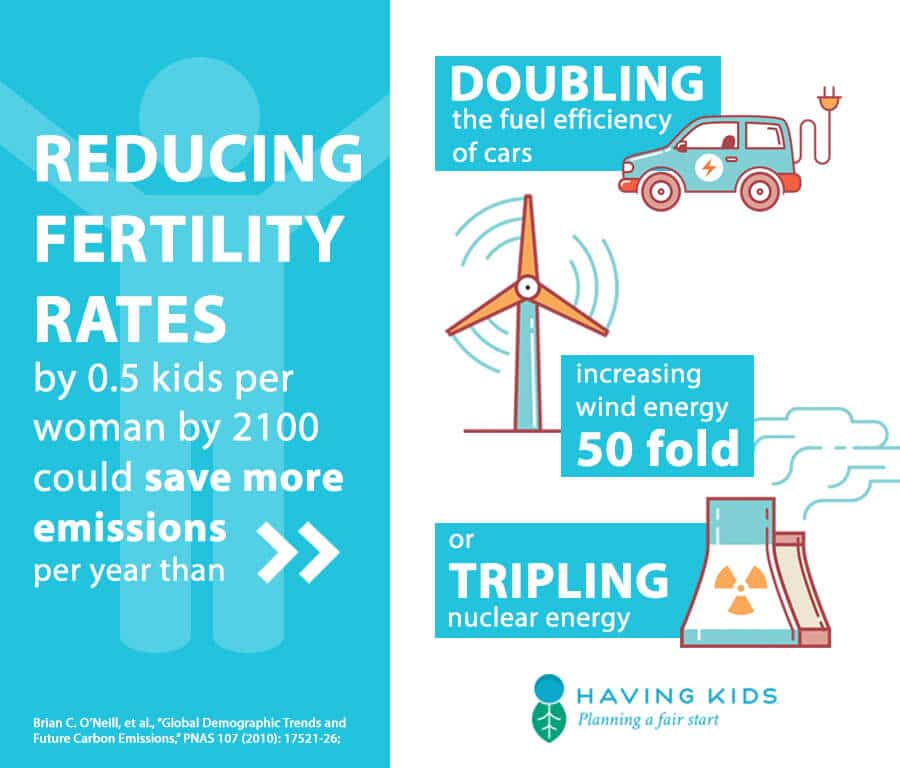
    Infographic showing ways to reduce carbon emissions: reducing fertility rates, doubling car fuel efficiency, increasing wind energy 50-fold, and tripling nuclear energy. Includes icons of a car, windmill, and nuclear symbol.

    Activists should start by engaging the relatively wealthy children of UN officials, in this special  form of lawful and peaceful constitutional dialogue and social change, geared around our just desert to family planning incentives/entitlements. There is nothing more just than targeting an extant minority for the benefit of the countless future majority. This process will build, targeting the concentrations of wealth and power – both public and private – most responsible for the climate and other crises we face today, including those that most benefited from past, inequitable and unsustainable interpretations of Article 16.

    Take action: Urge United Nations Secretary General Antonio Guterres @antonioguterres to speak out and act to protect all generations’ right to found a family.

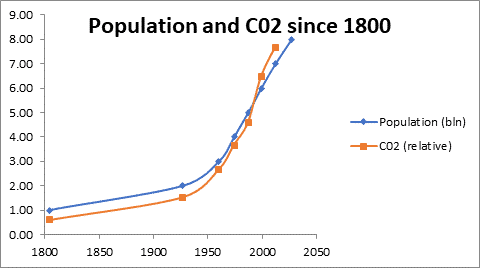
    Line graph showing global population (in billions) and CO2 (relative) from 1800 to 2050. Both lines rise slowly at first, then sharply increase around 1950, with population slightly above CO2 in recent decades.

  • How to See and Fix the Fundamental Mistake at the Heart of Our Climate, Inequality and Other Crises

    How to See and Fix the Fundamental Mistake at the Heart of Our Climate, Inequality and Other Crises

    There is a common mistake in all of our language and thinking that drives many of the crises we face today. Our brains have trouble perceiving how time and space interact, and this usually leads to bad long-term decision making. For example, we know promoting a universal norm of sustainable families is one of the best ways to mitigate the climate crisis, but most policies around the world today are pushing in the opposite direction, incentivizing women to have more children.

    The same can be said for the gap between rich and poor, which is inherited from the injustices of the past, and the policies we choose to address the gap.

    A line graph compares median family wealth by age for White and Black Americans born 1943–51. White wealth is consistently much higher, peaking at 7,500 in their 60s, while Black wealth peaks at ,800.

    This cognitive dissonance creates a special problem when it comes to systems of justice and freedom, normally things that we first deal with through laws, nations’ constitutions, and international human rights conventions. This is the problem: We tend to think of constitutions, or other fundamental and dominant systems of norms, statically. We think of them as fixed things. That is incorrect. The legitimacy of systems of governance derives from people, and people are not static. They are constantly being born and dying. They are dynamic. And most people, all of whom matter, will live in the future. What lies at the base of things like justice and freedom – the dynamic “we” in “We the People” – is more fluid than our brains usually perceive.

    It is thus more accurate and true to our values of deriving legitimate governance from the people themselves (per a recent peer-reviewed article), to say that we are constantly constituting as we create new persons, not constituted by god-like founders in the past. We have to account for justice and freedom in the fundamental and ongoing formation of power relations, in the act of having children and ensuring their capacity to consent to the power of others. We thus “constitute” by accounting for the key stages in our development, early childhood and the creation of things like empathy, and the collective impact of that on our ability to socially self-determine. This is how we truly come together, or constitute, as free and equal people. We surpass our constant confusion about what it means to be free by seeing that such a state of being first lies in who we are – the fundamental power relations formed between us as we are created – before freedom can emerge, or not, in what we do.

    Making that change, using a verb, frees us from what might be called the constitutive fallacy, an erroneous deference to power structures that oppresses us – like property entitlements that prevent equal opportunities in life for all. Or treating the planning of our families – the creation of children – as “nobody else’s business.” That sense of privacy was not meant to protect would-be parents or children, but was instead designed for concentrations of wealth and power to evade collective obligations to give kids a fair start in life via things like family planning incentives/entitlements pegged to literal birth equity.

    How does the verb form free us? If we are dynamically constituting, then that process – limiting and decentralizing power to ensure future generations are free – becomes the dominant norm or ubernorm. We have to first and constantly make a free “We the People.” It precedes and overrides other norms. If we value justice and freedom (or self-determination over top-down systems of influences outside of ourselves like coercion or even incentives, which we can think of as simple sticks and carrots), we have to start from the premise that governance derives its legitimacy – its compelling oughtness – from the norm which through our creation ensures consensual governance.

    We have to create future generations in ways that assure they are relatively self-determining, part of a system of laws that reflects their will, and as such free from all forms of power to which they cannot consent.

    An infographic compares two options: on the left, gray figures under “People without real say over their government,” and on the right, colorful families with “Smaller & better democracies.” Text promotes smaller families for fairer representation.

    Using the verb constituting may feel nebulous, leaving us lost in time and space without the familiar static concept of a written constitution, sitting under glass in some far-away place, or militarily defended lines on a globe that define some amorphous “we.” There is a simple way to fix this. If we are constituting or in motion, we will necessarily be focused on where we are going, prioritizing a universal and child-centric (as opposed to parent-centric) system for planning our families that ensures justice and freedom for the majority (those that will live in the future) of persons. We will be sufficiently other-regarding – and free enough – to physically constitute just communities.

    In the Fair Start Movement a collective of diverse people are discussing what it means to physically constitute those communities, using the simple and most basic value parameters of 1) minimum levels of welfare approaching birth equity for all, 2) an effective voice for everyone in more participatory democracies, and 3) restoration of nature, or the nonhuman world, which we can also think of as nonpolity, or the original positions/states of nature that undergird all theories of freedom. These values, just relations between people, and freedom, are simply inseparable from who we are and should be. And who we are and should be first depends on our creation. It’s about people, not population, and a physicalizing of justice through an existential norm that would include all other forms of traditional justice, e.g. distributive, environmental, intergenerational, procedural, retributive. We cannot be free if we carry pre-ordained hierarchies into our creation.

    In other words, if we don’t start from a just people policy that gives all kids an ecosocial Fair Start in life, we can never proceed from a just position. We can never really be free. Our language and vision for the future will not orient from any of the values that comprise freedom.

    A four-panel meme showing brain images that progressively light up as the captions advance: from denying global warming, to recognizing overconsumption, to choosing a smaller family, to advocating for future children’s needs.

    As we move to correct the fallacy in our thinking, we will find ourselves divided between free people, and those who are entrenched in preconstituting modes (whom we might call “precons”), often because they benefit at cost to others from those modes. The divide, at this first and uniquely critical border of human power, is binary: We either support sufficiently just beginnings and are sufficiently other-regarding to constitute, or not. We either constitute/maintain polities and their citizenry in the position of being able to effectively participate in a constitutional convention, and have the capacity to consent to others’ power, or we give up the pretense of being free and equal people.

    How can we identify precons? While forthcoming federal policies requiring disclosures regarding the role large companies play in the climate and other crises will help out these people, we can force the conversation with a few questions: How do they account for freedom and justice if not in the ongoing formation of power relations, as we have children? How could they care about children without caring about the conditions in which they are born? Is one’s birth position really a matter of fortune, or the result of things we can control? Is procreation more self, or other, determining? How can we consent to others’ power over us without accounting for the fundamental formation of power relations? If we value welfare, equity, democracy, or nature, wouldn’t we want to reflect those values in the norms that create us? Won’t we want to avoid relegating untold numbers of children to an ecologically degraded future with no guaranteed levels of resource or resilience?

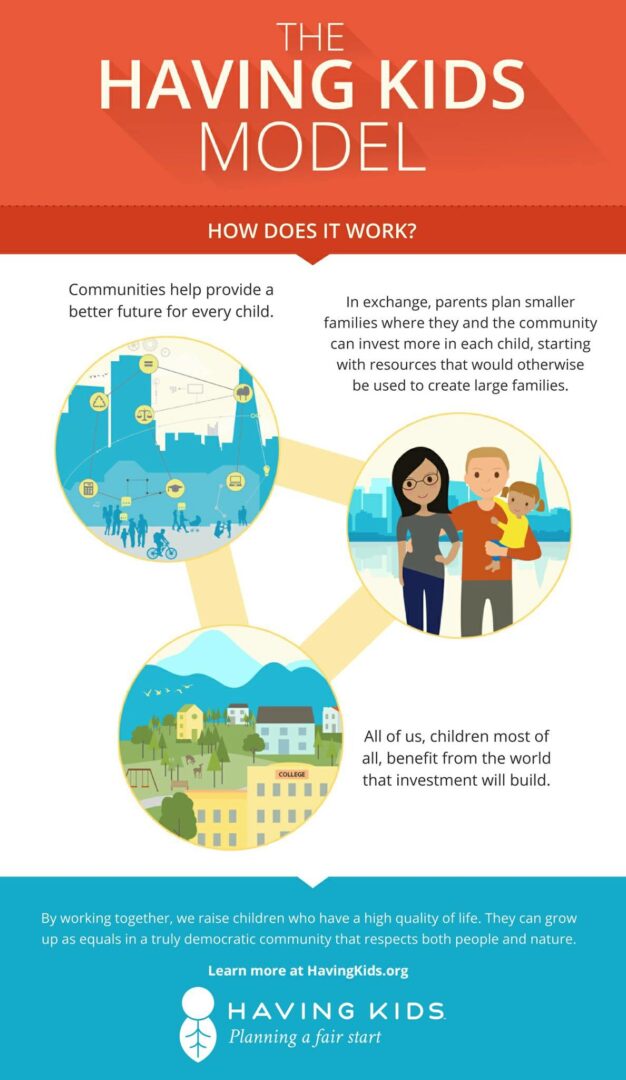
    Infographic explaining the Having Kids Model: communities invest in children’s futures, parents plan smaller families, and all children benefit from increased resources and a supportive environment. Includes illustrations and text.

    TAKE ACTION:

    These facts are indisputable: 1) Many benefitted from the mistakes described above by placing costs – ecological and social – on others. They did so in violation of multiple universal human rights that would have otherwise allowed us to constitute as free and equal people. And they did so in part by hiding the impact of the unjust family planning policies from which they were benefitting, instead using distracting downstream policies to prevent effective upstream reforms. 2) Most justly and effectively compensating future generations, who should be treated as a majority, for those violations requires targeting those precons most responsible, and those precons who benefitted the most, from blocking the process of constituting. They stand between us and legitimate systems of governance. 3) We right the fundamental wrong by taking and using portions of their concentrated power and wealth, measured against the relevant fundamental baseline, to constitute free and equal groups of future people via the effective vehicle of Fair Start incentives/entitlements.

    Free people will demand these resources, and be opposed by precons, who should be treated as the fundamental threat to our freedom.

    In other words these entities, like Exxon, should pay for the costs they externalized on others. And they must do so by complying with the first and overriding human right – Fair Start. We can spread this modeling, and this simple discourse: “Part of your wealth is my and my future child’s family planning entitlement and incentive.” If justice is meant to protect the most vulnerable, and it is, then it starts by protecting future persons, including nonhumans, which are the most vulnerable entities in the moral universe.


  • Fair Start Movement Files Amicus Brief Urging Court to Hear Climate Change Lawsuit

    Fair Start Movement Files Amicus Brief Urging Court to Hear Climate Change Lawsuit

    Fair Start joins Zero Hour, actor Mark Ruffalo, and dozens of other groups filing amicus brief in support of lawsuit arguing for a constitutional right to nature, which would prompt federal climate action 

    The Fair Start Movement has joined dozens of organizations together to file an amicus curiae (“friend of the court”) brief in support of a groundbreaking lawsuit brought by the Animal Legal Defense Fund and Seeding Sovereignty, a project of Earth Island Institute, that aims to compel federal government action on climate change based on a constitutional right to nature and wilderness. There is no freedom without nature. It sets the spectrum for autonomy from other persons, the buffer between us and their impacts upon us. The climate crisis is the erosion of the that buffer.

    The case is currently pending before the Ninth Circuit Court of Appeals. The case is based simply on the plain meaning of the liberty right “to be let alone,” a constitutional right promised by the Supreme Court and enforced in a variety of contexts, but none as important as this case. While the government routinely protects our right to be let alone in terms of being free from surveillance or intrusion into our homes, it is this version of the right – protecting the ecological baseline of nature in which we can be free from others and thrive – that matters most. 

    Cat Hughey, Director at Fair Start, had this to say: 

    “The sacredness of all human life and the more than human life culminates at a moment that we hold space and protections for all equally. The Fair Start Movement holds that the full-fledged experience of humanity exists when we embark on fighting the climate and ecological crisis by ensuring that every child can restore nature and value its health. By environing wilderness and its right, we in turn protect our future generations’ ability to exercise freedom, democracy and, most importantly, keep at bay ecological and social catastrophe.”

    The right to be let alone, applied in this case to require the federal government to take the greatest measures possible to stop the climate crisis and restore nature, would ensure our children enjoy the natural world generations past have enjoyed. The Constitution guarantees that. 

    Nature, like equity and democracy, is part of every child’s right to an ecosocial Fair Start in life, and we have a right to ensure that right by all means effective. No government that fails to ensure that right is legitimate. The Fair Start Movement knows future parents will do what it takes to protect their children’s right to an ecosocial #fairstart in life. 

    What’s next? The Fair Start Movement intends to file federal litigation challenging a state abortion ban not as a violation of personal privacy, but because such bans interfere with the first and most fundamental human right: Every child’s right to a Fair Start in life.

    For more information, visit fairstartmovement.org 

    ### 

  • Growth Economics Created the Climate Crisis. Why Are Politicians and Media Pushing Women to Have Kids? Ask NYT’s Editor

    Growth Economics Created the Climate Crisis. Why Are Politicians and Media Pushing Women to Have Kids? Ask NYT’s Editor

    Fact: Falling fertility rates and eventual population decline will have the most beneficial long-run impact on the climate and other ecological crises. And yet influential media like the New York Times, and politicians pushed by businesses that rely on unsustainable growth, continue to urge women to have more kids. That is what even progressive Joe Biden is trying to do with his Ivanka Trump-inspired increased child tax credits.

    For demographers and other population experts population decline is the expected and desired outcome of decades of family planning interventions meant to end and reverse unsustainable population growth. Why the media alarmism then? 

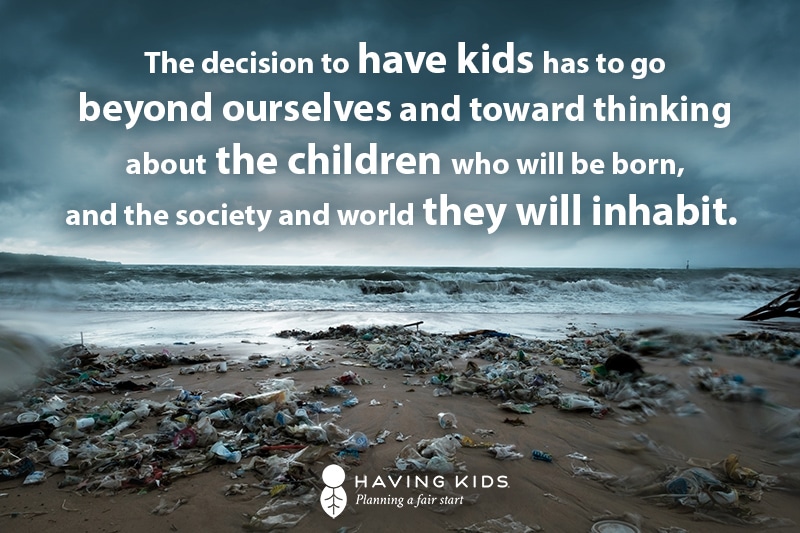
    A beach littered with plastic trash under a cloudy sky. Overlaid text reads: The decision to have kids has to go beyond ourselves and toward thinking about the children who will be born, and the society and world they will inhabit.

    Between the time those interventions were begun and today, neoliberalism and unsustainable growth-based economics that externalizes costs – like the climate crisis and birth inequity, has become the zeitgeist. The Times itself wrote about the same. But fanciful ideologies aside, growth remains unsustainable. The more interesting question is how the arc of population growth became so high to initiate the climate crisis, and who among those who have benefitted from that mistake will pay to compensate the future generations who certainly will be harmed – through no fault of their own.

    Justice begins with an ecosocial #FairStart in life.

    TAKE ACTION: Engage and urge the Times editor and his family to address the #FairStart question, and how we will redistribute power – including influential media platforms – to compensate future generations.

    A circular infographic titled “Fertility Delay Incentives to Planning” shows a leaf in the center with four benefits: Delayed Parenthood, Better Family Planning, Guaranteed Minimum Income, and Equal Opportunity & Education for all kids.
  • What Fundamentally Drives Pandemics and the Climate Crisis? Misunderstanding Freedom

    What Fundamentally Drives Pandemics and the Climate Crisis? Misunderstanding Freedom

    [et_pb_section admin_label=”section”] [et_pb_row admin_label=”row”] [et_pb_column type=”4_4″][et_pb_text admin_label=”Text”]

    Chaos Enabled by Irresponsible Behavior Is the Antithesis of Freedom

    What do pandemics like Covid-19, and ecocidal things like the climate crisis, have to do with the idea of human freedom? For some, these events will be perceived as opportunities for governments to limit human freedom. For others, they will seem like limitations on freedom, along with governments’ failure to prevent them. Whatever the view, these events are largely driven by human behavior, which in turn is driven by values and norms, like freedom. How we further these events, and react to them, fundamentally derives in many ways from our perception of freedom and how it limits or justifies behavior. Dealing with these crises could then fundamentally start with examining the concept. Below are three particular perspectives, centered on isolation, inclusion, and creation, respectively.

    A common view of freedom is the right to do whatever one wishes, absent some obvious and unjustifiable harm to others. The vision here is that one is and should be autonomous from other people, a vision captured in statements we see all the time: A gym owner in Arizona who refuses to require masks or close his business despite Covid-19, landowners who refuse to comply with the endangered species act, companies in trade associations that push back against consumer regulations, or coalitions fighting regulations that would limit climate emissions. The entire concept proceeds from intentional myopia, or the decision to view oneself in isolation from others, in time and space. It is the maintaining of willful ignorance of how people came to occupy different positions in society, the subtlety of harm, and the importance of things beyond harm – like obtaining the considered consent of others we influence. That myopia makes these claims of freedom easy to contest, but they endure to the extent our political systems position people so that they are – in an antisocial way – unwilling or unable to examine them. Collective problems, like the climate crisis and Covid 19, are primarily seen as presenting a risk that the collective will have a new opportunity to interfere with the will of individuals.

    A beach littered with plastic trash under a cloudy sky. Overlaid text reads: The decision to have kids has to go beyond ourselves and toward thinking about the children who will be born, and the society and world they will inhabit.

    A second and less common view of freedom evades these problems we find in the first view. It takes many forms, but the general idea is to more comprehensively account for one’s position in the collective, and ensure a shared arrangement that allows one to do what one wishes as part of a system that simultaneously allows others to do the same. The goal is to not prevent each other from self-determination in the process. The philosophers: Joseph Raz, in The Morality of Freedom, or Philip Pettit, in a recent Ted Talk, exemplify this more comprehensive view. It cannot easily be picked apart by examining how the autonomy of the individual relates to the collective – they have accounted for these complex and relevant connections. Under this view, both the climate crisis and Covid-19 present direct risks to the autonomy or freedom of all, as well as those in the future. It is consistent with the objective value of people getting to do what they want that we require all to change their behavior in response to these events. This vision is more complex and accurate – but beyond the capacity or willingness of many to grasp.

    But the truly myopic, and even the more comprehensive visions of freedom, aside, there is a third view of freedom that involves something unique.  Is there something odd about the two visions of freedom just discussed? There is no account of how the people in them came to be. It’s as if they dropped from the sky. But if freedom entails freedom from other people and their unwanted influence, as well as the freedom to do things – like choose among the valuable options in life enabled by particular types of social organization – don’t we have to first account for the creation of people? Don’t we have to assure all some minimum levels of welfare or even equity of opportunity at birth, some meaningful role in controlling their governance, and political entities physically defined by nature so that we can be free from others? In other words – we first need a norm that accounts for the creation of free people.

    In this third view, freedom is more dynamic and physical, a norm that through creation, or procreation, determines the quantity, constitutive qualities (persons sufficiently social or empathetic enough to maintain a social contract), and early positioning of each to maximize self-determination. This is not as abstract as it seems. Just reverse the current norm being constantly pushed by many in the media that women should have more children – full stop – as a means of reversing America’s dreaded economic baby bust. In the third view, using those future children to ensure economic growth would be the opposite of freedom, bringing children into the world with no minimum levels of welfare, and degrading equity, nature, and the role each person plays in their democracy. And it does those things in violation of our current standards, or laws, that try – ineffectively and downstream – to pull children out of sub-threshold conditions, redistribute wealth among families, protect nature, and enfranchise each person with a meaningful vote.

    A hazy, polluted city skyline with the quote: Explain to future generations that it was good for the economy when they can’t farm the land, breathe the air, or drink the water. - Unknown. Having Kids logo at bottom.

    This third view of freedom – which we might call a fair start, is centered on the act of creating other people to ensure they live as free and equal persons. It is not exclusive of the first two but rather precedes and enables them, and would be furthered through a very specific process of reforming family planning and population policies – specifically treating the act of procreation as more other-determining for the child than self-determining for the parents. It asks: How can we be inclusive without first accounting for the creation of the people to be included? The impact of these family planning reforms would exponentially surpass many of the downstream reforms underway to alleviate child poverty, ensure equity, restore democracy, and protect our environment. So would the long-term impact on the climate crisis, and the impact and risks of pandemics.

    Lastly, this third view has a unique feature: Because it always proceeds other behaviors, in that we are before we do, it overrides conflicting interests. We may do whatever it takes to ensure all children a fair start in life or to continuously recreate the people who actually – or physically – comprise free societies. 

    The crises we face today arise from and depend on values, like freedom. Starting at the source of the problem entails examining what we mean when we use this word, and what it means for others.

    [/et_pb_text][/et_pb_column] [/et_pb_row] [/et_pb_section]
  • Vox Founder Pushing Population Growth Made the Climate Crisis Worse. Hold Him Accountable.

    Vox Founder Pushing Population Growth Made the Climate Crisis Worse. Hold Him Accountable.

    The Financial Times just published an article detailing the massive impact policies that promote smaller families – for all – have on the climate crisis. Nothing comes close.

    And yet people like Matthew Yglesias and the media outlet Vox continue to push women to have kids. Many have said that we should punish climate change deniers for blocking policy reforms that could have mitigated the crisis. But all climate emission flow downstream from the increase in demand population growth creates. It is the fundamental driver. Aren’t the people actually making the crisis worse, usually to grow their investments, just as bad as the deniers? Did Ygelsias pushing women to have kids actually have an impact? The proposals to change federal child tax and care subsidy policy to encourage population growth that followed his advice suggest it did.

    Let’s hold him and others, like Lee Raymond, accountable. We have a right to take the resources of wealthy people like Lee and Matthew who profited from poor and unsustainable family planning but never paid that costs that growth imposed on the environment, animals, women, and children. Why? Because every child’s right to an ecosocial Fair Start is the first human right, and it precedes and overrides any other obligation, including property rights.

    It’s time to pay up. Those that really profited owe future generations – more than most.

    What is Fair Start? It’s about people, not population. It’s about shared values and thinking qualitatively about the future, not using poor and unsustainable family planning to grow economies. Read the Allegory of the River, and why Having Kids talks about constituting democratic communities instead of framing our work around the concept of population, to understand more. Let’s make family planning truly inclusive, and geared around creating democratic communities where everyone has a voice. 

    It’s simple: Fair Start family planning means smaller families sharing resources to invest more in every child. For some, the closest analog for this new model would be responsible family planning incentives. But Fair Start resources are actually entitlements held by future children, and funded through non-traditional means. Those opposed to remodeling favor our current system of unsustainable families, unearned privileges, and undemocratic influence, over giving kids a fair start in life.

    In a previous blog post, Having Kids argued that his approach — like many others who see babies as economic inputs to be exploited — was actually compelling evidence of the fundamentally unjust nature of our system.

    All kids have a fundamental human right, ecologically and socially, to a #fairstart in life. It’s the first human right. Help us secure it against those who threaten our future.

    A comparison chart of Current Family Planning vs. Fair Start Family Planning. The former lacks welfare, equality, and environmental protection, while the latter ensures welfare, equal opportunity, and environmental protection for all kids.

    Groups and individuals from around the world are signing on to an effort to change the old model that focuses on what parents want toward a new model that focuses on what all kids need. The new model, called Fair Start family planning, is the beginning of real social justice. The reform can begin with the United Nations secretary general simply acknowledging the need for change.

    Sign on, and urge any organization you support or can influence — nonprofit or for-profit — to also sign on. Sign here, or contact us at info@fairstartmovement.org for more information.