Professor Jose Barrientos-Rastrojo is a brilliant ethicist and professor at the University of Seville (Spain).
He had this to say about the Fair Start movement:
Hace unos días, me entrevisté con Carter Dillard, un abogado estadounidense con avezadas ideas para enfrentar algunas de las problemáticas que ya está viviendo nuestra infancia y juventud como el cambio climático o injusticias económicas provocadas por la acumulación de capital. Su propuesta implica la devolución de los beneficios obtenidos por el capital a aquellos que han sido desplazados y arrinconados en la pobreza. El movimiento Fair Start promueve un cambio y una devolución por una cuestión de justicia social en medio de esta apropiación indebida. Sin dudar, sus propuestas merecen, cuanto menos, ser reflexionadas.
And in English:
A few days ago, I interviewed Carter Dillard, an American lawyer with seasoned ideas to confront some of the problems that our childhood and youth are already experiencing, such as climate change or economic injustices caused by the accumulation of capital.His proposal involves returning the benefits obtained by capital to those who have been displaced and cornered in poverty.The Fair Start movement promotes change and giving back as a matter of social justice in the midst of this misappropriation.Without a doubt, his proposals deserve, at the very least, to be reflected upon.
Singer fails because he does not push for what true animal liberation, the title of his famous book, requires: Restoration of the nonhuman world through family planning entitlements. Had he done so during the climate-crucial decades in which could have, he might have helped mitigate the climate crisis, the greatest threat to nonhumans.
His mistake is what we might call the constitutive fallacy. The fallacy means Singer never accounts for the actual relations between humans and nonhumans (a random person abusing their companion animal, growth driving extinction, utility-based consumerism demeaning the nonhuman world more generally, etc.) because he never accounts for the creation of those relations.
But the fallacy does something more insidious. It robs us of our freedom, or relative self-determination.
When we create people, we are also creating the fundamental power relations between them, and between them and their otherwise nonhuman ecologies, and in a way that precedes written constitutions or other binding sets of rules. If we want justice, bottom-up in the style of true democracy, just creation must come first. Imagine this process as a sort of “first election” – the one that means we all consent to be a “we” then capable of doing things like electing officials. And that mistake – not requiring things like the Children’s Convention standard in family planning policies to improve those relations, which would physically constitute just communities – does more than just harm animals.
It fundamentally permits anthropocentric changes that cause irrefutable harm to all, against an absolute standard like infant health. Singer might counter that “ought to imply can” and effective family reforms were not politically feasible. But as discussed below, incentives/entitlements work where coercion does not, but were never promoted by people like Singer, even when the wealth the absence of these incentives created was shuttling into the hands of a few during the critical decades we had to evade the worst of the crisis.
TAKE ACTION: Find and urge Singer to admit the overall impact of the changes he promoted could not have, and did not, liberate animals.
If you read about the controversy swirling around the head of Harvard regarding her recent statements on Hamas, and other instances where the university took a stance on political controversies, you might notice something odd:
In upholding certain values, like democracy, nonviolence, and human rights, Dr. Claudine Gay simultaneously accepts status quo family norms – in the region and elsewhere – that quietly undermine the values. We see this if we focus on the actual creation – through families and childbearing – of power relations.
Claudine might seem to value human rights. She does nothing to end a fundamentally unjust family system based on top down adult choice, rather than a bottom up system where – through entitlements – children are born and reared in conditions that comply with, minimally, the Children’s Rights Convention.
Many promote his dietary focus because they are invested in plant-based companies, companies that embrace growth even though it does more harm to humans and nonhumans than these companies do good. His mistakes here, turning animal liberation into mass consumerism, bleed into his work on Effective Altruism, risking millions of lives with misleading information about entitlements and what has impact. His work siloed off animals from social justice, and the natural alignment we find there.
Cheerful African Ethnicity Infant Carrying Healthy Water for a dehydration concept
He should embrace true animal liberation, and not mislead as to what that means. We don’t liberate animals by humanizing the world.
Solution:
Ask anyone – like Singer – claiming to promote certain values about how their approach to families and child welfare undid and is undoing the values they otherwise promote. Exploiting children to ensure economic growth is the system we are all used to and largely ignore. We do this, rather than requiring equitable investments in their birth and development conditions. That move has now reversed most of the progress in fighting the climate crisis, and inequity. That fundamental injustice, which made a small percentage of mostly white men wealthy by violating human rights, will kill millions.
In the climate crisis reparations in the form of family planning entitlements save lives and restore biodiversity. They return wealth to those who deserve it. We can leave wealth at the top of the economic pyramid, and millions will die, or we can pay it back to the future generations – those on which its true costs are being imposed.
If you wanted to be free from the power of others, you might migrate towards nations where you had more social mobility, where government was democratically elected, and where the rule of law – preventing things like arbitrary violence – operated. That would be liberating, but only relative to the nation from which you emigrated.
The move would not free you from the man-made climate crisis, the way your social positioning in that nation was determined by the resources you had at birth and in your development, or the way your vote is diluted by the size of the democracy itself. Relative to the ideal of freedom, your physical move might not be liberating at all.
Our thinking, when it comes to freedom, is clouded by what is called the “constitutive fallacy,” or basing your obligation to follow the law on coercive top-down instruments like written constitutions rather than bottom-up family reforms that actually empower and liberate people – in terms of their actual relations – and in a measurable way, enabling them to physically constitute – under the Children’s Convention – legitimate power relations between people from whose authority things like written constitutions must derive.
Resolving the fallacy allows us to orient from a just position, rather than knowingly being part of systems in which some benefit by placing costs on others.
This work can feel oppressive because it seems to impinge on our autonomy – the freedom to have as many children we like, in any conditions, irrespective of what they need and the impact on the nonhuman world. That sense of autonomy is an illusion because the private sphere of our family lives is not private at all, but shaping the public life of the future and it may very well be that freedom is an impossibility without fairness in creation, given that fairness is the base prerequisite for justice and liberty.
The idea that having and raising children is a personal or private matter to be left to the parent was not designed to protect; it was designed to eliminate the obligations of the wealthy, and the governments they influence, to collectively invest in the children they could instead exploit as labor, and to avoid drastic reductions in the arc of population growth that was creating massive returns on investments.
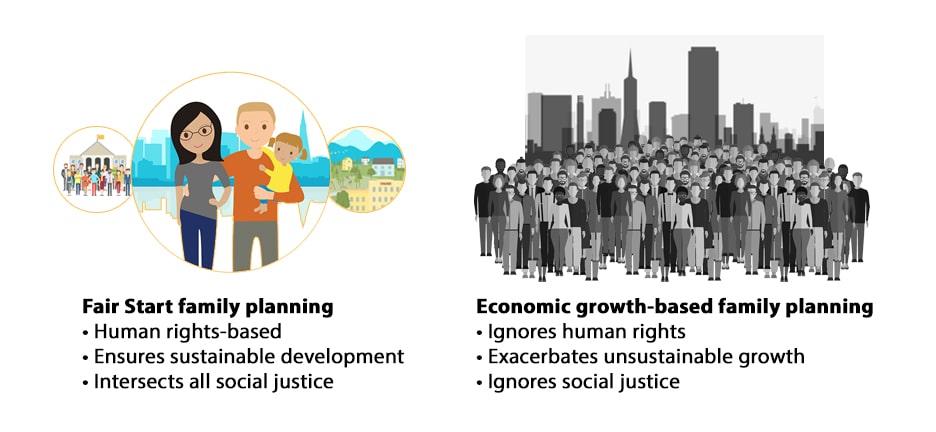
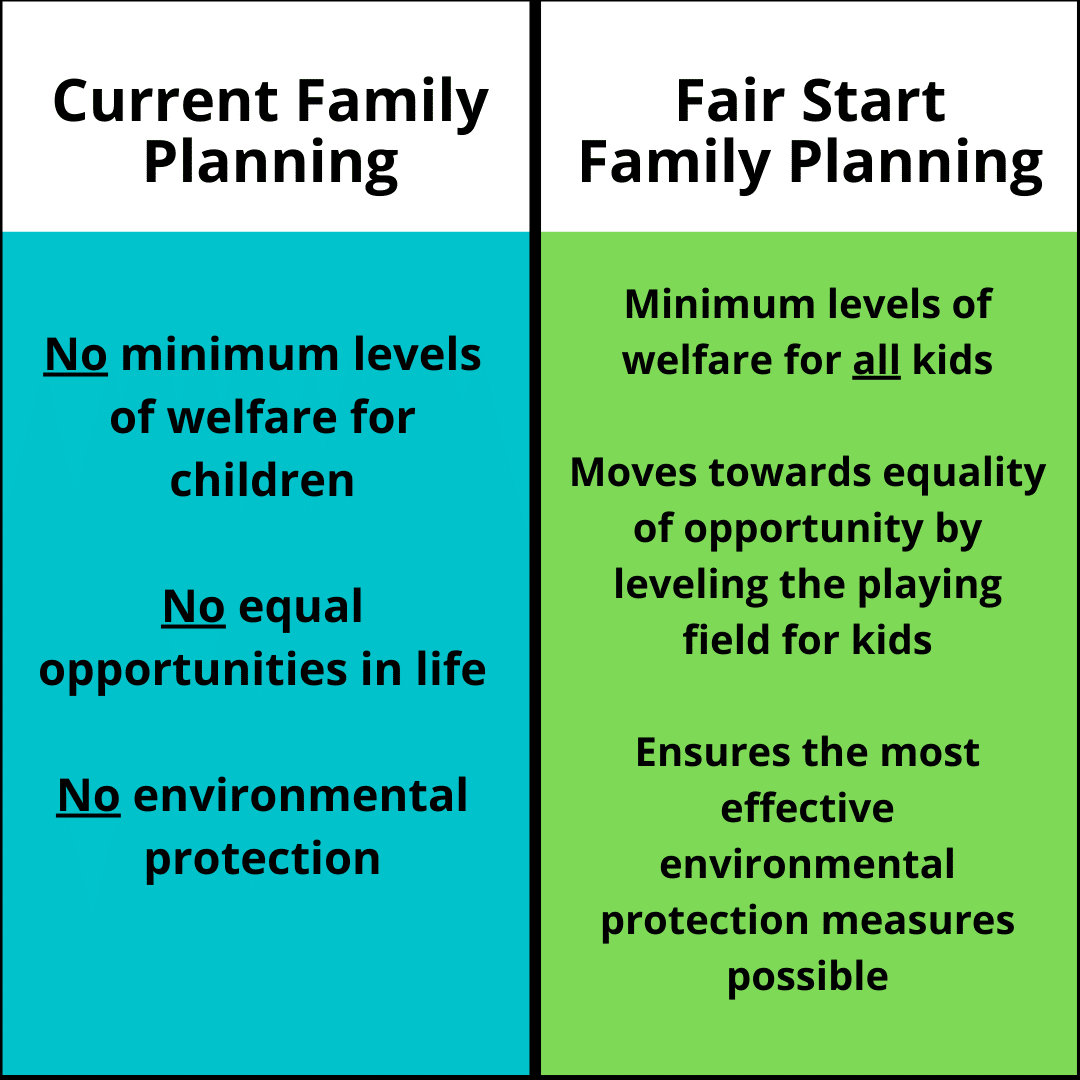
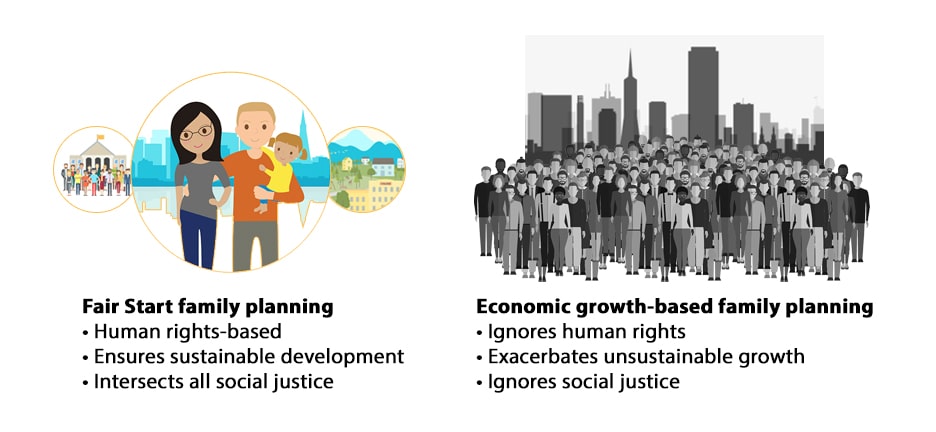
How? He embraced anthropocentric population growth over the true liberation of animals, something only possible through rewilding and Fair Start family policies that require parental readiness, redistribution of wealth for child equity, and a default of smaller families.
Moreover, his approach has bred a generation of “distractivists” who pretend to help animals by selling vegan food products to a growing population, while even pushing for more growth, that on balance is at war with animals. They are using their wealth and power profit by imposing costs on others, disempowering the majority, and in a way that exacerbates acts of violence that are hitting innocent rather than those responsible for pushing unjust systems.
Singer committed the “constitutive fallacy,” or basing one’s obligation to follow the law on top-down instruments like written constitutions rather than bottom-up family reforms that actually empower and liberate people – in terms of their actual relations – and in a measurable way, enabling them to physically constitute – under the Children’s Convention – legitimate power relations between people from whose authority things like written constitutions must derive.
Urge Singer to embrace Fair Start reforms, or a comparably effective approach, here.
The first measure of doing good is not welfare or utility, it is consent, and whether we are constituting – physically – just and liberating societies. Singer, given his position, has the capacity to tell the truth and help change family policies in a way that could save millions of lives. Doing the most good means targeting concentrations of influence, like Singer, and using them to bend the arc of growth towards justice.
Peter Singer is regarded by many as a founder of contemporary animal rights, largely based on his book Animal Liberation. But few realize that he has also taken public and influential stances on family and population policies, in this 2018 public lecture, for example. He avoids making concrete conclusions about population policies in this lecture and elsewhere,
Nowhere has he advocated for effective interventions – like overriding property rights to wealth in order to fund Fair Start family planning incentives/entitlements – and other peremptory norm measures would have bent the arc of unsustainable growth downwards towards what many see as optimal world population ranges. Those ranges, like all population matters, actually involve people – and the fundamental creation of power relations between them. And power and population ethics begin with human rights, the objective frame that after WW2 should cabin utility, Effective Altruism, and all other lesser and more subjective forms of policy Singer normally employs.
How is animal liberation possible in the face of a wave of human population growth causing massive extinction? How is promoting veganism for what is effectively a small percentage of a growing human population that mostly exploits, tortures, and kills nonhumans true animal rights? How does that growth further human rights when the growth enriched relatively few people, at cost to equality and the political stability it brings?
Singer’s work is based on an error called the constitutive fallacy, or ignoring the way our creation and development do and (assuming we use baselines like the Children’s Rights Convention) should – fundamentally – constitute actual power relations, between humans, and between humans and nonhumans. Who we are might be different mixes of nurture, or nature, or influential power relations, but all flow (and among self-determining peoples should flow) from our creation. We cannot separate values like nature and equity from who we are and our power relations with others, which stem from our creation.
For example, our economic birth position mostly determines whether we are rich or poor as adults. Another example would be that it is impossible to ensure the empathy people need to treat nonhumans well without addressing the conditions in which people are born and develop because empathy largely depends on years zero to three in childhood maturation.
Another example would be that if we assume we ought to treat nonumans well, we would have to structure an effective legal system that would obligate that. But because there is such massive attenuation (caused by the growth that is eradicating the nonhuman world) between people and their representatives, we cannot do this. Another example would be world leaders attempting to determine the costs and benefits associated with Anthropocentric environmental baselines like the Paris Agreement, a mistake that only accelerated ecocide, rather than using an organic baseline like beingrelatively self-determining people and the conditioning of wealth on equitable family planning investments that make that possible. (This last example gels with the constitutive fallacy as political adherence to national constitutions, or even international law, as basic and overriding norms, as opposed to adherence the obviously antecedent and more basic family planning norms that create us, the people.)
In other words, in Singer’s prescriptions for animal liberation come from outside of who people ought to actually be, in terms of the creation of the fundamental power relations that define them.
Some have argued that it’s unfair to say that Singer’s population comments (or lack of comments) have “undone” his work for animals, given that virtually no one knows what his views on population are. Per this argument, there are probably zero policy-makers who’ve done anything based on Singer’s population views. Perhaps few or none have decided to procreate or not procreate based on Singer’s silence on the issue.
This response treats population as something, an issue, that we can separate from what we do. But how can we do anything, or suggest that others should do something, without first determining the acceptable power relations that determine who we are, and should be? We cannot separate what we narrowly think of as population – or who we are – from what we do. The former is always a factor and precedes the latter.
Singer’s claim that “we should help animals by not eating them” is wrong on its face because the “we” in his claim – the fundamental creation of power relations that permit growth, relations he accepts – does more harm to animals than changing diets does good. That’s the constitutive fallacy at play. And that mistake – not requiring things like the Children’s Convention standard in family planning policies to improve those relations, which would physically constitute just communities – does more than just harm animals. It fundamentally permits anthropocentric changes that cause irrefutable harm to all, against an absolute standard like infant health.
Don’t confuse chaos with freedom. Truly free people will fundamentally limit and decentralize the power (including subtle power like climate emissions, the impact of bad parenting on communities, massive disparities of wealth, etc.) others have over them, and by all means effective. They will condition their obligation to follow the law on their actually being empowered, assessed via a simple test, in functional democracies.
Singer never seriously addresses this issue, through redistributive birth entitlements that empower us in terms of who we are before turning to what we should do, for example. That mistake of ignoring the primacy of who we should be (and the best answer is fair), given his position of influence and the crucial time for mitigating the climate crisis in which he was working, harmed future generations.
And as a result his work does not effectively protect nonhumans, promote equity, restore democracy, or even protect considered parental desire. An alternative approach which does not make the error would value each person born, and the value of self-determination, above the growth Singer never seriously opposed.
Is this type of fairness a threat to the ongoing processes of decolonization. antiracism, and other forms of anti-oppression? Eliminating the massive birth inequity caused by colonization – the one that disempowers the majority of people, those who will live in the future – and doing so while restoring nonhuman autonomy is the height of anti-oppression. Though admittedly, all of this argument flows from Eurocentric framing and should also be done from more indigenous frames.
It would treat ensuring minimum levels of welfare, and freedom, as more important than total welfare indictors like gross domestic product. It would elevate ethics in the creation of people – and the conditioning of political obligation on family planning policies that ensure people will matter – over the constitutions and governments whose authority to assign property and other rights derive from such people, again something Singer never considered.
TAKE ACTION: Urge Singer to #tellthetruth and admit that his family and population ethics undid his animal liberation ethics. Urge him to support a pivot from parent-centric family planning to child-centric planning. He should admit that before we can engage in Effective Altruism we are politically obligated to constitute just communities – and total liberation – through socially and ecologically regenerative family reforms like Fair Start.
Without this, his work could in the end do more to protect concentrations of wealth and power than nonhumans.
He should not allow his work on animal ethics to mislead people from the truth that we are committing ecocide through poor family planning, and should support paying back the costs to freedom that population growth has imposed on future generations. Also urge him to lead by example and treat property claims – like the extreme wealth he helped create in the plant-based industry – as conditional on our fulfilling every child’s right to a fair start in life.That wealth, and the power disparity it represents, is defended by the threat of state violence, not the true justification possible amid fair power relations.
But what makes the modeling unique is the way it frees us, ensuring – through an alignment of values – relative self-determination that is impossible without it. That, and the fact that reproductive justice precedes other forms, means we can purse Fair Start by all means effective, and use it to identify and overcome those that threaten that our and our kids’ freedom.
For example, the autonomy would-be parents gain through self-development and meeting a standard of readiness to parent aligns with objective, constitutive and naturalistic reasons for having children, parents’ procreative interest in successful relationships with their children, the diminishing interest in having additional children, and the quality–quantity tradeoff of a smaller family or more ecocentric family. These things align with the autonomy a highly loved and developed child experiences in life, and the morally valuable options and equality of opportunities in life they will have, which further aligns with the autonomy created by the gender equity such development allows, cooperativeness within groups, a level of inherent security in groups that avoids the need for top-down limitations on autonomy, as well as fluidity among groups.
The resulting smaller or more ecocentric populations and high levels of development align with one’s being empowered by having a meaningful voice – not drowned out or diluted by others – in public affairs and the rules under which one must live. This participatory agency aligns with the autonomy created by fulfilling one’s need for meaningful group membership, which in turn aligns with reduced consumption. and personal property that is oriented around nonpolity rather than things like ranking over others.
And all of these align with a healthy and safe environment and the freedom—or autonomy—from others that is only possible through interaction with the nonhuman world. That is freedom in nature. This in turn aligns with the nonhuman autonomy the animal liberation movement advocates for. Note this alignment spans many types of freedom, from communitarian to libertarian, that might be seen as conflicting, were we not temporalizing our perspective and orienting from creation, a place that could unify values in ways other approaches do not.
We can assess with a simple test, objectively, whether each of us is choosing to be part of a fundamentally just system in which the values discussed above align and in which we ensure true self-determination, or we are not.
What matters most is the people with whom we and our kids will share this planet as its ecology degrades. That is the most fundamental question of all.
Take action: Contact the Times at nytnews@nytimes.com and urge them to deal with the values at stake and not to promote unsustainable growth.