Category: Responsible Parenting & Smaller Families

  • A Millennial’s Take on Having Kids

    A Millennial’s Take on Having Kids

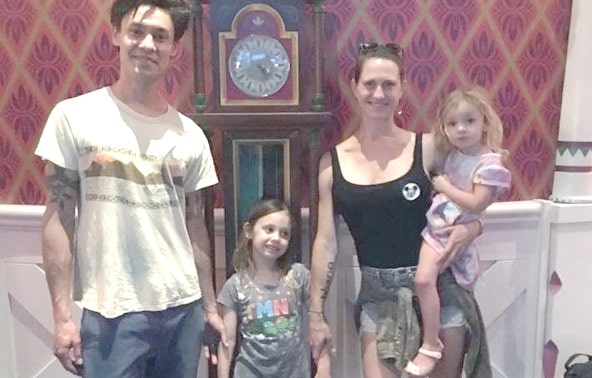
    by EK Green, far left

    I’ve been incredibly fortunate to have great parents who put a tremendous amount of work and time and love into raising me and continuing to support me. They made their housing decisions based on getting me into the best school districts they could afford, and always supported my education. They drove me to 6 am cross country practices all through high school, trained with me through the offseason, and came to track and cross-country meets around the state. They paid my way through college and continue to always be there for me.

    Their example has shown me that raising a child well is a full time, lifelong commitment. I’m incredibly grateful for all they do for me, especially as I see others close to me who don’t receive the same kind of support from their parents. I see friends – especially those with siblings – who are put into roles they shouldn’t have to take on: the role of parent to siblings, or mediator between parents.

    Potential parents who aren’t able and/or willing to take responsibility for themselves, their emotions, and their obligations to others, shouldn’t have kids. Potential parents who aren’t able and/or willing to put their kid(s) first shouldn’t have kids.

    My parents have been patient, thoughtful, and compassionate as I’ve come out and come to an understanding of my own various queer identities. I have friends who aren’t in the same fortunate position. Some do not feel comfortable talking with their parents about their identity; others have parents who ignore or disrespect who they are. Of my close friends, most are queer, neurodivergent, or mentally or physically disabled (or some combination of the above). The assumption of many parents that their child will be straight, cis, neurotypical*, and without disabilities, etc. is wrong and unfair to their child.

    Even if their child is straight, cis, etc., there are often other unfair assumptions, such as a child will fill a particular gender role and/or have certain social aspirations. A child is an individual, not the projections of a potential parent’s dreams or wishes. No child should come into the world unwanted, and no child should end up resented because they aren’t what their parents imagined. If potential parents are not prepared – practically and emotionally – to support their children, regardless of who they end up being, and what their needs are, they shouldn’t have kids.

    As an adult, I’ve never wanted kids of my own. Although when I was younger I briefly considered that I might adopt kids, as I’ve gotten older and realized that I’m not obligated to have kids, I’ve come to the conclusion that raising kids isn’t something I want for my life.

    Even if I did, I know myself and what I value. Stability, space for myself, and self-determination are important to me; none of which are compatible with the level of work and sacrifice required to raise a child. Most of my close friends also don’t want kids, for similar reasons. Those who do are actively invested and eager to have raising a kid be a part of their life, and have thought about it significantly, rather than simply accepting that as the default Plan For Their Lives.

    While not interested in raising kids of my own, I do plan to be a part of the support network for my friend’s kids. I’ve had conversations with my friends about what kind of “cool not-blood-related nuncle***” I’ll be for their kids – such as introducing them to my favorite cartoons and comics as age-appropriate, teaching them about Cool Science, taking them to natural history museums, and getting them registered to vote when they turn 18. Friends of my parents have played a variety of important roles in my life – I wouldn’t be where I am today without them and their support – so I hope to be that kind of person to my friends’ kids. We all know – village, child, etcetera.

    * And if parents are not willing to vaccinate – and thus risk their kids dying because they don’t want an autistic kid – they absolutely should not have kids.**
    ** Vaccines don’t cause autism, but that’s not the point.
    *** Borrowed from Ann Leckie’s
    Provenance, where it’s the term for a nonbinary sibling of a parent.

  • 5 Ways Thoughtful Family Planning Can Protect Children, Wildlife, Our Democracy – and the Future

    5 Ways Thoughtful Family Planning Can Protect Children, Wildlife, Our Democracy – and the Future

    This is third in a series of AlterNet articles on population growth.

    The first explored the trend toward smaller families. The second examined a new family planning model that can capitalize on that trend. The current piece – 5 Ways Thoughtful Family Planning Can Protect Children, Wildlife, Our Democracy – and the Future – explores ways to implement that change.

    Click here for the article.

    This article was made possible by the readers and supporters of AlterNet.


  • Having Kids Protects Kids from Abusive Parents

    Having Kids Protects Kids from Abusive Parents

    Having Kids is working to replace parent-centered family planning with the child-centered Fair Start model.

    Why?

    Some of the worst consequences of parent-centered family planning are the many abused and neglected children it creates and subsequently ignores. Because the parent-centered approach prioritizes the parents’ desire to have any number of children, in any conditions – irrespective of what children need – this approach leads to some horrific results for kids.

    For example, parents who have abused and/or neglected their kids – and as such are prohibited by law from having custody of any children – will often continue to have more kids. These kids are then taken in by the state – oftentimes right from the maternity ward. They are left in limbo – raised by failing state systems rather than loving and caring parents.

    These kids do not get anywhere near a fair start in life. They lead lives none of us would choose for our own kids. The abusive and neglectful parents often suffer as well, separated from their children. The rest of us suffer, too, in failing communities funding a failing system of public childcare.

    In the face of this horrible situation, some judges have stepped forward and said, “Enough is enough.” In certain cases, they have issued orders prohibiting abusive and neglectful parents from having more kids. These judges take the position that:

    • Society cannot care about children – the most vulnerable citizens – and not also care about the conditions into which they are born.
    • There is no ethical or legal conception of parenthood that would allow abusive and neglectful parents to create children for the state to raise (and raise poorly).

    These judges’ orders clearly protect future children. Their orders also protect individuals who can’t parent, and society as a whole.

    Having Kids is working to improve and expand the use of such orders – what we’re calling “Fair Start orders.” We are working to make sure they are constitutional, and are used under specific guidelines and in egregious cases.

    To improve our efforts and accurately reflect our memberships’ views, we sought your opinion, using a survey that was based on a real-world case.

    As you can see, Having Kids’ membership strongly supports our efforts to protect children from being born to abusive parents.

    This is the survey and results:

    A Florida couple with four children stands accused of abusing at least one of the children by shocking him/her with a stun gun and forcing him/her to eat dog feces. The other children were present during this abuse. Some courts are conditionally limiting the right of abusive parents to have more children in order to protect the children those parents already have, as well as future children.
    .
    If the charges prove true:
    .
    1. Should the couple be allowed to retain custody of their four current children?
    .
    Yes:     18 (6.98%)
    No:      240 (93.02%)
    .
    2. Regardless of whether they are allowed to retain custody of their current children, should the couple be conditionally limited by court order from having more children, under penalty of fines/jail time?
    .
    Yes:      193 (75.39%)
    No:       40 (15.63%)
    Other:  23 (8.98%)
    .
    3. Regardless of whether they are allowed to retain custody, should the couple be conditionally limited by court order from having more children, but there would be no penalty assessed for violating the court’s order?
    .
    Yes:      43 (16.86%)
    No:       170 (66.67%)
    Other:  42 (16.47%)

    Your opinion really matters to us – thank you for taking the time to respond to our survey. We will take the results into consideration as we develop and promote model Fair Start orders.

    If you would like more details on the responses, please contact us. And please follow us on Facebook and Twitter to help us with future surveys!

  • The Future World Is Our Choice

    The Future World Is Our Choice

    What do you want the future to look like, for you and for your kids? The family planning decisions we make today will define the future.

    Line graph showing world population from 1950 to projections for 2100, with observed data, median forecast, prediction intervals, and sample trajectories. Population could range from 8 to 15 billion by 2100.

    When parents choose to have larger families the world gets pushed towards higher projections in the graph above. This leads to a larger gap between rich and poor, and a more polluted, hotter, and dangerous environment.

    But when parents follow the Having Kids Fair Start family planning model, choosing instead to have smaller families and work with others to plan a fair start for every child, we move in the opposite direction – towards a greener, more equitable, and safer world.

    Which way do you want to go?

    Shouldn’t we all have a right to avoid the type of world larger and inequitable families, like, for instance, the Trump’s, are leading us to?

    Recently, a generous couple chose a better way. Los Angelinos Mickey and Tricia Bhotiwihok chose to exemplify the Fair Start model by forgoing having a third child.  Also, by working with Having Kids, they donated $3000.00 to Project Health Children, a charity working hard to improve childhood nutrition in Africa. Mickey and Tricia’s thoughtfulness and generosity is giving other kids more of a fair start in life, and helping to reduce high fertility rates.

    Look at the fork in the graph above and think about which way you want to go. Which world do you want your children to inherit? The best way to change the world is by changing the people in it, and the good news is that we are doing just that every day, every time we have and raise kids. We just have to get it right.

  • Other Parents Can Lead by Example … Including You?

    Other Parents Can Lead by Example … Including You?

    As expected, the Duke and Duchess of Cambridge announcing their third child has inspired other parents – and not in good ways. The exploding media around the growing Royal family is causing a “three is the new two” frenzy, despite some parents’ warnings and others openly admitting they can’t raise that many kids well:

    “There is also a tendency to loosen the reins and lower standards with each subsequent child. I remember when my youngest was two, I discovered he didn’t know any nursery rhymes — because we just hadn’t had time to teach him.”

    There has also been a massive outcry to lift the two child limit on some public assistance benefits, although the premise of those arguments is that children in families getting assistance are already struggling. Kate and William seem to have exacerbated the problem.

    Could other celebrities do better?

    What if instead of having a third child by surrogate, Kanye West and Kim Kardashian had adopted one of the many infants or children waiting for a home in Los Angeles, which has a struggling foster care system filled with needy kids?

    What if other celebrities step forward and say: “Parenting is not about making more people who look like us – it’s about leading by example to make sure that every baby is raised with the things they need and deserve. I want all children – not just my own – to live in a better world.”

    Instead of modeling bigger families, perhaps one or two celebrities will have the courage to lead by example. For the past month, Having Kids has been asking celebrities to do just that. We want them to adopt the Fair Start model and publicly state: “We are planning a smaller family so we can maximize the child’s love, time, attention, and resources.”

    Does this sound good to you? You don’t have to be a celebrity to make the case for smaller families and a fair start for every child! You could be our next Featured Family. Please contact us today.

  • Featured Family Counters Growing Royal Family

    Featured Family Counters Growing Royal Family

    On the heels of announcements that Prince William and Kate Middleton are having a third child, another couple – Los Angelinos Mickey and Tricia Bhotiwihok – are setting a different example. Instead of putting money into their children, they are giving thousands to help other children.

    Like Having Kids’ other Featured Families, Mickey and Tricia chose a smaller family. That decision also allows Mickey and Tricia to act on their altruistic natures and help other families.

    To show just how powerful this approach to family planning is, Having Kids gave Mickey and Tricia a big choice: we sent them three thousand dollars that had been allocated for this purpose. The Bhotiwihoks could choose to apply this money to their family. Or they could donate the money. It was up to them.

    Mickey and Tricia chose to donate all three thousand dollars to Project Healthy Children, a Givewell.org standout charity working on fortifying food for kids in the developed world.

    They knew that the best way to ensure everyone’s kids live in a cleaner and safer world is to choose a smaller family and help other families do better too.

    Mickey and Tricia’s Statement
    “Before discovering Having Kids’ Fair Start Model, we did not know there were other ways to approach family planning.  Instead, we relied on generational, social, and cultural norms passed down to us. After considerable thought, we adopted the Fair Start Model, because it just made sense. We are a family of four in which both parents work. Like all parents, we want the best for our children. We are also thinking of the big picture. The Fair Start Model provides an indispensable tool for families and children. Participation in the Fair Start Model demonstrates our commitment to a brighter world for all children.”

    Please join us! HavingKids.org

    Screenshot of an email from GiveWell confirming a ,000 donation to Project Healthy Children, with details on how the funds will be used and additional information for the donor.

  • We Can Still Do Better For Our Kids

    We Can Still Do Better For Our Kids

    Yes, Having Kids suggested that Prince William and Kate might forgo having a third child. We did so to encourage them to set an example of the most effective thing possible to mitigate climate change and protect the future.

    And yes, it appears the Royal family, and what CNN calls the world’s strongest brand, is getting bigger.

    That’s OK. Having Kids wishes Prince William, Kate, and their kids all the best.

    The truth is that we don’t have to always rely on celebrities to lead by example. Changing this world for the better does not happen overnight.

    This week Having Kids will feature two everyday families, families like you and me, families without a lot of money or prestige. But these families care deeply about all of our futures, working to create a sustainable world that nurtures us all. They are showing their concern and dedication by choosing a smaller family, and choosing to save resources and work with other families to plan a fair start in life for every child.

    We can all do the same.

    We always hear that children are the future, But what does that really mean? It means how we plan families today will determine whether our world will be hotter, more crowded, and filled with people who never got a fair start in life, or greener, cleaner, safer, and filled with people born into loving homes where they got what they deserved.

    It’s our future. Let’s build it together.

  • Are There Any Limits on Who Should Be Allowed To Have Kids?

    Are There Any Limits on Who Should Be Allowed To Have Kids?

    Recently USA Today reported on the Nigerian militant organization Boko Haram’s increasing use of children as human bombs. Already this year, 83 children – including a baby strapped to a girl – have been used as terrorist tools since the beginning of 2017. Bloomberg reports that many of the victims come from families who donated the children, knowing how they would be used.

    The stories raise a compelling question: Are there any limits on who should be allowed to have kids?

    Do parents who would donate their young children to be blown up by Boko Haram still have a moral or legal right to have more? Should we as a society say nothing about members of ISIS having more kids, given what will happen to them?

    These are questions no one is asking. And not because there are no ways to answer them – bioethicists deal with similar questions all the time – but because there appears to be no way to actually implement such limits. Why ask the question if there is nothing we can do about it? How would the United Nations and the international community begin to limit the right, legally and in practice? How should we actually intervene in these situations to stop parents? The notion is almost silly.

    But that’s thinking inside the box. It’s almost equally silly to think laws and policies that are not enforced have no impact on our behavior. Such laws and policies do, and are studied under an area of legal theory and research usually referred to as expressive law. Prominent organizations and governments merely taking a position on a controversial subject – that some people are not fit to have children – can have a tremendous impact.

    And what does not taking a position mean? That we think it’s ok for parents who would use their children as human bombs to have kids? Is that what we think? Is that the universal norm we all want to be living with?  

  • Mike Huckabee: Defend or Apologize, or You Are Part of the Problem

    Mike Huckabee: Defend or Apologize, or You Are Part of the Problem

    Recently, Mike Huckabee took to Facebook to attack Having Kids and insult the parents who run the organization. However, when challenged to either defend his attacks or apologize on multiple occasions (1, 2), Mr. Huckabee was suddenly silent.

    It is almost as though he was more interested in getting cheap laughs from his fans than wanting to honestly face the future and help to solve the world’s problems.

    In the meantime, we’ve experienced what is likely to be the most expensive disaster in US history. It is estimated that Hurricane Harvey could cost more than Katrina and Sandy combined.

    All this suffering and devastation was exacerbated by global warming. And yet another report has come out showing that the most effective way to combat climate change is family planning.

    We will ask again: What will it take for us to have an honest, constructive conversation about leaving our children, and their children, a sustainable world where they can have a fair start?