Category: News & Fair Start Headlines

  • Guest Blog: San Francisco Public Health Professional Addresses Family Planning

    Guest Blog: San Francisco Public Health Professional Addresses Family Planning

    Recently a public health professional in California contacted Having Kids to discuss the impact of family planning on the lives of children. This is what they had to say.

    As a public health professional working for the City and County of San Francisco, I am passionate about improving outcomes for at-risk youth and families. Over the years, I have contributed to the evidence-base on what works in mental health and behavioral health care. My greatest interest lies in prevention work, intervening early enough in life to ensure that children get the love and support they need to thrive and become healthy adults. It’s a passion that pervades my personal life, as I plan to foster and adopt my first child – a decision I’ve made for ethical reasons and one that reflects caring for those in need rather than creating new need.

    Child welfare is an issue that has risen to near-crisis level in San Francisco. The hasty decision to close our Juvenile Hall is evidence of a broken system whereby community organizations, child welfare and juvenile justice fail to effectively work together on developing long-term solutions, in one of the wealthiest cities in the world. The affordable housing crisis is driving many in the next generation into the streets.   

    Families are one of the strongest socializing forces in our lives

    Unfortunately, many children come from homes with considerable conflict, putting them at high risk for negative health outcomes. In San Francisco, children and families that come into regular contact with human service agencies, like Child Welfare, Juvenile Probation, and Behavioral Health generally have low socioeconomic status and experience chronic stress related to this. It is common to see children, and their siblings, with mental diagnoses such as oppositional defiant disorder, major depression, and PTSD. 

    A substantiated allegation of abuse or neglect can result in a child being removed from their home, however, this is often too late as trauma can permanently impact developing minds. Also, removal from the home brings additional challenges. Children removed from the home may already have attachment issues due to a lack of a stable family environment and they are now being asked to trust multiple providers (case workers, doctors, foster parents, probation officers, etc.). Given the lack of consistent relationships in their lives, they do not know who they trust, and lose a sense of identity and place, putting them in a very vulnerable position for exploitation. In fact, 60% of all sex trafficking victims have a history of involvement with the child welfare system.  Oakland is considered a national hub for child-sex trafficking.

    Similarly, juvenile justice-involved youth can be removed from the home. They tend to be older and more criminally sophisticated, and it is therefore challenging to find foster/resource families. Instead, youth are placed in group home facilities, or, depending on the nature of the crime, a more secure facility. In California, the cost to maintain a youth in a group home facility is approximately $10-12K per month with negative outcomes such as running away, early mortality, being in and out of the prison system in adulthood, mental health and behavioral health issues, and chronic homelessness. Teens and youth with multiple placements present a significant barrier to reunification.

    All of this creates a pipeline for human trafficking, and horrific cases of domestic violence. I’ve seen the moms and kids stuck in this world with my own eyes. And I know the problem began long ago, in families where the children were being set up for failure. The opioid crisis has only amplified to levels that are breaking public health and child welfare systems around the country.  

    A big challenge is how can we intervene early enough to impact children’s lives so that they can thrive and become healthy, contributing members of society? A major challenge is keeping up with the pace of this public health crisis whereby so many children and their siblings are experiencing early neglect and trauma, essentially becoming pawns of the “cradle to prison” pipeline.

    Family planning is prevention work

    By changing the way we plan families, we take prevention work to another level, finding ways to encourage all parents to have smaller, more equitable and better-planned families, thereby reducing the scale of this crisis and re-purposing resources to focus on evidence-based services that improve long-term outcomes. Programs such as the Perry Preschool Program which focuses on the developmental growth of at-risk children and resulted in a 7–10% per year return on investment based on increased school and career achievement, as well as reduced costs in remedial education, health, and criminal justice system expenditures.

    As a society, we need to create policies that uphold the rights of children. Smarter family planning leads to better outcomes. Period. It is time to take a long-range prevention approach and embrace better family planning models like Fair Start.
  • Consumption or Family Size: Which Matters for Climate?

    Consumption or Family Size: Which Matters for Climate?

    Care about consumption and its impact on the planet? Many argue that consumption, not population is the real climate crisis. But the truth is, consumption and people are inextricably linked. We have to address both.

    Demand isn’t created by dirty companies. Demand comes from people. Focusing only on carbon, plastic, and such plays right into the hands of global corporations like Unilever, Walmart and Amazon who depend on increasing birth rates to fuel spending for their products. Yes, bad industrial players must be held accountable. And we’re on our way to doing that. But if we’re only addressing carbon output, we’re ignoring the source of the problem: unsustainable population growth. Choosing to have a smaller family however, is the best way to mitigate our impact on the planet.  

    Looking only at emissions also ignores several critically important issues including water scarcity, mineral depletion, deforestation, and habitat loss. As the Center for Biological Diversity explains,“If we address one without the other, the end result will still be humans continuing to take more than our fair share from the planet.”

    The Center for Biological Diversity also stated:

    “A 2009 study of the relationship between population growth and global warming determined that the “carbon legacy” of just one child can produce 20 times more greenhouse gas than a person will save by driving a high-mileage car, recycling, using energy-efficient appliances and light bulbs, etc. Each child born in the United States will add about 9,441 metric tons of carbon dioxide to the carbon legacy of an average parent. The study concludes, “Clearly, the potential savings from reduced reproduction are huge compared to the savings that can be achieved by changes in lifestyle.”

    One of the study’s authors, Paul Murtaugh, warned that: “In discussions about climate change, we tend to focus on the carbon emissions of an individual over his or her lifetime. Those are important issues and it’s essential that they should be considered. But an added challenge facing us is continuing population growth and increasing global consumption of resources. . . . Future growth amplifies the consequences of people’s reproductive choices today, the same way that compound interest amplifies a bank balance.”

    The consumption vs. population debate.

    The finger pointing is generally toward high fertility rates in developing countries and high consumption in developed countries. However, it’s not an either/or scenario. It’s an evolving situation. As nations develop, their standard of living increases along with consumption rates. We are on track for exponential population growth paired with a drastic increase in consumption. Taking an incomplete approach is a recipe for disaster.

    Is consumption outpacing population growth?
    It is in some cases. Consider that food demand outpaces sustainable supply. According to the 2018 Global Agricultural Productivity Report, “for the fifth straight year, global agricultural productivity growth is not accelerating fast enough.” How can we continue to feed a growing population without a global effort for sustainable population planning?

    The U.N. has also warned that one million species are at risk of disappearing due to habitat loss, among other human activities, in the sixth mass extinction already underway. “A quarter of catalogued animal and plant species are already being crowded, eaten or poisoned out of existence,” its IPBES Global Assessment Report report states. Should we be concerned then about consumption or crowding? The answer is both – as confirmed by a UN Report released in May. 

    We have the power to determine the future for our kids.
    Most of us agree that a crowded planet is not something we want. But we fail to make the connection that our decision to have a large or small family is what determines how the world will look. The Fair Start Model is one way that we can work together to ensure that all kids get what they need to thrive – including a habitable planet. Let’s save room for animals, for nature, and for our kids to enjoy the only planet we have by planning smaller families.

    TAKE ACTION:
    Join us in urging the U.N. Secretary-General to issue a statement recommending sustainable family planning for World Population Day. RSVP to our event, help us share the event, and send him a message here.

  • A Plea to Hilaria Baldwin

    A Plea to Hilaria Baldwin

    Dear Hilaria,

    We know you love your kids and want what’s best for their future. Recently when asked about having more kids you said: “They’re My Favorite Things in the World So Why Not?” “Why not keep going?”

    We are asking you to use your status as an influential public figure to speak out on the connection between family planning, the climate crisis and other environmental and social crises, and to choose to foster and/or adopt your next child.

    Thank you for considering setting a vital example.

    Sincerely,

    Erika and Willow

    The Phelps-Mathews Family
    The Phelps-Mathews Family

    Join Erika and Willow by tweeting @hilariabaldwin to urge her to consider adoption.

  • Confronting Fears About Better Family Planning

    Confronting Fears About Better Family Planning

    Why would anyone oppose the idea of promoting smaller families? Most people care about the worsening state of our climate, and the rights and welfare of both humans and animals. But many are also aware of the unsettling history of coercive reproductive activities imposed on certain groups and powerless individuals. It is because of that fear that some balk at suggestions to encourage more thoughtful family planning, like policies that encourage smaller families that can invest more time, love, and energy in each child. They would rather avoid the topic entirely.

    But that knee-jerk reaction misses the larger picture. Poor family planning is the source of our greatest social and environmental crises, and the genesis of inequity and disempowerment. We cannot claim to be addressing things like anthropogenic climate change, extinction, inequity, and child welfare without targeting the source of those crises, and opening our minds to a whole new way of family planning that involves cooperation, rather than isolation.

    The status quo perpetuates inequality and oppression.
    We believe we are free in our reproductive decision making. But temporalize your thinking, think of the future child and their relations with others, and things become more morally complex. The truth is, our current system perpetuates oppression by falling far short of providing a fair start in life.

    Poverty, inequality, abuse, family instability, low social mobility, poor health, interaction in an unequal criminal justice system, limited access to quality education and opportunities in life – they are passed on, generation to generation. The U.S. has been called the most unequal society in the developed world. Inequality is also rising across the globe as the world population grows exponentially. Without greater family planning investments with citizens and communities working together to ensure a fair start for kids, this unlevel playing field will only continue to worsen. If we are not starting upstream to address this problem we are not dealing with the source of inequity.

    Wall Street and faith-based interests already exert massive influence on family planning policy and reproductive choice.
    These forces exert their power over lawmakers and other elected officials to shape policies that ensure larger families and higher fertility. Of course we know there are socially conservative groups and the religious right who oppose access to family planning choice and steer the views of so many people in the United States. But few are aware of the role of the capitalism in advancing pro-natalist policies. Economists and corporations largely subscribe to an agenda of infinite economic growth. It’s an agenda that relies on bringing more and more children into the world to fuel a system of workers, consumers, and taxpayers that benefit a small percentage of people at the top in what many have recognized as a Ponzi scheme pyramid. Just look at the many voices like Marco Rubio, who tell Americans that we need to have more kids because “it’s good for the economy”.

    Shouldn’t we push back by advocating for policies that put children and the planet before the economy? Who wouldn’t want to improve lives and give citizens a more equitable opportunity to succeed?

    It’s About Improving Choice.
    We can protect reproductive rights and pursue better family planning. It’s not an either-or proposition. Think of it as choice-plus. Family planning shouldn’t only be about the availability of contraceptives. It should also include education about the benefits to parents and children on delaying parenthood and having smaller families. That’s family planning in the truest sense of term. Why not arm young people with the information to make better choices for their future?

    The way to create more inclusive, equitable, and sustainable results for our communities is by encouraging delayed parenthood and smaller families.
    Decades of research prove that, bar none, better family planning is the most effective way to increase social mobility and reduce inequality. When parents wait to have kids, they are better positioned to succeed financially and emotionally. When parents choose to have smaller families, there are more resources to go around. Communities and parents can invest more in each child, rather than dividing dollars, time, and attention among many more kids.

    Fair Start family planning takes it a step further to shift the unfair distribution of resources from going the top, to the rest of society who needs it to have a fair shot at opportunities to succeed.

    The aim of Fair Start family planning is to inform and provide – to strengthen investments, access, education, and resources to reduce inequality, increase inclusiveness, and put communities on a path to a sustainable future.

  • Washington Post: Want Democracy? Connect the Dots to Family Planning

    Washington Post: Want Democracy? Connect the Dots to Family Planning

    [et_pb_section fb_built=”1″ admin_label=”section” _builder_version=”3.22″][et_pb_row admin_label=”row” _builder_version=”3.25″ background_size=”initial” background_position=”top_left” background_repeat=”repeat”][et_pb_column type=”4_4″ _builder_version=”3.25″ custom_padding=”|||” custom_padding__hover=”|||”][et_pb_text admin_label=”Text” _builder_version=”3.27.4″ background_size=”initial” background_position=”top_left” background_repeat=”repeat”]

    The Washington Post recently reported on a troubling trend in the United States: attacks on the value of higher education. The Washington Post is correct that education matters for democracy. A society made up of uneducated people, vast inequality, and greed as the primary motivator is the antithesis of a democracy. Democracy must come before economics.

    But if the Washington Post values democracy over economics when it comes to education policy, why does it reverse that stance when it comes to family planning?

    The Washington Post has itself promoted ideas that have created the situation they now bemoan. For example, they encourage Millenials to have more kids because “it’s good for the economy”. However, we know that encouraging fertility for the sake of the economy only serves to drive further inequality and weaken democracy.

    If we value democracy, we have to ensure that the conditions in which people are actually born and raised foster democracy. Downstream and after-the-fact approaches are a farce, and build inequality more than democracy. Yes, education matters for democracy. But not family planning matters even more. Why? The point of education is to ensure free and equal citizens, but family planning – more than education – determines the people we become.

    The Washington Post isn’t connecting the dots, and suffers (as we all do) from temporal myopia. The myopia is not limited to the issue of education. It’s overriding in things like our view of child care policies (where else do we ignore the source of need), preventing mass extinction, and certainly in climate change mitigation, where we routinely ignore the most important behavior change.

    What’s the solution? Through better family planning policies we could afford to make college free and obligatory. That may be what real democracy requires.

    We can break our temporal myopia, and change the way we see the world.

    Take action: Urge Washington Post’s editor @PostBaron to embrace democracy at its source, and abandon its promotion of economic-growth based family planning.


    [/et_pb_text][/et_pb_column][/et_pb_row][/et_pb_section]

  • WORLD ENVIRONMENT DAY: NEW CAMPAIGN URGES TEACHERS TO TELL TEENS THE TRUTH ABOUT CLIMATE CHANGE

    WORLD ENVIRONMENT DAY: NEW CAMPAIGN URGES TEACHERS TO TELL TEENS THE TRUTH ABOUT CLIMATE CHANGE

    On the heels of a study showing that the most effective solutions to climate change are not being discussed, and UN reports of disastrous mass extinctions, a growing coalition of environmental and child protection organizations is launching a daring new campaign.

    The Tell the Truth Campaign is urging the education community around the world to speak out, and to tell teen students as appropriate and depending on their age, that smaller families are the most effective way to mitigate the threats of climate change and many other environmental crises.

    Why are groups urging teachers to speak out?

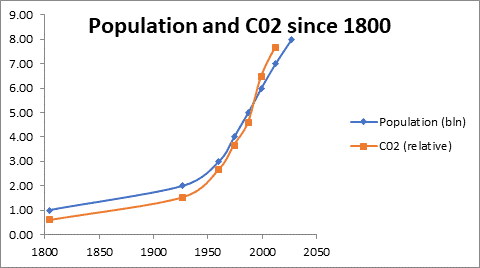
    Here are the facts:

    Population and CO2

    The campaign will be sending a new letter each week to influential educator organizations around the world urging them to take action, providing them with all of the relevant information, and offering to publicize the most impressive efforts.

    “Who would oppose telling kids the truth about what protects their future,” said Erika Matthews, Executive Director of Having Kids. “It’s well past due to give teens the information they need to promote effective policy changes,” said Small Families Project Executive Director Peter Fiekowsky. “This may be the most important thing for the educational community to convey to younger generations.”


  • Are Falling U.S. Birth Rates Really A Problem?

    Are Falling U.S. Birth Rates Really A Problem?

    It’s rare that you will see media from opposite ends of the political spectrum take the same policy positions, but outlets from the Wall Street Journal to the Washington Post are apoplectic about the fact that women in the United States are having fewer kids. Why? There will be less consumer demand with fewer people, future labor will be more scarce and costly, and the tax base could shrink. And while low fertility countries have performed well economically, our fear is that falling birth rates in the U.S. could threaten long term economic growth. 

    What’s wrong with this picture? The United States is a democracy before it is an economy, and falling birth rates are wonderful for democracy.

    • All things equal, smaller families can invest more time, love, energy, and resources in each child. This in turn results in greater academic achievement, lifelong success, and more thoughtful and engaged citizens. That may not matter if we want to produce depressed, low skilled workers with low civic participation. It matters a lot if we want to produce citizens capable of sustaining a democracy. And that’s something which the United States could do a lot better.
    • The opportunity to invest more in each child aside, smaller families will eventually allow each person to play a greater role in governance. As Jean-Jacques Rousseau understood long ago, the larger democracies get the harder it is for each citizen to influence the policies that influence their lives. One gets lost in the crowd.
    • A nation where more than half of the populace is disenfranchised is not a democracy. Falling fertility rates are the culmination of decades of efforts to liberate women. Yes, being a mother is a lot of work and conflicts with time that could be spent influencing public affairs. Falling fertility rates are part of empowering women and leveling of the playing field.
    • Arbitrarily pushing people to have kids – irrespective of readiness – results in actual cases of child abuse and neglect, and massive inequality. That’s not how people in a democracy would treat future citizens. Ensuring parental readiness and child development would be a priority. Should we be holding the people pushing for more kids, who care more about their investments than people, personally accountable for those kids’ suffering?

    So is falling fertility really a problem? Smaller families mean greater individual investment in each child, which is in important factor in reducing inequality and improving social mobility, and thus a stronger economy.

    But If you primarily care about your investments, and see this country just as an economy, falling fertility rates could still seem threatening. If you care democracy, you might think the opposite. Better family planning can create a more democratic and equitable system. What’s the difference between an economy and human right-based democracies? They differ based on the people that comprise them. In the former people are willing to trade human rights for wealth. In the latter they are not.

    Luckily, most people probably don’t see children as labor inputs and future taxpayers. That’s a good thing. And so are smaller families.

    Take action: Urge media reporting on falling fertility rates to cover the values at stake. Here’s one reporter who got it wrong. Reply with your comments here. The United States is a democracy, and we should put our values before our investments.

  • World Biodiversity Day: Time to Leave Room for Animals?

    World Biodiversity Day: Time to Leave Room for Animals?

    Today is World Biological Diversity Day. What is driving mass extinction around the planet? It is poor family family planning, which has caused explosive population growth, with humans literally replacing other species around the globe. The connections are clear.

    Do you want your kids to live in a world with wildlife? You grew up in a world with giraffes, polar bears, and koalas. Do you really want your kids to live in a world where these wonderful animals are replaced with Wal-Marts and Starbucks?

    The most effective solution to mitigate species loss and dozens of other anthropogenic impacts is through policies that promote smaller families sharing resources to give every child a far start in life. Better family planning can have twenty times the impact of downstream policy changes.

    Take action: If you are a member of an environmental or animal protection organization urge them to take a position embracing smaller families and the need for better family planning policies. Break the taboo, and speak out. 

  • Real Climate Action Means Promoting Smaller Families

    Real Climate Action Means Promoting Smaller Families

    We applaud candidates like Washington Governor Jay Inslee and Texas Rep. Beto O’Rourke for presenting ambitious climate plans. Gov. Inslee has proposed a transition to 100% renewable energy. Rep. O’Rourke proposes net zero emissions by 2050 along with trillions in new investments.

    Yes, these are important steps in mitigating the climate crisis. What’s missing though? Like other proposals coming forward by 2020 candidates, they are forgetting to start at the source of the problem. The fact is, anthropogenic climate impact starts with people. Is it time to change who we are, and will be?  

    A policy of promoting smaller families that share resources to plan a fair start in life for every child is the most effective way to reduce our impact.

    We urge the 2020 candidates to consider policies that would promote smaller and more equitable families. Not only is that the best way to reduce a variety of harmful emissions, but it reduces other anthropogenic effects. And (perhaps most importantly), it creates a population – in quantity and of a resilient quality – that can still thrive in a degraded future environment. No other change is as fundamental, interpersonal or effective.

    Better family planning is the most effective solution to the greatest threats that face us and our children. What can we do?

    • Speak out: Break the taboo against talking about the need for better family planning policies. Talk to the organizations you support, to parents, and people considering becoming parents about the facts about climate impact. It’s your future too. Empower yourself and change the world around you.
    • Put direct pressure on wealthy people and corporations to fund Fair Start family planning: Children are the future, and every kid deserves a fair start in life. Wealthy politicians – who have to defend themselves in public – should be able to explain themselves on this issue. What standard of living do they provide their own kids? Other children don’t deserve the same? Why not?

    Less than most effective is not an option. Speak out, and put pressure on politicians to include better family planning reforms in their climate change proposals.