Category: Media Critique & Fact-Checking

  • Nonprofits Need to Start at the Source: Activist Urges Surfrider to Address Family Planning

    Nonprofits Need to Start at the Source: Activist Urges Surfrider to Address Family Planning

    What is the greatest threat to our oceans? Climate change and other population-driven crises are the greatest threats to our oceans. Better family planning policies are the greatest solution.

    So why is it still taboo to talk about those solutions? Why do so many concerned parents have to remain anonymous in order to speak out? Meet one parent and activist taking action: Adam Sugalski is an accomplished surfer and animal protection expert from Jacksonville, Florida. Adam is urging the Surfrider Foundation, one of the leading ocean protection organizations in the world, to speak out on the need for better family planning policies both in the U.S. and worldwide, through the United Nations. Why Surfrider? Overpopulation is not just destroying our oceans – it’s perhaps the biggest problem in the sport today.

    Adam’s efforts follow on the efforts of Willow Phelps, a budding 11 year old surfer who wrote personally to Surfrider recently.

    Kid Activist Asks Surfrider Foundation to Think of the Planet’s Future

    Willow has never shied away from asking the tough questions. That’s a noble trait in anyone, but Willow is only 11 years old. She just sent a letter to the Surfrider Foundation (one of her favorite organizations) about her passion for surfing and protecting the ocean. Willow also asked the organization to stand behind its mission to protect the ocean by embracing an ethic of smaller families. Having Kids stands behind Willow and all kids, who will have to live with the environment we leave for them.

    The Facts are Clear

    Do you have a young activist in your life? Encourage them to contact their own favorite environmental organizations about smaller, sustainable families.

  • New York Times: Be Responsible When Dealing With Family Planning

    New York Times: Be Responsible When Dealing With Family Planning

    The New York Times Style Magazine, T, recently posed this question: “Given the State of the World, Is It Irresponsible to Have Kids?” Could it have framed the query, which goes to the heart of family planning, differently? Given the power of framing, how we first think about a question is crucial to the answers at which we will arrive. We could frame the question more comprehensively and ask: “How Did Our Family Planning Policies and Culture Create the State of the World Today?”

    That approach would allow us to avoid making the same mistakes that lead us to now worry about having kids, and also avoid the cognitive dissonance of seeing the decision to have children as disconnected from the future the act of having kids collectively creates.

    Given the impact family planning has on climate change, child welfare, equity and other things that define the state of the world and the future, we should force ourselves to expand our thinking and frame important issues broadly enough to capture what matters. TAKE ACTION: URGE THE NYT EXEC. EDITOR TO CONSIDER THEIR APPROACH MORE CLOSELY: @deanbaquet

  • Urge Grist to Talk About Sustainable Family Planning

    Urge Grist to Talk About Sustainable Family Planning

    [et_pb_section fb_built=”1″ admin_label=”section” _builder_version=”3.22″][et_pb_row admin_label=”row” _builder_version=”3.25″ background_size=”initial” background_position=”top_left” background_repeat=”repeat”][et_pb_column type=”4_4″ _builder_version=”3.25″ custom_padding=”|||” custom_padding__hover=”|||”][et_pb_text admin_label=”Text” _builder_version=”4.7.7″ background_size=”initial” background_position=”top_left” background_repeat=”repeat” hover_enabled=”0″ sticky_enabled=”0″]

    It’s great that Grist, the environmentally minded media outlet, is recognizing that media isn’t doing their jobs when they spend a lot more time covering news of the royal baby than climate change. But is it time for Grist to aggressively report on better family planning policies as the most comprehensive and effective way to mitigate the variety of harms climate change is causing?  

    Environmentalists have long treated family planning as a taboo subject. It’s glaringly absent from the Green New Deal. But it’s time to break taboo. The businesses that are destroying our environment are breaking it, and urging parents to produce more babies to increase consumption, and to increase a glut of cheap labor and taxpayers for the future. 

    We know how to fix this.

    A better family planning model and policies – with a focus on smaller and more equitable families – are likely the most effective solution to most of the world’s crises today. Remodeling family planning is the most comprehensive and effective way to promote the UN’s Sustainable Development Goals, and in some cases proves twenty times more effective than other reforms. Simply stated, the current family planning model used by the United Nations is the fundamental source of the problem. It ensures unsustainable population growth in a way that degrades equality, democracy, and our environment.

    This archaic model predates our understanding of climate change, the impact of early childhood development, the way birth conditions and early childhood can exacerbate inequality, etc. Many better models have been proposed, including one by leading political theorist Sarah Conly, and Having Kids’ own model, the Fair Start approach (detailed here).

    Take action:

    Contact Grist CEO here and urge him to help Grist to break the taboo and aggressively report on better family planning policies. It’s the most comprehensive and effective way to mitigate the harms of climate change. 

    [/et_pb_text][/et_pb_column][/et_pb_row][/et_pb_section]

  • Washington Post: Want Democracy? Connect the Dots to Family Planning

    Washington Post: Want Democracy? Connect the Dots to Family Planning

    [et_pb_section fb_built=”1″ admin_label=”section” _builder_version=”3.22″][et_pb_row admin_label=”row” _builder_version=”3.25″ background_size=”initial” background_position=”top_left” background_repeat=”repeat”][et_pb_column type=”4_4″ _builder_version=”3.25″ custom_padding=”|||” custom_padding__hover=”|||”][et_pb_text admin_label=”Text” _builder_version=”3.27.4″ background_size=”initial” background_position=”top_left” background_repeat=”repeat”]

    The Washington Post recently reported on a troubling trend in the United States: attacks on the value of higher education. The Washington Post is correct that education matters for democracy. A society made up of uneducated people, vast inequality, and greed as the primary motivator is the antithesis of a democracy. Democracy must come before economics.

    But if the Washington Post values democracy over economics when it comes to education policy, why does it reverse that stance when it comes to family planning?

    The Washington Post has itself promoted ideas that have created the situation they now bemoan. For example, they encourage Millenials to have more kids because “it’s good for the economy”. However, we know that encouraging fertility for the sake of the economy only serves to drive further inequality and weaken democracy.

    If we value democracy, we have to ensure that the conditions in which people are actually born and raised foster democracy. Downstream and after-the-fact approaches are a farce, and build inequality more than democracy. Yes, education matters for democracy. But not family planning matters even more. Why? The point of education is to ensure free and equal citizens, but family planning – more than education – determines the people we become.

    The Washington Post isn’t connecting the dots, and suffers (as we all do) from temporal myopia. The myopia is not limited to the issue of education. It’s overriding in things like our view of child care policies (where else do we ignore the source of need), preventing mass extinction, and certainly in climate change mitigation, where we routinely ignore the most important behavior change.

    What’s the solution? Through better family planning policies we could afford to make college free and obligatory. That may be what real democracy requires.

    We can break our temporal myopia, and change the way we see the world.

    Take action: Urge Washington Post’s editor @PostBaron to embrace democracy at its source, and abandon its promotion of economic-growth based family planning.


    [/et_pb_text][/et_pb_column][/et_pb_row][/et_pb_section]

  • Tabloid Baby Obsession: Harming the Future for Kids?

    Tabloid Baby Obsession: Harming the Future for Kids?

    Our kids’ future will be defined by the people with whom they will share the world, the people being born and raised every day. Will our kids will live in a crowded world filled with billions of people who did not get what they needed growing up; a world of massive inequality and pollution? Or will they live in a safe, healthy, sustainable world, with equity and democracies where their voice matters? The world could go either way.

    What environmentalists are doing to reduce consumption, child welfare activists are doing to protect kids alive today, and human rights activists are doing to universalize rights are all laudable. But what really matters – what has the greatest impact – is people, and how we make and shape them.

    Studies have shown the media have a crucial influence over the way we will go. Recent eye-grabbing headlines from People magazine are not helping: “’Unprepared’ Kim Kardashian and Kanye West ‘Are Both Very Excited’ About Baby No. 4.” Really? Promoting large families as climate change and inequality worsen is a bad idea. Downplaying the idea of preparation makes it even worse. Ignoring the ways this uber-wealthy couple differ from most families that might follow their lead, makes the article simply irresponsible. Other news outlets are doing a better job of promoting a better future, showing more sustainable families sharing resources to invest more in every child.

    Urge People Magazine to consider the impact it is having in limiting our kids future and driving an unjust future when reporting on celebs, and their family choices.

    Tweet People’s Executive Editor Kat Coyne @KatePeople and urge her to consider the Fair Start family planning model as a normative baseline when reporting on celebrity families.

  • Kudos to Vox. Now Lets Connect the Dots on Climate, Kids, and Policies.

    Kudos to Vox. Now Lets Connect the Dots on Climate, Kids, and Policies.

    Vox has recently done a great job making the connection between the ethics of having kids and things like climate change, or the quality of the resulting lives. But can we urge Vox see the crucial need to revise our family planning policies to prioritize every child getting a fair start in life?

    Here’s one way. 

    Elizabeth Warren is right to focus on the need to improve child care throughout the United States. Vox knows this. But quality child care, and the sufficient development of children to ensure real democracy in the future, depends on both supply and demand. Any policy changes should be geared toward strengthening family planning and bringing kids into better conditions, as well as improving the overall conditions. Warren should distinguish herself from Ivanka Trump, who like her father, also supports child care, but because it is a way of maintaining the growth-based Ponzi scheme of creating profits for investors by creating more people.

    Warren should embrace a policy of smaller families sharing resources to invest more in every child. That’s the best way to protect our most vulnerable entities, mitigate climate change, and ensure an ecologically and socially sustainable future.

    Will Vox help? Tweet Lauren Williams at @laurenwilliams and ask her to publicize the difference between growth-based and child-centered child care policies, and call for the latter.

  • Urge the Guardian To Connect the Issues

    Urge the Guardian To Connect the Issues

    Last month we asked the Guardian to correct a confusing story that said changing one’s diet is the most effective way to reduce one’s impact on Earth, and mitigate climate change. As we explained, and the Guardian previously reported, that is not true. Ensuring smaller families is the most effective action – so much so, that in one recent report the impact of having one child less could not even be easily graphed against other actions. It’s not the first time the Guardian has elided family planning when discussing climate change.

    Most discussions of family planning and the environment – the Guardian included – involve narratives of the most compassionate and thoughtful people one can imagine forgoing having kids entirely. But is that what we really want? Would discussions of the need for better family planning policies, for all, make more sense?

    Ignoring a culture of family planning that treats each family as if it were an isolated unit condemns future generations to a luck-of-the-draw birth lottery that ensure poor kids stay poor, and rich kids stay rich. Journalists have a responsibility to put issues in context. In that sense, they should start at the source, and bring attention to idea of focusing our family planning on collectively ensuring a fair start in life for every child.

    It’s time for the Guardian to connect the dots, and see the linkages between the issues it reports on – from needy kids, to water shortages, to the cycle of child abuse and neglect, to maternal deaths worldwide – and the need for better family planning.

    We can all do better. Our future depends on it.

    Urge the Editor of the Guardian Katharine Viner to reconsider the paper’s approach to family planning by tweeting her @KathViner or by sending her a brief letter guardian.letters@theguardian.com.

  • Having Kids Asks Guardian to Issue Correction on Climate Gaffe

    Having Kids Asks Guardian to Issue Correction on Climate Gaffe

    The Guardian recently ran a story claiming that eliminating meat and dairy is the single biggest way to reduce impact on the environment. While going vegan is crucial for our planet, the claim in the article is not quite accurate. Today Having Kids is calling for a correction.

    As the Guardian itself recently reported, multiple studies have shown that choosing smaller families easily has the most impact on environmental crises like climate change. Moreover, those studies did not assess vital and obvious knock-on benefits of smaller families, like better cognitive outcomes for children, opportunities for empathy-building through early childhood development, and increased social cooperation and compliance with environmental norms.

    Population Impact

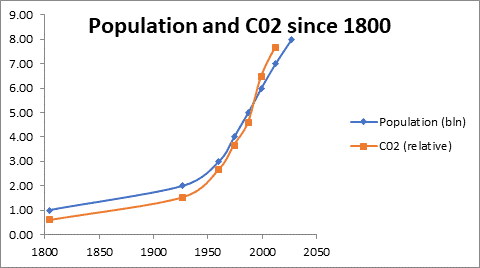
    From Paul Hawken’s book Drawdown to previous studies on climate change population size has been shown to be the primary driver of climate disruption. That’s also the case for the downstream impacts of climate change like ocean acidification, and for other forms of ecocide, like the loss of biodiversity / mass extinction of other species. Thus, sustainable family planning is the most significant act that we can take to reduce our impact.

    Are Vegans Exempt?

    Dietary changes should not replace better family planning. It should be included as a necessary condition of sustainability. If you want to be a true vegan, change your diet and plan smaller families for the goal of reducing the number of animals used for food and restoration of the nonhuman world. We should do our best to live sustainably through our consumption choices as well as through our reproductive choices.

    Ending the Taboo

    Discussing family planning is difficult because we have a cognitive distortion called temporal myopia. The push for pro-natalism has been ingrained in us over generations since the beginning of time. But today the size of the families we plan will determine our survival on the planet. It’s time to look beyond our selves. We must confront our own self-centered wishes to put our children’s future first.

    Our climate change trajectory is largely the product of past failures to deal with known variables like population and family planning policy. We should not repeat those mistakes, and the media has a grave responsibility in this regard.

    Fertility Rate Vs. the Economy

    Leaders and economists constantly push policies that support having more children to create future consumers and endlessly growth the economy. We see ourselves as consumers, rather than as citizens, which explains why dietary change is the common approach for people who care about animals. But why are we seeking infinite growth? What about a more stable, sustainable economy with a smaller gap between rich and poor and better opportunities for everyone?

    The Trend Toward Smaller Families

    Today there is also a marked trend towards smaller families, driven by several factors that range from cultural to financial. When thinking of policy changes, why not capitalize on, rather than ignore, this existing trend? From fully-funded LARC programming, to reforming child protection systems, to equity-based family tax systems, there are existing and effective vectors for real population policy change that can capitalize on the trend towards sustainable families.

    Family Planning for a Better Future

    Family planning is the unifying and primary driver behind all anthropogenic impacts. To fix our relationship with the nonhuman world, we will have to start at the source. Family planning is also our chance to create more equitable as well as sustainable societies. We can replace increasingly crowded, consumption-oriented economies with more connected communities that live in balance with nature. Family planning must be where we start in any discussion on how to reduce impact – at the source of who we are, and will become.

    The Guardian should issue a correction today. Ask the Guardian to do so at guardian.readers@theguardian.com, and to run a sufficient article explaining the correction highlighting the importance of better family planning.

    Ashley Berke, Spokesperson for Having Kids


  • New York Times: Time to Take a Deeper Look at Family Planning?

    New York Times: Time to Take a Deeper Look at Family Planning?

    Leta Hong Fincher’s New York Times piece on China’s family planning regime raises many questions: We decry population growth policies as violating women’s rights and autonomy. Should we also look beyond parents, to future children, and consider their rights to a world free of population-driven climate change and the environmental destruction that typifies massive China today?

    Would such rights limit parents’ autonomy in family planning? China is the bogeyman when it comes to family planning, but isn’t the United States attempting to also use women to produce workers, consumers, and taxpayers for the state? China uses family planning to limit the number of children born into poverty, and that has disparate impact on some families, but if a policy does not independently use genetics or race as a factor, is it eugenics? Could states compensate for that disparity by using equity as baseline for cooperative planning?

    Regardless of how we answer these questions, family planning is morally complex – with immense consequences for more than just parents – and rarely a matter of evil state actors and blameless citizens. The New York Times needs to dig deeper when it covers an issue that, more than anything else, defines the world around us.