
Summary – While some people enjoy abundant opportunities, security, and freedom, millions of children in Uganda and sub sub saharan Africa and other vulnerable communities continue to face preventable poverty, disease, and limited opportunities due to enduring structural inequalities and decision-making systems that undervalue future lives, underscoring the need for policies that recognize the equal worth, dignity, and freedom of every human being regardless of where or when they are born. Freedom for Some, Hardship for Others.
A family in a wealthy part of the United States may enjoy reliable access to food, clean water, healthcare, education, economic opportunity, and the freedom to travel the world, attend major sporting events, and pursue their aspirations with confidence. At the same time, many children in Uganda continue to face hunger, water scarcity, preventable diseases such as Ebola, and limited access to essential services.
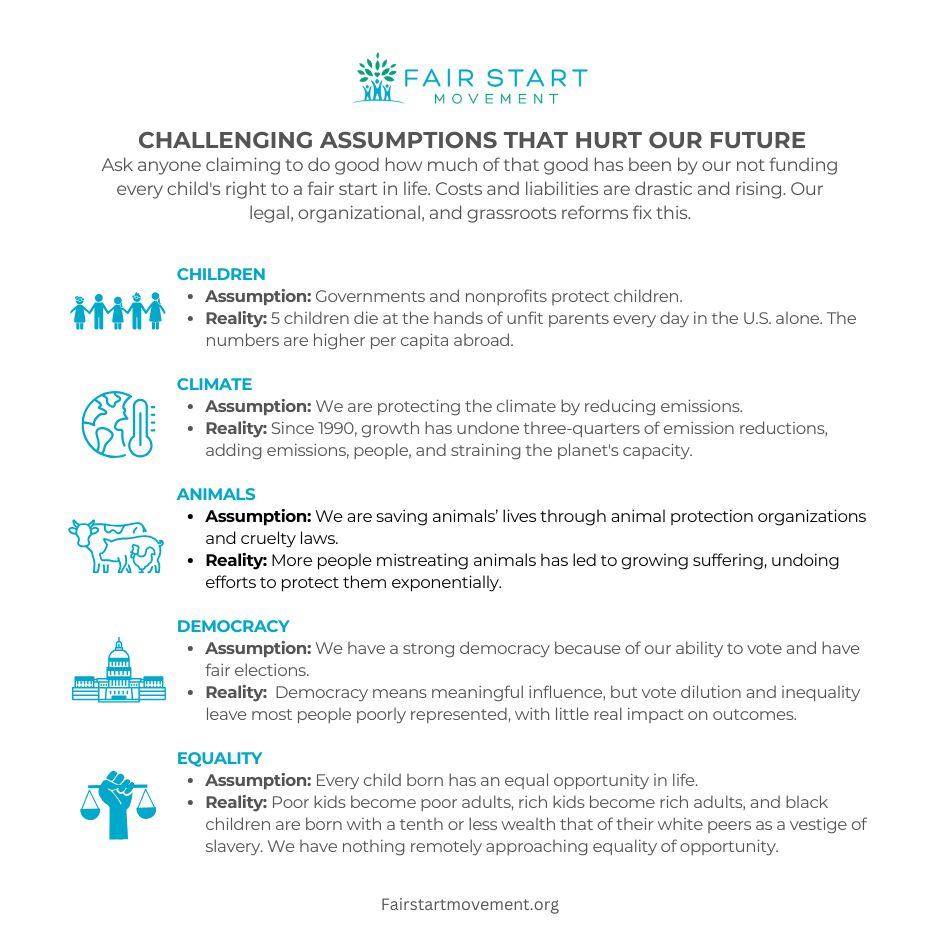
This contrast is not simply the result of individual choices. It reflects global economic and political systems that have historically concentrated wealth, power, and opportunity in some regions while leaving many communities in the Global South with fewer resources, less self-determination, and greater exposure to preventable risks.
As Samuel has requested, we must confront the deeper question of freedom. Freedom is not merely the absence of constraints for those who are already privileged. Genuine freedom requires that every person has a meaningful opportunity to live, develop, and pursue their future. When children lack access to healthcare, clean water, education, and protection from preventable disease, their freedom is restricted long before they have the chance to exercise it.
This concern extends beyond Uganda. Vulnerable communities in Uganda and elsewhere also experience disproportionate exposure to poverty, environmental hazards, inadequate healthcare, and economic insecurity. Policies and models that systematically place lower value on the lives and futures of disadvantaged populations contribute to these inequalities, regardless of where they occur.
One important example is the practice of discounting future lives and future harms in economic and policy analysis. When future human lives are valued less simply because they occur later in time, decisions may systematically underinvest in preventing long-term suffering, disease outbreaks, climate impacts, and structural poverty. In practice, such approaches can disproportionately harm those who are already most vulnerable, including children in Uganda and marginalized communities in Uganda.

Truth Alliance “It is difficult to think about these issues only in terms of the future, because the consequences are already with us today. The children and future generations of Uganda and other parts of Sub-Saharan Africa are paying the cost of decisions that were not addressed 40 or 50 years ago. Many racial justice advocates, policymakers, and institutions recognized inequality, yet the underlying structures that perpetuate unequal opportunities and unequal protection from harm were never fully corrected. The result is that today’s generation continues to bear the burden of preventable poverty, disease outbreaks, climate vulnerability, and limited opportunities for self-determination. Political leaders, including President Trump and others before and after him, operate within systems whose costs often fall disproportionately on the world’s most vulnerable communities. We should not continue passing these burdens from one generation to the next. Every generation has a responsibility to confront injustice rather than defer it. That is why we seek change today to ensure that future generations inherit greater equality, greater freedom, and a world where no child’s life is valued less than another because of where they were born.”
Peter and Erica have the opportunity to lead by example. By revisiting and reforming modeling approaches that rely on discounting future lives, they can help advance a framework that recognizes the equal worth and dignity of every human being, regardless of where they live or when they are born. Such a shift would strengthen efforts to protect both present and future generations from preventable harms.
This is not a call for charity alone. It is a call for fairness, consistency, and equal concern for all people. If every child has equal worth, then justice requires more than addressing symptoms. It requires confronting the structural inequalities and decision-making frameworks that allow some populations to flourish while others continue to face preventable poverty, disease, hunger, and insecurity.
There is already an example of this kind of consideration. Bobak Bakhtiari has committed to reconsidering and changing his modeling approach in recognition of these concerns. Peter and Erica could help lead the way as well by adopting models that better reflect the equal value of all human lives and the importance of protecting the freedoms and opportunities of future generations.
A world in which some enjoy extraordinary freedom while others face preventable suffering is neither inevitable nor just. The challenge before us is to build systems that recognize that no child and no human being is worth less than another, and that every person deserves an equal opportunity to survive, thrive, and determine their own future.